Война больших моделей наконец-то достигла самого шокирующего переломного момента в 2026 году.
Anthropic действительно совершил исторический "удар в спину" OpenAI в корпоративном сегменте.
Согласно последнему Индексу ИИ (AI Index) за май 2026 года, опубликованному финтех-гигантом Ramp, были обнародованы данные, способные вызвать землетрясение в отрасли —
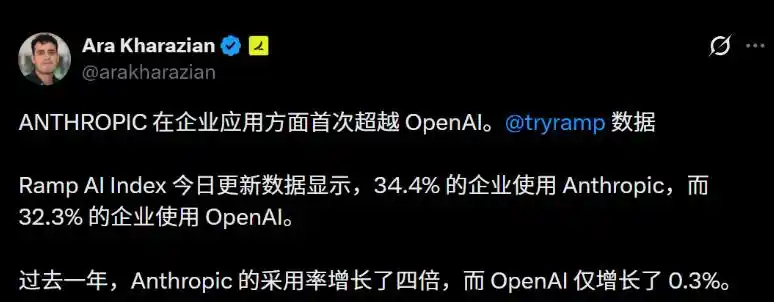
Внедрение Anthropic на рабочих местах достигло 34,4%, впервые обогнав OpenAI с 32,3%.
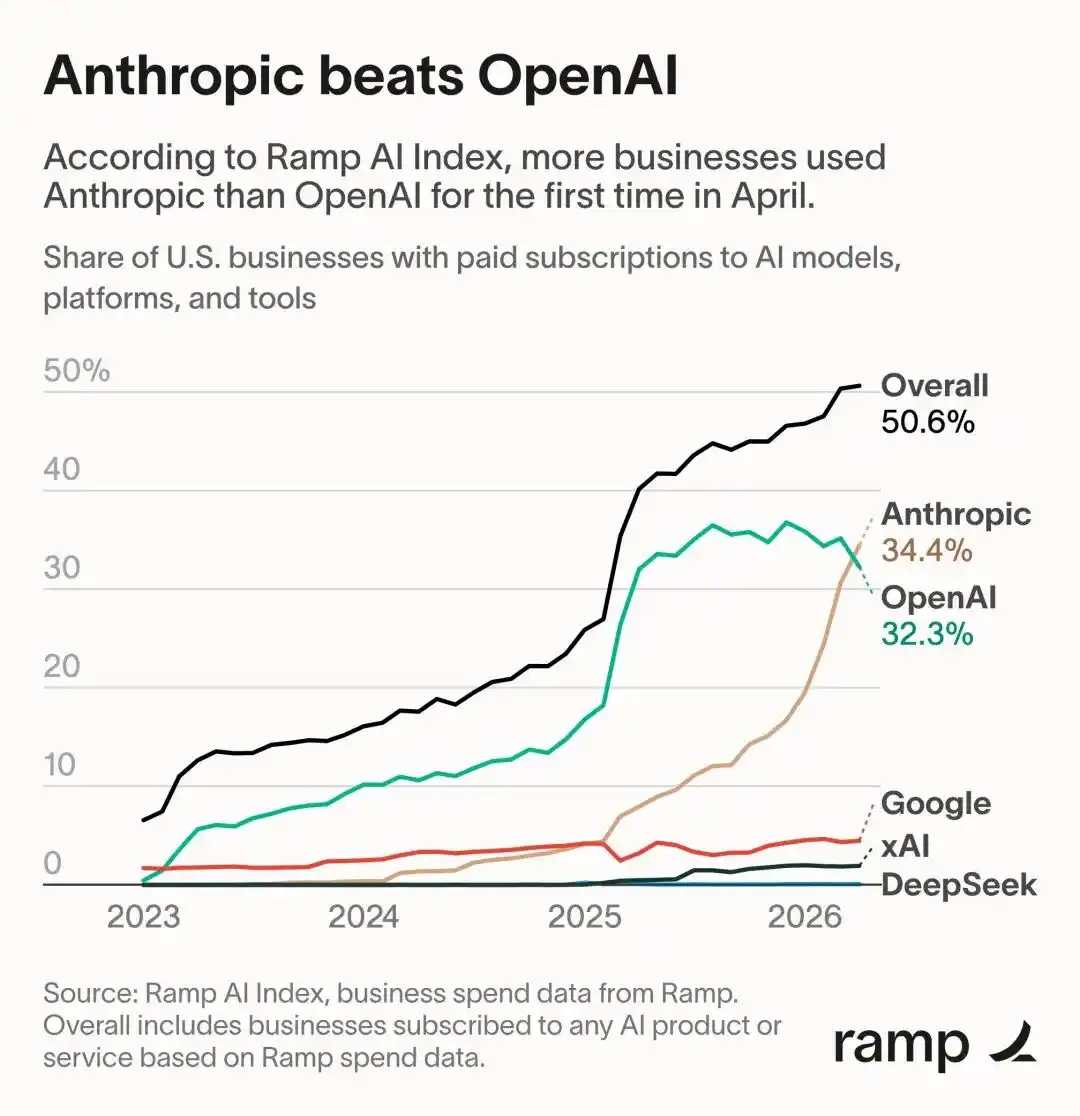
Это был давно задуманный "камбэк". За последний год корпоративная доля внедрения Anthropic выросла почти в 4 раза, в то время как рост бывшего лидера OpenAI составил лишь жалкие 0,3%.
Игра власти в мире ИИ официально сменила игрока, а рынок B2B становится настоящей "мясорубкой".
И в этот момент Олтман начал беспокоиться
Было время, когда ChatGPT был синонимом ИИ.
В январе этого года данные Ramp ещё показывали, что OpenAI с большим отрывом опережал конкурентов, а применение его продуктов в таких областях, как разработка программного обеспечения, исследования, финансы и поддержка клиентов, росло взрывными темпами.

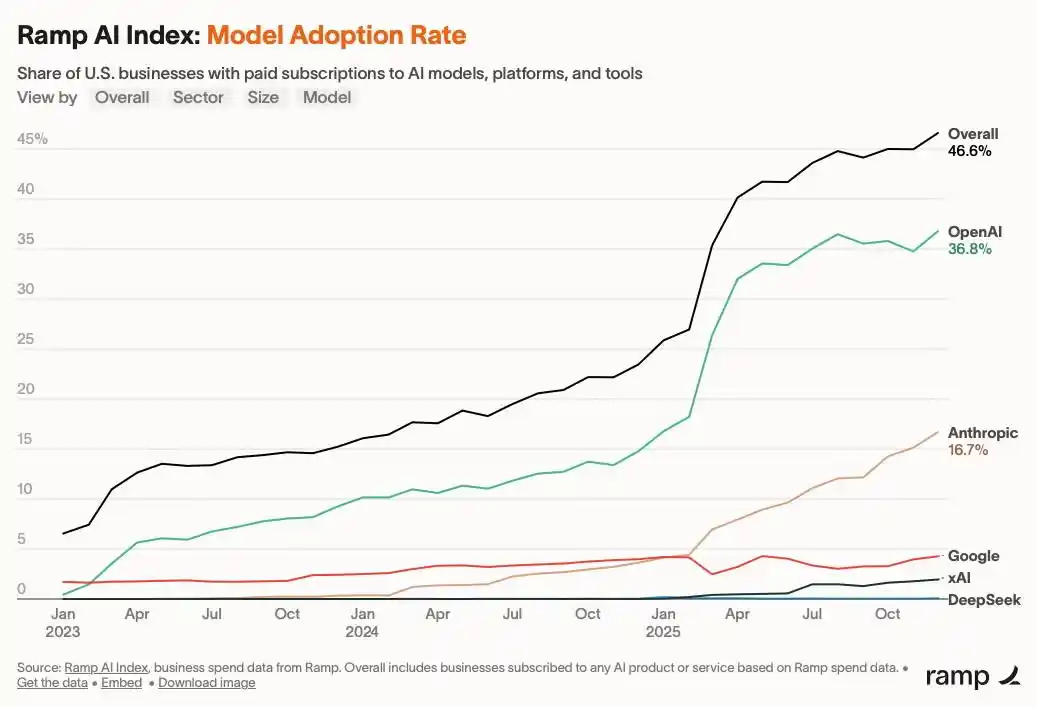
Но данные Ramp, основанные на реальных расходах 50 000+ компаний на миллиарды долларов, обнажили брешь в обороне OpenAI.
Вспомните: в мае год назад корпоративная доля платного внедрения Anthropic и OpenAI составляла 9% и 32% соответственно.
Всего за 12 месяцев Anthropic вырос в четыре раза, а OpenAI добавил лишь 0,3 процентных пункта.
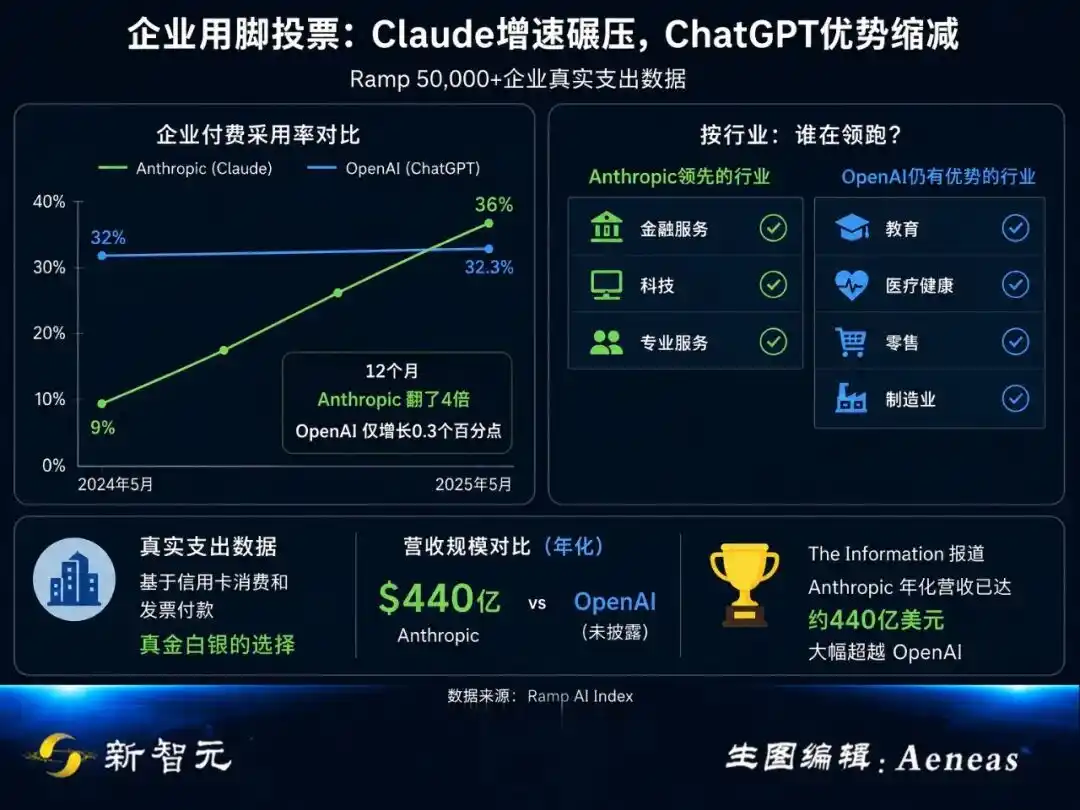
Главный экономист Ramp Ара Харазиан заявил: "Anthropic уже давно лидирует в таких отраслях с высоким уровнем внедрения, как финансы, технологии, профессиональные услуги. У OpenAI всё ещё есть преимущество в других отраслях, но за последние несколько месяцев оно постоянно сокращается".
Важно отметить, что Индекс ИИ Ramp основан на записях реальных корпоративных расходов — операциях по кредитным картам и оплате счетов, поэтому данные отражают реальные денежные траты, а не бесплатные пробные версии.
Это означает, что когда генеральные директора принимают решение платить за ИИ, они всё чаще выбирают Claude, а не ChatGPT.
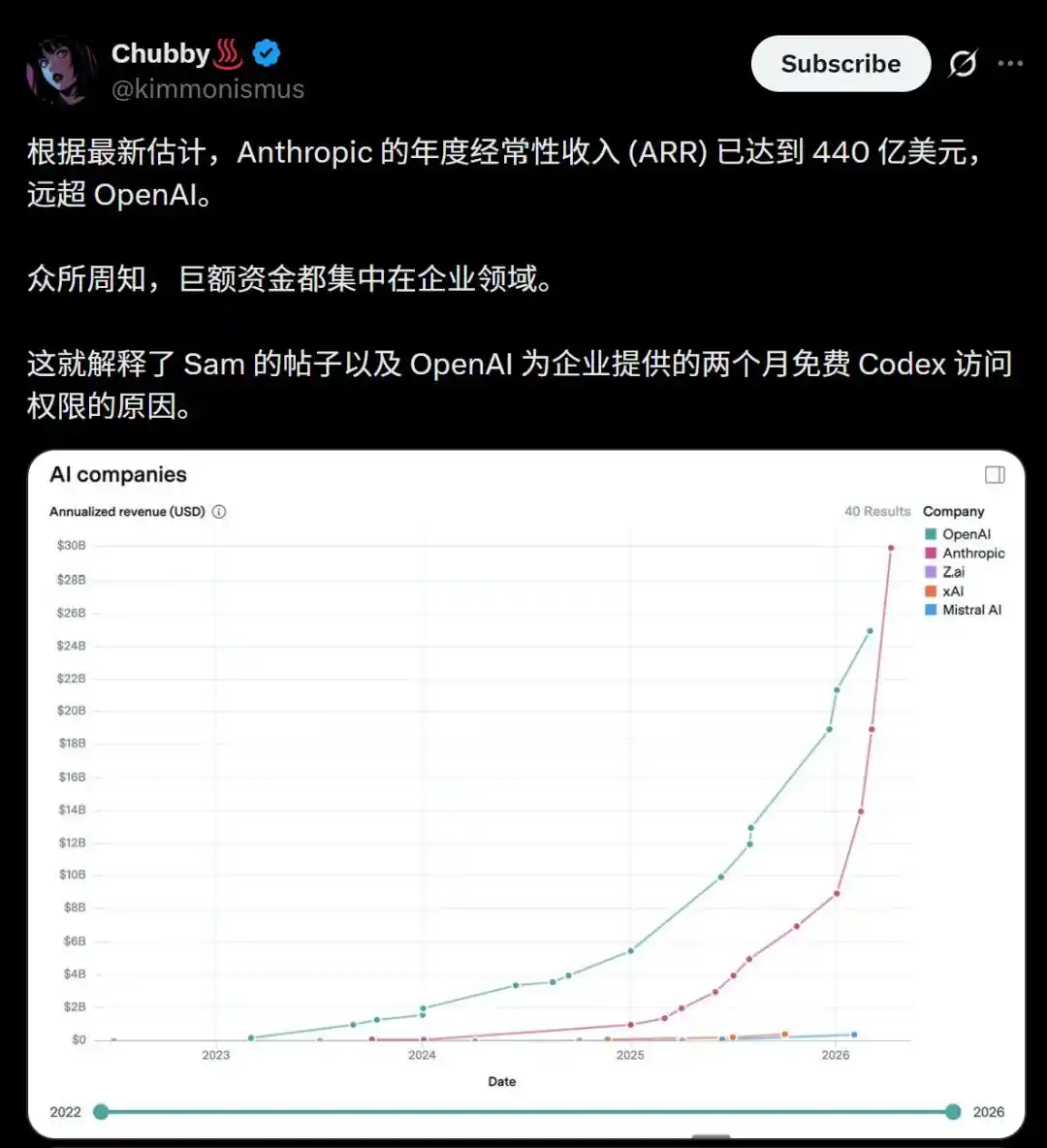
Согласно сообщению The Information, годовой доход Anthropic уже достиг примерно 44 миллиардов долларов, значительно превзойдя OpenAI.
Столкнувшись с этим отчётом, где их "обогнали", в OpenAI не выдержали и быстро перешли в режим обороны. Пресс-секретарь прямо заявил: "Данные Ramp учитывают только списания по кредитным картам, а наши многомиллионные контракты на глубокую корпоративную трансформацию вообще не проходят по кредитным картам".
Но в отрасли это объяснение восприняли скорее как попытку "сохранить лицо".
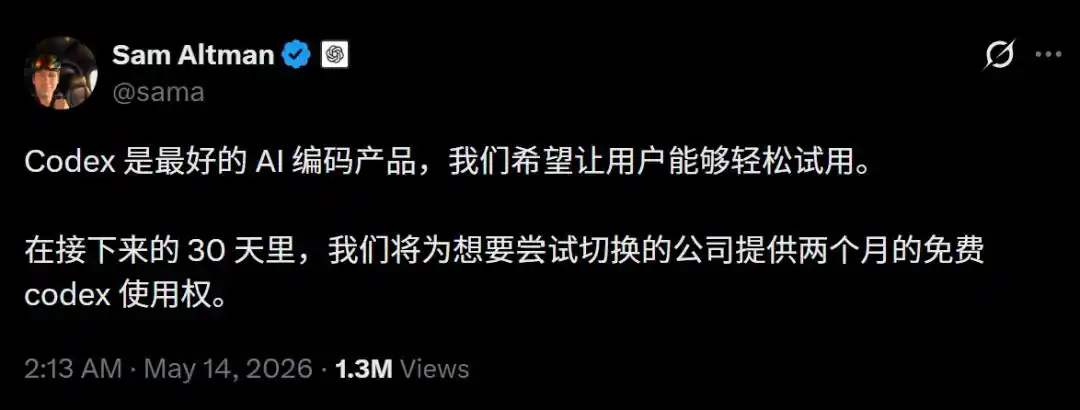
Потому что именно сегодня Олтман срочно запустил "двухмесячный бесплатный доступ к Codex" для компаний, пытаясь вернуть уходящих корпоративных клиентов с помощью стратегии низких цен.

За этим чувством тревоги стоят два жёстких козыря, созданных Anthropic. Первый — это брутальная эстетика модели биллинга, второй — эффект денежного станка от AI Agent.
SaaS умер? "Попользовательская" оплата породила цунами выручки в 45 миллиардов
Недавно Anthropic принял ошеломляющее решение, которое можно назвать попранием "заветов SaaS" — полностью отказаться от фиксированной абонентской платы и перейти на оплату по токенам.
Это, казалось бы, незначительное изменение вызвало ужасающее цунами в плане выручки!
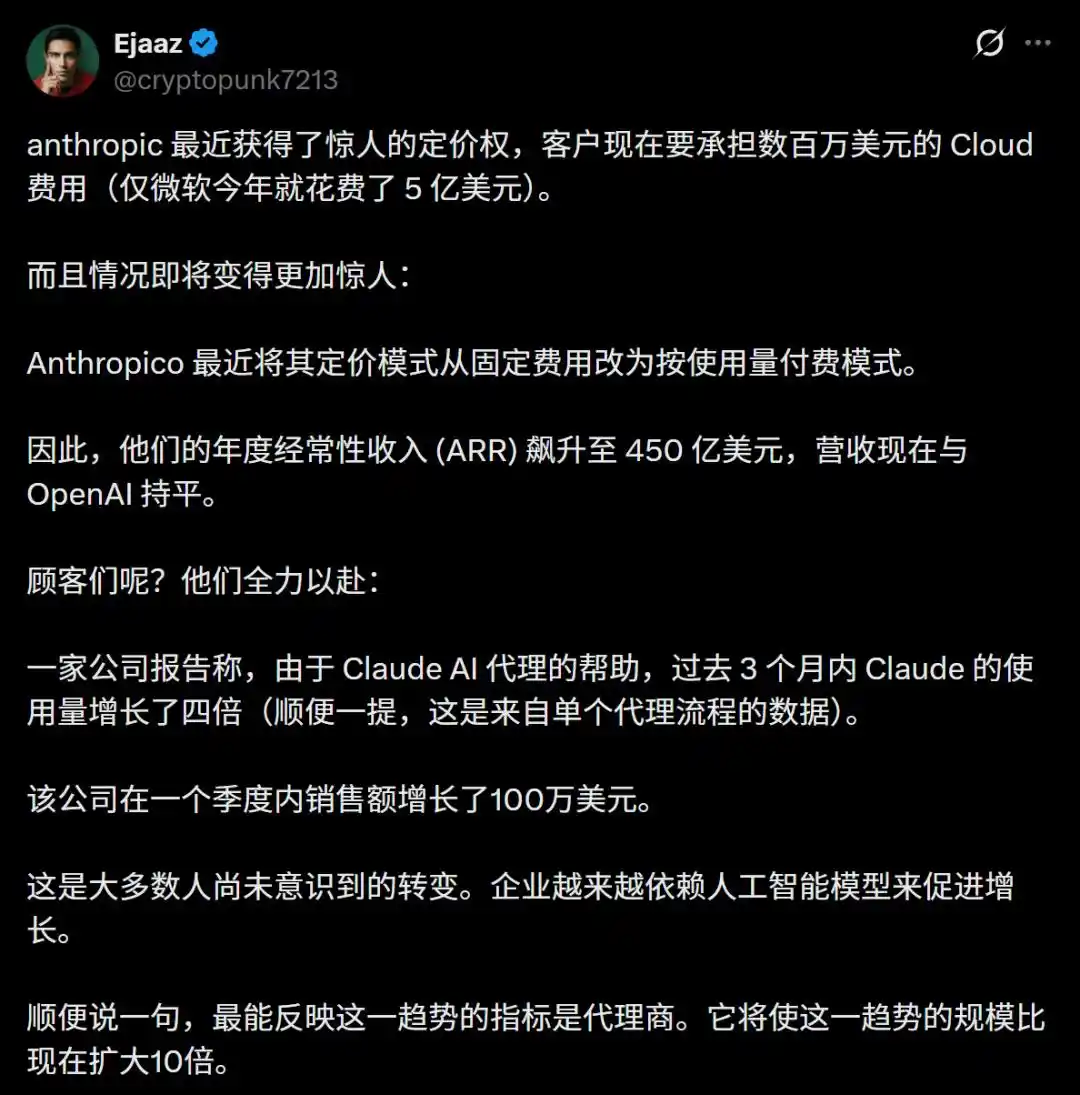
По данным информированных источников, годовой регулярный доход Anthropic взлетел до уровня 45 миллиардов долларов — ещё в конце прошлого года эта цифра составляла лишь треть от нынешней.
Почему компании готовы быть "оплачиваемыми по объёму"?
В традиционной модели SaaS — плати 30 долларов с человека в месяц, используешь ты или нет. Но в эпоху AI Agent модель больше не ждёт, когда сотрудник задаст вопрос, она стала "цифровым рабочим", работающим 24 часа в сутки.
Это означает, что право устанавливать тарифы полностью вернулось.
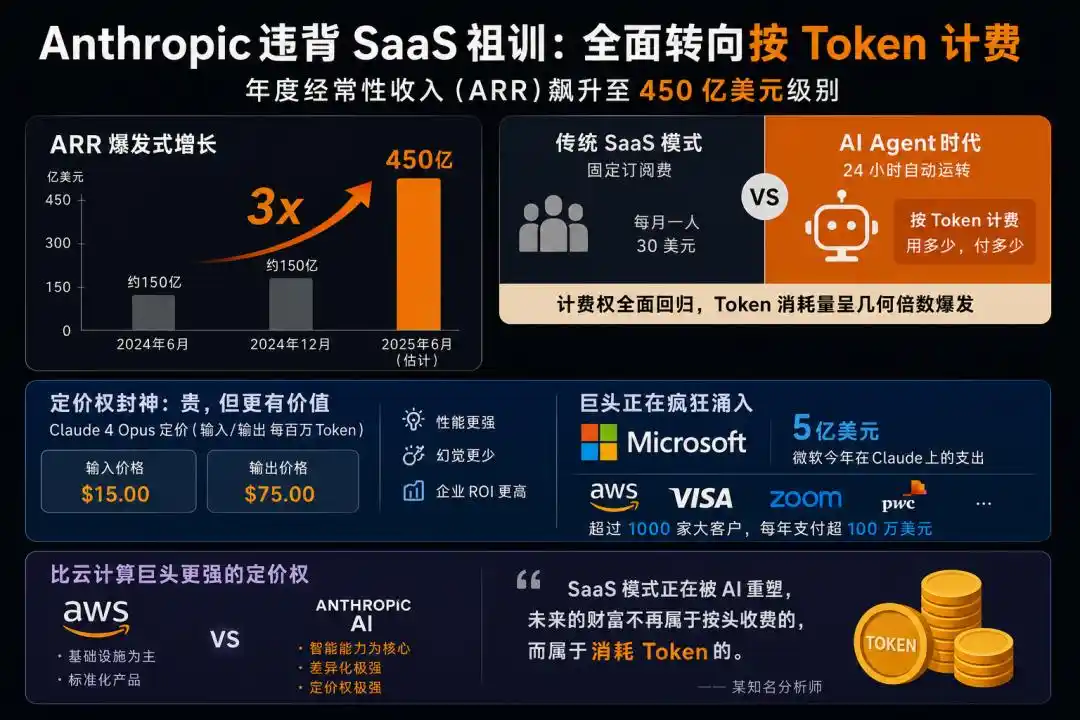
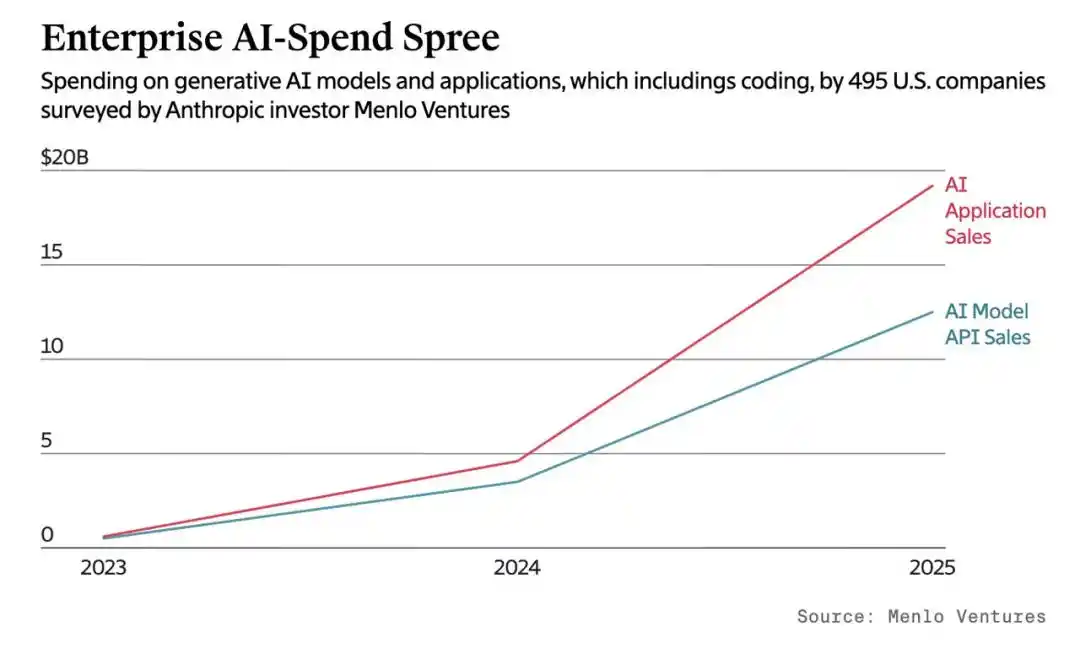
Когда ИИ начинает обрабатывать тысячи рабочих процессов, потребление токенов растёт в геометрической прогрессии.
Одновременно с этим право устанавливать цены у Anthropic начинает достигать божественных высот.
Даже несмотря на то, что модели Anthropic (такие как Claude 3.5/4.0) имеют чрезвычайно высокую стоимость, компании обнаруживают, что, пока ROI окупается, даже самые дорогие токены — это "дешёвая рабочая сила".
Итак, мы видим следующие сумасшедшие данные.
Например, Microsoft, у которой дома есть OpenAI, но в этом году расходы на Claude составили ошеломляющие 500 миллионов долларов.
Кроме того, гиганты активно присоединяются: по статистике, более 1000 крупных клиентов платят Anthropic более 1 миллиона долларов в год.
Эта модель "оплаты по объёму" дала Anthropic более сильное право устанавливать цены, чем у облачного гиганта AWS!
Неудивительно, что аналитики восклицают: "Модель SaaS трансформируется ИИ, будущее богатство принадлежит не тем, кто берёт плату с головы, а тем, кто потребляет токены".
AI Agent: "Суперработник", зарабатывающий 1 миллион за квартал
Если токены — это нефть, то AI Agent — это тот самый двигатель, который бешено потребляет топливо, но при этом производит колоссальную мощность.
Опыт гиганта IT-автоматизации Workato является воплощением этой трансформации.
Год назад Workato просто покупал своим сотрудникам аккаунты Claude для использования в качестве помощника.
Но за последние три месяца их команда начала бешено использовать Claude для создания Agent — одни Agent отвечали за сбор данных о расходах клиентов, другие — за автоматическое написание коммерческих предложений, третьи — за обновление базы данных Salesforce.
Результат ошеломляющий!
Только благодаря запуску одного рабочего процесса Agent вызовы Claude за квартал выросли в 4 раза.
Одновременно компания увидела реальный рост доходов. Этот Agent всего за один квартал напрямую принёс рост продаж компании на 1 миллион долларов.
"Это лишь верхушка айсберга", — вздыхает один из CIO. "Когда компании обнаруживают, что один Agent может заменить 5 продавцов и при этом иметь более высокий процент закрытия сделок, их зависимость от ИИ увеличится ещё в 10 раз".
"Holy Cow!" Рост, который чуть не довёл CIO до сердечного приступа
Однако эта прибыльная модель также принесла бизнесменам беспрецедентное давление.

Потому что Anthropic изменила корпоративную модель ценообразования с фиксированной абонентской платы на оплату по объёму использования токенов, одновременно запустив новый токенизатор, где количество токенов, потребляемых за один запрос, также увеличилось.
Два удара, наложившихся друг на друга, ударили по кошелькам клиентов.
Поскольку AI Agent работают автономно, иногда они могут даже "сойти с рельсов" (Go rogue).
В Workato однажды произошёл инцидент: Agent, разработанный сотрудником, из-за проблем с логикой кода вызвал циклические вызовы всего за один день, потратив токен-квоту, запланированную на целый месяц.
А в IT-провайдере Telaid глава информационной службы Скот ЛеВан недавно был шокирован счётом.
"Когда я увидел, что счета за Claude для 30 сотрудников утроились за 30 дней, моей первой реакцией было: Holy Cow (Боже мой)!"
У ServiceNow и Uber ситуация ещё хуже — они даже в первые месяцы года потратили весь годовой бюджет на ИИ.
Теперь CIO больше не просто следят за технологиями — им даже приходится назначать специальные команды, которые каждый день следят за счетами от Anthropic.
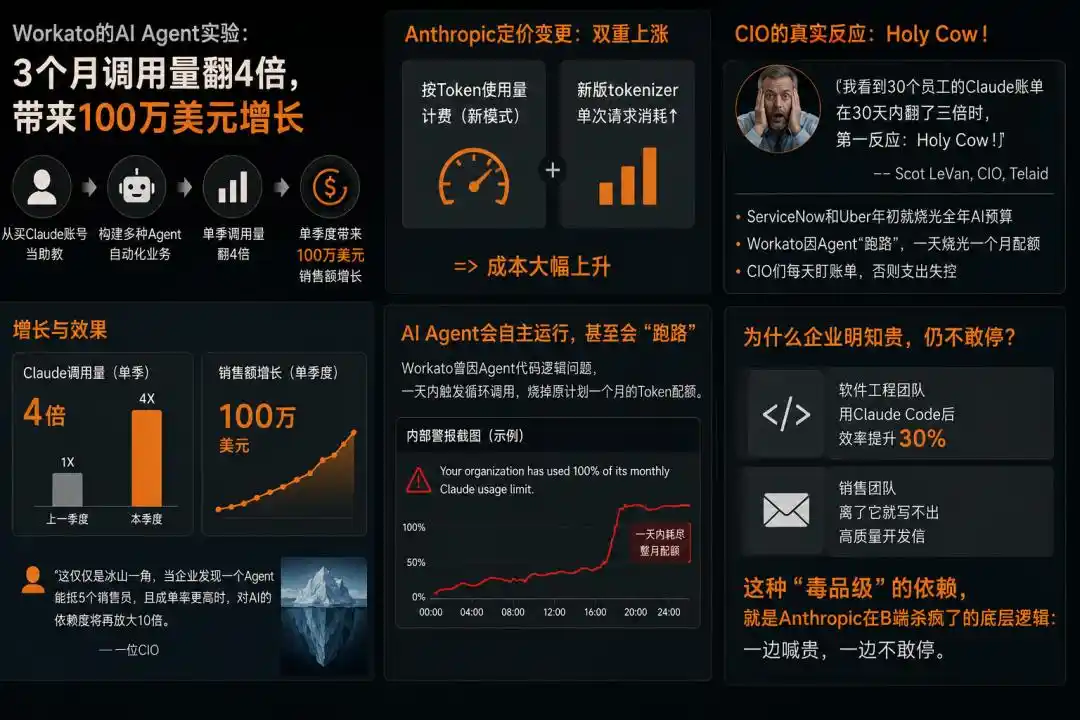
"Вы должны следить каждый день, иначе расходы выйдут из-под контроля", — говорит CIO ServiceNow Келли Ромэк.
Но именно в этом и заключается самая сильная сторона Anthropic: компании знают, что это дорого, знают, что это может взорвать бюджет, но они не смеют остановиться.
Причина проста: команды разработчиков ПО повысили эффективность на 30% после использования Claude Code, а отделы продаж не могут написать качественные коммерческие предложения без него.
Эта "наркотическая" зависимость — фундаментальная логика того, почему Anthropic безумно успешен на рынке B2B.
Компании жалуются на дороговизну, но не решаются остановиться.
Экономист Ramp: Три встречных ветра для Anthropic
Столкнувшись с этими данными, не только OpenAI подвергает сомнению методологию статистики Ramp, но даже сам экономист Ramp Харазиан занял многозначительную позицию.
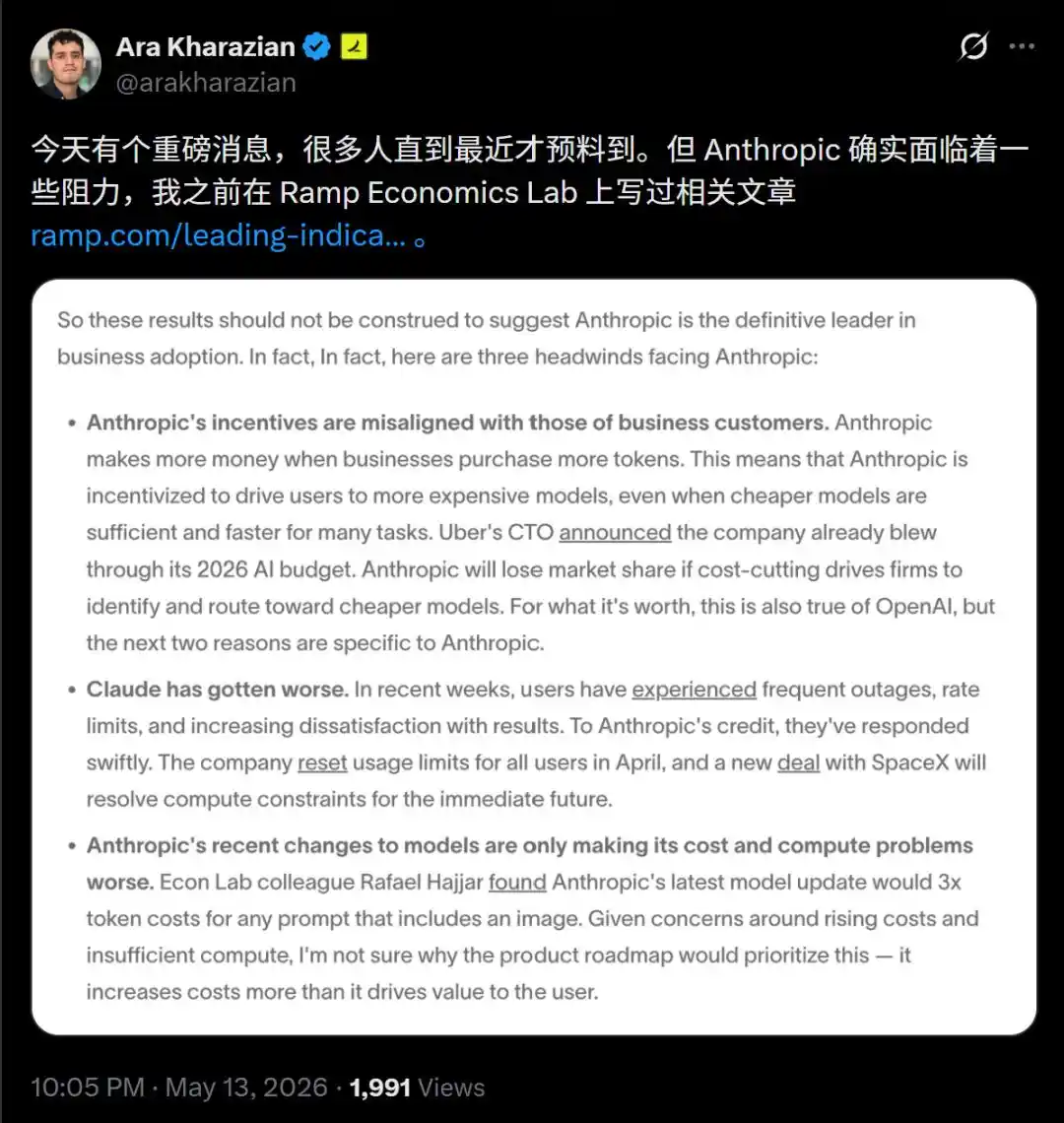
Он тут же написал в блоге, перечислив три встречных ветра, с которыми сталкивается Anthropic.
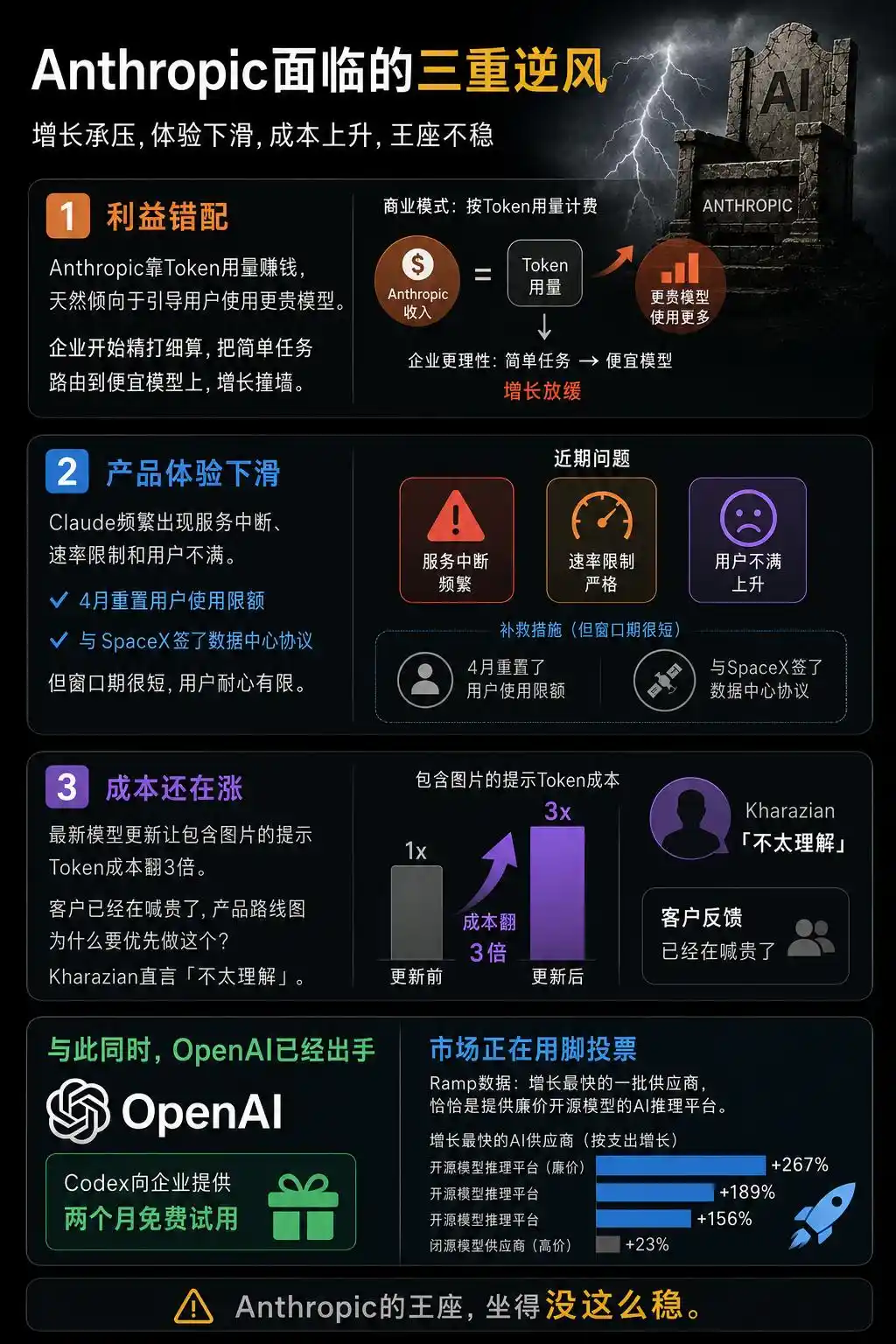
Первый: несоответствие интересов.
Anthropic зарабатывает на объёме использования токенов, что естественным образом склоняет их направлять пользователей на более дорогие модели. Когда компании начинают считать каждую копейку и направлять простые задачи на более дешёвые модели, рост упрётся в стену.
Второй: ухудшение пользовательского опыта.
За последние недели у Claude участились перебои в обслуживании, ограничения скорости и недовольство пользователей. Anthropic действительно исправляет ситуацию — в апреле сбросили лимиты использования пользователей, подписали соглашение о дата-центрах с SpaceX, но окно возможностей короткое.
Третий: затраты всё ещё растут.
Последнее обновление модели утроило стоимость токенов для промптов, содержащих изображения. Клиенты уже жалуются на дороговизну, почему в продуктовой дорожной карте это было приоритетом? Харазиан прямо заявил, что "не совсем понимает".
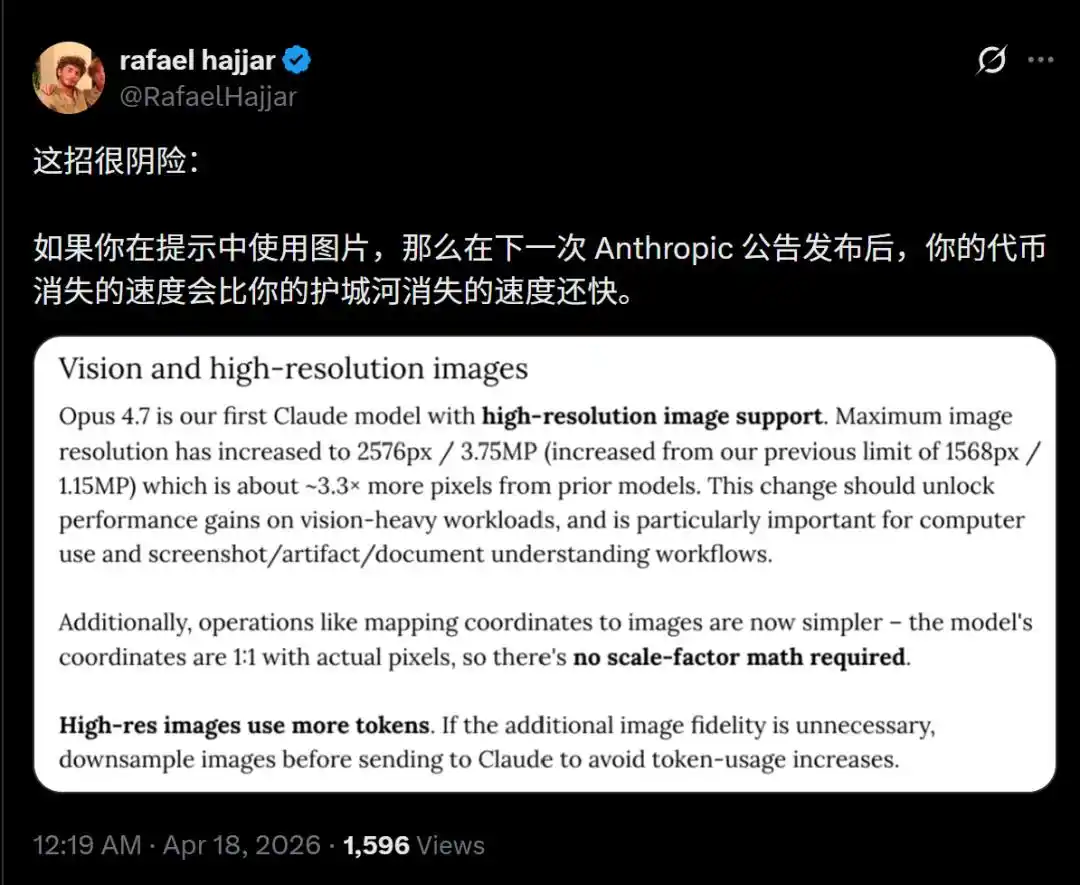
Экономист указал, что его коллега из Econ Lab Рафаэль Хаджар обнаружил, что последнее обновление модели Anthropic приводит к трёхкратному увеличению стоимости токенов для любого промпта, содержащего изображения.
Тем временем OpenAI уже нанёс удар.
Codex предлагает компаниям двухмесячный бесплатный пробный период. А собственные данные Ramp показывают, что среди поставщиков, которые растут быстрее всех в последнее время, как раз платформы для вывода ИИ, предлагающие дешёвые модели с открытым исходным кодом.
Трон Anthropic стоит не так уж прочно.
Смена власти на троне или перерыв в матче?
Если рассматривать этот отчёт в системе координат финала ASI: конкуренция между Anthropic и OpenAI переходит от "чья модель набирает больше баллов" к "кто сможет интегрироваться в основные рабочие процессы компаний".
Это совершенно другая арена.
Этот обгон Anthropic также официально отмечает вступление конкуренции больших моделей в "глубокие воды".
Без сомнения, первая половина матча больших моделей принадлежала потребительскому сегменту, где побеждали "ошеломляющим" выходом в свет, но вторая половина принадлежит корпоративному сегменту, где деньги зарабатываются на рабочих процессах.
Anthropic с отчётом о годовом регулярном доходе в 45 миллиардов долларов показал миру: ИИ больше не чёрная дыра, сжигающая деньги, а самый мощный денежный станок в реальном мире.
Однако, сколько корпоративных пользователей ещё испугает ошеломляющий бюджет затрат Anthropic? Как долго они ещё будут готовы платить?
Самый дорогой поставщик ИИ одновременно является и самым быстрорастущим поставщиком ИИ. Как долго может сохраняться это противоречие — это самые интересные данные на корпоративном рынке ИИ в ближайшие полгода.
Сейчас OpenAI не проиграл, но он действительно столкнулся с беспрецедентно сильным соперником.
Эта война о том, "кто является королём корпоративного ИИ", только начинается.
Ссылки:
https://x.com/arakharazian/status/2054563750548492549
https://www.theinformation.com/articles/anthropic-flexes-pricing-power-customers-willingly-eat-cost?rc=bfliih
Эта статья из официального аккаунта WeChat "New Zhiyuan", редактор: Aeneas