AI Sweeps Everything, Why Are Crypto Builders the Most Secure?

marsbitОпубликовано 2026-03-20Обновлено 2026-03-20

Введение

In an era where AI is disrupting industries and causing widespread job displacement, crypto builders are uniquely positioned to thrive. While AI threatens to automate many white-collar and coding jobs, the crypto sector has forged individuals with exceptional adaptability, cross-domain expertise, and rapid learning capabilities. The real issue isn’t that crypto is dying—it’s that AI is commoditizing knowledge-based work globally. True value in AI is captured by infrastructure players like NVIDIA and OpenAI, not by those simply wrapping AI models. In contrast, crypto offers structural advantages: its community operates at high information density, tracks multiple innovation frontiers, and builds non-commoditizable tech like zero-knowledge proofs and quantum-resistant cryptography. Major players like Stripe, BlackRock, and Cloudflare are investing heavily in crypto infrastructure, signaling real-world demand. The future remains uncertain, but those who build through uncertainty—as seen in past technological revolutions—will define the next era. Crypto builders, equipped with a unique skill set and mindset, are among the best prepared to navigate and lead in the age of AI.

Written by: YQ

Compiled by: Chopper, Foresight News

A current point of debate on Crypto Twitter is: 'Should I stay, or should I go?' The question itself is wrong; it assumes there is a safe place to go, but in reality, there is none.

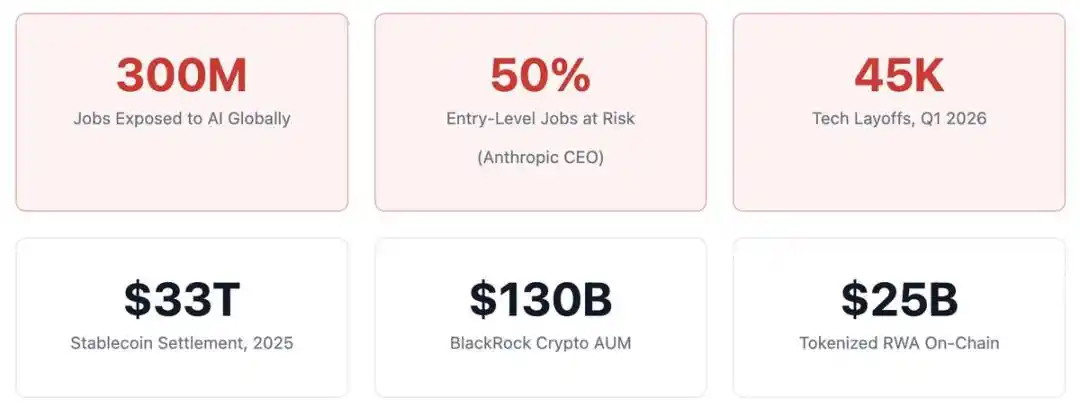
Goldman Sachs states that 300 million jobs globally will be impacted by AI. The CEO of Anthropic claims that 50% of junior white-collar jobs will disappear within five years. Just in Q1 2026, 45,000 tech workers were laid off.

This is not a problem unique to the crypto industry; it is the Fourth Industrial Revolution arriving at everyone's doorstep.

The panic you feel is real and widespread. And those who find the next direction to build will define the next thirty years.

What I see is this: the crypto industry hasn't made you fragile; it has forged you into the fastest-learning, most cross-domain capable, and most adaptable builders on the planet. The real question is: will you use this ability, or will you discard it to chase a sense of security that simply doesn't exist.
Confronting the Real Problem

The statement 'Crypto is dead for builders' had some merit in 2022. It described a market that no longer exists today.

Behind the same anxiety lies a more brutal, yet more universal truth: AI is commoditizing all work based on existing knowledge and pattern matching.

This is the real fear, not 'crypto has no use cases.' What is truly unsettling is that Claude Code, Codex, Gemini Code Assist are already so powerful that most junior software development roles are being replaced.

Stanford University research confirms: since the launch of ChatGPT, the employment rate for developers aged 22-25 has fallen by 20%. 60% of companies plan to replace employees with AI in 2026. The marginal cost of a competent code agent is approaching zero.

This is not a cryptocurrency problem. This is a problem facing all of human civilization, and it is impacting every industry simultaneously.
Three Types of People Make Money, The Rest Panic

Stripping away the hype, who is *really* making money from AI right now?

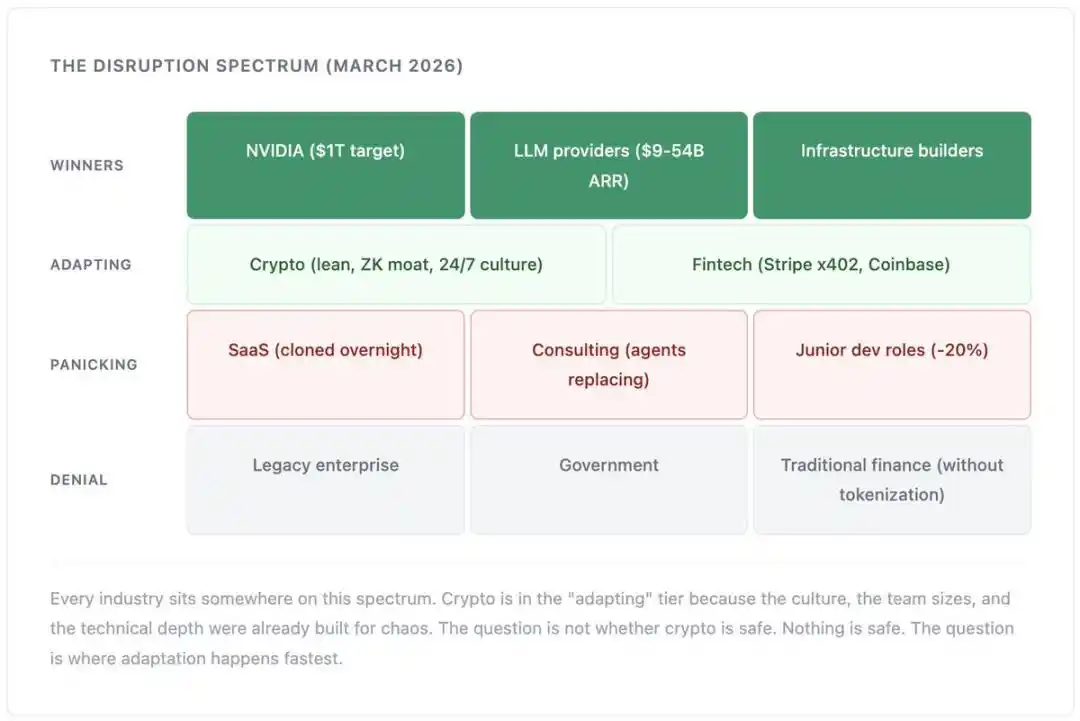
First Layer: NVIDIA. NVIDIA's annual revenue is $216 billion; Jensen Huang aims for $1 trillion in annual AI chip revenue by 2027. This is the classic 'selling shovels' logic, proven effective time and again in every transformation.

Second Layer: Major model vendors. OpenAI's annualized revenue is $12.7 billion, targeting $54 billion by 2027. Anthropic's annual recurring revenue is approaching $9 billion, targeting $20-26 billion in 2026. They sell API calls, have recurring revenue, and real profits.

Third Layer: Fearmongers. Short video creators, course sellers, make money by telling you 'AI will replace you.' The content is fear, the product is a $99 course, with extremely high profit margins.

Everyone else is searching for a moat, but finding none. A good idea gets copied by hundreds of companies within days of launch. If the profits are attractive enough, OpenAI, Anthropic, or Google will step in and launch their own version.

Manus was the first general AI agent, then Claude launched Cowork, followed by OpenClaw open-sourcing the entire concept, garnering 219k stars on GitHub. The window from 'innovation' to 'commoditization' is now measured in weeks.

A dangerous signal: if your moat is just 'a nice interface wrapped around a large model,' then you have no moat. The marginal cost of wrapping models is approaching zero. The real barrier in the AI field lies in controlling the infrastructure that large models rely on, not piling features on top of them.

Why Crypto Builders Actually Have a Unique Advantage

Set aside shallow narratives like 'crypto is dead' and ask: how much better off is any other field?

Compared to SaaS? All features will be copied by AI overnight. Compared to consulting? Agents are replacing analysts. Compared to junior dev roles? Employment has fallen 20% in two years.

Crypto builders possess structural advantages that other tech fields lack.
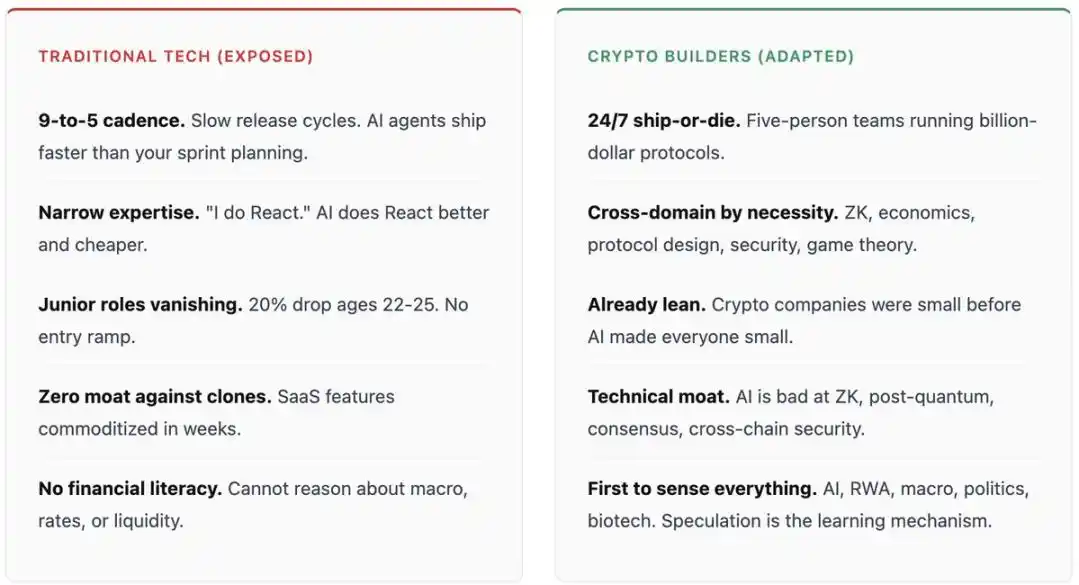
One point is particularly important: the crypto crowd has the highest information density in the tech circle. They track cryptography, distributed systems, macroeconomics, geopolitics, oil, gold, AI, biotech, longevity tech, SpaceX, and all cultural hotspots.

Why? Because they are betting on it. Meme coins, prediction markets, new token offerings... Speculation is not a flaw; it is the fastest learning mechanism humans have invented. By the time traditional industries catch on to a trend, crypto builders have already built the infrastructure for it and moved on to the next big thing.

And technical barriers aren't just talk; they are measurable. The Ethereum Foundation has elevated post-quantum cryptographic security to its highest strategic priority. Vitalik's 'Ethereum Simplification' roadmap places 'full quantum resistance' at its core. Zero-knowledge proof systems, Poseidon hash functions, lattice-based cryptography...

Claude Code can easily crush CRUD apps, but it's far less effective when writing recursive SNARK circuits or designing validator penalty mechanisms with game-theoretic guarantees.

The Fact Everyone is Ignoring

Watch actions, not sentiment. Those actually doing things are giving an answer completely opposite to the doomsayers on Crypto Twitter with their actions.
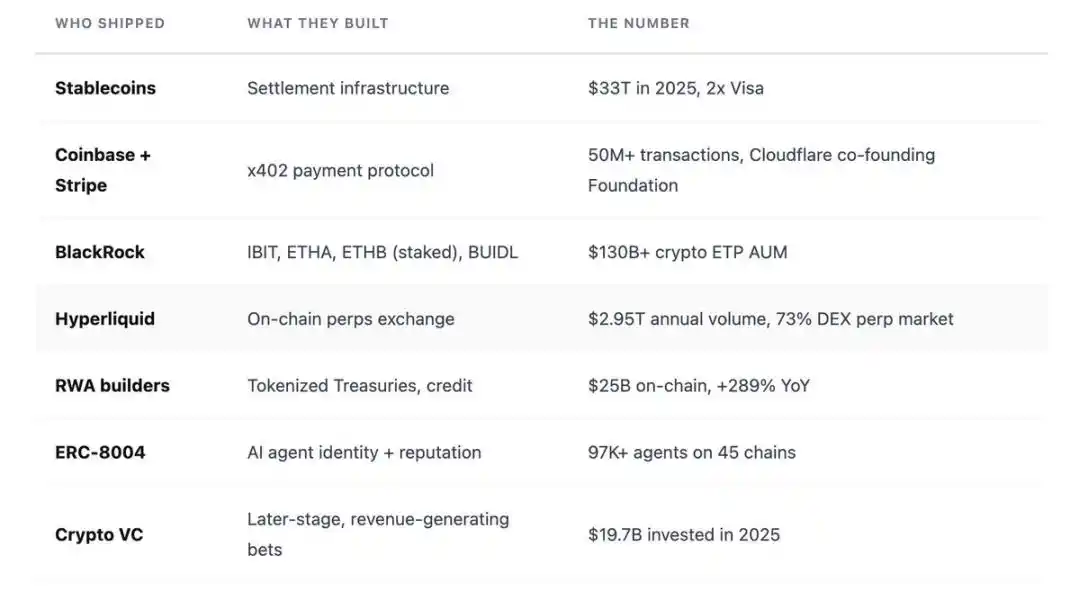
Stripe won't integrate a dying protocol. BlackRock won't issue a staked ETH ETF in a dead market. Cloudflare won't co-found a payments foundation for an industry with no future.

Hype is not demand; adoption is demand. These giants are voting with their feet.

Pandora's Box is Open

Sam Altman cannot predict what GPT-6 will bring. Dario Amodei built a lab focused on safety yet still admits half of junior jobs will disappear. Sundar Pichai reorganized all of Google to pivot entirely to AI.

The people building these technologies don't know what the future holds. No one knows.

Only three things are certain:

  • The box won't close. AI will get stronger, code agents will get better, white-collar automation will accelerate. We are not going back to an era of all hand-written code. The question is not how to escape, but how you position yourself.
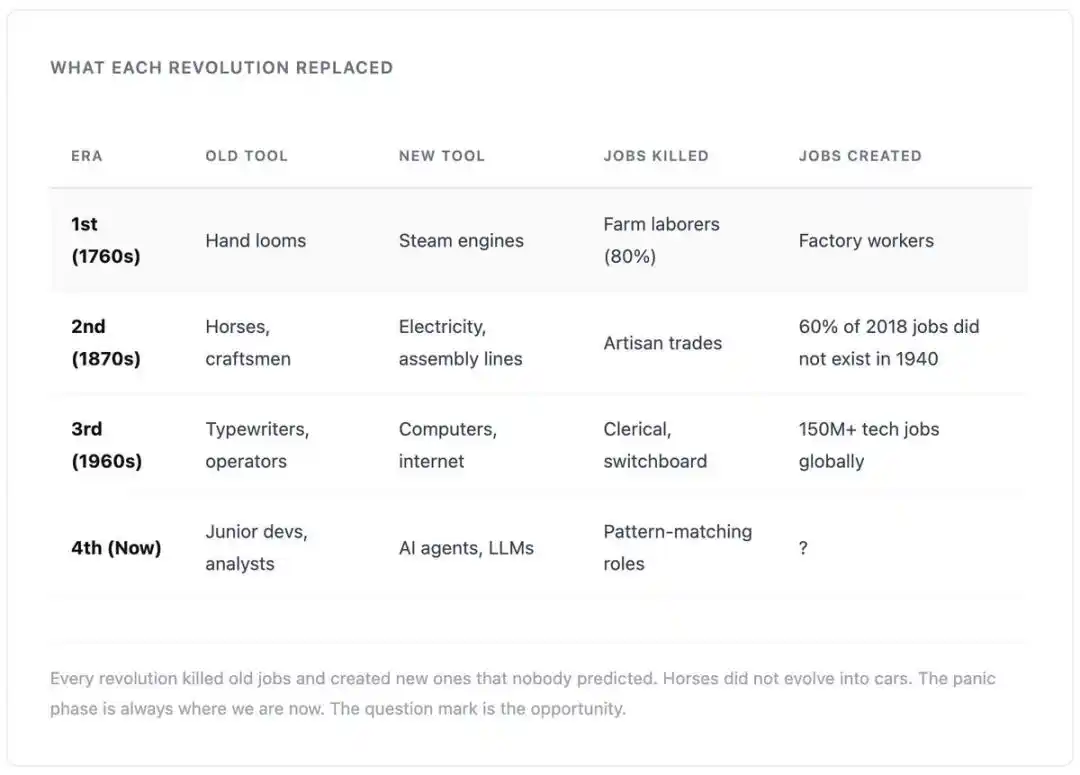
  • New tools create new professions. In 1995, no one foresaw 'social media manager.' In 2005, no one foresaw 'cloud architect.' Today, no one can predict the AI-native professions of 2030. But every industrial revolution has created more jobs than it destroyed, without exception.
  • Builders during the panic will dominate the next era. Amazon was born amidst the skepticism of the dot-com bubble; Stripe was founded when payments were 'already solved'; Coinbase started when Bitcoin was a joke.

When everyone feels 'now is not the time to build,' it is precisely the signal that it is the best time to build.
Your Choice

For doing old things, this is the worst of times. For trying new things, this is the best of times.

Don't leave the industry just because Crypto Twitter is full of anxiety. *Everyone* is anxious. Financial analysts are anxious. SaaS founders are anxious. Junior engineers at Google are anxious.

The difference is: the crypto industry has endowed you with a set of capabilities most builders don't have: all-weather cross-domain pattern recognition, a permissionless innovation sandbox, lean teams that can launch quickly without approval, and the community that absorbs new technologies the fastest globally.

Follow your genuine interest. Not because it's a comforting platitude, but because in a world where no one knows the future, the only reliable signal is whether you genuinely care about this thing, whether you are willing to persevere through difficult times.

And difficult times will come for everyone, for every industry.

Pandora's box is open; it cannot be closed. Pick up the new tools and move to the frontier. Those who persist in building amidst the panic will ultimately define the next era.


Связанные с этим вопросы

QWhy does the article argue that crypto builders are uniquely positioned during the AI revolution?

AThe article argues that crypto builders possess structural advantages such as high information density, cross-domain adaptability, and experience in fast-paced, permissionless innovation. They are skilled in complex areas like cryptography and distributed systems, which are less easily automated by AI compared to routine coding tasks.

QAccording to the article, what are the three groups currently profiting from AI?

AThe three groups profiting from AI are: 1) Nvidia (selling AI chips), 2) Major model manufacturers like OpenAI and Anthropic (selling API calls with recurring revenue), and 3) Those selling fear, such as influencers and course sellers capitalizing on AI anxiety.

QWhat is the core fear that the article identifies, beyond the crypto-specific concerns?

AThe core fear identified is that AI is commoditizing all work based on existing knowledge and pattern matching, threatening to replace a vast number of white-collar and junior developer positions across all industries, not just crypto.

QWhat evidence does the article provide to counter the narrative that 'crypto is dead' for builders?

AThe article points to actions from major institutions like Stripe integrating crypto protocols, Blackrock issuing a staking ETH ETF, and Cloudflare co-founding a payment foundation as evidence of real-world demand and long-term confidence, contradicting the superficial narrative.

QWhat is the article's final advice to builders feeling anxiety about the future?

AThe article advises builders to leverage the unique skills they've developed in crypto, such as rapid learning and adaptation, and to continue building new things based on genuine interest, as periods of widespread panic are historically the best times for innovation and defining the next era.

Похожее

«Летняя пила» продолжается: пробой $67 000 станет началом роста биткоина

Цена биткоина продолжает консолидироваться в диапазоне $58 000–$67 000 с начала июня. 1 августа актив снизился до $62 217. Аналитики расходятся в краткосрочных прогнозах: некоторые, как Crypto Candy, ожидают тестирования уровня $60 000 или ниже, пока цена находится под $66 000. Другие, как Jelle, видят в боковом движении «летнюю пилу» и придерживаются стратегии усреднения. Ключевым для определения дальнейшего направления считается уровень $67 000. По мнению Daan Crypto Trades, его пробой необходим для выхода из затянувшейся паузы. Roman полагает, что уверенный пробой с объемом может быстро запустить рост к $70 000–$80 000 и выше. С долгосрочной точки зрения, макроаналитик Герт ван Лаген рассматривает текущую фазу как накопление в рамках масштабной формации «чаша с ручкой». Он отмечает, что долгосрочные держатели не спешат продавать актив, о чем говорит показатель NUPL. Таким образом, рынок находится в решающей фазе, где пробой либо поддержки $60 000, либо сопротивления $67 000 задаст тренд на ближайшее будущее.

cryptonews.ru14 мин. назад

«Летняя пила» продолжается: пробой $67 000 станет началом роста биткоина

cryptonews.ru14 мин. назад

На неделе с 3 по 9 августа стоит обратить внимание: Закон CLARITY, возможно, будет поставлен на голосование в Сенате; SpaceX и Circle опубликуют финансовые отчеты

**Важные события на следующей неделе (3–9 августа 2026 г.)** **Ключевые даты:** * **3 августа:** Публикация отчетов American Bitcoin за Q2. Полное закрытие сервисов DeFi-трекера Zapper и кошелька Ctrl Wallet. LayerZero прекратит поддержку ретрансляторов v1. Upbit прекратит торговлю токенами AQT и AERGO. * **4 августа:** Публикация финансовых отчетов SpaceX и Hut 8 за второй квартал 2026 года. * **5 августа:** Circle опубликует отчет за Q2. Начинается предварительное ценовое консультирование для IPO компании Unitree Tech (Ушу Цзишу) в Китае. * **6 августа:** Первая крупная разблокировка акций SpaceX — до 12% от общего капитала. * **7 августа:** Выход важных данных по рынку труда США (отчет о занятости за июль). Предельный срок для Сената США — получить 60 голосов в поддержку **Закона CLARITY** (билль о регулировании криптовалют и этике). Ожидается выпуск Grok 4.6 от xAI. * **8 августа:** Начало принудительной подачи сигналов в сети Bitcoin согласно предложению BIP-110. * **На неделе (дата уточняется):** Ожидается голосование полного состава Сената США по **Закону CLARITY**. Выход нового релиза XRP Ledger (v3.3.0) с новыми функциями, такими как конфиденциальные данные и пакетные транзакции. **Основные темы недели:** корпоративная отчетность (SpaceX, Circle), регулирование (CLARITY Act), рыночные события (разблокировка акций SpaceX, отчет по занятости в США) и обновления в технологиях блокчейна.

marsbit53 мин. назад

На неделе с 3 по 9 августа стоит обратить внимание: Закон CLARITY, возможно, будет поставлен на голосование в Сенате; SpaceX и Circle опубликуют финансовые отчеты

marsbit53 мин. назад

Акции упали сильнее, чем криптовалюты. Куда делись деньги?

Автор: Кэти,白话区块链 28-29 июля, Сеул. Индекс Kospi впервые в истории Южной Кореи два дня подряд срабатывал на приостановку торгов. Первый день: падение на 10.84%, второй день: -5.98%. SK Hynix, крупнейшая по весу акция, потеряла за два дня около 23%. Падение Nasdaq, глобальный обвал акций полупроводниковых компаний, массовые потери на кредитных ETF. За два дня откат Kospi от пика июня достиг 40%. Июль угрожает стать худшим месяцем в истории индекса. Все ранее перегретые сделки были перевернуты, как стол. Это не локальный негатив по одной акции, а глобальное принудительное снижение кредитного плеча. Самое парадоксальное: на этот раз больше всего на «криптовалютное» падение похожи именно акции. Спот: прибыль SK Hynix за второй квартал достигла рекордных 60.54 трлн вон, но из-за несоответствия прогнозу в 64.22 трлн акция подверглась жесткой распродаже. Хорошие новости не растут — это уже плохая новость. Производные инструменты пострадали еще сильнее. Кредитный ETF с плечом 2x на SK Hynix упал на 83% с пика, потеряв в стоимости более 1 трлн гонконгских долларов. Эмитент был вынужден изменить правила продукта. Неожиданно: Биткоин, известный высокой волатильностью, с 1 июля вырос почти на 15%, в то время как акции демонстрировали «криптовалютную» динамику. Это не паника всего рынка, а точечный сброс перегретых позиций. Триггеры: отчет SK Hynix и фактор Китая — крупнейшее IPO ChangXin Memory, направленное на расширение производства DRAM, создало конкуренцию для нарратива о дефиците памяти для ИИ. Дополнительное давление — нормализация политики Банка Японии и потенциальное сокращение кэрри-трейда в иенах. Эксперт Дэн Найлз считает, что это не крах логики ИИ, а «краткосрочное дно», вызванное принудительными ликвидациями мелких инвесторов и хедж-фондов. Промышленная логика не мертва — умерло кредитное плечо. Перетекли ли деньги из акций в Биткоин? Нет. «Устойчивость» Биткоина объясняется тем, что он уже прошел фазу распродаж раньше. В мае-июне американские спотовые BTC-ETF зафиксировали рекордный отток средств. К июлю продавать было уже нечего. Небольшой приток в июле — лишь частичное восстановление. Настоящие «защитные» деньги пошли в золото. Коэффициент корреляции между Биткоином и золотом упал до -0.88. Нарратив о «цифровом золоте» разбит: золото — для сохранения капитала, Биткоин — для роста. Деньги придут в криптоактивы при выполнении трех условий: смягчение глобального давления на ликвидность; снижение ставок ФРС без рецессии; принятие закона CLARITY, устраняющего регуляторные неопределенности. Пока Биткоин — не убежище, а актив, который раньше других прошел очистку. Но когда шторм утихнет и глобальный капитал снова начнет распределяться, Биткоин займет место в первых рядах очереди. Место уже зарезервировано.

marsbit53 мин. назад

Акции упали сильнее, чем криптовалюты. Куда делись деньги?

marsbit53 мин. назад

Диалог с Далио: Сейчас мы находимся в пузыре ИИ, 1% моего инвестиционного портфеля — это биткоин

Источник: интервью Рэя Далио, основателя Bridgewater Associates, для подкаста "The Diary Of A CEO". Далио, предсказавший кризис 2008 года, обсуждает "большой цикл" — концепцию, охватывающую долговые проблемы, растущее неравенство и геополитические сдвиги. Он указывает, что текущий ажиотаж вокруг ИИ демонстрирует классические признаки пузыря, который может лопнуть из-за высокой долговой нагрузки, роста процентных ставок и чрезмерной эмиссии акций, что способно привести к рецессии. Для защиты личного капитала в неопределенные времена Далио советует диверсификацию: вместо хранения наличных инвестировать в акции, золото, облигации. Сам он держит около 1% портфеля в биткоине, считая его "твердыми деньгами", но предпочитает физическое золото из-за его статуса резервного актива и независимости от технологических рисков. Говоря о влиянии ИИ, Далио отмечает, что технология заменяет не только физический труд, но и элементы мышления, что увеличит разрыв между капиталом и трудом. Ключевыми останутся человеческие качества — эмоции и интуиция, а успеха добьются те, кто научится работать в партнерстве с ИИ. На геополитической арене, по его мнению, мир движется к регионализации с центрами в виде США и Китая. Вовлечение США в конфликты, подобные иранскому, обнажает снижение их абсолютного влияния. Внутренние вызовы, такие как дебаты о налогах на богатство, риск капитального бегства и низкая производительность, также ставят под вопрос стабильность традиционных держав в текущей фазе цикла.

marsbit4 ч. назад

Диалог с Далио: Сейчас мы находимся в пузыре ИИ, 1% моего инвестиционного портфеля — это биткоин

marsbit4 ч. назад

7.2 трлн вон за один день: иностранные инвесторы установили рекорд чистых покупок в пятницу! Уолл-Стрит: встречный ветер в плане ликвидности на южнокорейском рынке уже утих

Капиталы возвращаются на южнокорейский рынок акций. 31 июля иностранные инвесторы осуществили чистые покупки акций KOSPI на рекордные 7,2 трлн вон за один день, что стало самым высоким показателем в истории. По данным Citigroup, эта цифра знаменует собой кардинальный разворот после месяцев масштабного оттока средств нерезидентов. В июле чистые продажи иностранными инвесторами значительно сократились до 9,8 трлн вон по сравнению с 48,4 трлн и 44,5 трлн вон в июне и мае соответственно. Одновременно внутренние пенсионные и инвестиционные фонды в июле вернулись к чистым покупкам на 1,0 трлн вон. Дополнительным фактором снижения волатильности стали новые правила Комиссии по финансовым услугам (FSC), ужесточившие с 31 июля доступ розничных инвесторов к ETF с плечом на отдельные акции. После введения норм торговый оборот таких инструментов упал примерно вдвое. Citigroup сохраняет целевую точку для KOSPI на уровне 10000 пунктов, отмечая ослабление давления со стороны движения капиталов. Аналитики видят поддержку рынку в устойчивости фундаментальных показателей сектора чипов памяти, низких оценках KOSPI, сильной экономике и благоприятной политике властей, включая возможные меры по поддержке ликвидности.

marsbit4 ч. назад

7.2 трлн вон за один день: иностранные инвесторы установили рекорд чистых покупок в пятницу! Уолл-Стрит: встречный ветер в плане ликвидности на южнокорейском рынке уже утих

marsbit4 ч. назад

Торговля

Спот
活动图片




