3 июня IT-сектор Индии обвалился.
TCS рухнул на 9%, Infosys — на 4,3%, Wipro — на 3,7%. Индийский IT-индекс за один день упал на 5,8%, что стало максимальным показателем за 4 месяца.
Не из-за провала в отчетности, не из-за резких изменений в политике. Панику на рынке вызвали всего два слова: ИИ.
За последний год всеобщее внимание было приковано к США и Китаю — на сцену вышли OpenAI, Anthropic, DeepSeek. Но первый удар искусственного интеллекта пришелся по Индии.
Если ИИ действительно может писать код, проводить тестирование, составлять документацию, обрабатывать запросы клиентов, то что произойдет со страной, которая больше всех в мире зависит от «продажи программистов»?
Индия — это ответ.
Несколько отраслевых экспертов рассказали Pencil News: эта драматическая перемена резко ускорилась во второй половине 2025 года, ее символом стало появление агентного ИИ. ИИ может помочь человеку выполнить 70-80% работы по созданию SaaS-продукта.
AI-программистская компания Kouding Intelligence, привлекшая три раунда финансирования, сообщила Pencil News: «Влияние ИИ-программирования на экономику IT-аутсорсинга — не просто эффект, а, возможно, „уничтожение“».
01
30 лет национальной судьбы зависели от строки кода
Одна индустрия кормила Индию 30 лет.
Многие не знают, что самый прибыльный бизнес в Индии — не производство и не интернет. Это IT-аутсорсинг.
Согласно данным Ассоциации программного обеспечения и услуг Индии (NASSCOM), в 2025 финансовом году общий доход технологического сектора Индии достиг около 282,6 млрд долларов (около 2 трлн юаней), из которых доход от IT-услуг составил около 137 млрд долларов, то есть почти половину от всей отрасли.
Что еще важнее — экспорт. В 2025 финансовом году экспортный доход технологического сектора Индии достиг 224 млрд долларов, что составляет почти 80% от общего дохода.
Что это значит? Проще говоря, один из самых прибыльных бизнесов Индии — это работа на американские и европейские компании.
Генеральный директор Kedichuhai Луань Тянь раскрыл суть: «Аутсорсинг программного обеспечения — это, по сути, „продажа людей“. Оплата идет за головы, за человеко-часы, очень похоже на строительную отрасль».
За последние 30 лет Индия почти переписала свою национальную судьбу благодаря этой отрасли. Американским компаниям нужно разрабатывать ПО, европейским банкам — обслуживать системы, глобальным компаниям из списка Fortune 500 — цифровая трансформация. Что делать? Отдать работу Индии, а Индия организует тысячи инженеров для ее выполнения.
Так сложилась классическая модель: чем больше клиентов, тем больше проектов, тем больше инженеров, тем выше доход.
Сегодня несколько крупнейших индийских IT-сервисных компаний являются представителями именно этой модели.
В 2025 финансовом году годовой доход TCS превысил 30 млрд долларов, численность сотрудников приблизилась к 600 тысячам человек; годовой доход Infosys составил около 19,3 млрд долларов, сотрудников — более 320 тысяч; годовой доход Wipro — около 10,5 млрд долларов, сотрудников — более 230 тысяч.
Только у этих трех компаний работает более 1,15 миллиона сотрудников.
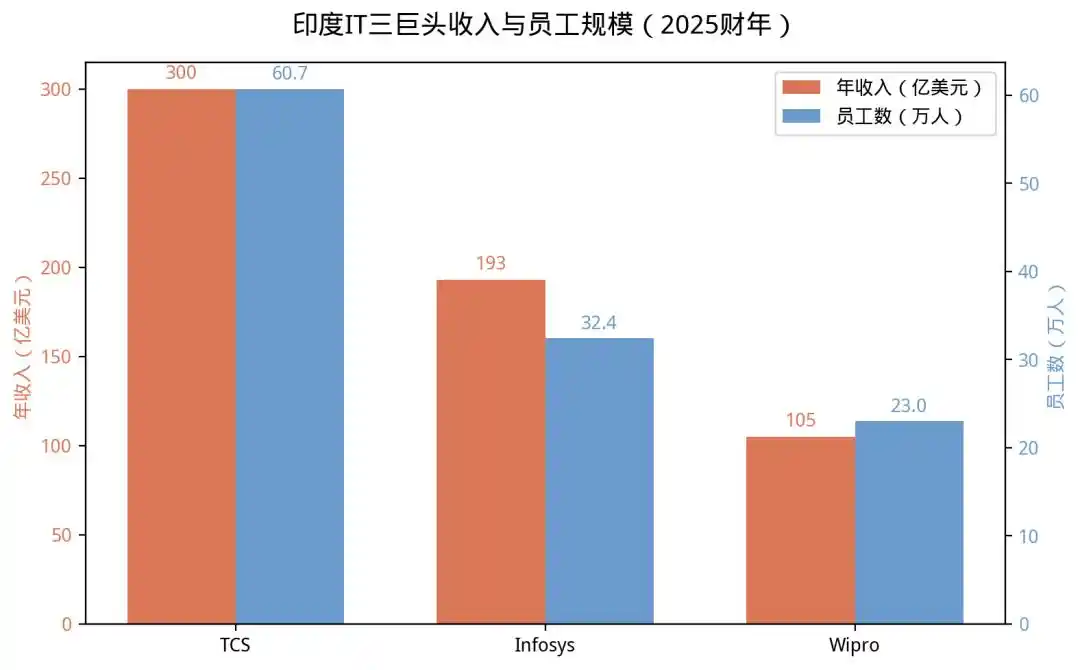
Доход и численность сотрудников трех индийских IT-гигантов (2025 фин. год) Источник: NASSCOM
Что еще важнее, логика роста этих компаний долгое время была единообразной: нанять больше инженеров, взять больше проектов, заработать больше дохода. Десятилетиями одним из ключевых показателей для оценки индийских IT-компаний на рынке капитала была даже не способность к ИИ, а количество сотрудников.
Согласно данным Reuters, масштаб индийской IT-индустрии достиг примерно 283 млрд долларов. Многие международные инвесторы даже называют Индию: «Мировой бэк-офис».
Но эта логика меняется. Ключевой фактор связан с ИИ: бизнес IT-аутсорсинга разрушается ИИ-программированием.
Су Вэнь сказал: «Новые технологии редко убивают напрямую на существующих рынках. Чаще они делают так: на растущих рынках вы просто не получаете права на участие. Как человек под баскетбольным кольцом, который только и делает, что ловит мяч, — сейчас такая должность еще есть? Как бы хорошо вы ни ловили, это бессмысленно».
02
Падение на 5,8% за день: капитал голосует ногами
Поэтому рынок капитала начал беспокоиться об одном.
В феврале этого года индийский IT-сектор за неделю потерял 22,5 млрд долларов (около 1,6 трлн юаней) рыночной капитализации. Тогда рынку это еще казалось чрезмерной реакцией. Но к июню паника вернулась.
3 июня индийский IT-индекс рухнул на 5,8% за один день, что стало максимальным падением за 4 месяца; крупнейший индийский экспортер программного обеспечения TCS обвалился на 9%, Infosys упал на 4,3%, Wipro — на 3,7%.

Штаб-квартира TCS Источник: Forbes India
Еще более важно то, что это уже не единичный случай. По состоянию на начало июня 2026 года индийский IT-индекс с начала года упал в совокупности на 22%; а за весь 2025 год он уже упал на 26%. Другими словами, этот когда-то звездный сектор, поддерживавший экономический рост Индии, уже второй год подряд становится одним из худших в рыночных показателях.
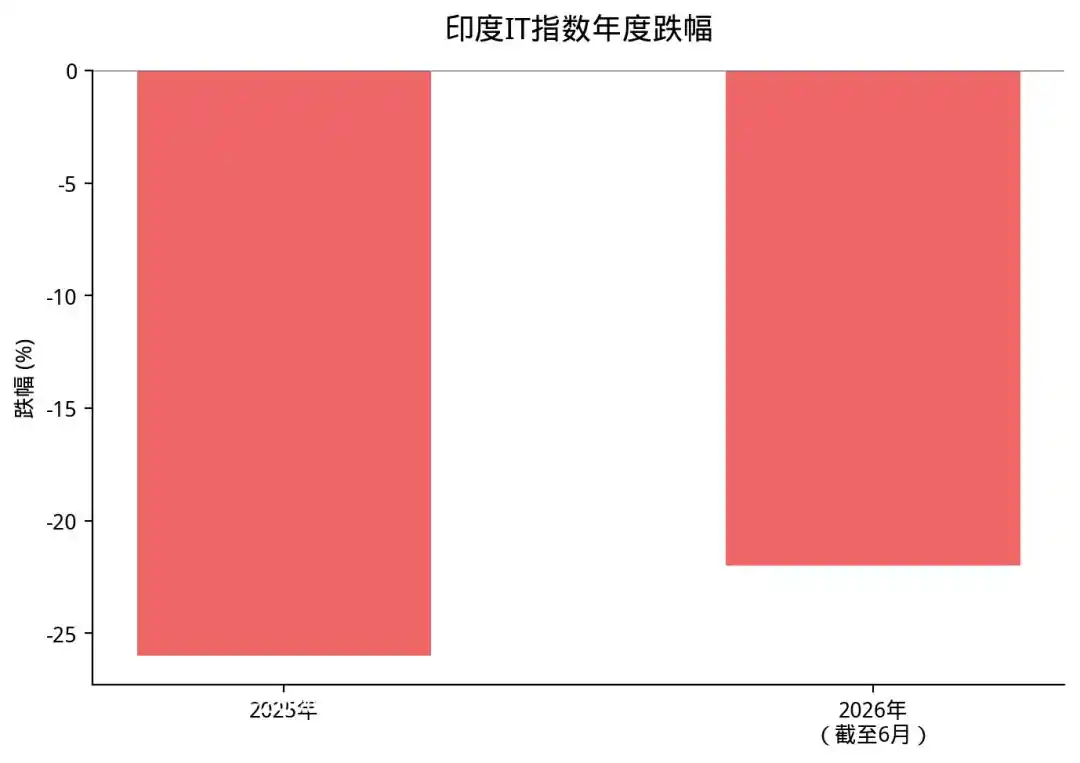
Индийский IT-индекс два года подряд резко падает Источник: Economic Times
Причина проста. Все больше инвестиционных институтов начинают осознавать: ИИ заменяет как раз то, что является ядром индийского бизнеса. Например, написание кода, тестирование ПО, техническая поддержка, составление документации, поддержка клиентов. Эта работа раньше требовала множества инженеров, теперь все больше компаний начинают пробовать выполнять ее с помощью ИИ.
Что еще страшнее. Рынок капитала боится не того, что «все программисты останутся без работы». А того, что самая прибыльная бизнес-модель Индии перестанет работать.
Прежняя логика была такова: у клиента есть проект, индийская компания отправляет 100 человек, зарабатывает деньги за 100 человек. В будущем может стать так: у клиента есть проект, ИИ выполняет 80% работы, нужно всего 20 человек.
AI-программистская компания Kouding Intelligence, привлекшая три раунда финансирования, предоставила Pencil News данные: раньше требовалась команда разработчиков из 100 человек, теперь справляются 2-3 человека; раньше разработка сайта электронной коммерции могла стоить сотни тысяч, даже миллионы, теперь стоимость можно снизить до 6-8 долларов.
Еще страшнее средний чек. «Средний чек компании-разработчика ПО может снизиться на 70–90%», — сообщил Pencil News Су Вэнь.
Отчеты брокеров показывают, что общая чистая прибыльность отрасли IT-аутсорсинга уже упала с почти 10% до примерно 0,1% (не только в Индии). Это означает, что прибыльное пространство индийских IT-компаний взрывается под давлением ИИ.
Глобальная перспектива выглядит еще более устрашающе.
Данные Mordor Intelligence показывают, что в 2025 году глобальный рынок IT-аутсорсинга составил около 618 млрд долларов. Из них примерно 40–60% зависят от трудоемкой поставки, то есть около 250–450 млрд долларов — что эквивалентно примерно 3 трлн юаней — находятся под риском прямой замены ИИ или значительного снижения цен.
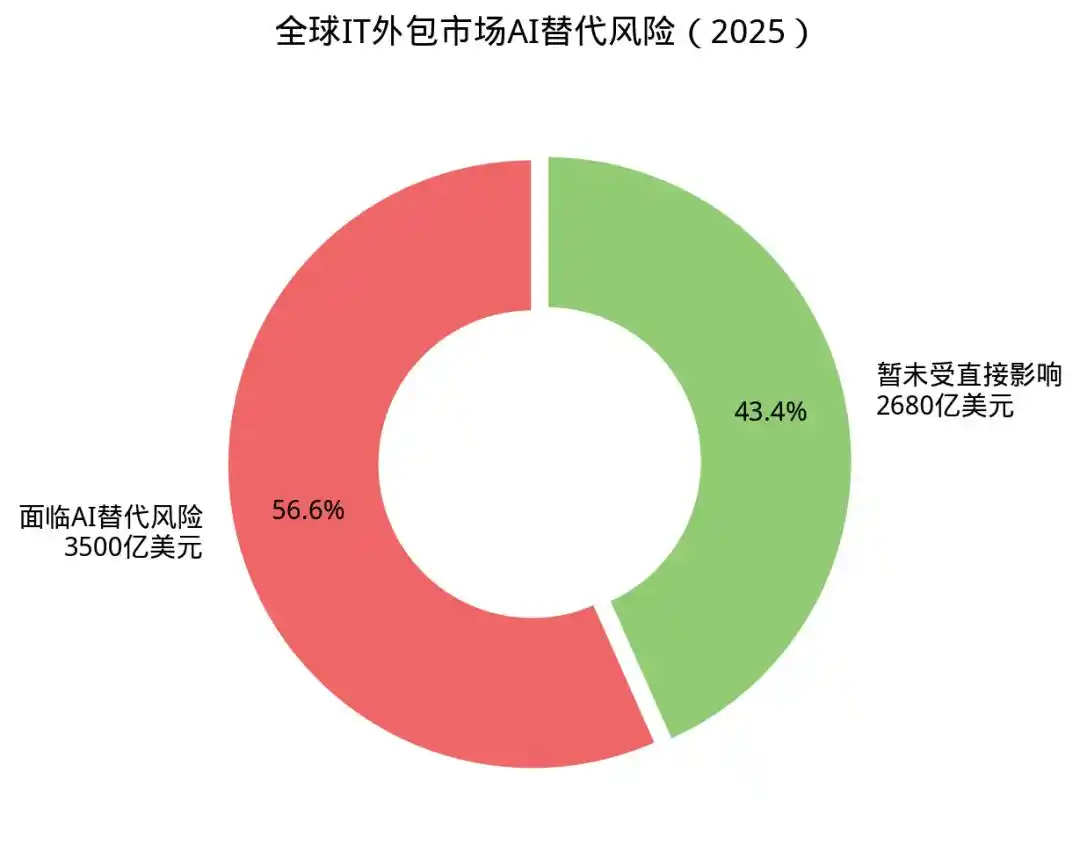
Риск замены ИИ на глобальном рынке IT-аутсорсинга (2025) Источник: Mordor Intelligence
Для индустрии стоимостью 280 млрд долларов — это сигнал тревоги ядерного уровня.
03
Крупные компании массово сокращают штат
Появился еще более опасный сигнал.
Если бы падали только акции — это еще куда ни шло. По-настоящему стоит обратить внимание на найм. Более прямые изменения уже проявляются в численности сотрудников ведущих компаний.
Прогноз Су Вэня более радикален: «Сокращение инженерного персонала в 20 раз — это минимум».
Опытный программист Мэйсы с более чем десятилетним опытом работы в крупных компаниях делает похожий вывод: «Будущий тренд — сжатие в соотношении 10:1. Инженерная команда из двух-трех тысяч человек в итоге может сократиться до двух-трех сотен».
Общая численность сотрудников крупнейшей индийской IT-сервисной компании TCS в 2025 финансовом году составила около 607 тысяч человек, что примерно на 13 тысяч меньше, чем в предыдущем финансовом году. Общая численность сотрудников Infosys — около 324 тысяч человек, что на 15 тысяч меньше, чем годом ранее.
Это редкое для индийской IT-индустрии за последние годы явление. Последние 30 лет численность сотрудников в этих компаниях почти только росла. Рост был нормой, сокращение — исключением. А сегодня эта кривая роста, длившаяся 30 лет, разворачивается вниз.
Основатель и генеральный директор ANSR Лалит Ахужа прямо заявил: «На рынке царит осторожность, компании сокращают количество найма».
Весь рынок найма в технологическом секторе Индии резко сжимается. В июне 2026 года количество активных вакансий в сфере технологий в Индии снизилось до 93 000, что является самым низким показателем за 28 месяцев. Количество вакансий для специалистов с опытом работы менее 2 лет обвалилось на 44% в годовом выражении — исчезла почти половина позиций начального уровня.
Су Вэнь объяснил логику, стоящую за этим: «Разработку со сложностью ниже 4 баллов можно полностью заменить. Там, где раньше требовалась команда из 100 человек, теперь нужно 2-3 человека».
В прошлом цикле роста увеличение количества проектов часто означало увеличение найма; а теперь рост доходов и рост числа сотрудников постепенно разъединяются.
Самая большая головная боль индийских технологических компаний раньше была: людей не хватает. Сегодня они начинают задумываться: а не слишком ли много людей.
Когда такие ведущие компании, как TCS и Infosys, одновременно начинают «сокращать персонал», направление эпохи уже изменилось.
04
Индия получила удар ИИ прямо в сердце
Почему Индия в большей опасности, чем другие?
Потому что ИИ поразил Индию не по краевым отраслям, а по ключевой.
Приведем простой пример. Если ИИ атакует компанию электронной коммерции, влияние ограничено. Если ИИ атакует рекламную индустрию, влияние ограничено. Но Индия другая, IT-услуги — одна из важнейших экспортных отраслей Индии. Общий доход индийской IT-индустрии превысил 315 млрд долларов, что составляет более 7% ВВП Индии, в ней занято более 6 миллионов человек. За этими 6 миллионами стоят 6 миллионов семей, средства к существованию десятков миллионов людей.
Что еще важнее, это не изолированная отрасль. IT-аутсорсинг кормит индийскую обучающую индустрию, сектор недвижимости (офисы и жилье в Бангалоре, Хайдарабаде), сферу услуг, образовательную индустрию. Одно IT-рабочее место поддерживает как минимум 3-5 смежных рабочих мест. Это означает, что удар ИИ по IT-индустрии в конечном итоге может затронуть 20-30 миллионов человек в индийской экосистеме занятости.
А сама Индия сталкивается с еще более суровой реальной проблемой. Данные Reuters показывают: уровень безработицы среди городской молодежи Индии по-прежнему высок — 13,6%.
Множество молодых людей и так ищут работу. Уровень безработицы среди выпускников индийских университетов взлетел до 29,1%, 40% молодых выпускников до 25 лет не могут найти работу. Ежегодно на рынок труда выходит более 1,5 миллиона выпускников по компьютерным специальностям, но только 42,6% из них соответствуют стандартам трудоустройства компаний.
Теперь же ИИ начинает сжимать уровень занятости. Давление на занятость + несоответствие навыков + замена ИИ — это не три отдельные проблемы, а взаимно усиливающаяся спираль смерти.
Су Вэнь высказался довольно жестоко: «Новые рынки уже обошли вас. Вы проигрываете не конкурентам, а тому, что этот этап стерт технологией».
Аналитик Everest Group прямо заявил: «ИИ больше не будет нуждаться в инженерах уровня L1 и L2». А эти инженеры L1 и L2 как раз и являются основой индийской IT-индустрии, первой остановкой для 1,5 миллиона выпускников по компьютерным специальностям ежегодно, входом для миллионов семей, меняющих судьбу.
05
Шанс Индии: 80% сотрудников используют ИИ, первое место в мире
Конечно, Индия также может стать крупнейшим победителем.
История еще не закончена. Потому что у Индии есть и другие данные.
Согласно последнему отчету Boston Consulting Group (BCG) «ИИ на работе 2026», Индия стала одной из стран, наиболее активно внедряющих ИИ, и занимает первое место в мире по уровню использования ИИ сотрудниками и руководителями.
Другой опрос ADP «Люди на работе 2026», охвативший 34 страны, показывает: 80% индийских сотрудников используют инструменты ИИ несколько раз в неделю; 41% индийских сотрудников используют ИИ ежедневно; глобальные средние показатели составляют всего 50% и 20% соответственно.
То есть: в среднем в мире примерно 1 человек из 5 использует ИИ ежедневно; а в Индии 2 человека из каждых 5 используют ИИ ежедневно.
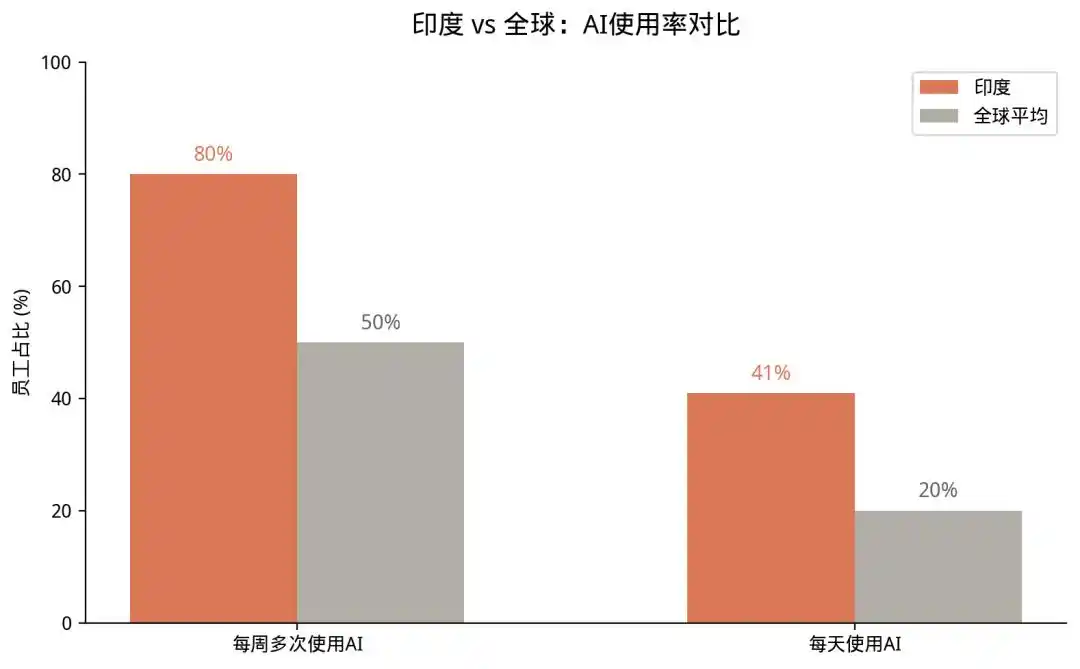
Сравнение уровня использования ИИ в Индии и в мире Источник: BCG/ADP 2026
Используют не только сотрудники, но и компании массово внедряют. В конце мая Microsoft раскрыла данные: у TCS, Infosys и Wipro развернуто более 100 000 лицензий Microsoft 365 Copilot каждая, совокупный масштаб развертывания трех компаний превышает 300 000 рабочих мест, что Microsoft называет одним из крупнейших в мире примеров корпоративного внедрения ИИ.
Другими словами, в Индии одновременно происходят две вещи: с одной стороны, ИИ атакует традиционные рабочие места в аутсорсинге; с другой стороны, ИИ проникает в компании с беспрецедентной скоростью.
Вот почему руководитель Microsoft в Индии недавно публично заявил: Индия стала одним из самых быстрорастущих рынков ИИ в мире.
06
Новая парадигма
Какой может быть новая парадигма IT-аутсорсинга в Индии?
На самом деле, пока рынок капитала все еще беспокоится о том, что модель индийского IT-аутсорсинга будет разрушена ИИ, крупнейшие технологические компании Индии уже начали искать новые способы заработка: продавать не инженеров, а производительность ИИ.
Наиболее показательна TCS. В первом квартале 2026 года TCS раскрыла, что годовой объем заказов, связанных с ИИ, достиг 2,3 млрд долларов, тогда как в предыдущем квартале он составлял всего 1,8 млрд долларов, рост за квартал — около 28%.
В то же время объем новых заказов TCS за квартал достиг 12 млрд долларов, оставаясь на исторически высоком уровне. Это показывает интересное явление: клиенты не перестали тратить деньги, просто изменился способ их расходования.
Раньше клиент покупал 100 программистов. Сегодня клиент покупает ИИ-решения, агентские системы и возможности автоматизации.
Многие думают, что самый большой шанс Индии в будущем — это учиться у США и создать свой Cursor. Но распространенное мнение таково: настоящая возможность Индии заключается в том, чтобы стать крупнейшим в мире центром внедрения ИИ.
В области больших языковых моделей в США уже появилась группа монополистических компаний: OpenAI, Anthropic, Google, Meta и др. Но модели — это только начало, по-настоящему сложное — это внедрение.
По состоянию на 2026 год в Индии уже действует более 2100 глобальных центров компетенций (GCC), обслуживающих транснациональные компании, такие как Microsoft, JPMorgan Chase, Goldman Sachs, Walmart, Pfizer, создавая доход около 100 млрд долларов и напрямую нанимая более 2,36 миллиона человек.
Эти глобальные центры компетенций по сути берут на себя: разработку ПО, интеграцию систем, цифровизацию предприятий, управление данными, ИТ-обслуживание. Эта работа требует больших инженерных и внедренческих возможностей, а это именно то, в чем Индия накопила наибольший опыт за последние 30 лет.
Согласно прогнозам IDC, к 2028 году глобальные расходы предприятий на ИИ превысят 630 млрд долларов. И самая большая возможность Индии, возможно, не в борьбе за рынок моделей, а в борьбе за рынок внедрения.
Если за последние 30 лет Индия экспортировала в мир инженеров, то в следующие 10 лет Индия, возможно, будет экспортировать в мир: возможности по развертыванию агентов, возможности по обслуживанию ИИ и производительность ИИ.
Возможно, это и есть настоящая новая парадигма для Индии.
Статья из WeChat-аккаунта «Pencil News» (ID:pencilnews), автор: Ай Юй, редактор: Ван Фан