Crypto industry, trade unions clash over multi-trillion dollar retirement funds

cointelegraphОпубликовано 2025-12-12Обновлено 2025-12-12

Введение

A dispute has emerged in Washington between the cryptocurrency industry and labor unions over proposed legislation that would allow cryptocurrencies, such as Bitcoin, to be included in 401(k) retirement accounts. Labor unions, including the American Federation of Teachers (AFT) and the AFL-CIO, argue that cryptocurrencies are too volatile and speculative for retirement savings, posing significant risks to workers' financial security. They oppose regulatory changes that would permit exposure to such assets in pension plans. In response, crypto industry representatives contend that the proposed bill would improve oversight and allow retirement funds to access a high-performing asset class. They accuse unions of being politically motivated and dismiss their concerns as uninformed. The debate highlights a broader clash between proponents who see crypto as a means of financial democratization and critics who warn against its unregulated and risky nature.

A growing rift has emerged in Washington, D.C., between the cryptocurrency industry and labor unions as lawmakers debate whether to ease rules allowing cryptocurrencies in 401(k) retirement accounts.

The dispute centers on proposed market structure legislation that would allow retirement accounts to gain exposure to crypto, a move labor groups say could expose workers to speculative risk. In a letter sent on Wednesday to the US Senate Banking Committee, the American Federation of Teachers argued that cryptocurrencies are too volatile for pension and retirement savings, warning that workers could face significant losses.

The letter drew immediate pushback from crypto investors and industry figures. “The American Federation of Teachers has somehow developed the most logically incoherent, least educated take one could possibly author on the matter of crypto market structure regulation,” a crypto investor said on X.
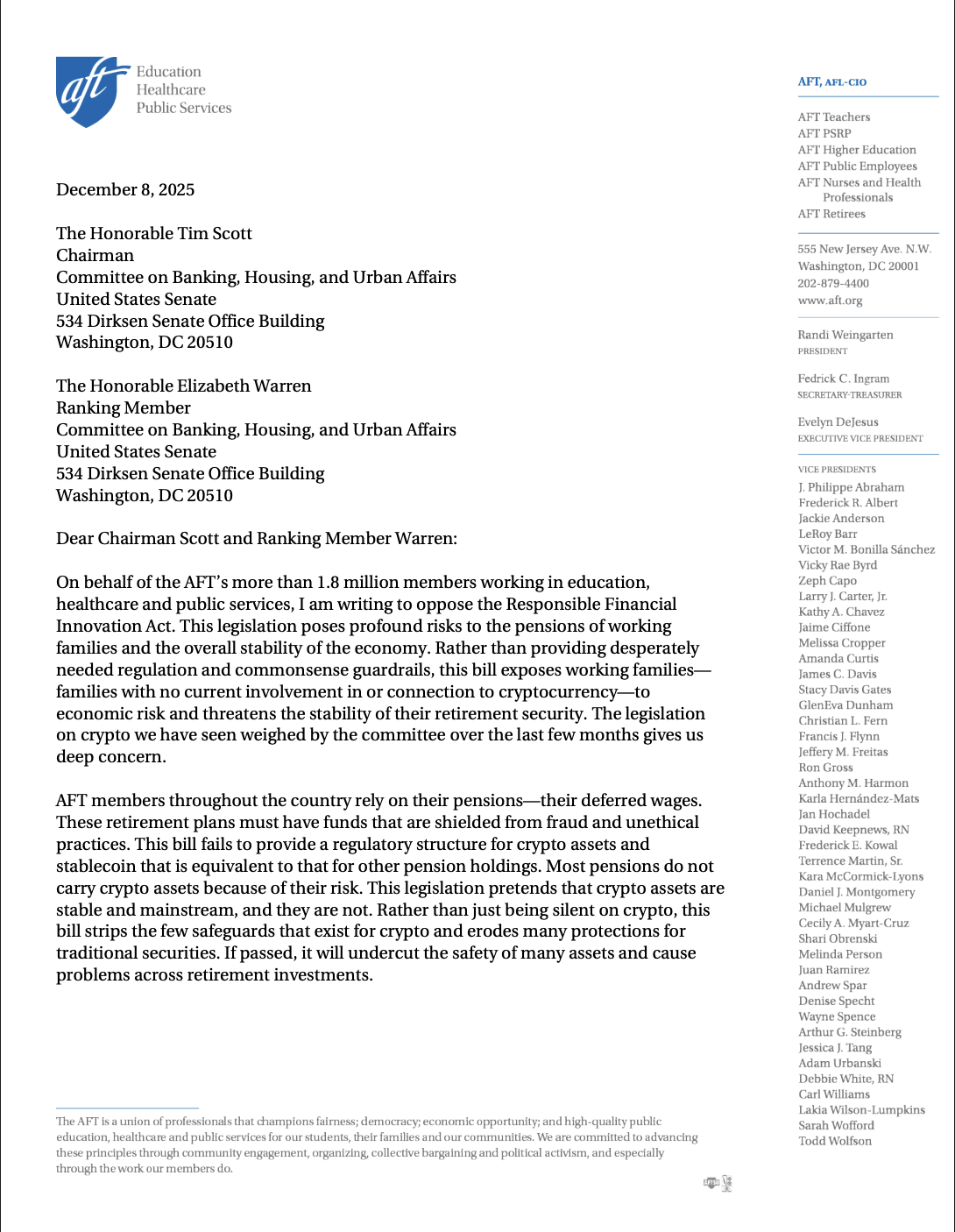
The AFT letter to Congress opposes regulatory changes that would allow 401(k) retirement accounts to hold alternative assets, including cryptocurrency. Source: CNBC

In response to the letter, Castle Island Ventures partner Sean Judge said the bill would improve oversight and reduce systemic risk, while enabling pension funds to access an asset class that has delivered strong long-term returns.

Consensys attorney Bill Hughes said the AFT’s opposition to the crypto market structure bill was politically motivated, accusing the group of acting as an extension of Democratic lawmakers.
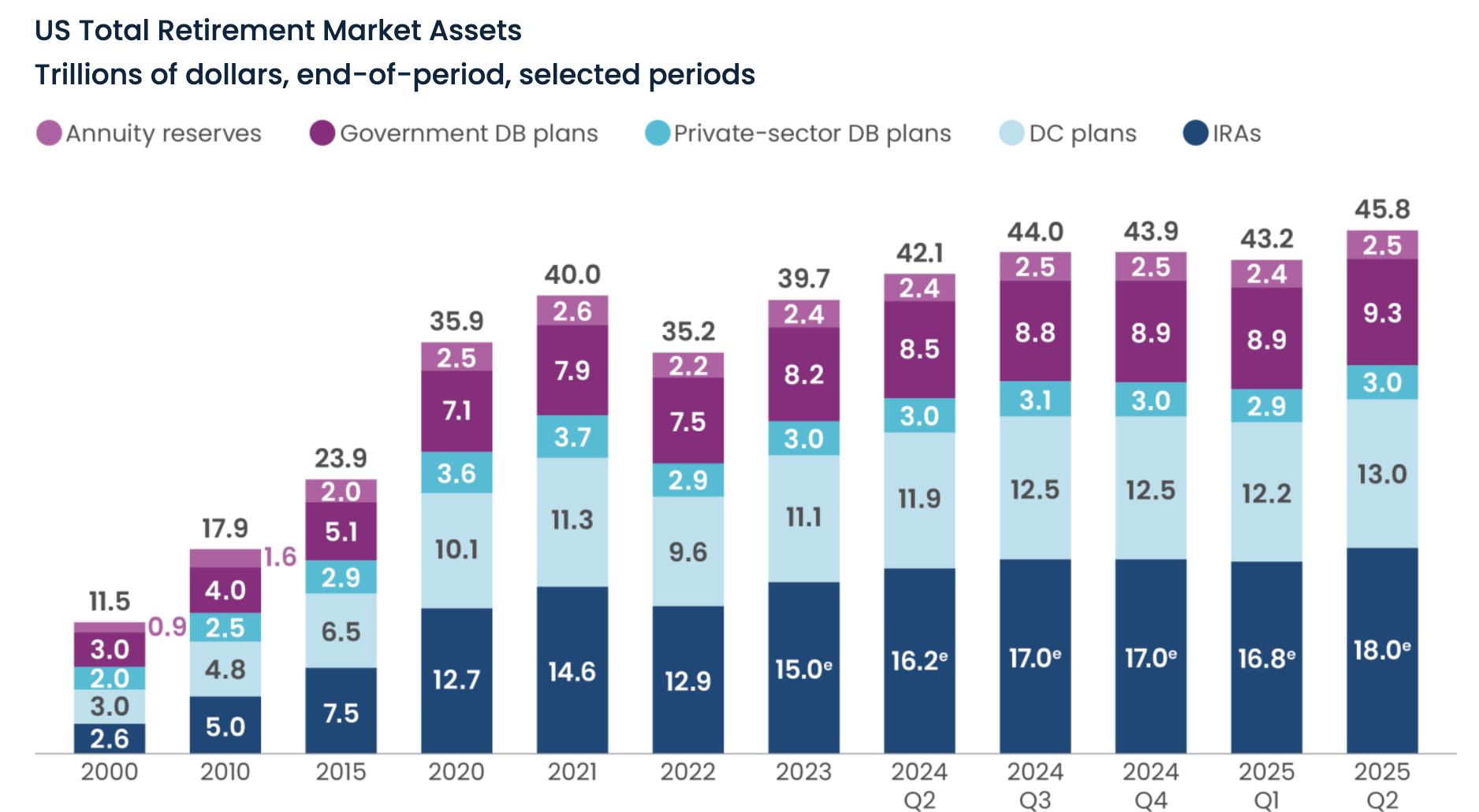
Funds held in US retirement accounts by type of account plan. Source: ICI

Related: Atkins says SEC has ‘enough authority’ to drive crypto rules forward in 2026

Opposition to crypto in retirement and pension funds mounts

Proponents of allowing crypto in retirement portfolios, on the other hand, argue that it democratizes finance, while trade unions have voiced strong opposition to relaxing current regulations, claiming that crypto is too risky for traditional retirement plans.

“Unregulated, risky currencies and investments are not where we should put pensions and retirement savings. The wild, wild west is not what we need, whether it’s crypto, AI, or social media,” AFT president Randi Weingarten said on Thursday.

The AFT represents 1.8 million teachers and educational professionals in the US and is one of the largest teachers’ unions in the country.

According to Better Markets, a nonprofit and nonpartisan advocacy organization, cryptocurrencies are too volatile for traditional retirement portfolios, and their high volatility can create time-horizon mismatches for pension investors seeking a predictable, low-volatility retirement plan.
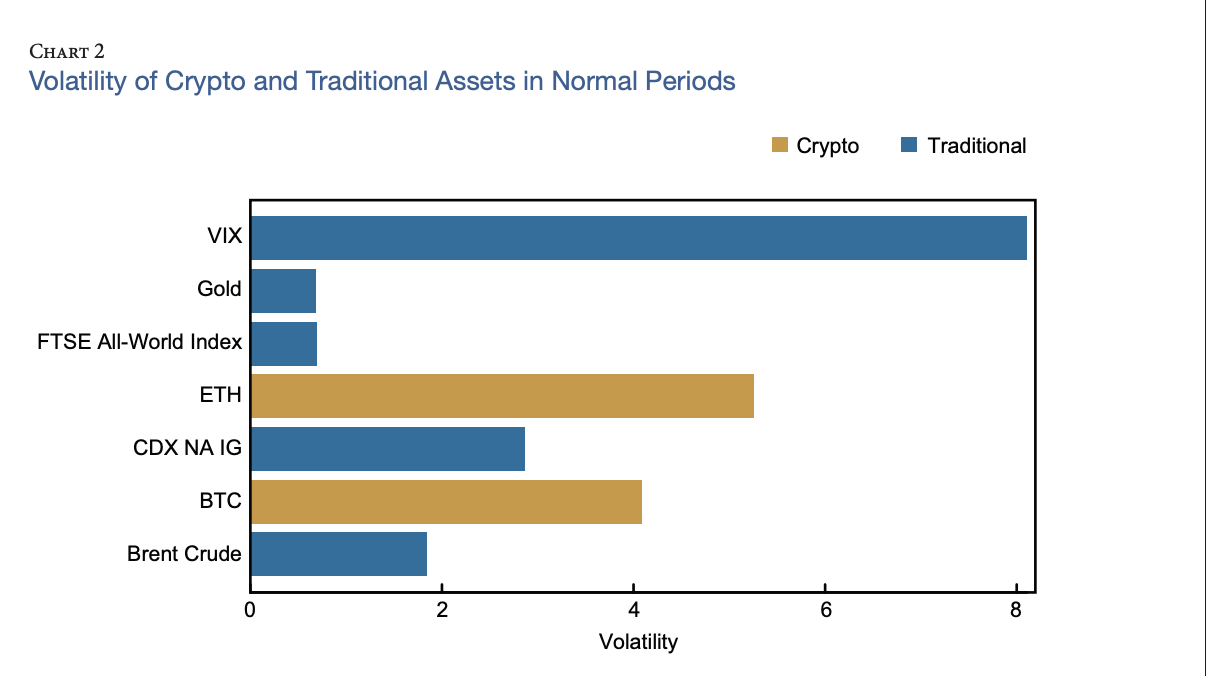
Bitcoin and Ether volatility compared to other asset classes and stock indexes. Source: US Federal Reserve

In October, the American Federation of Labor and Congress of Industrial Organizations (AFL-CIO) also wrote to Congress opposing provisions within the crypto market structure regulatory bill.

The AFL-CIO, the largest federation of trade unions in the US, wrote that cryptocurrencies are volatile and pose a systemic risk to pension funds and the broader financial system.

Magazine: 13 Christmas gifts that Bitcoin and crypto degens will love

Похожее

Dumping US Bonds, Buying Japanese Bonds: Wall Street Prepares for 'Capital Repatriation to Japan'

Wall Street is bracing for a potential "great repatriation" of Japanese capital as yields on Japanese Government Bonds (JGBs) soar to multi-decade highs. The 10-year JGB yield recently hit 2.73%, its highest since 1997, while the 30-year yield broke 4% for the first time. This dramatic shift is causing global asset managers to reassess a long-ignored risk: that Japanese investors, who hold roughly $1 trillion in U.S. Treasury debt, could start bringing that money home. For decades, Japan's ultra-low interest rates pushed domestic insurers, pension funds, and banks to seek yield overseas, primarily in U.S. Treasuries. Now, with the Bank of Japan hiking rates and JGB yields climbing, the incentive is reversing. Firms like BlueBay Asset Management are preparing for this shift, believing new Japanese investments will be directed domestically rather than to foreign bonds. Early signs of repatriation are emerging, with record monthly inflows into Japanese sovereign bond funds in March. Some managers, like Ruffer's Matt Smith, hold yen as a hedge, anticipating that market stress could trigger a rapid acceleration of capital returning to Japan. However, analysts caution that a mass exodus hasn't begun yet. Japanese investors were still net buyers of foreign bonds over the past year. Uncertainty remains high as Japan's government fiscal plans could push JGB yields even higher, making investors hesitant to buy immediately. Furthermore, the Bank of Japan's withdrawal as a dominant bond buyer has increased market volatility. Nevertheless, the potential scale of Japanese selling poses a tangible risk to the U.S. Treasury market. As the largest foreign holder of U.S. debt, any sustained shift by Japanese institutions could materially impact supply and demand dynamics, pushing U.S. yields higher. Wall Street's current positioning is a forward-looking bet on this logic becoming increasingly compelling as Japanese yields continue to rise.

marsbit55 мин. назад

Dumping US Bonds, Buying Japanese Bonds: Wall Street Prepares for 'Capital Repatriation to Japan'

marsbit55 мин. назад

How Did Institutions Adjust Their Crypto Asset Holdings in Q1? Who Increased and Who Exited?

The Q1 2026 13F filings reveal a sharply divided picture of institutional activity in crypto assets. Sovereign wealth funds and bank capital increased exposure, while major endowment funds notably de-risked. The most significant buying came from the Abu Dhabi sovereign wealth fund Mubadala, which expanded its position in the iShares Bitcoin Trust (IBIT). JPMorgan Chase dramatically increased its IBIT exposure by 174%, with other global banks like RBC, Scotiabank, and Barclays also adding to Bitcoin ETF holdings, while using options for asymmetric protection. Conversely, the Harvard Management Company (Harvard University's endowment), once a major academic holder, cut its IBIT position by 43% and fully exited a BlackRock Ethereum ETF. The reallocated capital flowed into traditional assets like TSMC, Microsoft, and gold. Other Ivy League endowments showed varied strategies: Brown and Dartmouth maintained Bitcoin positions, with Dartmouth making a nuanced shift by moving Ethereum exposure to a staking ETF and adding a Solana staking ETF to capture yield. Hedge fund Jane Street significantly reduced Bitcoin ETF holdings, locking in profits, while Wells Fargo increased its Ethereum stake. Overall, institutions are deploying traditional capital market tactics—buying, selling, hedging, and rotating—within crypto via spot ETFs. The Q2 reports will be crucial to determine if Harvard's retreat is an outlier or the start of a broader trend among endowments.

marsbit1 ч. назад

How Did Institutions Adjust Their Crypto Asset Holdings in Q1? Who Increased and Who Exited?

marsbit1 ч. назад

Blockchain Capital Partner: Most People Have a Narrow Understanding of the On-Chain Economy

Author Spencer Bogart, a partner at Blockchain Capital, argues that most people have a narrow view of the on-chain economy, seeing it primarily as a faster, cheaper version of existing financial systems. While this represents a significant opportunity, he believes it's only a small part of the story. Bogart compares the current state of crypto to the early internet, where email was the obvious "faster mail" application. The truly transformative categories—like search, social media, and cloud computing—were entirely new and unimaginable beforehand. Similarly, the most profound innovations in crypto will not be incremental improvements but entirely new categories enabled by the core properties of public blockchains: atomic execution, shared global state, programmable custody, and composability. He cites the "flash loan" as a prime example of a "new verb"—a financial action structurally impossible before programmable assets and atomic settlement. It allows for uncollateralized, trustless borrowing of any size, provided repayment occurs within the same transaction, enabling novel strategies like arbitrage and collateral swaps. Bogart admits the difficulty in precisely predicting these future innovations, as human imagination tends to extrapolate from the past. He posits that the most exciting applications in ten years will be things that don't exist today and have no precedent—products only possible in a global, composable, always-on environment with programmable assets. While the exploration of this vast design space will involve many failures, the potential for transformative, category-defining breakthroughs is what makes the next decade so promising.

链捕手1 ч. назад

Blockchain Capital Partner: Most People Have a Narrow Understanding of the On-Chain Economy

链捕手1 ч. назад

Торговля

Спот
Фьючерсы

Популярные статьи

Как купить HPP

Добро пожаловать на HTX.com! Мы сделали приобретение House Party Protocol (HPP) простым и удобным. Следуйте нашему пошаговому руководству и отправляйтесь в свое крипто-путешествие.Шаг 1: Создайте аккаунт на HTXИспользуйте свой адрес электронной почты или номер телефона, чтобы зарегистрироваться и бесплатно создать аккаунт на HTX. Пройдите удобную регистрацию и откройте для себя весь функционал.Создать аккаунтШаг 2: Перейдите в Купить криптовалюту и выберите свой способ оплатыКредитная/Дебетовая Карта: Используйте свою карту Visa или Mastercard для мгновенной покупки House Party Protocol (HPP).Баланс: Используйте средства с баланса вашего аккаунта HTX для простой торговли.Третьи Лица: Мы добавили популярные способы оплаты, такие как Google Pay и Apple Pay, для повышения удобства.P2P: Торгуйте напрямую с другими пользователями на HTX.Внебиржевая Торговля (OTC): Мы предлагаем индивидуальные услуги и конкурентоспособные обменные курсы для трейдеров.Шаг 3: Хранение House Party Protocol (HPP)После приобретения вами House Party Protocol (HPP) храните их в своем аккаунте на HTX. В качестве альтернативы вы можете отправить их куда-либо с помощью перевода в блокчейне или использовать для торговли с другими криптовалютами.Шаг 4: Торговля House Party Protocol (HPP)С легкостью торгуйте House Party Protocol (HPP) на спотовом рынке HTX. Просто зайдите в свой аккаунт, выберите торговую пару, совершайте сделки и следите за ними в режиме реального времени. Мы предлагаем удобный интерфейс как для начинающих, так и для опытных трейдеров.

164 просмотров всегоОпубликовано 2026.04.29Обновлено 2026.04.29

Как купить HPP

Что такое GENIUS

I. Введение в проект1. Что такое Genius?Genius (GENIUS) позиционируется как «конечный терминал на блокчейне», децентрализованная торговая платформа, ориентированная на конфиденциальность и скорость. Интегрируя технологии конфиденциальности высшего уровня, она стремится создать инфраструктуру торговли с конфиденциальностью нового поколения на таких сетях, как BNB Chain, позволяя пользователям взаимодействовать на блокчейне с бесшовным опытом, сопоставимым с централизованными биржами.2. Как работает Genius?Основная техническая архитектура Genius структурирована следующим образом:(1) Невидимость для цепочки: Пользователям не нужно вручную обрабатывать многоступенчатые одобрения для кросс-цепочных операций, упаковки активов или сложного управления газом.(2) Торговля без подписи: Благодаря интеграциям, таким как Turnkey, Genius позволяет мгновенно торговать без всплывающих подтверждений или авторизации на каждую транзакцию.(3) Аггрегатор аггрегаторов: Genius работает на основе лучшего в своем классе стека агрегации, интегрированного с более чем 150 DEX, утверждая о превосходной эффективности котировок по сравнению с конкурентными продуктами.(4) Управление аккаунтом: Платформа использует некастодиальную архитектуру и использует Turnkey и Lit Protocol для управления ключами, позволяя пользователям безопасно получать доступ к своим аккаунтам через пасскоды.3. Кто создал Genius?Согласно официальным Условиям обслуживания, Genius был разработан компанией Shuttle Labs, Inc. На основе официального аккаунта проекта в X, Райан Майер является одним из ключевых участников, способствующих итерации продукта, включая разработки, такие как внедрение протокола Ghost, а также более широкое вовлечение сообщества.Основатель Binance CZ официально присоединился к проекту в качестве советника с целью помочь команде создать более быструю и конфиденциальную торговлю на блокчейне.Кроме того, проект получил сильную поддержку от YZi Labs, которая инвестировала в Genius и работает вместе с Фондом Genius, ответственным за поддержание основного Протокола Моста Genius (GBP).4. Токеномика GeniusGENIUS — это родной токен экосистемы Genius. На данный момент проект не выпустил полный документ по токеномике.Согласно последним официальным раскрытиям, Genius включает дефляционный механизм, и 4,6% от общего объема токенов уже было сожжено в ходе ранней фазы запуска.Система Genius Points (GP):(1) Торговля за вознаграждение: Платформа создала пул вознаграждений в 200 миллионов Genius Points, и пользователи зарабатывают GP за каждую сделку, выполненную через терминал.(2) Уровни и значки: Genius предлагает систему значков на основе прогрессии от Умного до Бога, с более высокими уровнями, открывающими дополнительные привилегии и преимущества.(3) Родной доход: Пользователи, держащие определенные активы, такие как usdGG на панели управления, могут зарабатывать родной доход напрямую, не проходя через сложное стекинг.(4) Реферальные стимулы: Рефереры могут зарабатывать возвраты комиссии более 45%, выплачиваемые в USDC, а также дополнительные GP.5. Хронология и ключевые вехиМарт 2020: Официальный аккаунт проекта в X был создан, что ознаменовало начало его ранней подготовительной фазы.13 января 2026: Genius объявил о многомиллионной инвестиции от YZi Labs и одновременно подтвердил CZ в качестве советника для ускорения создания своей инфраструктуры торговли с конфиденциальностью.18 апреля 2026: Проект объявил, что протокол конфиденциальности Ghost будет запущен в ближайшее время.29 апреля 2026: Протокол Ghost официально открылся для первых 50 тестеров, что ознаменовало начало новой эры для торговли с конфиденциальностью на BNB Chain. В то же время команда подтвердила, что 4,6% токенов были сожжены.​II. Информация о токенах1) Основная информацияНазвание токена: GENIUS (Genius)III. Связанные ссылкиВебсайт: https://www.tradegenius.com/homeЭксплореры: https://bscscan.com/address/0x1f12b85aac097e43aa1555b2881e98a51090e9a6Социальные сети: https://x.com/GeniusTerminalПримечание: Введение в проект основано на материалах, опубликованных или предоставленных официальной командой проекта, и предназначено только для справки и не является инвестиционной рекомендацией. HTX не несет ответственности за любые прямые или косвенные убытки, возникшие в результате этого.

273 просмотров всегоОпубликовано 2026.04.29Обновлено 2026.05.12

Что такое GENIUS

Как купить GENIUS

Добро пожаловать на HTX.com! Мы сделали приобретение Genius (GENIUS) простым и удобным. Следуйте нашему пошаговому руководству и отправляйтесь в свое крипто-путешествие.Шаг 1: Создайте аккаунт на HTXИспользуйте свой адрес электронной почты или номер телефона, чтобы зарегистрироваться и бесплатно создать аккаунт на HTX. Пройдите удобную регистрацию и откройте для себя весь функционал.Создать аккаунтШаг 2: Перейдите в Купить криптовалюту и выберите свой способ оплатыКредитная/Дебетовая Карта: Используйте свою карту Visa или Mastercard для мгновенной покупки Genius (GENIUS).Баланс: Используйте средства с баланса вашего аккаунта HTX для простой торговли.Третьи Лица: Мы добавили популярные способы оплаты, такие как Google Pay и Apple Pay, для повышения удобства.P2P: Торгуйте напрямую с другими пользователями на HTX.Внебиржевая Торговля (OTC): Мы предлагаем индивидуальные услуги и конкурентоспособные обменные курсы для трейдеров.Шаг 3: Хранение Genius (GENIUS)После приобретения вами Genius (GENIUS) храните их в своем аккаунте на HTX. В качестве альтернативы вы можете отправить их куда-либо с помощью перевода в блокчейне или использовать для торговли с другими криптовалютами.Шаг 4: Торговля Genius (GENIUS)С легкостью торгуйте Genius (GENIUS) на спотовом рынке HTX. Просто зайдите в свой аккаунт, выберите торговую пару, совершайте сделки и следите за ними в режиме реального времени. Мы предлагаем удобный интерфейс как для начинающих, так и для опытных трейдеров.

216 просмотров всегоОпубликовано 2026.04.29Обновлено 2026.05.12

Как купить GENIUS

Обсуждения

Добро пожаловать в Сообщество HTX. Здесь вы сможете быть в курсе последних новостей о развитии платформы и получить доступ к профессиональной аналитической информации о рынке. Мнения пользователей о цене на A (A) представлены ниже.

活动图片