Digital asset ETPs post third straight week of net inflows, led by US demand

cointelegraphОпубликовано 2025-12-15Обновлено 2025-12-15

Введение

Digital asset exchange-traded products (ETPs) recorded $864 million in net inflows for the third consecutive week, driven primarily by U.S. demand, according to CoinShares. Bitcoin products led with $522 million in inflows, while Ether saw $338 million. Solana and XRP also attracted significant inflows of $65 million and $46.9 million, respectively. The U.S., Germany, and Canada accounted for the majority of regional inflows, while Switzerland posted outflows. Year-to-date, Bitcoin has attracted $27.7 billion, though still below 2024 levels. Multi-asset crypto ETPs and blockchain equity funds saw mixed flows during the period.

Crypto exchange-traded products (ETPs) recorded about $864 million in inflows last week, according to a report on Monday by European digital asset manager CoinShares.

The United States led regional inflows with about $796 million, followed by Germany with roughly $68.6 million and Canada with about $26.8 million. Together, the three countries account for approximately 98.6% of year-to-date (YTD) inflows into digital asset investment products.

Switzerland-listed crypto ETPs recorded about $41.4 million in weekly outflows, while YTD net flows were about $622.4 million, according to the data.
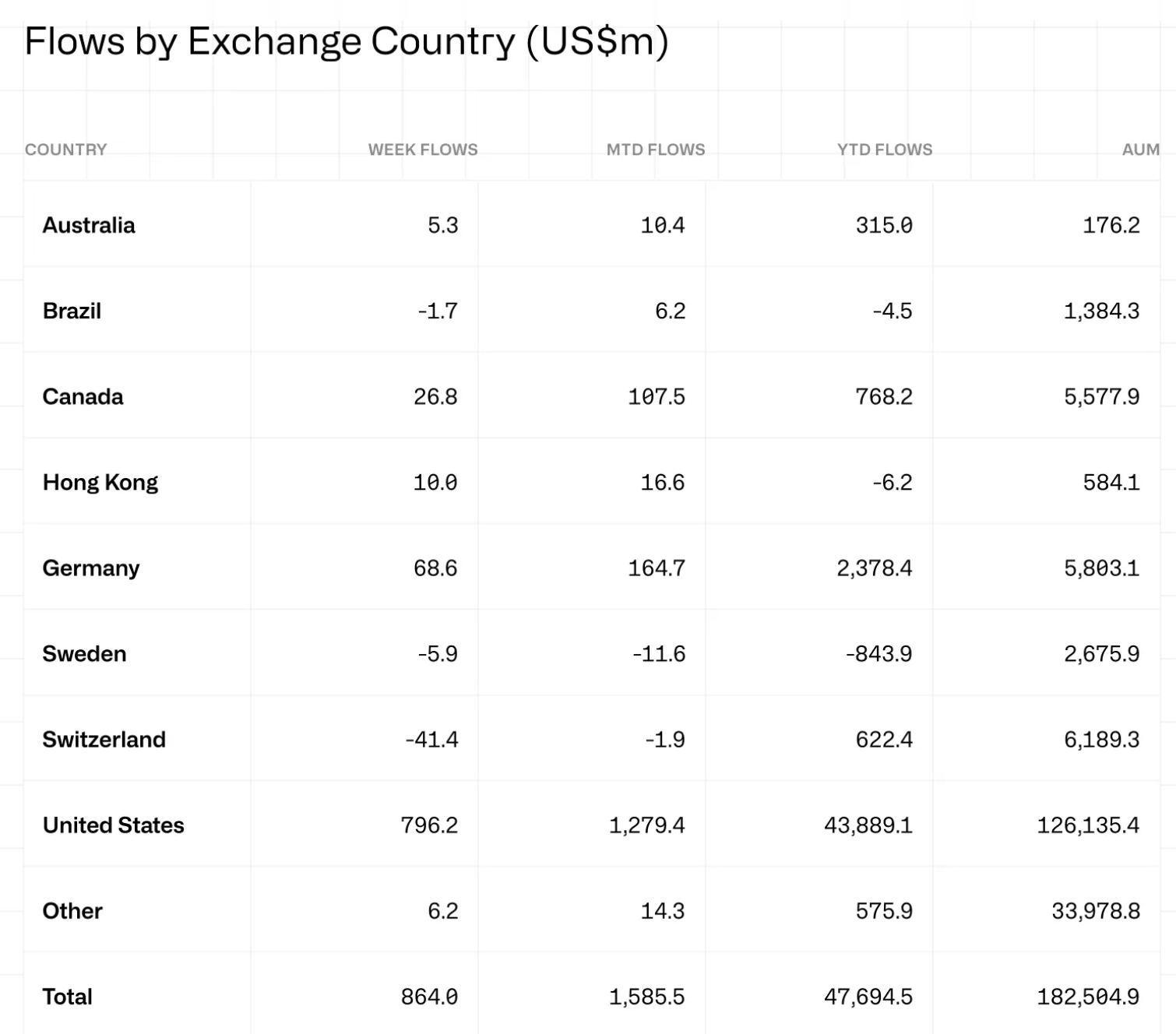
Flows by Exchange Country (US$m). Source: CoinShares’ Report

Bitcoin and Ether dominate inflows, followed by Solana and XRP

Bitcoin (BTC) investment products recorded about $522 million in weekly inflows, while short-Bitcoin products posted roughly $1.8 million in net outflows, “signalling a recovery in sentiment,” according to the report.

Ether (ETH) saw approximately $338 million in inflows during the week, lifting YTD to about $13.3 billion, up 148% from 2024.

Beyond Bitcoin and Ether, Solana (SOL) investment products recorded about $65 million in weekly inflows, bringing YTD inflows to roughly $3.46 billion, a tenfold increase from last year.

XRP (XRP) products also attracted fresh capital, with approximately $46.9 million added during the week and about $3.18 billion in inflows accumulated YTD, according to the data.

Smaller-cap products saw more mixed results, with Aave (AAVE)-linked products recording about $5.9 million in weekly inflows and Chainlink (LINK) adding roughly $4.1 million. Hyperliquid (HYPE) products posted net outflows of around $14.1 million during the period.

This is the third consecutive week of inflows for crypto ETPs, following about $716 million in inflows last week and roughly $1 billion the week before.

Bitcoin has attracted around $27.7 billion YTD, still below the $41 billion it recorded in 2024.

Related: XRP sinks below $2 despite $1B in ETF inflows: How low can price go?

Assets under management and equity ETP flows

By assets under management, Bitcoin investment products hold about $141.8 billion, while Ether-linked products account for roughly $26 billion.

Outside of single-asset products, multi-asset crypto ETPs recorded about $104.9 million in weekly outflows, extending net redemptions to roughly $69.5 million YTD, despite holding approximately $6.8 billion in assets under management, according to the data.
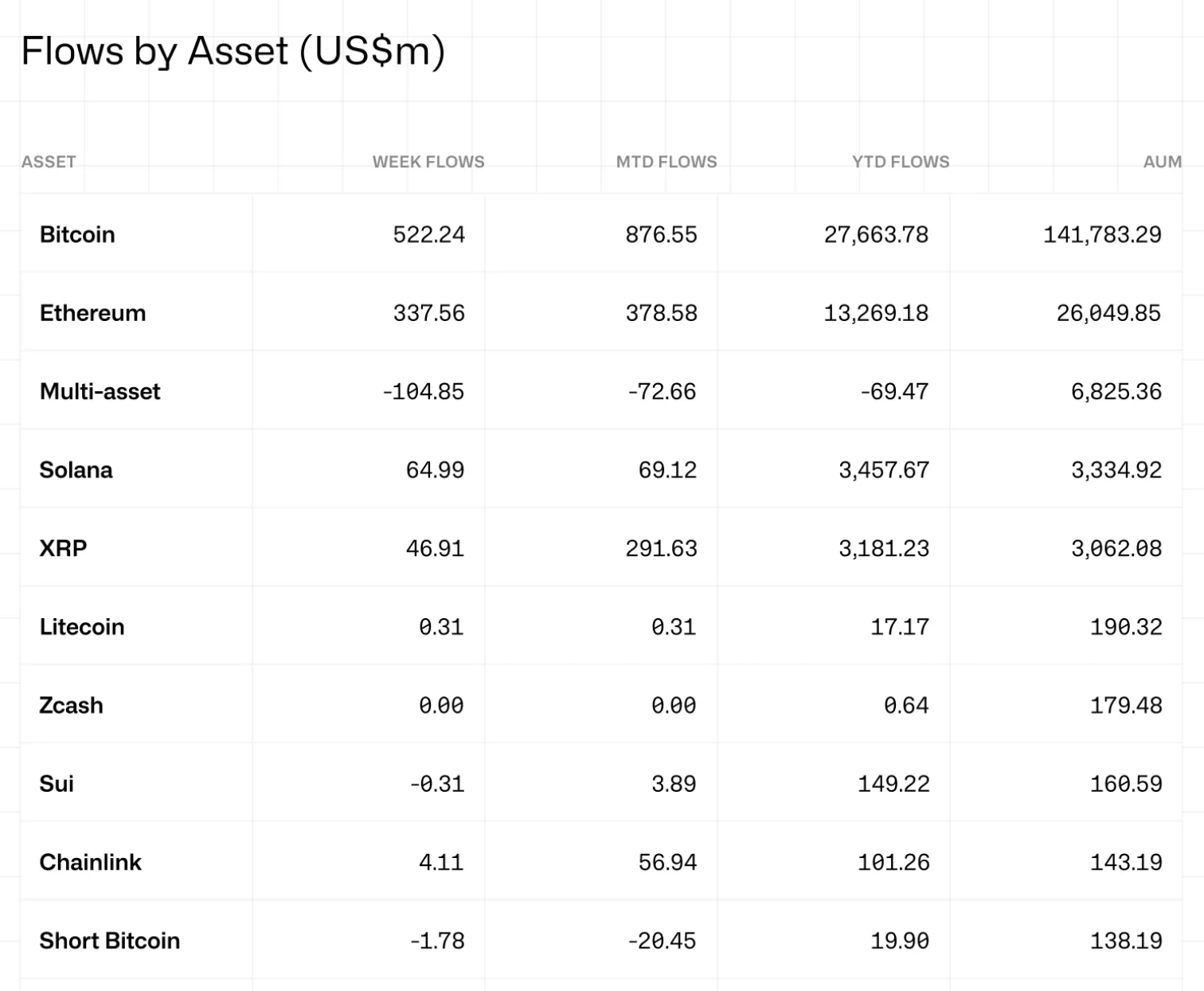
Crypto ETP USD flows by asset. Source: CoinShares

Funds that invest in publicly traded blockchain-related companies saw mixed investor flows during the week. VanEck’s Digital Transformation fund posted the largest weekly inflow at about $45.8 million, followed by VanEck Crypto and Blockchain at roughly $20.5 million and Schwab’s Crypto Thematic ETF at about $7.2 million.

Invesco CoinShares’ Global Blockchain and Bitwise Crypto Industry Innovators ETPs recorded modest net outflows during the week.
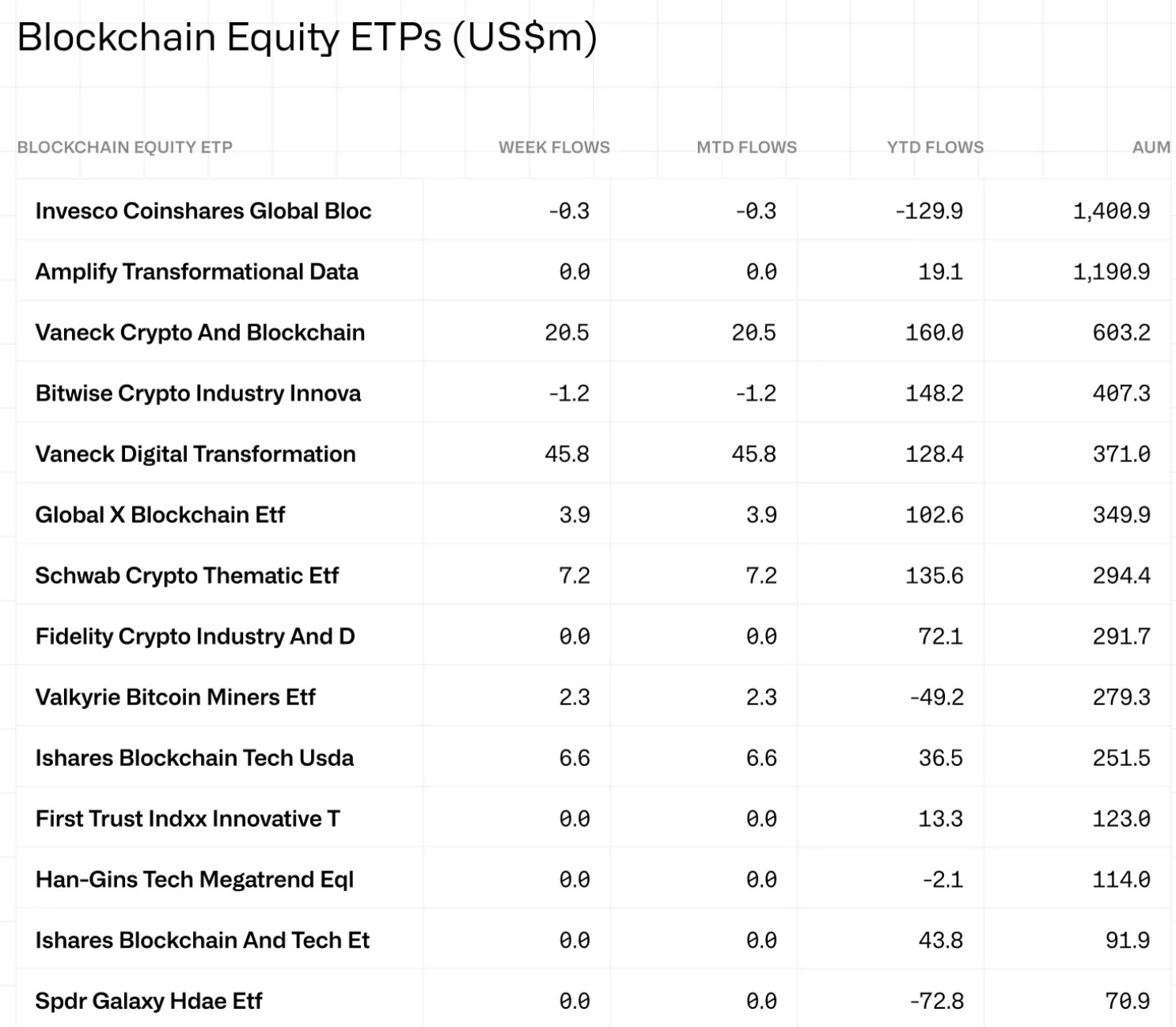
Blockchain Equity ETPs. Source: CoinShares’

Magazine: Big questions: Would Bitcoin survive a 10-year power outage?

Похожее

Why Does the Term 'Year of AI Computing Power Realization' Have Pitfalls? —Understanding the Four Hurdles from Policy Signals to Actual Orders in One Article

This article critiques the phrase "The First Year of AI Computing Power Cashing In," arguing it oversimplifies a complex, multi-stage process. It proposes a "Four Gates" framework to assess the true commercialization of domestic AI computing power (like Huawei's Ascend chips): 1. **Policy Procurement:** Widely open in 2026. Significant government funding and large bulk orders from tech giants like Alibaba and Tencent exist. However, purchasing hardware is not the same as deploying it for real use. 2. **Real Deployment:** A crack has opened. The key evidence is DeepSeek V4, a top-tier AI model fully migrating from NVIDIA's CUDA to domestic computing platforms. This proves the capability for real, high-level tasks, but widespread adoption beyond leading tech firms is still nascent. 3. **Mature Software Ecosystem:** A narrow crack has opened. While frameworks like Huawei's CANN are progressing, they lag far behind NVIDIA's vast, established CUDA ecosystem in terms of supported models and developer ease-of-use. Building this middle-to-downstream developer environment is estimated to need 1-2 more years. 4. **Scalable Replication:** Essentially closed. This final gate, where thousands of mid-sized enterprises across various industries can easily adopt the technology without major migration costs, is not expected before 2027-2028. The core risk is conflating these stages. While 2026 marks a real turning point in policy-driven procurement and proving technical viability (Gates 1 & 2), the phrase "cashing in" is premature for the full industry. True, large-scale value realization depends on the later, slower-to-open gates of software maturity and scalable replication to the broader market. DeepSeek V4's shift is identified as the most critical 2026 signal, changing the narrative from "can it work?" to "when will supply meet demand?"

marsbit33 мин. назад

Why Does the Term 'Year of AI Computing Power Realization' Have Pitfalls? —Understanding the Four Hurdles from Policy Signals to Actual Orders in One Article

marsbit33 мин. назад

Торговля

Спот
Фьючерсы

Популярные статьи

Как купить US

Добро пожаловать на HTX.com! Мы сделали приобретение Talus Network (US) простым и удобным. Следуйте нашему пошаговому руководству и отправляйтесь в свое крипто-путешествие.Шаг 1: Создайте аккаунт на HTXИспользуйте свой адрес электронной почты или номер телефона, чтобы зарегистрироваться и бесплатно создать аккаунт на HTX. Пройдите удобную регистрацию и откройте для себя весь функционал.Создать аккаунтШаг 2: Перейдите в Купить криптовалюту и выберите свой способ оплатыКредитная/Дебетовая Карта: Используйте свою карту Visa или Mastercard для мгновенной покупки Talus Network (US).Баланс: Используйте средства с баланса вашего аккаунта HTX для простой торговли.Третьи Лица: Мы добавили популярные способы оплаты, такие как Google Pay и Apple Pay, для повышения удобства.P2P: Торгуйте напрямую с другими пользователями на HTX.Внебиржевая Торговля (OTC): Мы предлагаем индивидуальные услуги и конкурентоспособные обменные курсы для трейдеров.Шаг 3: Хранение Talus Network (US)После приобретения вами Talus Network (US) храните их в своем аккаунте на HTX. В качестве альтернативы вы можете отправить их куда-либо с помощью перевода в блокчейне или использовать для торговли с другими криптовалютами.Шаг 4: Торговля Talus Network (US)С легкостью торгуйте Talus Network (US) на спотовом рынке HTX. Просто зайдите в свой аккаунт, выберите торговую пару, совершайте сделки и следите за ними в режиме реального времени. Мы предлагаем удобный интерфейс как для начинающих, так и для опытных трейдеров.

466 просмотров всегоОпубликовано 2025.12.11Обновлено 2025.12.11

Как купить US

Обсуждения

Добро пожаловать в Сообщество HTX. Здесь вы сможете быть в курсе последних новостей о развитии платформы и получить доступ к профессиональной аналитической информации о рынке. Мнения пользователей о цене на US (US) представлены ниже.

活动图片