From SpaceX's IPO to the Future of Crypto: Which Crypto Sectors Will Host the Trillion-Dollar Narrative?

marsbitОпубликовано 2026-06-06Обновлено 2026-06-06

Введение

From the SpaceX IPO, which targets a $750 billion raise at a $1.77 trillion valuation, we can extrapolate capital flow trends relevant to crypto. The focus shifts from speculative narratives to foundational infrastructure and real-world asset (RWA) integration. Key crypto sectors poised to benefit include: 1. **AI Infrastructure**: The narrative is moving from consumer-facing AI applications to underlying, scarce resources like compute power and decentralized GPU networks (e.g., TAO, RENDER, AKT, IO). These protocols are positioning as the essential "picks and shovels" providers for the AI economy. 2. **Real-World Assets (RWA)**: Beyond tokenized treasury bonds, RWA's future lies in on-chain equity and pre-IPO assets like SpaceX. This could democratize access to high-growth assets and reshape global capital flows, benefiting infrastructure projects like ONDO, LINK, and Plume that facilitate issuance, data, and liquidity. 3. **Core Financial Infrastructure**: Stablecoins, payment networks, and DePIN (Decentralized Physical Infrastructure Networks) are critical for settling the future on-chain economy. Their role expands from internal trading tools to foundational layers for global finance, AI systems, and real-world asset networks, leading to potential value reassessment. In summary, the next cycle may prioritize long-term infrastructure value—AI compute, asset tokenization networks, and settlement layers—over short-lived application hype, mirroring the broader market's s...

Author: Climber, CryptoPulse Labs

According to the latest SEC filing, SpaceX plans to issue approximately 556 million shares at $135 per share, raising $75 billion, corresponding to a valuation of approximately $1.77 trillion. At the same time, SpaceX is integrating rockets, Starlink, AI, orbital data centers, and the future space economy into a super-narrative.

For the crypto market, what is truly worth paying attention to is not the "space concept," but rather the shift in capital valuation logic. When capital begins to reallocate assets around AI, infrastructure, and future ecosystems, which directions in the crypto market will receive a spillover effect from this capital?

So, which crypto sectors could become the core of the next cycle? This article explores the possible industry cycle development logic based on this historic largest IPO event.

I. The AI Narrative Enters Its Second Half: The Market Begins to Compete for "The Shovel Sellers"

Over the past year, the main narrative around AI in the crypto market has undergone two changes.

In the first stage, the market traded AI applications. After the explosion of ChatGPT, a large number of AI Agent, AI assistant, AI social, and AI content projects began to attract market attention.

The logic of this stage was very simple: whoever was closer to the end user was easier to value. But problems soon emerged. The barrier to entry for AI applications themselves was rapidly decreasing.

After a new AI application emerged, it could easily be replicated. After model upgrades, many applications could even be directly replaced. The market then began to realize that what is truly scarce in AI is not the application layer, but the underlying means of production.

SpaceX's IPO actually reinforces this logic.

On the surface, SpaceX sells rockets, but the prospectus materials and roadshows repeatedly emphasize AI, computing power networks, and future data centers.

Goldman Sachs expects SpaceX's AI revenue to grow 100-fold by 2030, essentially betting on future AI infrastructure. Mapping this logic to the crypto market means capital may further migrate towards underlying AI protocols.

The first is computing power. Currently, one of the biggest limiting factors in the AI industry is not the models, but GPU resources.

From OpenAI to xAI, from Anthropic to Google, everyone is competing for high-performance computing resources. Even the continuous rise in Nvidia's market cap essentially reflects the market's revaluation of computing resources.

A similar type of asset exists in the crypto world, such as TAO. Many have simplistically understood TAO as an AI-themed coin, but it is actually closer to an AI network-layer protocol. It attempts to use token incentives to create an open network of model, computing power, and data contributors.

If the market continues to strengthen the AI infrastructure logic in the future, TAO's valuation framework may further shift towards "AI network infrastructure" rather than an ordinary application project.

Next are GPU computing power networks. For example, projects like RENDER, AKT, and IO have long been understood as computing power rental platforms, but they may need to be reinterpreted in the future. They are not selling GPUs, but the liquidity of future computing capacity.

The most profitable entity in the internet era was not necessarily websites, but AWS. In the AI era, the most profitable might not be Agents, but computing networks.

A change may occur in the next cycle. In the past, the search was for which AI product would explode. In the future, the search may be for who is selling computing power.

The valuation systems for these two logics are completely different. The former relies on user growth, while the latter relies on the value of infrastructure, which typically has a longer cycle.

II. When Trillion-Dollar Assets Begin to Go On-Chain: RWA May See Its Real Breakout Point

Behind the $75 billion fundraising size, there is another question worth noting: why can SpaceX obtain a $1.77 trillion valuation?

Because the market believes in the future.

But the practical issue is that a large number of ordinary investors actually cannot participate in the early stages of these future assets. This is true for OpenAI, SpaceX, and many AI unicorns.

This means there may be a huge future demand: how can global capital participate in future assets earlier and more efficiently? The crypto industry is attempting to solve this problem.

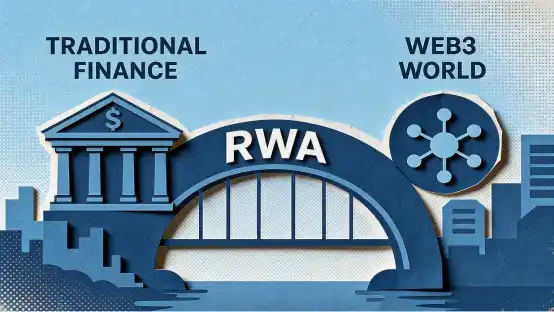
In the past, RWA (Real World Assets) mainly revolved around government bonds for a simple reason: bonds have low risk, simple structures, and are easy to bring on-chain. But the future development direction of RWA may not just be bonds, but equity assets, stock assets, and even unlisted assets.

If more SpaceX-type assets partially enter the on-chain market in the future, it means the logic of asset trading may change.

In the past, there was a huge disconnect between the primary and secondary markets. Ordinary investors struggled to participate in early-stage quality assets. But if assets begin to be tokenized, this boundary may be broken.

New models of asset circulation may emerge, such as on-chain asset issuance, on-chain asset trading, on-chain asset settlement, forming a global 24/7 liquidity network.

This change could be bigger than DeFi because DeFi redefines financial instruments, while RWA may redefine the assets themselves.

Therefore, from a project perspective, the first to benefit may not be asset projects, but infrastructure projects. ONDO may benefit from the expansion of asset issuance, LINK may benefit from the growing demand for asset data, and RWA networks like Plume may benefit from the increasing demand for asset liquidity.

In the past, the market traded tokens. In the future, it may begin to trade assets. And whoever masters the asset circulation network masters the value gateway.

III. Stablecoins, Payments, and DePIN: A New Underlying Logic Is Forming

If AI and RWA still belong to the growth logic, another possible main beneficiary line is the infrastructure logic.

The most easily overlooked point about SpaceX is that rockets are not its true core; what is truly valuable is Starlink.

Because Starlink is essentially not a hardware business, but a network business.

Networks typically have greater long-term value than products because products can be replaced, but once a network reaches scale, it creates barriers.

A similar situation exists in the crypto market.

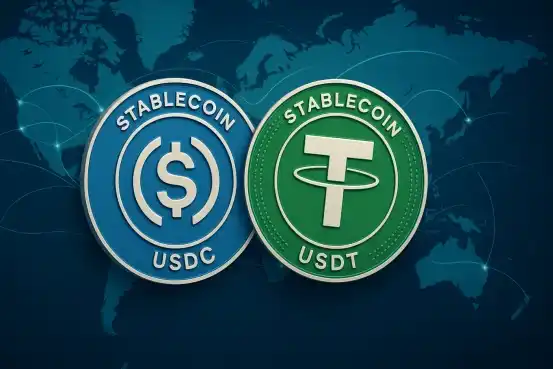
In the future, whether it's AI, RWA, or the development of on-chain securities, they will all ultimately require underlying settlement capabilities. Therefore, stablecoins may become one of the real big winners of the next cycle.

In the past, stablecoins were more understood as a medium of exchange. But in recent years, stablecoins have gradually evolved into financial infrastructure.

Cross-border payments need stablecoins.

On-chain securities need stablecoins. AI economic systems need stablecoins. Global asset circulation also needs stablecoins. This means the demand for stablecoins may no longer come from within the crypto market, but from the real world.

Simultaneously, payment protocols may also enter a stage of value revaluation. Many payment projects have long been undervalued by the market because payments seem to grow slowly.

But if the scale of the on-chain economy continues to expand in the future, the payment network itself could become a super gateway.

In addition, DePIN is also worth paying attention to.

In the past, the market mostly understood DePIN as a concept. But SpaceX actually proves one thing: real-world infrastructure can obtain extremely high valuations.

DePIN similarly attempts to use token incentives to build real-world networks—wireless networks, mapping systems, storage networks, computing networks—all essentially follow this logic.

If the market begins to reprice real-world infrastructure in the future, then DePIN may undergo a new value revaluation.

Because in the future, the most valuable thing may not be the application, but the network itself. This was true in the internet era, true in the mobile internet era, and may still be true in the AI era.

Conclusion

SpaceX appears to be an IPO event, but what it truly reflects is the new capital allocation path in the financial markets. The first stage is capital chasing stories, the second stage is capital chasing infrastructure, and the third stage is capital chasing cash flow.

Over the past few years, the crypto market has mostly remained in the first stage. In the coming years, capital may gradually enter the latter two stages. AI infrastructure, RWA, on-chain securities, stablecoins, payment networks, and DePIN may not rise the fastest in the short term, but they may be closer to the true underlying logic of the next cycle.

Because in every technological revolution, the ultimate biggest winners are often not the hottest applications, but those who build the underlying systems.

Связанные с этим вопросы

QWhat is the core argument the article makes about capital flow trends as illustrated by SpaceX's IPO?

AThe article argues that SpaceX's IPO illustrates a shift in capital's pricing logic from chasing narratives or stories to valuing underlying infrastructure. Capital is being reallocated towards AI, infrastructure, and future ecosystems. This trend suggests funds may overflow into crypto sectors that align with these new investment themes, such as AI infrastructure protocols, RWA networks, and foundational infrastructure like stablecoins and payment systems.

QAccording to the article, what is the potential shift in the AI crypto narrative, and which projects are cited as examples?

AThe article suggests the AI crypto narrative is shifting from trading AI applications to valuing AI infrastructure and 'pick-and-shovel' plays. It posits that future capital will target those who provide essential computing resources. Examples cited include TAO as an AI network layer protocol, and projects like RENDER, AKT, and IO, which could be re-evaluated as networks providing future computing liquidity rather than mere GPU rental platforms.

QHow might the RWA (Real World Assets) sector evolve beyond its current focus, as suggested by the article?

AThe article suggests RWA could evolve beyond tokenizing low-risk assets like treasuries to include equity assets, private company shares, and even pre-IPO assets like SpaceX. This would break down barriers between primary and secondary markets, allowing broader investor access. Such a shift would likely benefit infrastructure projects first, such as those facilitating asset issuance (ONDO), providing data (LINK), or enabling asset liquidity networks (Plume).

QWhy does the article identify stablecoins as a potential major winner in the next cycle?

AThe article argues that stablecoins are evolving from mere trading instruments into critical financial infrastructure. Future developments in AI economies, RWA, on-chain securities, and global asset flows will all require a reliable, neutral settlement layer. As these sectors grow and attract real-world demand, the need for stablecoins will extend far beyond the internal crypto market, potentially driving massive adoption and value accrual.

QWhat broader historical pattern does the article use to frame its conclusion about future crypto winners?

AThe article frames its conclusion using a historical pattern observed in technological revolutions: the biggest long-term winners are often not the most popular end-user applications, but the entities that build the underlying systems and infrastructure. It applies this logic to predict that in the coming crypto cycle, sectors like AI infrastructure, RWA networks, stablecoins, payment protocols, and DePIN may become the core winners by providing foundational value.

Похожее

From Banning Doubao to Embracing Honor: Why Did WeChat Suddenly 'Change Its Face'?

The article explores the sudden shift in WeChat's strategy towards AI assistants from mobile phone manufacturers, transitioning from strict opposition to active collaboration. For over a year, WeChat fiercely resisted attempts by phone AI assistants (like ByteDance's Doubao in late 2025) to control its features via GUI automation ("simulated clicking"), citing security and data control concerns. This stance created a significant barrier for system-level AI integration. Now, Tencent has initiated A2A (Agent-to-Agent) partnerships with major phone brands like Honor, Xiaomi, OPPO, and vivo. This model allows a phone's system AI (e.g., Honor's YOYO) to parse a user's voice command and send a structured request directly to WeChat's own internal AI agent via secure APIs. WeChat then executes the action (e.g., sending a message) and returns the result. The article attributes Tencent's "change of face" to strategic pressure. While leading in social app usage, Tencent trails rivals like ByteDance and Alibaba in standalone AI app popularity. WeChat, with its vast mini-program ecosystem, is Tencent's key asset for an AI comeback. The upcoming WeChat AI agent aims to handle tasks like booking and payments within the app. However, phone system assistants remain the primary AI entry point for most users. The A2A collaboration allows Tencent to extend WeChat's AI reach to this crucial system layer while maintaining control over its core functions and data. For phone manufacturers, embracing A2A is a pragmatic move. The GUI route proved unviable due to WeChat's blocks. A2A offers a compliant path to integrate a vital service, enhancing their AI assistants' usefulness. It allows them to focus on developing their own AI ecosystems for other services while cooperating on WeChat access. The collaboration is framed as a mutual, strategic necessity: Tencent gains a distribution channel, and manufacturers gain a key functionality. The partnership relies on a "dual authorization" mechanism for security, requiring both user and app consent for each action. While questions about long-term data privacy practices remain, experts note A2A is more secure and compliant than GUI automation. Ultimately, this cooperation is seen as a tentative, calculated truce. Tencent's long-term goal is to make WeChat an AI-powered "service OS." Phone manufacturers aim to make their system AI the central user interface. Their paths may converge or clash in the future, but for now, the A2A deal represents the opening chapter in the battle for the AI-era user入口, driven by necessity and strategic calculus on both sides.

marsbit1 ч. назад

From Banning Doubao to Embracing Honor: Why Did WeChat Suddenly 'Change Its Face'?

marsbit1 ч. назад

On-Chain Figures on the Eve of Kickoff: 1.6 Billion Traded Before the World Cup Even Begins

"On-Chain Numbers on the Eve of the World Cup: $1.6 Billion Traded Before Kick-off" Analysis of on-chain markets before the 2026 FIFA World Cup reveals significant crypto integration into football. The most striking figure is the approximately **$1.6 billion** in total trading volume on the single "World Cup Winner" contract on the Polymarket prediction market platform, accumulated before a single match was played. This represents explosive growth for a sector whose annual volume surged from ~$16B in 2024 to ~$64B in 2025. The ecosystem is maturing beyond speculation. Key developments include: 1) **Infrastructure upgrades** like Polymarket's migration to native, regulated USDC stablecoin for settlements; 2) **Reliable data oracles**, such as Chainlink, being used to resolve real-world match outcomes on-chain; and 3) **Official recognition**, with FIFA appointing its first-ever "Prediction Markets" partner. Over 100 contracts now cover everything from the outright winner to individual match results and even non-sporting risks like venue relocation. This evolution marks a fundamental shift. While crypto firms are absent from FIFA's top-tier sponsor list, the technology has deeply penetrated the tournament's financial and predictive infrastructure through regulated stablecoin settlements, decentralized oracles, and new official partnership categories. The regulatory landscape remains complex and varies by jurisdiction, but on-chain markets for the World Cup are already a multi-billion-dollar reality.

marsbit2 ч. назад

On-Chain Figures on the Eve of Kickoff: 1.6 Billion Traded Before the World Cup Even Begins

marsbit2 ч. назад

Торговля

Спот
Фьючерсы

Популярные статьи

Как купить S

Добро пожаловать на HTX.com! Мы сделали приобретение Sonic (S) простым и удобным. Следуйте нашему пошаговому руководству и отправляйтесь в свое крипто-путешествие.Шаг 1: Создайте аккаунт на HTXИспользуйте свой адрес электронной почты или номер телефона, чтобы зарегистрироваться и бесплатно создать аккаунт на HTX. Пройдите удобную регистрацию и откройте для себя весь функционал.Создать аккаунтШаг 2: Перейдите в Купить криптовалюту и выберите свой способ оплатыКредитная/Дебетовая Карта: Используйте свою карту Visa или Mastercard для мгновенной покупки Sonic (S).Баланс: Используйте средства с баланса вашего аккаунта HTX для простой торговли.Третьи Лица: Мы добавили популярные способы оплаты, такие как Google Pay и Apple Pay, для повышения удобства.P2P: Торгуйте напрямую с другими пользователями на HTX.Внебиржевая Торговля (OTC): Мы предлагаем индивидуальные услуги и конкурентоспособные обменные курсы для трейдеров.Шаг 3: Хранение Sonic (S)После приобретения вами Sonic (S) храните их в своем аккаунте на HTX. В качестве альтернативы вы можете отправить их куда-либо с помощью перевода в блокчейне или использовать для торговли с другими криптовалютами.Шаг 4: Торговля Sonic (S)С легкостью торгуйте Sonic (S) на спотовом рынке HTX. Просто зайдите в свой аккаунт, выберите торговую пару, совершайте сделки и следите за ними в режиме реального времени. Мы предлагаем удобный интерфейс как для начинающих, так и для опытных трейдеров.

1.4k просмотров всегоОпубликовано 2025.01.15Обновлено 2026.06.02

Как купить S

Sonic: Обновления под руководством Андре Кронье – новая звезда Layer-1 на фоне спада рынка

Он решает проблемы масштабируемости, совместимости между блокчейнами и стимулов для разработчиков с помощью технологических инноваций.

2.3k просмотров всегоОпубликовано 2025.04.09Обновлено 2025.04.09

Sonic: Обновления под руководством Андре Кронье – новая звезда Layer-1 на фоне спада рынка

HTX Learn: Пройдите обучение по "Sonic" и разделите 1000 USDT

HTX Learn — ваш проводник в мир перспективных проектов, и мы запускаем специальное мероприятие "Учитесь и Зарабатывайте", посвящённое этим проектам. Наше новое направление .

1.8k просмотров всегоОпубликовано 2025.04.10Обновлено 2025.04.10

HTX Learn: Пройдите обучение по "Sonic" и разделите 1000 USDT

Обсуждения

Добро пожаловать в Сообщество HTX. Здесь вы сможете быть в курсе последних новостей о развитии платформы и получить доступ к профессиональной аналитической информации о рынке. Мнения пользователей о цене на S (S) представлены ниже.

活动图片