Warsh's Debut: Will the FED Chair Who Knows Crypto Best Bring Surprises or Shocks to the Market?

marsbitОпубликовано 2026-06-16Обновлено 2026-06-16

Введение

Kevin Warsh, the new Federal Reserve Chairman, prepares for his inaugural press conference amidst a challenging macroeconomic landscape: resurgent inflation, a bond market sell-off, and political pressure from President Trump for rate cuts. Uniquely, Warsh holds indirect investments in over 20 crypto and Web3 entities (e.g., Solana, dYdX), making him the first Fed Chair with disclosed crypto exposure. His stance may combine a hawkish, inflation-focused monetary policy with a crypto-friendly regulatory philosophy that shifts from Powell’s “same risk, same rule” approach toward a framework acknowledging blockchain’s productivity value. Warsh’s leadership could impact crypto markets across three dimensions: a paradigm shift in regulation (potentially accelerating pro-innovation legislation and stable币 rules), a re-pricing of risk premiums based on clearer communication and his view of AI as a structural disinflationary force, and a long-term reallocation of global institutional capital driven by increased legitimacy. Two potential scenarios for the press conference are outlined. A “positive surprise” would involve a dovish-leaning tone on rates coupled with signals of regulatory openness, potentially boosting crypto asset valuations. Conversely, a “negative shock” would see a more hawkish-than-expected stance on inflation and rates, triggering a broad risk-asset selloff that crypto markets would not escape. While ethics rules required Warsh to divest his crypto holdings upon c...

Author: EXIO Institute

June 16, 2026

Macro Context: A "Debut" Moment Under Triple Pressure

After only three weeks in office, the new Federal Reserve Chairman Kevin Warsh is about to hold his first monetary policy press conference. The timing of this briefing is arguably the trickiest in recent years—inflation is resurging at its fastest pace in three years, US Treasuries are facing a sell-off, market-implied expectations for a year-end rate hike have surged sharply. Meanwhile, President Trump is publicly applying high-pressure from the Oval Office demanding rate cuts. Caught between "political will" and "market reality," Warsh's debut is destined to be anything but uneventful.

In the crypto asset market, all are holding their breath because Warsh will be the first Fed Chairman in history to disclose holdings of virtual assets in his financial disclosure forms. Within the approximately $192 million asset portfolio shared with his wife, indirect investments are buried in at least twenty crypto and Web3 entities including Solana, dYdX, Optimism, and Polychain Capital. The scope covers nearly every major sector of the industry, from L1 blockchains and L2 scaling solutions to DeFi protocols and Bitcoin payment infrastructure. As the helmsman of the Federal Reserve with firsthand venture capital exposure to blockchain technology, every nuance in his policy language could send ripples through the global crypto markets.

Policy Signals: Can a Hawkish Core Coexist with Crypto-Friendliness?

Warsh's stance on interest rate policy needs to be understood along two main lines.

The first is his hawkish core stance against inflation. This former Morgan Stanley banker was known as an "inflation hawk" even before taking office. His experience as a wealth advisor gave him an almost instinctive sensitivity to asset price inflation and monetary discipline. The current rebound in US CPI, the steepening Treasury yield curve, and the market's heated bets on a year-end rate hike are all shrinking his room for policy maneuver. Analysis from Bloomberg points out that investors are already selling US Treasuries and betting the Fed will need to start raising rates before year-end—a direct contradiction to Trump's calls for rate cuts.

The second line is his unique understanding of digital assets. Warsh's crypto investment track record is not merely academic. As early as 2011, he received the Bitcoin whitepaper from Marc Andreessen at a dinner; in 2018, he wrote in the Wall Street Journal that Bitcoin could become a "perpetual store of value"; in 2021, he stated on CNBC that "for people under forty, Bitcoin is their new gold"; in 2025, during a Hoover Institution interview, he gave his most complete statement to date—Bitcoin is not a substitute for the dollar, but it is a "good cop on policy." This cognitive framework, which views crypto assets as macroeconomic "monitors," differs fundamentally from the defensive regulatory mindset of the Powell era, which simply categorized Bitcoin as a "speculative asset."

However, these two lines are not without tension. A chairman inclined towards tighter monetary policy due to inflation concerns is theoretically not favorable for risk assets. But Warsh's recognition of the productivity value of crypto technology—he has characterized software development in the crypto industry as part of US economic competitiveness—means that even in a relatively tight interest rate environment, friendly signals from the regulatory side could still inject structural confidence into the market. This combination of "hawkish rates + friendly regulation" will become a core variable for crypto asset pricing during his tenure.

Impact on Crypto Assets: A Restructuring of Macro Market Pricing Logic

The impact of Warsh's appointment on the macro market for crypto assets can be assessed across three dimensions.

A paradigm shift in regulatory expectations. The Fed under Powell adhered to "same activity, same rules," with the core aim of building a firewall to prevent crypto market volatility from affecting traditional banks. Warsh is inclined towards establishing a "dedicated framework" that acknowledges the productivity value of blockchain technology. This shift in regulatory philosophy from "defense and prevention" to "integration and innovation" could accelerate the passage of the "CLARITY Act," provide clearer compliance paths for stablecoin issuers, and fundamentally reshape Wall Street institutions' risk-reward calculus for participating in crypto markets. Warsh's own publicly stated opposition to a retail CBDC—he once called it a "bad policy choice"—also means the Fed will be more inclined to support privately-issued stablecoin ecosystems, constituting a medium- to long-term boon for the entire DeFi infrastructure.

Repricing of the rate path and risk premium. If Warsh signals a hawkish tone at this press conference—for example, by emphasizing inflation risks and hinting that rate hikes are not entirely off the table—risk assets could face pressure in the short term, and the crypto market would not be immune. However, from a structural perspective, Warsh views AI-driven productivity gains as a "structural inflation dampener." This implies that if tech-driven productivity growth indeed suppresses inflation expectations, the Fed would have room to maintain a relatively accommodative rate environment even amidst a strong economy—a condition historically favorable for the valuation expansion of scarce assets. For the crypto market, the key is not "whether rates are cut," but "whether policy uncertainty is reduced." A chairman capable of clearly communicating policy intentions and possessing deep knowledge of digital assets is, in himself, a factor that reduces uncertainty premiums.

Reallocation of global capital flows. Warsh's crypto investment background is arguably unique among the heads of major global central banks. This fact signals to global institutional investors that the attitude of the highest US monetary authority towards crypto assets has shifted from "watchfulness and caution" to "understanding and acceptance." This enhancement in legitimacy could accelerate the allocation process of traditional pension funds, insurance funds, and sovereign wealth funds into digital assets, thereby bringing structural, long-term capital inflows to the crypto market.

Outlook: Surprise or Shock?

Looking ahead to this monetary policy meeting, the possible paths for the macro market can be roughly summarized in two scenarios.

Scenario One: "Surprise"—Dovish tone combined with crypto-friendly signals. If Warsh acknowledges inflation risks while emphasizing the medium- to long-term dampening effect of AI productivity on inflation, and indirectly signals recognition of the innovative value of digital assets, the market could reap the dual benefits of "reduced policy uncertainty" and "heightened expectations for friendly regulation." In this scenario, crypto assets, as representatives of high-risk-appetit/assets, could see a valuation recovery driven by institutional capital inflows.

Scenario Two: "Shock"—Unexpectedly hawkish stance suppressing risk appetite. If Warsh sends a clear signal for a year-end rate hike, or even expresses concerns about asset price bubbles, risk assets could face indiscriminate selling, and the crypto market would not be spared. In that event, even the identity of "the FED Chair who knows crypto best in history" would struggle to withstand the systemic risk aversion triggered by macro liquidity tightening.

It is noteworthy that, under Office of Government Ethics rules, Warsh has pledged to sell all crypto-related holdings upon confirmation and to recuse himself from related matters. This means he may not be able to quickly translate his personal "sympathetic attitude" towards the crypto industry into concrete policy actions in the early days of his tenure.

However, from a longer-term perspective, a Fed Chairman who truly understands the logic of blockchain technology, whose regulatory discourse is inherently built on "understanding and respect," is in itself one of the most solid infrastructures for the mainstreaming of crypto assets. The ultimate answer to this debut may not lie in the binary choice between "surprise" and "shock," but in whether the market can read from Warsh's policy signals the outline of a new era with greater coherence.


Связанные с этим вопросы

QWho is Kevin Warsh, and what makes his upcoming Federal Reserve press conference particularly significant for the crypto market?

AKevin Warsh is the new Chairman of the Federal Reserve. His press conference is highly significant for the crypto market because he is the first Fed Chair whose financial disclosures reveal indirect investments in numerous crypto and Web3 entities, making him potentially the most knowledgeable about crypto among all Fed leaders.

QWhat are the two main lines influencing Kevin Warsh's interest rate policy stance according to the article?

AThe two main lines are: 1) A hawkish stance on fighting inflation, driven by concerns over rising CPI and market expectations for rate hikes. 2) His unique understanding and perceived friendliness towards digital assets, viewing them as a macroeconomic 'monitor' and part of U.S. economic competitiveness.

QHow might Kevin Warsh's approach to crypto regulation differ from his predecessor, Jerome Powell?

AJerome Powell's approach focused on 'same activity, same rules' and building firewalls to protect traditional banks. In contrast, Kevin Warsh is expected to favor creating a 'dedicated framework' for crypto, acknowledging blockchain's productivity value, shifting the philosophy from 'defense and prevention' to 'integration and innovation'.

QWhat are the two possible scenarios ('surprise' and 'shock') for the crypto market following Warsh's press conference?

AScenario 1 (Surprise): A dovish tone combined with crypto-friendly signals could boost market confidence and lead to a valuation recovery. Scenario 2 (Shock): An unexpectedly hawkish signal hinting at rate hikes could trigger a broad sell-off in risk assets, including crypto, despite Warsh's personal understanding of the sector.

QAccording to the article, what is the potential long-term impact of having a crypto-knowledgeable Fed Chair like Kevin Warsh?

AThe long-term impact is the legitimization and mainstream adoption of crypto assets. His deep understanding builds 'understanding and respect' into the regulatory discourse, which can reduce policy uncertainty, accelerate institutional investment from funds like pensions and sovereign wealth funds, and provide a solid foundation for crypto's integration into the broader financial system.

Похожее

Has the Crypto Market Bottomed? Here's What Institutions Think

The crypto market is in a period of significant debate, with leading institutions offering differing views on whether a bottom has been reached. Three prominent firms have published detailed analyses: * **Galaxy Digital** argues Bitcoin has **not yet bottomed**. Their analysis of 13 historical indicators across six dimensions (valuation, profit-taking, miner pressure, etc.) shows only four are fully met. They project a potential bottom range between $30k and $54k. * **NYDIG** states a bottom is **possible but not likely**. While metrics are close to historic bear market extremes, they note the absence of a classic panic-selling event. They also suggest increased institutional adoption may have structurally altered the market cycle, potentially leading to a shallower downturn. * **Standard Chartered Bank** asserts the **bottom has already occurred** at around $59k. They cite two key factors: potential US-Iran diplomatic progress and the anticipated SpaceX IPO, which they believe absorbed capital and caused ETF selling pressure that is now subsiding. They forecast a year-end price target of $100k. Despite the surface-level disagreement, the reports share critical common ground more valuable for long-term investors: 1. All three believe the market bottom will form **within this year**. 2. All agree the current price is **closer to the bottom than to previous highs**. 3. All maintain a **bullish long-term outlook** for Bitcoin and a new cycle. The core takeaway is that while the exact bottom price ($40k, $50k, or $60k) is debated, the consensus is that a bottom is imminent. For long-term holders, the primary focus should not be pinpointing the absolute low, but on the future potential for prices to reach $100k, $200k, or higher. The fundamental thesis for Bitcoin—sovereign debt accumulation, inflation, declining trust in centralized institutions, global digitization, and improved accessibility—remains intact and is arguably strengthening. The overall landscape is viewed as more favorable than in previous crypto winters.

marsbit7 мин. назад

Has the Crypto Market Bottomed? Here's What Institutions Think

marsbit7 мин. назад

The 'Chip' Challenge and Breakthroughs in China's Optical Industry Chain

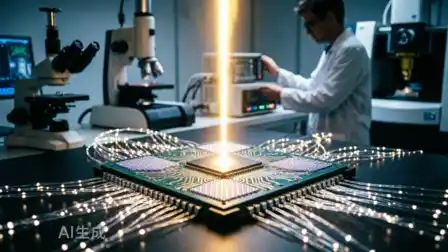
China's Photonics Industry: Bottlenecks and Breakthroughs In the global AI race, computing chips dominate the narrative, but the underlying bottleneck increasingly defining the scale of AI clusters is light—or more specifically, optical connectivity. Optical modules, which translate electrical signals to light and vice versa, are crucial for connecting thousands of GPUs in AI data centers, preventing data congestion and ensuring efficient model training. High-speed modules (800G, 1.6T) are now standard, with performance hinging on advanced DSP (Digital Signal Processor) chips. This is where a critical dependency lies. Two US giants—Marvell and Broadcom—collectively dominate over 90% of the high-end DSP chip market. Chinese optical module leaders like Zhongji Innolight and Eoptolink rely on these chips to manufacture modules for overseas AI customers, primarily in North America. While this creates a supply chain vulnerability, complete decoupling is difficult. Marvell derives over half its revenue from Greater China, and the US firms depend on Chinese partners for chip packaging and optical components. The risk from laser chips (e.g., from Lumentum), another key component, is considered more manageable due to multiple global suppliers and faster progress in domestic alternatives from companies like YOFC and Accelink. To mitigate risks, China's industry is pursuing a multi-pronged strategy: diversifying supply chains and locking in long-term orders; fostering a domestic market ecosystem to adopt homegrown DSPs from firms like Huawei HiSilicon and CETC; accelerating R&D in high-speed DSPs and advanced packaging; and investing in next-gen technologies like silicon photonics and Co-Packaged Optics (CPO) to reduce reliance on discrete DSPs. The ultimate solution lies not in short-term博弈 but in persistent advancement of domestic high-end chip R&D and manufacturing. While challenges remain in performance, certification, and ecosystem building, China's vast domestic market and manufacturing base provide a crucial buffer, buying time for the industry to achieve greater technological independence.

marsbit20 мин. назад

The 'Chip' Challenge and Breakthroughs in China's Optical Industry Chain

marsbit20 мин. назад

Behind SpaceX's $2 Trillion Market Cap: Why Does Musk Always Have the Next Move Planned?

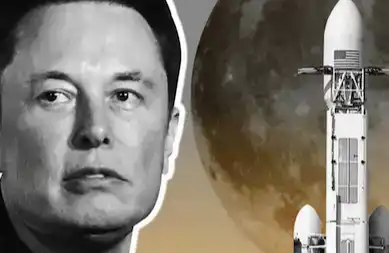
On June 12th, SpaceX debuted on the Nasdaq, reaching a valuation that briefly touched $2 trillion. This marked the culmination of a 24-year journey from its founding in 2002, driven by Elon Musk's frustration at the high cost of buying rockets. The company's path was defined by early failures, with its first three Falcon 1 launches ending in explosions before a successful 2008 flight opened the era of commercial spaceflight. Key to its model was a fixed-price NASA contract, incentivizing cost reduction. SpaceX mastered rocket reusability, first achieving a Falcon 9 landing in 2015, which drastically cut launch costs. This enabled its profitable Starlink satellite internet constellation, envisioned years before reusability was proven, to create an internal market for frequent launches. Similarly, the next-generation Starship rocket was in development long before its first flight, with its business case evolving from Mars colonization to supporting the emerging concept of in-orbit data centers for AI—a story now central to its valuation. The company's recent IPO, a reversal of its long-standing "no IPO" stance, is funding this ambitious "space-based compute" vision. While major tech players like Google, Blue Origin, and others are investing heavily, significant technical and cost hurdles remain. Ultimately, SpaceX's history is one of creating its own demand: first with Starlink and now with space-based AI compute, betting that its next rocket will enable its next giant market.

marsbit23 мин. назад

Behind SpaceX's $2 Trillion Market Cap: Why Does Musk Always Have the Next Move Planned?

marsbit23 мин. назад

When Crypto Meets the World Cup: CoinW and Modrić's Art of "Navigating Cycles"

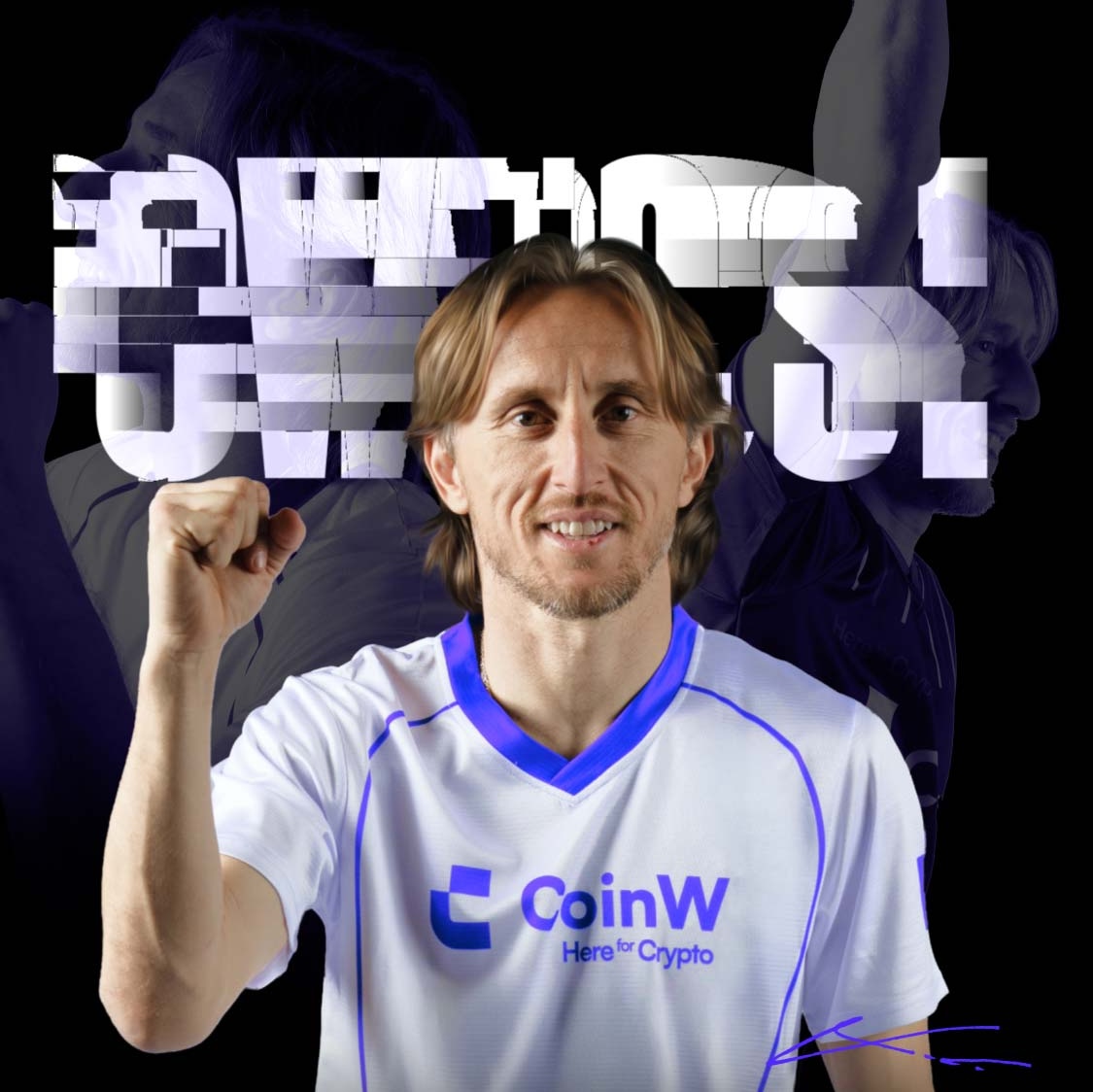
When Encryption Meets the World Cup: CoinW and Modrić's "Transcending Cycles" Philosophy In the context of the 2026 FIFA World Cup and its massive global audience, the crypto exchange CoinW announced football legend Luka Modrić as its global brand ambassador. This move is framed not merely as a marketing tactic, but as a strategic experiment in user profile migration. It targets mature, financially stable football fans—particularly in Europe, Southeast Asia, and Latin America—who traditionally have low crypto awareness but value trusted, time-tested authority figures like Modrić. The article draws parallels between Modrić's enduring, disciplined career—marked by consistency and success at the highest level over two decades—and CoinW's own development path. Founded in 2017 during a volatile industry period, CoinW focused on building robust infrastructure and risk management. It weathered the 2022 industry crisis without major security incidents, subsequently earning recognition like "Europe's Most Trusted Exchange" and growing to over 20 million registered users. This "long-termism" is translated into user-centric products. CoinW Academy lowers the initial knowledge barrier. Its integrated ecosystem (CoinW, GemW, DeriW, PropW) and the recent launch of a TradFi section—offering perpetual contracts on traditional assets like stocks, gold, and oil—aim to create a unified platform for diverse assets. For the World Cup, CoinW launched the "We Are The Game" campaign, collaborating with Alchemy Pay to offer zero-fee deposits and local payment options, aiming to transform spectators into participants and lower entry barriers. Ultimately, CoinW's sports partnerships and product strategy are presented as a concerted effort to build trust and accessibility for the "silent majority" still outside crypto—shifting the industry narrative toward inclusivity and long-term value.

Foresight News29 мин. назад

When Crypto Meets the World Cup: CoinW and Modrić's Art of "Navigating Cycles"

Foresight News29 мин. назад

Торговля

Спот
Фьючерсы

Популярные статьи

Как купить S

Добро пожаловать на HTX.com! Мы сделали приобретение Sonic (S) простым и удобным. Следуйте нашему пошаговому руководству и отправляйтесь в свое крипто-путешествие.Шаг 1: Создайте аккаунт на HTXИспользуйте свой адрес электронной почты или номер телефона, чтобы зарегистрироваться и бесплатно создать аккаунт на HTX. Пройдите удобную регистрацию и откройте для себя весь функционал.Создать аккаунтШаг 2: Перейдите в Купить криптовалюту и выберите свой способ оплатыКредитная/Дебетовая Карта: Используйте свою карту Visa или Mastercard для мгновенной покупки Sonic (S).Баланс: Используйте средства с баланса вашего аккаунта HTX для простой торговли.Третьи Лица: Мы добавили популярные способы оплаты, такие как Google Pay и Apple Pay, для повышения удобства.P2P: Торгуйте напрямую с другими пользователями на HTX.Внебиржевая Торговля (OTC): Мы предлагаем индивидуальные услуги и конкурентоспособные обменные курсы для трейдеров.Шаг 3: Хранение Sonic (S)После приобретения вами Sonic (S) храните их в своем аккаунте на HTX. В качестве альтернативы вы можете отправить их куда-либо с помощью перевода в блокчейне или использовать для торговли с другими криптовалютами.Шаг 4: Торговля Sonic (S)С легкостью торгуйте Sonic (S) на спотовом рынке HTX. Просто зайдите в свой аккаунт, выберите торговую пару, совершайте сделки и следите за ними в режиме реального времени. Мы предлагаем удобный интерфейс как для начинающих, так и для опытных трейдеров.

1.5k просмотров всегоОпубликовано 2025.01.15Обновлено 2026.06.02

Как купить S

Sonic: Обновления под руководством Андре Кронье – новая звезда Layer-1 на фоне спада рынка

Он решает проблемы масштабируемости, совместимости между блокчейнами и стимулов для разработчиков с помощью технологических инноваций.

2.3k просмотров всегоОпубликовано 2025.04.09Обновлено 2025.04.09

Sonic: Обновления под руководством Андре Кронье – новая звезда Layer-1 на фоне спада рынка

HTX Learn: Пройдите обучение по "Sonic" и разделите 1000 USDT

HTX Learn — ваш проводник в мир перспективных проектов, и мы запускаем специальное мероприятие "Учитесь и Зарабатывайте", посвящённое этим проектам. Наше новое направление .

1.8k просмотров всегоОпубликовано 2025.04.10Обновлено 2025.04.10

HTX Learn: Пройдите обучение по "Sonic" и разделите 1000 USDT

Обсуждения

Добро пожаловать в Сообщество HTX. Здесь вы сможете быть в курсе последних новостей о развитии платформы и получить доступ к профессиональной аналитической информации о рынке. Мнения пользователей о цене на S (S) представлены ниже.

活动图片