Author: 137Labs
Just moments ago, Tim Cook officially announced that he will step down as CEO, a piece of news that quickly swept through the global tech community. Since taking over the reins from Steve Jobs in 2011, Cook has spent fifteen years propelling Apple Inc. from a tech company with a market value of about $350 billion to a historic high approaching $4 trillion.
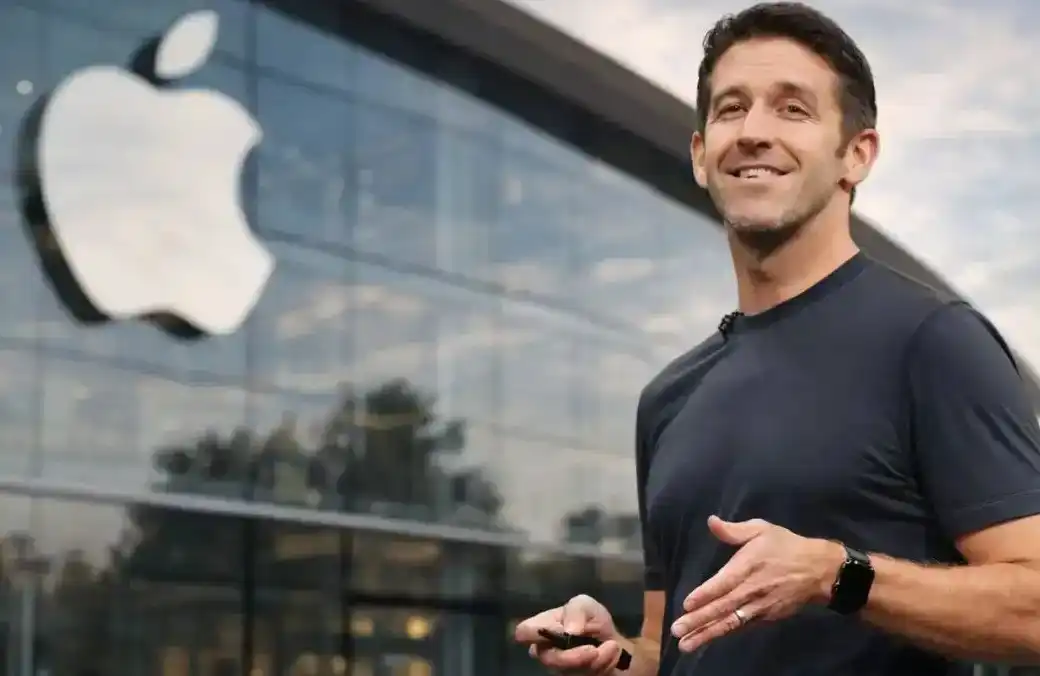
This is a business legend that is beyond almost any dispute. However, the end of a legend often marks the beginning of new uncertainties. According to the arrangement, Cook will officially step down as CEO in September this year, transitioning to the role of Executive Chairman. Taking over the position is John Ternus—a "pure-blooded engineer" who grew up within Apple.
After the news was released, the entire industry quickly reacted, with tech leaders including Sam Altman publicly paying tribute, calling Cook "a symbol of an era." But beyond the tributes, more practical questions have already emerged: In the current full-blown era of artificial intelligence, has Apple already fallen a step behind?
I. "The Chosen Successor": A Long-Rehearsed Power Transition
In fact, Ternus's rise to power was not a temporary decision but rather a natural endpoint after a long period of铺垫. Over the past year, speculation about him becoming the successor has continuously emerged. Now that the shoe has dropped, it merely confirms market expectations.
From the board's perspective, this choice carries strong "certainty." First, there is the matching age structure. Ternus is currently 50 years old, highly similar to Cook's age when he took over, meaning he has the potential for a complete, long-term leadership cycle—ten years or even longer. This kind of temporal stability is of极高 value for a company of such massive scale.
Second, and more crucially, is his technical background. Unlike Cook, who is known for supply chain and operations, Ternus has devoted almost his entire career to hardware engineering. From joining Apple in 2001 to overseeing core product lines like the iPhone and Mac, his growth path has almost completely overlapped with Apple's hardware system. This type of "engineer-born" leader is precisely what Apple needs most at its current stage.
Finally, there is the "visibility" of the power transition. In recent years, Cook has increasingly handed over more public-facing opportunities to Ternus—from new product launches to retail store openings, and even media interviews and strategic communications. These symbolic actions, originally belonging to the CEO, have gradually shifted to him. This is not only a delegation of responsibilities but also a reshaping of public perception: Apple is actively shaping the image of its next helmsman.
In other words, even before the official appointment, Ternus had, to some extent, "exercised part of the CEO's power."
>II. Organizational Reshuffle: The Rebalancing of Apple's Internal Power Structure
Alongside Ternus's promotion, the technical power格局 within Apple has also changed simultaneously. One of the most notable points is the further strengthening of the hardware system.
Taking over Ternus's former responsibilities is Johny Srouji, long responsible for chip development. He has been promoted to Chief Hardware Officer, an adjustment of great significance. Over the past decade, Apple has built a core competitive advantage through its self-developed chips (Apple Silicon), and Srouji has been a key driver of this strategy.
This means Apple's future technology roadmap will focus even more intensely on two dimensions:
One is product engineering capability (represented by Ternus), and the other is underlying computing power (controlled by Srouji).
The convergence of these two lines essentially serves one goal—to reclaim technological leadership.
However, the problem is that this structure might have been sufficiently powerful in the traditional hardware era, but it may not hold up in the AI era.
>III. The Delayed Future: The "AI Debt" Left by Cook
If there is any truly unfinished task from the Cook era, the answer is almost indisputable: artificial intelligence.
As early as 2018, Apple brought in John Giannandrea from Google, attempting to systematically enhance AI capabilities, particularly to revitalize Siri. However, years later, this project not only failed to succeed but gradually evolved into a case study of organizational and strategic missteps.
Over the past few years, multiple promised upgrades for Siri have been repeatedly delayed, from initial功能演示 to constantly postponed release dates, gradually eroding market trust. Meanwhile, internal power within the AI team was continuously split, moving from initial centralized management to multiple executives sharing responsibility. This fragmented structure made it difficult for Apple to form a unified pace for technological advancement.
More symbolically, Apple ultimately chose to partner with Google,引入 its model capabilities to support its own AI system. This move might be pragmatic from a business perspective, but strategically it appears passive: the world's most valuable tech company relying on a competitor for core technology.
The root of the problem lies not entirely in technology, but in organizational mechanisms. Apple has long been known for its small-scale decision-making and strong control, a model that was extremely efficient in the hardware era. But in the AI era, which requires rapid iteration and open collaboration, it could become a constraint.
Therefore, what Ternus inherits is not a complete system, but an AI strategy that has yet to prove itself.
>IV. The Test of the ASI Era: Apple's Reason for Being is Being Redefined
Pulling the perspective back even further, it becomes clear that what Apple faces is not merely "lagging in AI," but a deeper paradigm conflict.
Over the past two decades, Apple's success has been built on a closed loop of "hardware + operating system + ecosystem." But as Artificial General Intelligence (ASI) gradually becomes a reality, the core of technology is shifting from the device itself to the intelligent capabilities themselves. In other words, what users truly rely on may no longer be the phone, but the intelligent system running on the device.
Under this trend, Apple's strengths and weaknesses are simultaneously放大. On one hand, over two billion devices worldwide form an unparalleled distribution network, an entry point that no AI company can easily replicate; but on the other hand, this vast ecosystem also意味着 path dependency, making radical transformation difficult.
On-device AI is seen as Apple's key breakthrough. This direction emphasizes privacy and local computing power,高度契合 with Apple's consistent values. But the problem is that this path is still full of uncertainty: it could either become a differentiated advantage or lose competitiveness due to limited capabilities.
Therefore, many of the choices Apple is currently making—including introducing external models, strengthening chip capabilities, and adjusting the organizational structure—are essentially about "finding a balance between ideal and reality."
>V. The Time Window: A Shorter Countdown Than Imagined
From the outside perspective, Ternus似乎 has ample time to prove himself. But reality might be more urgent.
The next critical juncture likely lies in the upcoming Worldwide Developers Conference (WWDC). This stage is not just a product launch event; it is Apple's window to explain its technology roadmap to the world. If Apple cannot provide a clear AI strategy and product direction in the short term, market confidence will quickly waver.
In other words, this succession is not a long-term proposition, but更像 a short-cycle pressure test.
>Conclusion
On the surface, Cook's curtain call and Ternus's succession represent a smooth, orderly, and long-planned power transition; but on a deeper level, this is actually an era transition with no certain answers.
The Apple of the Cook era has pushed "business success" to its extreme; the Apple of the Ternus era must now answer a more difficult question: In a new world driven by artificial intelligence, can Apple once again become the company that "defines the future"?
If Jobs gave Apple its soul, and Cook established its order, then Ternus's task is perhaps to rediscover Apple's direction atop that order.
And that is the true significance of this power transition.