Cango Releases Q1 Financial Report: Total Revenue of $102 Million, Business Expands into AI Computing Infrastructure

marsbitОпубликовано 2026-06-01Обновлено 2026-06-01

Введение

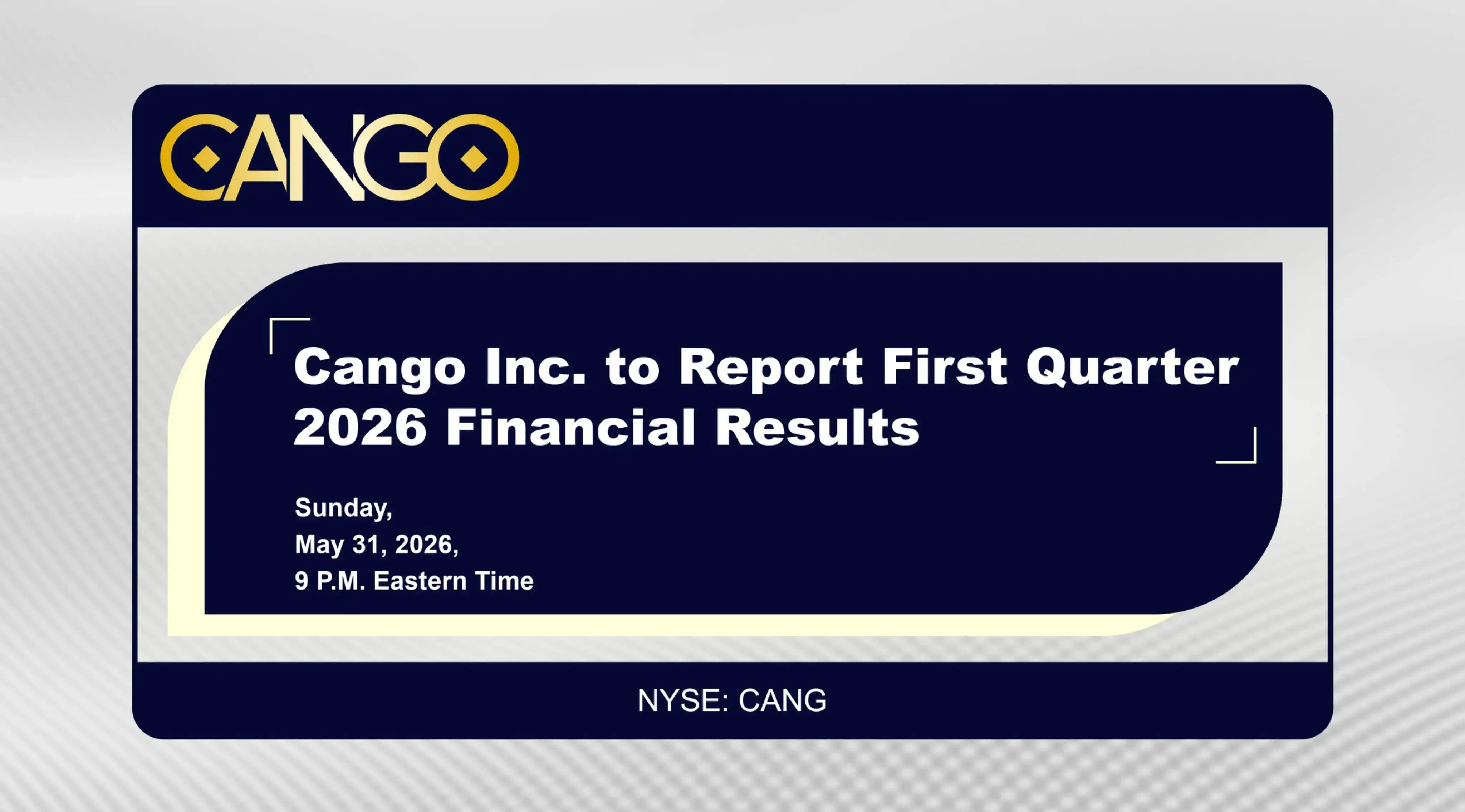
Cango Releases Q1 2026 Financial Results: Total Revenue of $102 Million, Business Expands into AI Compute Infrastructure Bitcoin mining company Cango reported unaudited financial results for Q1 2026. While bitcoin mining remains its core revenue driver, the company is strategically expanding into energy and AI compute infrastructure. **Key Financial & Operational Highlights:** * **Revenue & Performance:** Total revenue for the quarter was $102 million, with $98.4 million coming from bitcoin mining. However, the company reported a net loss of $261.1 million, primarily attributed to non-cash impacts like bitcoin price declines leading to miner impairments and fair value losses on its bitcoin holdings. Notably, long-term debt was significantly reduced to $30.6 million from $557.6 million at the end of 2025. * **Mining Operations:** Cango's total hash rate was 37.01 EH/s. It mined 1,266 bitcoin during the quarter and reduced its average cash cost per bitcoin by 9.0% quarter-over-quarter to $76,928, demonstrating improved operational efficiency. * **AI Business Expansion:** The company introduced EcoHash, a new commercial platform. This initiative leverages Cango's existing expertise in energy management and high-density computing to provide infrastructure for AI workloads, starting with GPU compute leasing. Management emphasized executing a disciplined strategy to strengthen the core mining business while advancing AI infrastructure through EcoHash. They highlighted pro...

Today, Bitcoin mining company Cango released its unaudited financial results for the first quarter of 2026. The company is currently leveraging its global operational capabilities to extend its business from Bitcoin mining into the fields of energy and AI computing infrastructure.

2026 First Quarter Financial and Operational Highlights

  • Financial Performance: In the first quarter of 2026, the company achieved total revenue of $102 million, with Bitcoin mining contributing $98.4 million, constituting the primary source of revenue for the quarter. The company recorded a net loss of $261.1 million during the reporting period. This loss was primarily attributed to non-cash items, including impairment charges on mining rigs due to the decline in Bitcoin market price and losses arising from the fair value change of Bitcoin holdings. As of March 31, 2026, the company's long-term debt decreased to $30.6 million, compared to $557.6 million as of December 31, 2025. At the end of the quarter, the company held 1,026 Bitcoin as digital asset reserves.
  • Mining Operations and Costs: The company continued to enhance operational efficiency while maintaining a more prudent operational scale. During the reporting period, the company's total hash rate was 37.01 EH/s, consisting of 27.98 EH/s from self-operated mining and 9.02 EH/s from leased hash rate. In the first quarter, the company mined a total of 1,266 Bitcoin. Benefiting from optimized mining rig portfolio and cost management, the company's average cash cost per Bitcoin decreased by 9.0% quarter-on-quarter compared to Q4 2025, dropping to $76,928, reflecting the company's ongoing efforts to improve mining operational efficiency.
  • AI Business Expansion: The company is leveraging its existing infrastructure capabilities to expand its business from Bitcoin mining into AI computing services. This quarter, Cango launched a new commercial platform, EcoHash, planning to repurpose its experience in energy management and high-density computing to provide infrastructure support for AI computing demands. The company is currently advancing pilot deployments of modular, containerized computing units. This project follows a phased approach, initially focusing on GPU hash rate leasing, with plans to gradually expand into a global AI computing network.

Cango's CEO, Paul Yu, stated, "The company is executing a steady and disciplined strategy, continuing to solidify the foundation of our Bitcoin mining business on one hand, while advancing the layout of AI infrastructure through EcoHash on the other. Over the past few months, the company has seen positive progress, including the continued reduction in costs driven by our mining rig upgrade strategy and stable operations of our global mining business. Meanwhile, the EcoHash project is progressing steadily, with related pilot deployments proceeding as planned. Leveraging our global energy network and operational experience, Cango is well-positioned to further enhance operational efficiency, seize emerging opportunities in the AI computing sector, and drive long-term, sustainable value growth."

Furthermore, Cango's CFO, Simon Tang, stated, "Despite a challenging operating environment in the first quarter affected by industry adjustments and non-cash items, the company has made substantial progress in optimizing its cost structure and strengthening its balance sheet. The company has reduced its long-term debt and continues to drive down mining cash costs through rigorous execution of our operational strategy. Looking ahead, the company will remain focused on enhancing cash flow resilience, maintaining financial flexibility, and supporting the transition towards a more efficient and diversified infrastructure platform."

2026 First Quarter Continuing Operations Financial Results

Revenue

In the first quarter of 2026, the company's total revenue was $102 million, with Bitcoin mining revenue at $98.4 million. Compared to the fourth quarter of 2025, the company's total revenue decreased by approximately 43%, primarily due to the company's proactive reduction in operational hash rate scale. During this process, the company phased out older, less efficient S19 series mining rigs and converted a portion of its hash rate into leased hash rate.

Operating Costs and Expenses

In the first quarter of 2026, the company's total operating costs and expenses were $356.4 million. These costs were primarily related to the company's Bitcoin mining business, recognition of mining rig impairment losses, losses from disposal of mining rigs, and losses from the fair value change of Bitcoin-collateralized receivables.

  • Cost of revenue (excluding depreciation presented separately below) was $99.6 million, lower than the $155.3 million in Q4 2025, mainly due to reduced electricity and hosting fees following the reduction in hash rate scale;
  • Depreciation expense was $29.4 million;
  • General and administrative expenses, including related party fees, totaled $7.2 million;
  • Mining rig impairment loss was $49.0 million;
  • Loss on disposal of mining rigs was $20.3 million;
  • Loss from the fair value change of Bitcoin-collateralized receivables was $151.8 million, lower than the $171.4 million in Q4 2025. This non-cash loss was primarily impacted by the decline in Bitcoin price during the quarter.

Operating Loss

In the first quarter of 2026, the company's operating loss was $254.4 million, compared to an operating loss of $26.9 million in the same period of 2025. The expanded loss was primarily due to the decline in Bitcoin price.

Net Loss from Continuing Operations

In the first quarter of 2026, the company's net loss from continuing operations was $261.1 million, compared to a net loss of $28.3 million in the same period of 2025.

Adjusted EBITDA

In the first quarter of 2026, the company's Adjusted EBITDA loss was $154.1 million, compared to an Adjusted EBITDA loss of $1.7 million in the same period of 2025.

Balance Sheet

As of March 31, 2026, the company held:

  • Cash and cash equivalents of $7.2 million, down from $41.2 million at the end of 2025, mainly due to debt repayment and operating expenditures;
  • Bitcoin-collateralized receivables, a non-current related party item, with a net value of $68.2 million;
  • Mining rig assets, net value of $130.8 million;
  • Long-term debt (related party item) of $30.6 million, significantly reduced from $557.6 million as of December 31, 2025;

Cango stated that the significant reduction in Bitcoin-collateralized receivables and related long-term debt reflects the company's proactive efforts to deleverage during the quarter.


Связанные с этим вопросы

QWhat were Cango's total revenue and primary source of income for the first quarter of 2026?

ACango's total revenue for Q1 2026 was $102 million. The primary source of income was its Bitcoin mining business, which contributed $98.4 million.

QWhat is the strategic business expansion announced by Cango in the report, and what is the name of the new platform?

ACango announced an expansion from Bitcoin mining into AI computing infrastructure services. The new commercial platform is named EcoHash.

QWhat was the reported net loss for Cango in Q1 2026, and what were the main reasons for it?

ACango reported a net loss of $261.1 million in Q1 2026. The loss was primarily due to non-cash items, including impairments on mining rigs and losses from changes in the fair value of Bitcoin holdings, both driven by a decline in Bitcoin's market price.

QHow did Cango's mining hash rate and Bitcoin cash cost per coin perform in the first quarter?

ACango's total hash rate was 37.01 EH/s, comprising 27.98 EH/s from self-mining and 9.02 EH/s from hosting. The average cash cost per Bitcoin mined decreased by 9.0% quarter-over-quarter to $76,928.

QWhat significant improvement did Cango achieve in its balance sheet regarding long-term debt by the end of Q1 2026?

ACango significantly reduced its long-term debt to $30.6 million as of March 31, 2026, down from $557.6 million as of December 31, 2025, reflecting its active de-leveraging efforts.

Похожее

What's New in Jensen Huang's 'Agent Factory'?

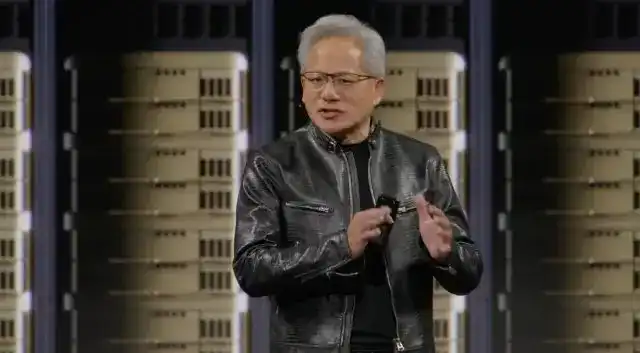
In a keynote at COMPUTEX 2026, NVIDIA CEO Jensen Huang shifted the company's focus from hardware "full-stack" solutions to the era of AI Agents. The centerpiece is the Vera Rubin platform, now in production, which is designed specifically for Agent workloads and offers 10x the efficiency of its predecessor. The platform features the new Vera CPU, built for AI, and incorporates Spectrum-X Ethernet Photonics with CPO technology for improved networking and energy efficiency. NVIDIA introduced DSX, an integrated toolkit for designing, simulating, and operating AI data centers, aiming to streamline "AI factory" deployment and management. For end-user deployment, the company unveiled DGX Station for Windows, a desktop AI supercomputer for running Agents locally, and the RTX Spark SoC for AI PCs. On the software front, NVIDIA launched the 550B-parameter Nemotron 3 Ultra model for enterprise Agents and the Cosmos 3 foundation model for physical AI, unifying visual reasoning and action prediction. In robotics, a partnership with Unitree yielded the H2 Plus, a reference humanoid robot built on the Isaac GR00T platform to lower development barriers. Security was emphasized with enhanced confidential computing for Vera Rubin and new data path security features for the BlueField-4 STX storage platform. The presentation highlighted a strategic pivot: NVIDIA is reorganizing its entire technology stack—from chips and data centers to models, software, and robots—around the emerging ecosystem of autonomous, practical AI Agents.

marsbit10 мин. назад

What's New in Jensen Huang's 'Agent Factory'?

marsbit10 мин. назад

The Era of Bitcoin Dominating Crypto Is Over

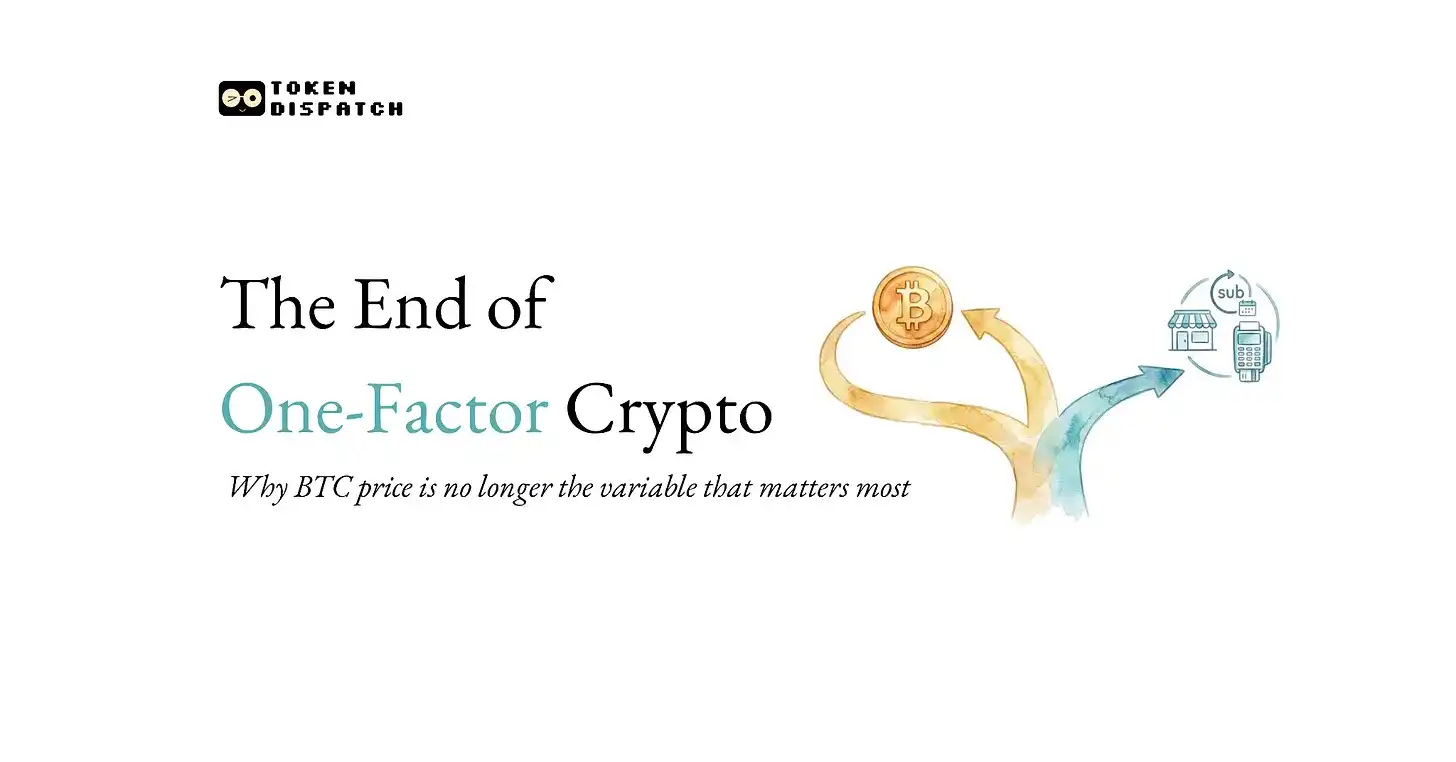
The era of Bitcoin's dominance over the entire crypto market is ending. The crypto economy is now bifurcating into two distinct camps: endogenous assets and exogenous assets. Endogenous assets, like Bitcoin and many traditional cryptocurrencies, derive their value primarily from the broader crypto market's price movements. Their fortunes rise and fall with the market cycle. Exogenous assets, however, are increasingly decoupled from crypto market volatility. These projects, while technically part of the crypto space, have business models and value drivers that operate independently. Examples include Venice, which monetizes private AI inference services; Figure, a fintech firm using blockchain to streamline home equity loans; and stablecoin-related companies like BVNK and Bridge, which see growth unrelated to crypto bull or bear markets. This shift is fundamental. Past narratives of a "blockchain over Bitcoin" focus failed because they lacked sustainable, quantifiable demand and revenue streams that could translate to token value. The current cycle is different: exogenous projects generate real revenue from paying users, and investors are beginning to evaluate them based on fundamentals rather than mere market narrative. While endogenous assets will remain relevant—akin to gold and gold mining stocks in a portfolio—their performance drivers are now distinct from those of exogenous assets. Consequently, analyzing exogenous assets requires a traditional, fundamentals-based approach: examining user bases, unit economics, and competitive moats, much like a fintech investor would. Bitcoin's price is no longer the primary reference point. Promising exogenous sectors include on-chain exchanges/brokerages, AI/crypto fusion, tokenization of real-world assets, new digital banks, lending platforms, payment channels, non-financial crypto-consumer products, and the agent economy. Currently, investing in company equity is often the most direct way to gain exposure, though token mechanisms are evolving. The core trend is clear: the crypto market's drivers are diversifying from a single factor to multiple factors. Industry analysis must now focus on deep business fundamentals, not just interpreting Bitcoin's price charts.

marsbit27 мин. назад

The Era of Bitcoin Dominating Crypto Is Over

marsbit27 мин. назад

Торговля

Спот
Фьючерсы

Популярные статьи

Тест по Bitcoin Биткоина

HTX Learn: Изучите Bitcoin halving и Заработаете Токены USDT

3.0k просмотров всегоОпубликовано 2024.04.16Обновлено 2024.04.16

Тест по Bitcoin  Биткоина

Что такое $BITCOIN

ЦИФРОВОЕ ЗОЛОТО ($BITCOIN): Комплексный анализ Введение в ЦИФРОВОЕ ЗОЛОТО ($BITCOIN) ЦИФРОВОЕ ЗОЛОТО ($BITCOIN) — это проект на основе блокчейна, работающий в сети Solana, который стремится объединить характеристики традиционных драгоценных металлов с инновациями децентрализованных технологий. Хотя он носит имя Биткойн, часто называемого “цифровым золотом” из-за его восприятия как средства хранения ценности, ЦИФРОВОЕ ЗОЛОТО является отдельным токеном, предназначенным для создания уникальной экосистемы в ландшафте Web3. Его цель — позиционировать себя как жизнеспособный альтернативный цифровой актив, хотя детали его применения и функциональности все еще развиваются. Что такое ЦИФРОВОЕ ЗОЛОТО ($BITCOIN)? ЦИФРОВОЕ ЗОЛОТО ($BITCOIN) — это токен криптовалюты, специально разработанный для использования в блокчейне Solana. В отличие от Биткойна, который выполняет широко признанную роль хранения ценности, этот токен, похоже, сосредоточен на более широких приложениях и характеристиках. Примечательные аспекты включают: Инфраструктура блокчейна: Токен построен на блокчейне Solana, известном своей способностью обрабатывать высокоскоростные и недорогие транзакции. Динамика предложения: ЦИФРОВОЕ ЗОЛОТО имеет максимальное предложение, ограниченное 100 квадриллионами токенов (100P $BITCOIN), хотя детали о его обращающемся предложении в настоящее время не раскрыты. Утилита: Хотя точные функциональные возможности не описаны, есть указания на то, что токен может быть использован для различных приложений, потенциально связанных с децентрализованными приложениями (dApps) или стратегиями токенизации активов. Кто создатель ЦИФРОВОГО ЗОЛОТА ($BITCOIN)? На данный момент личность создателей и команды разработчиков, стоящих за ЦИФРОВЫМ ЗОЛОТОМ ($BITCOIN), остается неизвестной. Эта ситуация типична для многих инновационных проектов в области блокчейна, особенно тех, которые связаны с децентрализованными финансами и феноменом мем-криптовалют. Хотя такая анонимность может способствовать культуре, ориентированной на сообщество, она усиливает опасения по поводу управления и ответственности. Кто инвесторы ЦИФРОВОГО ЗОЛОТА ($BITCOIN)? Доступная информация указывает на то, что у ЦИФРОВОГО ЗОЛОТА ($BITCOIN) нет известных институциональных спонсоров или значительных венчурных капиталовложений. Проект, похоже, функционирует по модели пирингового взаимодействия, сосредоточенной на поддержке и принятии сообществом, а не на традиционных путях финансирования. Его активность и ликвидность в основном сосредоточены на децентрализованных биржах (DEX), таких как PumpSwap, а не на устоявшихся централизованных торговых платформах, что еще больше подчеркивает его подход, ориентированный на grassroots. Как работает ЦИФРОВОЕ ЗОЛОТО ($BITCOIN) Операционные механизмы ЦИФРОВОГО ЗОЛОТА ($BITCOIN) можно подробно описать на основе его дизайна блокчейна и характеристик сети: Механизм консенсуса: Используя уникальный механизм доказательства истории (PoH) Solana в сочетании с моделью доказательства доли (PoS), проект обеспечивает эффективную валидацию транзакций, что способствует высокой производительности сети. Токеномика: Хотя конкретные дефляционные механизмы не были подробно описаны, большое максимальное предложение токенов подразумевает, что оно может быть предназначено для микротранзакций или нишевых случаев использования, которые еще предстоит определить. Интероперабельность: Существует потенциал для интеграции с более широкой экосистемой Solana, включая различные платформы децентрализованных финансов (DeFi). Однако детали относительно конкретных интеграций остаются неуточненными. Хронология ключевых событий Вот хронология, которая подчеркивает значимые вехи, касающиеся ЦИФРОВОГО ЗОЛОТА ($BITCOIN): 2023: Первоначальное развертывание токена происходит в блокчейне Solana, отмеченное его адресом контракта. 2024: ЦИФРОВОЕ ЗОЛОТО приобретает видимость, когда оно становится доступным для торговли на децентрализованных биржах, таких как PumpSwap, позволяя пользователям обменивать его на SOL. 2025: Проект наблюдает спорадическую торговую активность и потенциальный интерес к инициативам, возглавляемым сообществом, хотя на данный момент не зафиксировано никаких значительных партнерств или технических достижений. Критический анализ Сильные стороны Масштабируемость: Основная инфраструктура Solana поддерживает высокие объемы транзакций, что может повысить полезность $BITCOIN в различных сценариях транзакций. Доступность: Потенциально низкая цена торговли за токен может привлечь розничных инвесторов, способствуя более широкому участию благодаря возможностям дробного владения. Риски Отсутствие прозрачности: Отсутствие публично известных спонсоров, разработчиков или процесса аудита может вызвать скептицизм относительно устойчивости и надежности проекта. Волатильность рынка: Торговая активность сильно зависит от спекулятивного поведения, что может привести к значительной волатильности цен и неопределенности для инвесторов. Заключение ЦИФРОВОЕ ЗОЛОТО ($BITCOIN) является интригующим, но неоднозначным проектом в быстро развивающейся экосистеме Solana. Хотя он пытается использовать нарратив “цифрового золота”, его отход от установленной роли Биткойна как средства хранения ценности подчеркивает необходимость более четкого различения его предполагаемой утилиты и структуры управления. Будущее принятие и усвоение, вероятно, будут зависеть от решения текущей непрозрачности и более четкого определения его операционных и экономических стратегий. Примечание: Этот отчет охватывает синтезированную информацию, доступную на октябрь 2023 года, и с тех пор могут произойти события.

99 просмотров всегоОпубликовано 2025.05.13Обновлено 2025.05.13

Что такое $BITCOIN

Fractal Bitcoin: масштабирование Биткоина с помощью рекурсивной системы

Fractal Bitcoin — масштабное Layer-1-решнение, созданное на базе кода Биткоина, позволяющего достигать бесконечного масштабирования с помощью рекурсивного подхода.

2.3k просмотров всегоОпубликовано 2025.06.30Обновлено 2025.06.30

Fractal Bitcoin: масштабирование Биткоина с помощью рекурсивной системы

Обсуждения

Добро пожаловать в Сообщество HTX. Здесь вы сможете быть в курсе последних новостей о развитии платформы и получить доступ к профессиональной аналитической информации о рынке. Мнения пользователей о цене на BTC (BTC) представлены ниже.

活动图片