From 'I'd Rather Have a Banana' to Selling 80% of His Bitcoin: Mark Cuban's Love-Hate Relationship with Crypto

marsbitОпубликовано 2026-05-22Обновлено 2026-05-22

Введение

Mark Cuban, billionaire entrepreneur and former Dallas Mavericks owner, has sold most of his Bitcoin holdings, stating it failed as a hedge against dollar weakness and geopolitical turmoil. He cited Bitcoin's drop during recent Iran tensions while gold rallied. Cuban's crypto journey began with skepticism in 2019, comparing Bitcoin to collectibles. He shifted during the 2021 bull market, publicly endorsing crypto and revealing a portfolio of 60% Bitcoin, 30% Ethereum. That same year, he suffered losses in the Iron Finance DeFi collapse. From 2022, his focus turned to legal battles, including a dismissed lawsuit over Voyager Digital promotion. By 2025, he expressed disappointment in crypto, particularly Bitcoin and NFTs. His seven-year arc mirrors a retail cycle from doubt to enthusiasm to disillusionment, with his views heavily influenced by price trends and macro events.

Original Author: ChandlerZ, Foresight News

On May 21st, billionaire entrepreneur and former owner of the NBA's Dallas Mavericks, Mark Cuban, stated on the Front Office Sports podcast that he had sold most of his Bitcoin holdings. He believes Bitcoin failed to effectively hedge against the risks of a weakening U.S. dollar and geopolitical turmoil, especially during the recent Iranian conflict. "When the Iran war sparked this chaos, Bitcoin was supposed to be the best alternative to fiat currency devaluation, and I always thought it was superior to gold. However, gold prices soared while Bitcoin fell. And whenever the dollar weakened, Bitcoin should have risen, but it didn't do that."

"I think Bitcoin has lost the plot."

2019: I'd Rather Have a Banana Than Bitcoin

Mark Cuban's initial public stance on crypto was skepticism. In September 2019, during a video Q&A with Wired magazine, he said, "I'd rather have a banana than Bitcoin because at least I can eat the banana." This statement has been repeatedly cited since. At that time, he analogized Bitcoin to baseball cards, comic books, and art, arguing it had no intrinsic value, and emphasized that crypto was too complex for 99% of people.

In reality, he had already entered the market earlier. In October 2017, Mark Cuban admitted in an interview with Bloomberg that he had purchased Bitcoin, viewing it as a "fun" addition to his portfolio. However, he stressed his position was very small at the time, treating it purely as a speculative gamble similar to collecting baseball cards or art.

2021: From Banana Advocate to Allocating 60% to Bitcoin

The shift occurred during the 2021 bull market, transforming Mark Cuban from an observer into one of crypto's most vocal proponents.

At the end of January, he minted his personal series "The RollUp 2021" on the NFT platform Rarible, tokenizing and releasing an animated GIF of himself dancing in a Mavericks jersey.

In March 2021, the Dallas Mavericks became the first NBA team to accept Dogecoin for ticket and merchandise payments. Mark Cuban's explanation was "because we can, and it gets a lot of PR." In the first month, the Mavericks sold approximately $122,000 worth of merchandise via DOGE. Two months later, DOGE hit its all-time high of $0.7375.

That same year, on The Delphi Podcast, he disclosed his crypto allocation: "About 60% Bitcoin, 30% Ethereum, 10% other," and emphasized, "I have never sold any Bitcoin." His rationale at the time was Bitcoin's fixed supply and decentralization, making it a superior store of value compared to gold.

June 2021: Schooled by Iron Finance

At the peak of the bull market, Mark Cuban received a lesson from DeFi.

In June 2021, he published a lengthy blog post titled "The Brilliance of Yield Farming, Liquidity Providing and Valuing Crypto Projects," publicly praising the algorithmic stablecoin project Iron Finance on the Polygon chain. He described himself as a major liquidity provider for the DAI/TITAN pair, with an initial investment of $75,000. Days later, TITAN plummeted from nearly $60 to near zero within 24 hours, wiping out approximately $2 billion from the protocol.

An IRON Finance analysis report stated the incident began when several whale addresses started selling, causing user panic and massive redemptions of IRON and sales of TITAN. Due to the operation of the 10-minute TWAP oracle, the spot price of TITAN fell further compared to the TWAP redemption price, creating a vicious cycle: the more IRON users redeemed, the more TITAN was minted, continuously driving its price down until TITAN crashed to near zero. IRON Finance also suspended USDC redemptions from its contracts.

Following the event, Mark Cuban did not publicly disclose the exact loss. In an email to Bloomberg, he only said the investment "wasn't large enough to warrant checking every detail" and that it constituted a small portion of his crypto holdings. He added, "I got rugged just like everyone else. Ironically, I had pulled some out, thinking their TVL was still rising, and then boom... Ultimately, I was lazy. This DeFi game is all about yield and math, and I didn't calculate the key metrics properly."

2022 to 2025: Tangling with Regulation, Being Sued and Winning

After the market cycle turned from bull to bear, Mark Cuban's crypto life shifted from buying coins to fighting lawsuits and clashing with regulators.

After crypto brokerage Voyager Digital filed for bankruptcy in 2022, retail investors sued Mark Cuban and the Mavericks, alleging he used the team's partnership to sell a "Ponzi scheme" to inexperienced young people. Mark Cuban repeatedly criticized former SEC Chair Gary Gensler in public, questioning why the SEC didn't provide clear rules first instead of compelling platforms to "come in and talk."

On December 30, 2025, the cryptocurrency class-action lawsuit accusing Mark Cuban and the Dallas Mavericks of defrauding investors by promoting Voyager Digital was dismissed. The lawsuit alleged Cuban made numerous false endorsements of the company before its 2022 bankruptcy filing. Cuban and his legal team, Brown Rudnick, stated in a declaration, "The lawsuit brought claims under numerous state securities laws and consumer fraud statutes. On December 30th, U.S. District Judge Roy K. Altman for the Southern District of Florida dismissed the case in its entirety."

In 2025, the billionaire also considered launching his own Memecoin but ultimately did not proceed. In his most recent commentary on cryptocurrency, he expressed disappointment stemming from NFTs and Ethereum, though this disappointment was not as severe as his current aversion to Bitcoin's state.

One Man, Seven Years, Three Reversals

Since the initial signs of U.S.-Iran conflict emerged in February 2026, Bitcoin has still accumulated a gain of approximately 16%, while gold has fallen about 15%, and Ethereum has risen about 9%. Mark Cuban saw a snapshot of the few days when the conflict escalated. Over a longer time window, Bitcoin actually outperformed gold. This doesn't negate his disappointment, but merely illustrates that his judgment this time was again an emotional decision highly dependent on the chosen timeframe.

The arc Mark Cuban has traced over these seven years almost perfectly mirrors the standard template for the past cycle of retail investors moving from skepticism to frenzy to disappointment. The next time he changes his mind will most likely be triggered simultaneously by macro narratives and price movements.


Связанные с этим вопросы

QAccording to the article, why did Mark Cuban decide to sell most of his Bitcoin holdings?

AHe sold most of his Bitcoin because he felt it failed to act as an effective hedge against a weakening US dollar and geopolitical turmoil, specifically citing its price drop during the recent Iran conflict while gold prices surged.

QHow did Mark Cuban's public stance on cryptocurrencies start in 2019?

AIn 2019, his public stance started with skepticism. He famously stated in a Wired magazine video Q&A that he would rather have a banana than Bitcoin because he could at least eat the banana, comparing Bitcoin to collectibles like baseball cards with no intrinsic value.

QWhat significant event in 2021 made Mark Cuban a vocal proponent of crypto, and what was his portfolio allocation at that time?

AThe 2021 bull market made him a vocal proponent. He disclosed on The Delphi Podcast that his crypto portfolio allocation was approximately 60% Bitcoin, 30% Ethereum, and 10% other assets, citing Bitcoin's fixed supply and decentralization as superior to gold for value storage.

QWhat DeFi project did Mark Cuban publicly promote and then suffer losses from in June 2021, and what was the reason for the project's collapse?

AHe publicly promoted the algorithmic stablecoin project Iron Finance on Polygon. He suffered losses when the project's TITAN token crashed from nearly $60 to near zero in 24 hours. The collapse was triggered by whale sell-offs causing panic, leading to massive redemptions and a death spiral due to the mechanics of its 10-minute TWAP oracle.

QWhat was the outcome of the 2025 lawsuit against Mark Cuban and the Dallas Mavericks related to Voyager Digital?

AThe cryptocurrency class-action lawsuit accusing Mark Cuban and the Dallas Mavericks of promoting Voyager Digital and misleading investors was dismissed in its entirety by US District Judge Roy K. Altman on December 30, 2025.

Похожее

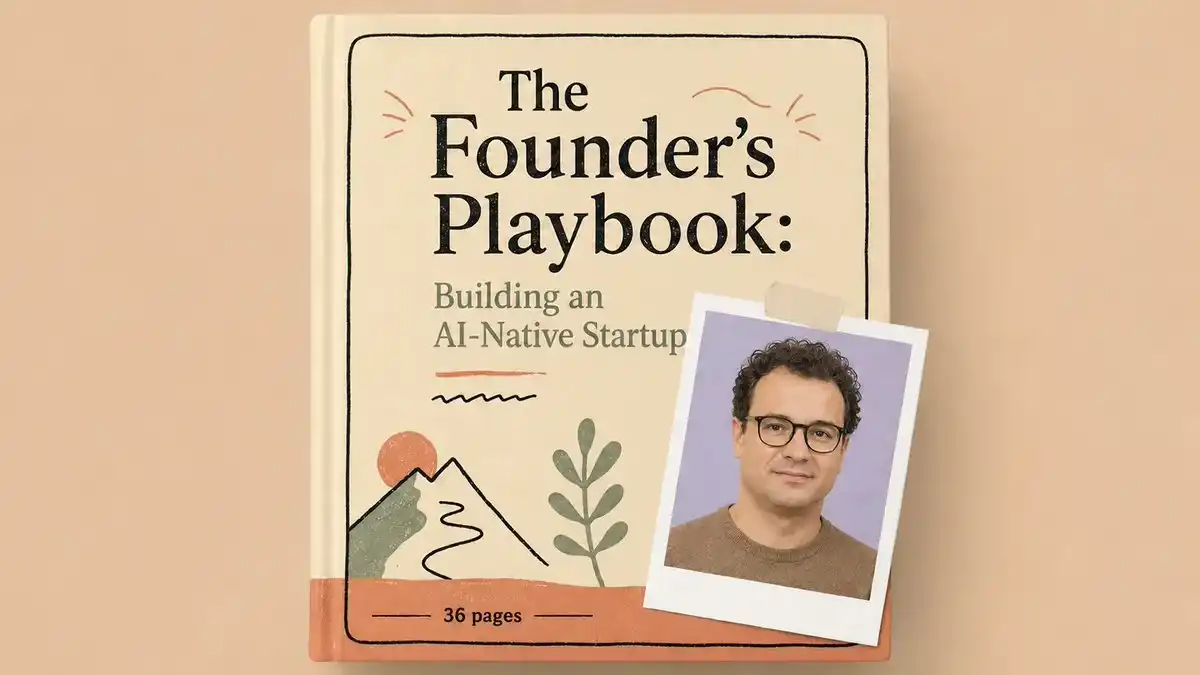
Anthropic Major Release: "The Founder's Playbook" - All 4 Stages of Entrepreneurship, Completely Reimagined with AI

**Anthropic Releases "The Founder's Playbook," Reimagining the Four Stages of Startups with AI** The logic of entrepreneurship is being fundamentally reshaped by AI. Anthropic's new handbook, "The Founder's Playbook: Building an AI-Native Startup," defines the AI-native startup as a new species: not a traditional company with AI tools, but a venture driven by AI from day one. The founder's role is transforming from a hands-on builder to a conductor or architect, orchestrating AI agents for execution while focusing on high-level judgment and strategy. Anthropic outlines a product matrix of Claude tools for different tasks: Claude Chat for interactive research, Claude Code for generating production-ready code, and Claude Cowork for automating knowledge-intensive workflows. The handbook structures the startup lifecycle into four stages, detailing core goals, pitfalls, and AI applications for each: 1. **Idea Stage**: Focuses on validating a real problem. The core challenge is avoiding confirmation bias. AI practices include using Claude as a "structured devil's advocate" to challenge assumptions and for automated market/competitor research. 2. **MVP Stage**: Aims to gather early signals of Product-Market Fit (PMF). Key risks are technical debt and scope creep due to rapid AI-assisted development. Recommended AI uses include maintaining project memory documents (e.g., CLAUDE.md), using Claude Code for structured coding, and automating user feedback analysis. 3. **Launch Stage**: Centers on establishing scalable growth, operations, and compliance. Challenges include accelerating technical debt and founders becoming bottlenecks. AI should be used to build an "operating system" for launch—automating routine tasks (scheduling, reporting, content) and code audits—freeing founders for critical decisions. 4. **Scale Stage**: Focuses on achieving sustainable business operations. The main challenge is delegating operational control. AI should be leveraged for differentiated marketing, operational optimization, and building competitive moats through data network effects. The handbook concludes that in the AI era, "Can we build it?" is no longer the primary constraint. The advantage shifts back to foundational strengths: **insight, judgment, and a deep understanding of a specific problem and audience.**

marsbit3 ч. назад

Anthropic Major Release: "The Founder's Playbook" - All 4 Stages of Entrepreneurship, Completely Reimagined with AI

marsbit3 ч. назад

Eight Departments Launch Severe Crackdown on Cross-Border Securities Firms, How to Interpret This?

China's top financial regulators, including the CSRC and seven other ministries, have launched a sweeping crackdown on unlicensed cross-border securities operations. The core action involves a joint enforcement plan and the issuance of administrative penalties against major offshore internet brokers like Futu and Tiger Brokers for conducting unauthorized securities business in mainland China without a domestic license. The primary legal basis is China's requirement for securities businesses to operate with proper, locally issued licenses. The crackdown aims to eliminate a major regulatory gray area, plugging channels that allowed massive, unmonitored capital outflows which posed risks to financial stability, currency controls, and foreign exchange reserves. It also seeks to protect mainland investors who previously lacked legal recourse when dealing with offshore platforms and to secure sensitive financial data. The immediate impact is severe for the targeted brokers, including a complete ban on new mainland business, forced liquidation of existing mainland client positions over two years, and the confiscation of illegal profits estimated in the billions. Their U.S.-listed shares plummeted in response. Market analysts warn that the forced sell-off of an estimated 250-280 billion RMB in assets, concentrated in U.S. tech stocks, Chinese ADRs, and Hong Kong equities, could create sustained selling pressure on these markets over the next two years, potentially lowering valuations. For mainland investors, legal cross-border investment channels will become extremely constrained. The high asset threshold for the Stock Connect program and the severe shortage of QDII fund quotas—leading to chronic high premiums on popular U.S.-focused ETFs—mean retail access to overseas markets like the U.S. will be sharply limited. Conversely, some of the returning capital may flow into domestic A-share sectors like AI, semiconductors, and advanced manufacturing. However, this could further inflate valuations in these already elevated sectors. In conclusion, regulators frame this move not as closing off cross-border investment, but as a necessary step to enforce compliance, manage systemic risk, and steer investors toward regulated, protected channels like QDII and Stock Connect for the long-term health of the financial system.

链捕手3 ч. назад

Eight Departments Launch Severe Crackdown on Cross-Border Securities Firms, How to Interpret This?

链捕手3 ч. назад

Торговля

Спот
Фьючерсы

Популярные статьи

Как купить S

Добро пожаловать на HTX.com! Мы сделали приобретение Sonic (S) простым и удобным. Следуйте нашему пошаговому руководству и отправляйтесь в свое крипто-путешествие.Шаг 1: Создайте аккаунт на HTXИспользуйте свой адрес электронной почты или номер телефона, чтобы зарегистрироваться и бесплатно создать аккаунт на HTX. Пройдите удобную регистрацию и откройте для себя весь функционал.Создать аккаунтШаг 2: Перейдите в Купить криптовалюту и выберите свой способ оплатыКредитная/Дебетовая Карта: Используйте свою карту Visa или Mastercard для мгновенной покупки Sonic (S).Баланс: Используйте средства с баланса вашего аккаунта HTX для простой торговли.Третьи Лица: Мы добавили популярные способы оплаты, такие как Google Pay и Apple Pay, для повышения удобства.P2P: Торгуйте напрямую с другими пользователями на HTX.Внебиржевая Торговля (OTC): Мы предлагаем индивидуальные услуги и конкурентоспособные обменные курсы для трейдеров.Шаг 3: Хранение Sonic (S)После приобретения вами Sonic (S) храните их в своем аккаунте на HTX. В качестве альтернативы вы можете отправить их куда-либо с помощью перевода в блокчейне или использовать для торговли с другими криптовалютами.Шаг 4: Торговля Sonic (S)С легкостью торгуйте Sonic (S) на спотовом рынке HTX. Просто зайдите в свой аккаунт, выберите торговую пару, совершайте сделки и следите за ними в режиме реального времени. Мы предлагаем удобный интерфейс как для начинающих, так и для опытных трейдеров.

1.3k просмотров всегоОпубликовано 2025.01.15Обновлено 2025.03.21

Как купить S

Sonic: Обновления под руководством Андре Кронье – новая звезда Layer-1 на фоне спада рынка

Он решает проблемы масштабируемости, совместимости между блокчейнами и стимулов для разработчиков с помощью технологических инноваций.

2.2k просмотров всегоОпубликовано 2025.04.09Обновлено 2025.04.09

Sonic: Обновления под руководством Андре Кронье – новая звезда Layer-1 на фоне спада рынка

HTX Learn: Пройдите обучение по "Sonic" и разделите 1000 USDT

HTX Learn — ваш проводник в мир перспективных проектов, и мы запускаем специальное мероприятие "Учитесь и Зарабатывайте", посвящённое этим проектам. Наше новое направление .

1.8k просмотров всегоОпубликовано 2025.04.10Обновлено 2025.04.10

HTX Learn: Пройдите обучение по "Sonic" и разделите 1000 USDT

Обсуждения

Добро пожаловать в Сообщество HTX. Здесь вы сможете быть в курсе последних новостей о развитии платформы и получить доступ к профессиональной аналитической информации о рынке. Мнения пользователей о цене на S (S) представлены ниже.

活动图片