2026-06-05 Пятница

Новостной центр - Страница 26

Получайте криптоновости и тенденции рынка в режиме реального времени с помощью Новостного центра HTX.

The Era of Bitcoin Dominating Crypto Is Over

The era of Bitcoin's dominance over the entire crypto market is ending. The crypto economy is now bifurcating into two distinct camps: endogenous assets and exogenous assets. Endogenous assets, like Bitcoin and many traditional cryptocurrencies, derive their value primarily from the broader crypto market's price movements. Their fortunes rise and fall with the market cycle. Exogenous assets, however, are increasingly decoupled from crypto market volatility. These projects, while technically part of the crypto space, have business models and value drivers that operate independently. Examples include Venice, which monetizes private AI inference services; Figure, a fintech firm using blockchain to streamline home equity loans; and stablecoin-related companies like BVNK and Bridge, which see growth unrelated to crypto bull or bear markets. This shift is fundamental. Past narratives of a "blockchain over Bitcoin" focus failed because they lacked sustainable, quantifiable demand and revenue streams that could translate to token value. The current cycle is different: exogenous projects generate real revenue from paying users, and investors are beginning to evaluate them based on fundamentals rather than mere market narrative. While endogenous assets will remain relevant—akin to gold and gold mining stocks in a portfolio—their performance drivers are now distinct from those of exogenous assets. Consequently, analyzing exogenous assets requires a traditional, fundamentals-based approach: examining user bases, unit economics, and competitive moats, much like a fintech investor would. Bitcoin's price is no longer the primary reference point. Promising exogenous sectors include on-chain exchanges/brokerages, AI/crypto fusion, tokenization of real-world assets, new digital banks, lending platforms, payment channels, non-financial crypto-consumer products, and the agent economy. Currently, investing in company equity is often the most direct way to gain exposure, though token mechanisms are evolving. The core trend is clear: the crypto market's drivers are diversifying from a single factor to multiple factors. Industry analysis must now focus on deep business fundamentals, not just interpreting Bitcoin's price charts.

marsbit06/01 11:47

The Era of Bitcoin Dominating Crypto Is Over

marsbit06/01 11:47

Claude Bill Skyrockets by 5 Billion, Surges 60-Fold Overnight—Can Your Token Budget Keep Up?

An enterprise reportedly ran up a staggering $500 million bill on Anthropic's Claude AI in just one month due to a simple oversight: failing to set usage limits for employee accounts. This incident highlights a growing trend of runaway AI costs. Other examples include a Google Cloud user hit with an unexpected $18,000 bill from API key abuse, and an OpenAI internal experiment that consumed 603 billion tokens, costing $1.3 million in 30 days. Major AI providers like OpenAI and GitHub are shifting from flat monthly fees to granular, usage-based pricing (per input/output/cached token), causing shock for some users whose costs skyrocketed by orders of magnitude. The root causes extend beyond pricing. The rise of autonomous AI agents executing long, complex tasks has drastically increased token consumption. Furthermore, misaligned incentives, like internal "leaderboards" ranking employees by AI usage, can encourage wasteful "tokenmaxxing"—using powerful models for trivial tasks just to inflate metrics. This has sparked a new industry focused on cost optimization. Solutions include providing AI with better context (reducing redundant searches) and intelligent model routing (matching tasks to the most cost-effective model). Research indicates token consumption for agentic tasks can vary wildly (up to 30x for the same job) without guaranteeing better results, and models often underestimate their own costs. As AI expenses begin to rival or even surpass human labor costs for some teams, companies are being forced to move from indiscriminate usage to meticulous "token accounting." The future belongs to those who can maximize the value of every token spent.

marsbit06/01 11:17

Claude Bill Skyrockets by 5 Billion, Surges 60-Fold Overnight—Can Your Token Budget Keep Up?

marsbit06/01 11:17

24/7 Unstoppable Derivatives Wave: Cryptocurrency Is Forcing Traditional Finance to 'Change Time Zones'

The article discusses how the 24/7 nature of the cryptocurrency market is compelling traditional finance to adapt its operating hours and infrastructure. The key catalyst is the CME Group's planned launch of nearly round-the-clock trading for regulated crypto derivatives, a move driven by strong institutional demand for continuous risk management. This shift highlights a fundamental change: derivatives, not spot trading, now dominate crypto market activity and price discovery. However, integrating continuous trading into traditional finance reveals structural tensions. While execution times can be extended, settlement, clearing, and regulatory reporting largely remain bound to traditional business-day cycles. This creates a lag where weekend price movements can impact risk exposures before traditional control systems are fully active. Furthermore, the article explores new challenges arising from this always-on environment. The inherent transparency of public blockchains, while ensuring auditable settlement, also exposes sensitive corporate information like treasury flows to competitors in real-time. This has elevated privacy from a feature to a core requirement for institutional adoption. The next phase hinges on building systems that balance this necessary privacy with regulatory accountability and compliance. In conclusion, the move towards 24/7 trading signifies more than crypto becoming institutionalized. It represents traditional finance beginning to adopt the temporal structure of crypto-native markets. The future will be defined by how successfully traditional risk, identity, privacy, and settlement frameworks can operate at the continuous speed cryptocurrency markets demand.

marsbit06/01 10:36

24/7 Unstoppable Derivatives Wave: Cryptocurrency Is Forcing Traditional Finance to 'Change Time Zones'

marsbit06/01 10:36

Unitree Passes the Hearing, Hangzhou Reaps the Rewards

Unitree Technology, a leading company in Hangzhou's tech scene known as one of the "Hangzhou Six Dragons," has officially passed the review for listing on the Shanghai Stock Exchange's STAR Market (科创板). It plans to raise 4.202 billion yuan for the research and development of intelligent robot models and robot hardware. This milestone will make Unitree the "first humanoid robotics stock." Founded in 2016 by Wang Xingxing, the company started humbly in a small office in Hangzhou's Binjiang district. Initially, the robotics sector was not viewed favorably by the market, with Unitree's products often labeled as "toys" and struggling to secure funding. At its most critical point, with only around 100,000 yuan left, Wang stopped his own salary to keep the company afloat. A crucial turning point came in 2018 when Hangzhou's state-owned capital system provided timely support. A financial platform under the city's state-owned assets completed due diligence in three days and granted a 20-million-yuan loan within a week. This "patient capital" infusion stabilized Unitree, enabling its transition from prototype development to mass production and commercial viability. Subsequently, Hangzhou Capital, through its two major 100-billion-yuan mother funds—the Hangzhou Science and Technology Innovation Fund and the Hangzhou Innovation Fund—participated in four of Unitree's financing rounds (B2, B3, C, and C+). This continuous backing helped the company grow, attract top-tier industrial investors like China Mobile, Tencent, Alibaba, and Geely, and solidify its position as a global leader in legged robotics. By 2025, Unitree achieved significant scale, with revenue reaching 16.99 billion yuan, net profit of 5.91 billion yuan, global leadership in humanoid robot shipments, and over 33,000 quadruped robots sold worldwide. Unitree's journey exemplifies Hangzhou's strategy of nurturing hard-tech startups from "seedlings" to industry leaders. Beyond Unitree, Hangzhou's capital ecosystem has supported other "Six Dragons" like Cloudwalk, BrainCo, and DeepSeek. The city has established a 500-billion-yuan "3+N" industrial fund cluster and specialized early-stage funds like the "Runmiao Fund" with a 20-year term to fill funding gaps for very early-stage projects. This robust "capital + talent" model, coupled with an influx of over 430,000 young professionals in 2025 alone, has fostered a vibrant innovation ecosystem. Hangzhou is now home to 48 unicorns and 413 potential unicorns, building comprehensive industrial chains in AI, robotics, brain-computer interfaces, and more. As Hangzhou experiences a wave of IPOs, it is solidifying its reputation as an ideal city for entrepreneurs.

marsbit06/01 10:11

Unitree Passes the Hearing, Hangzhou Reaps the Rewards

marsbit06/01 10:11

Are Rising U.S. Stocks Getting More Dangerous? Goldman Sachs: Downside Protection Mechanisms Have Almost Failed

The US stock market rally is showing signs of becoming increasingly precarious as key downside protection mechanisms fail, according to Goldman Sachs. Derivatives strategist Brian Garrett notes that the S&P 500 options volatility skew has plunged to an 18-month low, indicating the market now prices an 8% probability for both a 10% drop and a 10% rise—a sign of "skew failure." Concurrently, Goldman's Panic Index hit a two-year low, reflecting minimal demand for tail-risk hedging. This complacency emerges amid a relentless market surge, with the S&P 500 setting new records frequently in 2024. Garrett highlights three major concerns: extreme concentration in the top ten stocks (40% of index weight), heavy reliance on AI-themed performance, and a price pattern eerily similar to the 1998-1999 period. Despite pervasive media pessimism, this fear is absent in options pricing. Downside hedge costs are historically low. Goldman suggests tactical trades: buying RSP outperformance options versus the SPX for a broadening rally, purchasing VIX calls for protection, and going long on Bitcoin ETF volatility. Hedge funds have been net buyers for two weeks, with sector rotation into financials and out of industrials. Notably, the global single-stock leveraged/ inverse ETF AUM has doubled to over $60 billion in two months, underscoring growing speculative activity.

marsbit06/01 09:45

Are Rising U.S. Stocks Getting More Dangerous? Goldman Sachs: Downside Protection Mechanisms Have Almost Failed

marsbit06/01 09:45

DAT Failure? Listed Companies Betting on HYPE Floating Profit of $12.5 Billion

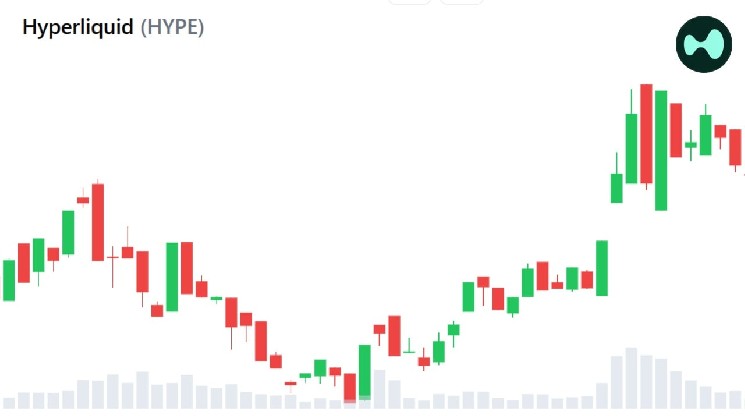
Several public companies that adopted a "HYPE Treasury" strategy—holding significant reserves of the HYPE token from the Hyperliquid ecosystem—have achieved substantial paper gains, collectively exceeding $1.25 billion. This contrasts with the reported struggles of MicroStrategy's flagship BTC treasury strategy. The article profiles three such HYPE-focused treasury companies: 1. **Hyperliquid Strategies Inc. (PURR):** The largest holder, with approximately 22.3 million HYPE tokens valued at ~$1.636 billion, resulting in an unrealized gain of ~$1.22 billion. It has fully transitioned from a biotech firm to a dedicated crypto treasury, adding staking and validator operations to enhance returns. 2. **Hyperion DeFi (HYPD):** Holds around 2 million HYPE tokens (~$147 million value) with a gain of ~$49.4 million. It is deeply integrated into the Hyperliquid ecosystem, running a major validator node and building DeFi products for additional yield. 3. **Lion Group Holding (LGHL):** A smaller holder with ~194,000 HYPE tokens (~$14.14 million value), maintaining a long-term commitment to the token. The success of these HYPE treasuries is attributed not only to the token's significant price appreciation but also to active on-chain participation through staking, validation, and ecosystem integrations, creating a compounding "flywheel" effect. The article posits that while MicroStrategy's BTC strategy faces challenges, HYPE treasuries may offer a more sustainable model through deeper protocol engagement, with potential for further growth if HYPE's price rises as predicted by some analysts.

marsbit06/01 09:25

DAT Failure? Listed Companies Betting on HYPE Floating Profit of $12.5 Billion

marsbit06/01 09:25

DAT Failing? Listed Companies Betting on HYPE Have Floating Profits of $12.5 Billion

Facing a potential need to sell Bitcoin to pay dividends amid a $12.5B quarterly net loss, the crypto treasury strategy pioneered by Strategy appears strained. In contrast, public companies that adopted a similar strategy by betting on the HYPE token are seeing massive gains, with collective unrealized profits exceeding $1.25 billion. Three key HYPE treasury companies are highlighted: 1. **Hyperliquid Strategies Inc. (PURR):** The largest holder, with approximately 22.3 million HYPE tokens valued at ~$1.636 billion, resulting in ~$1.22 billion in unrealized gains. It has fully transitioned from a biotech firm to a native crypto treasury, focusing on staking and ecosystem participation via validator operations. 2. **Hyperion DeFi (HYPD):** Holds about 2 million HYPE tokens (~$147M value) with ~$49.4M in gains. It is deeply integrated into the Hyperliquid ecosystem, running a top validator node and building DeFi products to generate additional yield. 3. **Lion Group Holding (LGHL):** A smaller player holding ~193,775 HYPE tokens (~$14.14M value), maintaining a long-term holding strategy alongside other crypto assets. The article argues that HYPE treasuries have an advantage over Bitcoin-based ones like Strategy's. Their success stems not just from price appreciation but from active on-chain participation—staking, earning validator rewards, and engaging with ecosystem protocols—creating a compounding "flywheel" effect. With Hyperliquid dominating the on-chain perpetuals market and HYPE's tokenomics encouraging buys and burns, these treasuries are positioned to benefit further if HYPE's price rises as some predict. While the original Bitcoin treasury strategy isn't declared a failure, the current narrative highlights the outsized success of early movers into the HYPE ecosystem.

Odaily星球日报06/01 09:20

DAT Failing? Listed Companies Betting on HYPE Have Floating Profits of $12.5 Billion

Odaily星球日报06/01 09:20

活动图片