Programmers Around the World Are Giving Money Away to Anthropic for Free, and the Company Finally Can't Stand It Anymore

marsbitОпубликовано 2026-08-17Обновлено 2026-08-17

Введение

Anthropic's recent blog post urges developers using Claude Code to stop wasting money on tokens. The core issue is inefficient usage that inflates costs, often unbeknownst to users. The article outlines six key optimization strategies: 1) Use `/clear` after completing a task to prevent irrelevant previous context from bloating future interactions. 2) Set the model and reasoning effort level at the start of a session; changing them mid-conversation invalidates the prompt cache, forcing a full-price recomputation of the entire history. 3) Attach files with `@` instead of typing paths manually to avoid unnecessary tool calls and exploratory file reads that add to the context. 4) Add quiet flags to noisy commands (e.g., in `CLAUDE.md`) to minimize lengthy output that fills the context window. 5) Use `/compact` before a break while the cache is still hot, as it costs only one-tenth of compressing after the cache expires. 6) Offload large-output tasks to sub-agents, which run in isolated contexts and only return conclusions, keeping the main conversation lean. The cost structure is explained: output tokens are 5x more expensive than input tokens due to serial "decoding." Pricing depends on the model (Opus, Sonnet, Haiku) and reasoning effort level. The most powerful cost-saving tool is the **prompt cache**, which allows reusing previously computed prefixes at 10% of the input cost. However, the cache is fragile and invalidated by switching models, changing effort levels, toggling ...

Just now (15th), Anthropic posted a blog.

The core message is: Everyone, stop burning tokens for nothing, we can't stand it anymore!

To this end, the official blog listed six money-saving tips in detail. Here they are:

1. /clear after a task is done. Clear the current conversation after fixing a bug. Don't drag the files read and command outputs from the previous task into the next one, uselessly occupying context.

2. Set the model and reasoning effort level from the start. If you switch mid-session, all accumulated prompt caches become invalid, and the entire conversation history needs to be recalculated at full price.

3. Use @ to reference files, don't type paths manually. Attach files directly to the message with @, so Claude doesn't need to spend an extra tool call to read them. If you just type the filename, Claude might search around first and then open several files to test. All these operations go into the conversation history and get carried along in every subsequent turn.

4. Add quiet flags to commands with verbose output. Write a configuration like --reporter=dot in CLAUDE.md, so test output prints only a few lines of summary, not hundreds of lines of detail. Shorter output uses less context.

5. Do /compact before a break. Compress the conversation while it's still cached; the cost is only one-tenth of the normal price. If you wait until you come back and the cache has expired, you have to pay full price to reread everything before compressing.

6. Offload large-output tasks to subagents. A subagent runs in its own independent context window. It only passes back the conclusion when done; the files read and command outputs generated during the process don't enter your main conversation.

The Life and Times of a Token

Working with Claude Code, the API is pay-as-you-go, and the subscription monthly fees range from $20 to $200 across three tiers.

According to official estimates, developers consume an average of $13 worth of tokens per day, spending between $150 and $250 per month.

And this is just the average. Fixing the same bug with different phrasing can cost several times more.

Moreover, each turn of conversation re-sends all the content from all previous turns. The longer the session, the more expensive each turn becomes.

To understand where this money goes, we need to start with the pricing logic of tokens.
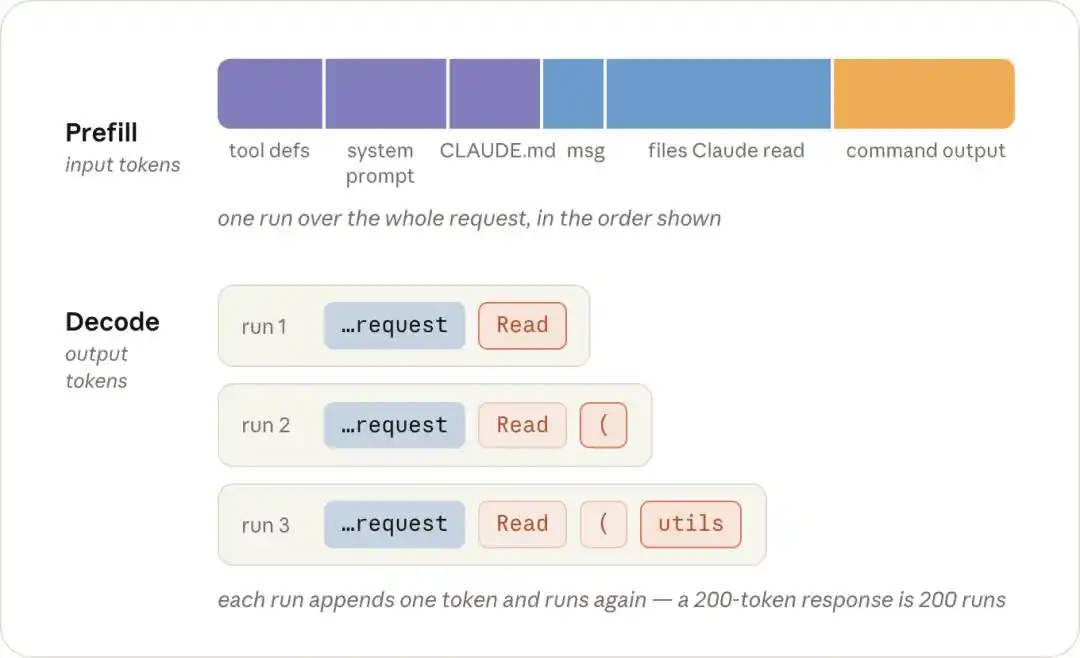
Each time you input a command in Claude Code, two things happen behind the scenes.

The first is prefill, where the model reads your entire request at once, including the system prompt, CLAUDE.md, your message, and everything accumulated in the previous conversation. These are input tokens.

The second is decoding, where the model writes out its response word by word, including its reasoning, tool calls, and the text you finally see. These are output tokens.

The key difference lies here.

Prefill is parallel, processing all input tokens through the GPU at once. Decoding is serial, requiring the model to run once for each token it generates. A 200-token reply means 200 independent computations.

So, it's not hard to understand why output tokens are 5 times more expensive than input tokens.
On this basis, the final bill depends on two things.

First is the model, which determines the price per token.

Opus 5: $5 per million input tokens, $25 output.

Sonnet 5: $2 input, $10 output.

Haiku 4.5: $1 input, $5 output.

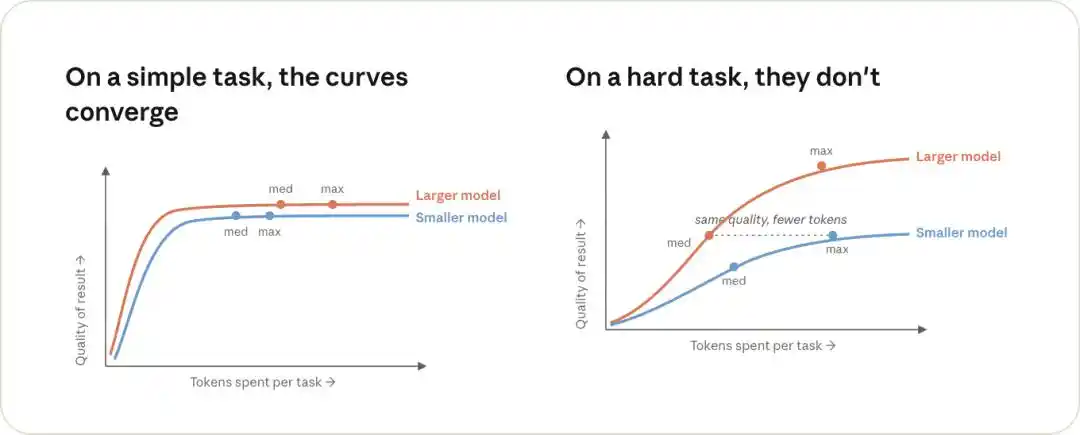
Second is the reasoning effort level, which determines the number of tokens.

Most output tokens in a session are reasoning tokens, and the effort level controls this amount. Higher reasoning effort means the model thinks longer, producing more reasoning tokens. The difference between 'max' and 'low' can be severalfold.

Use Sonnet for simple daily tasks, only bring out Opus for the hard nuts. Using a sledgehammer to crack a nut is the most wasteful spending.
Prompt Caching: The Biggest Money-Saver

There's another huge variable in token pricing: caching.

Each request in Claude Code starts with the same prefix: the system prompt, tool definitions, CLAUDE.md, and conversation history.

If the prefix of this request is byte-for-byte identical to the last one, the server doesn't recompute it; it directly loads the previous computation result.

Reading from the cache costs only 0.1 times the normal input price, saving 90% directly.

Writing to the cache is more expensive, up to 2 times. But writing only happens once; every subsequent turn enjoys the 0.1x read cost.

For example.

Assume your conversation history is 50,000 tokens. Without caching, you'd pay full price just to re-read these 50k tokens every turn. But as long as the cache hits, the same 50k tokens only cost one-tenth.

A session running 20-30 turns, the discounts accumulated from cache hits are astronomical.

This is your biggest leverage for getting the most bang for your buck.

But caching has a fatal weakness. It must match continuously from the first byte of the request; if anything changes in the middle, everything from that point onward is invalidated.

Specifically, there are six scenarios:

1. /model switch: Caches are independent per model. Switching from Sonnet to Opus means the entire conversation history is prefilled at Opus prices, with no discount.

2. /effort switch: Reasoning effort level is also part of the cache key. Switching means the entire history must be recalculated.

3. Toggling Fast mode: Same effect as the first two; cache is invalidated.

4. /compact compression: The conversation is rewritten into a summary; the original content no longer matches, so the old cache is invalidated.

5. Time expiration: Cache stays alive for 1 hour for subscribers, 5 minutes by default for API users. After timeout, the next turn is a full recomputation.

6. Resuming old sessions: If it's been too long, the cache is long gone, almost guaranteeing a full-price recomputation.

The bad news is, hitting any one of these means the entire conversation history goes from 0.1x back to full price.

The good news is, once you know what invalidates the cache, you know how to preserve it.

For example, lock in the model and reasoning effort at the start of the session and don't switch. Don't run /compact while the cache is hot; do it when you're about to take a break.

There's also a hidden trap here.

The opusplan mode switches models every time you enter or exit the plan. Enter once, cache invalidated. Exit, invalidated again. Jumping back and forth means a full-price prefill for each jump.

Your Session Is Secretly Getting Fatter

Caching helps reduce the cost of re-sending history to one-tenth.

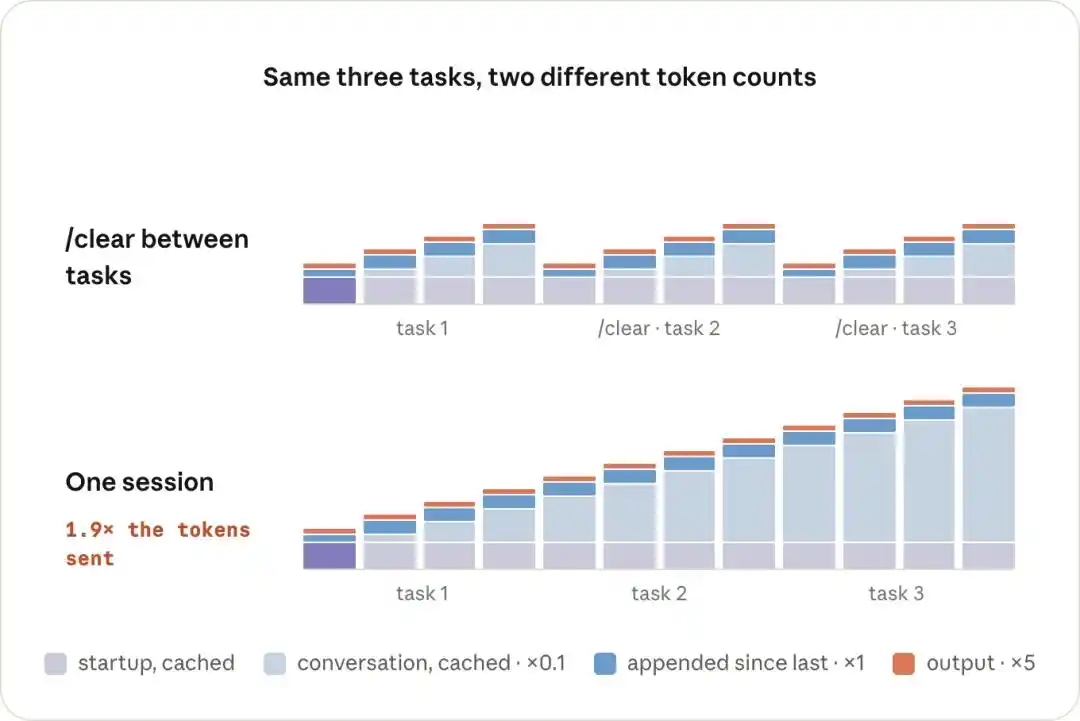
But there's one thing it can't help with. Your history itself is expanding turn by turn.

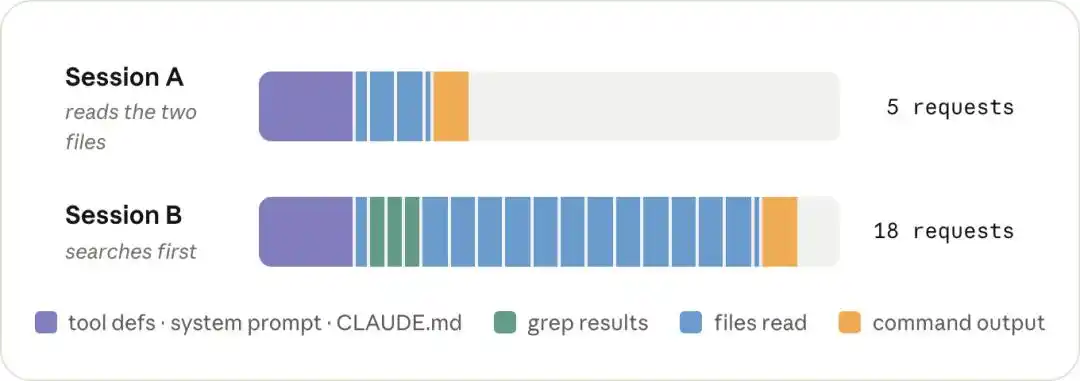
Every time Claude reads a file, the file content is appended to the conversation. Every time Claude runs a command, the output is also appended. From that turn onward, everything is carried along.

The 40th turn of conversation is re-sending all the accumulated content from turns 1 through 39.

This growth is near-quadratic, O(n²).

Claude Code has a safety net mechanism.

If command output exceeds 30,000 characters, it doesn't get stuffed into the conversation. Instead, it's written to a temporary file, and only a summary sentence is placed in the conversation. But outputs under 30,000 are left untouched.

For example, a test framework finishes running, printing 400 lines of pass records, each line dozens of characters. The total is less than 30k, not hitting the threshold.

So these 400 lines remain intact in the conversation history, being re-sent with every subsequent turn.

The Anthropic blog offers several practical methods for slimming down.

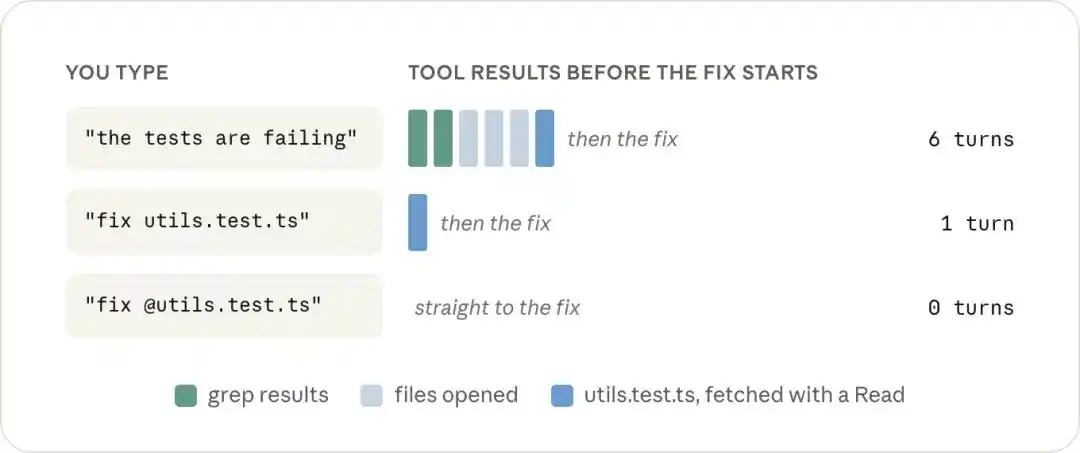
1. Use @ to reference files.

Don't manually type paths and let Claude find them itself. @ referencing attaches the file directly to the message, saving a read operation.

If you just mention the filename, Claude might grep around first, opening several files to see which one is correct. All these probes then enter the conversation history, adding unnecessary cost.
2. Add quiet flags to noisy commands.

Write a line like "run tests with npx vitest run --reporter=dot" in CLAUDE.md. From then on, each test run will output only a few lines of dots, not hundreds of lines of detail. A one-minute configuration saves hundreds of lines of context for every future session.

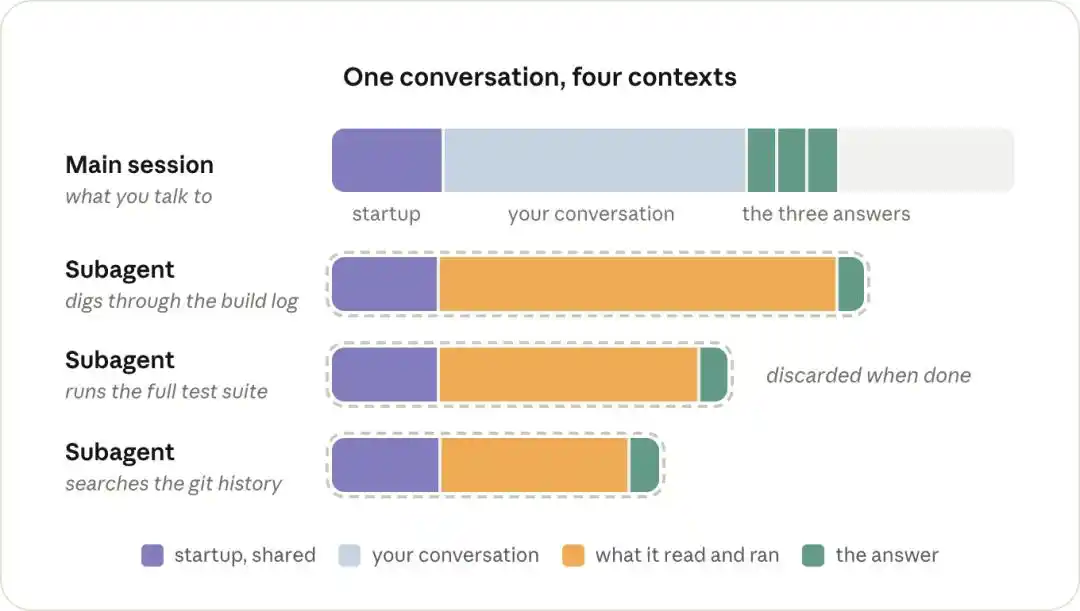
3. Isolate large-output tasks with subagents.

A subagent runs in its own independent context window, passing back only the answer when done. Files read and command outputs generated during the process are all discarded. Suitable for tasks like "go check the logs for anomalies" or "help me go through this large file." You only want the conclusion, not the process.
And the most important one.

4. /clear between tasks.

/clear after fixing a bug before starting the next thing. The files, command outputs, and intermediate explorations from the previous bug are all irrelevant to the next task. But if not cleared, they occupy space and consume tokens in every subsequent turn.

If you don't want to clear completely, /compact can compress the conversation into a summary. Ten to twenty thousand tokens can be compressed to one to three thousand.
Additionally, the blog mentions a lesser-known but free operation: /rewind.

If the last few turns go off track, /rewind directly cuts them off, leaving the previous cache completely untouched.

Managing Tokens Is Also a Developer Skill

Breaking down all these operations, you'll notice a pattern. Coders are developing a new set of skills.

Unrelated to frameworks or languages, it's knowing which model to choose, how to manage context, how to preserve cache, and what reasoning effort level is appropriate.

These abilities didn't exist a year ago. But now they determine whether you spend $3 or $30 on the same task.

Anthropic itself is the best example.

They write 80% of their code with AI, their code merge volume increased 8x in a year, and benchmark test speeds accelerated 52x. Using AI at this intensity, if no one managed tokens, the inference costs alone could blow the budget.

From this perspective, rather than saying this blog is about money-saving tips, it's more about a new instinct developers need in the AI era —

Knowing what each of your operations consumes, and knowing how to get more work done with the same budget.

Those who understand this aren't just saving a few dollars on tokens.

References:

https://claude.com/blog/maximizing-the-value-of-your-claude-code-sessions

This article is from WeChat public account "Xinzhiyuan", author: Moxi

Трендовые криптовалюты

Связанные с этим вопросы

QWhat are the six cost-saving tips provided by Anthropic for using Claude Code?

AThe six cost-saving tips are: 1. /clear after finishing a task to prevent previous files and command outputs from occupying context in the next task. 2. Set the model and effort level at the beginning; switching mid-session invalidates prompt cache. 3. Use @ to attach files directly instead of typing file paths to avoid unnecessary tool calls. 4. Add quiet flags to noisy commands (e.g., --reporter=dot) to minimize output length. 5. Perform /compact before a break while the cache is still hot to save costs. 6. Delegate large-output tasks to subagents to isolate process details from the main conversation.

QWhy are output tokens more expensive than input tokens in Claude Code?

AOutput tokens are about 5 times more expensive than input tokens because of the computational difference: input tokens are processed in parallel during prefill (one GPU pass), while output tokens are generated serially during decoding, requiring the model to run once per token. For example, a 200-token response involves 200 independent computations.

QHow does prompt caching help reduce costs in Claude Code sessions?

APrompt caching reduces costs by storing the computation results of repeated prefixes (e.g., system prompts, CLAUDE.md, conversation history). If a request's prefix matches exactly byte-for-byte with a previous one, the server loads the cached results at 10% of the normal input token cost, saving 90%. Cached reads are cheap, while writing to cache costs up to 2x the input price but only happens once per unique prefix.

QWhat actions can cause prompt cache to be invalidated in Claude Code?

APrompt cache can be invalidated by: 1. Switching models with /model. 2. Changing the effort level with /effort. 3. Toggling Fast mode. 4. Using /compact to summarize the conversation. 5. Cache expiration (1 hour for subscribers, 5 minutes for API users by default). 6. Resuming an old session after cache has expired. Any change breaks byte-for-byte matching, forcing a full-price recomputation from the point of change.

QWhat are some strategies to prevent conversation history from growing too large and increasing costs?

AStrategies to manage conversation growth include: 1. Using @ to attach files directly, avoiding exploratory tool calls. 2. Adding quiet flags to commands to reduce verbose output. 3. Delegating large-output tasks to subagents to isolate process details. 4. Using /clear after completing a task to discard irrelevant context. 5. Using /compact to summarize long conversations into shorter summaries. 6. Using /rewind to remove recent off-track turns without affecting earlier cache.

Похожее

В биткоине на горизонте появляется золотой крест! Вот что это значит и что может произойти

Биткоин ($BTC) приближается к формированию паттерна «золотой крест», ключевого индикатора долгосрочного бычьего тренда, благодаря резкому росту, превысившему $72 000 (рост более 12% за неделю). Курс уже торгуется выше 200-дневной простой скользящей средней (SMA), которая находится на уровне около $69 005. «Золотой крест» возникает, когда 50-дневная SMA пересекает 200-дневную SMA снизу вверх. Если BTC продолжит рост и это пересечение произойдет, паттерн официально сформируется, что в техническом анализе считается сигналом усиления восходящего тренда. Удержание цены выше 200-дневной SMA, которая является важным индикатором долгосрочного направления рынка, может указывать на смену общей рыночной структуры в пользу бычьего тренда. Падение ниже этого уровня, напротив, может свидетельствовать об ослаблении бычьих настроений.

cryptonews.ru48 мин. назад

В биткоине на горизонте появляется золотой крест! Вот что это значит и что может произойти

cryptonews.ru48 мин. назад

Илон Маск и компания X делают шаг в сторону криптовалют! Намечается новая эра платежей! Вот подробности

Социальная платформа X Илона Маска рассматривает возможность выплаты вознаграждений создателям контента в стейблкоинах, в первую очередь в USDC. Согласно данным источников, ведутся соответствующие переговоры. Решение пока не принято, и детали срока реализации неизвестны. Если план будет осуществлен, это позволит авторам по всему миру получать быстрые цифровые платежи. Эксперты видят в этом альтернативу традиционным системам, особенно для трансграничных расчетов. Интерес X к стейблкоинам во многом связан с их скоростью и низкой стоимостью для международных переводов. В отчете также отмечается, что другая компания Маска, SpaceX, уже использует стейблкоины для платежей Starlink в некоторых странах. Хотя план X еще не утвержден окончательно, его рассмотрение рассматривается как сигнал к потенциально более широкому использованию стейблкоинов в повседневных цифровых платежах.

cryptonews.ru2 ч. назад

Илон Маск и компания X делают шаг в сторону криптовалют! Намечается новая эра платежей! Вот подробности

cryptonews.ru2 ч. назад

Криптоинвестор потерял 1010 эфиров на устаревшем сайте Tornado Cash

Криптоинвестор понес значительные потери, перейдя на устаревший домен Tornado Cash по старой закладке в браузере. Как сообщают аналитики Wu Blockchain, этот домен, который команда миксера не смогла продлить после санкций OFAC в 2022 году, был перехвачен злоумышленниками. Они развернули фишинговый сайт, имитирующий оригинальный интерфейс. Полагая, что взаимодействует с настоящим сервисом, жертва предоставила мошенникам доступ к своему кошельку, в результате чего было похищено 1010 ETH. Средства были выведены небольшими траншами в течение 12 часов. В общей сложности, по данным экспертов, за последний год с помощью этого поддельного сайта было украдено около 4000 ETH у различных пользователей. При этом сам протокол Tornado Cash продолжает функционировать через децентрализованные каналы, такие как IPFS и ENS. В отдельном сообщении специалисты Bitdefender предупредили о новой схеме мошенников, распространяющих вредоносную программу Lumma Stealer для кражи криптоактивов под видом пиратских копий фильма "Одиссея" Кристофера Нолана.

cryptonews.ru2 ч. назад

Криптоинвестор потерял 1010 эфиров на устаревшем сайте Tornado Cash

cryptonews.ru2 ч. назад

Аналитики: MiCA не вызвал заметного глобального оттока из USDT

Аналитики констатируют, что ограничения для стейблкоина USDT на регулируемых европейских площадках в рамках MiCA не привели к значительному глобальному оттоку из актива. Данные Artemis Analytics и исследование экономистов из LUISS University и University of Surrey показывают, что не произошло заметного сокращения предложения USDT или массовой миграции ликвидности между блокчейнами. В Европе на отдельных биржах доля конкурирующего стейблкоина USDC действительно выросла, но на глобальном уровне совокупные рыночные доли и объемы торгов основных стейблкоинов почти не изменились. USDT сохранил лидерство по капитализации, которая на конец июля составила около $183 млрд. Основная ончейн-активность с USDT продолжает расти в регионах за пределами ЕС, например, в Латинской Америке, где цифровые доллары все чаще используются для платежей и переводов, а не только как инструмент сбережения. Таким образом, MiCA повлиял на выбор активов внутри регулируемой европейской юрисдикции, но не вызвал структурных сдвигов на мировом рынке.

cryptonews.ru2 ч. назад

Аналитики: MiCA не вызвал заметного глобального оттока из USDT

cryptonews.ru2 ч. назад

Торговля

Спот

Популярные статьи

Как купить CORE

Добро пожаловать на HTX.com! Мы сделали приобретение CORE (CORE) простым и удобным. Следуйте нашему пошаговому руководству и отправляйтесь в свое крипто-путешествие.Шаг 1: Создайте аккаунт на HTXИспользуйте свой адрес электронной почты или номер телефона, чтобы зарегистрироваться и бесплатно создать аккаунт на HTX. Пройдите удобную регистрацию и откройте для себя весь функционал.Создать аккаунтШаг 2: Перейдите в Купить криптовалюту и выберите свой способ оплатыКредитная/Дебетовая Карта: Используйте свою карту Visa или Mastercard для мгновенной покупки CORE (CORE).Баланс: Используйте средства с баланса вашего аккаунта HTX для простой торговли.Третьи Лица: Мы добавили популярные способы оплаты, такие как Google Pay и Apple Pay, для повышения удобства.P2P: Торгуйте напрямую с другими пользователями на HTX.Внебиржевая Торговля (OTC): Мы предлагаем индивидуальные услуги и конкурентоспособные обменные курсы для трейдеров.Шаг 3: Хранение CORE (CORE)После приобретения вами CORE (CORE) храните их в своем аккаунте на HTX. В качестве альтернативы вы можете отправить их куда-либо с помощью перевода в блокчейне или использовать для торговли с другими криптовалютами.Шаг 4: Торговля CORE (CORE)С легкостью торгуйте CORE (CORE) на спотовом рынке HTX. Просто зайдите в свой аккаунт, выберите торговую пару, совершайте сделки и следите за ними в режиме реального времени. Мы предлагаем удобный интерфейс как для начинающих, так и для опытных трейдеров.

802 просмотров всегоОпубликовано 2024.03.29Обновлено 2026.06.02

Как купить CORE

Обсуждения

Добро пожаловать в Сообщество HTX. Здесь вы сможете быть в курсе последних новостей о развитии платформы и получить доступ к профессиональной аналитической информации о рынке. Мнения пользователей о цене на CORE (CORE) представлены ниже.

活动图片