AI Takes Over the Lab? Latest Research from USTC Puts It to the Test in the Real Physical World

marsbitОпубликовано 2026-08-06Обновлено 2026-08-06

Введение

This study from the University of Science and Technology of China presents a real-world stress test for AI in scientific research. Researchers developed a machine-readable, modular laboratory for catalysis, consisting of 45 automated workstations. They evaluated 48 configurations combining 6 agent frameworks and 9 large language models (LLMs) across 32 expert-defined research tasks, conducting 4,608 tests. The key findings reveal a significant gap between AI's planning ability and reliable physical execution. Only 3.3% of all generated workflows (151 out of 4,608) could be executed without human correction. The best-performing agent/LLM combination achieved a 28.1% success rate. In a five-round closed-loop experiment, the AI could adjust local parameters based on results but failed at higher-level scientific replanning, such as redesigning analytical methods or correcting persistent critical omissions. Maintaining logical integrity for long-sequence workflows (over 30 steps) also proved challenging. The research distinguishes three often-conflated AI capabilities: generating plausible experimental plans, creating physically executable workflows, and performing evidence-driven strategic replanning. Results show the first does not guarantee the second, and parameter tuning is not equivalent to scientific reasoning. The platform serves as both a "testing ground" to quantify AI's scientific aptitude and a potential "training ground." By forming a "plan-execute-feedback-replan"...

How can we determine if artificial intelligence is intelligent enough to conduct scientific research and achieve end-to-end autonomous scientific discovery?

The latest research from the University of Science and Technology of China (USTC) has allowed an AI "brain" to take over a machine scientist laboratory "body," advancing this question from knowledge Q&A and solution generation to experimental execution and feedback learning in the real physical world.
Paper link: https://arxiv.org/abs/2607.23045

The research team built a machine catalysis laboratory, which includes 45 modular automated workstations covering synthesis, characterization, and catalytic performance testing.

To enable the AI to understand and utilize the lab's capabilities, the research team encapsulated these capabilities into machine-readable skills. The AI agent can directly call on experimental equipment through these skills while being constrained by the actual equipment capabilities, operational protocols, and experimental conditions.
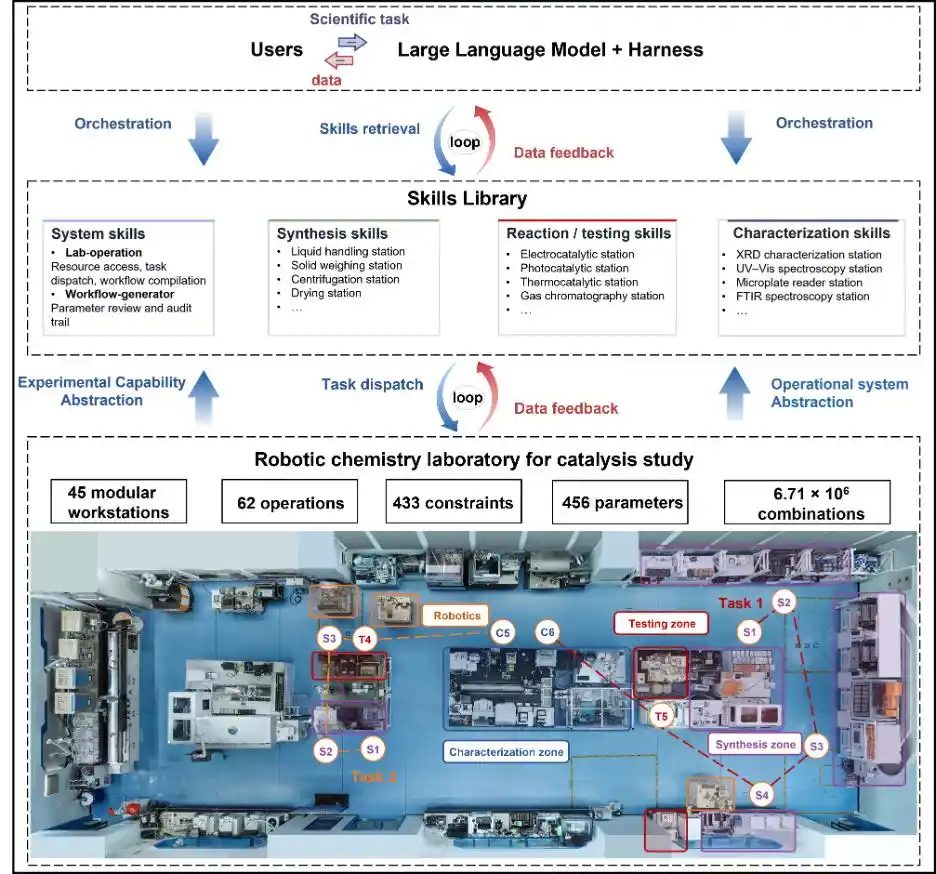
Figure 1. Architecture of an AI-readable machine scientist laboratory for catalysis research.
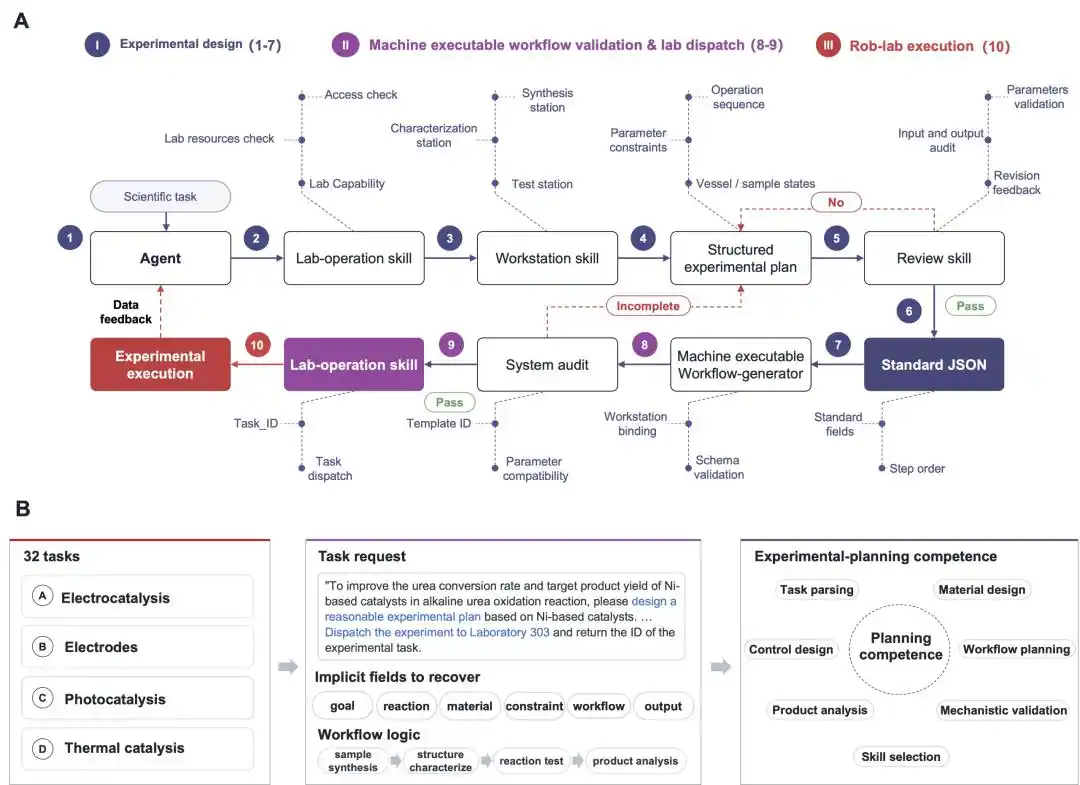
Figure 2. Path from scientific intent to machine laboratory execution.

Pressure Test

Based on this platform, the research team systematically evaluated 48 practical configurations composed of 6 agent frameworks and 9 large language models.

The test covered 32 research tasks defined by domain experts, totaling 4,608 evaluation runs. The assessment not only examined whether the agent could generate experimental plans but also tracked whether these plans could pass verification and be dispatched to the robotic system, and whether the generated workflows could be executed directly without human intervention.

Harsh Real-World Evaluation Results

Current leading large language model agents still have a significant gap from "taking over." Out of 4,608 tests, only 151 workflows could be executed without manual fixes, accounting for 3.3% of all tests. The best-performing combination, Claude Code and Claude Opus 4.7, achieved an executable rate of 28.1%; the Codex and GPT 5.5 combination achieved an executable rate of 19.8%.

Adjusting Parameters Does Not Equal Re-planning

The research further examined whether the agent could learn from real experimental results. The team placed the Codex/GPT 5.5 combination in an open-ended, five-round closed loop to continuously conduct experimental planning, robotic execution, evidence acquisition, and re-planning.

The agent was able to adjust material formulas and operational conditions based on the returned experimental results, but these adjustments mainly stayed at the level of local parameter optimization.

During the five rounds of experiments, the agent consistently retained the original workflow skeleton, failing to redesign analysis methods or correct some persistent key omissions, such as the lack of electrode binders and colorimetric reagents for specific analytes.

The results indicate that being able to read experimental feedback and adjust parameters does not equate to being able to identify problems with the research strategy itself, let alone perform scientific-level re-planning.
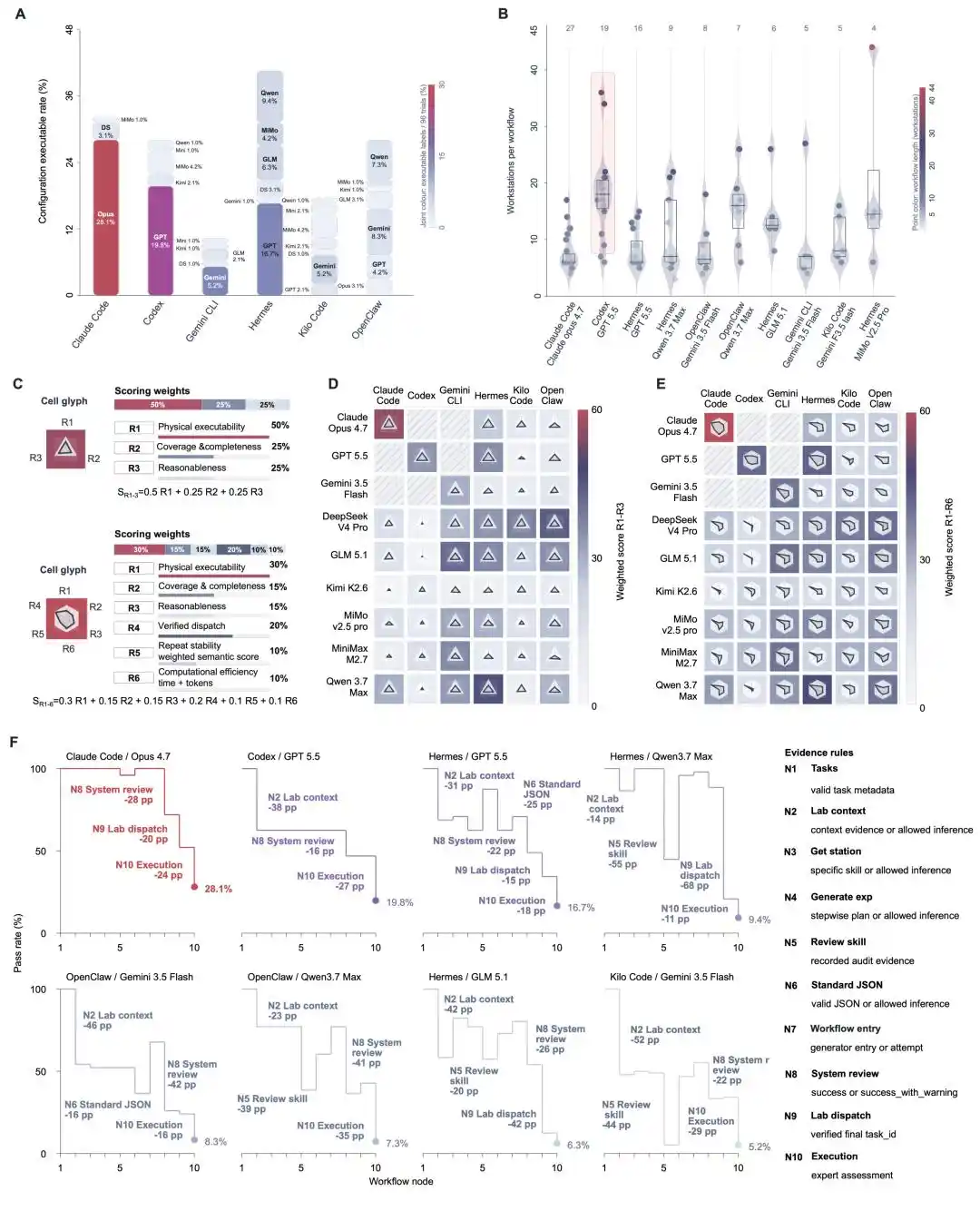
Figure 3. Performance of AI agents across executable planning, verification, and laboratory task dispatch.

Long-Range Planning Remains a Bottleneck

Although some agents generated workflows deemed executable by expert evaluation, with some containing up to 44 operational steps, only 3 workflows across all tests exceeded 30 steps. This suggests that as the task chain lengthens, the agent's ability to maintain experimental logical integrity and physical executability still faces significant challenges.

Redefining AI's Scientific Capabilities

The research thus distinguishes between three capabilities often conflated in current discussions about "AI scientists": first, fluently generating experimental plans; second, generating workflows that can actually be executed in a physical laboratory; and third, adjusting overall research strategies based on experimental results.

The research results show that linguistic-level planning capability does not automatically translate into reliable experimental execution capability, and local parameter adjustment cannot be directly regarded as scientific-level re-planning.

From "AI Proving Ground" to "AI Training Ground"

As intelligent research infrastructure for AI for Science, the machine laboratory can serve both as a "proving ground" to test AI's scientific capabilities and as a "training ground" to drive AI's continuous evolution. The AI agent, through machine-readable skills, directly converses with the machine lab, transforming scientific intent into executable tasks and receiving real feedback from machine execution, instrument status, and experimental results.

The resulting closed loop of "planning—execution—feedback—re-planning" can not only expose AI's deficiencies in knowledge, operation, and research strategy but also capture successful workflows, failure cases, experimental results, and expert evaluations as data for model training and agent alignment, continuously iterating AI models and their agent systems.

Thus, the machine scientist provides quantifiable, repeatable, and verifiable physical world evidence to answer "How can we determine if artificial intelligence is intelligent enough to conduct scientific research?" and drives AI from generating experimental protocols to gradually achieving end-to-end autonomous scientific discovery encompassing scientific question posing, experimental design, robotic execution, data analysis, and evidence-driven re-planning.
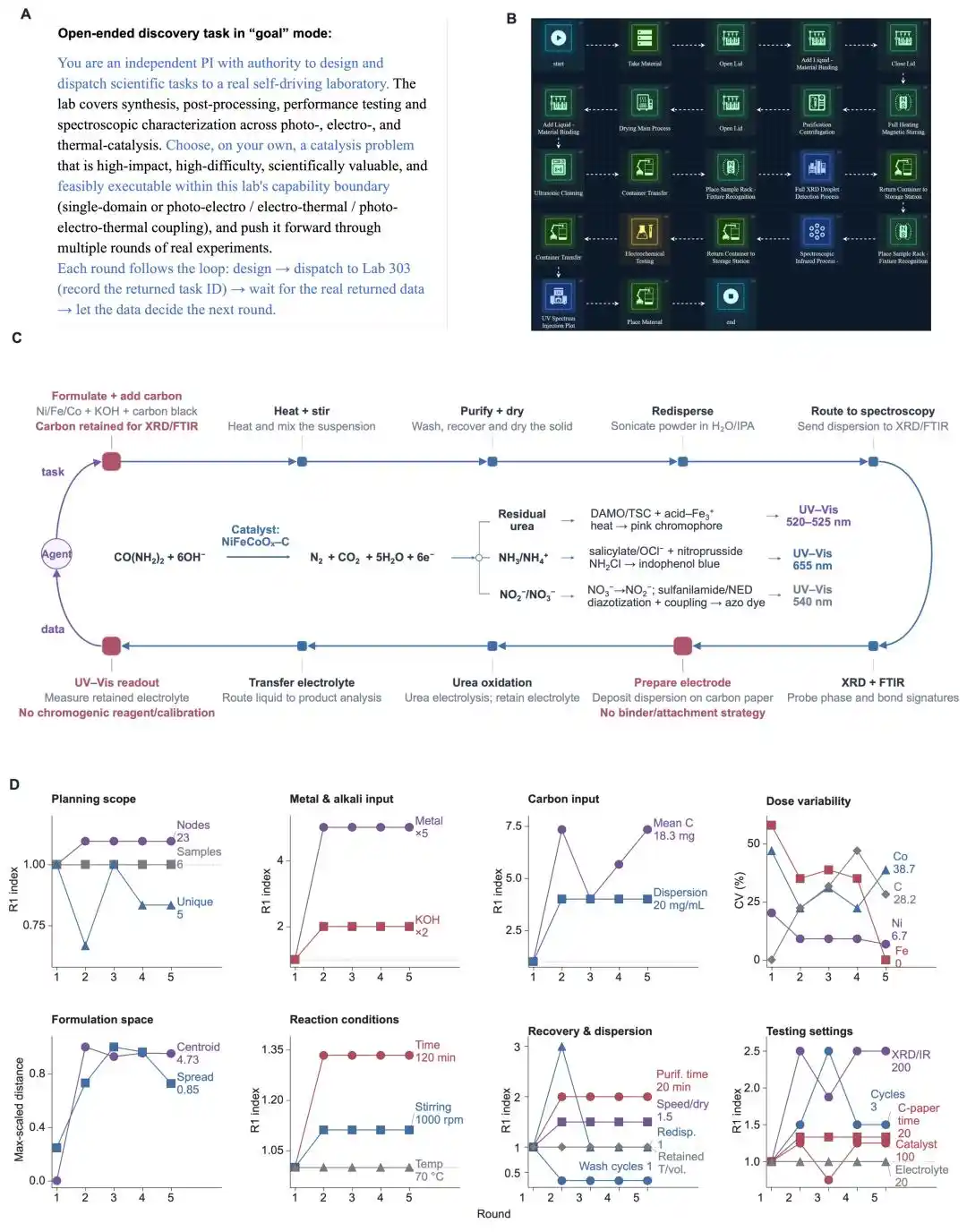
Figure 4. Five-round iteration of the AI-Machine Scientist on an open scientific question.

Reference: https://arxiv.org/abs/2607.23045

This article is from the WeChat public account "Xin Zhi Yuan," author: Xin Zhi Yuan; editor: LRST


Трендовые криптовалюты

Связанные с этим вопросы

QWhat is the main contribution of the University of Science and Technology of China's latest research on AI in scientific discovery?

AThe research transitions the question of AI's scientific capability from knowledge-based Q&A and plan generation to a real-world test by developing a 'machine-scientist lab'. This lab comprises 45 automated workstations for catalysis research, where an AI agent can control lab equipment via machine-readable 'skills', enabling real-world experiment execution and feedback learning.

QWhat were the key findings from the pressure test conducted on AI agents using the machine-scientist lab platform?

AThe pressure test revealed a significant gap in AI's readiness to take over. Out of 4,608 test trials using 48 AI agent configurations, only 151 workflows (3.3%) were executable without human intervention. The best-performing combination (Claude Code with Claude Opus 4.7) had a 28.1% execution success rate. The test highlighted major challenges in creating long, logically consistent workflows and in moving from simple parameter adjustments to true scientific re-planning.

QWhat three distinct capabilities did the study identify as often being conflated in discussions about 'AI scientists'?

AThe study distinguishes three often-conflated capabilities: 1) Fluently generating experimental plans on paper. 2) Generating workflows that are physically executable in a real laboratory. 3) Adjusting the overall research strategy based on experimental results. The research shows that language-based planning does not automatically translate to reliable execution, and parameter tuning does not equate to scientific-level re-planning.

QHow did the AI agent perform in the five-round closed-loop experiment designed to test its ability to learn from results?

AIn the five-round closed-loop test, the AI agent could adjust material formulas and operation conditions based on returned experimental results, but these adjustments remained at the level of local parameter optimization. It consistently retained the original workflow skeleton, failed to redesign analytical methods, and could not correct persistent key omissions, indicating it cannot identify flaws in research strategy or perform true scientific re-planning.

QHow can the machine-scientist lab function as both a 'testing ground' and a 'training ground' for AI in science?

AAs a testing ground, it provides quantifiable, repeatable physical-world evidence to assess an AI's scientific capabilities. As a training ground, the 'planning-execution-feedback-re-planning' closed loop exposes AI's shortcomings and can generate training data—including successful workflows, failure cases, experimental results, and expert evaluations. This data can be used to iteratively improve AI models and agent systems, moving AI toward end-to-end autonomous scientific discovery.

Похожее

UNDP и DFINITY займутся развитием ИИ-инфраструктуры

Программа развития ООН (UNDP) и DFINITY Foundation объявили о партнерстве в сфере суверенной облачной инфраструктуры и децентрализованного искусственного интеллекта. Цель сотрудничества — исследование применения данных технологий в госпроектах и цифровой трансформации государственных органов, организаций гражданского общества и инициатив UNDP. Партнёрство будет реализовываться по трём направлениям. SDG Blockchain Accelerator позволит страновым офисам UNDP тестировать суверенную облачную инфраструктуру и инструменты для разработки ИИ. Future of Work Academy поможет организациям гражданского общества создавать и тестировать приложения. Government Blockchain Academy совместно с правительствами разработает пилотные решения, учитывающие национальные приоритеты. В проектах будут использоваться Cloud Engines и платформа Caffeine AI от DFINITY, что позволит организациям создавать приложения в защищённой цифровой среде с локальным контролем управления. Партнёры также изучат возможности технологий для защиты конфиденциальных данных, повышения устойчивости инфраструктуры и развития местных технических компетенций.

cryptonews.ru11 мин. назад

UNDP и DFINITY займутся развитием ИИ-инфраструктуры

cryptonews.ru11 мин. назад

ПОСЛЕДНИЕ НОВОСТИ: Опубликованы данные Федеральной резервной системы по индексу потребительских цен (PCE), используемому для измерения инфляции! Вот первая реакция биткоина (BTC)!

Криптовалюта Bitcoin удерживает высокие позиции накануне публикации ключевых данных по инфляции в США — индексу потребительских расходов (PCE), за которым пристально следит ФРС. В последнее время BTC демонстрировал быстрый рост с около 62 000 до более 80 000 долларов, даже краткосрочно превысив 81 000 долларов. Внимание рынка сейчас сосредоточено на отчёте PCE, так как его результаты могут повлиять на ожидания относительно денежно-кредитной политики ФРС. Отчёт ниже ожиданий мог бы поддержать ожидания смягчения политики, а данные выше прогнозов — ослабить надежды на снижение ставок и оказать давление на BTC. По опубликованным данным за июль: базовый годовой индекс PCE составил 3,3% (ожидание 3,3%), месячный — 0,2% (ожидание 0,2%). Годовой общий индекс PCE — 3,7% (ожидание 3,6%), месячный — 0,2% (ожидание 0,1%). Эти данные имеют критическое значение для прогнозов по ставкам и для краткосрочной динамики Bitcoin.

cryptonews.ru12 мин. назад

ПОСЛЕДНИЕ НОВОСТИ: Опубликованы данные Федеральной резервной системы по индексу потребительских цен (PCE), используемому для измерения инфляции! Вот первая реакция биткоина (BTC)!

cryptonews.ru12 мин. назад

Taurus подключила платформы цифровых активов к блокчейн-реестру Swift

Провайдер инфраструктуры для цифровых активов Taurus объявил об интеграции своих платформ токенизации и кастодиального хранения с блокчейн-реестром международной платёжной сети Swift. Благодаря этому клиенты Taurus смогут подключать свою существующую инфраструктуру к реестру Swift и осуществлять платежи с использованием выпущенных банками токенизированных депозитов. Первые интеграции для клиентов заработают в течение нескольких дней, а первые реальные транзакции через платформы Taurus на базе этой технологии ожидаются в ближайшие недели. Реестр Swift, о готовности к первоначальному использованию которого было объявлено в июле, предназначен для координации круглосуточных трансграничных платежей с помощью токенизированных депозитов. Он организует переводы между банками до окончательного расчёта через существующие системы. В пилотных операциях с реестром готовятся участвовать 17 банков по всему миру. Ранее Standard Chartered и HSBC уже провели первую реальную трансграничную транзакцию в рамках этой системы, связав свои отдельные системы токенизированных депозитов.

cryptonews.ru12 мин. назад

Taurus подключила платформы цифровых активов к блокчейн-реестру Swift

cryptonews.ru12 мин. назад

В эту пятницу следите за биткоином: два уровня имеют очень важное значение! Волатильность может возрасти! Вот подробности

Биткоин преодолел отметку в 81 000 долларов, достигнув трехмесячного максимума благодаря снижению доходности казначейских облигаций США, давлению на доллар и высокому спросу на спотовые биткоин-ETF. В эту пятницу, 28 августа, на бирже Deribit истекает срок действия опционов на биткоин на сумму около 6,4 млрд долларов. Преобладание колл-опционов над пут-опционами указывает на сохранение бычьего настроения, однако такое крупное событие может повысить волатильность рынка. Особое внимание привлекают ключевые уровни в 75 000 и 80 000 долларов, вокруг которых возможны резкие колебания цены. Специалисты отмечают, что истечение срока примерно 20% открытых позиций по биткоинам на Deribit делает рынок особенно чувствительным.

cryptonews.ru37 мин. назад

В эту пятницу следите за биткоином: два уровня имеют очень важное значение! Волатильность может возрасти! Вот подробности

cryptonews.ru37 мин. назад

CryptoQuant: биткоин вошел в начальную фазу нового бычьего рынка

Аналитическая платформа CryptoQuant 25 августа 2026 года сообщила, что биткоин входит в начальную фазу нового бычьего рынка. Индекс Bull Score за неделю вырос с 30 до 80 пунктов, что является самым быстрым разворотом за год и самым «бычьим» значением с октября 2025 года. Восемь из десяти индикаторов индекса подают оптимистичные сигналы. Ключевым условием для подтверждения смены рыночного тренда аналитики называют закрытие цены биткоина выше уровня в $83 000, где находится 365-дневная скользящая средняя. В отчёте отмечается сильный рост спроса, который увеличивается самыми быстрыми месячными темпами с конца декабря. Одновременно платформа предупреждает о признаках краткосрочного перегрева: маржа нереализованной прибыли достигла максимума с июня 2025 года, киты зафиксировали рекордную прибыль в $614 млн, а приток активов на биржи указывает на возможное давление продаж. Машинный анализ данных напоминает, что аналогичный бычий сигнал в апреле 2026 года оказался краткосрочным, после чего последовала коррекция. Таким образом, устойчивость текущего разворота будет зависеть от способности биткоина закрепиться выше $83 000.

cryptonews.ru42 мин. назад

CryptoQuant: биткоин вошел в начальную фазу нового бычьего рынка

cryptonews.ru42 мин. назад

Торговля

Спот

Популярные статьи

Неделя обучения по популярным токенам (2): 2026 может стать годом приложений реального времени, сектор AI продолжает оставаться в тренде

2025 год — год институциональных инвесторов, в будущем он будет доминировать в приложениях реального времени.

2.0k просмотров всегоОпубликовано 2025.12.16Обновлено 2025.12.16

Неделя обучения по популярным токенам (2): 2026 может стать годом приложений реального времени, сектор AI продолжает оставаться в тренде

Обсуждения

Добро пожаловать в Сообщество HTX. Здесь вы сможете быть в курсе последних новостей о развитии платформы и получить доступ к профессиональной аналитической информации о рынке. Мнения пользователей о цене на AI (AI) представлены ниже.

活动图片