1inch Announces Public Launch of Aqua and Introduces the First Shared Liquidity Layer for DeFi

cryptonews.ruОпубликовано 2026-07-28Обновлено 2026-07-28

Введение

The 1inch DeFi ecosystem has publicly launched Aqua, a non-custodial shared liquidity layer. This innovative solution allows liquidity providers to use the same wallet balance across multiple liquidity positions without locking assets in pools, enabling more capital efficiency. Unlike traditional pool models where liquidity is fragmented and controlled by protocols, Aqua acts as a registry. Users connect a wallet, approve a token balance, and create positions that reference this balance. The protocol only withdraws tokens for a matching swap order, returning the received tokens and fees in a single atomic transaction; otherwise, assets remain fully under the user's control. Co-founder Sergej Kunz stated that Aqua addresses the inefficiencies of the current "broken" liquidity provisioning system, where a significant portion of concentrated liquidity goes unused. An on-chain study cited found 85% of tracked concentrated liquidity was inefficient in early 2026, leading to substantial lost fee income. To incentivize adoption, the 1inch Foundation and DAO have launched a liquidity rewards program with 10 million $1INCH and 500,000 $USDC. Aqua is now live on 13 EVM-compatible networks, including Ethereum and Arbitrum. It features enhanced controls, security from eight independent audits, and architectural protection against JIT fee sniping.

1inch, the leading DeFi ecosystem, has announced the full-scale public launch of Aqua – a non-custodial shared liquidity layer that allows liquidity providers to use the same wallet balance across multiple positions without locking assets in pools. This is stated in a press release by Incrypted.

Following a developers-only launch in November 2025, Aqua offers one of the first alternatives to the traditional DeFi pooled model with risk control. The solution allows for more efficient capital utilization when providing liquidity.

As explained by the project team, 1inch Aqua functions like a registry: a user connects their wallet, approves a token balance, and creates liquidity positions that can reference this balance.

The Aqua protocol tracks the balance. When it receives a swap order matching a position's criteria, the protocol takes the requested tokens from the wallet and returns the received tokens and fees as part of a single atomic transaction. In all other cases, the user's tokens remain in their wallet and under their full control.

"The liquidity provision space is broken, but the scale of the problem only becomes visible when an alternative emerges. Today, that alternative is here. With Aqua, liquidity providers no longer have to put up with the inefficient pool structure they've worked with for years," said Sergej Kunz, Co-Founder of 1inch.

He added that the DeFi space doesn't just need additional liquidity volume, but more useful capital, active where there is demand.

"We built Aqua so providers could have that reach without giving up self-custody: your tokens stay in the wallet until the moment of swap execution," Kunz noted.

Alongside the product launch, the 1inch Network Incentives program – a liquidity reward program for Aqua – is kicking off. It is led by Degensoft Ltd (BVI) and implemented via Merkl.

The 1inch Foundation has allocated 10 million $1INCH as rewards for liquidity providers, and the 1inch DAO has added another 500,000 $USDC.

The initiative aims to accelerate liquidity growth and swap activity in supported pairs. As a result, liquidity providers not only get Aqua's improved user experience but also the opportunity to earn additional rewards. The program's terms, markets, and guardrails are detailed in the published campaign configuration.

According to 1inch, the current pooled system is one of the key limitations for scaling DeFi and attracting capital from traditional finance on-chain.

For liquidity providers, the existing deposit-to-pools model means relinquishing control over assets, while active capital is spread too thinly across protocols, pairs, and price ranges.

The scale of the problem is evident in an on-chain Dune research study commissioned by 1inch: in the first half of 2026, 85% of concentrated liquidity on major DEXs was used inefficiently. This is about $1.6 billion out of the $1.84 billion tracked. This figure includes approximately $542 million that were on average completely out of range weekly. This led to roughly $150 million in unearned fees annually.

Through Aqua, 1inch demonstrates a more efficient shared liquidity model that allows the same wallet balance to support multiple positions simultaneously. Unlike the traditional model where liquidity must be split across multiple pools and positions, Aqua allows a single balance to support multiple quotes at once.

For example, a $100,000 balance can support three positions that collectively quote $300,000 worth of liquidity, with the potential to quote an even larger volume. The underlying tokens remain available to each position at all times. Nothing is borrowed, and any swap can only execute against assets that are actually present in the wallet.

A position in Aqua can be full-range, concentrated, or pegged depending on the selected pair and position type. Users can open and close positions independently without locking assets.

Their exposure is limited to the tokens they actually hold, not the theoretical aggregate size of all created positions. If there are insufficient funds in the wallet to cover a swap, Aqua simply does not access the user's tokens.

Starting today, users can create positions across 13 EVM-compatible networks, including Ethereum, Arbitrum, Base, Robinhood Chain, and BNB Chain.

Aqua also launches with a range of additional features, including a liquidity leaderboard, an incentives dashboard, liquidity map visualizations, batch position creation, provider profiles with cross-chain positions, sub-wallets, and an AI assistant for liquidity provisioning via the 1inch Business MCP with secure batch deployment coming soon.

Aqua has undergone eight independent security audits conducted by OpenZeppelin, Bailsec, Hashlock, Hexens, MixBytes, Nethermind, Theori, and Decurity. Combined with its fully non-custodial architecture where Aqua never stores user tokens, this means a swap can only move assets that are actually in the provider's wallet at the moment of execution. Revoking approval stops new executions immediately after the transaction is confirmed on the blockchain.

Aqua is also architecturally protected against JIT fee sniping, as each position has a single owner. Therefore, there is no common fee accrual moment that bots could target. While Aqua's architecture limits exposure and leaves providers in control of their own tokens, swap fees are not guaranteed, prices can move against a position (impermanent loss), and providers bear market risks and smart contract risks.


Трендовые криптовалюты

Связанные с этим вопросы

QWhat is Aqua, and what key problem in DeFi does it aim to solve?

AAqua is a non-custodial shared liquidity layer launched by 1inch. It addresses the inefficiency of the traditional DeFi pooled liquidity model. It allows liquidity providers to use the same wallet balance across multiple positions without locking assets in pools, solving the problem of capital being thinly spread and inefficiently utilized across protocols, pairs, and price ranges.

QHow does the 1inch Aqua protocol technically function for a user providing liquidity?

AA user connects their wallet and approves the token balance. They then create liquidity positions that reference this single balance. The Aqua protocol tracks this balance. When a swap order matching a position's criteria is received, the protocol takes the requested tokens from the wallet and returns the received tokens and fees in a single atomic transaction. Otherwise, the user's tokens remain untouched in their wallet.

QWhat are the key features and benefits of the new liquidity reward program launched with Aqua?

AThe program is called 1inch Network Incentives. It is led by Degensoft Ltd and implemented via Merkl. It features 10 million $1INCH from the 1inch Foundation and an additional 500,000 $USDC from the 1inch DAO as rewards for liquidity providers. Its goal is to accelerate liquidity growth and swap activity, allowing providers using Aqua to earn extra rewards on top of the improved user experience.

QWhat did the on-chain research commissioned by 1inch reveal about the inefficiency of concentrated liquidity?

AResearch on Dune showed that in the first half of 2026, 85% of concentrated liquidity on major DEXs was used inefficiently. This amounted to approximately $1.6 billion out of a tracked $1.84 billion. This included about $542 million that was, on average per week, completely out of range, leading to an estimated $150 million in lost fees annually.

QWhat security measures and architectural protections are in place for the Aqua protocol?

AAqua has undergone eight independent security audits by firms including OpenZeppelin and Nethermind. It features a fully non-custodial architecture where user tokens are never held by the protocol. A swap can only move assets actually present in the provider's wallet. Revoking permission stops new executions immediately. It is also architecturally protected against JIT fee sniping because each position has a single owner, eliminating a common fee accrual moment for bots to exploit.

Похожее

Акции падают сильнее, чем криптовалюта. Куда ушли деньги?

В конце июля южнокорейский фондовый рынок пережил историческое падение: индекс Kospi дважды сработал на остановку торгов, откатившись на 40% от пиков июня. Особенно пострадали полупроводниковые акции, такие как SK Hynix, чьи отличные, но не оправдавшие максимальных ожиданий результаты спровоцировали обвал. Ещё сильнее упали связанные с ними leveraged ETF, один из которых потерял 83% за месяц. Парадоксально, но в это же время биткоин, известный высокой волатильностью, показал относительную стабильность, даже немного вырос. Автор объясняет это не притоком «уклоняющихся» от акций денег, а тем, что биткоин уже пережил собственное сильное падение в мае-июне, когда инвесторы массово выводили средства из биткоин-ETF. Таким образом, к моменту кризиса на фондовом рынке продавцы в криптосфере уже истощились. Основная причина обвала — глобальное принудительное снижение левериджа (делеверидж) на самых перегретых направлениях, в первую очередь в AI и полупроводниках. Катализаторами стали не совсем идеальные отчёты компаний, выход на IPO китайского конкурента в производстве памяти и давление от сворачивания «кэрри-трейда» в японской иене. Настоящим убежищем для капитала в этой ситуации стало золото, цена которого значительно выросла. Биткоин же, по данным корреляции, перестал восприниматься институтами как «цифровое золото» и остаётся активом для роста с высокой долей риска. Вывод: деньги с фондового рынка не ушли в биткоин. Они ушли в наличность, гособлигации и золото. Биткоин просто уже пережил свою фазу распродаж раньше. Для его устойчивого роста нужны три условия: смягчение глобальной ликвидности, снижение ставок ФРС без рецессии и принятие чёткой регуляции (CLARITY Act). Его текущая низкая корреляция с Nasdaq может в будущем сделать его привлекательным для диверсификации портфелей, но только после окончания общей рыночной бури.

marsbit14 мин. назад

Акции падают сильнее, чем криптовалюта. Куда ушли деньги?

marsbit14 мин. назад

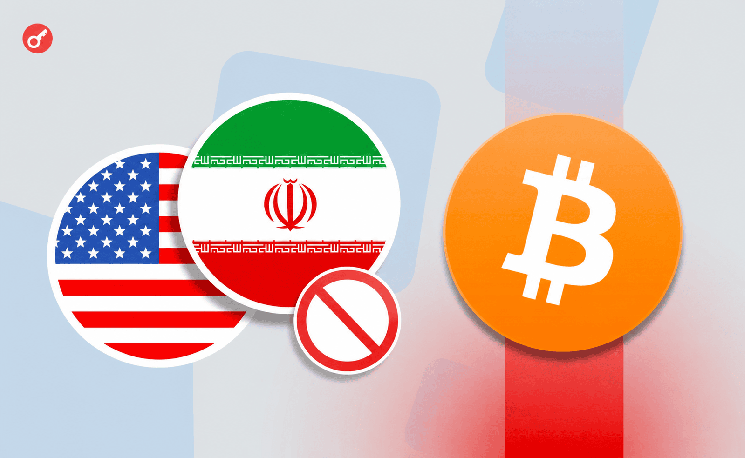
США ввели санкции против иранского криптосервиса по оплате биткоинами Hormuz Safe

Министерство финансов США ввело санкции против двух иранских компаний — Persian Gulf Marine Insurance Company (PGMIC) и платформы Hormuz Safe Marine Services Authority. Их обвиняют в создании схемы обхода санкций через цифровое морское страхование с оплатой в криптовалютах, включая биткоин. По данным OFAC, Иран с мая 2026 года принуждал суда покупать такие страховые полисы для прохода через Ормузский пролив, что позволяло режиму получать доход и обходить ограничения. Одновременно под санкции попали восемь судоходных компаний и восемь танкеров, входящих, по версии США, в «теневой флот» Ирана, который перевозил иранскую нефть в обход международных ограничений. Все активы указанных компаний и судов в юрисдикции США будут заблокированы. Министр финансов США Скотт Бессент заявил, что Вашингтон не позволит Ирану использовать международное судоходство для финансирования терроризма и агрессии. Санкции введены на фоне отсутствия ответа от КСИР на дипломатические предложения США о перемирии.

cryptonews.ru21 мин. назад

США ввели санкции против иранского криптосервиса по оплате биткоинами Hormuz Safe

cryptonews.ru21 мин. назад

«Последняя фаза перед новым циклом». Что будет с биткоином в августе

Аналитики ожидают, что в августе курс биткоина, скорее всего, продолжит движение в боковом тренде с давлением вниз, а не совершит решительный разворот к росту. Несмотря на восстановление от июльского минимума около $58 тыс. до примерно $63,5 тыс., сохраняется ряд негативных факторов. Основное давление оказывает макроэкономическая ситуация: высокие процентные ставки в США, инфляция и доходность гособлигаций делают криптовалюты менее привлекательными на фоне традиционных активов. Это подтверждается рекордным оттоком средств из биткоин-ETF в первом полугодии, особенно в июне. Исторически август также является слабым месяцем для рынка. Эксперты считают вероятным (с вероятностью около 30-50%) новое тестирование и даже пробой уровня $60 тыс. с риском падения к $53–55 тыс. Базовый сценарий — торговля в диапазоне $58–68 тыс. Шансы на рост выше $67–70 тыс., который бы сломал нисходящий тренд, оцениваются лишь в 20%. При этом аналитики отмечают, что текущая фаза может быть последней перед новым рыночным циклом, и уровни близ $60 тыс. подходят для долгосрочного накопления биткоина и сильных проектов. Однако серьезный рост, по мнению некоторых экспертов, стоит ожидать не раньше IV квартала 2025 года.

cryptonews.ru21 мин. назад

«Последняя фаза перед новым циклом». Что будет с биткоином в августе

cryptonews.ru21 мин. назад

Торговля

Спот

Популярные статьи

Как купить LAYER

Добро пожаловать на HTX.com! Мы сделали приобретение Solayer (LAYER) простым и удобным. Следуйте нашему пошаговому руководству и отправляйтесь в свое крипто-путешествие.Шаг 1: Создайте аккаунт на HTXИспользуйте свой адрес электронной почты или номер телефона, чтобы зарегистрироваться и бесплатно создать аккаунт на HTX. Пройдите удобную регистрацию и откройте для себя весь функционал.Создать аккаунтШаг 2: Перейдите в Купить криптовалюту и выберите свой способ оплатыКредитная/Дебетовая Карта: Используйте свою карту Visa или Mastercard для мгновенной покупки Solayer (LAYER).Баланс: Используйте средства с баланса вашего аккаунта HTX для простой торговли.Третьи Лица: Мы добавили популярные способы оплаты, такие как Google Pay и Apple Pay, для повышения удобства.P2P: Торгуйте напрямую с другими пользователями на HTX.Внебиржевая Торговля (OTC): Мы предлагаем индивидуальные услуги и конкурентоспособные обменные курсы для трейдеров.Шаг 3: Хранение Solayer (LAYER)После приобретения вами Solayer (LAYER) храните их в своем аккаунте на HTX. В качестве альтернативы вы можете отправить их куда-либо с помощью перевода в блокчейне или использовать для торговли с другими криптовалютами.Шаг 4: Торговля Solayer (LAYER)С легкостью торгуйте Solayer (LAYER) на спотовом рынке HTX. Просто зайдите в свой аккаунт, выберите торговую пару, совершайте сделки и следите за ними в режиме реального времени. Мы предлагаем удобный интерфейс как для начинающих, так и для опытных трейдеров.

786 просмотров всегоОпубликовано 2025.02.11Обновлено 2026.06.02

Как купить LAYER

Обсуждения

Добро пожаловать в Сообщество HTX. Здесь вы сможете быть в курсе последних новостей о развитии платформы и получить доступ к профессиональной аналитической информации о рынке. Мнения пользователей о цене на LAYER (LAYER) представлены ниже.

活动图片