Microsoft CEO Satya Nadella's Latest Warning: Betting Entirely on a Single AI Model Hands Over a Company's Lifeblood

marsbitОпубликовано 2026-07-28Обновлено 2026-07-28

Введение

Microsoft CEO Satya Nadella warns that companies relying solely on a single AI model could jeopardize their survival. He argues that over-dependence leads to "vendor lock-in," where businesses risk ceding control over their core data, memory, contextual history, and AI usage patterns. This dependence essentially outsources a company's critical thinking and operational know-how to an external provider. The deeper a company integrates with one AI system—feeding it prompts, internal data, and workflows—the more it reveals its unique business methods and competitive edge. This accumulated knowledge could become accessible to the AI supplier. Furthermore, switching providers becomes extremely costly and complex, as companies would need to rebuild their entire AI-augmented workflow, memory, and tool integrations from scratch. Nadella's solution is "decoupling." Companies should separate their proprietary data, memory, and control layer (or "harness") from the underlying AI models. By retaining metadata from every AI interaction, businesses can preserve their operational "brain" or institutional knowledge. This allows them to flexibly use different AI models (e.g., from OpenAI, Anthropic, Microsoft) for specific tasks without losing their accumulated expertise. The core idea: companies can rent the smartest models available, but they must keep their own "brain" and operational control firmly in-house.

Betting the whole company on a single AI could eventually mean betting away the entire company!!

This statement might sound somewhat alarmist, but the person saying it is none other than Microsoft CEO Satya Nadella, who is currently pushing AI with all his might.

In an interview on CNN's "Fareed Zakaria GPS" program, Nadella delivered a harsh message to all companies that believe 'one AI model can handle everything':

Any company that loses control of its data, memory, and AI usage records may not be able to survive because it has effectively outsourced its thinking.
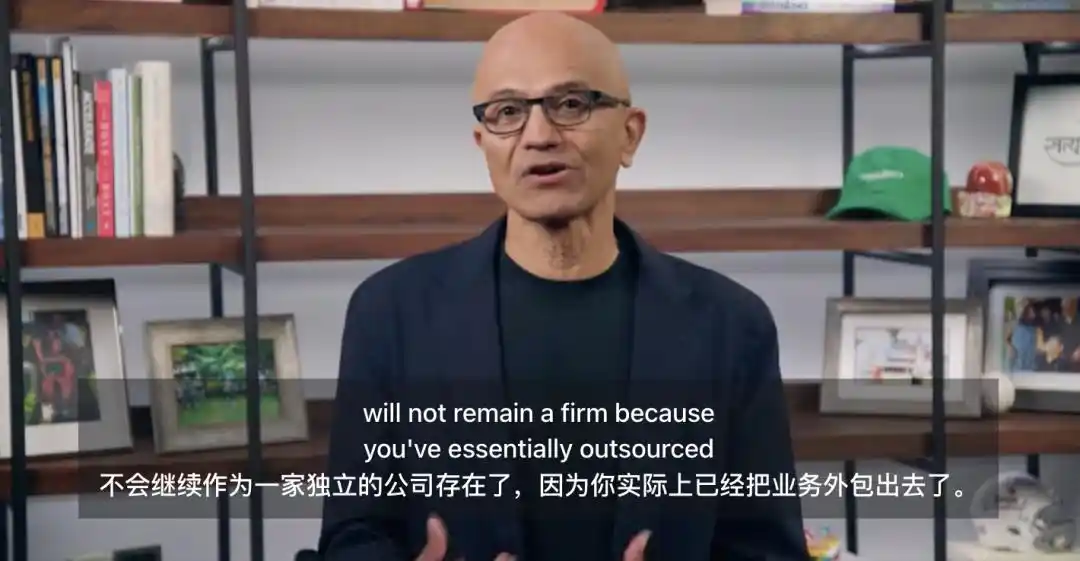
And he added, the deeper a company uses AI in its daily operations, the more opportunities the AI supplier has to understand how that company truly functions.

In the end—

What the company pays might not just be the token fee, but also a set of commercial experience that competitors couldn't buy even with money.

So, what exactly is Nadella worried about?

Betting on a Single AI Could Ultimately Outsource a Company's Core Capabilities

Then, how can a company simply using a specific AI seriously risk its survival?

The core of Nadella's concern revolves around two words: "lock-in."

Today, when a company integrates AI, what employees see might just be a chat interface, but what's connected behind it is becoming increasingly complex—

Prompts, internal data, context, long-term memory, and the harness responsible for directing AI to call tools and execute tasks are all gradually being integrated.

Moreover, employees continuously feed company materials into the system to make the AI better understand the business!!

Thus, thousands of prompts, calls, and corrections layered together leave behind the real working methods of a company:

How to serve customers, how to assess risks, how to modify products, and who to listen to in special situations. (The real "secret manual")

While this system isn't fully documented in any employee handbook, it might determine why a company is better at 'doing business' than its competitors...

Leaking business know-how is just one layer of risk.

If the model, harness, corporate context, and long-term memory are all locked into a single AI company's product, another issue arises—

When the company wants to switch models, it will find that it needs to move far more than just a chat interface!!

Accumulated context, memory, tool-calling methods, and workflows may all need to be rebuilt, and that's when they'll realize they've made a huge mistake.

Furthermore, if the original model suddenly raises prices, discontinues service, falls behind in capabilities, or undergoes major changes to a feature, it becomes very difficult for the enterprise to quickly migrate to another AI.

The company either endures the high cost of migration, starting from scratch to re-train the AI, or stays on the original platform, accepting its price changes, rules, and product shifts.

Price hike by the model? Have to follow. (Wry smile)

Model capabilities fall behind? Have to follow. (Wry smile)

Model supplier changes product direction? The company's core workflow has to change too. (Wry smile)

This is the complete logic behind Nadella's warning that relying on a single AI 'may not survive'—

If a company attaches its data, memory, and working methods entirely to a single AI system, it has essentially outsourced a part of its thinking capacity.
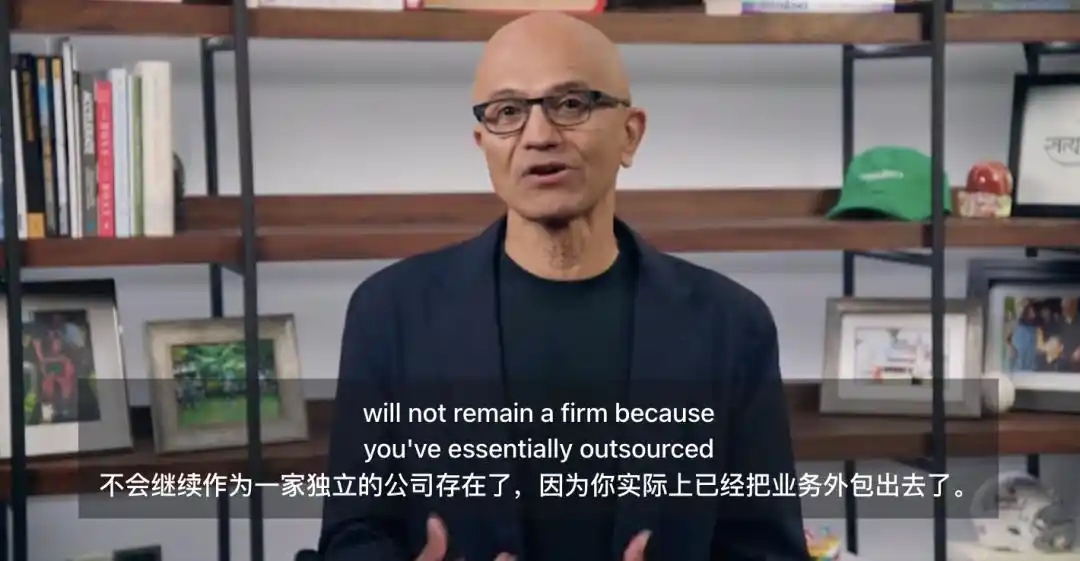
Without that AI, the company might not even understand why it made past decisions or how to continue working.

So it seems like the AI is working for the company.

But in the end, it might turn into the company needing the AI supplier to stay alive. (Ouch)

The Smartest Models Can Be Rented, A Company's "Thought Patterns" Must Be Kept In-House

Alright, the question arises: companies can't all go train foundational models from scratch just because they're worried about lock-in, right?

Training cutting-edge models requires massive computing power, vast amounts of data, and specialized talent. Most companies neither need nor can afford this...

The solution Nadella offers is actually one word—Decouple!!!

Decouple the model from the harness, decouple the context and memory from the model.

Underlying models can come from OpenAI, Anthropic, Microsoft, or other vendors. The company's own data, usage records, context, and long-term memory, however, must always reside within its own systems.
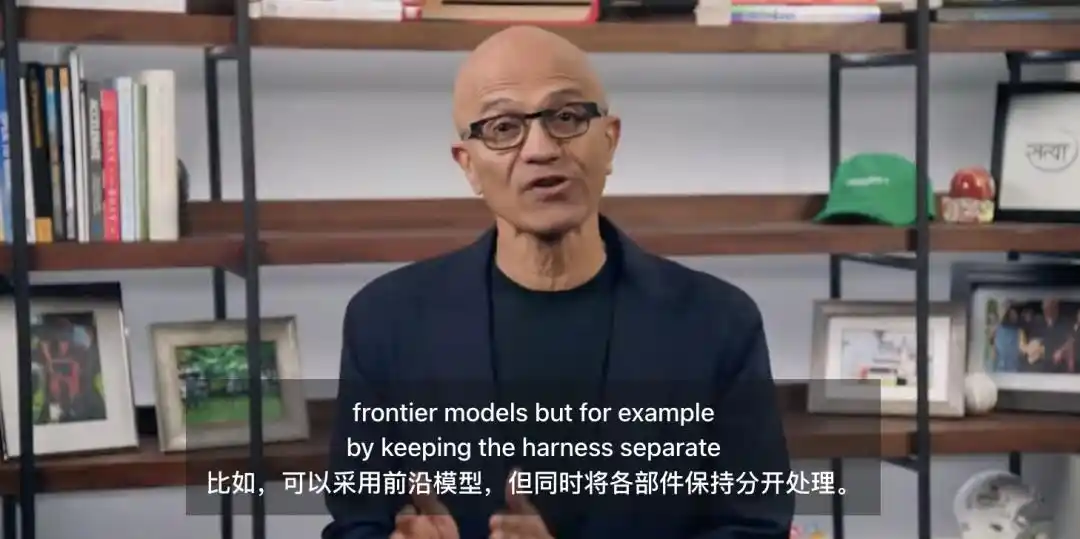
According to Nadella's vision, each time a company uses a model, the metadata generated around that call should be retained by the company itself.

This metadata can include what questions the company asked, what content the model accessed, what results it gave, and what modifications employees made afterwards.

Once these records accumulate, the company can also use them to train its own weights or models, further solidifying the process of using AI into its own capabilities.

Furthermore, the harness should also not be permanently welded to any single model.

The benefit of this is that the model can evolve from being the brain, body, and memory of the entire system into a replaceable inference engine.

When writing code, you can call a model more proficient in programming.

When analyzing long documents, you can switch to a model with stronger long-context capabilities.

When handling sensitive materials, you can use open-source weight models deployed within the company.

Whichever model has better capabilities and lower costs gets the job.

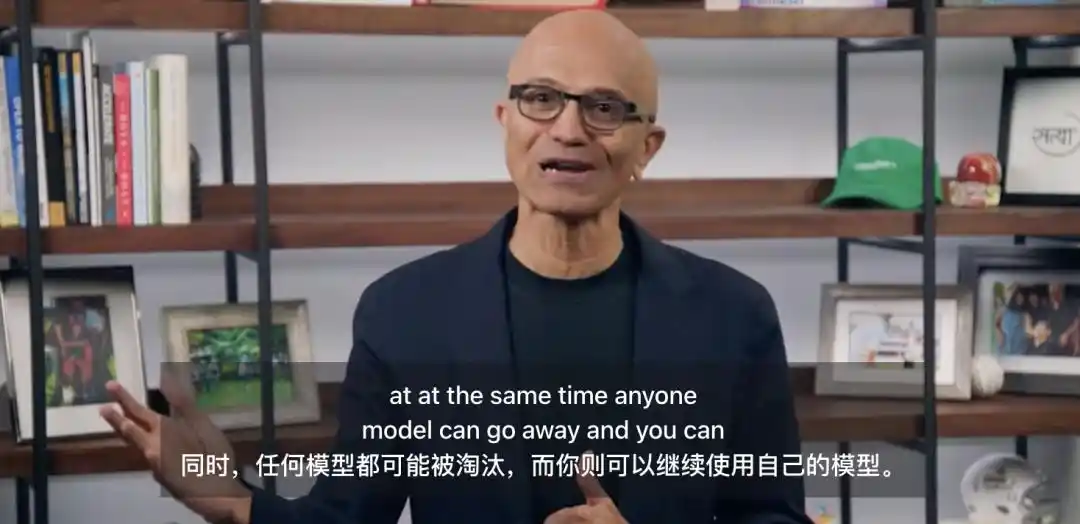
As Nadella puts it, this way, even if "any single model disappears," the company can still control its own destiny.
Actually, Nadella's concern has already surfaced in the startup world.

Previously, OpenAI proposed a special investment offer to startups in the Y Combinator Spring and Summer batches.

Each company could receive up to $2 million worth of OpenAI tokens. In exchange, OpenAI would gain corresponding equity through SAFE.

Investor Jason Calacanis later publicly warned entrepreneurs that accepting these tokens meant OpenAI could potentially see what a startup was actually doing, then replicate the idea and embed similar capabilities into its own free product.

Now, Nadella extends the same warning from startups to all enterprises—

In the past, one of a company's most important assets was the experience accumulated over time by its employees and organization.

In the AI era, this experience will further transform into prompts, context, evaluation data, agent memory, and the records of countless tool calls and manual corrections.

Together, they form a company's new "neural circuitry."

This neural circuitry can operate by calling different models and can also become smarter as models upgrade.

But regardless of how many generations of external models are replaced, it must be the company itself that controls this neural circuitry.

After all, the smartest models can be rented.

A company's "brain" must stay firmly in its own head.

References:

[1]https://www.facebook.com/fareedzakaria/videos/1344036211210716/

[2]https://techcrunch.com/2026/07/27/satya-nadella-says-companies-that-trust-one-ai-for-everything-may-not-survive/

This article is from the WeChat public account "QbitAI", author: Meng Yao

Трендовые криптовалюты

Связанные с этим вопросы

QWhat is the core risk that Microsoft CEO Satya Nadella warns about when companies rely on a single large AI model?

AThe core risk is 'vendor lock-in' or 'binding.' Companies risk outsourcing their core thinking and capabilities to a single AI provider, losing control over their data, memory, and AI usage records. This makes them vulnerable to the provider's pricing, service changes, or potential access to their proprietary operational knowledge.

QAccording to Nadella, what elements of a company's operations become embedded in a single AI system over time?

AOver time, a company embeds its internal data, prompts, context, long-term memory, tool-calling methods, workflows, and the specific logic behind its business decisions (e.g., how to serve clients, assess risk, modify products) into the AI system. This collectively forms the company's unique operational 'playbook.'

QWhat is Nadella's proposed solution to avoid dependency on a single AI model?

ANadella's solution is to 'decouple' or 'unbundle' the AI stack. Companies should separate their core data, memory, context, and workflow 'harness' from the underlying AI model. This allows them to retain their 'brain circuit' and use different models (from various providers) as interchangeable 'reasoning engines' based on task, cost, or performance.

QWhat does Nadella mean when he says a company's new 'brain circuit' can be rented but must be owned?

AHe means that the most advanced AI reasoning models ('brains') can be rented or accessed from external providers. However, the company's own unique system—composed of its data, workflows, prompts, and operational knowledge that directs and utilizes these models—is its 'brain circuit.' This core system must be owned and controlled by the company itself to ensure independence and survival.

QWhat parallel does the article draw between Nadella's warning and a previous concern in the startup community?

AThe article parallels Nadella's warning with a previous concern raised by investor Jason Calacanis about OpenAI's investment offers to startups. He warned that accepting OpenAI's tokens for equity could allow OpenAI to see a startup's operations and potentially replicate their ideas in its own free products, similar to how a single AI provider could gain insights into and leverage a company's proprietary operational knowledge.

Похожее

Dash запустила ZK-приватность на базе Zcash

В феврале Dash анонсировала планы по интеграции протокола Orchard от Zcash для обеспечения приватности. Теперь первая часть этих планов реализована в Dash Platform v4.0.0: shielded-операции (защищённые транзакции) стали частью консенсуса сети. Это встроенная в протокол модель приватности, а не внешний миксер. Для Dash это не замена исторического механизма CoinJoin, а вторая, параллельная опция. CoinJoin продолжает работать в основной сети (Core), а новый ZK-подход на базе Orchard используется в Platform и лучше подходит для мобильных кошельков. Приватность остаётся опциональной. Shielded pool скрывает балансы, отправителей, получателей и суммы переводов внутри пула, используя нулевые знания (ZK-доказательства) для проверки корректности операций без раскрытия их содержимого. Пользователи могут вносить средства в пул из Core, совершать приватные переводы и выводить средства обратно в Core. Основой реализации стал shielded-протокол Orchard от Zcash (на базе Halo 2). Команда Dash адаптировала его для своей Platform, добавив структуру SumTree для дополнительного контроля и предотвращения скрытой эмиссии. Скорость синхронизации нового кошелька составляет около 21 секунды. В настоящее время приватный пул работает с внутренней расчётной единицей Platform — Credits. В планах — запуск отдельных shielded pools для нативных пользовательских токенов и NFT, что в сочетании с возможностью их обмена на Dash создаст прямую связь приватных активов с внешним рынком.

cryptonews.ru25 мин. назад

Dash запустила ZK-приватность на базе Zcash

cryptonews.ru25 мин. назад

Известный инвестор «нацелился» на NVIDIA: чрезмерный бум ИИ полностью зависит от неё

Известные инвесторы Марк Кубан и Майкл Берри высказали предупреждения о рисках, связанных с доминирующей ролью Nvidia в экосистеме искусственного интеллекта. Кубан провёл параллель с пузырем доткомов, отметив, что Nvidia, финансируя клиентов для покупки своих GPU, сама扮演了 роль "первоначального публичного предложения" в нынешнем буме. Он выразил опасения, что сбой у Nvidia или прорыв у конкурентов могут привести к краху всей системы. Берри указал на стремительный рост стоимости кредитных дефолтных свопов Nvidia как на признак растущих рыночных опасений по поводу чрезмерной扩张 компании. Он заявил, что увеличил короткие позиции по акциям Nvidia, считая, что значительная часть её спроса создана за счёт циклического финансирования, а не реальных конечных пользователей. Оба инвестора критикуют чрезмерные инвестиции в инфраструктуру ИИ, которая может устареть или привести к перепроизводству. Генеральный директор Nvidia Дженсен Хуан ранее в шутку заявлял, что компания "удерживает на плаву всю планету", подчёркивая её ключевую роль. Акции Nvidia в среду упали более чем на 3%.

marsbit26 мин. назад

Известный инвестор «нацелился» на NVIDIA: чрезмерный бум ИИ полностью зависит от неё

marsbit26 мин. назад

OpenAI, выпустила код с открытым исходным кодом

OpenAI выпустила в открытый доступ свой инструмент безопасности кода — Codex Security CLI (интерфейс командной строки) и TypeScript SDK. Инструмент предназначен для автоматического обнаружения, проверки и исправления уязвимостей в кодовой базе. Для работы необходимы Node.js 22+, Python 3.10+ и ключ API OpenAI. За первые 30 дней тестирования инструмент проанализировал более 1.2 миллиона коммитов, выявив 792 критических и 10 561 высокоуровневых уязвимостей, при этом уровень ложных срабатываний снизился на 50%. Однако первые пользователи столкнулись с высокими затратами и техническими проблемами. По умолчанию инструмент использует дорогую модель GPT-5.6-sol с максимальными настройками анализа, что привело к быстрому исчерпанию квот и счетам на десятки долларов за один прогон. Также были сообщения о сбоях при длительном сканировании. Этот шаг OpenAI в сторону открытости последовал за публичным заявлением Дженсена Хуанга (Nvidia) в поддержку открытого ИИ. При этом компания открыла клиентскую часть приложения, оставив базовые модели проприетарными.

marsbit28 мин. назад

OpenAI, выпустила код с открытым исходным кодом

marsbit28 мин. назад

Morgan Stanley выпускает два крипто-ETF с рекордно низкой комиссией 0.14%, подрывая рынок

Морган Стэнли выпустил две новые ETF-фонды на базе Ethereum и Solana, которые сразу же привлекли значительный объем торгов. Фонд Ethereum (MSSE) в первый день привлек чистый приток средств в размере 5,15 млн долларов, в то время как фонд Solana (MSOL) столкнулся с общим оттоком средств из этой категории. Оба продукта предлагают стейкинг базовых активов, при этом Морган Стэнли применяет агрессивную ценовую стратегию: годовая комиссия за управление составляет всего 0,14%, а компания не забирает себе вознаграждение за стейкинг, оставляя инвесторам большую часть дохода. Это ставит новые фонды в выгодное положение по сравнению с существующими конкурентами, такими как Bitwise и Grayscale, которые взимают более высокие комиссии. Несмотря на преимущество в стоимости, новым фондам предстоит догонять established игроков по размеру активов и ликвидности. Однако Морган Стэнли обладает уникальным преимуществом благодаря своей обширной сети финансовых консультантов и платформ, таких как E*TRADE, что позволяет привлекать массовых инвесторов, а не только криптоэнтузиастов.

marsbit30 мин. назад

Morgan Stanley выпускает два крипто-ETF с рекордно низкой комиссией 0.14%, подрывая рынок

marsbit30 мин. назад

Китайская газета предупреждает о схеме вымогательства биткоинов с использованием её имени

Китайская газета China Business Journal, связанная с государством, предупредила о мошеннической схеме, в которой злоумышленники выдают себя за это издание. Как сообщило издание в заявлении в четверг, мошенники рассылают компаниям письма с адреса Proton Mail. В этих письмах они ложно утверждают, что в ходе тайных расследований получили компрометирующую информацию, и угрожают опубликовать её, если не получат выкуп в биткоинах. Газета заявила, что такие рассылки неавторизованны и представляют собой мошенничество. Издание собирает доказательства и оставляет за собой право привлечь виновных к гражданской и уголовной ответственности. China Business Journal, основанная в 1985 году и издаваемая государственным академическим институтом, работает под государственным надзором и считается деловым изданием, аффилированным с государством.

cointelegraph31 мин. назад

Китайская газета предупреждает о схеме вымогательства биткоинов с использованием её имени

cointelegraph31 мин. назад

Торговля

Спот

Популярные статьи

Как купить S

Добро пожаловать на HTX.com! Мы сделали приобретение Sonic (S) простым и удобным. Следуйте нашему пошаговому руководству и отправляйтесь в свое крипто-путешествие.Шаг 1: Создайте аккаунт на HTXИспользуйте свой адрес электронной почты или номер телефона, чтобы зарегистрироваться и бесплатно создать аккаунт на HTX. Пройдите удобную регистрацию и откройте для себя весь функционал.Создать аккаунтШаг 2: Перейдите в Купить криптовалюту и выберите свой способ оплатыКредитная/Дебетовая Карта: Используйте свою карту Visa или Mastercard для мгновенной покупки Sonic (S).Баланс: Используйте средства с баланса вашего аккаунта HTX для простой торговли.Третьи Лица: Мы добавили популярные способы оплаты, такие как Google Pay и Apple Pay, для повышения удобства.P2P: Торгуйте напрямую с другими пользователями на HTX.Внебиржевая Торговля (OTC): Мы предлагаем индивидуальные услуги и конкурентоспособные обменные курсы для трейдеров.Шаг 3: Хранение Sonic (S)После приобретения вами Sonic (S) храните их в своем аккаунте на HTX. В качестве альтернативы вы можете отправить их куда-либо с помощью перевода в блокчейне или использовать для торговли с другими криптовалютами.Шаг 4: Торговля Sonic (S)С легкостью торгуйте Sonic (S) на спотовом рынке HTX. Просто зайдите в свой аккаунт, выберите торговую пару, совершайте сделки и следите за ними в режиме реального времени. Мы предлагаем удобный интерфейс как для начинающих, так и для опытных трейдеров.

1.7k просмотров всегоОпубликовано 2025.01.15Обновлено 2026.06.02

Как купить S

Sonic: Обновления под руководством Андре Кронье – новая звезда Layer-1 на фоне спада рынка

Он решает проблемы масштабируемости, совместимости между блокчейнами и стимулов для разработчиков с помощью технологических инноваций.

2.4k просмотров всегоОпубликовано 2025.04.09Обновлено 2025.04.09

Sonic: Обновления под руководством Андре Кронье – новая звезда Layer-1 на фоне спада рынка

HTX Learn: Пройдите обучение по "Sonic" и разделите 1000 USDT

HTX Learn — ваш проводник в мир перспективных проектов, и мы запускаем специальное мероприятие "Учитесь и Зарабатывайте", посвящённое этим проектам. Наше новое направление .

1.9k просмотров всегоОпубликовано 2025.04.10Обновлено 2025.04.10

HTX Learn: Пройдите обучение по "Sonic" и разделите 1000 USDT

Обсуждения

Добро пожаловать в Сообщество HTX. Здесь вы сможете быть в курсе последних новостей о развитии платформы и получить доступ к профессиональной аналитической информации о рынке. Мнения пользователей о цене на S (S) представлены ниже.

活动图片