OUSD Fake Partnership Controversy? Stablecoins and the Credit Game of Giant Endorsements

链捕手Опубликовано 2026-07-06Обновлено 2026-07-06

Введение

Author: Chloe, ChainCatcher Last week, Open Standard launched the dollar stablecoin OpenUSD (OUSD) with a list of over 140 supposedly supporting companies, including major names like Visa, Mastercard, Stripe, American Express, BlackRock, BNY, Standard Chartered, Google, Shopify, Samsung, Coinbase, Solana, and Ripple. The announcement initially impacted Circle's stock price, but doubts about the list quickly emerged. Several Korean firms named, including Samsung Electronics, Shinhan Financial Group, Dunamu (Upbit's parent), and K Bank, clarified they had not formally agreed to join the alliance. Some stated they were only approached for potential interest or learned of their inclusion from news reports, expressing surprise. Similar concerns were raised by U.S. entities, suggesting the list may be misleading. OUSD, led by Zach Abrams of Bridge (acquired by Stripe in 2024), promotes zero-fee minting/redemption, no transaction limits, and sharing reserve asset yields with partners instead of keeping profits. However, this model makes listed partnership imply economic benefits, turning it into a serious credibility issue. This incident reflects a common crypto marketing tactic of leveraging big names. A Chainstory analysis found over 62% of crypto press releases in late 2025 were high-risk or scams. The situation recalls Facebook's Libra (later Diem), which collapsed in 2022 after initial heavyweight backers like Visa and PayPal withdrew under regulatory pressure. Circle CEO ...

Author: Chloe, ChainCatcher

Last week, Open Standard launched the dollar stablecoin OpenUSD (OUSD), unveiling an impressive roster of over 140 endorsing companies, ranging from Visa, Mastercard, Stripe, American Express, to BlackRock, BNY, Standard Chartered, and further to Google, Shopify, Samsung, Coinbase, Solana, and Ripple. The news caused Circle's stock price to drop that same day. However, within just a few days, cracks began to appear in this dazzling list.

Multiple Korean Companies Distance Themselves

OUSD is led by Zach Abrams, co-founder of Bridge (which was acquired by Stripe in 2024). It highlights three key differences from existing stablecoins: zero fees for minting and redemption, no transaction volume caps, and the sharing of most of the revenue generated from reserve assets with partners driving adoption, rather than keeping it all for the issuer. In terms of governance, it has no single controlling entity; instead, decisions are made collectively by a board composed of partners, resembling the structure of payment networks like Visa and Mastercard. It plans to launch first on Solana, Polygon, Aptos, and Stellar chains.

However, according to a report by the Korean media 'Chosun Biz' on July 3rd, multiple companies among the 13 Korean firms listed have distanced themselves. Samsung Electronics stated that no formal negotiations have taken place, and the company is not even clear on what role it is supposed to play in the alliance. Shinhan Financial Group, Dunamu (parent of Upbit), and K Bank gave nearly identical statements: Open Standard merely asked if they 'were willing to participate,' and their response was simply 'we will evaluate it,' yet their names directly appeared on the official member list. More awkwardly, some companies said they only discovered their listing through local news reports, and their initial response was merely 'we would consider it if things go well,' expressing shock at being written into the alliance.

This skepticism is not limited to Korea. Gabor Gurbacs, founder of the US-based OpenAssets, said that several of his clients on the list told him they have never signed or agreed to anything, speculating that 'either the media has severely distorted this, or this participant list is misleading.' Objectively speaking, the list is not entirely fictitious; executives from companies like Mastercard, Stripe, Visa, Coinbase, BlackRock, BNY, and Adyen have indeed given named endorsements, with Stripe even stating its intention to make OUSD the default stablecoin for its platform merchants.

The real controversy lies in OUSD's model of sharing reserve yields. Being listed as a partner implies having economic interests, which makes the question of formal participation no longer just a matter of PR wording but a tangible commercial and reputational issue.

Stacking Reputation as a Marketing Habit: Past 'All-Star Alliances' Have Fallen from Grace

Stacking the reputation of giants to build momentum is a long-standing marketing habit in the crypto industry.

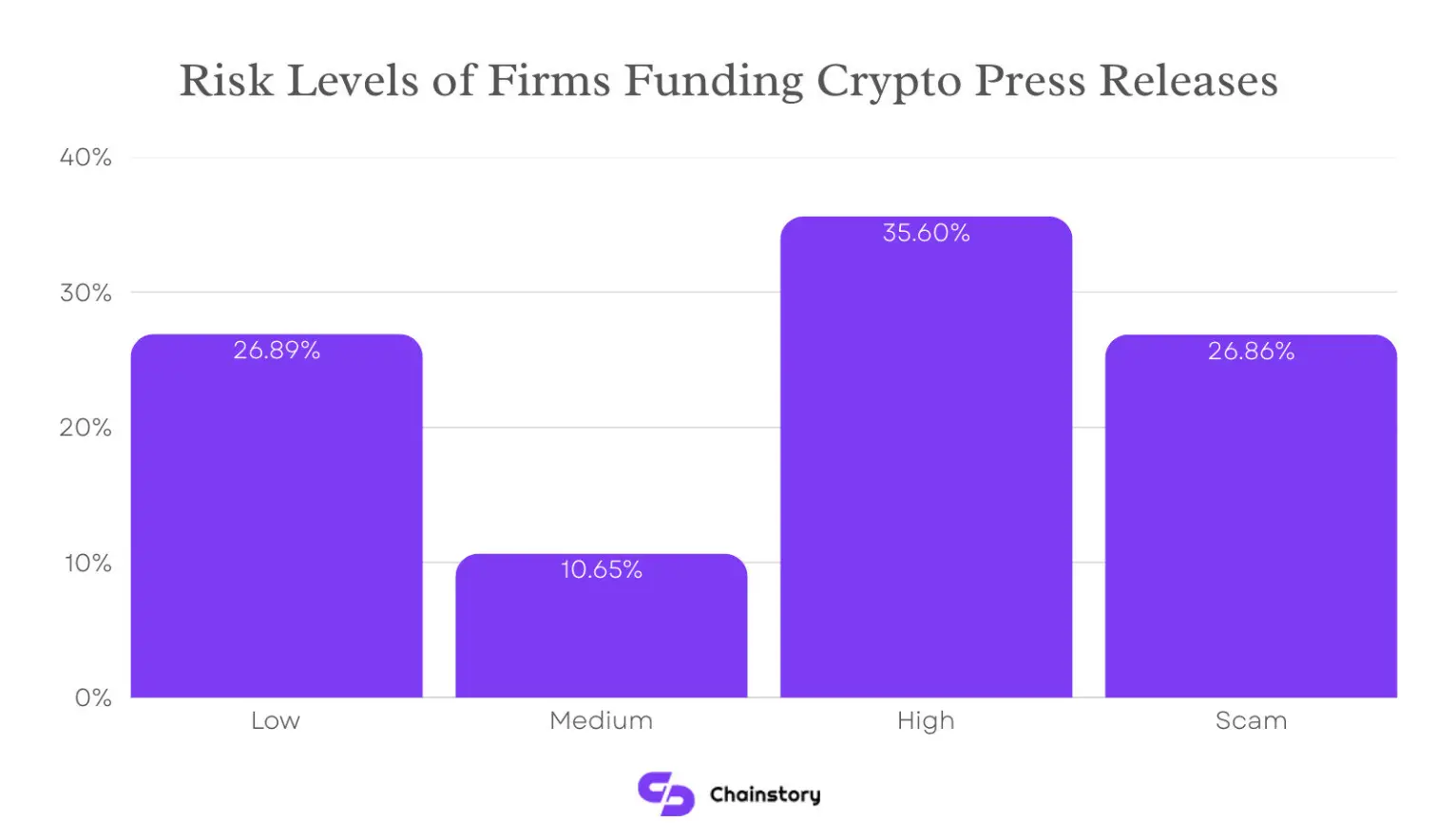
Chainstory analyzed nearly three thousand crypto press releases from the second half of 2025. Projects rated as high-risk accounted for 35.6% of all announced projects, and those marked as scams accounted for 26.9%. These suspicious categories combined made up over 62% of the total press releases. Meanwhile, low-risk projects accounted for only about 27% of the total press releases.
When it comes to how 'all-star alliances' can fall from grace, the most classic and fitting parallel is Facebook's Libra.

In the summer of 2019, Facebook announced with great fanfare, accompanied by a white paper, its intention to launch the stablecoin Libra. The lineup was unprecedentedly star-studded: on the payments side, there were Visa, Mastercard, PayPal, Stripe; in e-commerce, eBay and Shopify; in the crypto space, Coinbase; and even top-tier VCs like a16z were listed. Nearly half of Silicon Valley seemed to be cheering for it.

Later, a congressional hearing shifted its fate. Governments worldwide were concerned about threats to sovereign currencies and the dollar's dominance. France was the first to oppose it, while the U.S. Congress relentlessly questioned Facebook's past privacy and data scandals, challenging 'why should this company be the one to do this.' Regulatory pressure quickly spread to its allies. On October 4, 2019, PayPal was the first to withdraw; just a week later, Stripe, Visa, eBay, and Mastercard collectively exited. All this happened just days before Libra's first council meeting was scheduled to take place—before the first meeting even convened, the whole group was almost disbanded.

What followed was a series of desperate measures to survive: rebranding to Diem, moving its headquarters from Switzerland back to the U.S., pegging its value solely to the U.S. dollar, operating independently from Facebook, and the departure of key figures. By 2022, the entire project sold its assets to Silvergate for approximately $200 million, marking its official end.

The lesson of Libra is not about an erroneous currency issuance strategy, but that an alliance roster, no matter how dazzling, is not equivalent to a functioning product, let alone established real-world channels. Coincidentally, Visa, Mastercard, and Stripe, which abandoned Libra back then, are now the marquee names on the OUSD list. The same giants, in a different alliance—whether the story will be different remains to be seen.

Circle CEO Welcomes Competition with Open Arms

Facing the aggressive entry of OUSD, Circle CEO Jeremy Allaire stated that he welcomes competition and directly pointed out what he sees as the nature of this business: stablecoin networks are a business of platforms and network effects, where market structure tends towards winner-take-all, and building such networks takes a very long time.

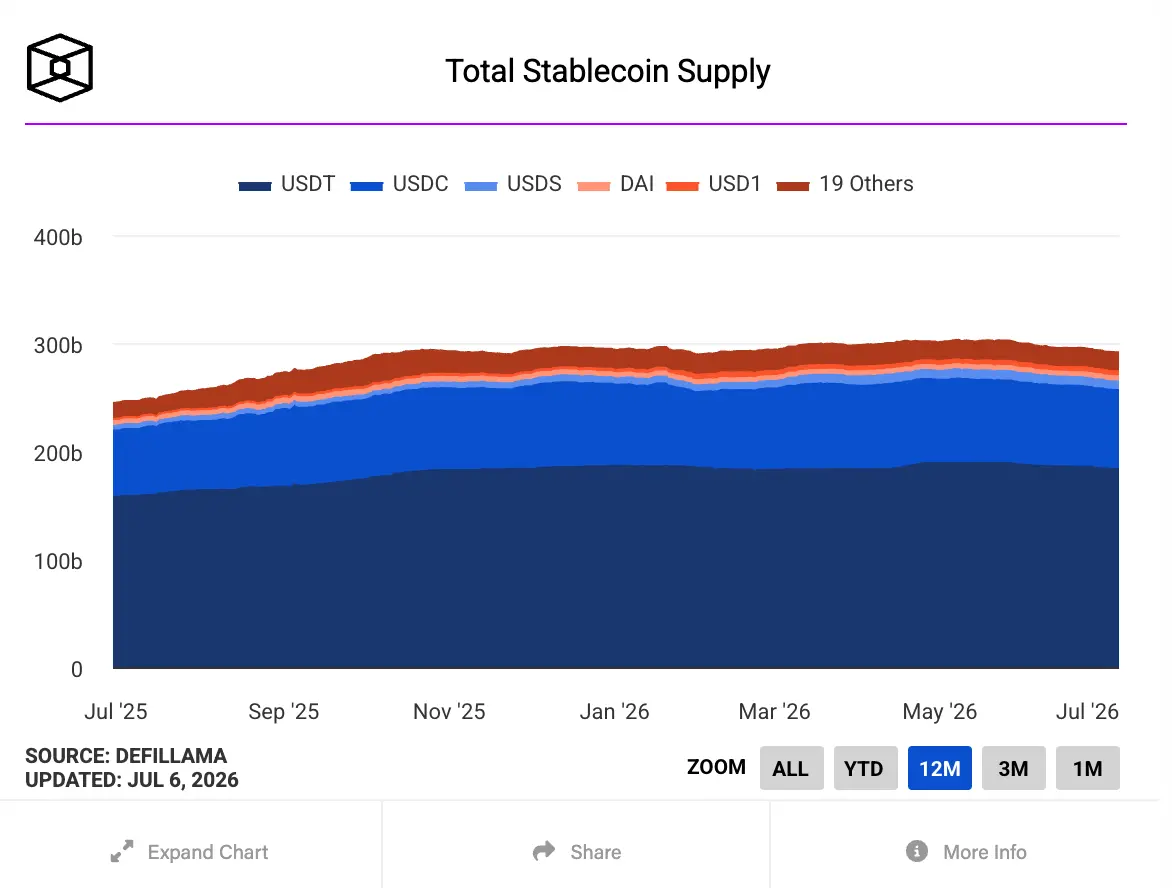
According to data from The Block's dashboard, the total market capitalization of USD-pegged stablecoins exceeds $291 billion, with Tether's USDT accounting for approximately $184.3 billion and Circle's USDC over $73 billion.
Furthermore, regarding OUSD's 'zero-fee minting and redemption' selling point, he believes market realities often force projects to adjust their approach; Circle handles it through contractual mechanisms rather than a blanket zero-fee policy. Regarding 'sharing revenue with everyone,' he bluntly stated that distributing all revenue is equivalent to 'starving the infrastructure,' leading to systemic underinvestment and preventing the platform from ever scaling up.

Additionally, there is his view on the 'alliance model.' Allaire believes consortium-type products have a historically poor track record in achieving scale, product-market fit, or even basic agility. 'A big group of big companies coming together, poor coordination, misaligned incentives, slow progress, and often, they all have their own agendas and 'starve' the consortium itself.' He also observed that when such alliances are formed, everyone is eager to put their logo on the list, endorse it, and loudly proclaim its openness, but in the end, each company's business units will still make optimal decisions for their clients.

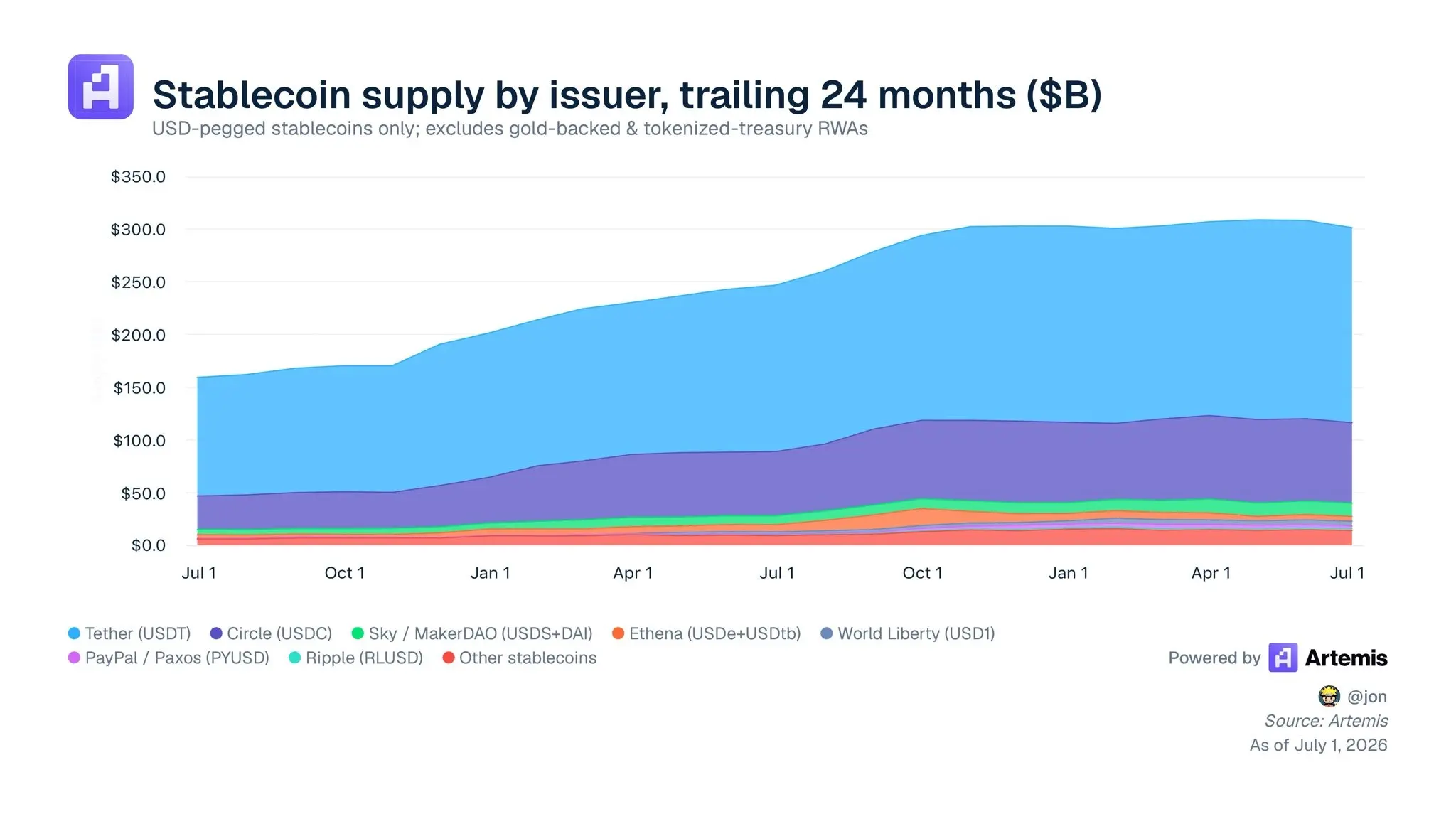
According to statistics from the third-party institution Artemis, as of July 2026, the total supply of USD stablecoins is approximately $3 trillion, with USDT around $1.8 trillion and USDC around $780 billion, together accounting for nearly 90%; all new entrant stablecoins combined total about $40 billion, just a tiny sliver at the bottom of the stacked chart. Allaire believes many stablecoins may have circulating supply, but most of it comes from promotions and incentives, with extremely limited real usage because liquidity and network utility cannot sustain them.
Conclusion

It can be said that the success of a stablecoin does not rely on assembling a group of alliance members for marketing purposes, but depends on whether it has real use cases and real users, including in specific scenarios such as B2B payments, merchant settlements, cross-border payroll, etc.

However, we cannot yet determine the final outcome for OUSD. It does have genuine heavyweight endorsements and a product model distinct from the existing market landscape, and it may not necessarily follow Libra's path. Yet, what this controversy reveals is a recurring issue in the crypto industry: a giant alliance can give a project immense momentum even before launch, but the positions of USDT and USDC are built upon real application scenarios in exchanges, DeFi, payments, and cross-border flows. Before achieving that, is OUSD merely issuing empty promises to the market? The market will provide its own answer.

Связанные с этим вопросы

QAccording to the article, what are the three main features that distinguish OUSD from existing stablecoins?

AThe three main distinguishing features of OUSD are: zero fees for minting and redemption, no transaction volume limits, and distributing the majority of the yield generated from reserve assets to partners driving adoption, instead of keeping it solely for the issuer.

QWhat issue emerged regarding the Korean companies listed as partners for OUSD, according to the article?

ASeveral Korean companies, including Samsung Electronics, Shinhan Financial Group, Dunamu (Upbit's parent company), and K Bank, stated that they were listed as official members without their formal agreement or a clear understanding of their role. Some reported they had only expressed a willingness to consider participation in preliminary talks, and others learned of their inclusion from the news.

QHow does Circle CEO Jeremy Allaire view the business model of stablecoin networks and the 'alliance model' used by OUSD?

AJeremy Allaire believes stablecoin networks are a platform business with strong network effects, tending towards winner-takes-all dynamics that take a long time to build. He is skeptical of the 'alliance model,' stating that historically, such alliances suffer from poor coordination, misaligned incentives, slow progress, and often starve the alliance itself of resources, making it difficult to achieve scale and product-market fit.

QWhat historical example does the article use to illustrate the risks of a 'star-studded alliance' in the crypto industry?

AThe article uses Facebook's Libra (later renamed Diem) as a classic example. Despite initial backing from major companies like Visa, Mastercard, PayPal, and Stripe, the project faced intense regulatory pressure, leading key partners to withdraw. It ultimately failed, with its assets sold off in 2022.

QWhat does the article suggest is the ultimate determinant of a stablecoin's success, rather than a strong partner list?

AThe article suggests that a stablecoin's success ultimately depends on having real-world use cases and real users, such as in B2B payments, merchant settlements, and cross-border payroll, rather than just a list of high-profile partners for marketing.

Похожее

MSTR сообщила о продаже 3588 биткоинов, цена акций упала на 5% в течение дня

Компания MicroStrategy (MSTR), крупнейший корпоративный держатель биткоинов, сообщила о продаже 3588 BTC в период с 29 июня по 5 июля, выручив примерно $216 млн для выплаты дивидендов по своим привилегированным акциям. Это крупнейшая продажа в истории компании и третья с 2020 года, что сигнализирует о сдвиге: биткоин постепенно превращается из стратегического резерва "только для покупки" в актив для управления ликвидностью. Ранее компания придерживалась принципа "никогда не продавать", но впервые нарушила его в конце мая, продав 32 BTC. Нынешняя продажа, в 100 раз больше по объему, указывает на интеграцию этой практики в регулярные финансовые операции. Основной причиной продажи является давление ежегодных дивидендных выплат по привилегированным акциям на сумму около $1.5 млрд, которые не могут быть покрыты денежными потоками от основного программного бизнеса MicroStrategy. Операционная модель компании теперь выглядит так: при благоприятных условиях привлечения капитала она продолжает покупать биткоины, а при ужесточении условий — продает небольшую часть для покрытия обязательств. На фоне новости акции MSTR упали более чем на 5%. По состоянию на 5 июля компания владеет 843 775 BTC со средней ценой покупки около $75 700.

华尔街日报4 ч. назад

MSTR сообщила о продаже 3588 биткоинов, цена акций упала на 5% в течение дня

华尔街日报4 ч. назад

BUILDon: Сможет ли B удержать 12% рост цены перед лицом ЭТОГО препятствия

Токен BUILDon (B) вырос на 12% за сутки, чему способствовал позитивный настрой на рынке перипетуальных контрактов, где преобладают длинные позиции (Funding Rate 0.0101%), а открытый интерес вырос до $27.34 млн. Однако устойчивость ралли находится под вопросом. На графике актив встречает сильное сопротивление на 200-дневной скользящей средней, при этом сформировался «крест смерти» (смертельное пересечение), что является медвежьим сигналом. Индикаторы Chaikin Money Flow (CMF) и Accumulation/Distribution (A/D) также находятся в отрицательной зоне и снижаются, что указывает на рост давления продаж. Таким образом, несмотря на позитивные импульсы от рынка деривативов и высокий объем торгов ($7.25 млн), технический анализ указывает на значительные препятствия для дальнейшего роста. Прорыв выше сопротивления 200-дневной SMA может открыть путь к уровням $0.266 и $0.279, в то время как неудача способна привести к откату к поддержке около $0.21.

ambcrypto4 ч. назад

BUILDon: Сможет ли B удержать 12% рост цены перед лицом ЭТОГО препятствия

ambcrypto4 ч. назад

Обратный отсчет Q-Day: Положит ли квантовые вычисления конец криптовалютам?

**Резюме: Отсчет до Q-Day — уничтожит ли квантовые вычисления криптовалюты?** Квантовые вычисления представляют системный вызов для криптографии с открытым ключом, лежащей в основе блокчейна. Основная угроза исходит от алгоритма Шора, который теоретически способен взломать ECDSA/ECC, подорвав безопасность подписей Bitcoin и Ethereum. **Суть угрозы:** Критический момент («Q-Day») наступит с появлением крупномасштабных, устойчивых к ошибкам квантовых компьютеров. Главная проблема — не отсутствие постквантовых криптографических алгоритмов (PQC, таких как ML-DSA, SLH-DSA), а колоссальная задача по скоординированному обновлению всей экосистемы до этого момента. Риск распределен неравномерно: в первую очередь под угрозой находятся активы, чьи открытые ключи уже раскрыты в блокчейне (например, старые BTC UTXO). **Подходы к решению:** * **Постквантовая криптография (PQC):** NIST стандартизировал алгоритмы на основе решеток (ML-KEM, ML-DSA) и хэшей (SLH-DSA). Их интеграция сталкивается с проблемами увеличения размера подписи и сложностью обновления. * **Bitcoin:** Главный вызов — социальный консенсус и управление. Необходимо решить, как поступить с «унаследованными» активами (legacy UTXO), чьи ключи уязвимы. Миграция, вероятно, будет происходить через мягкое форкирование, но это вызовет ожесточенные споры о неизменности и правах собственности. * **Ethereum:** Проблема носит более технический, инженерный характер. План включает обновление учетных записей (через абстракцию счетов), консенсусного уровня (замена BLS) и слоя данных. Ethereum Foundation активно работает над повышением «криптографической гибкости» сети. **Вывод:** Квантовые вычисления не являются мгновенным «концом» криптовалют. Это долгосрочный структурный риск, запускающий обратный отсчет для масштабной, сложной миграции. «Инженерное окно» для подготовки оценивается в 5-8 лет. Успех зависит от способности сообществ Bitcoin (социальное управление) и Ethereum (техническая сложность) скоординировать обновление всей экосистемы — от протоколов до кошельков и бирж.

marsbit5 ч. назад

Обратный отсчет Q-Day: Положит ли квантовые вычисления конец криптовалютам?

marsbit5 ч. назад

Трамп – самый искусный инвестор среди президентов США

Согласно отчету Управления по этике правительства США, бывший президент Дональд Трамп в 2025 году заработал рекордные 2,2 миллиарда долларов, что сделало его самым высокооплачиваемым президентом в истории США. Основными источниками дохода стали криптовалюта (примерно 1,4 млрд долларов, включая его мем-монету $TRUMP) и операции с недвижимостью (около 575 млн долларов), особенно в его курортных клубах, таких как Мар-а-Лаго. Также сообщается о более чем 22 000 операций с акциями за год, что вызвало споры о возможных конфликтах интересов, поскольку многие сделки совпадали по времени с важными политическими заявлениями. Трамп и его семья активно монетизировали президентское влияние через брендированные криптовалютные проекты и премиальный доступ к своим объектам. Критики утверждают, что такая деятельность размывает границы между государственной должностью и частным бизнесом, в то время как сторонники видят в этом успешную коммерческую деятельность. Отчет поднял новые вопросы о необходимости этических реформ для высших должностных лиц.

marsbit5 ч. назад

Трамп – самый искусный инвестор среди президентов США

marsbit5 ч. назад

Обратный отсчёт Q-Day: Покончит ли квантовый вычисление с криптовалютой?

**Квантовые вычисления и криптовалюты: обратный отсчет до Q-Day** Квантовые компьютеры, основанные на принципах квантовой механики (суперпозиция, запутанность), представляют собой экзистенциальную угрозу для блокчейн-индустрии, поскольку способны взломать используемую в ней криптографию с открытым ключом (ECC, RSA) за счет алгоритма Шора. Момент, когда это станет возможным (Q-Day), по оценкам, может наступить в 2035-2045 гг. Основной удар придется на публичные ключи, уже находящиеся в блокчейне (например, старые UTXO в Bitcoin), из которых можно будет восстановить приватные ключи и подделать транзакции. Это ставит под угрозу сам принцип "необратимости" активов. **Антиквантовая защита:** * **PQC (Постквантовая криптография):** Использование алгоритмов, устойчивых к квантовым атакам (на основе решеток, хэшей), например, стандарты NIST FIPS 203-205. * **Гибридные схемы:** Совместное использование классической и постквантовой криптографии для плавного перехода. **Практические вызовы для блокчейнов:** 1. **Bitcoin:** Главная проблема — социальный консенсус и управление. Необходимо решить судьбу уязвимых устаревших UTXO, не нарушая принцип "неизменности". Технически переход возможен через софт-форк, но новые подписи PQC значительно больше по размеру, что увеличивает нагрузку на сеть. 2. **Ethereum:** Проблема — сложность полного обновления стека (аккаунты, консенсус, доказательства с нулевым разглашением). Стратегия основана на повышении "криптографической гибкости" сети и использовании решений второго уровня (L2) для тестирования. **Вывод:** Угроза реальна, но это не "конец света". Индустрия имеет 5-8-летнее окно для скоординированного перехода всей экосистемы (протоколы, кошельки, биржи). Ключевым барьером для Bitcoin станут вопросы управления и права собственности, а для Ethereum — инженерная сложность полномасштабного обновления. Отсчет до Q-Day уже начался.

链捕手5 ч. назад

Обратный отсчёт Q-Day: Покончит ли квантовый вычисление с криптовалютой?

链捕手5 ч. назад

Торговля

Спот
活动图片