a16z Partner: The Next Space War May First Target Commercial Satellites

marsbitОпубликовано 2026-06-23Обновлено 2026-06-23

Введение

In May 2026, Russian Cosmos satellites maneuvered to within 500 meters of the commercial ICEYE-X36 radar satellite supporting Ukraine, highlighting the growing military targeting of commercial space assets. As constellations like Starlink and ICEYE provide critical communication, reconnaissance, and imaging services in conflicts, they are increasingly viewed as legitimate military objectives. This incident exemplifies modern space warfare's grey zone—actions like close approaches, jamming, or cyberattacks that fall short of kinetic destruction but demonstrate coercion and capability. Space warfare is constrained by physics, orbital congestion, and the threat of debris from kinetic strikes. While the US holds advantages in launch frequency, reusable rockets (led by SpaceX), and large commercial constellations, these assets are now vulnerable. True resilience requires distributed, proliferated satellite architectures, rapid replenishment, and robust space domain awareness. The future of space conflict will likely involve non-kinetic tactics to degrade an adversary's space-based support while avoiding catastrophic debris generation. The key is maintaining functionality under threat and deterring attacks by ensuring their cost outweighs any potential gain.

In May 2026, multiple Russian Cosmos satellites maneuvered close to the ICEYE-X36 commercial radar satellite, which supports Ukraine. Public orbit analysis indicated that both parties entered a nearly co-planar orbit, with a lateral distance once reaching approximately 500 meters.

This was not a missile interception, nor was there any public destruction of satellites, yet it brought a real-world issue to the forefront: when commercial satellites already provide communication, reconnaissance, positioning, and timing services for warfare, will they also become military targets?

In a lengthy article, a16z partners Christian Keil and Alex Oliver viewed this incident as a typical fragment of modern space confrontation. Russia had previously publicly stated that commercial space facilities supporting military operations could become "legitimate targets for retaliation." In the Russia-Ukraine war, Starlink provides communications, and ICEYE-type synthetic aperture radar satellites provide imaging. Commercial constellations are no longer just civilian infrastructure but part of the battlefield information chain.

500-Meter Proximity: Commercial Satellites Enter the Military Crosshairs

Dealroom relayed an orbit analysis by Integrity ISR, stating that at least four to five of the Russian Cosmos 2609 to 2614 satellites performed orbital maneuvers between May 14 and 20, 2026. They adjusted their inclination from approximately 97.0 degrees to around 97.8 degrees, consuming about 105 m/s of delta-v, and established a near-co-planar relationship with ICEYE-X36.

ICEYE-X36 is not a traditional military reconnaissance satellite. It belongs to the Finnish and American company ICEYE, uses synthetic aperture radar for imaging, and can continuously observe ground targets under night and cloud cover conditions. Since the Russia-Ukraine war, the value of such commercial remote sensing capabilities for Ukrainian battlefield awareness has risen, thereby entering Russia's threat list.

500 meters doesn't sound very close on the ground, but in low Earth orbit, where two spacecraft travel at several kilometers per second, any unplanned maneuver could lead to collision, interference, or coercion signals. Close-proximity operations themselves can serve multiple purposes: surveillance, simulated attacks, testing reactions, demonstrating capability, or even preparing for future co-orbital anti-satellite actions.

The most challenging aspect of space conflict is that many actions fall between normal operations and military coercion. Satellite proximity does not equal an attack, and malfunctions are not necessarily due to hostile actions. However, in a wartime environment, a single close approach is enough to alter an adversary's risk assessment.

Space is Close, but Extremely Difficult to Access

The uniqueness of space warfare stems first from physical constraints. Low Earth Orbit is only a few hundred kilometers above the Earth's surface, where the International Space Station and many Starlink satellites operate. The key to reaching orbit is not "flying high" but achieving sufficient horizontal velocity so that an object continuously falls but always misses the Earth.
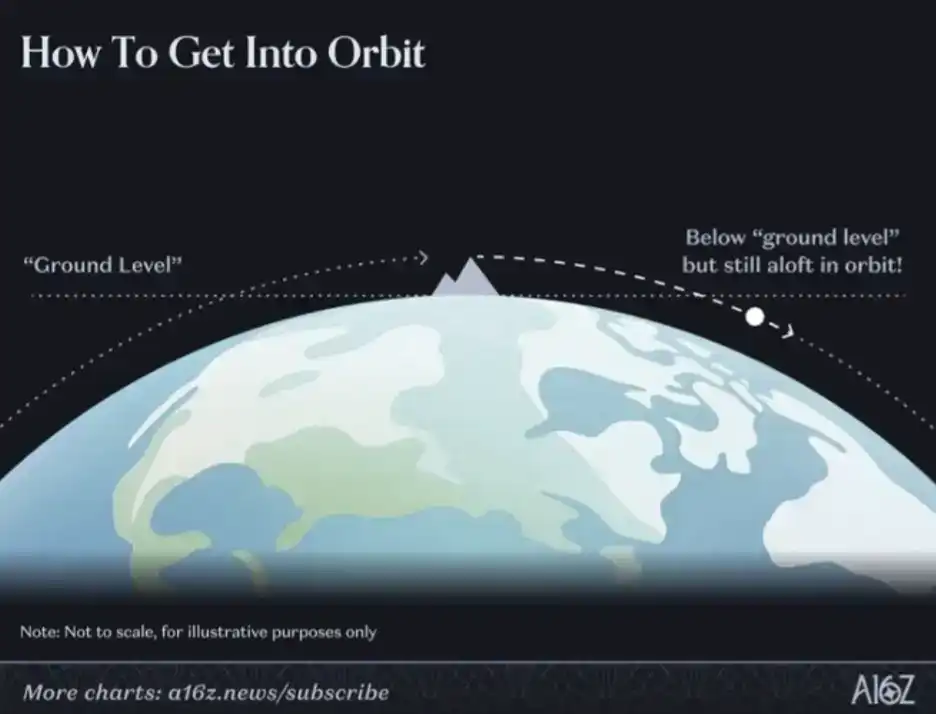
This threshold typically requires a delta-v of about 9.4 km/s. How much mass one can reliably place into orbit determines a nation's capacity to deploy satellites, the amount of fuel, sensors, protection, and redundancy they can carry.

Traditional satellites are often large and expensive because every gram is scarce, and design must be highly optimized. However, such "precious large satellites" become high-value targets in war. The more functions a single satellite carries, the greater the loss if it is blinded, jammed, or destroyed. Insufficient maneuverability and redundancy also make it harder to evade threats.

Orbital space itself is not as spacious as imagined. LEO constellations operate at different altitudes and inclinations, and their orbital planes intersect. Geostationary orbit, while at 36,000 km altitude, is essentially a limited resource line of longitude above the equator for communication satellites. Spectrum is similarly scarce; communication resources like the Ka-band require coordination. Space is vast physically but limited in operational resources.

An even greater nuisance is debris. Kinetic anti-satellite weapons, upon shattering a target, can create thousands of high-speed debris fragments. These fragments do not disappear but continue to orbit, repeatedly crossing relevant areas in the future, threatening other satellites. If collisions trigger more collisions, some orbits may become unusable for extended periods.

The US Has Scale Advantage, But Advantage Does Not Equal Safety

Judging from launch data, the US remains in a leading position. According to statistics from sources like Ill-Defined Space, the US had approximately 192 successful orbital launches in 2025, China about 90 successful out of 93 attempts, and Russia 17. Different agencies have slight variations in their definitions of "success" and "attempt," but the US lead is clear.
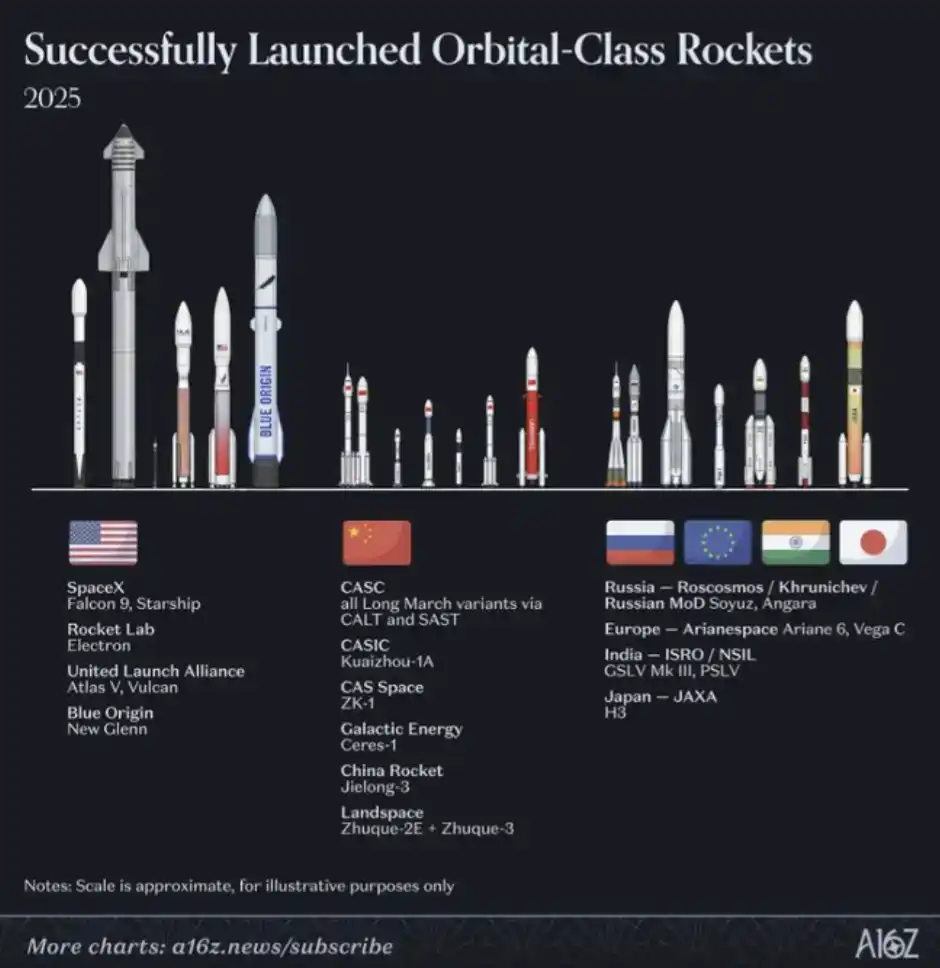
This is almost inseparable from SpaceX. In 2025, Falcon 9 launched approximately 165 times. SpaceX is also currently the only company to achieve large-scale reuse of orbital-class boosters. Reusability shifts launch from a scarce, expensive, low-frequency endeavor toward a higher-frequency, more industrialized rhythm. For military space capability, this impacts the speed of replenishment, expansion, generational upgrades, and wartime recovery.

Starlink demonstrates another type of advantage: scale. SpaceX's EU prospectus disclosed on June 5, 2026, shows that as of March 31, 2026, approximately 9,600 Starlink broadband and mobile satellites were operational in orbit. Third-party tracking data from June indicates the active number had exceeded 10,000.

Starlink's use in the Ukraine battlefield proves that commercial constellations can be rapidly transformed into wartime communication infrastructure. Its government version, Starshield, is more directly oriented toward defense needs.

But scale also brings new risks. Adversaries may no longer distinguish between commercial and military, viewing all commercial satellites capable of supporting war as dual-use targets. Russia's close-proximity operations around ICEYE-X36 are a real-world demonstration of this logic.

The US's true vulnerability lies in the fact that if critical missions like high-end reconnaissance, missile warning, and nuclear command communications remain concentrated on a few expensive satellites, even with a large overall satellite count, adversaries might target these few critical nodes. Space superiority cannot be judged solely by "how many satellites" but also by whether the architecture is dispersed, capable of rapid replenishment, whether ground systems are reliable, and whether operations can continue after jamming.

Space Warfare is More Likely to Remain in the Gray Zone

Winning a space war does not mean being the first to destroy more satellites. The real goal is to preserve one's own communication, reconnaissance, positioning, navigation, and timing capabilities, while making the adversary believe that an attack cannot yield decisive gains.

The first layer is launch capability. Whoever can place payloads into orbit faster, cheaper, and on a larger scale possesses wartime recovery capability. Reusable rockets, launch pad capacity, supply chains, and regulatory efficiency all become part of national security capability. Globally active orbital launch pads are few, and launch infrastructure itself becomes a high-value target.

The second layer is satellite manufacturing. Space no longer needs only a few "jewel-grade" satellites but requires large numbers of expendable, replaceable, functionally dispersed constellations. Military satellites need to distribute missions across more platforms so that the loss of a single point does not cripple the system.

The third layer is space domain awareness. In orbit, knowing who is approaching, at what speed, and with what possible intent is more critical than post-event attribution. Satellite jamming, blinding, collision, or internal failure can all manifest as malfunctions, making attribution often difficult. Without sufficient tracking and evidence chains, deterrence is weakened.

The cost of directly shattering satellites is also high. The 1962 US Starfish Prime high-altitude nuclear test detonated a nuclear bomb at about 400 km altitude, creating an artificial radiation belt that lasted for years and damaged or prematurely disabled multiple satellites. By various estimates, affected satellites at the time comprised about one-quarter to one-third of satellites in orbit. Modern orbital asset density is far higher than then, making the consequences of nuclear anti-satellite or large-scale kinetic strikes harder to control.

More realistic space confrontation may long remain within the realms of electronic jamming, GPS spoofing, laser dazzling, cyber attacks, close-proximity maneuvers, spectrum competition, and ground station attacks. China and Russia are developing counter-space capabilities, while the US is promoting more dispersed proliferated military constellations, such as PWSA. The ITU's spectrum and orbital slot rules will also become a field of competition.

The Most Dangerous Thing is Misjudging that Space is Still Peaceful

Space has long been packaged as a realm of peace, science, and commercial expansion, but modern warfare has proven it to be the infrastructure of ground battlefields. Without satellite communications, troops struggle to coordinate. Without remote sensing and navigation, missiles, drones, and artillery lose precision. Without timing systems, finance, power grids, and communication networks are also affected.

The peculiarity of Russia's approach to ICEYE-X36 is that it did not create an explosion but demonstrated the reality of commercial satellites being incorporated into military coercion. Future space warfare may not start with a missile but more likely with an approach, an interference, a spectrum grab, or a difficult-to-attribute failure.

The US's current advantage is real: leading in launch numbers, SpaceX has established a reusable rocket advantage, and Starlink has proven the wartime value of commercial constellations. Blue Origin, Rocket Lab, and Chinese commercial aerospace are catching up, while Russia and China are accumulating co-orbital, electronic warfare, and anti-satellite capabilities. If a few expensive platforms still bear critical missions, the orbital high ground will increasingly resemble a set of tempting targets.

The end goal of space warfare should not be to turn near-Earth orbit into a debris field. A more controllable outcome is to keep orbits usable, allow communications, reconnaissance, and navigation to recover under attack, and make adversaries believe that disrupting order will incur higher costs. Commercial spaceflight has given the US unprecedented scale advantages but also exposed commercial assets to new military risks. The Russian satellite's 500-meter approach is merely the clearest reminder of this stage.


Трендовые криптовалюты

Связанные с этим вопросы

QAccording to the article, what specific event in May 2026 does the author consider a key moment for highlighting the vulnerability of commercial satellites in conflict?

AThe author points to Russia's Cosmos satellites maneuvering to within approximately 500 meters of the Ukrainian-supporting ICEYE-X36 commercial radar satellite as a key moment, demonstrating how commercial satellites used for military support can become targets for military coercion or potential attack.

QWhat are the two main advantages the United States holds in space according to the article's analysis?

AThe article identifies two main US advantages: 1) Dominant launch capability, primarily through SpaceX's reusable Falcon 9 rockets enabling frequent, cost-effective access to orbit. 2) Scale of satellite constellations, exemplified by Starlink's thousands of operational satellites, which provide resilient and rapidly deployable infrastructure.

QWhy is a direct kinetic attack (like destroying a satellite with a missile) considered a high-risk option in space warfare?

ADirect kinetic attacks create persistent space debris. The fragments orbit at high speeds for years, posing a long-term collision threat to all satellites in similar orbital regions. This could trigger a chain reaction of collisions (Kessler Syndrome), potentially making certain orbits unusable and harming the attacker's own space assets.

QWhat does the article suggest is a more likely form of space conflict than outright destruction of satellites?

AThe article suggests future space conflict is more likely to occur in a 'gray zone' using non-kinetic or coercive tactics. These include electronic jamming, GPS spoofing, laser dazzling, cyber attacks, close-proximity satellite maneuvers, spectrum interference, and attacks on ground stations.

QWhat is the core strategic goal of space warfare as defined in the article, beyond simply destroying enemy satellites?

AThe core strategic goal is to preserve one's own capabilities for communication, reconnaissance, positioning, navigation, and timing (PNT) while convincing the adversary that an attack would not provide decisive benefits. The aim is to maintain a functioning orbital environment where critical services can survive and recover from disruption.

Похожее

Cardano Foundation предупреждает SPO о пассивном уклонении от участия в управлении

Кардано Фонд предупредил операторов стейк-пулов (SPO) об опасности пассивного неучастия в управлении сетью. Ключевая проблема заключается в практике автоматического воздержания от голосования («авто-воздержание») по управленческим предложениям без их предварительного изучения. Такой подход создает «тихий пробел в подотчетности», что ослабляет систему управления в эпохе Вольтера, которая зависит от активного и осмысленного участия сообщества. Фонд подчеркивает важное уточнение: сознательное ручное воздержание после оценки предложения остается допустимым. Предупреждение направлено именно против пассивного автоматического выбора по умолчанию. Для трейдеров эта новость важна как сигнал, влияющий на оценку рисков и доверия к экосистеме. Такие сюжеты могут влиять на настроения рынка, особенно в условиях недостаточной ликвидности, когда подобные структурные факторы оказывают значительное вторичное воздействие. Следует наблюдать за дальнейшими данными с дашбордов управления и метриками сети, чтобы определить, станет ли это устойчивой тенденцией или краткосрочным эпизодом.

bitcoinist4 мин. назад

Cardano Foundation предупреждает SPO о пассивном уклонении от участия в управлении

bitcoinist4 мин. назад

BNB Chain обогнала Solana в гонке за $5,2 млрд в торговле токенизированными акциями

Краткое содержание: Объем торгов токенизированными акциями на BNB Chain достиг 5,2 млрд долларов (в основном за счет Ondo Finance Global Markets - 5,12 млрд долларов), превысив показатель Solana в 4,5 млрд долларов. Это важный сигнал о смещении аппетита к риску и активности ликвидности в секторе реальных активов (RWA), но его следует интерпретировать с осторожностью. Ключевое уточнение: данные BNB Chain отражают "совокупный объем торгов", в то время как для Solana указан "совокупный объем переводов" токенизированных акций, что затрудняет прямое сравнение. Для трейдеров эта информация является частью более широкой мозаики, включающей ликвидность, макроэкономические условия и данные деривативов. Следует наблюдать, подтвердится ли эта тенденция в дальнейших данных, чтобы определить, является ли она устойчивым трендом или краткосрочным колебанием.

bitcoinist4 мин. назад

BNB Chain обогнала Solana в гонке за $5,2 млрд в торговле токенизированными акциями

bitcoinist4 мин. назад

Аналитики предсказывают, что XRP и BNB могут достичь капитализации в $100 млрд к концу 2026 года

Аналитики предполагают, что рыночная капитализация XRP и BNB может достичь отметки в 100 миллиардов долларов во второй половине 2026 года. Эта информация, основанная на отчете Finbold от 29 июня 2026 года и данных CoinMarketCap, носит спекулятивный характер и основана на историческом анализе графиков и фундаментальных показателях проектов, а не является гарантированным прогнозом. Для трейдеров данный прогноз важен как индикатор сдвигов в аппетитах к риску и движения ликвидности на рынке криптовалют, который все еще зависит от потоков ETF, решений казначейств и ротации капитала между альткойнами. Обсуждение столь высокой капитализации для XRP и BNB, хотя и выглядит амбициозно, считается достижимым при благоприятных рыночных условиях и наличии специфических катализаторов для каждого актива. Ключевой вывод заключается в том, что подобные сигналы следует воспринимать в более широком контексте. Они влияют на сопутствующие активы и общие рыночные настроения, особенно в периоды низкой ликвидности, когда второстепенные эффекты могут быть значительными. Важно отслеживать, подтвердятся ли эти предположения последующими данными о потоках средств, ончейн-метриках и позиционировании, или же они останутся краткосрочным рыночным шумом.

bitcoinist49 мин. назад

Аналитики предсказывают, что XRP и BNB могут достичь капитализации в $100 млрд к концу 2026 года

bitcoinist49 мин. назад

Капитализация рынка альткойнов вернулась к уровню почти 900-дневной давности, аналитик указывает на ключевую зону поддержки

Аналитик Михаэль ван де Поппе отметил, что общая капитализация рынка альткоинов откатилась к уровням конца 2023 года, потеряв примерно 900 дней роста. Такая динамика объясняет, почему рыночные настроения настолько негативны: широкий класс альткоинов в целом не показывал прогресса почти три года. Ключевой момент сейчас — бывшая зона прорыва, которая теперь стала критической областью поддержки. Если рынок удержит этот уровень, здесь может сформироваться основа для следующего роста и зона накопления. Если же поддержка не сработает, это будет сигналом о провале прошлого бычьего движения. Для формирования устойчивого восстановления необходима не единичная активность, а широкое участие разных секторов: L1-протоколов, DeFi, инфраструктурных и AI-токенов, а также качественных проектов средней капитализации. Текущая ситуация является переломной точкой для всего рынка альткоинов, который должен доказать свою жизнеспособность на этом уровне.

bitcoinist49 мин. назад

Капитализация рынка альткойнов вернулась к уровню почти 900-дневной давности, аналитик указывает на ключевую зону поддержки

bitcoinist49 мин. назад

Chainlink увеличил число держателей на 8000 – Сможет ли LINK развернуть нисходящий тренд?

Chainlink (LINK) за последние пять дней привлек более 8000 новых держателей, увеличив общее количество непустых кошельков до 892,8 тыс. Несмотря на сохраняющуюся слабость цены и торговлю в нисходящем канале, это указывает на устойчивое расширение сети. Активность на биржах демонстрирует чистый отток средств (-$479,49 тыс.), что сигнализирует о накоплении токенов в частных кошельках, а не о распродажах. Цене удается удерживать ключевую зону поддержки около $7,00, однако для прорыва выше сопротивления $8,31 не хватает объема покупок. Индикатор RSI (34,6) остается ниже нейтрального уровня, отражая слабую покупательскую активность. При этом позиции на фьючерсном рынке остаются оптимистичными: положительное финансирование (0,0077%) показывает, что трейдеры сохраняют уверенность в будущем росте. В итоге, сочетание растущей базы держателей, оттока с бирж и уверенности на деривативах создает фундамент для возможного разворота нисходящего тренда, если вернется более сильный спрос на спотовом рынке.

ambcrypto53 мин. назад

Chainlink увеличил число держателей на 8000 – Сможет ли LINK развернуть нисходящий тренд?

ambcrypto53 мин. назад

Торговля

Спот

Популярные статьи

Как купить WAR

Добро пожаловать на HTX.com! Мы сделали приобретение WAR (WAR) простым и удобным. Следуйте нашему пошаговому руководству и отправляйтесь в свое крипто-путешествие.Шаг 1: Создайте аккаунт на HTXИспользуйте свой адрес электронной почты или номер телефона, чтобы зарегистрироваться и бесплатно создать аккаунт на HTX. Пройдите удобную регистрацию и откройте для себя весь функционал.Создать аккаунтШаг 2: Перейдите в Купить криптовалюту и выберите свой способ оплатыКредитная/Дебетовая Карта: Используйте свою карту Visa или Mastercard для мгновенной покупки WAR (WAR).Баланс: Используйте средства с баланса вашего аккаунта HTX для простой торговли.Третьи Лица: Мы добавили популярные способы оплаты, такие как Google Pay и Apple Pay, для повышения удобства.P2P: Торгуйте напрямую с другими пользователями на HTX.Внебиржевая Торговля (OTC): Мы предлагаем индивидуальные услуги и конкурентоспособные обменные курсы для трейдеров.Шаг 3: Хранение WAR (WAR)После приобретения вами WAR (WAR) храните их в своем аккаунте на HTX. В качестве альтернативы вы можете отправить их куда-либо с помощью перевода в блокчейне или использовать для торговли с другими криптовалютами.Шаг 4: Торговля WAR (WAR)С легкостью торгуйте WAR (WAR) на спотовом рынке HTX. Просто зайдите в свой аккаунт, выберите торговую пару, совершайте сделки и следите за ними в режиме реального времени. Мы предлагаем удобный интерфейс как для начинающих, так и для опытных трейдеров.

410 просмотров всегоОпубликовано 2024.12.11Обновлено 2026.06.02

Как купить WAR

Обсуждения

Добро пожаловать в Сообщество HTX. Здесь вы сможете быть в курсе последних новостей о развитии платформы и получить доступ к профессиональной аналитической информации о рынке. Мнения пользователей о цене на WAR (WAR) представлены ниже.

活动图片