pump.fun's New Feature Brings 'Black Mirror' Into Reality

marsbitОпубликовано 2026-06-16Обновлено 2026-06-16

Введение

The article begins by recounting a dark fictional story from *Black Mirror* (Season 7, Episode 1 "Common People"), where a man is forced to perform humiliating tasks online to pay for his wife's life-sustaining medical subscription. It then draws a parallel to a new real-world feature on the crypto platform pump.fun called "Pump.fun Go," which allows users to post and complete paid bounty tasks. This feature gained mainstream attention, often negatively, through extreme examples. A prominent case involved a bounty of 40 SOL (~$2,600) offered to permanently tattoo "$bountywork" on one's forehead. An Indian man completed the task, stating the money "changed his life," and later earned significantly more from a related meme coin. Another bounty paid 200 SOL (~$14,000) for a "bounty.fun" forehead tattoo, with the participant simply stating, "We need the money." The article highlights how this system can amplify darkness, citing the dev behind $Bountywork who spent thousands on bounties for attention-grabbing stunts like eating bugs or drinking hot sauce for small sums. It compares this to past tragic live-streaming incidents where people harmed themselves for money, noting regulation cannot stop those in desperate need. However, it also points to positive, altruistic bounties that have emerged, such as organizing anti-work rallies in New York, performing random acts of kindness for strangers, organizing community food drives, or even helping an elderly person cross the street....

Black Mirror Season 7, Episode 1, "Common People," tells this story:

Mike, a welder, and Amanda, a teacher, are a loving couple trying to conceive. Unfortunately, Amanda is diagnosed with an inoperable brain tumor.

Tech company Rivermind offers a solution: replace the damaged parts with synthetic brain tissue. The surgery is free, but Amanda's life thereafter will depend on the company's servers, with a monthly subscription fee of $300. With no other choice, Mike signs the agreement.
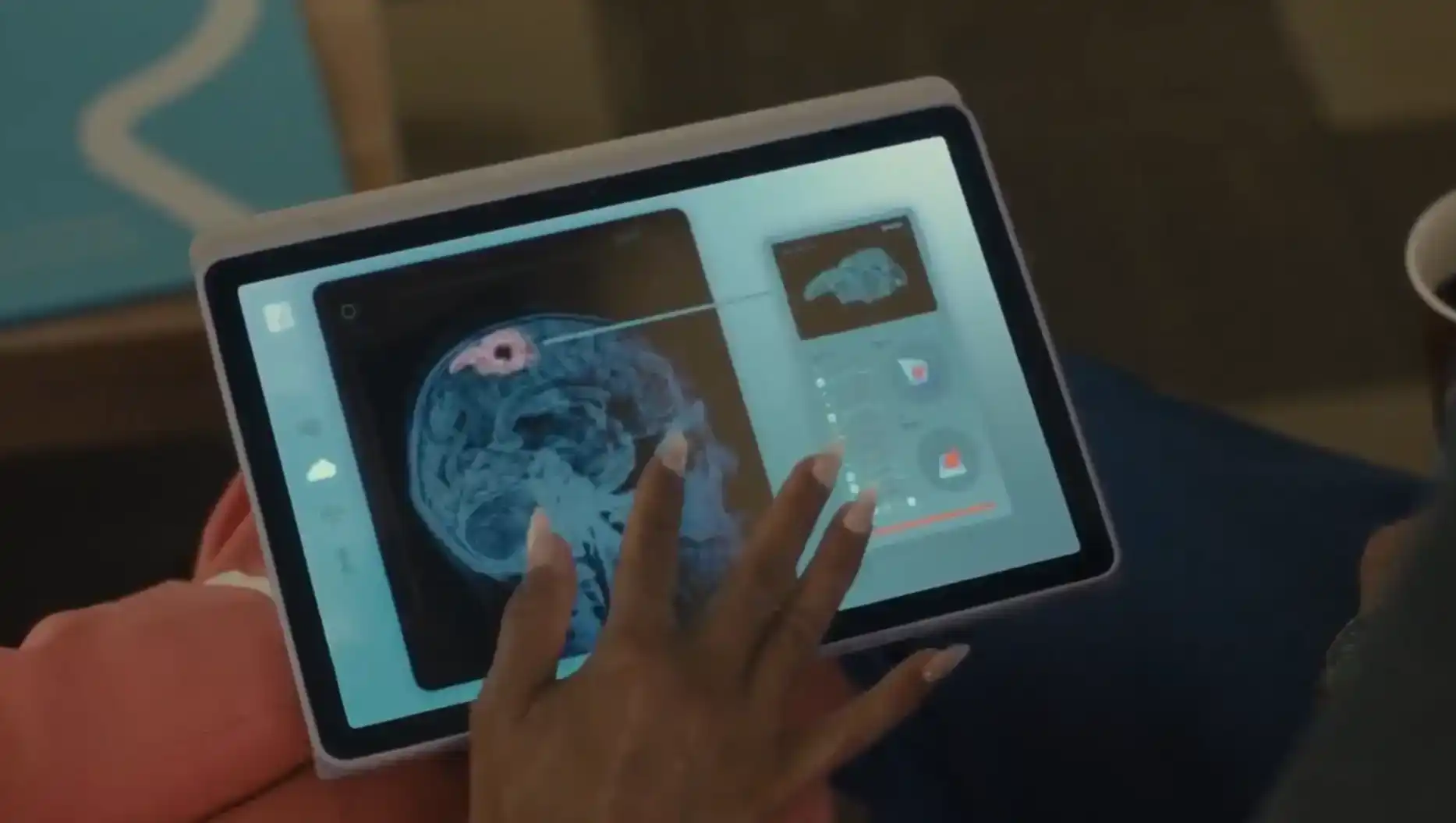
However, the subscription fees keep rising, and when Amanda is conscious, advertisements are involuntarily inserted. To secretly raise money, Mike starts live-streaming on the "Dum Dummies" platform—a website where viewers pay to instruct streamers to perform various humiliating tasks.
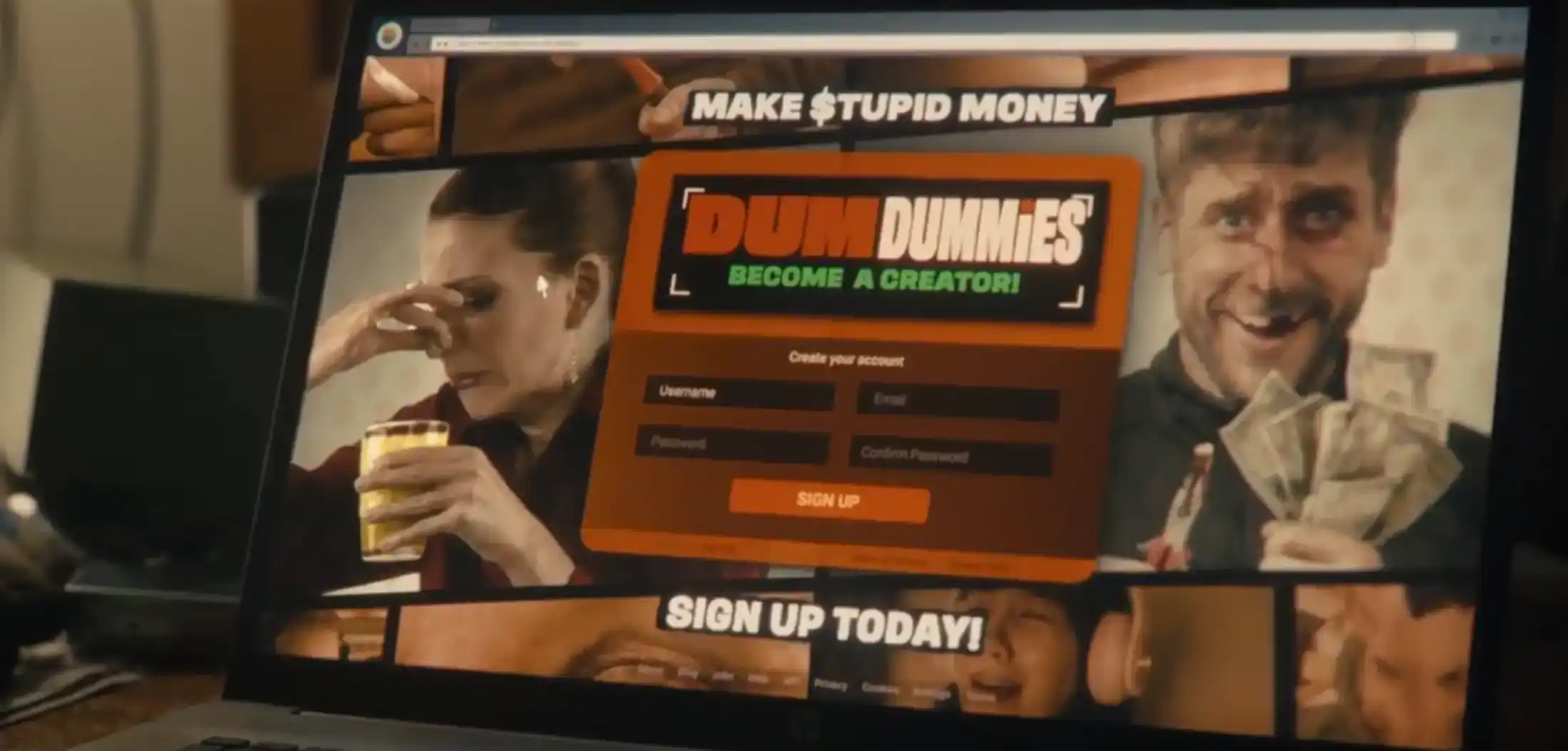
When exposed by a colleague, Mike loses his job, and the couple is plunged into despair.

A year later, Mike can no longer afford the premium service that maintains his wife's life. Amanda sleeps 16 hours a day, and her occasional awakenings are only to broadcast ads. Mike uses his last savings to buy 30 minutes of the premium package, allowing Amanda to leave her final words in brief peace.

When the time expires, Mike personally ends Amanda's life. The final shot freezes on the still-live laptop screen, with Mike holding a box cutter, walking into the darkness.

Being forced to sell one's dignity for the right to survive is the aspect that feels most chilling and oppressive in this episode. Therefore, when pump.fun launched a new feature called "Pump.fun Go" earlier this month, many couldn't help but think of this episode.

The story of Black Mirror is not far from our lives; it has even entered them.

$2,600 Is the Price of a Forehead Tattoo

The new pump.fun GO feature allows anyone to post paid bounty tasks on pump.fun.

This did attract the attention of mainstream media, but unfortunately, it touched the public in a negative light yet again.

$Bountywork, a token whose market cap once approached $2.5 million at its peak. Its developer, @ayushquantt, focused on continuously posting new tasks on pump.fun to generate hype for this token.

He succeeded—by offering a bounty of 40 SOL (approximately $2,600) for someone to tattoo $bountywork on their forehead.

An Indian man actually got the tattoo:
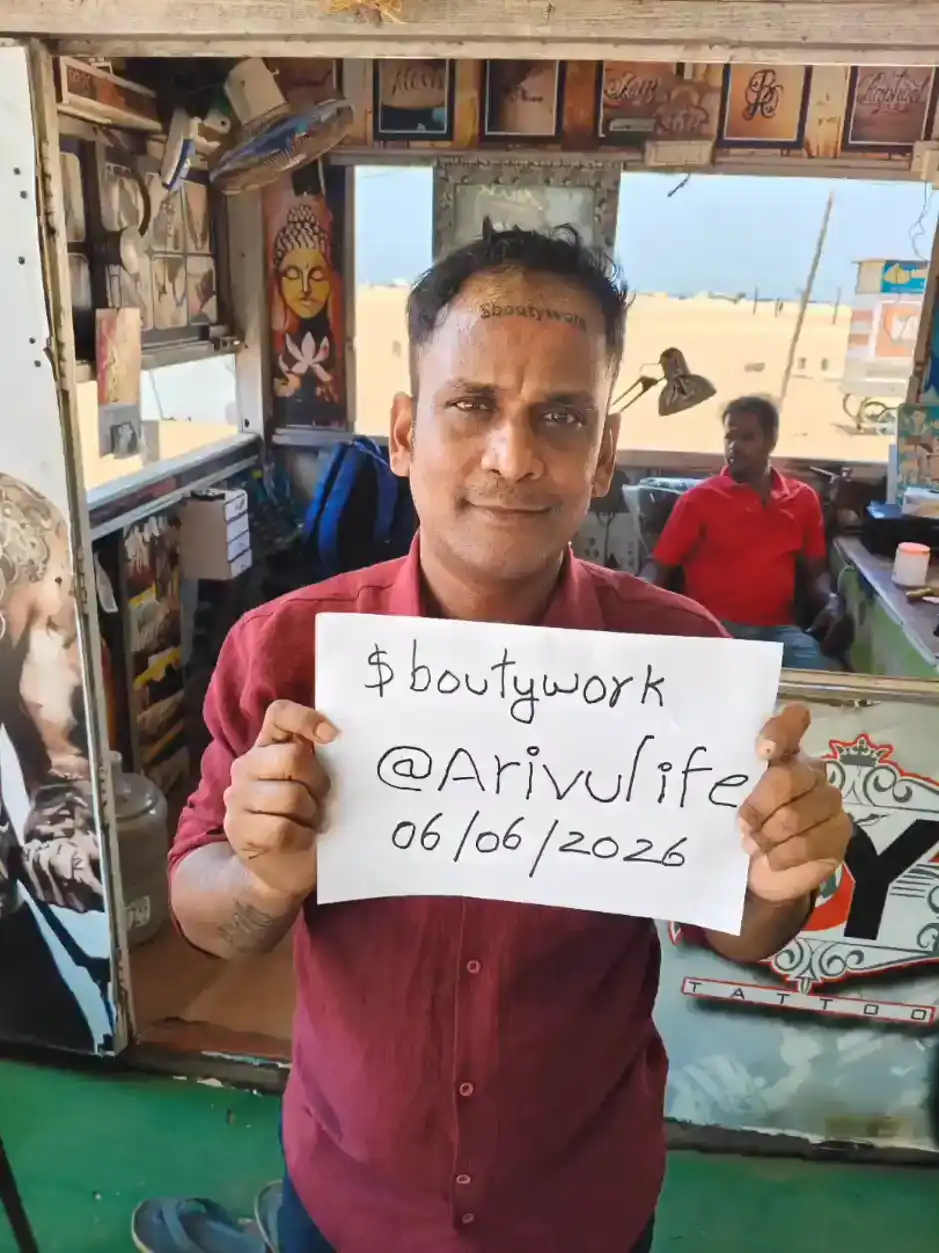
When submitting the full video of his tattooing process for bounty approval, he wrote in his remarks:

"Getting a permanent tattoo on the forehead, which will last a lifetime, is not an easy decision. The process itself was painful. It bled, and I had to endure the discomfort to complete it."

But his submission was rejected by the bounty poster due to a typo in the description—missing an 'n', writing the ticker as $boutywork. And this Indian man had precisely followed the requirements as described.

So, the next day, he went back to add a tattoo of the letter 'n':
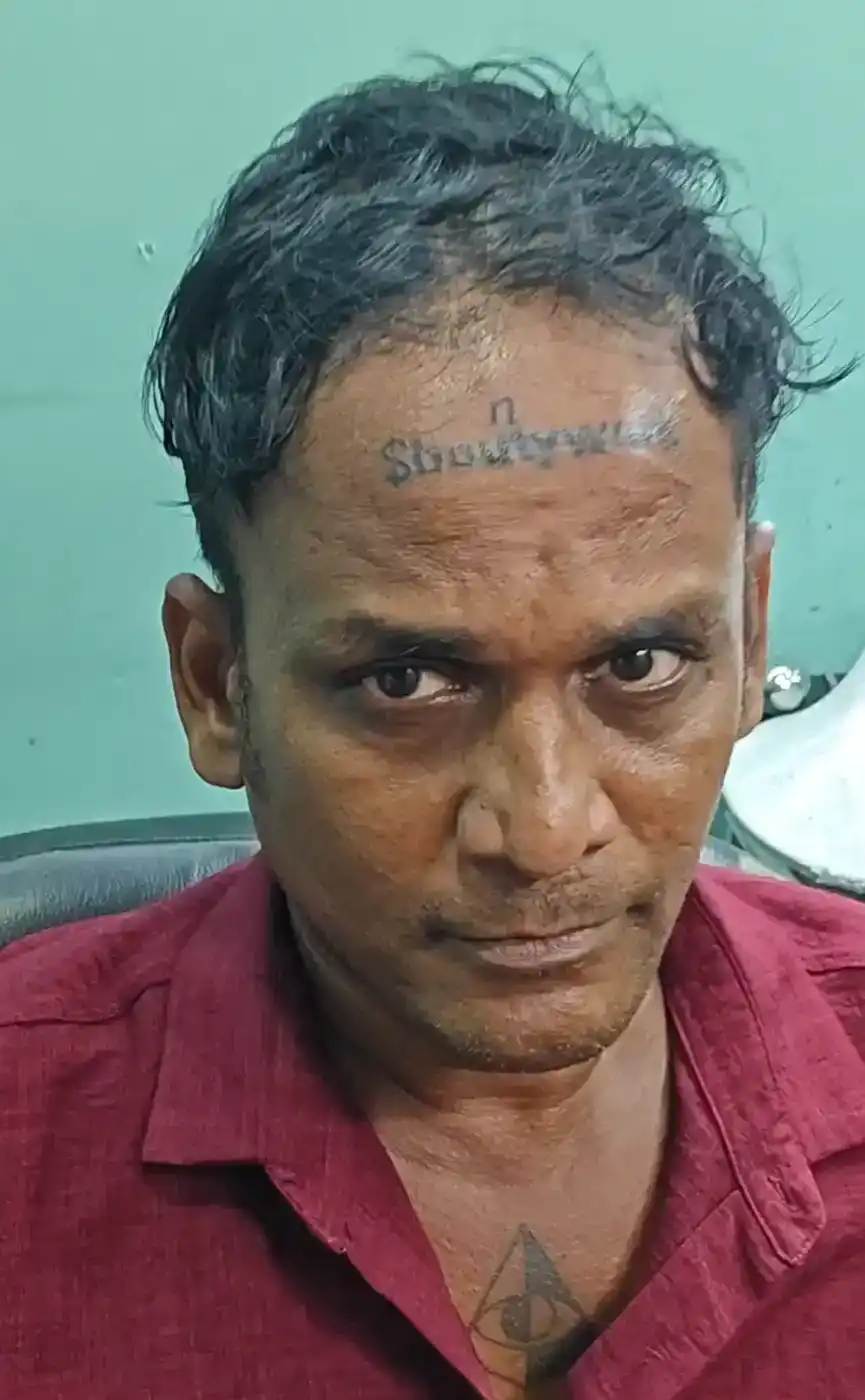
This time, he successfully received the bounty. $2,600 is the price of a forehead tattoo. He said this money changed his life.

But he earned far more than just that $2,600. After his initial bounty approval request was rejected, someone sent him a token called $boutywork, using the incorrect tattoo as the new token's name.

Because the incident had enough traction, this token accumulated over $5 million in trading volume. The creator's revenue from transaction fees was given to him, so he ended up earning about $48,000 in total.

And this wasn't even the highest single bounty earned for completing a tattoo task on pump.fun. Another bounty task posted by @Perporseful, also requiring a forehead tattoo with "bounty.fun," was completed on the same day it was posted. The person eventually received a bounty of 200 SOL (approximately $14,000).
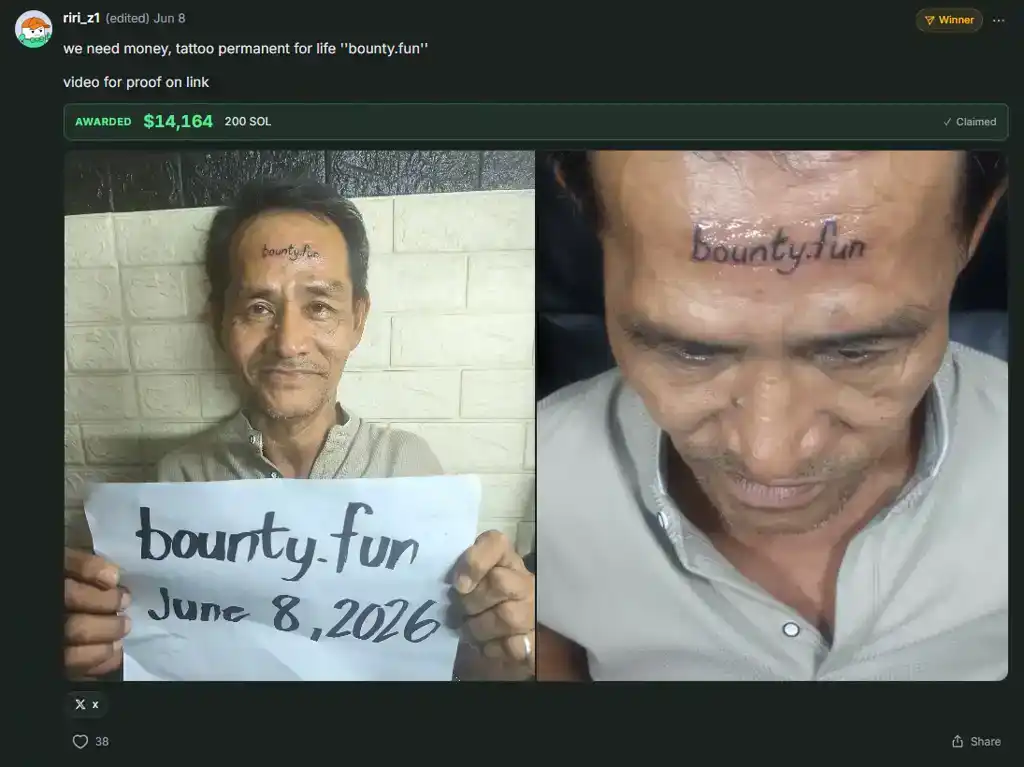
When submitting his tattoo proof for bounty approval, his remark was simple:

"We need money."

Priced Freedom Easily Amplifies Darkness

The hype around the Indian man's forehead tattoo has faded, and $boutywork has basically gone to zero. But the $Bountywork developer is still posting new bounties, trying to replicate this "success." For example, making someone wear a $Bountywork shirt and eat 3 bugs on camera.

Even though the bounty is only 2.5 SOL (about $178), not particularly generous, in the face of "We need money," this is hardly a challenge:

To continuously generate traffic for the $Bountywork token, @ayushquantt has spent $4,500 on various bounties. Besides the bug-eating challenge, there's also one like wearing a $Bountywork shirt and drinking a bottle of hot sauce for a bounty of 1.4 SOL (about $100):
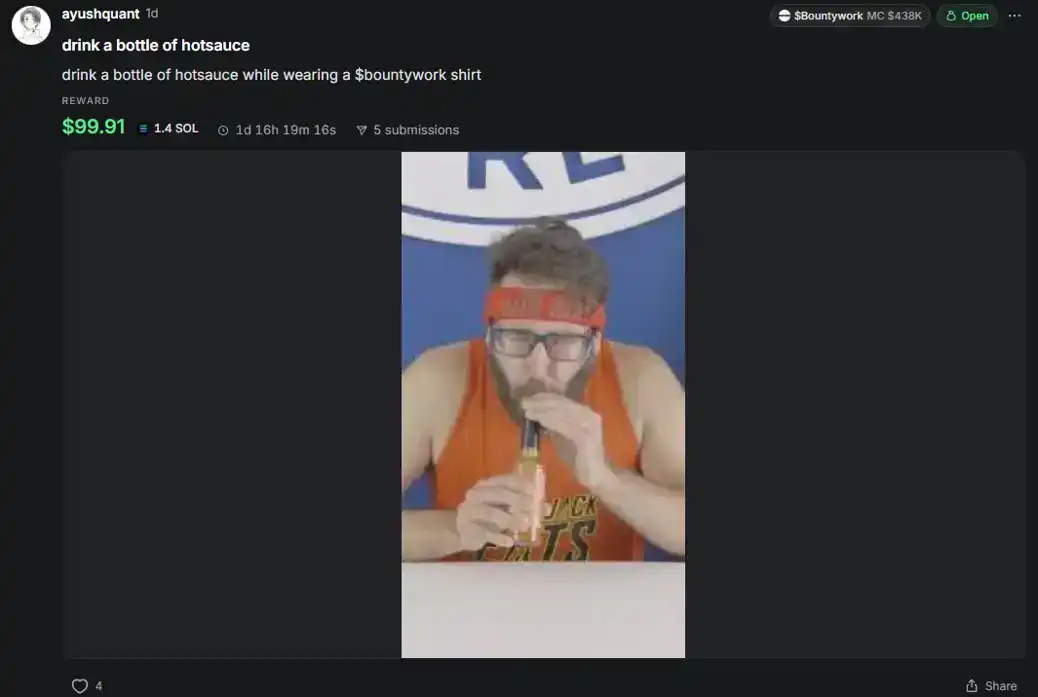
But he has also posted some relatively normal or even heartwarming bounty tasks. For example, gifting a $50 gift card in the name of $Bountywork to someone in need, with a bounty of 1.5 SOL (about $107):
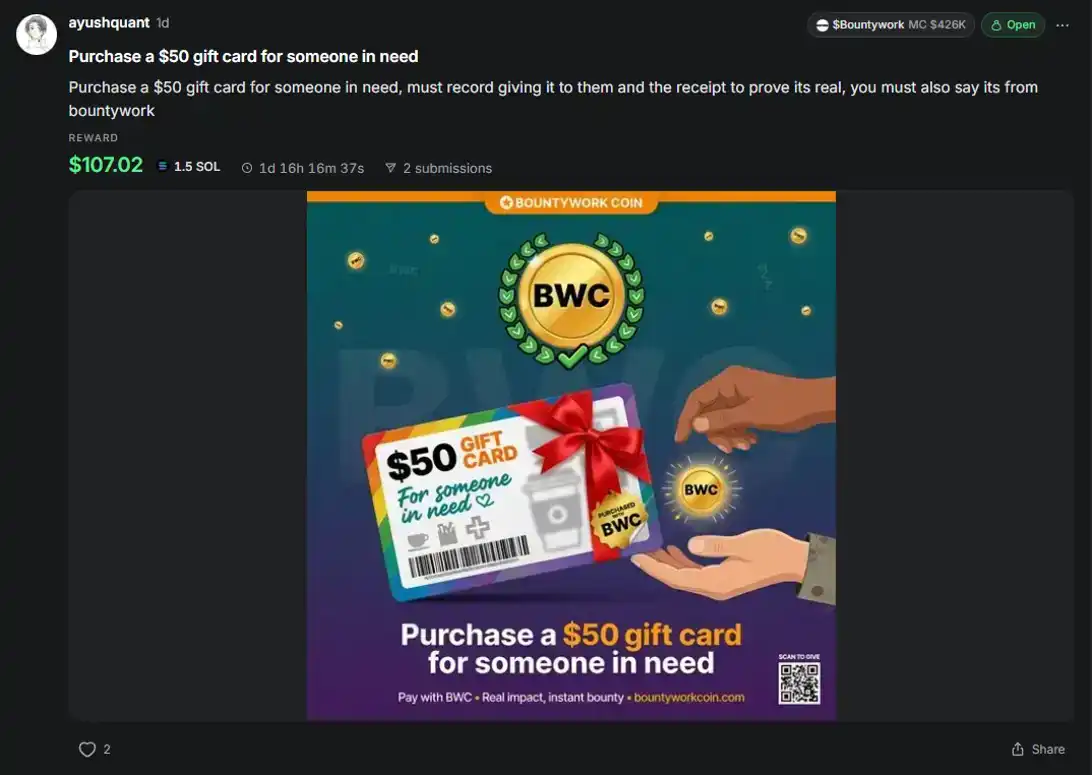
It's difficult to judge the morality of such actions or even the new pump.fun feature. What's very obvious is that gifting a $50 gift card to someone in need barely creates a ripple in terms of traffic, but eating bugs or drinking hot sauce on camera is much more likely to gain attention.

I don't think this means "in an era where traffic equals money, we have all become slaves to traffic." Freedom often reveals itself in a raw, naked form; it's just that you and I have been 'protected' too well. We wouldn't get a forehead tattoo for $2,600 simply because we can still endure monthly salaries of a few thousand, venting our dissatisfaction with work and overtime in group chats and short video apps.

The Black Mirror episode mentioned at the beginning has long entered real life. During the 'wild west' era of live streaming, LiaoLiao Voice was once a popular platform. On December 31, 2018, a streamer with the online name "Da Fei," persuaded by the chat room host Wang and egged on by viewers, consumed a large amount of alcohol again and died of sudden cardiac arrest while out after drinking. In the three months before the incident, "Da Fei" had been live-streaming drinking every day, often drinking alcohol or soybean oil to earn tips.

In one of "Da Fei's" past live streams, he once said after drinking that he couldn't take it anymore and started convulsing. At that time, viewers in the chat room were still egging him on, "Pour what you vomited on your head, add another $300."

Others shouted, "LiaoLiao is finally going to have a death." Unexpectedly, it eventually came true.

Even in 2023-2024, with live streaming regulations becoming more mature, we can still find many cases of deaths due to excessive drinking during PK battles or binge-eating in mukbang streams.

"Desperate for fame," "Why go to such lengths for money?"—these are the final legacies these streamers leave for the internet, topics for after-dinner chatter, gradually disappearing into the massive daily data updates of the internet. Regulatory norms can indeed curb the excessive commodification of people by money, but ultimately cannot stop those on pump.fun who are willing to tattoo their faces for a few thousand dollars.

Because they really need the money.

Light in the Darkness

Although many bounties on pump.fun resemble Black Mirror or the dark web, you can also find some interesting and heartwarming things.

Organize a gathering in New York for people resisting work, promoting "Work is a scam," bounty $15,865. This is the kind of event that energizes a wage slave like me:
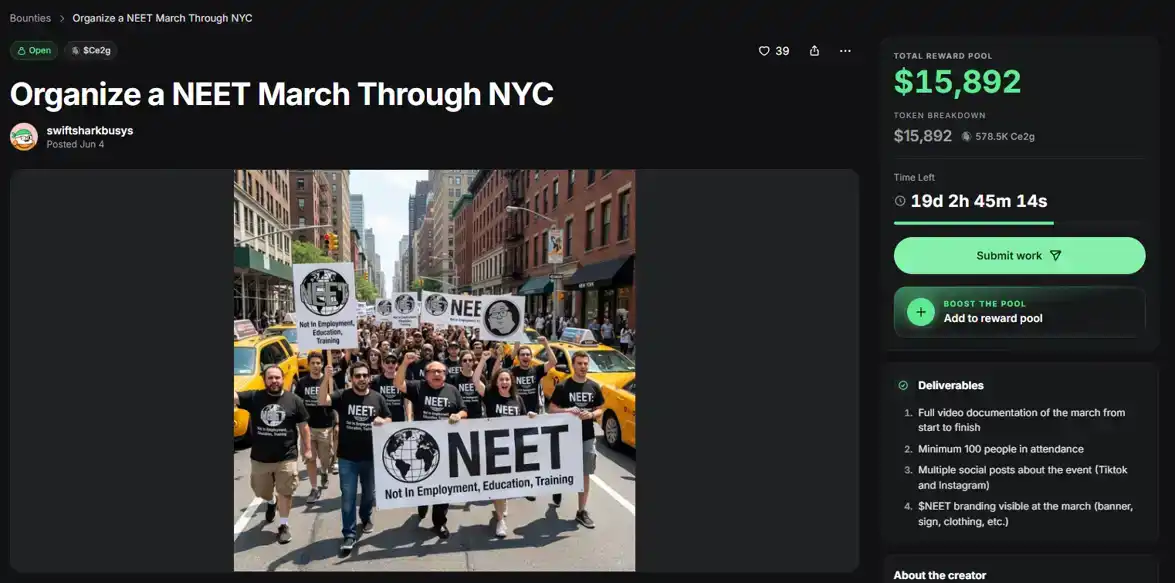
The $neet community has previously self-organized two offline "No Work Gatherings" in the US. If this bounty is completed, it will be the third.

Show kindness to 10 strangers to make their day better. The bounty poster did not specify the method—treat them to a meal, give them flowers, books, buy them coffee, tell them to have a good day. The five best videos each receive a $1,000 bounty:
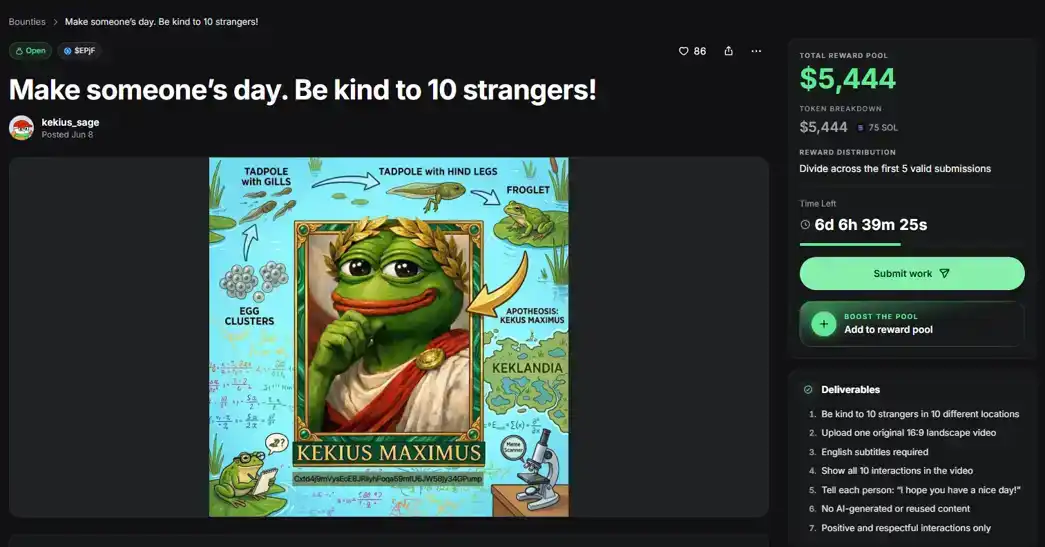
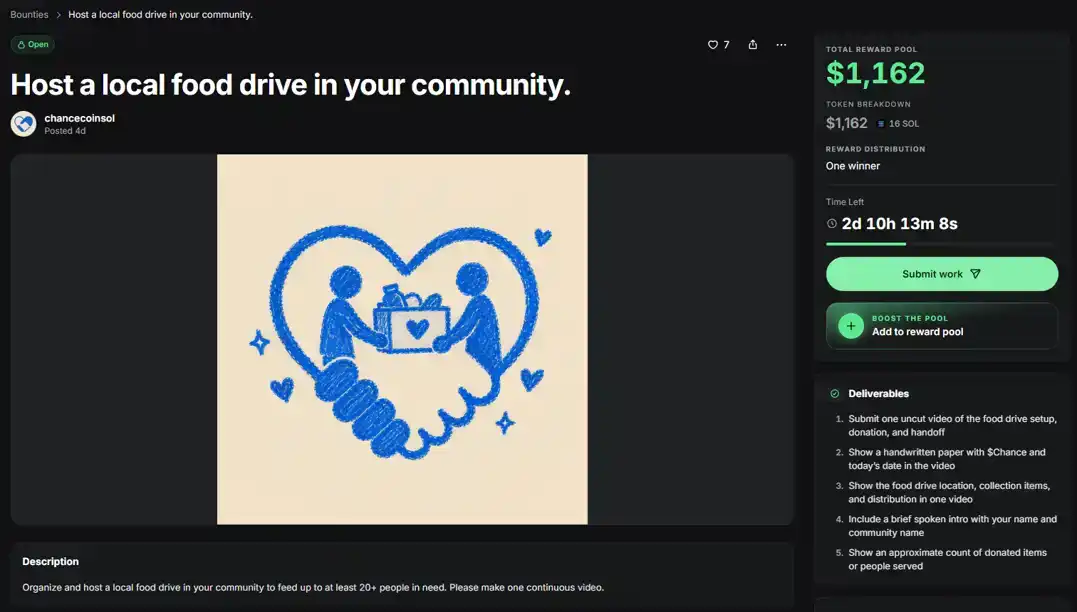
Organize a charity food donation in your local community, providing food to at least 20 people in need, bounty $1,161:
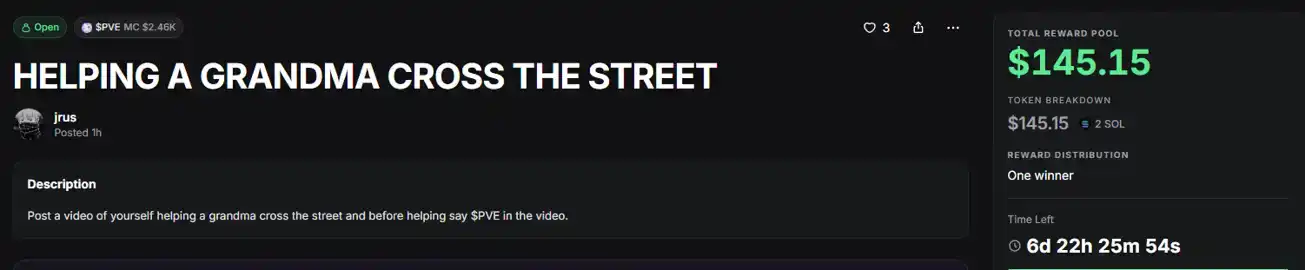
There's even one for helping an old lady cross the street, bounty $145:
The world is vast and full of wonders. We cannot escape the darkness; we can only hope for more light.


Связанные с этим вопросы

QWhat is the core function of the new 'Pump.fun Go' feature mentioned in the article, and what real-world phenomenon does it draw a parallel to?

AThe 'Pump.fun Go' feature allows anyone to post and complete paid bounty tasks on the pump.fun platform. The article draws a parallel to the fictional dystopian reality presented in the Black Mirror episode 'Common People', where people are forced to trade their dignity for survival, as well as to real-world extreme live-streaming phenomena where individuals perform degrading or dangerous acts for money.

QAccording to the article, how much money did the Indian man earn in total from the '$bountywork' tattoo incident, and what were the sources?

AThe Indian man earned a total of approximately $48,000. This came from two sources: the initial 40 SOL (around $2,600) bounty for tattooing the correct '$Bountywork' on his forehead, and the creator fees from trading a separate meme coin named '$boutywork' (the incorrect spelling) that was launched based on the incident's viral attention.

QBeyond shock-value stunts like tattooing and eating insects, what are some examples of positive or socially beneficial bounty tasks found on pump.fun mentioned in the article?

AExamples of positive bounty tasks mentioned include: organizing a rally in New York for people rejecting work; performing acts of kindness for 10 strangers; organizing a community food donation for at least 20 people in need; and helping an elderly person cross the street.

QWhat real-life tragedy from the early days of live streaming does the article reference to illustrate that the 'Black Mirror' scenario is not just fiction?

AThe article references the 2018 case of a streamer nicknamed 'Da Fei' on the 'Liaoliao' platform. He frequently livestreamed heavy drinking to earn tips and eventually died of alcohol poisoning after being egged on by his audience and the chat room host.

QWhat is the article's implied critique regarding why some people are willing to perform extreme acts for relatively small bounties on platforms like pump.fun?

AThe article implies that the primary driver is genuine financial desperation, encapsulated in the simple submission note 'We need the money.' It suggests that societal judgment often overlooks this underlying economic necessity, framing such acts merely as a quest for fame or a sign of being 'crazy for attention,' when for some, it's a matter of survival.

Похожее

M&A Deals Are Exceptionally Active in the Crypto Market

Mergers and acquisitions (M&A) activity in the cryptocurrency primary market has reached a historic high, accounting for approximately 42% of total deals in the current month, nearly matching the number of financing rounds. This shift does not signal a new boom cycle but rather reflects a severe contraction in the venture capital funding environment. As financing dwindles, established industry giants—including major exchanges, payment firms, and infrastructure providers—are seizing the opportunity to acquire strategic assets at lower valuations. Key drivers behind the surge in M&A include depressed project valuations, the need to quickly acquire talent and technology to capture short market windows, the pursuit of crucial regulatory licenses, and the strategic expansion into adjacent business verticals such as derivatives, payments, stablecoins, and real-world asset (RWA) issuance. Major acquisitions, like Coinbase's purchase of Deribit and Kraken's acquisition of NinjaTrader, exemplify the push to expand into high-margin areas like derivatives and multi-asset trading. This trend is reshaping the industry's exit landscape, offering an alternative to token-based exits and incentivizing startups to build tangible products and revenue streams with inherent strategic value for acquisition. However, it also points toward increasing centralization, as critical functions—trading, custody, payments, compliance—become concentrated within a few large, well-capitalized platforms, potentially raising barriers to entry for new ventures.

marsbit3 мин. назад

M&A Deals Are Exceptionally Active in the Crypto Market

marsbit3 мин. назад

Solana Privacy Ecosystem Panorama: A Complete Privacy Stack from Compute to AI

**Title: The Solana Privacy Ecosystem: A Full-Stack View from Compute to AI** **Summary:** This article provides a comprehensive overview of the emerging privacy landscape on the Solana blockchain, characterizing it as still in early development. It identifies two primary verticals—Neobanks and Private DeFi—as key drivers, while noting gaps in tooling and user experience. The discussion centers on two main approaches to private computation: Arcium, which utilizes Multi-Party Computation (MPC) networks (Multi-Party eXecution Environments) to process encrypted data with final settlement on Solana; and Magic Block, which leverages Trusted Execution Environments (TEEs) via its Private Ephemeral Rollup (PER). Both enable confidential applications like dark pools and private DeFi with minimal code changes. Building on this infrastructure, projects are creating privacy-focused applications. Umbra, built on Arcium, offers Encrypted Token Accounts (ETAs) for private balances, transfers, and selective disclosure for compliance. Other wallets like Privacy Cash and Hush provide mixer-like functionality for SOL. For private trading, encifherio uses TEEs to encrypt swap details routed through Jupiter, while VanishTrade and Darklake focus on shielding transaction intent and liquidity routing, with Darklake introducing a "blind slippage pool" to prevent front-running. Further applications include private prediction markets (e.g., Melee Markets using Arcium's encrypted order books) and private AI. Loyal exemplifies the latter, using both Magic Block and Arcium to enable decentralized AI agents that store user data, conversations, and transactions confidentially on-chain. The article concludes by framing privacy not as a single technology but as an evolving "ultimate privacy stack," with experts like Helius's Mert envisioning a future combination of Fully Homomorphic Encryption (FHE) and Zero-Knowledge proofs (ZK). Helius Privacy itself is developing a ZK-based UTXO privacy layer for Solana.

Foresight News9 мин. назад

Solana Privacy Ecosystem Panorama: A Complete Privacy Stack from Compute to AI

Foresight News9 мин. назад

7 Key Questions Regarding 'DeepSeek Completes Over 50 Billion Yuan in Financing'

DeepSeek, the prominent Chinese AI company, has reportedly completed its first external funding round, raising over 50 billion RMB (approximately $6.9 billion USD), according to foreign media reports. This financing values the company at over $50 billion USD, a significant increase from a $10 billion valuation when the round began in April 2026. Founder Liang Wenfeng personally contributed 20 billion RMB, with other investors including Tencent, CATL (Contemporary Amperex Technology), JD.com, NetEase, and IDG Capital. Notably, the National Artificial Intelligence Industry Investment Fund also participated with a direct investment of 1 billion RMB. The funding round is distinctive for its structure. Most investors' capital is channeled into a limited partnership controlled by CEO Liang Wenfeng, rather than directly into DeepSeek. These investors face a five-year lock-up period, have no voting rights, but receive priority financial information and future investment rights. This arrangement is seen as a measure to ensure Liang's absolute control over the company's direction, aligning with its stated principles of prioritizing groundbreaking AGI (Artificial General Intelligence) research over short-term profitability. The report highlights strategic reasons for key investors. Tencent's involvement is viewed as a strategic alignment, building on existing collaborations. CATL's investment is linked to the critical energy and power infrastructure needed for AI data centers, a key growth area for the battery giant. The participation of a state-backed fund underscores the national strategic importance of AI development. Post-funding, DeepSeek is expected to accelerate infrastructure development, including building its own data centers, hire more talent, and release new model versions with enhanced capabilities like image and audio support. While this marks a major step, the company's long-term journey towards AGI remains a challenging path that will require balancing its foundational ideals with the expectations of its new investors.

marsbit54 мин. назад

7 Key Questions Regarding 'DeepSeek Completes Over 50 Billion Yuan in Financing'

marsbit54 мин. назад

The World Cup is Here: The Battle for Entry into Prediction Markets Has Begun

The 2026 FIFA World Cup has begun, and alongside the on-field competition, a new off-field battleground is emerging: prediction markets. These blockchain-based platforms, which convert crowd wisdom into tradable probabilities, are gaining significant traction. However, their complexity—involving wallets, gas fees, and smart contracts—has historically limited participation to crypto-native users. Centralized exchanges (CEXs), like Gate, are tackling this adoption barrier. By integrating with leading prediction market protocol Polymarket, Gate simplifies the user experience. Users can participate directly with their exchange account and USDT, bypassing complex Web3 steps. Gate offers a streamlined "Prediction Mode" for casual users and a professional "Trading Mode" with advanced tools. Key features include two-way trading (allowing users to buy or sell positions before event resolution), support for diverse markets (sports, crypto, macroeconomics), and a suite of information tools like a "Smart Money" leaderboard, wallet tracking, and AI-powered insights. For the World Cup, Gate launched a dedicated hub aggregating schedules, standings, and relevant markets. This allows fans to seamlessly follow games and trade on outcomes, transforming passive viewing into active participation where they can monetize their predictions and trade on shifting consensus throughout a match. The article argues that prediction markets have proven their value in event forecasting. The next challenge is mass adoption. The competition is shifting from building effective protocols to creating accessible user entry points. By lowering technical barriers and building a complete ecosystem for information and trading, platforms like Gate aim to transition prediction markets from a niche crypto tool to a mainstream platform for expressing and trading on collective intelligence.

Odaily星球日报1 ч. назад

The World Cup is Here: The Battle for Entry into Prediction Markets Has Begun

Odaily星球日报1 ч. назад

Торговля

Спот
Фьючерсы

Популярные статьи

Как купить PEOPLE

Добро пожаловать на HTX.com! Мы сделали приобретение ConstitutionDAO (PEOPLE) простым и удобным. Следуйте нашему пошаговому руководству и отправляйтесь в свое крипто-путешествие.Шаг 1: Создайте аккаунт на HTXИспользуйте свой адрес электронной почты или номер телефона, чтобы зарегистрироваться и бесплатно создать аккаунт на HTX. Пройдите удобную регистрацию и откройте для себя весь функционал.Создать аккаунтШаг 2: Перейдите в Купить криптовалюту и выберите свой способ оплатыКредитная/Дебетовая Карта: Используйте свою карту Visa или Mastercard для мгновенной покупки ConstitutionDAO (PEOPLE).Баланс: Используйте средства с баланса вашего аккаунта HTX для простой торговли.Третьи Лица: Мы добавили популярные способы оплаты, такие как Google Pay и Apple Pay, для повышения удобства.P2P: Торгуйте напрямую с другими пользователями на HTX.Внебиржевая Торговля (OTC): Мы предлагаем индивидуальные услуги и конкурентоспособные обменные курсы для трейдеров.Шаг 3: Хранение ConstitutionDAO (PEOPLE)После приобретения вами ConstitutionDAO (PEOPLE) храните их в своем аккаунте на HTX. В качестве альтернативы вы можете отправить их куда-либо с помощью перевода в блокчейне или использовать для торговли с другими криптовалютами.Шаг 4: Торговля ConstitutionDAO (PEOPLE)С легкостью торгуйте ConstitutionDAO (PEOPLE) на спотовом рынке HTX. Просто зайдите в свой аккаунт, выберите торговую пару, совершайте сделки и следите за ними в режиме реального времени. Мы предлагаем удобный интерфейс как для начинающих, так и для опытных трейдеров.

778 просмотров всегоОпубликовано 2024.04.12Обновлено 2026.06.02

Как купить PEOPLE

Обсуждения

Добро пожаловать в Сообщество HTX. Здесь вы сможете быть в курсе последних новостей о развитии платформы и получить доступ к профессиональной аналитической информации о рынке. Мнения пользователей о цене на PEOPLE (PEOPLE) представлены ниже.

活动图片