Los mayores bancos de Japón prevén el lanzamiento de una stablecoin en el año fiscal 2026 ante el impulso regulatorio

bitcoinistОпубликовано 2026-06-11Обновлено 2026-06-11

Введение

Las tres principales entidades bancarias de Japón —MUFG Bank, Sumitomo Mitsui Banking Corp. y Mizuho Bank— planean lanzar una stablecoin conjunta antes del 31 de marzo de 2027 (fin del año fiscal 2026). Han establecido un consejo voluntario para desarrollar el marco operativo y de gobernanza, y explorarán su uso en múltiples casos prácticos y posibles colaboraciones. El impulso regulatorio en Japón, con la modificación de la Ley de Servicios de Pago en 2022, permite que solo entidades autorizadas emitan tokens respaldados por yen. Recientemente, el partido gobernante ha instado a promover las stablecoins en yen para su uso en liquidaciones en Asia, coincidiendo con la próxima reunión anual del Banco Asiático de Desarrollo en Japón el próximo año.

Mientras las autoridades financieras japonesas impulsan la expansión del mercado de activos digitales basados en el yen, tres megabancos han avanzado en sus planes conjuntos de stablecoin al establecer un consejo para desarrollar el marco para emitir este token en el presente año fiscal.

Los megabancos avanzan en sus planes conjuntos de stablecoin

Los tres mayores bancos de Japón, Mitsubishi UFJ Financial Group (MUFG) Bank, Sumitomo Mitsui Banking Corp. y Mizuho Bank, se preparan para lanzar su stablecoin de emisión conjunta antes de finalizar el año fiscal 2026 (FY2026).

En un comunicado del miércoles, los megabancos revelaron su plan de realizar transacciones comerciales durante el FY2026 utilizando una stablecoin emitida bajo un acuerdo fiduciario, donde los tres bancos actuarán como fiduciantes conjuntos y un banco fiduciario o entidad similar será el fideicomisario.

Los bancos anunciaron que han firmado un memorándum de entendimiento (MoU) para formar un consejo voluntario conjunto para revisar los marcos operativos, la gobernanza y temas relacionados para respaldar la implementación práctica del token.

"El Consejo servirá como un marco para examinar el posible desarrollo de una infraestructura de emisión relacionada con la Stablecoin Objetivo, así como el diseño de sistemas, esquemas y estructuras de gobernanza", señaló el comunicado.

Los tres bancos también acelerarán sus esfuerzos para apoyar el uso potencial de estos tokens en una amplia gama de casos de uso, con el objetivo de lanzar transacciones en vivo de la stablecoin conjunta antes del 31 de marzo de 2027, cuando finaliza el año fiscal actual. Además, el consejo también considerará colaboraciones con instituciones financieras y otras partes interesadas relevantes que puedan unirse al proyecto en el futuro.

Cabe destacar que los megabancos, que en conjunto atienden a más de 300,000 empresas, comenzaron a explorar el lanzamiento de una stablecoin conjunta a finales de 2025, y los informes iniciales sugerían planes para debutar con el token dentro del FY2025.

En noviembre, los bancos anunciaron un proyecto piloto bajo el Proyecto de Innovación en Pagos de la Agencia de Servicios Financieros (FSA). El piloto utilizó la infraestructura de la empresa fintech con sede en Tokio, Progmat, y tuvo como objetivo recopilar "conocimiento práctico" sobre la emisión conjunta de una stablecoin y pagos transfronterizos avanzados.

El impulso regulatorio de Japón por los tokens respaldados por yen

En 2022, las autoridades japonesas enmendaron la Ley de Servicios de Pago para establecer un marco legal para las stablecoins. Bajo el nuevo régimen, solo las empresas de transferencia de dinero con licencia, las compañías fiduciarias y los bancos están autorizados a emitir tokens denominados en yenes.

La empresa fintech de Tokio, JPYC, lanzó en octubre el primer token vinculado al yen, JPYC, respaldado por reservas en yenes, incluidos depósitos bancarios y bonos del gobierno. A principios de este año, SBI Holdings se asoció con Startale Group para JPYSC, una stablecoin de yen respaldada por un banco fiduciario para casos de uso institucionales y transfronterizos.

La semana pasada, el Partido Liberal Democrático (LDP) de Japón pidió la creación de reglas para los fondos cotizados en bolsa (ETF) de criptomonedas y la promoción de las stablecoins denominadas en yen en la región, en una nueva propuesta al gobierno.

Junichi Kanda, un legislador en el panel del partido gobernante, afirmó que el LDP presionó al gobierno para impulsar el uso de stablecoins de yen en la región. "Instamos al gobierno a tomar medidas para promover las stablecoins de yen para liquidaciones en Asia en el futuro", declaró.

El legislador también dijo que Japón podría promover los tokens basados en yen y la innovación en blockchain el próximo año, cuando el país sea anfitrión de la reunión anual del Banco Asiático de Desarrollo.

Mientras tanto, la FSA amplió recientemente la Ordenanza de la Oficina del Gabinete para reconocer ciertas stablecoins de tipo fiduciario emitidas por bancos fiduciarios extranjeros y entidades similares como instrumentos de pago electrónico bajo la Ley de Servicios de Pago.
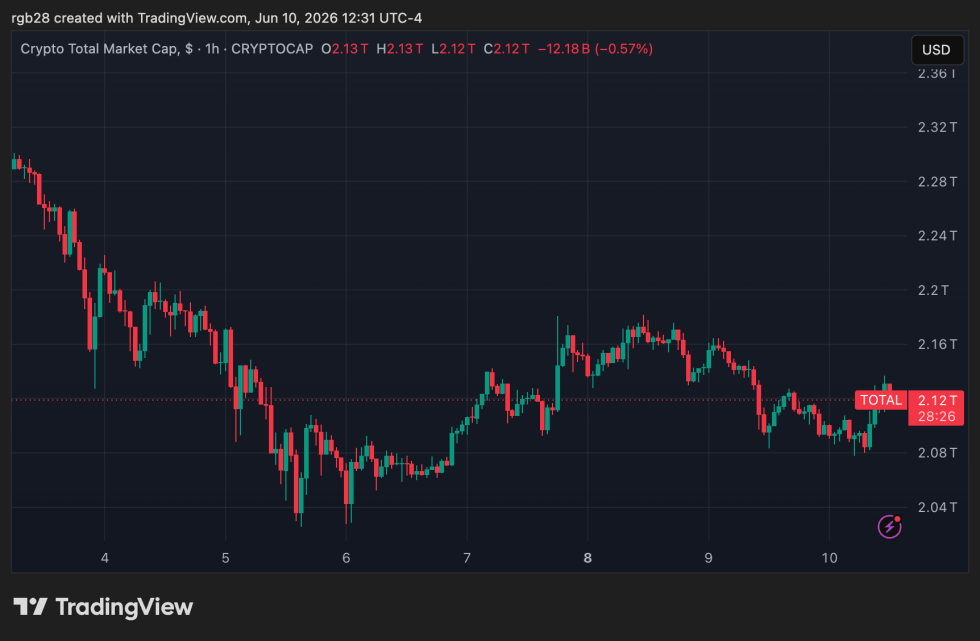
La capitalización total del mercado de criptomonedas se sitúa en $2.12 billones en el gráfico semanal. Fuente: TOTAL en TradingView


Связанные с этим вопросы

Q¿Qué tres megabancos japoneses planean lanzar conjuntamente un stablecoin para el año fiscal 2026?

ALos tres megabancos son Mitsubishi UFJ Financial Group (MUFG) Bank, Sumitomo Mitsui Banking Corp. y Mizuho Bank.

Q¿Qué marco legal estableció Japón en 2022 que regula la emisión de stablecoins denominados en yenes?

AEn 2022, Japón enmendó la Ley de Servicios de Pago para establecer un marco legal para los stablecoins, permitiendo que solo empresas de transferencia de dinero con licencia, compañías fiduciarias y bancos emitan tokens denominados en yenes.

Q¿Qué entidad actuará como fiduciaria en el acuerdo de fideicomiso para la emisión del stablecoin conjunto de los megabancos?

AUn banco fiduciario o una entidad similar actuará como fiduciaria en el acuerdo de fideicomiso, mientras que los tres megabancos servirán como fideicomitentes conjuntos.

QAdemás de los megabancos, ¿qué otro actor del mercado japonés ha lanzado recientemente un stablecoin respaldado por yenes?

ALa empresa fintech con sede en Tokio JPYC lanzó el primer token vinculado al yen, JPYC, en octubre, respaldado por reservas en yenes, incluyendo depósitos bancarios y bonos gubernamentales.

Q¿Qué organismo político japonés propuso recientemente la creación de reglas para ETFs de criptomonedas y la promoción de stablecoins en yenes?

AEl Partido Liberal Democrático (PLD) de Japón propuso la creación de reglas para los fondos cotizados en bolsa (ETFs) de criptomonedas y la promoción de stablecoins denominados en yenes en una nueva propuesta al gobierno.

Похожее

When Crypto Meets the World Cup: CoinW and Modrić's Art of "Navigating Cycles"

When Encryption Meets the World Cup: CoinW and Modrić's "Transcending Cycles" Philosophy In the context of the 2026 FIFA World Cup and its massive global audience, the crypto exchange CoinW announced football legend Luka Modrić as its global brand ambassador. This move is framed not merely as a marketing tactic, but as a strategic experiment in user profile migration. It targets mature, financially stable football fans—particularly in Europe, Southeast Asia, and Latin America—who traditionally have low crypto awareness but value trusted, time-tested authority figures like Modrić. The article draws parallels between Modrić's enduring, disciplined career—marked by consistency and success at the highest level over two decades—and CoinW's own development path. Founded in 2017 during a volatile industry period, CoinW focused on building robust infrastructure and risk management. It weathered the 2022 industry crisis without major security incidents, subsequently earning recognition like "Europe's Most Trusted Exchange" and growing to over 20 million registered users. This "long-termism" is translated into user-centric products. CoinW Academy lowers the initial knowledge barrier. Its integrated ecosystem (CoinW, GemW, DeriW, PropW) and the recent launch of a TradFi section—offering perpetual contracts on traditional assets like stocks, gold, and oil—aim to create a unified platform for diverse assets. For the World Cup, CoinW launched the "We Are The Game" campaign, collaborating with Alchemy Pay to offer zero-fee deposits and local payment options, aiming to transform spectators into participants and lower entry barriers. Ultimately, CoinW's sports partnerships and product strategy are presented as a concerted effort to build trust and accessibility for the "silent majority" still outside crypto—shifting the industry narrative toward inclusivity and long-term value.

Foresight News8 мин. назад

When Crypto Meets the World Cup: CoinW and Modrić's Art of "Navigating Cycles"

Foresight News8 мин. назад

A Panoramic View of the Solana Privacy Ecosystem: The Complete Privacy Stack from Computation to AI

**Solana Privacy Ecosystem: A Comprehensive Overview from Computation to AI** Solana's privacy ecosystem, while nascent, is rapidly evolving to address key challenges across multiple layers. Key figures like Helius CEO Mert acknowledge that Solana has lagged in privacy but highlight its unique potential for scalable, composable privacy protocols, potentially leveraging technologies like ZK compression without persistent rollups. The foundational layer is **Private Compute**, addressed by providers like Arcium and Magic Block. Arcium utilizes Multi-Party Computation (MPC) networks to process encrypted data off-chain with final settlement on Solana, supporting use cases like confidential payments (via its C-SPL token standard) and encrypted data analysis. Magic Block employs Trusted Execution Environments (TEEs) to create private, ephemeral rollups, offering confidentiality, scalability, and composability. Both enable private order books, dark pools, and DeFi rails. Building on this infrastructure are applications for **Private Transfers and Balances**. Umbra, built on Arcium, offers encrypted token accounts with amount, balance, and sender-receiver linkage privacy, plus compliance features. Privacy Cash uses Tornado-style shielded pools for SOL, while Hush provides private staking and trading with integrated swaps via Jupiter. To eliminate **On-Chain Trails** from everyday activities like trading, protocols like encifherio and VanishTrade are emerging. encifherio privately routes swaps through Jupiter by encrypting transaction details within TEEs. VanishTrade routes trades through shielded liquidity pools. Darklake offers a ZK-native "blind slippage" AMM and private perpetuals to hide trading intent and prevent front-running. More advanced applications include **Private Prediction Markets**. Platforms like Melee Markets use Arcium's MPC to encrypt order books, allowing participants to place hidden bets without revealing their market position until settlement. Finally, the ecosystem is expanding into **Private AI**. Loyal leverages both Magic Block and Arcium to create a decentralized protocol where user-AI interactions, queries, and preferences are encrypted on-chain, giving users ownership and control over their data while enabling private transactions and yield generation. In summary, Solana's privacy stack is developing from core compute and transfer privacy towards sophisticated applications in DeFi, prediction markets, and AI, aiming for a future where Fully Homomorphic Encryption (FHE) and Zero-Knowledge (ZK) proofs combine for a complete privacy solution.

marsbit9 мин. назад

A Panoramic View of the Solana Privacy Ecosystem: The Complete Privacy Stack from Computation to AI

marsbit9 мин. назад

Spain's Stunning Upset: A Sharp Review of World Cup Betting Methods from 'Solid' to 'Meh'

"Spain Stunned: A Critical Review of World Cup Betting Methods from 'Awesome' to 'Trash'" The 2026 World Cup has already delivered its first major upset, as tournament favorite Spain was held to a goalless draw by Cape Verde. This shock result highlights the unpredictable nature of sports and the risks involved in betting on favorites. The article critically compares four major channels for World Cup predictions across five key dimensions: market clarity, transaction transparency, variety of bets, user access/compliance, and promotional incentives. Traditional online sportsbooks and China's official sports lottery offer familiar but opaque systems using complex odds. While they provide a vast array of betting options, their market mechanics and liquidity are not transparent to users. In contrast, new crypto prediction markets like Polymarket, Kalshi, Opinion, and Predict.fun present a clearer model. They translate probability directly into a tradable price (e.g., a 16¢ price equals a perceived 16% chance to win), making market sentiment easily visible. These platforms offer full transparency into order books and trading activity. User access varies significantly. China's sports lottery is fully compliant but primarily offline. Crypto markets require digital wallets and carry regulatory uncertainties. Kalshi is US-regulated but geographically restricted. Traditional offshore books pose the highest compliance and fund security risks. For engagement, Predict.fun leads with a $2 million incentive campaign and gamified features on BNB Chain. Traditional books also ramp up promotions during the World Cup, while other platforms focus more on core market functionality. In summary, the landscape is diversifying. Traditional platforms offer betting as entertainment, while emerging prediction markets frame the World Cup as a transparent, real-time information market. The core appeal remains the same: the human desire to price the future and validate one's predictions.

marsbit14 мин. назад

Spain's Stunning Upset: A Sharp Review of World Cup Betting Methods from 'Solid' to 'Meh'

marsbit14 мин. назад

AI Reshapes the Semiconductor "Smile Curve": The Rising Logic Behind the Global Distributed Bull Market

The Philadelphia Semiconductor Index (SOX) has hit a historic high above 14,000 points, driven by a concentrated AI-fueled semiconductor rally. Key drivers are extreme scarcity and pricing power in critical bottlenecks of the AI data center supply chain. Unlike traditional models where manufacturing held lower profits, AI has reshaped the "Smile Curve." Highly complex manufacturing and advanced packaging nodes—like TSMC's CoWoS, SK Hynix's HBM, and ASML's EUV lithography—have become exceptionally scarce and high-margin, rivaling design-side profitability. The market rewards those controlling irreplaceable segments: U.S. firms lead in AI chip design and cloud services; Taiwan and Korea dominate advanced foundry/logic and memory/HBM respectively; Japan and the Netherlands supply vital materials and equipment. Storage, particularly HBM, is the tightest bottleneck, with severe shortages predicted through 2027. While bullish analysts project sustained AI infrastructure spending growth, notable bears like Michael Burry warn of bubble-like exuberance reminiscent of the dot-com era, citing overleveraged private financing for data centers. Key near-term catalysts include earnings guidance from Micron and Nvidia, while longer-term risks hinge on the 2027-2028 capacity expansion wave and persistent geopolitical tensions in concentrated supply chains.

marsbit16 мин. назад

AI Reshapes the Semiconductor "Smile Curve": The Rising Logic Behind the Global Distributed Bull Market

marsbit16 мин. назад

Торговля

Спот
Фьючерсы

Популярные статьи

Как купить PUSH

Добро пожаловать на HTX.com! Мы сделали приобретение Push Protocol (PUSH) простым и удобным. Следуйте нашему пошаговому руководству и отправляйтесь в свое крипто-путешествие.Шаг 1: Создайте аккаунт на HTXИспользуйте свой адрес электронной почты или номер телефона, чтобы зарегистрироваться и бесплатно создать аккаунт на HTX. Пройдите удобную регистрацию и откройте для себя весь функционал.Создать аккаунтШаг 2: Перейдите в Купить криптовалюту и выберите свой способ оплатыКредитная/Дебетовая Карта: Используйте свою карту Visa или Mastercard для мгновенной покупки Push Protocol (PUSH).Баланс: Используйте средства с баланса вашего аккаунта HTX для простой торговли.Третьи Лица: Мы добавили популярные способы оплаты, такие как Google Pay и Apple Pay, для повышения удобства.P2P: Торгуйте напрямую с другими пользователями на HTX.Внебиржевая Торговля (OTC): Мы предлагаем индивидуальные услуги и конкурентоспособные обменные курсы для трейдеров.Шаг 3: Хранение Push Protocol (PUSH)После приобретения вами Push Protocol (PUSH) храните их в своем аккаунте на HTX. В качестве альтернативы вы можете отправить их куда-либо с помощью перевода в блокчейне или использовать для торговли с другими криптовалютами.Шаг 4: Торговля Push Protocol (PUSH)С легкостью торгуйте Push Protocol (PUSH) на спотовом рынке HTX. Просто зайдите в свой аккаунт, выберите торговую пару, совершайте сделки и следите за ними в режиме реального времени. Мы предлагаем удобный интерфейс как для начинающих, так и для опытных трейдеров.

865 просмотров всегоОпубликовано 2024.03.29Обновлено 2026.06.02

Как купить PUSH

Обсуждения

Добро пожаловать в Сообщество HTX. Здесь вы сможете быть в курсе последних новостей о развитии платформы и получить доступ к профессиональной аналитической информации о рынке. Мнения пользователей о цене на PUSH (PUSH) представлены ниже.

活动图片