别盯着GPU了,英特尔甩出重磅大招,能否终结英伟达的算力垄断?

marsbitОпубликовано 2026-06-03Обновлено 2026-06-03

过去两年,AI硬件的核心几乎只有一个:GPU。

从大模型训练,到推理集群,再到端云算力,整个行业都在讨论谁能拿到更多GPU、谁能把更多算力卡塞进数据中心。可以说,整个AI行业都在围着GPU打转,这也推动英伟达股票价格屡创新高。

但在COMPUTEX2026上,英特尔给出了一个不同的判断:AI的下一阶段,不能只看GPU。这个判断的核心,就是陈立武在主题演讲中反复强调的关键词:AgenticAI,也就是我们常说的智能体。
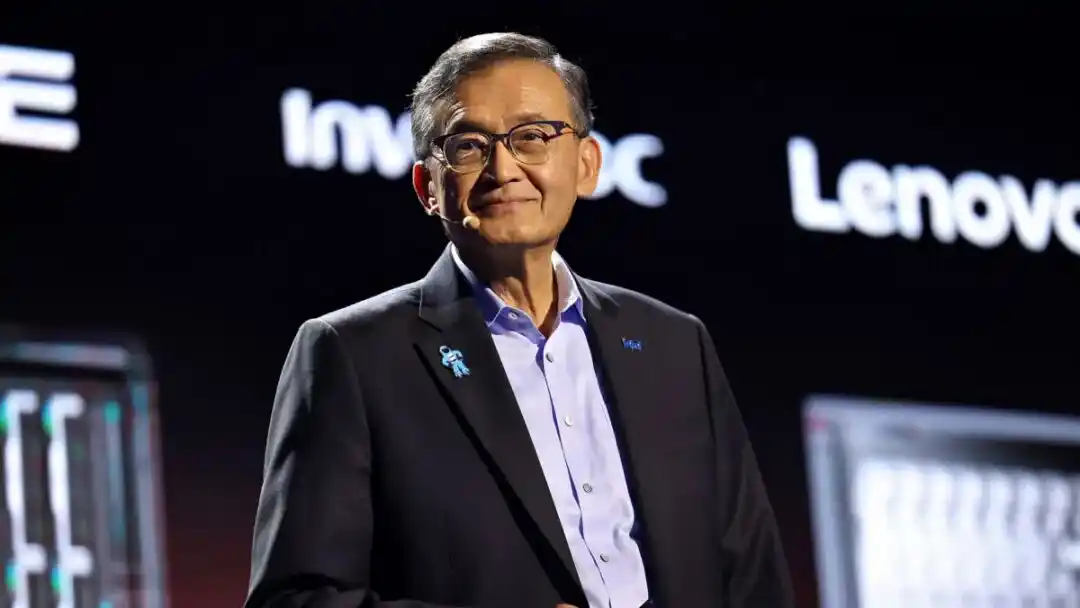
图源:英特尔

智能体正在改变计算生态

智能体与传统AI的区别其实很大,传统AI使用起来就像是“回合制”的问答机器,而智能体则是要进入真实工作流,主动完成“思考、规划、行动、反思”的循环。换言之,它要学会读取数据、调用工具、执行任务并检查结果,再不断根据反馈调整下一步。

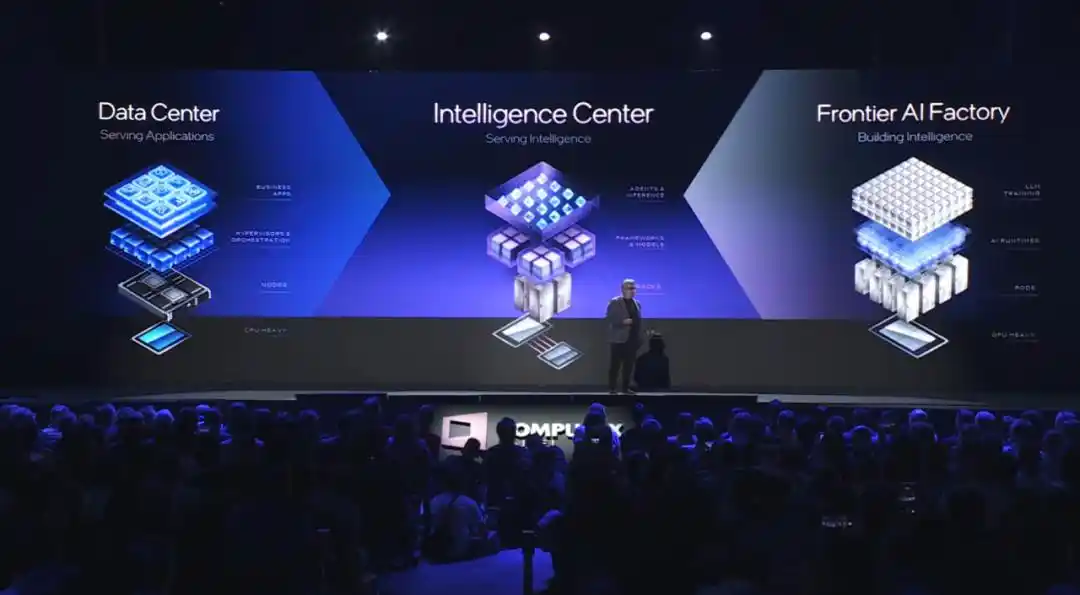
这意味着AI推理不再只是“一锤子买卖”,而是变成一套持续运行的自我决策和自我推理系统,这也完全改变了算力的运用方式。所以,英特尔这次最核心的观点就是:Agentic AI会重塑数据中心的算力配比。

目前,在前沿模型训练阶段,CPU和GPU的比例可以接近1:8,GPU承担了绝大多数计算压力。但是在进入智能体推理模式后,CPU就需要负责任务编排、工具调用、数据迁移和系统协调等工作,此时CPU与GPU的比例会逐渐走向1:1,甚至需要更高的CPU密度来快速拆解任务。

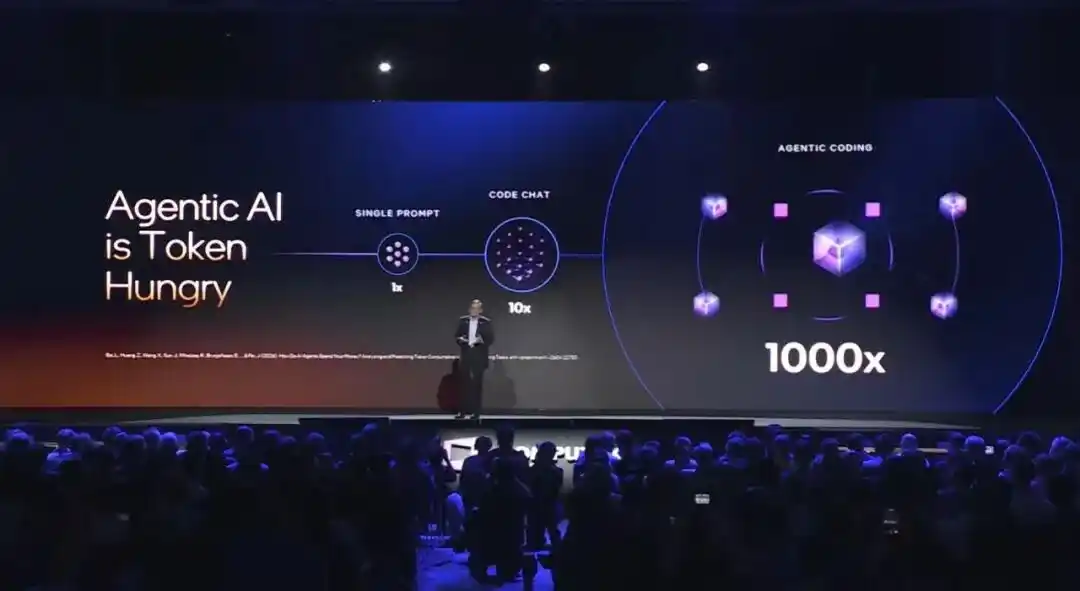
事实上,当一个智能体不只是生成一段答案,而是需要不断调用模型、工具和外部系统时,它的工作状态就与传统AI完全不同了。英特尔在演讲中就提到过一个数据:与单轮推理相比,一个智能体的Token消耗量最高可增加1000倍。
图源:英特尔

换句话说,智能体带来的不是简单的推理量增长,而是更复杂、更高频、更碎片化的系统负载。如果再把这些负载都丢给GPU解决,既低效也昂贵。

而英特尔此次发布的至强6+处理器则是基于英特尔18A制程打造,最高搭载288颗能效核,并配备最高576MB三级缓存,面向云原生、AgenticAI和网络密集型等负载需求,可以提供更高的能效和更稳定的持续性能。

在英特尔给出的方案中,单个液冷机架占用32U计算空间,就能提供36864个核心;机架功耗仅约100kW,足以承载高密度智能体部署。虽然100kW看起来唬人,但是与过往同等性能的服务器机架相比,功耗已经大幅降低。

而在至强6+之外,还有个更值得关注的东西:英特尔对推理架构的重新拆分。

在演讲中,英特尔宣布联合SambaNova、VistaEquityPartners、CambiumCapital等伙伴,正式推出全新的完全解耦推理方案。这个方案运行在VectorCoreCompute智能体云上,由英特尔至强6处理器负责编排与执行,再通过SambaNovaSN40RDU负责解码,最后由NVIDIABlackwellGPU负责预填充。
图源:英特尔

这套新方案就是针对智能体负载专门设计的。与过去很多AI系统习惯把推理链路里的大部分工作都交给GPU不同,在这个体系里,CPU、RDU、GPU将会各司其职,分别负责系统调度、解码、预填充等不同环节,让每个推理阶段都在最合适的硬件上运行,使效率最大化。

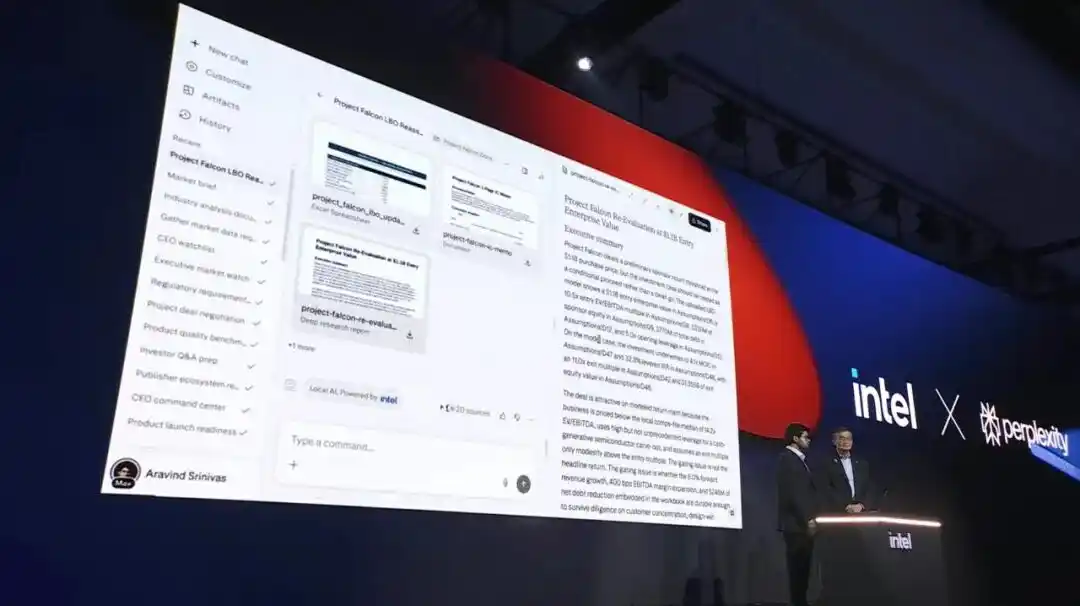
而在介绍完至强6+后,前段时间发布的第三代酷睿Ultra处理器也再次登场。它是英特尔AI生态的另一环——端侧AI核心。在演讲中,英特尔和Perplexity展示的混合式本地服务器,正是基于第三代酷睿Ultra和至强6+云端服务器构建的。
图源:英特尔

它可以根据设备能力和功能特性,在本地与云端之间动态分配工作负载,进一步降低对云端算力的依赖。这也是未来AIPC的理想形态:通过动态分配性能,在降低Token成本的同时,确保任务的即时性和数据隐私性得到保障。

除了PC,英特尔还把第三代酷睿Ultra继续扩展到游戏掌机和边缘计算领域,新发布的锐炫G3系列处理器面向掌上游戏设备,基于同代架构进行优化,将在本月晚些时候上市(掌机用户最期待的核显要来了)。

从通用到定制,英特尔也想“无处不在”

而在通用处理器之外,英特尔这次还强调了定制芯片,这也是陈立武担任英特尔CEO以来一直在主推的业务。

英特尔认为定制芯片将会在未来拥有庞大的市场,因为随着AI进入不同行业,客户将越来越不满足于通用算力,为了追求更高的效率和性能,他们将会逐渐倾向于定制芯片来保持自己的竞争力。

在演讲中,英特尔就提到,正与Google合作推出IPU,这类芯片对云服务商提升基础设施性能非常重要。同时,英特尔也与Ericsson等电信客户合作,在全球范围内提供先进无线基础设施芯片。

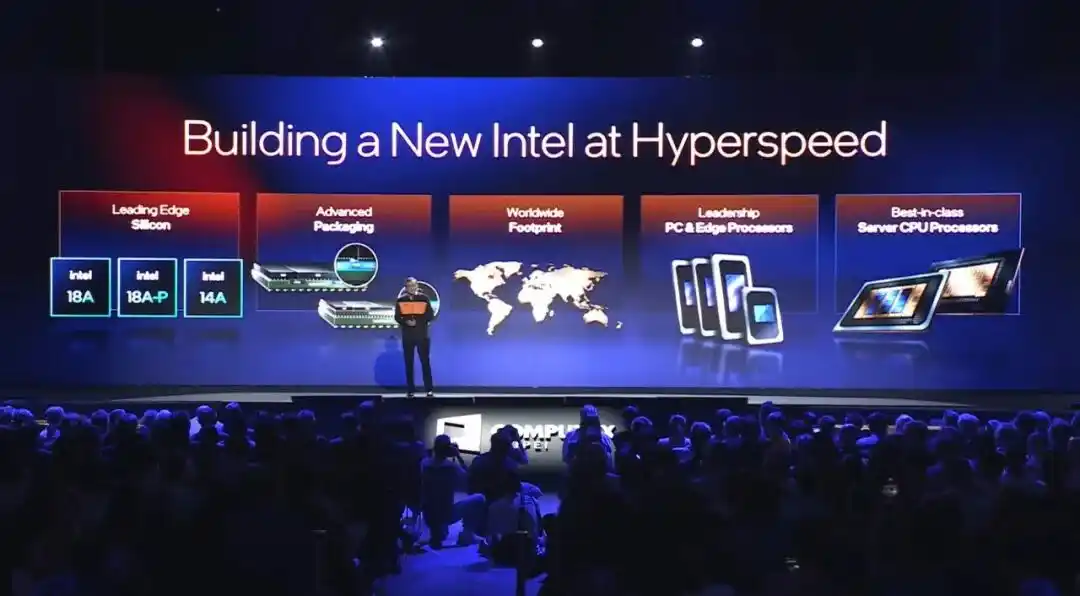
这其实是陈立武这场演讲的另一个主题:英特尔不再只靠一颗通用芯片来赢得市场,而是把芯片、系统、软件和行业合作打包成一整套解决方案,并且可以根据不同企业的需求自由定制,以此最大化英特尔的优势。
图源:英特尔

在雷科技看来,英特尔其实是在重新定义自己的生态位置:数据中心需要CPU负责智能体编排,推理系统需要异构解耦来降低成本,PC需要本地AI处理隐私和合规问题,边缘与具身智能需要高能效芯片,行业客户则需要定制化芯片。

通过满足不同领域、不同链路上的企业需求,英特尔将变得比英伟达还要“无处不在”。

当然,英特尔面前的压力依旧很大,NVIDIA在AI加速器和软件生态上的优势仍然明显,AMD也在服务器CPU和AI芯片上持续进攻。英特尔要想把这条路走通,最终还要看18A的量产速度和Xeon6+的机架级方案是否能快速落地,以及客户能不能真的从这套新方案中看到显著收益。

但至少这一次,英特尔的方向比过去更清楚。

可以说,随着AI进入智能体时代,竞争早已不再只是单颗芯片的峰值性能对比,而是涉及整个计算系统的协同效率优化。GPU仍然重要,但CPU、边缘设备、本地AI和定制芯片也会重新变得关键。

而英特尔想抓住的,正是这个AI基础设施重新分工的窗口期。
Похожее

Google TPU Shipments Revised Up by 50%

Recent industry research indicates a significant upward revision in the shipments of Google's TPU (Tensor Processing Unit) chips. Previous expectations for 2027 were set at around 10 million units, but new estimates now point to 15 million units, a 50% increase. This substantial boost directly translates to higher demand across the entire supporting supply chain. Google's TPU clusters utilize a standardized all-optical interconnect architecture. Consequently, key hardware components are deeply integrated and scaled in fixed ratios with the chips. The 15 million TPU target will drive corresponding demand increases for NPO optical engines (roughly a 1:1 match), 1.6T optical modules, OCS optical switches, high-end server power supplies, fiber optics & MPO connectors, and liquid cooling solutions. Among these, liquid cooling is highlighted as the sector experiencing the most significant transformation and offering the most stable potential for excess returns. As next-generation TPU chips reach power levels where traditional air cooling is insufficient, liquid cooling becomes essential. 2026 is forecasted as the first year of substantial adoption for Google's liquid cooling solutions. This shift, coupled with delivery and capacity bottlenecks faced by incumbent overseas manufacturers, is creating a prime window for domestic Chinese suppliers to enter and secure Google's core supply chain. The market size for Google-specific liquid cooling is projected to potentially triple from a baseline of hundreds of billions to around 300 billion units by 2028. The logic for the fiber optic sector is also being rewritten. Once considered a cyclical commodity tied to telecom operator procurement, fiber is now a strategic and scarce resource for AI Data Centers (AIDC). A severe supply-demand imbalance, driven by the long lead time for preform production (18-24 months) and surging demand from cloud giants, is supporting strong performance. Chinese fiber manufacturers are well-positioned to capture a significant share of global AIDC demand, with exports potentially reaching 200-300 million core kilometers in 2026. Overall, the investment focus within the AI computing industry is shifting from pure "chip performance speculation" towards the more certain incremental growth in computing infrastructure and its supporting ecosystem. The upward revision in Google TPU shipments, along with the potential for further doubling by 2028, is seen as solidifying performance visibility for the entire supporting supply chain over the next two years.

marsbit33 мин. назад

Google TPU Shipments Revised Up by 50%

marsbit33 мин. назад

What Wall Street Really Wants After the Crypto Story Recedes

The tide of speculative crypto narratives has receded, revealing Wall Street's true objective: building a controlled, yield-generating, and compliant financial pipeline on distributed ledgers. They are migrating core functions onto blockchains, not for decentralization, but for efficiency and new revenue streams. Key developments include BlackRock's BUIDL fund, a tokenized treasury fund acting as a foundational reserve asset, and the rise of Securitize, which is going public and partnering with the NYSE to build a 24/7 digital securities trading and settlement system. This signals a major shift of securities clearing to blockchain technology. To make volatile assets like Bitcoin palatable for institutional investors, firms like BlackRock and Goldman Sachs are creating "covered call" ETFs (e.g., BITA). These products systematically sell options on Bitcoin holdings, transforming price volatility into stable monthly income, effectively repackaging crypto as a yield-bearing asset. Stablecoins are being positioned not as speculative tools but as efficient payment rails. Companies like Stripe and Mastercard are integrating them for instant, low-cost merchant settlements and cross-border card payments, respectively. Critically, new legislation like the GENIUS Act shapes them as non-interest-bearing, heavily regulated extensions of the US dollar system. In summary, Wall Street is quietly constructing a parallel, blockchain-based financial infrastructure featuring tokenized traditional assets, structured crypto yields, and programmable dollar pipelines—all under its control and fully integrated with existing regulatory and credit frameworks.

marsbit50 мин. назад

What Wall Street Really Wants After the Crypto Story Recedes

marsbit50 мин. назад

Tying Itself to SpaceX: Cursor's $60 Billion Rise

This article recounts the rapid rise of AI-powered coding startup Cursor and its 25-year-old MIT graduate CEO, Michael Truell. Launched in 2023, Cursor achieved explosive growth, reaching over 10 billion USD in revenue by late 2025. However, its journey highlights a central dilemma for AI application companies: dependence on foundational model providers. Cursor initially relied heavily on Anthropic's models but faced an existential threat when Anthropic launched its own competing coding tool, Claude Code. In response, Cursor declared an internal emergency in early 2026 and accelerated development of its own model, Composer. To secure the immense computing power needed, Truell struck a pivotal deal with Elon Musk's SpaceX in April 2026. The collaboration grants Cursor access to SpaceX's supercomputing resources for Composer, while SpaceX's Grok model benefits from Cursor's programming data. The agreement includes a potential 600 billion USD acquisition of Cursor by SpaceX later in the year, though a substantial termination fee is in place if the deal falls through. The story explores Cursor's intense, sometimes controversial hiring practices involving lengthy unpaid "work trials," its complex partnership-turned-rivalry with Anthropic, and its high-stakes gamble to ensure independence through the SpaceX alliance. The core question remains: will Cursor evolve into a defining, independent "generational" software company, or become a key piece in a tech giant's AI arsenal?

marsbit54 мин. назад

Tying Itself to SpaceX: Cursor's $60 Billion Rise

marsbit54 мин. назад

Warsh's Debut: Will the FED Chair Who Knows Crypto Best Bring Surprises or Shocks to the Market?

Kevin Warsh, the new Federal Reserve Chairman, prepares for his inaugural press conference amidst a challenging macroeconomic landscape: resurgent inflation, a bond market sell-off, and political pressure from President Trump for rate cuts. Uniquely, Warsh holds indirect investments in over 20 crypto and Web3 entities (e.g., Solana, dYdX), making him the first Fed Chair with disclosed crypto exposure. His stance may combine a hawkish, inflation-focused monetary policy with a crypto-friendly regulatory philosophy that shifts from Powell’s “same risk, same rule” approach toward a framework acknowledging blockchain’s productivity value. Warsh’s leadership could impact crypto markets across three dimensions: a paradigm shift in regulation (potentially accelerating pro-innovation legislation and stable币 rules), a re-pricing of risk premiums based on clearer communication and his view of AI as a structural disinflationary force, and a long-term reallocation of global institutional capital driven by increased legitimacy. Two potential scenarios for the press conference are outlined. A “positive surprise” would involve a dovish-leaning tone on rates coupled with signals of regulatory openness, potentially boosting crypto asset valuations. Conversely, a “negative shock” would see a more hawkish-than-expected stance on inflation and rates, triggering a broad risk-asset selloff that crypto markets would not escape. While ethics rules required Warsh to divest his crypto holdings upon confirmation, his deep understanding of the technology may fundamentally lower policy uncertainty and build a more receptive long-term foundation for digital assets’ integration into the mainstream financial system.

marsbit11 ч. назад

Warsh's Debut: Will the FED Chair Who Knows Crypto Best Bring Surprises or Shocks to the Market?

marsbit11 ч. назад

Торговля

Спот
Фьючерсы

Популярные статьи

Как купить S

Добро пожаловать на HTX.com! Мы сделали приобретение Sonic (S) простым и удобным. Следуйте нашему пошаговому руководству и отправляйтесь в свое крипто-путешествие.Шаг 1: Создайте аккаунт на HTXИспользуйте свой адрес электронной почты или номер телефона, чтобы зарегистрироваться и бесплатно создать аккаунт на HTX. Пройдите удобную регистрацию и откройте для себя весь функционал.Создать аккаунтШаг 2: Перейдите в Купить криптовалюту и выберите свой способ оплатыКредитная/Дебетовая Карта: Используйте свою карту Visa или Mastercard для мгновенной покупки Sonic (S).Баланс: Используйте средства с баланса вашего аккаунта HTX для простой торговли.Третьи Лица: Мы добавили популярные способы оплаты, такие как Google Pay и Apple Pay, для повышения удобства.P2P: Торгуйте напрямую с другими пользователями на HTX.Внебиржевая Торговля (OTC): Мы предлагаем индивидуальные услуги и конкурентоспособные обменные курсы для трейдеров.Шаг 3: Хранение Sonic (S)После приобретения вами Sonic (S) храните их в своем аккаунте на HTX. В качестве альтернативы вы можете отправить их куда-либо с помощью перевода в блокчейне или использовать для торговли с другими криптовалютами.Шаг 4: Торговля Sonic (S)С легкостью торгуйте Sonic (S) на спотовом рынке HTX. Просто зайдите в свой аккаунт, выберите торговую пару, совершайте сделки и следите за ними в режиме реального времени. Мы предлагаем удобный интерфейс как для начинающих, так и для опытных трейдеров.

1.5k просмотров всегоОпубликовано 2025.01.15Обновлено 2026.06.02

Как купить S

Sonic: Обновления под руководством Андре Кронье – новая звезда Layer-1 на фоне спада рынка

Он решает проблемы масштабируемости, совместимости между блокчейнами и стимулов для разработчиков с помощью технологических инноваций.

2.3k просмотров всегоОпубликовано 2025.04.09Обновлено 2025.04.09

Sonic: Обновления под руководством Андре Кронье – новая звезда Layer-1 на фоне спада рынка

HTX Learn: Пройдите обучение по "Sonic" и разделите 1000 USDT

HTX Learn — ваш проводник в мир перспективных проектов, и мы запускаем специальное мероприятие "Учитесь и Зарабатывайте", посвящённое этим проектам. Наше новое направление .

1.8k просмотров всегоОпубликовано 2025.04.10Обновлено 2025.04.10

HTX Learn: Пройдите обучение по "Sonic" и разделите 1000 USDT

Обсуждения

Добро пожаловать в Сообщество HTX. Здесь вы сможете быть в курсе последних новостей о развитии платформы и получить доступ к профессиональной аналитической информации о рынке. Мнения пользователей о цене на S (S) представлены ниже.

活动图片