El LDP de Japón Pide un Marco para ETFs de Criptomonedas e Impulso a Stablecoins del Yen en Nueva Propuesta

bitcoinistОпубликовано 2026-06-02Обновлено 2026-06-02

Введение

El principal partido de gobierno de Japón ha instado al gobierno a desarrollar un marco legal para permitir fondos cotizados (ETFs) basados en criptoactivos y a impulsar el uso de stablecoins vinculadas al yen en Asia, según una nueva propuesta presentada al Ministerio de Finanzas. El Partido Liberal Democrático (PLD) argumenta que los ETFs de criptoactivos proporcionarían formas de inversión accesibles y deberían ser reconocidos oficialmente en el mercado financiero. Aunque la autoridad reguladora, la FSA, ha sido cautelosa en el pasado, se espera que Japón apruebe sus primeros ETFs de criptomonedas en los próximos dos años. En paralelo, los legisladores proponen promover las stablecoins denominadas en yen para su uso en liquidaciones dentro de Asia, aprovechando eventos como la próxima reunión anual del Banco Asiático de Desarrollo en Japón. El marco legal japonés ya permite a entidades financieras autorizadas emitir estas stablecoins, y recientemente se facilitó la gestión de stablecoins respaldadas por fideicomisos extranjeros.

El partido gobernante de Japón ha pedido la creación de las tan esperadas reglas para los fondos cotizados en bolsa (ETFs) de criptomonedas y la promoción de stablecoins denominadas en yen en la región, en una nueva propuesta al gobierno.

El Partido Gobernante de Japón Presiona por Normas de ETFs de Criptomonedas

El lunes, el Partido Liberal Democrático (LDP) de Japón pidió al gobierno que desarrolle un marco legal para permitir ETFs basados en criptomonedas en el país, buscando fortalecer el sector local de activos digitales, informó Reuters.

En una propuesta al gobierno, el partido gobernante afirmó que "los ETF de criptomonedas proporcionarían a los inversores formas de inversión fáciles de entender", instando al gobierno a "posicionar el producto como un medio oficial de inversión en el mercado financiero".

Según el informe, el panel del LDP sobre la promoción de la tecnología blockchain presentó su propuesta al ministro de Finanzas, Satsuki Katayama, quien supervisa la Agencia de Servicios Financieros (FSA).

Vale la pena señalar que las autoridades japonesas han sido cautelosas con los productos de inversión basados en criptomonedas en los últimos años, y el principal regulador financiero ha expresado repetidamente sus reservas sobre estos fondos.

A principios de este año, informes indicaron que la FSA planea enmendar la orden de ejecución de la Ley de Fondos de Inversión para agregar criptomonedas a la lista de activos específicos para ETFs, con salvaguardas más fuertes para proteger a los inversores.

Según se informa, es probable que el país apruebe y liste su primera ola de ETFs de criptomonedas en los próximos dos años, y algunos líderes de la industria afirman que la implementación podría llegar el próximo año si la revisión de la ley lo permite.

En una entrevista en abril, Hiromi Yamaji, CEO de Japan Exchange Group (JPX), la empresa matriz de la Bolsa de Tokio, declaró que las firmas de gestión de activos están interesadas en crear productos de inversión en criptomonedas.

"Estamos listos para trabajar en ello una vez que la legislación y el tratamiento fiscal sean claros", dijo el CEO de JPX a Bloomberg, pero señaló que las listas podrían llegar en 2028, si el progreso de las enmiendas a la ley se estanca.

Legisladores Apuntan a Impulsar Stablecoins del Yen en Asia

Después de la reunión del lunes con Katayama, Junichi Kanda, un legislador del panel, dijo a periodistas que el partido gobernante también había presionado al gobierno para impulsar el uso de stablecoins del yen en la región.

"Instamos al gobierno a tomar medidas para promover stablecoins del yen para liquidaciones en Asia en el futuro", dijo, añadiendo que Japón podría promover stablecoins del yen y sus esfuerzos en innovación blockchain el próximo año, cuando el país sea sede de la reunión anual del Banco Asiático de Desarrollo.

El marco legal de Japón para stablecoins se estableció mediante la enmienda de 2022 a la Ley de Servicios de Pago. Según estas reglas, solo las empresas de transferencia de dinero con licencia, las compañías fiduciarias y los bancos tienen permitido emitir tokens denominados en yen.

El año pasado, la empresa fintech de Tokio JPYC lanzó la primera stablecoin vinculada al yen, respaldada por reservas de yen japonés, incluidos depósitos bancarios y deuda gubernamental. La FSA también respaldó un proyecto de tres bancos japoneses importantes para emitir conjuntamente un token respaldado por yen.

En mayo de este año, el regulador financiero amplió la Ordenanza de la Oficina del Gabinete para reconocer ciertas stablecoins de tipo fiduciario emitidas por bancos fiduciarios extranjeros y entidades similares como "instrumentos de pago electrónico" según la Ley de Servicios de Pago, a partir del 1 de junio.

Las revisiones eliminan las stablecoins respaldadas por fideicomisos extranjeros de la clasificación de "valores" de la Ley de Instrumentos y Cambios Financieros (FIEA), permitiendo que los operadores registrados nacionales las gestionen legalmente.

De manera similar, las autoridades enmendaron la FIEA a principios de este año para clasificar los activos criptográficos como instrumentos financieros y esbozaron requisitos de cumplimiento para el uso de criptomonedas en transacciones inmobiliarias.
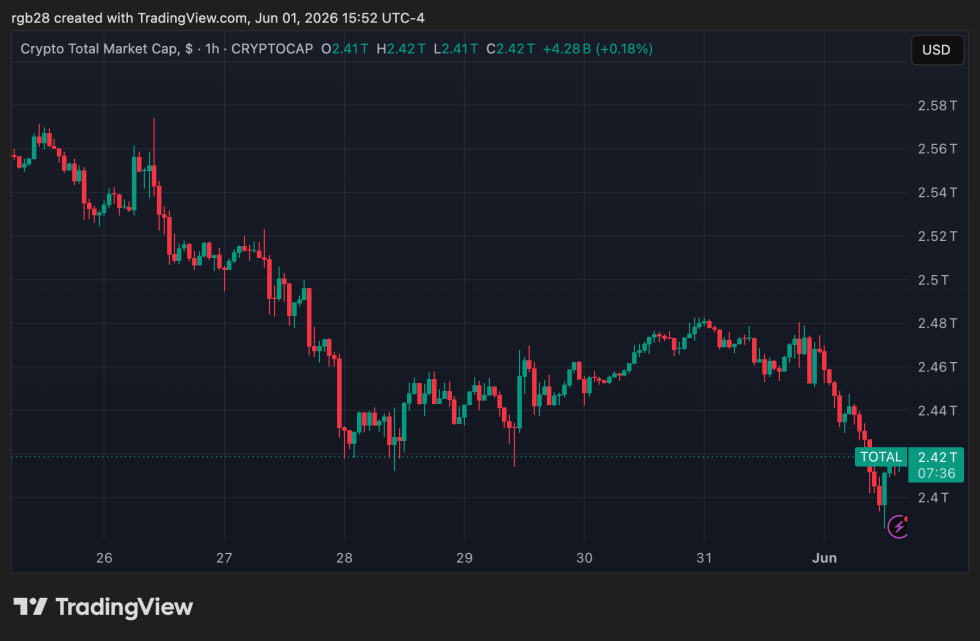
La capitalización total del mercado de criptomonedas está en 2,42 billones de dólares en el gráfico semanal. Fuente: TOTAL en TradingView

Связанные с этим вопросы

Q¿Qué propone el Partido Liberal Democrático de Japón en relación con los ETF de criptomonedas?

AEl Partido Liberal Democrático de Japón propone la creación de un marco legal para permitir los fondos cotizados (ETF) basados en criptomonedas, buscando fortalecer el sector local de activos digitales y posicionarlos como un medio oficial de inversión en el mercado financiero.

Q¿Qué organismo regula las propuestas del Partido Liberal Democrático sobre criptomonedas y quién es su responsable?

ALas propuestas son presentadas ante el Ministro de Finanzas, Satsuki Katayama, quien supervisa la Agencia de Servicios Financieros (FSA), el principal organismo regulador financiero de Japón.

QSegún la propuesta, ¿cómo beneficiarían los ETF de criptomonedas a los inversores japoneses?

ALos ETF de criptomonedas proporcionarían a los inversores formas de inversión fáciles de entender, según afirma la propuesta del partido gobernante.

Q¿Qué medidas propone el Partido Liberal Democrático para fomentar el uso de las stablecoins vinculadas al yen?

AEl Partido Liberal Democrático insta al gobierno a tomar medidas para promover el uso de stablecoins vinculadas al yen para liquidaciones en Asia en el futuro, aprovechando eventos como la reunión anual del Banco Asiático de Desarrollo que Japón acogerá el próximo año.

Q¿Qué cambios regulatorios recientes en Japón afectan a las stablecoins emitidas por entidades extranjeras?

AA partir del 1 de junio, la FSA amplió la Ordenanza de la Oficina del Gabinete para reconocer ciertas stablecoins de tipo fiduciario emitidas por bancos fiduciarios extranjeros como 'instrumentos de pago electrónico' bajo la Ley de Servicios de Pago, excluyéndolas de la clasificación de 'valores' bajo la Ley de Intercambio de Instrumentos Financieros (FIEA).

Похожее

Google TPU Shipments Revised Up by 50%

Recent industry research indicates a significant upward revision in the shipments of Google's TPU (Tensor Processing Unit) chips. Previous expectations for 2027 were set at around 10 million units, but new estimates now point to 15 million units, a 50% increase. This substantial boost directly translates to higher demand across the entire supporting supply chain. Google's TPU clusters utilize a standardized all-optical interconnect architecture. Consequently, key hardware components are deeply integrated and scaled in fixed ratios with the chips. The 15 million TPU target will drive corresponding demand increases for NPO optical engines (roughly a 1:1 match), 1.6T optical modules, OCS optical switches, high-end server power supplies, fiber optics & MPO connectors, and liquid cooling solutions. Among these, liquid cooling is highlighted as the sector experiencing the most significant transformation and offering the most stable potential for excess returns. As next-generation TPU chips reach power levels where traditional air cooling is insufficient, liquid cooling becomes essential. 2026 is forecasted as the first year of substantial adoption for Google's liquid cooling solutions. This shift, coupled with delivery and capacity bottlenecks faced by incumbent overseas manufacturers, is creating a prime window for domestic Chinese suppliers to enter and secure Google's core supply chain. The market size for Google-specific liquid cooling is projected to potentially triple from a baseline of hundreds of billions to around 300 billion units by 2028. The logic for the fiber optic sector is also being rewritten. Once considered a cyclical commodity tied to telecom operator procurement, fiber is now a strategic and scarce resource for AI Data Centers (AIDC). A severe supply-demand imbalance, driven by the long lead time for preform production (18-24 months) and surging demand from cloud giants, is supporting strong performance. Chinese fiber manufacturers are well-positioned to capture a significant share of global AIDC demand, with exports potentially reaching 200-300 million core kilometers in 2026. Overall, the investment focus within the AI computing industry is shifting from pure "chip performance speculation" towards the more certain incremental growth in computing infrastructure and its supporting ecosystem. The upward revision in Google TPU shipments, along with the potential for further doubling by 2028, is seen as solidifying performance visibility for the entire supporting supply chain over the next two years.

marsbit35 мин. назад

Google TPU Shipments Revised Up by 50%

marsbit35 мин. назад

What Wall Street Really Wants After the Crypto Story Recedes

The tide of speculative crypto narratives has receded, revealing Wall Street's true objective: building a controlled, yield-generating, and compliant financial pipeline on distributed ledgers. They are migrating core functions onto blockchains, not for decentralization, but for efficiency and new revenue streams. Key developments include BlackRock's BUIDL fund, a tokenized treasury fund acting as a foundational reserve asset, and the rise of Securitize, which is going public and partnering with the NYSE to build a 24/7 digital securities trading and settlement system. This signals a major shift of securities clearing to blockchain technology. To make volatile assets like Bitcoin palatable for institutional investors, firms like BlackRock and Goldman Sachs are creating "covered call" ETFs (e.g., BITA). These products systematically sell options on Bitcoin holdings, transforming price volatility into stable monthly income, effectively repackaging crypto as a yield-bearing asset. Stablecoins are being positioned not as speculative tools but as efficient payment rails. Companies like Stripe and Mastercard are integrating them for instant, low-cost merchant settlements and cross-border card payments, respectively. Critically, new legislation like the GENIUS Act shapes them as non-interest-bearing, heavily regulated extensions of the US dollar system. In summary, Wall Street is quietly constructing a parallel, blockchain-based financial infrastructure featuring tokenized traditional assets, structured crypto yields, and programmable dollar pipelines—all under its control and fully integrated with existing regulatory and credit frameworks.

marsbit52 мин. назад

What Wall Street Really Wants After the Crypto Story Recedes

marsbit52 мин. назад

Tying Itself to SpaceX: Cursor's $60 Billion Rise

This article recounts the rapid rise of AI-powered coding startup Cursor and its 25-year-old MIT graduate CEO, Michael Truell. Launched in 2023, Cursor achieved explosive growth, reaching over 10 billion USD in revenue by late 2025. However, its journey highlights a central dilemma for AI application companies: dependence on foundational model providers. Cursor initially relied heavily on Anthropic's models but faced an existential threat when Anthropic launched its own competing coding tool, Claude Code. In response, Cursor declared an internal emergency in early 2026 and accelerated development of its own model, Composer. To secure the immense computing power needed, Truell struck a pivotal deal with Elon Musk's SpaceX in April 2026. The collaboration grants Cursor access to SpaceX's supercomputing resources for Composer, while SpaceX's Grok model benefits from Cursor's programming data. The agreement includes a potential 600 billion USD acquisition of Cursor by SpaceX later in the year, though a substantial termination fee is in place if the deal falls through. The story explores Cursor's intense, sometimes controversial hiring practices involving lengthy unpaid "work trials," its complex partnership-turned-rivalry with Anthropic, and its high-stakes gamble to ensure independence through the SpaceX alliance. The core question remains: will Cursor evolve into a defining, independent "generational" software company, or become a key piece in a tech giant's AI arsenal?

marsbit56 мин. назад

Tying Itself to SpaceX: Cursor's $60 Billion Rise

marsbit56 мин. назад

Warsh's Debut: Will the FED Chair Who Knows Crypto Best Bring Surprises or Shocks to the Market?

Kevin Warsh, the new Federal Reserve Chairman, prepares for his inaugural press conference amidst a challenging macroeconomic landscape: resurgent inflation, a bond market sell-off, and political pressure from President Trump for rate cuts. Uniquely, Warsh holds indirect investments in over 20 crypto and Web3 entities (e.g., Solana, dYdX), making him the first Fed Chair with disclosed crypto exposure. His stance may combine a hawkish, inflation-focused monetary policy with a crypto-friendly regulatory philosophy that shifts from Powell’s “same risk, same rule” approach toward a framework acknowledging blockchain’s productivity value. Warsh’s leadership could impact crypto markets across three dimensions: a paradigm shift in regulation (potentially accelerating pro-innovation legislation and stable币 rules), a re-pricing of risk premiums based on clearer communication and his view of AI as a structural disinflationary force, and a long-term reallocation of global institutional capital driven by increased legitimacy. Two potential scenarios for the press conference are outlined. A “positive surprise” would involve a dovish-leaning tone on rates coupled with signals of regulatory openness, potentially boosting crypto asset valuations. Conversely, a “negative shock” would see a more hawkish-than-expected stance on inflation and rates, triggering a broad risk-asset selloff that crypto markets would not escape. While ethics rules required Warsh to divest his crypto holdings upon confirmation, his deep understanding of the technology may fundamentally lower policy uncertainty and build a more receptive long-term foundation for digital assets’ integration into the mainstream financial system.

marsbit11 ч. назад

Warsh's Debut: Will the FED Chair Who Knows Crypto Best Bring Surprises or Shocks to the Market?

marsbit11 ч. назад

Торговля

Спот
Фьючерсы

Популярные статьи

Как купить PUSH

Добро пожаловать на HTX.com! Мы сделали приобретение Push Protocol (PUSH) простым и удобным. Следуйте нашему пошаговому руководству и отправляйтесь в свое крипто-путешествие.Шаг 1: Создайте аккаунт на HTXИспользуйте свой адрес электронной почты или номер телефона, чтобы зарегистрироваться и бесплатно создать аккаунт на HTX. Пройдите удобную регистрацию и откройте для себя весь функционал.Создать аккаунтШаг 2: Перейдите в Купить криптовалюту и выберите свой способ оплатыКредитная/Дебетовая Карта: Используйте свою карту Visa или Mastercard для мгновенной покупки Push Protocol (PUSH).Баланс: Используйте средства с баланса вашего аккаунта HTX для простой торговли.Третьи Лица: Мы добавили популярные способы оплаты, такие как Google Pay и Apple Pay, для повышения удобства.P2P: Торгуйте напрямую с другими пользователями на HTX.Внебиржевая Торговля (OTC): Мы предлагаем индивидуальные услуги и конкурентоспособные обменные курсы для трейдеров.Шаг 3: Хранение Push Protocol (PUSH)После приобретения вами Push Protocol (PUSH) храните их в своем аккаунте на HTX. В качестве альтернативы вы можете отправить их куда-либо с помощью перевода в блокчейне или использовать для торговли с другими криптовалютами.Шаг 4: Торговля Push Protocol (PUSH)С легкостью торгуйте Push Protocol (PUSH) на спотовом рынке HTX. Просто зайдите в свой аккаунт, выберите торговую пару, совершайте сделки и следите за ними в режиме реального времени. Мы предлагаем удобный интерфейс как для начинающих, так и для опытных трейдеров.

865 просмотров всегоОпубликовано 2024.03.29Обновлено 2026.06.02

Как купить PUSH

Обсуждения

Добро пожаловать в Сообщество HTX. Здесь вы сможете быть в курсе последних новостей о развитии платформы и получить доступ к профессиональной аналитической информации о рынке. Мнения пользователей о цене на PUSH (PUSH) представлены ниже.

活动图片