From KYC to KYA, Is It Time to Give AI Agents Their Own 'ID Cards'?

marsbitОпубликовано 2026-05-10Обновлено 2026-05-10

Введение

Titled "From KYC to KYA: Is It Time to Issue 'Identity Cards' for AI Agents?", this article discusses the emerging concept of Know Your Agent (KYA) as AI agents become increasingly autonomous. In Agent-to-Agent (A2A) scenarios, where agents execute contracts, payments, and trades without human intervention, the lack of a shared identity standard creates risks like unauthorized transactions, fraud, and accountability gaps. KYA acts as a trust layer to verify an agent's origin, authority, and accountability. The need for KYA is most critical outside centralized platforms (like Google or Coinbase), such as in decentralized exchanges (DEX), A2A payments, and merchant payments. Several key players are building KYA infrastructure: - **ERC-8004**: A proposed Ethereum standard that issues a unique AgentID as an NFT, building on-chain identity, reputation, and validation systems. - **Visa TAP**: Visa's solution issues agent identity credentials, with transactions verified via triple signatures (legitimacy, delegator, payment method). - **Trulioo**: Extends its KYC/KYB compliance infrastructure using a Digital Passport for Agents (DAP), issued after verifying both the developer and user, and refreshed per transaction. - **Sumsub**: Focuses on post-issuance real-time verification, detecting agent anomalies during transactions using its existing compliance systems. Regulatory bodies are also acting. The EU AI Act mandates operator identification in logs for high-risk AI systems, the US...

Authored by: Tiger Research

Compiled by: AididiaoJP, Foresight News

The era of AI agents is accelerating, and alongside it, concerns about the uncontrolled creation and behavior of agents are growing. Know Your Agent (KYA) systems, which assign identities to agents and regulate their behavior, are receiving increasing attention. Why is a KYA identity infrastructure needed? Which companies are building it?

Summary

  • AI agents have entered an era of autonomously executing contracts, payments, and transactions, but there are currently no shared standards to verify "who this agent is." In Agent-to-Agent (A2A) scenarios, KYA is gaining more focus than KYC.
  • KYA is not needed in all scenarios. Within centralized platforms (Google, OpenAI, Coinbase), existing KYC is sufficient. Where KYA truly becomes important is in scenarios where independently deployed autonomous agents interact with DEXs, A2A payments, and merchant payments.
  • The KYA standards race has begun:
  • ERC-8004: Issues AgentIDs on top of NFTs, building an on-chain system for identity, reputation, and verification.
  • Visa TAP: Visa issues identity credentials for agents, verified through TAP's triple signature (legitimacy, delegator, payment method).
  • Trulioo: Adopts the SSL CA model, with DPAs issuing DAPs.
  • Sumsub: Layers a KYA system on top of its own compliance system.

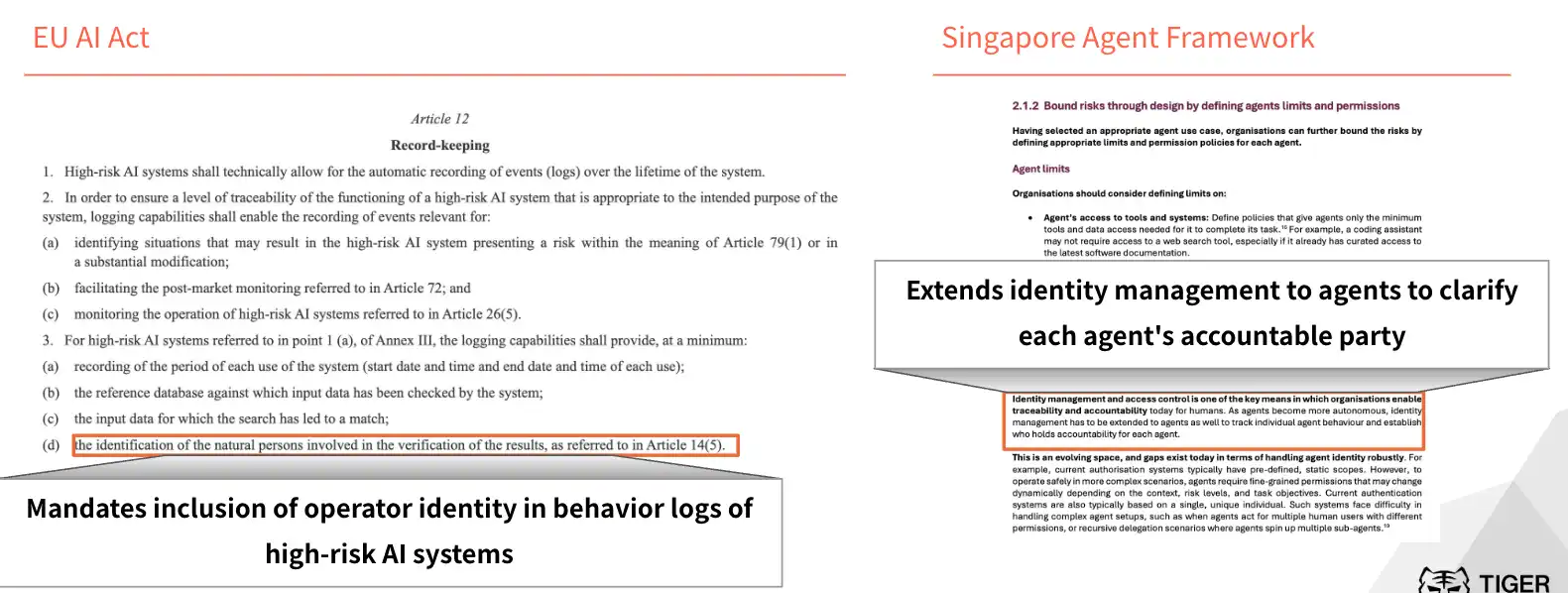
Regulatory action has begun at the national level. The EU's AI Act requires high-risk AI system behavior logs to include operator identity. The US NIST has listed agent identity management as a priority standard area. Singapore has released the world's first national-level AI agent governance framework. Just as the 2019 FATF Travel Rule determined which crypto exchanges survived, whether one possesses KYA infrastructure will determine who enters the next market cycle.

Why is KYA Emerging Now?

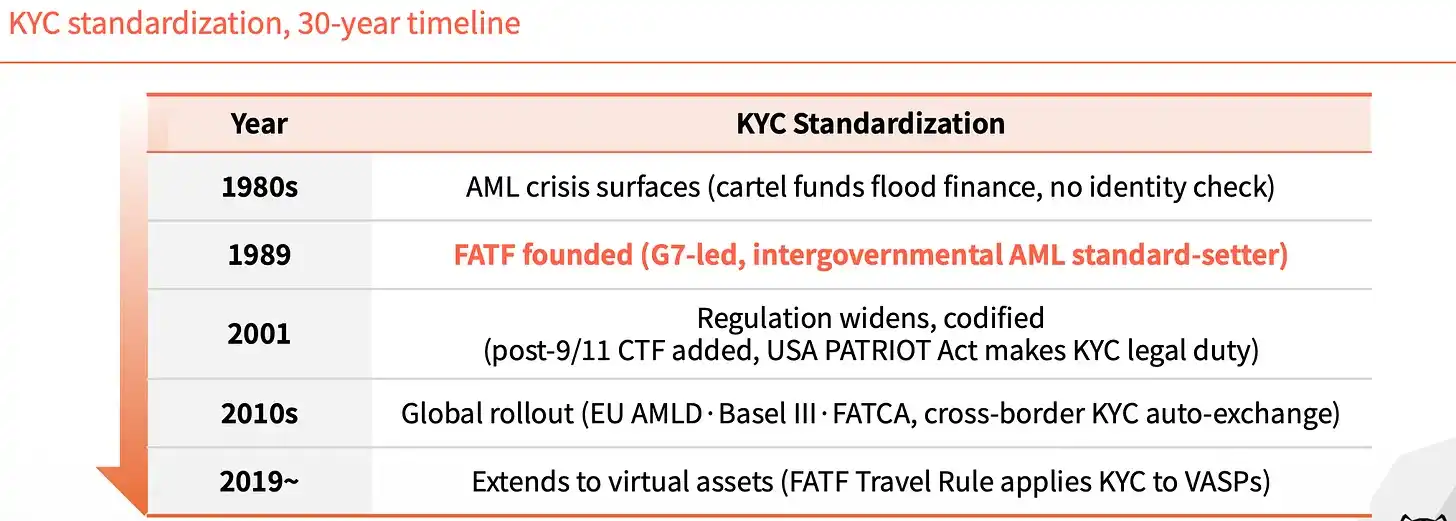
KYC: The Layer That Reshaped Finance

  • Before 1989, global finance lacked a unified identity standard. This gap made it difficult to track drug money and illicit funds.
  • After the FATF was founded in 1989, KYC became a mandatory requirement in finance, blocking illicit funds at the entry point.
Without Agent Identity, Systems Regress

  • AI agents execute contracts, payments, and transactions without human involvement, but currently, it's impossible to verify "who it is."
  • In A2A environments, accountability becomes blurred, dispute risks increase, and users are exposed to fraud patterns like money laundering.
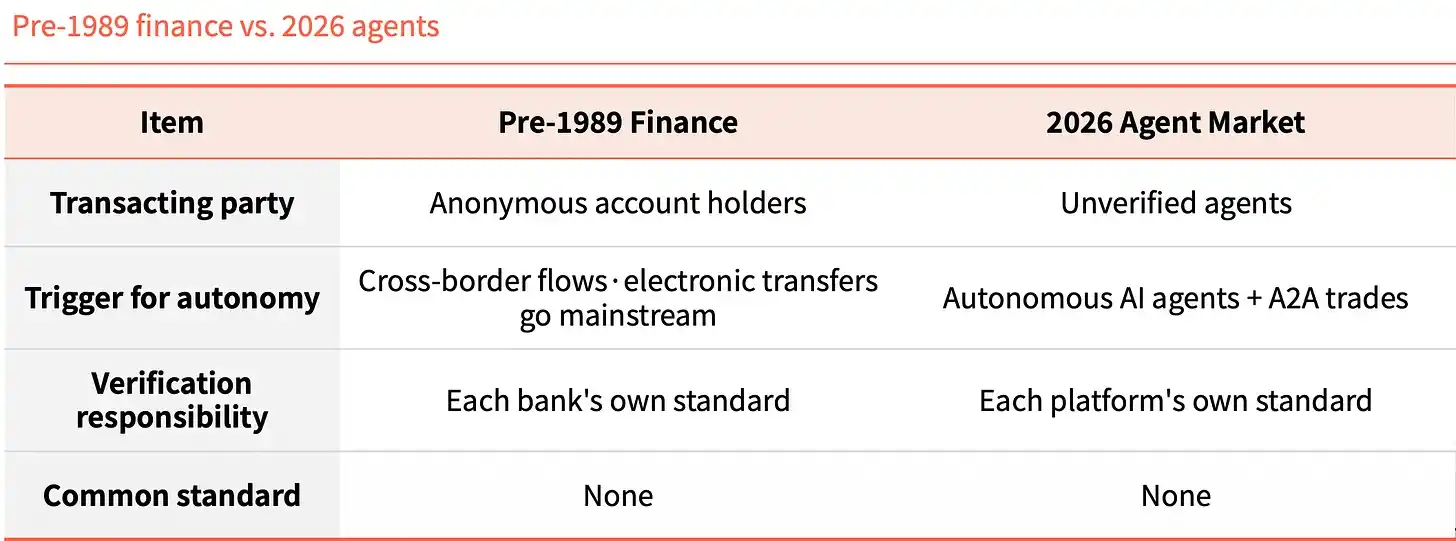
The Role and Response of KYA (Know Your Agent)

  • KYA (Know Your Agent) is a trust layer that pre-verifies an agent's origin, permissions, and accountability framework.
  • Unverified agents bring three major risks simultaneously: unauthorized transactions, fraud, and accountability gaps.
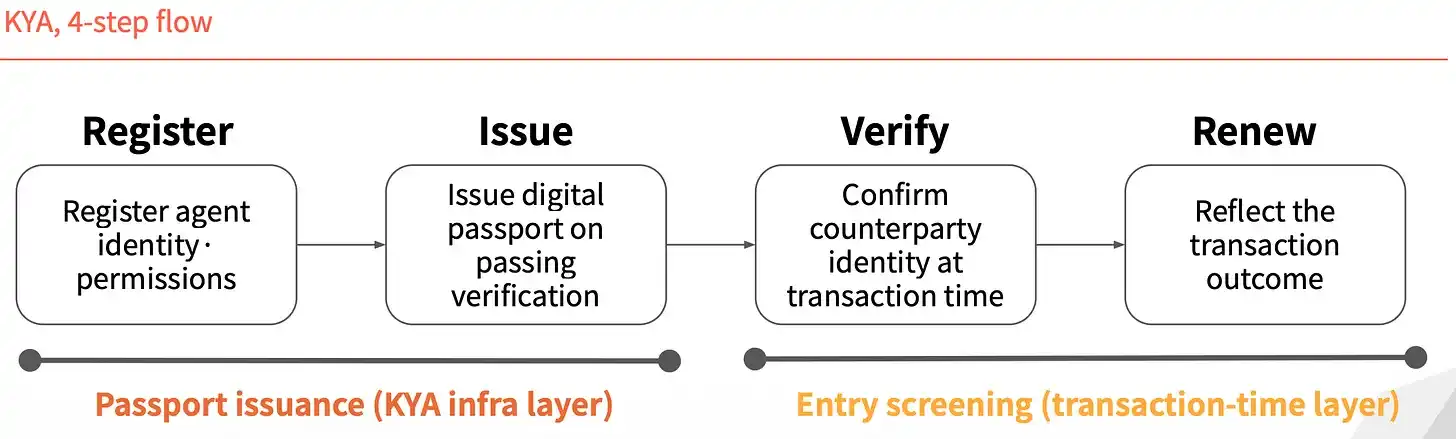
The Manifestation of KYA's Necessity

KYA is Needed at Every Level

  • Within centralized platforms, user KYC + platform accountability is sufficient. In interoperable scenarios outside platforms, KYA becomes crucial for verifying an agent's specific actions and safety.
  • Within a country (inside a platform), one ID (KYC) is enough to move freely. But once crossing borders (outside a platform), the environment changes, and entry review (KYA) of purpose and trust is needed.
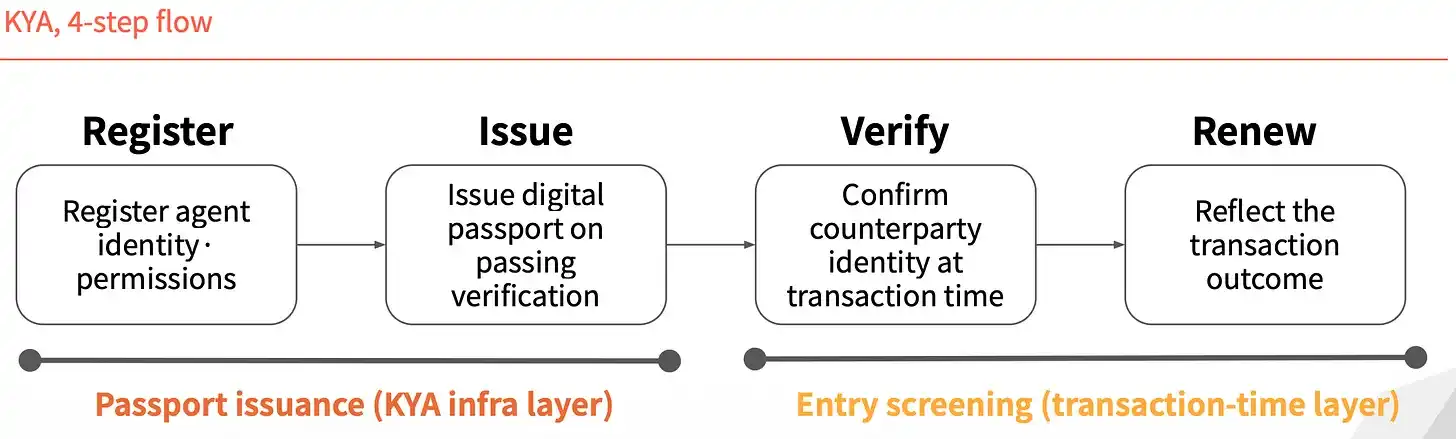
Market Players

ERC-8004: NFT-Based Agent Identity

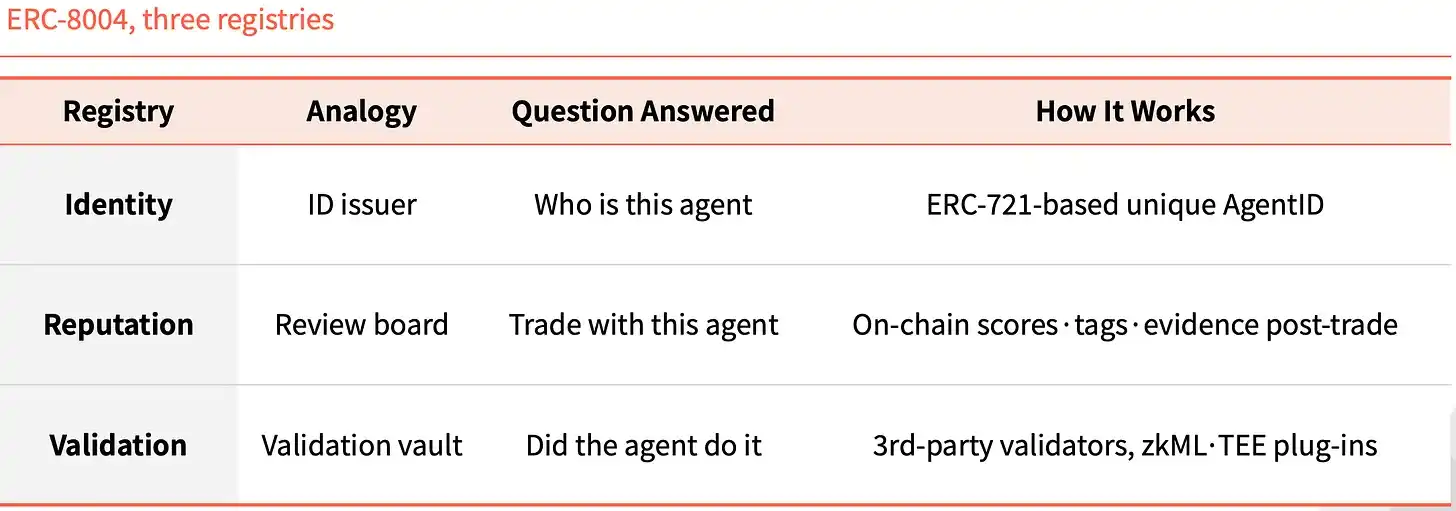
  • ERC-8004 adds an identity layer on top of ERC-721, minting an NFT as a unique ID for each agent.
  • It also adds three on-chain registries (Identity, Reputation, Validation), serving as identity, reputation board, and verification record respectively.
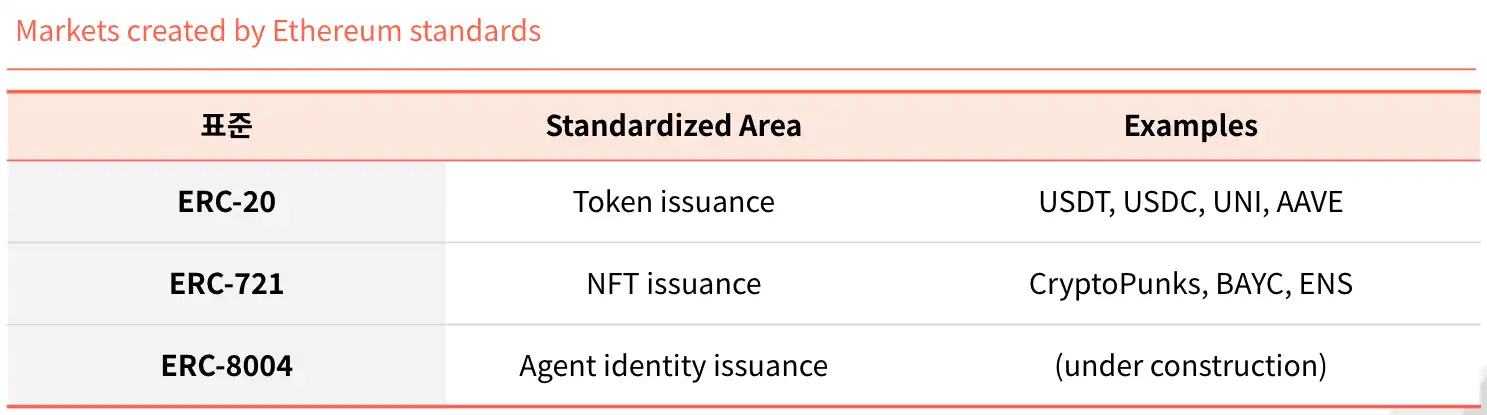
Two Markets Built by Ethereum Standards, a Third is Coming

  • ERC-20 (Token Issuance Standard): Before standardization, every token needed brand-new code. After ERC-20, most major assets were issued on it.
  • ERC-721 (NFT Standard): CryptoPunks, BAYC, ENS built the NFT market itself upon it. As blockchain integration accelerates in the agent era.
  • ERC-8004 will play the same standardizing role for Agents.
Visa TAP: Authentication on the Visa Rail

Visa issues identity credentials (Agent Intent) to agents, akin to an identity card. Without a key, transactions cannot occur. Keys are issued only after Visa pre-approval. Every transaction is signed and submitted to the merchant.

The merchant receives three signatures, not one: Visa approval, delegator, payment method, all confirmed simultaneously.
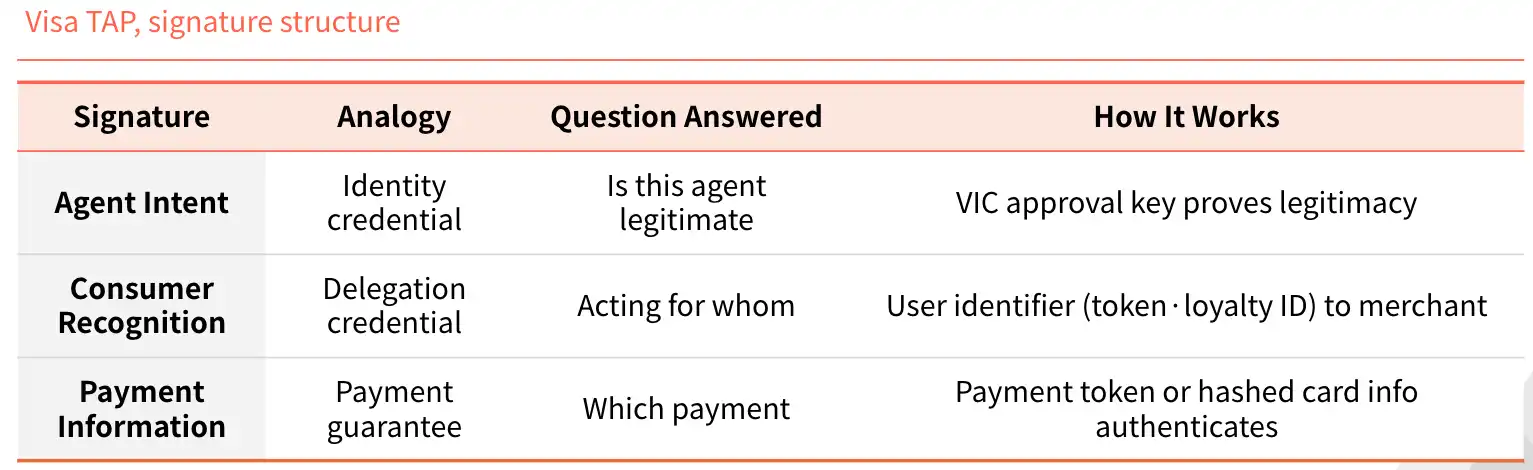
Visa: A Strategy to Pull Every Transaction into the Visa Network

  • Just as Visa previously captured payment rails, it is now encapsulating the agent era.
  • Through Visa Intelligent Commerce (VIC), Visa offers a solution bundle that packages KYA with payments.
  • If agent payments still use the card rail, and this bundle becomes the default option, then Visa's market share can remain stable even through the transition.

Trulioo: Extending KYC-Era Verification Infrastructure

  • Trulioo is a compliance operator on the global KYC/KYB rail and is expanding its verification stack to KYA.
  • DPAs play the role of SSL-CAs. Unlike SSL (domain only), DPAs verify developer KYB and user KYC before issuing a DAP.
  • Banks and fintechs legally require human and business identity. As agents enter finance, Trulioo's KYC/KYB position will be further solidified.
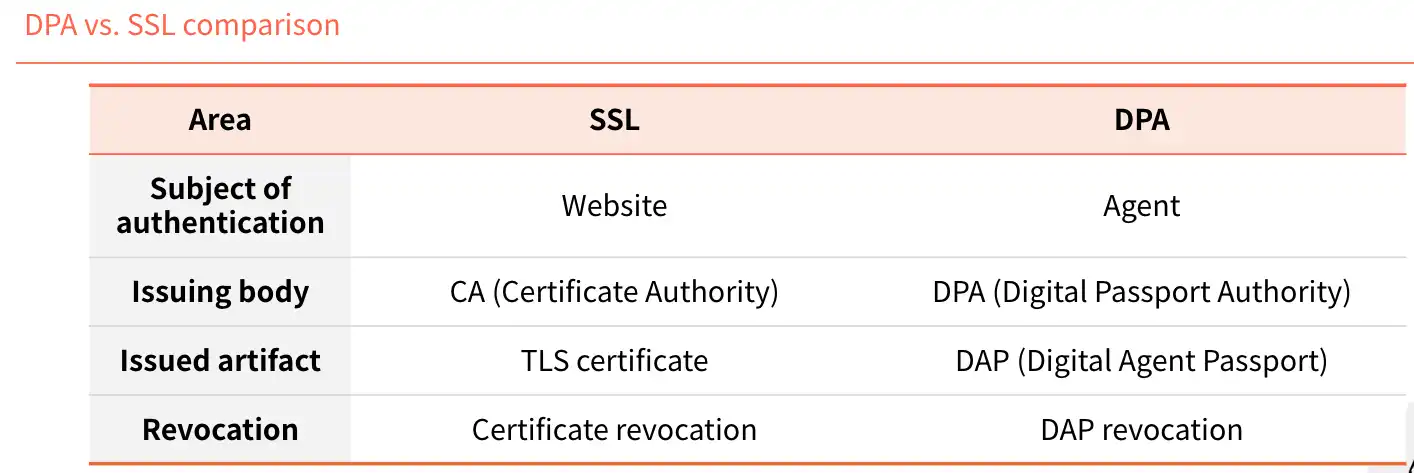
DAP, an Agent's Digital Passport, Refreshed with Each Transaction

  • DAP is an agent's digital passport. A DPA verifies the developer (KYB) and user (KYC), packages both into a token, and grants it to the agent.
  • Unlike a paper passport, it is a live token, refreshed and re-verified with every transaction. Once delegation is revoked or anomalies are detected, the DAP is invalidated immediately.
  • KYA is not a one-time verification. Trust must be reconfirmed with every transaction.
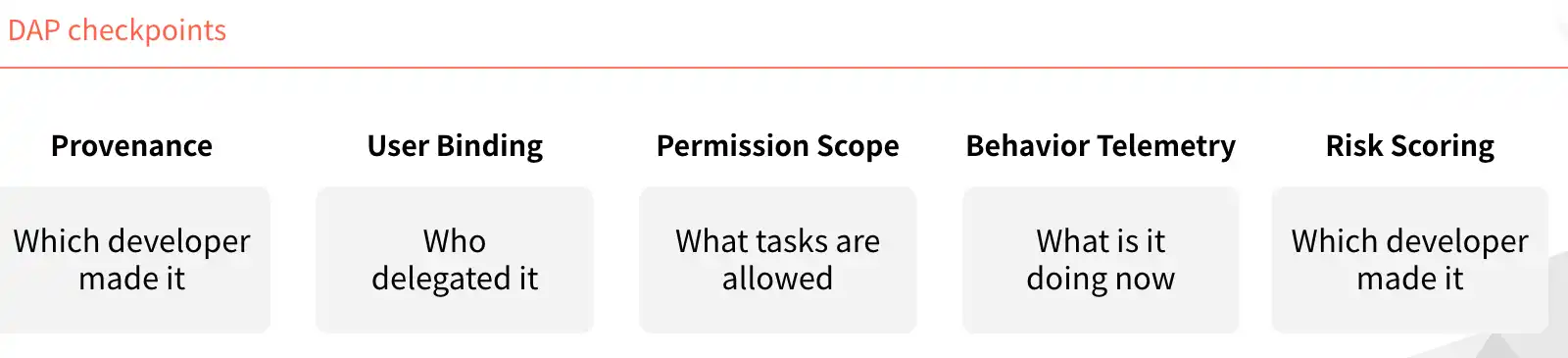
Sumsub (AI Agent Verification): Detecting Agent Anomalies

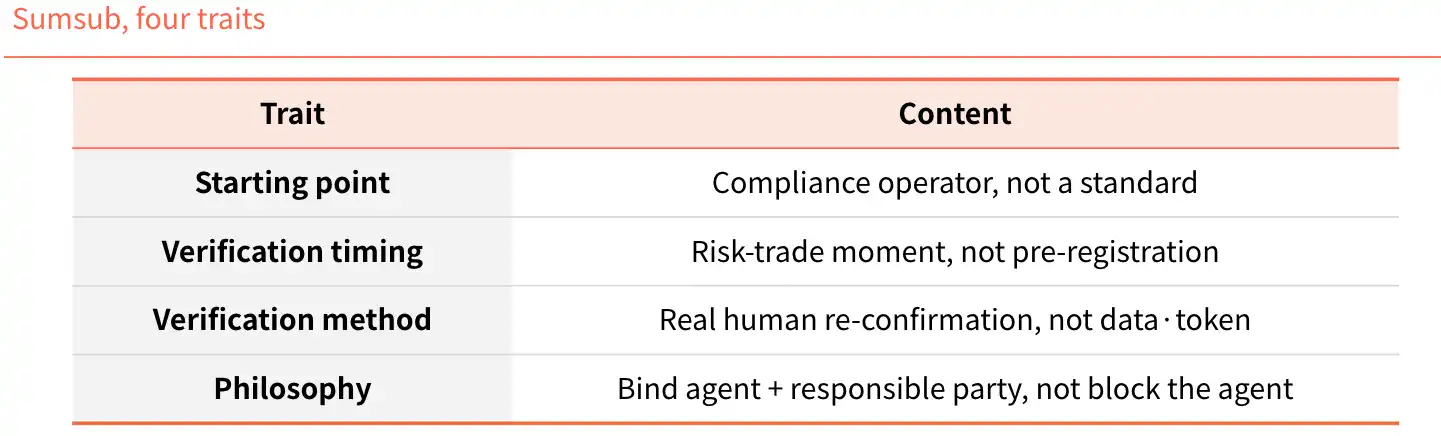
  • Sumsub's approach is: whenever an agent attempts an anomalous transaction, re-verify the currently active human identity.
  • It leverages its verification systems from its compliance business since 2015 to detect agent anomalies more accurately.
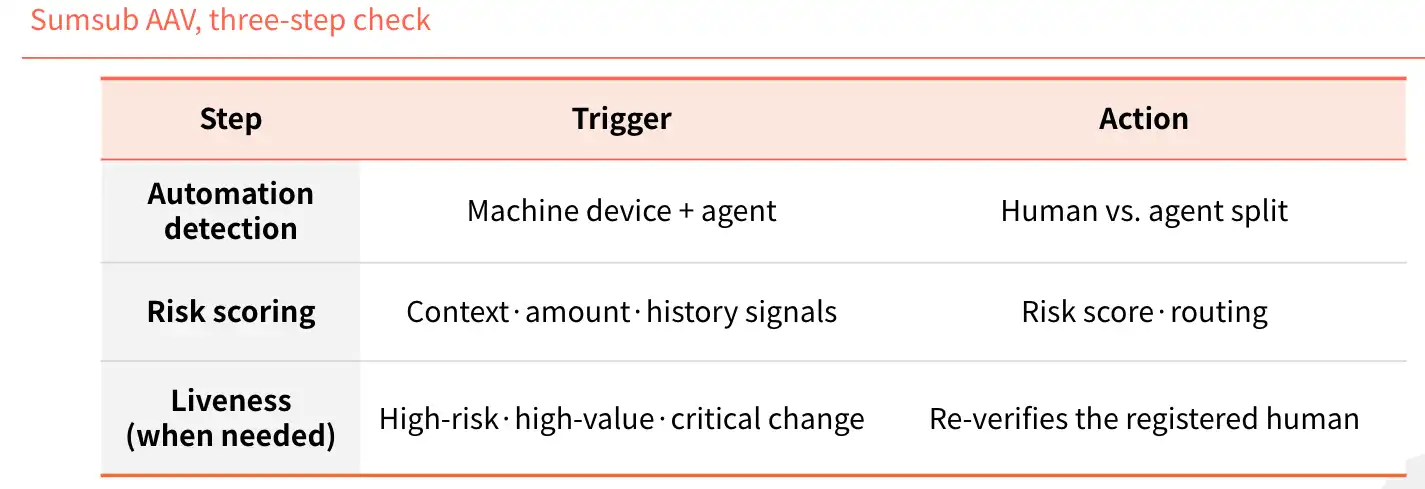
Operators with Technology to Address New Threats of the AI Era

  • Other KYA players focus on one-time pre-transaction identity verification. Sumsub focuses on real-time verification post-issuance.
  • As agent permissions expand, anomaly detection becomes crucial; as fraud scales with technology, Sumsub's real-time verification stack gains attention.
Proactive Regulatory Positioning, Shaping Entry Rules

The Gap Caused by the FATF Travel Rule May Recur with KYA

After the 2019 FATF Travel Rule, VASPs diverged based on their ability to bear KYC/AML infrastructure costs. Peers like CryptoBridge and Deribit, unable to afford it, either shut down or moved to less regulated regions.

The EU, Singapore, and the US are already vying for leadership. KYA will become a core layer of the agent era.
KYA Will Differentiate by Market Segment, Not a Single Winner

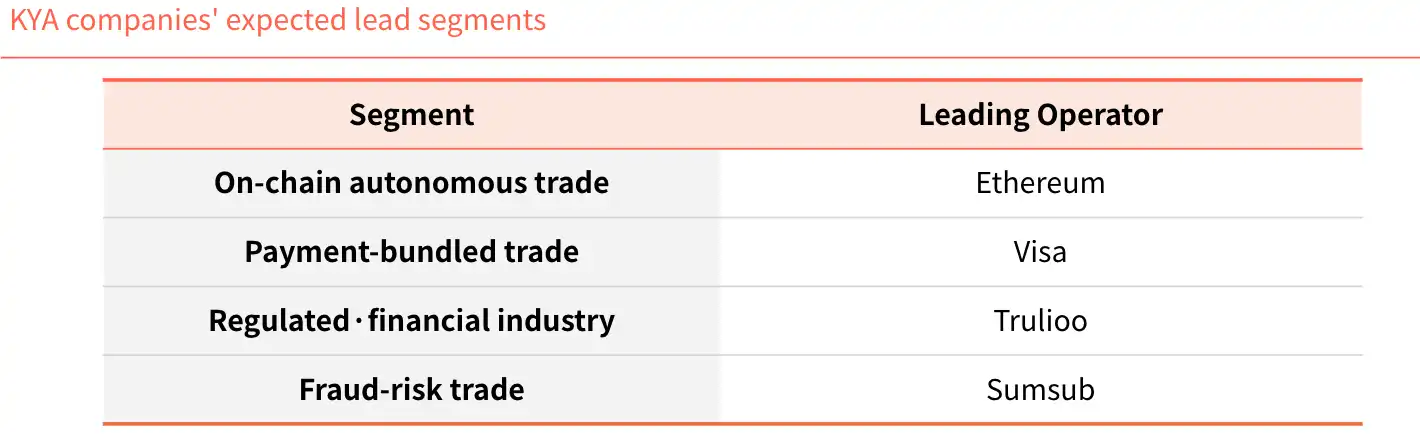
The real variable in the standards race is not technology, but combinations. Mainstream players have entered the collaboration and combination phase. In the future, who pairs with which merchants, payment networks, and KYC customer bases will determine the leader in each segment.

The market will not have a single winner; it will differentiate by market segment.
Трендовые криптовалюты

Связанные с этим вопросы

QWhat is KYA (Know Your Agent), and why is it emerging as an important concept in the AI agent era?

AKYA (Know Your Agent) is a system designed to verify the identity, authority, and accountability of AI agents, especially in scenarios where they operate autonomously without direct human oversight. It is emerging as a crucial trust layer due to the rise of AI agents that autonomously execute contracts, payments, and transactions. In these Agent-to-Agent (A2A) environments, there is currently no shared standard to verify 'who the agent is,' leading to increased risks like unauthorized transactions, fraud, and accountability gaps. KYA addresses these risks by establishing a trust infrastructure for pre-verifying an agent's source, permissions, and purpose.

QWhat are some key standards and solutions being developed for KYA?

ASeveral standards and solutions are being developed for KYA. Notable examples include: 1) **ERC-8004**: An Ethereum-based standard that uses NFTs (ERC-721) as unique AgentIDs and adds on-chain registries for identity, reputation, and validation. 2) **Visa TAP (Triple Authorization Protocol)**: Visa's solution that issues identity credentials (Agent Intent) to agents and requires triple signatures (from Visa, the delegator, and the payment method) for transaction approval. 3) **Trulioo's DAP**: Extends their KYC/KYB infrastructure to issue a dynamic Digital Agent Passport (DAP) that is re-validated per transaction. 4) **Sumsub (AI Agent Verification)**: Focuses on post-issuance, real-time verification of agents to detect and prevent abnormal behavior using their existing compliance stack.

QIn what scenarios is KYA most necessary, according to the article?

AAccording to the article, KYA is most necessary outside of centralized, walled-garden platforms (like Google, OpenAI, or Coinbase), where traditional user KYC and platform accountability are sufficient. KYA becomes critical in scenarios involving independent, autonomously deployed agents interacting across platforms, particularly in: 1) **Agent-to-Agent (A2A) transactions** (e.g., payments between agents). 2) **Accessing decentralized exchanges (DEXs)**. 3) **Making payments to merchants**. These represent interoperable environments where a lack of agent identity verification creates significant operational and financial risks.

QHow are governments and regulatory bodies responding to the need for AI agent identity management?

AGovernments and regulatory bodies are beginning to act on AI agent governance, effectively pushing the need for KYA infrastructure. Key actions include: 1) **The EU AI Act**: Requires operators of high-risk AI systems to be identifiable in activity logs. 2) **US NIST**: Has prioritized AI agent identity management as a key standard-setting area. 3) **Singapore**: Released the world's first national-level AI governance framework specifically for agents. The article draws a parallel to the 2019 FATF Travel Rule, suggesting that the ability to implement compliant KYA systems will be a determining factor for which entities can participate in the next phase of the AI agent market.

QWhy does the article suggest the KYA market will be segmented, with no single winner?

AThe article suggests the KYA market will be segmented because the key variable for success is not just technology, but the combination and integration of solutions with existing business ecosystems. Major players are entering a 'cooperation-combination' phase. The future market leader in each segment will be determined by which KYA provider successfully partners with which merchants, payment networks (like Visa's approach), and existing KYC customer bases. Therefore, different KYA standards and solutions (e.g., ERC-8004 for the crypto-native ecosystem, Visa TAP for card-based commerce) are likely to dominate different application areas, leading to a fragmented market rather than a single universal winner.

Похожее

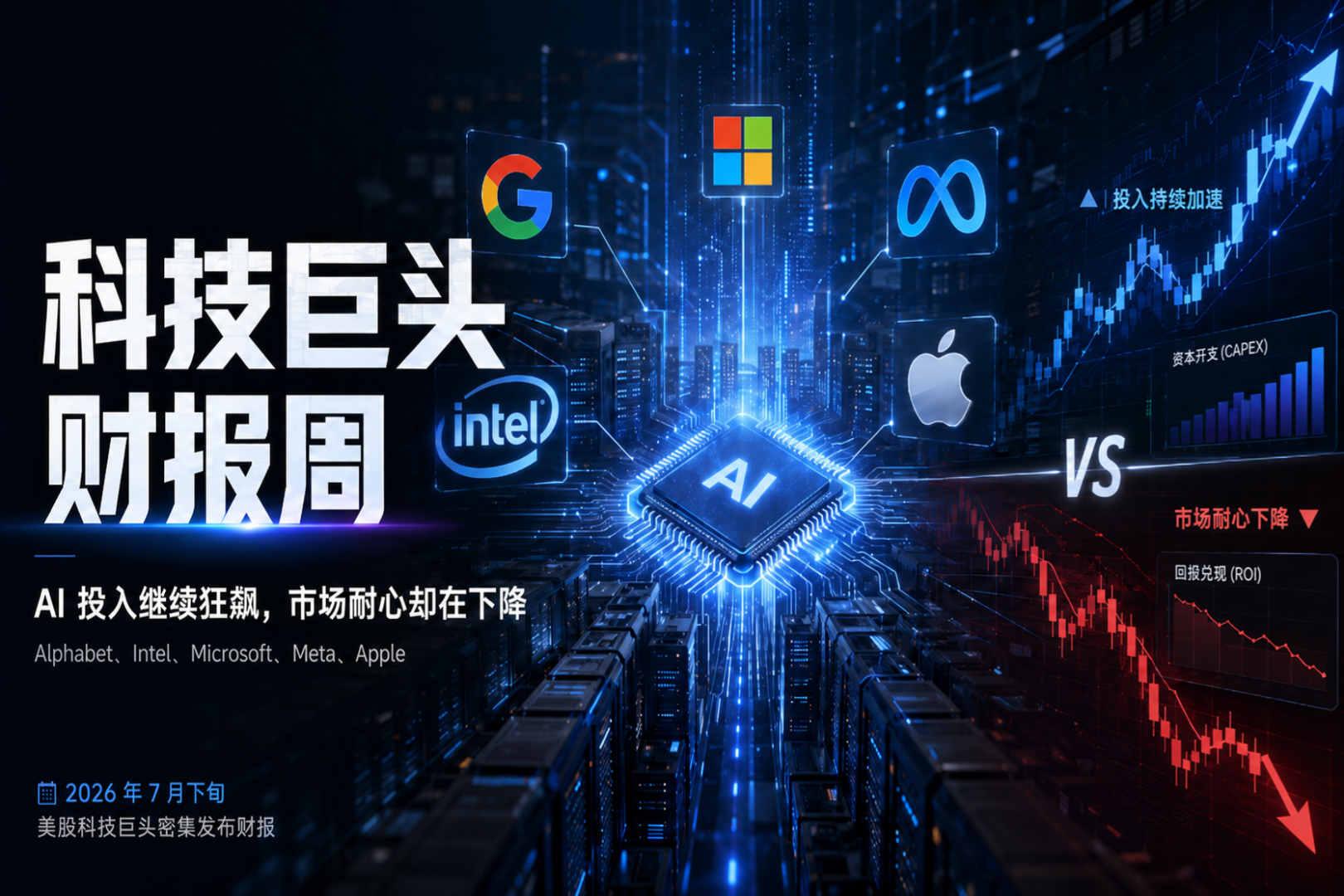
Когда рынок начинает сомневаться в капитальных затратах на ИИ: полный анализ квартальных отчетов пяти технологических гигантов

В конце июля 2026 года ведущие технологические гиганты — Alphabet (Google), Intel, Microsoft, Meta и Apple — представили квартальные отчёты. Все компании показали рост выручки и прибыли, превысив ожидания рынка, однако реакция инвесторов сильно различалась из-за расхождений в подходах к капитальным затратам (CAPEX) на ИИ и ожиданиях относительно свободного денежного потока. **Alphabet** продемонстрировал рекордный 12-й квартал двузначного роста выручки, а облачный бизнес вырос на 82%. Однако акции упали более чем на 7% после новостей о рекордных квартальных CAPEX в $44,9 млрд и первом в истории отрицательном свободном денежном потоке. Компания также повысила годовой прогноз по CAPEX. **Intel** сообщил о самом сильном росте выручки за 15 лет (25%), во многом благодаря бизнесу центров обработки данных и ИИ. Несмотря на это, акции испытали волатильность после увеличения годового прогноза CAPEX с $18 млрд до более чем $20 млрд, что усилило опасения по поводу денежного потока. **Microsoft** стала фаворитом рынка: выручка Azure впервые превысила $100 млрд в годовом исчислении. Ключевым положительным сигналом стало *снижение* прогноза по CAPEX на 2026 год с $190 млрд до $175 млрд и обещание положительного свободного денежного потока в 2027 финансовом году. Акции выросли, показав лучший однодневный результат за 18 лет. **Meta**, несмотря на рост выручки на 28%, столкнулась с самым резким падением акций (почти 10%). Причина — рост расходов на 55%, резкое сокращение свободного денежного потока на 90% и повышение годового прогноза по CAPEX. Это уже второй квартал подряд, когда Meta наказывают за рост затрат. **Apple** отчиталась о рекордной выручке и прибыли за июньский квартал, но её акции упали более чем на 8%, а рыночная капитализация сократилась на $300 млрд. Это произошло из-за консервативного прогноза на следующий квартал, который оказался ниже ожиданий Уолл-стрит, и опасений по поводу ограничений в цепочке поставок. **Общий вывод:** Рынок смещает фокус с абсолютных показателей выручки и прибыли на **доходность капитальных вложений**. Компании, демонстрирующие контроль над расходами и путь к положительному свободному денежному потоку (как Microsoft), вознаграждаются. Те, кто агрессивно наращивает CAPEX без четких краткосрочных перспектив возврата денежных средств (как Google и Meta), сталкиваются с продажами. В следующем отчётном сезоне объяснение стратегии CAPEX и его окупаемости будет критически важным для котировок акций.

Odaily星球日报9 мин. назад

Когда рынок начинает сомневаться в капитальных затратах на ИИ: полный анализ квартальных отчетов пяти технологических гигантов

Odaily星球日报9 мин. назад

a16z: От компании к DAO, DUNA может стать следующей организационной формой

Автор: a16z crypto Компиляция: Deep Tide TechFlow Основная задача бизнеса на протяжении веков остаётся неизменной: как организовать сотрудничество незнакомых людей с разными ролями, асимметричной информацией и интересами для достижения общей цели? История бизнеса — это история поиска новых организационных форм. Компания стала великим прорывом для индустриальной эпохи, но цифровые технологии и интернет-протоколы снижают потребность в традиционных иерархических структурах. Существующее законодательство не предназначено для нового мира децентрализованных сетей. DAO (децентрализованные автономные организации), хотя и являются перспективной формой, сталкиваются с правовыми проблемами: отсутствием юридического признания, что подвергает участников неограниченной ответственности, и неопределённостью в регулировании, особенно в свете теста Хоуи в США. В качестве решения предлагается DUNA (Децентрализованная Некорпоративная Некоммерческая Ассоциация) — новая правовая форма, уже принятая в нескольких штатах США. DUNA предоставляет группе людей юридическое лицо и ограниченную ответственность, позволяя децентрализованным сообществам легально владеть активами, заключать контракты и вести деятельность, не полагаясь на централизованное управление. Она заполняет правовой вакуум для интернет-нативных организаций, не решая всех проблем управления, но давая им законный статус. Эволюция организационных форм — от семейных предприятий и компаний до LLC и DUNA — расширяет инструменты для координации людей. DUNA представляет собой следующий шаг, позволяющий анонимным, географически разбросанным участникам блокчейн-сетей сотрудничать как единое юридическое лицо, минимизируя личные риски и открывая новую главу в организации коллективных действий.

marsbit55 мин. назад

a16z: От компании к DAO, DUNA может стать следующей организационной формой

marsbit55 мин. назад

Отчет о токенизированных активах реального мира (RWA) за середину 2026 года: рыночная капитализация токенизированных акций удвоилась за год, но 90% прав – пустышка

**Отчет о RWA на блокчейне за середину 2026 года: капитализация токенизированных акций удвоилась за год, но 90% прав — пустышка** В июле 2026 года стоимость распределенных токенизированных акций достигла $1,89 млрд, почти удвоившись с марта. Однако рост сконцентрирован вокруг немногих инструментов (SECZ, FGRS, STRCx дали ~49% прироста) и платформ (Ondo, xStocks, Securitize контролируют 85% рынка). Рынок расколот: офшорные продукты (Ondo, xStocks) обеспечивают ликвидность и доступность в DeFi, но предлагают слабые юридические права на базовый актив. Регулируемая инфраструктура США (например, через Nasdaq) обеспечивает юридическую определенность, но страдает от низкой ликвидности и ограниченного распределения. Ни один продукт не сочетает полноценные права собственности, широкое распределение, ликвидность и независимое ценовое образование. Общие данные по RWA ($36,8 млрд распределенных активов) требуют осторожной интерпретации из-за изменений в методологии учета. Рынок токенизированных акций расширяется технически, но остается фрагментированным в правовом поле, где разные токены, отслеживающие одну акцию, представляют собой отдельные юридические обязательства.

marsbit1 ч. назад

Отчет о токенизированных активах реального мира (RWA) за середину 2026 года: рыночная капитализация токенизированных акций удвоилась за год, но 90% прав – пустышка

marsbit1 ч. назад

Внимание, пользователи биткоина! Сегодняшний взлом может быть масштабнее, чем вы думали. Вот что нужно делать

Компания Coinkite, производитель аппаратных биткоин-кошельков Coldcard, обнаружила критическую уязвимость в процессе генерации сид-фраз на устройствах Coldcard Mk3 с прошивкой версий 4.0.1–5.0.3. Все биткоин-адреса, созданные из этих сид-фраз, потенциально скомпрометированы. Компания настоятельно рекомендует пользователям немедленно перевести средства на новый, безопасный кошелёк, создав новую сид-фразу. Просто сменить устройство недостаточно — старую сид-фразу использовать нельзя. Это предупреждение следует на фоне масштабной атаки 30 июля, в ходе которой автоматизированный инструмент за 41 минуту опустошил 1196 кошельков, похитив около 1082 BTC (на тот момент ~$70,2 млн). Исследователи связывают эту атаку с обнаруженной уязвимостью, так как она произошла за 30 часов до публичного раскрытия проблемы Coinkite. Украденные средства пока остаются на четырёх адресах без движения.

cryptonews.ru3 ч. назад

Внимание, пользователи биткоина! Сегодняшний взлом может быть масштабнее, чем вы думали. Вот что нужно делать

cryptonews.ru3 ч. назад

Биткоин в августе: эксперты ждут проверки диапазона, а не быстрого разворота

Биткоин в августе, по мнению аналитиков, скорее всего, останется в состоянии проверки ключевых ценовых уровней, а не совершит резкий разворот к росту. Несмотря на восстановление в июле, сохраняется риск снижения ниже $60 тыс. Основными факторами давления остаются сложная макроэкономическая обстановка: высокие ставки в США, устойчивая инфляция и сильный доллар, что ограничивает аппетит к рисковым активам, включая криптовалюты. Эксперты отмечают, что август исторически слаб для крипторынка. Институциональный спрос остается вялым, о чем свидетельствуют чистые оттоки из биткоин-ETF. Рынок продолжает торговаться в узком диапазоне, преимущественно между $60 и $65 тыс. Прогнозы на месяц в основном сдержанные. Базовый сценарий (вероятность 50%) предполагает движение в коридоре $58–68 тыс. Негативный (30%) — снижение к $50–55 тыс. Позитивный (20%) — рост к $71–75 тыс. Ключевыми уровнями являются поддержка в районе $60–61 тыс. и сопротивление около $67 тыс., преодоление которого могло бы изменить текущий нисходящий тренд. Эксперты советуют инвесторам рассматривать текущие уровни как возможность для постепенного долгосрочного накопления, но быть готовыми к повышенной волатильности. Более существенные движения рынка ожидаются не раньше четвёртого квартала. Внимание рекомендуется уделять не только цене биткоина, но и динамике ставок, инфляции, потокам в ETF и общему настроению на рынке рисковых активов.

cryptonews.ru4 ч. назад

Биткоин в августе: эксперты ждут проверки диапазона, а не быстрого разворота

cryptonews.ru4 ч. назад

Торговля

Спот

Популярные статьи

Как купить ID

Добро пожаловать на HTX.com! Мы сделали приобретение SPACE ID (ID) простым и удобным. Следуйте нашему пошаговому руководству и отправляйтесь в свое крипто-путешествие.Шаг 1: Создайте аккаунт на HTXИспользуйте свой адрес электронной почты или номер телефона, чтобы зарегистрироваться и бесплатно создать аккаунт на HTX. Пройдите удобную регистрацию и откройте для себя весь функционал.Создать аккаунтШаг 2: Перейдите в Купить криптовалюту и выберите свой способ оплатыКредитная/Дебетовая Карта: Используйте свою карту Visa или Mastercard для мгновенной покупки SPACE ID (ID).Баланс: Используйте средства с баланса вашего аккаунта HTX для простой торговли.Третьи Лица: Мы добавили популярные способы оплаты, такие как Google Pay и Apple Pay, для повышения удобства.P2P: Торгуйте напрямую с другими пользователями на HTX.Внебиржевая Торговля (OTC): Мы предлагаем индивидуальные услуги и конкурентоспособные обменные курсы для трейдеров.Шаг 3: Хранение SPACE ID (ID)После приобретения вами SPACE ID (ID) храните их в своем аккаунте на HTX. В качестве альтернативы вы можете отправить их куда-либо с помощью перевода в блокчейне или использовать для торговли с другими криптовалютами.Шаг 4: Торговля SPACE ID (ID)С легкостью торгуйте SPACE ID (ID) на спотовом рынке HTX. Просто зайдите в свой аккаунт, выберите торговую пару, совершайте сделки и следите за ними в режиме реального времени. Мы предлагаем удобный интерфейс как для начинающих, так и для опытных трейдеров.

838 просмотров всегоОпубликовано 2024.03.29Обновлено 2026.06.02

Как купить ID

Обсуждения

Добро пожаловать в Сообщество HTX. Здесь вы сможете быть в курсе последних новостей о развитии платформы и получить доступ к профессиональной аналитической информации о рынке. Мнения пользователей о цене на ID (ID) представлены ниже.

活动图片