Bank Of England Eyes Exemptions To Controversial Stablecoin Cap Proposal – Details

bitcoinistОпубликовано 2025-10-08Обновлено 2025-10-08

Введение

The Bank of England (BOE) is reportedly softening its stance toward digital assets with a potential exemption to a controversial...

Trusted Editorial content, reviewed by leading industry experts and seasoned editors. Ad Disclosure

The Bank of England (BOE) is reportedly softening its stance toward digital assets with a potential exemption to a controversial policy that would establish stricter stablecoin rules for the UK market.

BOE Plans Stablecoin Cap Exemption

On Tuesday, Bloomberg reported that the Bank of England is planning to grant exemptions to businesses in the UK from its proposed limit on stablecoin ownership, according to people familiar with the matter.

The central bank aims to grant waivers to certain digital asset firms that need to hold large amounts of stablecoins, like crypto exchanges. Additionally, the BOE intends to allow firms to use stablecoins as a settlement asset in its experimental Digital Securities Sandbox.

The changes to the sandbox will initially permit firms to adopt regulated stablecoins tied to non-sterling currencies for settlement purposes. This would allow the BOE to observe use cases for these digital assets while it evaluates its approach in more detail, said Bloomberg sources.

As reported by Bitcoinist, the central bank is exploring the restriction of stablecoin ownership in the country, imposing a limit of £10,000 to £20,000 for individuals and £10 million for businesses on all systemic stablecoins.

Notably, the BOE’s plan would reassemble its proposed approach to the digital pound, which aimed to address financial stability risks that deposits could flow out of the banking system.

BOE executive director for financial market infrastructure, Sasha Mills, previously stated that the limits would “mitigate financial stability risks stemming from large and rapid outflows of deposits from the banking sector (…) and risks posed by newly recognised systemic payment systems as they are scaling up.”

Some crypto industry and payment groups heavily criticized the central bank’s plan, arguing that it would be detrimental to the pound and put the UK at a disadvantage against the US and the European Union (EU).

Simon Jennings, executive director of the UK Cryptoasset Business Council trade body, considers that “limits simply don’t work in practice.” He explained that “stablecoin issuers don’t have sight of who holds their tokens at any given time, so enforcing caps would require a costly, complex new system, such as digital IDs or constant co-ordination between wallets.”

A Softer Crypto Stance?

According to Bloomberg’s sources, the restrictions are expected to be included in a consultation paper that will be published by the end of the year. The BoE previously said its proposed cap could be “transitional” while the financial system adjusts to the growth of digital money.

The report also noted that the potential exemptions could be seen as a shift from Governor Andrew Bailey’s skeptical perspective. Bailey has previously warned that stablecoins threaten to destabilize the public’s trust in money.

In August, former Chancellor and member of Coinbase’s advisory council, George Osborne, criticized the Bailey and the government’s approach to the crypto industry, arguing that it risks being “left behind” during the second wave of digital assets if it doesn’t “catch up.”

Osborne stated that authorities cannot continue to wait and evaluate the development of a digital revolution “reminiscent of Nigel Lawson’s Big Bang in the 1980s” while other financial capitals adopt comprehensive legislative frameworks for crypto asset platforms.

Nonetheless, the BOE Governor has recently shared a softer approach, affirming that it would be “wrong to be against stablecoins as a matter of principle” and noting that they have the potential to drive “innovation in payments systems both at home and across borders.”
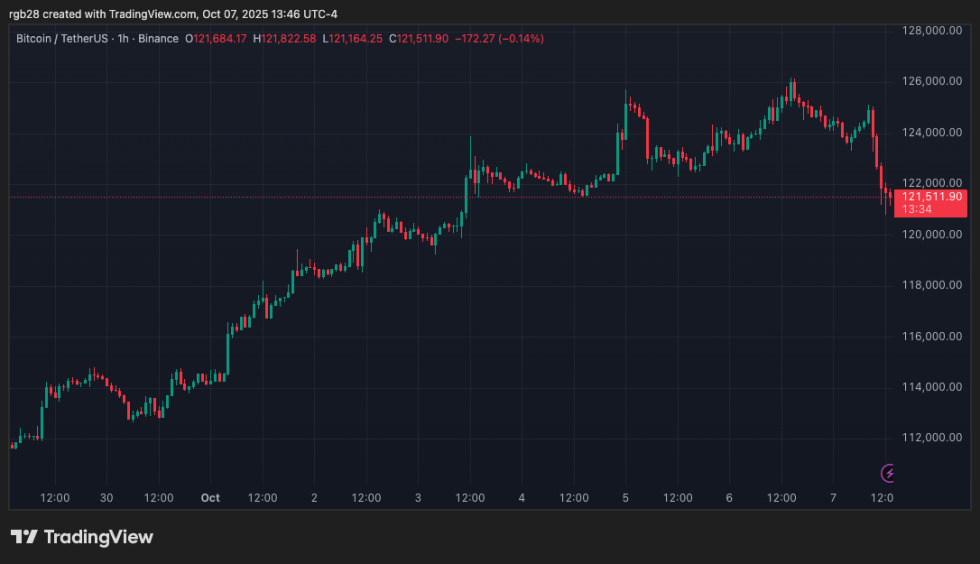
stablecoin, bitcoin, btc, btcusdt

Bitcoin (BTC) trades at $121,511 in the one-week chart. Source: BTCUSDT on TradingView
Featured Image from Unsplash.com, Chart from TradingView.com
Editorial Process for bitcoinist is centered on delivering thoroughly researched, accurate, and unbiased content. We uphold strict sourcing standards, and each page undergoes diligent review by our team of top technology experts and seasoned editors. This process ensures the integrity, relevance, and value of our content for our readers.

Rubmar is a crypto enthusiast who likes learning and improving constantly. She enjoys reporting on the latest news and developments in the crypto industry. Rubmar also enjoys scrapbooking, crafting, simulation games, and watching football.

Похожее

Three Years Later: Looking Back on My 2023 Predictions for ChatGPT

Looking Back After Three Years: Revisiting My 2023 Predictions on ChatGPT In March 2023, shortly after ChatGPT's debut and before GPT-4's release, I made over twenty predictions about AI's future based on limited information and intuition. Now, in May 2026, I revisited those forecasts using an AI-driven analysis with 41 Opus 4.8 agents to cross-reference them with the latest data. The assessment used symbols: ✅ Correct, 🟢 Mostly Correct, 🟡 Partially Correct, ❌ Incorrect. Overall, the directional judgments held up well, with only one major factual error regarding GPT-4's rumored parameter size (incorrectly cited as 100T). However, nuances and degrees of accuracy revealed more. **What Was Largely Correct:** Predictions about mechanisms and directions proved accurate. The rise of RAG (Retrieval-Augmented Generation) as the standard architecture for combating AI hallucination was confirmed, as was the transformative potential of LUI (Language User Interface) in creating a new industry layer atop GUIs. The emergence of "robot networks" (agent-to-agent communication protocols) and China's rapid catch-up in developing capable large models (closing the performance gap with top models to ~2.7%) were also on point. The analysis affirmed that LLMs lack consciousness and that the Turing Test merely measures perceived intelligence. **What Was Off Target:** Errors often involved specific numbers, over-optimistic timelines, or misjudged distributions. The prediction that value would primarily accrue to the application layer was half-right but missed NVIDIA's dominance as the profitable infrastructure layer. Forecasts about AI circumventing copyright issues and fostering a "global common ground" by averaging human viewpoints were incorrect; instead, major copyright settlements occurred and AI personalization is increasing. Estimates for model training costs ("$5-10 billion cap") were significantly off, underestimating frontier costs and overestimating replication costs. The notion that LLMs could never do complex math without tools was disproven by later models winning IMO gold. **Key Patterns from the Review:** 1. **Direction over precision:** Judgments about mechanisms and trends were more reliable than specific numbers or definitive statements. 2. **Timing bias:** There was a tendency to overestimate short-term speed but underestimate long-term magnitude and transformation. 3. **The distribution blind spot:** Aggregate-level correctness often masked uneven impacts (e.g., on young professionals' employment). 4. **The value of qualifiers:** Predictions framed with caution (e.g., "reportedly," "for now," "prototype in 2-3 years") aged better. 5. **Some debates continue:** Issues like the nature of "emergent abilities" or machine consciousness remain unresolved. This three-year review highlights that while seeing the big picture is crucial, humility regarding specifics, timelines, and disparate impacts is essential for future forecasting.

链捕手1 ч. назад

Three Years Later: Looking Back on My 2023 Predictions for ChatGPT

链捕手1 ч. назад

AI Bubble Warning: AI Investments Are Negative Returns for Most Tech Giants

The article issues a stark warning about a potential AI investment bubble. It notes that while the AI boom shares similarities with the TMT bubble of the late 1990s, its scale is vastly larger, currently driving 93% of U.S. GDP growth. Major hyperscale cloud providers like Microsoft, Alphabet, Amazon, Meta, and Oracle are planning to invest trillions in AI data centers over the coming years. However, calculations based on analyst projections for 2025-2030 reveal a concerning math problem: expected capital expenditure growth far outpaces projected revenue growth. Even under an extremely optimistic scenario of zero costs, the implied return on investment for most of these tech giants (except Amazon) is deeply negative. This suggests that the current trajectory could lead to one of history's largest shareholder value destruction events. The piece outlines two potential escapes: AI generating vastly more revenue than currently anticipated—a near-impossible task—or a significant cutback in the planned investment splurge. The latter scenario could trigger a domino effect, severely impacting the entire tech supply chain (from Nvidia to TSMC), potentially pushing the U.S. economy into recession, and causing a major stock market downturn. The author suggests upcoming high-profile IPOs by companies like OpenAI and Anthropic might represent a transfer of risk from early investors to public market participants. While the peak of the hype cycle might sustain investment through 2026, the fundamental financial dilemma remains unresolved, setting the stage for a potential market correction in 2027 or 2028, similar to the years following Alan Greenspan's "irrational exuberance" warning.

marsbit1 ч. назад

AI Bubble Warning: AI Investments Are Negative Returns for Most Tech Giants

marsbit1 ч. назад

From Tokens to Machine Labor: AI is Shifting from Tool to "Worker"

The article "From Token to Machine Labor: AI is Evolving from Tool to 'Worker'" argues that the business model for AI is shifting beyond simply selling computational resources (tokens, GPU hours) or model access. Instead, a new "machine labor market" is emerging, where the core economic transaction is the purchase of economically useful work directly performed by software. The central thesis is that AI pricing will evolve through four stages: 1) raw tokens, 2) standardized LLM capabilities (e.g., text generation), 3) industry-specific labor markets (e.g., legal review, radiology), and finally 4) a programmable results market where tasks like resolving a support ticket are bid on and priced based on outcome. In this future, buyers will care less about *which* model or GPU completes a task and more about whether the work meets specified standards for accuracy, latency, and cost. This transition reframes the impact of AI on human labor. Rather than simple replacement, it suggests a re-coordination where machines handle standardized, verifiable work, freeing humans for roles involving oversight, context management, responsibility, and final judgment. In some cases, this "last 1%" of human input becomes more valuable as it enables the other 99% to be automated. Furthermore, as AI reduces the cost of work, demand may expand, creating larger markets (e.g., 24/7 customer service) rather than just cheaper versions of existing ones. The article concludes that while infrastructure (GPUs, models, tokens) remains crucial upstream, the market is converging on a simpler, tradeable unit: machine labor that can be defined, measured, priced, and procured based on contractible specifications.

marsbit2 ч. назад

From Tokens to Machine Labor: AI is Shifting from Tool to "Worker"

marsbit2 ч. назад

Xiaomi MiMo's 99% Price Cut is Not Marketing! Luo Fuli Posts on X to Refute Critics

The price of Xiaomi's MiMo-V2.5 series API has been permanently reduced by up to 99%, specifically for the "Input (Cache Hit)" cost, which covers users re-reading historical context in long conversations. MiMo's head, Luo Fuli, published a detailed technical blog to clarify that this drastic price cut stems from genuine engineering breakthroughs, not a marketing stunt or a simple price war. The core of the achievement lies in six key engineering optimizations. First, the model architecture adopts a Hybrid Sliding Window Attention (SWA), reducing the memory footprint (KVCache) to 1/7th of a traditional model. Second, a dual-pool memory management system actually utilizes these savings, allowing a single GPU to handle over 5 times more concurrent users. Third, an upgraded prefix caching mechanism achieves a cache hit rate of 93-95% for repeated reads, meaning most such requests bypass GPU computation entirely. Fourth, a self-developed distributed cache (GCache) utilizes idle SSD space on existing GPU servers, eliminating additional storage costs. Fifth, an intelligent scheduling system (LLM-Router) efficiently routes requests to maximize cache reuse and performance. Sixth, Multi-Token Prediction (MTP) accelerates the model's text generation ("output") side. Together, these systemic optimizations dramatically lower the real computational cost per request, enabling the 99% price reduction for cached inputs while reportedly maintaining positive gross margins. Luo Fuli's disclosure aims to shift the narrative from "price war" to a demonstration of substantive AI engineering progress.

marsbit4 ч. назад

Xiaomi MiMo's 99% Price Cut is Not Marketing! Luo Fuli Posts on X to Refute Critics

marsbit4 ч. назад

$26 Billion: An 'All-Chinese Team' Backs the World's Highest-Valued AI Programming Company

Cognition AI, the company behind the AI programmer "Devin," has raised over $1 billion in new funding at a valuation of $26 billion, just eight months after reaching a $10.2 billion valuation. The round was led by Lux Capital, General Catalyst, and 8VC. Founded by three young Chinese entrepreneurs with strong competitive programming backgrounds, Cognition initially gained fame with Devin, marketed as the world's first AI software engineer capable of handling tasks from start to finish. While its early demos were impressive, real-world usage revealed reliability and cost-effectiveness issues, leading to a significant price cut for Devin in 2025. A pivotal moment came when Cognition acquired the assets of AI IDE company Windsurf after a failed acquisition by OpenAI. This move gave Cognition a crucial developer-facing tool, allowing it to pursue a two-pronged strategy: Devin for autonomous task execution and Windsurf for integrated, collaborative coding within an IDE. This shift helped the company move away from the controversial "AI replacement" narrative towards a model of augmenting human engineers, particularly for repetitive or maintenance tasks. This strategic pivot is backed by strong commercial metrics. The company reports a 10x increase in enterprise usage this year, with an annual revenue run-rate of $492 million and a 50% month-over-month growth in enterprise Devin usage over the past six months. Its client list now includes major corporations like Goldman Sachs and Mercedes-Benz, as well as government agencies like NASA and the U.S. Army. Investors are betting on Cognition becoming a foundational piece of next-generation software engineering infrastructure, positioning it at the center of a hybrid future where AI agents and human developers work in tandem.

marsbit4 ч. назад

$26 Billion: An 'All-Chinese Team' Backs the World's Highest-Valued AI Programming Company

marsbit4 ч. назад

Торговля

Спот
Фьючерсы

Популярные статьи

Что такое $BANK

Банк ИИ: Революционный шаг в будущее банковского дела Введение В эпоху, отмеченную быстрыми темпами технологического прогресса, Банк ИИ находится на пересечении искусственного интеллекта (ИИ) и банковских услуг. Этот инновационный проект стремится переопределить финансовый ландшафт, повышая операционную эффективность, меры безопасности и качество обслуживания клиентов с помощью ИИ. Приступая к этому изучению Банка ИИ, мы углубимся в то, что включает в себя проект, его операционную динамику, его исторический контекст и значительные вехи. Что такое Банк ИИ? В своей основе Банк ИИ представляет собой преобразовательную инициативу, направленную на интеграцию искусственного интеллекта в различные банковские операции. Этот проект использует возможности ИИ для автоматизации процессов, улучшения протоколов управления рисками иEnhancing взаимодействия с клиентами через персонализированные услуги. Основные цели Банка ИИ включают: Автоматизация банковских функций: Используя технологии ИИ, Банк ИИ стремится автоматизировать рутинные задачи, снижая нагрузку на человеческие ресурсы и повышая эффективность. Улучшение управления рисками: Проект использует алгоритмы ИИ для прогнозирования и выявления рисков, тем самым укрепляя меры безопасности против мошенничества и других угроз. Персонализация банковских услуг: Банк ИИ сосредоточен на предложении индивидуально подобранных финансовых продуктов и услуг, анализируя данные и поведение клиентов. Улучшение клиентского опыта: Внедрение решений на базе ИИ, таких как чат-боты и виртуальные помощники, направлено на предоставление пользователям более человеческого взаимодействия, революционизируя способ, которым клиенты взаимодействуют с банками. С этими целями Банк ИИ позиционирует себя как ключевого игрока в сделании банковских услуг более эффективными, безопасными и ориентированными на пользователей. Кто создатель Банка ИИ? Детали, касающиеся создателя Банка ИИ, остаются неизвестными. Таким образом, ни одно конкретное лицо или организация не были идентифицированы в доступной информации. Анонимность, окружающая начало проекта, поднимает вопросы, но не умаляет его амбициозного видения и целей. Кто инвесторы Банка ИИ? Подобно создателю проекта, конкретная информация о инвесторах или поддерживающих организациях Банка ИИ не была раскрыта. Без этой информации трудно описать финансовую поддержку и институциональную поддержку, которая может продвигать проект вперед. Тем не менее, важность наличия прочной инвестиционной базы является ключевой для поддержания развития в такой инновационной сфере. Как работает Банк ИИ? Банк ИИ работает на нескольких инновационных фронтах, сосредотачиваясь на уникальных факторах, которые отличают его от традиционных банковских рамок. Ниже приведены ключевые операционные особенности: Автоматизация: Применяя алгоритмы машинного обучения, Банк ИИ автоматизирует различные ручные процессы внутри банков. Это приводит к снижению операционных затрат и позволяет работникам перераспределять свои усилия на более стратегические деятельности. Совершенное управление рисками: Интеграция ИИ в практики управления рисками обеспечивает банки инструментами для точного прогнозирования потенциальных угроз, таких как мошенничество, обеспечивая безопасность информации и активов клиентов. Индивидуализированные финансовые рекомендации: Путем непрерывного обучения на основе взаимодействия с клиентами, системы ИИ развивают тонкое понимание потребностей пользователей, позволяя им предлагать персонализированные советы по финансовым решениям. Улучшенные взаимодействия с клиентами: Используя чат-боты и виртуальных помощников на базе ИИ, Банк ИИ обеспечивает более увлекательный клиентский опыт, позволяя пользователям быстро получать ответы на свои запросы, тем самым сокращая время ожидания и повышая уровень удовлетворенности. Все вместе эти операционные особенности позиционируют Банк ИИ как пионера в банковском секторе, устанавливающего новые эталоны для предоставления услуг и операционного совершенства. Хронология Банка ИИ Понимание траектории Банка ИИ требует взгляда на его исторический контекст. Ниже представлена хронология, подчеркивающая важные вехи и события: Начало 2010-х: Концепция интеграции ИИ в банковские услуги начала привлекать внимание, когда банковские учреждения осознали потенциальные преимущества. 2018: Произошел заметный рост внедрения технологий ИИ, когда банки начали использовать инструменты ИИ, такие как чат-боты, для базового обслуживания клиентов и системы управления рисками для улучшения безопасности. 2023: Сложность ИИ продолжала развиваться, при этом генеративный ИИ был представлен для выполнения более сложных задач, таких как обработка документов и анализ инвестиций в реальном времени. Этот год стал значительным шагом вперед в возможностях, которые ИИ-технологии предоставили банкам. 2024-Настоящее состояние: На данный момент Банк ИИ находится на восходящей траектории, с продолжающимися исследованиями и разработками, которые расширяют возможности в банковских операциях. Продолжение изучения приложений ИИ намекает на захватывающие события, которые еще предстоят. Ключевые моменты о Банке ИИ Интеграция ИИ в банковское дело: Банк ИИ сосредоточен на принятии искусственного интеллекта для оптимизации банковских процессов и улучшения пользовательского опыта. Автоматизация и фокус на управлении рисками: Проект сильно акцентирует внимание на этих областях, стремясь сместить бремя рутинных задач, одновременно усиливая системы безопасности с помощью предсказательной аналитики. Персонализированные банковские решения: Используя данные клиентов, Банк ИИ предоставляет индивидуально подобранные банковские услуги, которые учитывают потребности отдельных пользователей. Обязанность по развитию: Банк ИИ остается приверженным постоянным исследовательским и развивающим усилиям, обеспечивая свою адаптируемость и постоянную актуальность по мере того, как технологии продолжают развиваться. Заключение В заключение, Банк ИИ является важным шагом вперед в банковской индустрии, использующим искусственный интеллект для изменения операционных парадигм, повышения безопасности и повышения удовлетворенности клиентов. Несмотря на пробелы в информации о создателе и инвесторах, четкие цели и функциональные механизмы Банка ИИ обеспечивают прочную основу для его постоянной эволюции. Поскольку технологии ИИ продолжают развиваться и сливаться с банковским сектором, Банк ИИ хорошо позиционирован, чтобы существенно повлиять на будущее финансовых услуг, улучшая наш подход к пониманию и взаимодействию с банковским делом.

148 просмотров всегоОпубликовано 2024.04.06Обновлено 2024.12.03

Что такое $BANK

Как купить BANK

Добро пожаловать на HTX.com! Мы сделали приобретение Lorenzo Protocol (BANK) простым и удобным. Следуйте нашему пошаговому руководству и отправляйтесь в свое крипто-путешествие.Шаг 1: Создайте аккаунт на HTXИспользуйте свой адрес электронной почты или номер телефона, чтобы зарегистрироваться и бесплатно создать аккаунт на HTX. Пройдите удобную регистрацию и откройте для себя весь функционал.Создать аккаунтШаг 2: Перейдите в Купить криптовалюту и выберите свой способ оплатыКредитная/Дебетовая Карта: Используйте свою карту Visa или Mastercard для мгновенной покупки Lorenzo Protocol (BANK).Баланс: Используйте средства с баланса вашего аккаунта HTX для простой торговли.Третьи Лица: Мы добавили популярные способы оплаты, такие как Google Pay и Apple Pay, для повышения удобства.P2P: Торгуйте напрямую с другими пользователями на HTX.Внебиржевая Торговля (OTC): Мы предлагаем индивидуальные услуги и конкурентоспособные обменные курсы для трейдеров.Шаг 3: Хранение Lorenzo Protocol (BANK)После приобретения вами Lorenzo Protocol (BANK) храните их в своем аккаунте на HTX. В качестве альтернативы вы можете отправить их куда-либо с помощью перевода в блокчейне или использовать для торговли с другими криптовалютами.Шаг 4: Торговля Lorenzo Protocol (BANK)С легкостью торгуйте Lorenzo Protocol (BANK) на спотовом рынке HTX. Просто зайдите в свой аккаунт, выберите торговую пару, совершайте сделки и следите за ними в режиме реального времени. Мы предлагаем удобный интерфейс как для начинающих, так и для опытных трейдеров.

991 просмотров всегоОпубликовано 2025.05.09Обновлено 2026.05.19

Как купить BANK

Обсуждения

Добро пожаловать в Сообщество HTX. Здесь вы сможете быть в курсе последних новостей о развитии платформы и получить доступ к профессиональной аналитической информации о рынке. Мнения пользователей о цене на BANK (BANK) представлены ниже.

活动图片