Too Tough? Poland’s New Crypto Law Faces Pushback

bitcoinistОпубликовано 2025-09-30Обновлено 2025-10-01

Введение

Poland’s lower house has approved a wide-ranging crypto bill that would put the country’s entire virtual asset market under stricter...

Trusted Editorial content, reviewed by leading industry experts and seasoned editors. Ad Disclosure

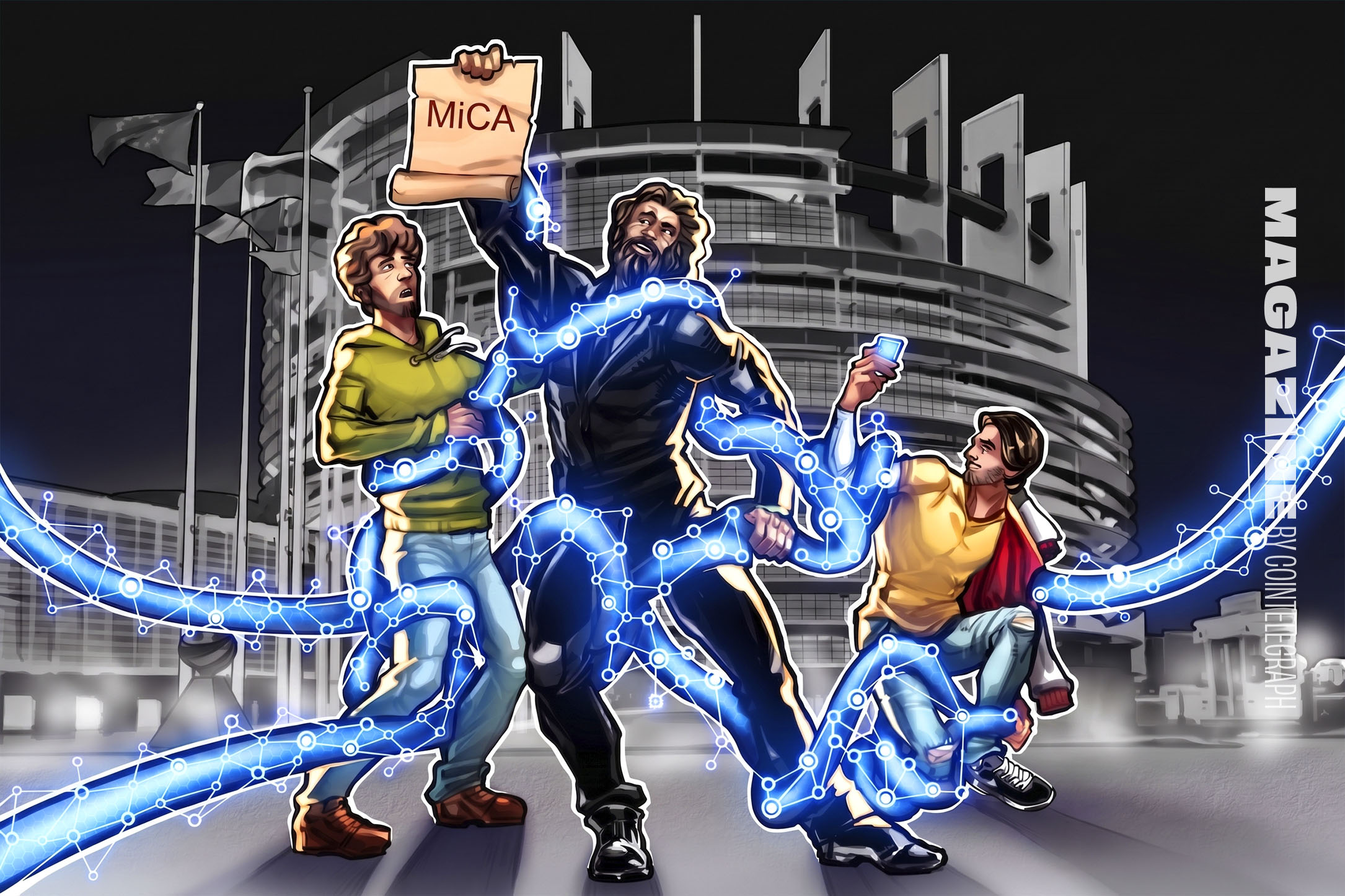
Poland’s lower house has approved a wide-ranging crypto bill that would put the country’s entire virtual asset market under stricter state control. Based on reports, the measure — known as Bill 1424 — passed the lower house of Poland’s national parliament, or Sejm, with 230 votes in favor and 196 opposed.

The law would give the Polish Financial Supervision Authority, KNF, sweeping powers over exchanges, issuers and custodians operating in or serving customers in Poland.

What The Law Requires

According to coverage, the draft compels all Crypto Asset Service Providers to obtain a KNF license to operate in the market. It would set detailed rules on capital, internal controls, anti-money-laundering safeguards and risk management.

Penalties are heavy: operating without a permit could draw fines up to 10 million złoty (about US$2.8 million) and, in some versions, criminal liability including up to two years in prison for serious breaches. Existing firms would get a six-month window to apply for authorization once the law takes effect.

Supporters Say It Brings Clarity

Backers argue the move will align Poland with the EU’s Markets in Crypto-Assets rules and give clearer rules to investors and businesses.

Clarity is meant to reduce scams and make large players feel safer about doing business in Poland. Some observers say stronger oversight could attract institutional money that has been wary of unclear local rules.

Concerns From Industry And Lawmakers

But many in Poland’s crypto community warn the bill goes further than EU minimums and could burden smaller players. Reports point to concerns about high costs and heavy paperwork that might push startups to move operations abroad.

BTCUSD trading at $112,886 on the 24-hour chart: TradingView

There is also worry the KNF’s review process could be slow; some sources claim decisions might take as long as 30 months, creating an uncertain climate for firms that need speed to survive. Artists, small issuers and hobbyist projects fear that strict rules will squeeze out low-budget activity.

Transparency And Blocking Powers

The draft would also require more disclosures from issuers and service providers. Regulators could maintain a register of unpermitted domains and use tools to block access. Supporters say this helps fight fraud. Critics say it risks overreach and could limit legitimate users’ access to services.

Based on reports, after clearing the Sejm the text is moving to the Senate for review. President Karol Nawrocki has been reported to consider a veto unless certain provisions are softened, particularly those that introduce criminal penalties and broad supervisory powers.

Lawmakers and industry groups are pressing for amendments that would narrow the scope of some requirements and ease costs for smaller operators.

Featured image from Meta, chart from TradingView

Editorial Process for bitcoinist is centered on delivering thoroughly researched, accurate, and unbiased content. We uphold strict sourcing standards, and each page undergoes diligent review by our team of top technology experts and seasoned editors. This process ensures the integrity, relevance, and value of our content for our readers.

Christian, a journalist and editor with leadership roles in Philippine and Canadian media, is fueled by his love for writing and cryptocurrency. Off-screen, he's a cook and cinephile who's constantly intrigued by the size of the universe.

Похожее

From Banning Doubao to Embracing Honor: Why Did WeChat Suddenly 'Change Its Face'?

The article explores the sudden shift in WeChat's strategy towards AI assistants from mobile phone manufacturers, transitioning from strict opposition to active collaboration. For over a year, WeChat fiercely resisted attempts by phone AI assistants (like ByteDance's Doubao in late 2025) to control its features via GUI automation ("simulated clicking"), citing security and data control concerns. This stance created a significant barrier for system-level AI integration. Now, Tencent has initiated A2A (Agent-to-Agent) partnerships with major phone brands like Honor, Xiaomi, OPPO, and vivo. This model allows a phone's system AI (e.g., Honor's YOYO) to parse a user's voice command and send a structured request directly to WeChat's own internal AI agent via secure APIs. WeChat then executes the action (e.g., sending a message) and returns the result. The article attributes Tencent's "change of face" to strategic pressure. While leading in social app usage, Tencent trails rivals like ByteDance and Alibaba in standalone AI app popularity. WeChat, with its vast mini-program ecosystem, is Tencent's key asset for an AI comeback. The upcoming WeChat AI agent aims to handle tasks like booking and payments within the app. However, phone system assistants remain the primary AI entry point for most users. The A2A collaboration allows Tencent to extend WeChat's AI reach to this crucial system layer while maintaining control over its core functions and data. For phone manufacturers, embracing A2A is a pragmatic move. The GUI route proved unviable due to WeChat's blocks. A2A offers a compliant path to integrate a vital service, enhancing their AI assistants' usefulness. It allows them to focus on developing their own AI ecosystems for other services while cooperating on WeChat access. The collaboration is framed as a mutual, strategic necessity: Tencent gains a distribution channel, and manufacturers gain a key functionality. The partnership relies on a "dual authorization" mechanism for security, requiring both user and app consent for each action. While questions about long-term data privacy practices remain, experts note A2A is more secure and compliant than GUI automation. Ultimately, this cooperation is seen as a tentative, calculated truce. Tencent's long-term goal is to make WeChat an AI-powered "service OS." Phone manufacturers aim to make their system AI the central user interface. Their paths may converge or clash in the future, but for now, the A2A deal represents the opening chapter in the battle for the AI-era user入口, driven by necessity and strategic calculus on both sides.

marsbit41 мин. назад

From Banning Doubao to Embracing Honor: Why Did WeChat Suddenly 'Change Its Face'?

marsbit41 мин. назад

On-Chain Figures on the Eve of Kickoff: 1.6 Billion Traded Before the World Cup Even Begins

"On-Chain Numbers on the Eve of the World Cup: $1.6 Billion Traded Before Kick-off" Analysis of on-chain markets before the 2026 FIFA World Cup reveals significant crypto integration into football. The most striking figure is the approximately **$1.6 billion** in total trading volume on the single "World Cup Winner" contract on the Polymarket prediction market platform, accumulated before a single match was played. This represents explosive growth for a sector whose annual volume surged from ~$16B in 2024 to ~$64B in 2025. The ecosystem is maturing beyond speculation. Key developments include: 1) **Infrastructure upgrades** like Polymarket's migration to native, regulated USDC stablecoin for settlements; 2) **Reliable data oracles**, such as Chainlink, being used to resolve real-world match outcomes on-chain; and 3) **Official recognition**, with FIFA appointing its first-ever "Prediction Markets" partner. Over 100 contracts now cover everything from the outright winner to individual match results and even non-sporting risks like venue relocation. This evolution marks a fundamental shift. While crypto firms are absent from FIFA's top-tier sponsor list, the technology has deeply penetrated the tournament's financial and predictive infrastructure through regulated stablecoin settlements, decentralized oracles, and new official partnership categories. The regulatory landscape remains complex and varies by jurisdiction, but on-chain markets for the World Cup are already a multi-billion-dollar reality.

marsbit1 ч. назад

On-Chain Figures on the Eve of Kickoff: 1.6 Billion Traded Before the World Cup Even Begins

marsbit1 ч. назад

From SpaceX's IPO to the Future of Crypto: Which Crypto Sectors Will Host the Trillion-Dollar Narrative?

From the SpaceX IPO, which targets a $750 billion raise at a $1.77 trillion valuation, we can extrapolate capital flow trends relevant to crypto. The focus shifts from speculative narratives to foundational infrastructure and real-world asset (RWA) integration. Key crypto sectors poised to benefit include: 1. **AI Infrastructure**: The narrative is moving from consumer-facing AI applications to underlying, scarce resources like compute power and decentralized GPU networks (e.g., TAO, RENDER, AKT, IO). These protocols are positioning as the essential "picks and shovels" providers for the AI economy. 2. **Real-World Assets (RWA)**: Beyond tokenized treasury bonds, RWA's future lies in on-chain equity and pre-IPO assets like SpaceX. This could democratize access to high-growth assets and reshape global capital flows, benefiting infrastructure projects like ONDO, LINK, and Plume that facilitate issuance, data, and liquidity. 3. **Core Financial Infrastructure**: Stablecoins, payment networks, and DePIN (Decentralized Physical Infrastructure Networks) are critical for settling the future on-chain economy. Their role expands from internal trading tools to foundational layers for global finance, AI systems, and real-world asset networks, leading to potential value reassessment. In summary, the next cycle may prioritize long-term infrastructure value—AI compute, asset tokenization networks, and settlement layers—over short-lived application hype, mirroring the broader market's shift towards funding the foundational systems of the future.

marsbit1 ч. назад

From SpaceX's IPO to the Future of Crypto: Which Crypto Sectors Will Host the Trillion-Dollar Narrative?

marsbit1 ч. назад

Торговля

Спот
Фьючерсы
活动图片