30-Day Doubling, 15-Fold Year-to-Date Gain: Why is the English-Speaking Crypto Community FOMOing Over $ZEC Again?

marsbitОпубликовано 2026-05-09Обновлено 2026-05-09

Введение

Over the past week, ZEC has surged back into the spotlight on English Crypto Twitter, driven by endorsements from prominent figures like Naval, Arthur Hayes, and Mert Mumtaz, alongside a public "significant" position announcement from Multicoin Capital at Consensus Miami. The price has skyrocketed, with ZEC gaining over 110% in 30 days and 1500% year-to-date, now ranking among the top 20 cryptocurrencies by market cap. The primary catalyst is a shifting investment thesis. Multicoin Capital's Tushar Jain argues that while Bitcoin resists censorship, its transparent ledger leaves holdings vulnerable to potential wealth confiscation via taxation. Zcash's shielded pool, using zk-proofs to obscure transaction details, is positioned as "insurance against Bitcoin" for true financial privacy. Arthur Hayes has set a long-term price target of 10% of Bitcoin's value. Further momentum comes from technical developments announced at Consensus, including a roadmap for quantum-recoverable wallets and full post-quantum security within 12-18 months. Institutional adoption signals are growing, with a Grayscale ETF application pending, Robinhood listing ZEC, and Foundry launching a mining pool. However, a critical caveat is the recent departure of the entire original Zcash development team (ECC) due to governance conflicts, leaving the project's future development uncertain. While narrative and institutional interest are clearly fueling the current rally, distinguishing between genuine adopti...

Author: Curry, Deep Tide TechFlow

If you've been browsing English Crypto Twitter lately, you've likely seen ZEC all over the screen.

Names like Naval, Arthur Hayes, Mert Mumtaz, Balaji, and Cobie are popping up repeatedly around the same topic. Coupled with Multicoin Capital's public announcement of a significant position and multiple privacy-focused panels at Consensus Miami, ZEC's social media buzz over the past week has reached its highest point since the rally at the end of 2025.

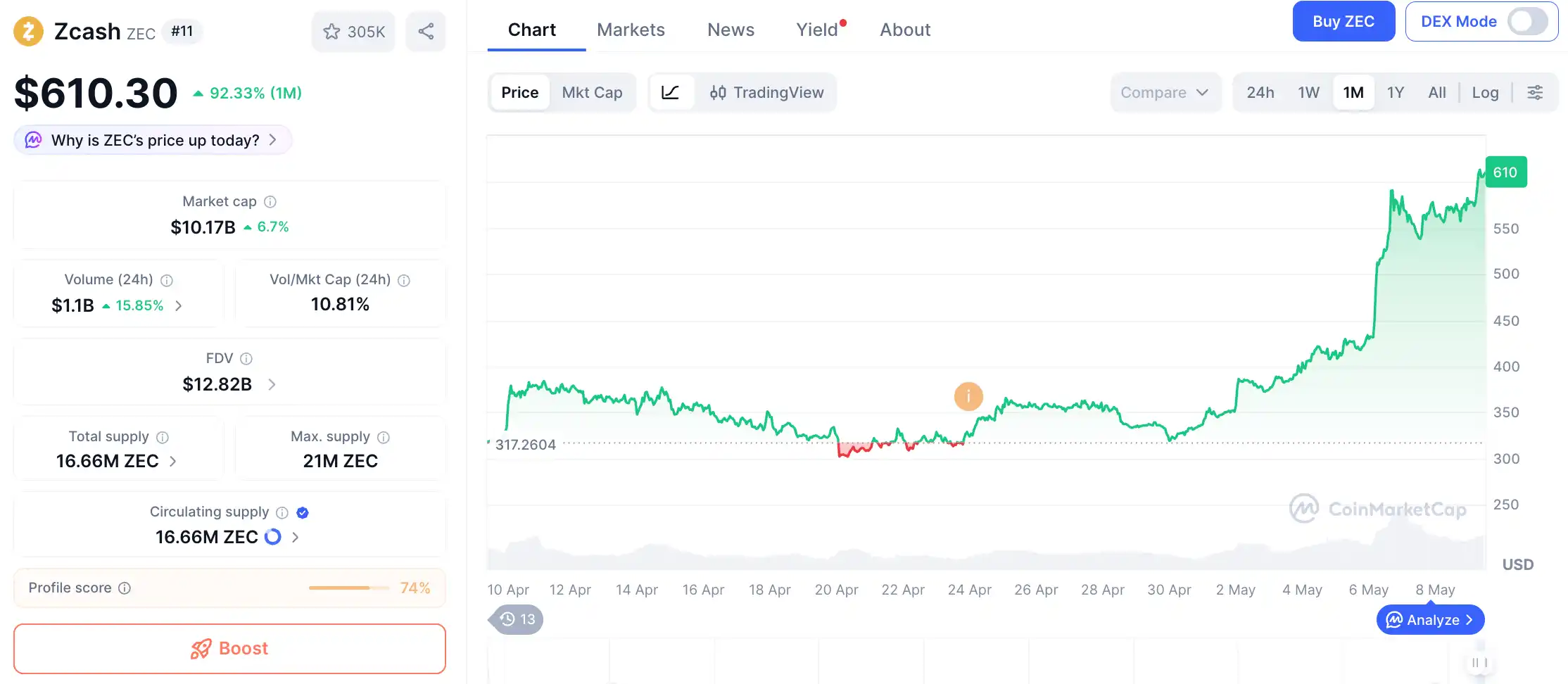
The price has already run ahead of the narrative. At the time of writing, ZEC is trading around $580, with gains exceeding 110% over the past 30 days and cumulative year-to-date gains surpassing 1500%. Its market cap has exceeded $9.5 billion, overtaking the veteran privacy coin Monero (XMR) and climbing into the top 20 on CoinGecko.

On May 6th, ZEC surged nearly 30% in a single day, triggering over $62 million in short liquidations, with shorts accounting for $46.7 million of that.

So the question is: What's driving this wave?

Multicoin's Heavy Position: "Bitcoin is Censorship-Resistant, But It Can't Stop a Wealth Tax"

The most direct catalyst came from Multicoin Capital.

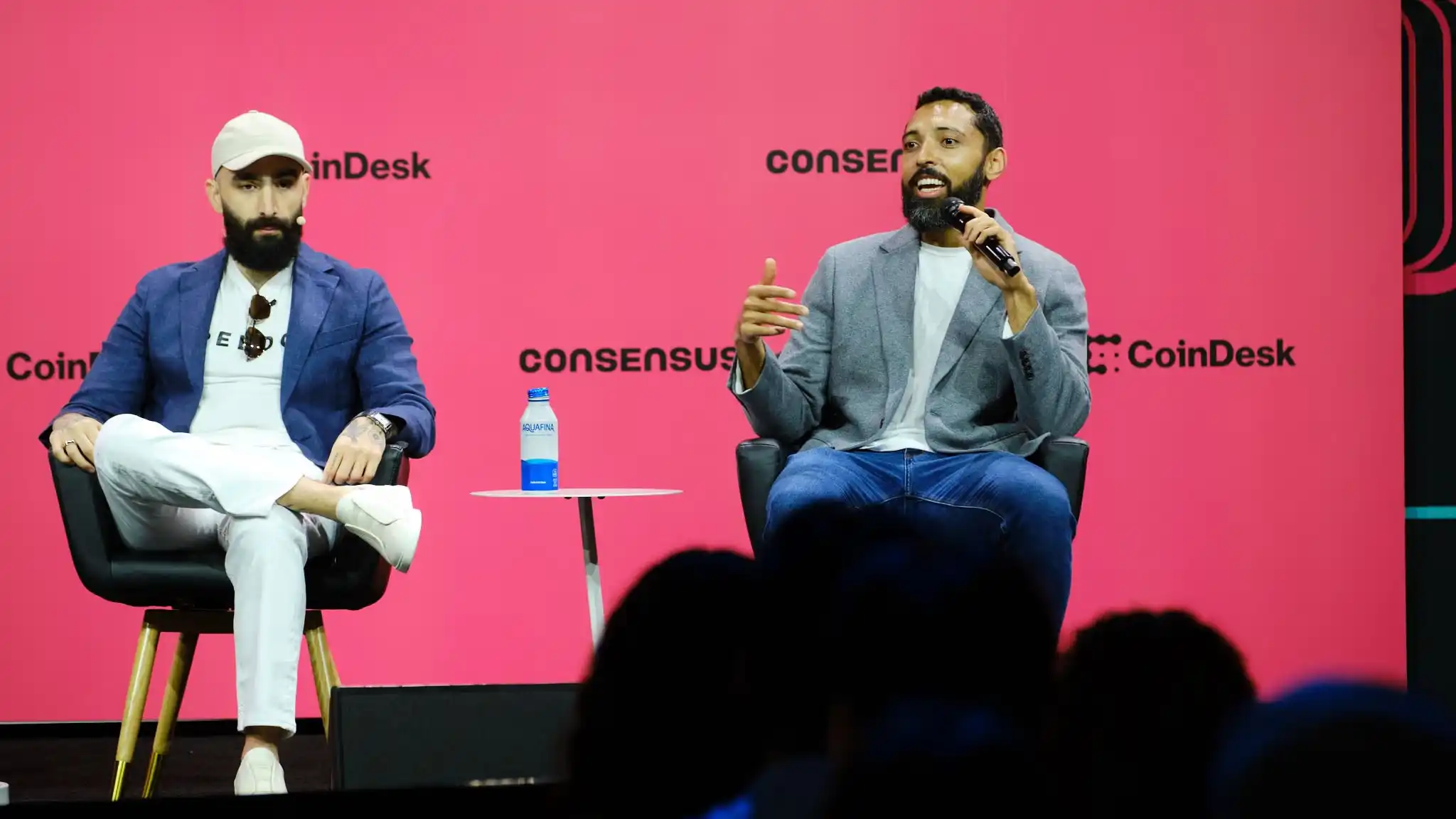
On May 6th, Multicoin Capital co-founder and managing partner Tushar Jain publicly stated during a panel at Consensus Miami that the firm had built a "significant position" starting in February. He didn't disclose the specific size but provided a clear investment logic framework.

In a subsequent long post on X, Jain wrote: "Bitcoin is censorship-resistant; nobody can freeze your BTC or stop you from using it. But it does not stop governments from confiscating known holdings via a wealth tax."

His direct evidence is California's Initiative 25-0024 proposal, which aims to impose a one-time 5% wealth tax (including unrealized gains) on residents with a net worth exceeding $1 billion, expected to raise approximately $100 billion.

Jain's core thesis is: Bitcoin is insurance against fiat currency, but its on-chain balances are completely transparent; a tax agency with a blockchain explorer can see everything. ZEC's shielded pool, using zero-knowledge proof technology, hides the sender, receiver, and amount, making on-chain assets invisible to external observers.

"We think there is clear product-market fit for truly private, censorship- and seizure-resistant assets, and demand is accelerating," Jain wrote, "Zcash is the cleanest way to express this thesis in public markets."

This represents a clear shift in stance for Multicoin.

In 2019, the fund published an article arguing that "privacy is a feature of valuable cryptocurrencies, not a standalone product," suggesting users shouldn't sell BTC or ETH to buy ZEC just for privacy.

Seven years later, this public statement looks like they are betting real money to overturn their past conclusion.

KOLs Rally, Arthur Hayes Calls for "10% of BTC's Price"

The seeds for this ZEC narrative were actually planted in the second half of 2025.

BitMEX co-founder Arthur Hayes, AngelList co-founder Naval Ravikant (also an early Zcash investor), Helius founder Mert Mumtaz, along with other top crypto KOLs like Balaji Srinivasan and Cobie, began voicing strong support for ZEC intensively starting last fall.

Naval tweeted in October last year: "Bitcoin is insurance against fiat. Zcash is insurance against Bitcoin."

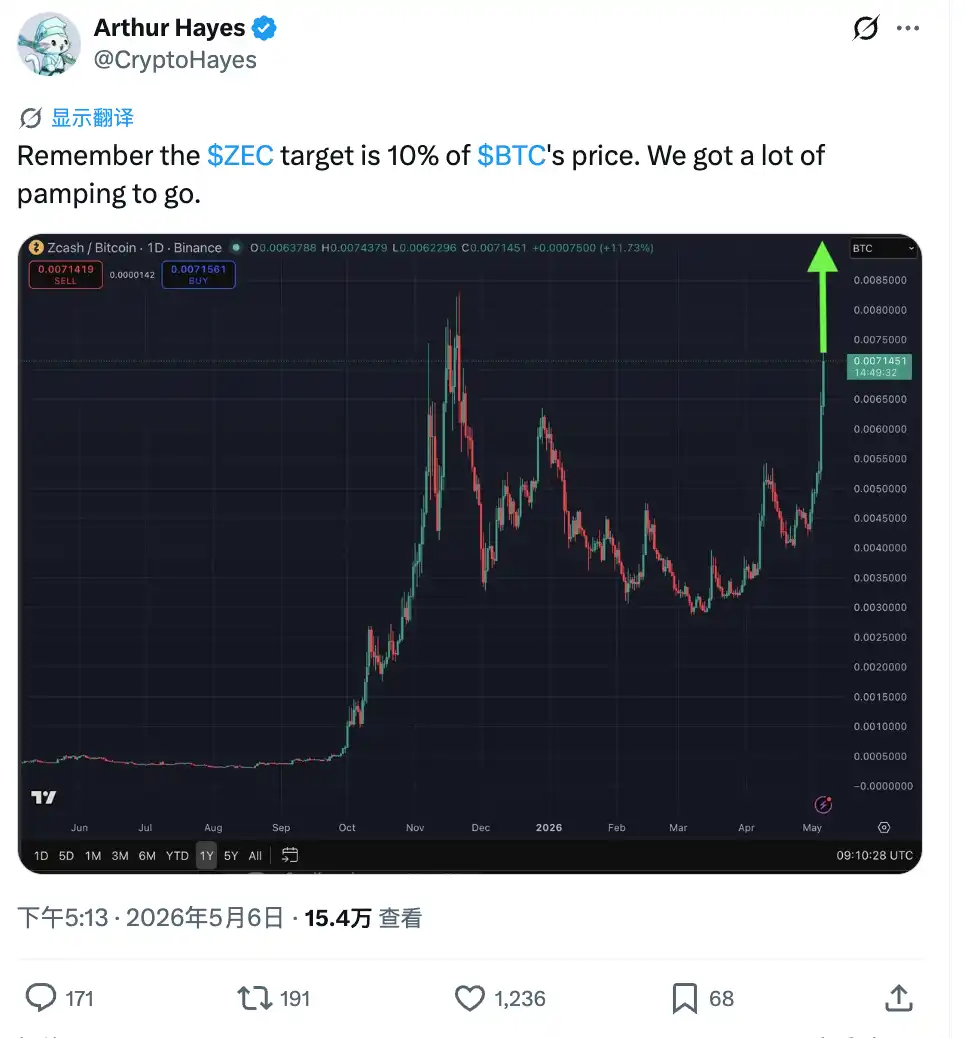
Hayes's stance was more aggressive. At Consensus 2026, he bluntly stated ZEC's long-term target price should be "10% of Bitcoin's price." Based on BTC's current price of around $80,000, this implies a target of approximately $8,000 for ZEC, representing over 13x upside from the current price. Tyler Winklevoss also endorsed a thesis this week targeting $9,700 for ZEC based on capturing offshore wealth.

These calls themselves might not be reliable investment advice, but their concentrated emergence indicates one thing: the top capital and top voices in the English-speaking crypto space are simultaneously tilting towards the privacy sector.

The Quantum-Resistant Narrative at Consensus Miami

If Multicoin and the KOLs provided catalysts on the capital and narrative fronts, the release of the technical roadmap at Consensus Miami gave the market a fundamental story.

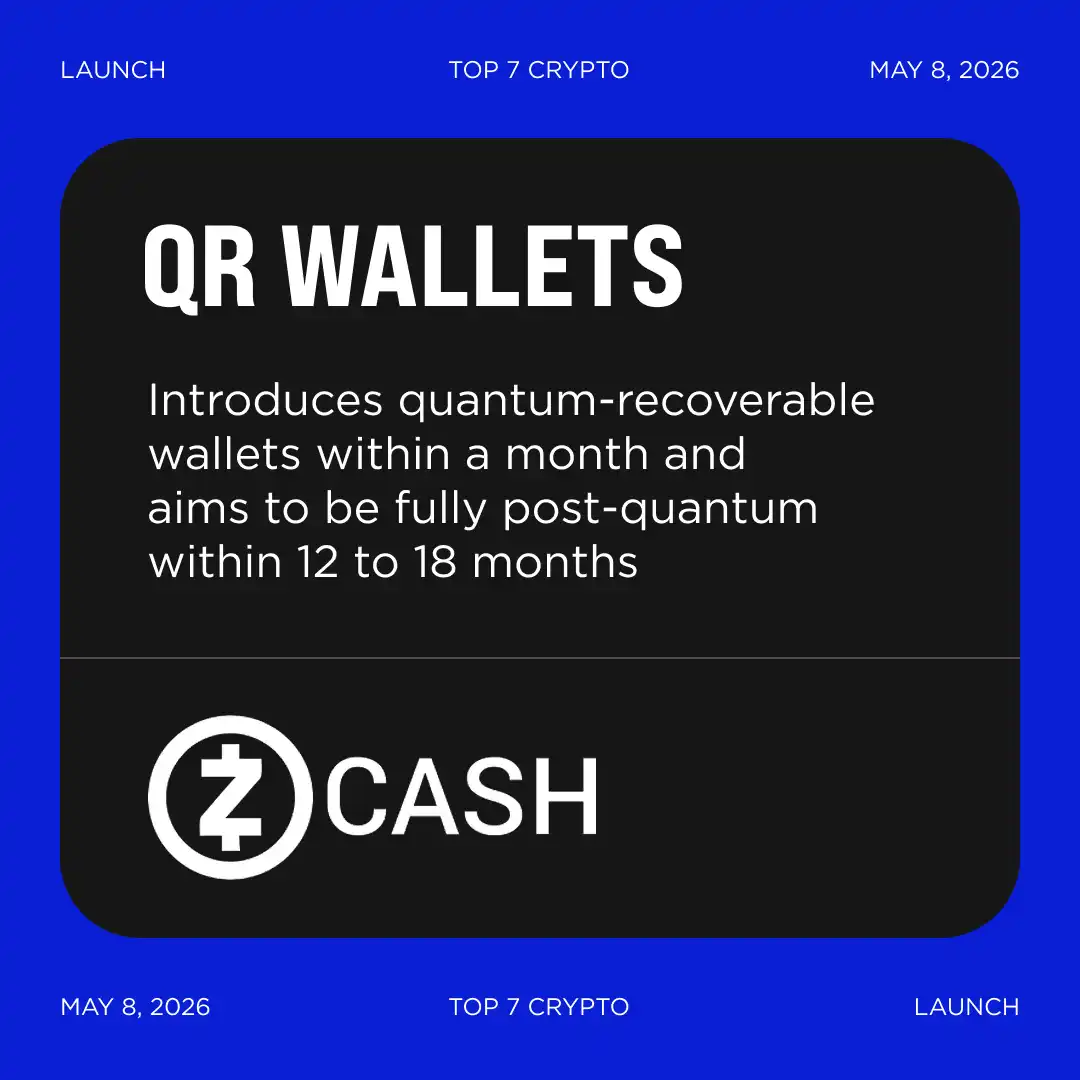
At a dedicated privacy panel on May 8th, Zcash Open Development Lab founder and CEO Josh Swihart announced that quantum-recoverable wallets will launch within a month, and Zcash plans to achieve full post-quantum security within 12 to 18 months.

The logic here is: the ECDSA signature algorithm used by most cryptocurrencies today will become vulnerable once quantum computing matures. A more dangerous scenario is the "harvest now, decrypt later" strategy, where adversaries record encrypted data now and decrypt it later when quantum hardware is available. For a privacy coin whose entire value proposition is built on the confidentiality of transaction data, this is an existential threat.

Swihart also disclosed that since the ECC wallet integrated Near Intents cross-chain swap functionality last October, $6-7 billion has flowed in and out through this channel, primarily swapping for dollars and USDC. Zcash's shielded pool currently holds about 30% of the circulating ZEC supply, the highest level in history.

Institutional Entry Signals: Grayscale ETF, Robinhood Listing, Foundry Mining

Beyond Multicoin's heavy position, ZEC is accumulating more institutional-level catalysts.

Grayscale has filed for a ZEC spot ETF, still awaiting an SEC ruling. Grayscale has previously stated publicly that ZEC's upside potential is closely tied to the "repricing of financial privacy in an AI-driven world."

Robinhood recently listed ZEC for trading, opening up a retail gateway. Foundry (under Digital Currency Group) announced the launch of large-scale ZEC mining pool operations. This is the second asset supported by the company after Bitcoin, adding credibility to ZEC's mining security and institutional acceptance.

On the on-chain data front, Santiment data shows retail investor interest in privacy coins is rising, driven by tighter exchange compliance rules and growing data tracking concerns. In a March report, CoinDesk Research stated that Zcash has reached a "encryption supremacy" tipping point, driven by the convergence of three forces: AI tools can de-anonymize users on transparent blockchains by tracking transaction patterns, the threat of quantum computing to current crypto wallet security is becoming more real, and quarterly trading volume has surpassed $100 billion.

However, The Team That Built Zcash Has All Left

The catalysts above paint a bullish picture, but one fact shouldn't be ignored: the core team that built Zcash is gone.

In January of this year, Electric Coin Company (ECC) CEO Josh Swihart and the entire ECC team resigned collectively, citing governance conflicts with the Bootstrap Project board and characterizing the departure as "constructive discharge." ECC was the core organization that created and maintained Zcash. The team's departure means the chain is now operating without its original engineering team.

Therefore, what's more apparent with ZEC currently is that the narrative hype is far outpacing the fundamentals. KOL calls, fund heavy positions, consecutive Consensus panels—these are stories of capital and attention, but on-chain public transaction volume hasn't grown much.

Because transactions in the shielded pool are, by design, invisible, you can't use on-chain data to distinguish between "real adoption" and "speculative capital sitting idle."

But lacking fundamentals is the norm for most coins. In this wave of "old guard coin" revival, ZEC is undoubtedly one of the brightest stars, but it likely won't be the last.

Связанные с этим вопросы

QAccording to the article, what is the main reason behind Multicoin Capital's significant investment in ZEC?

AMulticoin Capital's main investment thesis is that while Bitcoin resists censorship, it does not protect against government confiscation via mechanisms like wealth taxes on transparent holdings. They believe ZEC, with its shielded pool using zero-knowledge proofs, offers a truly private, censorship-resistant, and confiscation-resistant asset, which they see as having clear product-market fit with accelerating demand.

QWhat ambitious price target for ZEC was mentioned by BitMEX co-founder Arthur Hayes?

AArthur Hayes stated that the long-term price target for ZEC should be "10% of Bitcoin's price." With Bitcoin around $80,000, this would imply a ZEC target price of approximately $8,000.

QWhat key technical development for ZEC was announced at Consensus Miami?

AAt Consensus Miami, it was announced that quantum-recoverable wallets for ZEC will launch within a month, with the goal of achieving full post-quantum security for the Zcash network within 12 to 18 months to address the threat posed by future quantum computers.

QWhat major organizational change has recently occurred concerning Zcash's core development team?

AThe entire team of the Electric Coin Company (ECC), the core organization that created and maintained Zcash, including its CEO Josh Swihart, resigned in January. This departure was due to governance conflicts with the Bootstrap Project board, leaving the chain to operate without its original engineering team.

QBesides Multicoin Capital's investment, what are two other institutional-level catalysts mentioned for ZEC?

ATwo other institutional catalysts mentioned are: 1) Grayscale has filed for a ZEC spot ETF, which is pending SEC approval, and 2) Robinhood has listed ZEC for trading, providing a major retail access point.

Похожее

Fei-Fei Li's Team Clarifies the Concept of 'World Models', Sora Merely a Renderer

"World Models" has become a widely used yet confusing term in AI. To address this, a team led by Fei-Fei Li and World Labs proposed a functional taxonomy based on the Partially Observable Markov Decision Process framework. This taxonomy categorizes systems called "world models" into three distinct projections: Renderers, Simulators, and Planners. Renderers, like OpenAI's Sora and other video generation models, focus on producing photorealistic visual outputs for human perception. They prioritize visual fidelity over physical accuracy. Simulators, such as NVIDIA Omniverse, aim to compute precise future environmental states for computational tasks like engineering analysis or digital twins. Planners, like Vision-Language-Action models, take in observations and goals to output executable actions for robots or agents. The article clarifies that most current "world models," including Sora, are primarily Renderers. They generate convincing visuals but lack the core ability to simulate state transitions based on actions, a key requirement for a true world model in classic reinforcement learning definitions. This conceptual confusion has practical implications, leading to potential misalignment in technology selection, investment, and public understanding of AI capabilities. Clear categorization is crucial. It helps enterprises avoid costly mistakes (e.g., using a renderer for robot training), allows investors to accurately assess markets, and enables researchers to build comparable benchmarks. While future systems may integrate these functions, recognizing current boundaries is essential for honest assessment and progress.

marsbit1 ч. назад

Fei-Fei Li's Team Clarifies the Concept of 'World Models', Sora Merely a Renderer

marsbit1 ч. назад

Bloomberg Uncovered: How Do China's Wealthy Circumvent the Annual $50,000 Limit to Transfer Assets?

**Summary: How Wealthy Chinese Circumvent $50,000 Annual Foreign Exchange Limits** Despite China's strict capital controls, including an annual $50,000 per person foreign exchange quota, an estimated $150 billion in funds still leaves the country annually via various gray and underground channels. This report outlines the evolution of China's "capital wall" and the methods used to bypass it. **The Evolving Capital Controls:** * **Foundation (1994):** The system of "current account convertibility with strict capital account controls" was established. * **Quota Set (2007):** The $50,000 individual annual forex purchase limit was formalized. * **Crackdown Begins (2015-2017):** Following market volatility, enforcement tightened. Banks were required to scrutinize transactions, and channels like using UnionPay cards for Hong Kong insurance premiums or buying overseas property were blocked. * **Digital & Legal Upgrades (2024-2026):** Enhanced algorithms now flag suspicious patterns (e.g., "smurfing"). The Common Reporting Standard (CRS) provides Chinese tax authorities with data on citizens' offshore accounts. Unlicensed cross-border brokers have been targeted. **Five Primary Methods for Moving Capital:** 1. **Underground Banking / "Hawala" (Duiqiao):** The largest-scale method. No money crosses borders. Clients pay RMB to a domestic account; an overseas associate deposits equivalent foreign currency into the client's offshore account. Risks include high fees, account freezes, and legal penalties. 2. **"Smurfing" or "Ant Moving":** Using multiple individuals' $50,000 quotas to pool funds for one offshore recipient. Increasingly detected by anti-money laundering algorithms. 3. **Trade Invoice Manipulation:** Businesses over-invoice imports or under-invoice exports via offshore shell companies, creating a pretext to transfer excess funds abroad under the guise of trade. 4. **Channel Migration:** After a crackdown on internet brokers, funds flow toward more compliant but costly channels like major banks' cross-border wealth management services or Qualified Domestic Institutional Investor (QDII) quotas. 5. **Structural Arrangements:** High-net-worth individuals use complex, high-cost legal structures involving offshore trusts, insurance, and investment migration programs to transfer asset ownership. **Regulatory Response: Focusing on People, Not Just Money** The current strategy extends oversight from enterprises to **individual residents**. Tools like CRS allow retroactive visibility into offshore assets. Cryptocurrencies, once seen as a potential loophole, are now actively monitored and prosecuted as an illegal channel. The underlying driver remains: with significant wealth concentrated among millions of affluent households seeking diversification amid domestic economic shifts, the incentive to move assets offshore persists despite regulatory barriers.

marsbit1 ч. назад

Bloomberg Uncovered: How Do China's Wealthy Circumvent the Annual $50,000 Limit to Transfer Assets?

marsbit1 ч. назад

Торговля

Спот
Фьючерсы

Популярные статьи

Как купить ZEC

Добро пожаловать на HTX.com! Мы сделали приобретение Zcash (ZEC) простым и удобным. Следуйте нашему пошаговому руководству и отправляйтесь в свое крипто-путешествие.Шаг 1: Создайте аккаунт на HTXИспользуйте свой адрес электронной почты или номер телефона, чтобы зарегистрироваться и бесплатно создать аккаунт на HTX. Пройдите удобную регистрацию и откройте для себя весь функционал.Создать аккаунтШаг 2: Перейдите в Купить криптовалюту и выберите свой способ оплатыКредитная/Дебетовая Карта: Используйте свою карту Visa или Mastercard для мгновенной покупки Zcash (ZEC).Баланс: Используйте средства с баланса вашего аккаунта HTX для простой торговли.Третьи Лица: Мы добавили популярные способы оплаты, такие как Google Pay и Apple Pay, для повышения удобства.P2P: Торгуйте напрямую с другими пользователями на HTX.Внебиржевая Торговля (OTC): Мы предлагаем индивидуальные услуги и конкурентоспособные обменные курсы для трейдеров.Шаг 3: Хранение Zcash (ZEC)После приобретения вами Zcash (ZEC) храните их в своем аккаунте на HTX. В качестве альтернативы вы можете отправить их куда-либо с помощью перевода в блокчейне или использовать для торговли с другими криптовалютами.Шаг 4: Торговля Zcash (ZEC)С легкостью торгуйте Zcash (ZEC) на спотовом рынке HTX. Просто зайдите в свой аккаунт, выберите торговую пару, совершайте сделки и следите за ними в режиме реального времени. Мы предлагаем удобный интерфейс как для начинающих, так и для опытных трейдеров.

631 просмотров всегоОпубликовано 2024.03.29Обновлено 2026.06.02

Как купить ZEC

Обсуждения

Добро пожаловать в Сообщество HTX. Здесь вы сможете быть в курсе последних новостей о развитии платформы и получить доступ к профессиональной аналитической информации о рынке. Мнения пользователей о цене на ZEC (ZEC) представлены ниже.

活动图片