Uniswap 的“法律护甲”:DUNA 架构如何为费率开关与百亿估值铺路

marsbitОпубликовано 2025-08-11Обновлено 2025-08-12

在监管与创新的长期博弈中,Uniswap 迈出了颠覆性的一步。2025 年 8 月 11 日,Uniswap 基金会正式向社区提交提案,建议将去中心化自治组织(DAO)注册为怀俄明州的 ​​“去中心化未合并非营利协会”​​(DUNA),并成立名为 ​​DUNI​​ 的新法律实体。若提案通过,这将是全球首个采用该框架的大型 DAO,不仅为 Uniswap 治理披上“法律护甲”,更可能激活尘封多年的 ​​“费率开关”​​(fee switch)——这一机制将把部分交易手续费导入 DAO 国库,彻底改变 UNI 代币的价值捕获逻辑。

一、DUNA:DAO 的“法律身份证”与风险防护盾

去中心化自治组织虽以链上投票为核心理念,但在现实法律框架中始终处于尴尬境地:​​缺乏法人身份​​使其无法签署合同、开设银行账户或应对诉讼,成员甚至需为 DAO 的债务或法律风险承担个人责任。怀俄明州在 2024 年 3 月推出的 DUNA 法案,首次为非营利性 DAO 提供轻量化合规路径,成为全球区块链立法里程碑。

DUNA 的核心价值在于双重赋能:

  • ​​法律身份证​​:DUNI 实体可代表 DAO 雇佣律师、审计机构,处理税务申报(如支付历史欠款),并与监管机构直接沟通。
  • ​​风险防护盾​​:成员不再为 DAO 行为承担个人责任。例如,若 DAO 面临税务追缴或法律诉讼,仅 DUNI 实体资产会被追索,成员钱包安全无虞。

这一架构既不改变 Uniswap 协议代码或链上治理流程,也不影响 UNI 代币功能,却为 DAO 在现实世界的合规运营架设了桥梁。正如提案所述:“DUNI 是纯粹的功能性实体,旨在服务 Uniswap DAO 的日常需求。”


二、资金分配与执行机制:1650 万 UNI 的合规代价

为支撑 DUNI 实体运作,Uniswap 基金会计划分配 ​​1650 万美元等值的 UNI 代币​​,用途明确分为三部分:

  1. ​​历史税务清算​​:预计不足 1000 万美元,用于补缴过往可能存在的税务义务。
  2. ​​法律防御基金​​:预留资金应对未来潜在诉讼,呼应 2024 年 SEC 对 Uniswap 发出韦尔斯通知的监管风险。
  3. ​​合规服务支出​​:支付 7.5 万美元给怀俄明公司 Cowrie(DUNA 法案起草方之一),由其担任管理员处理税务申报与财报编制。

基金会将作为 ​​“执行代理人”​​(ministerial agent)主导实体运营,包括签署合同与聘用服务商。这种设计既满足法律合规需求,又避免过度中心化——所有重大决策仍需 DAO 投票通过。


三、费率开关:被合规枷锁禁锢的协议收入引擎

费率开关是 Uniswap 协议中预留的关键功能,允许将部分流动性提供者(LP)的交易手续费(如 0.3% 中的 0.05%)转入 DAO 国库。据 DefiLlama 统计,近一月 Uniswap 用户支付手续费超 ​​1.23 亿美元​​,若分流 1/6 至 DAO,年化收入可达 ​​2.4 亿美元​​。然而,该机制因两大障碍长期搁置:

  • ​​证券法风险​​:美国 SEC 曾指控 UNI 代币和 LP 代币可能被视为“投资合同”,直接分配收益恐触发证券违规。
  • ​​税务不确定性​​:DAO 收入如何计税长期处于灰色地带。

DUNA 架构被视为破局钥匙。怀俄明州法案明确 DUNA 实体不得向成员分红,但允许资金用于公共开支(如协议开发、生态激励)。这意味着费率开关激活后,资金将合法流入 DAO 国库,再通过治理投票用于提升协议价值,间接赋能 UNI 持有者。


四、治理权力平衡:去中心化理想与现实博弈

尽管 DUNA 提案标榜“不改变治理结构”,但 Uniswap 的权力集中问题仍引发争议:

  • ​​基金会主导权过大​​:美国众议员 Sean Casten 指出,Uniswap 基金会实际掌控提案议程,社区提案通过率远低于官方提案。2023 年费率开关提案撤回事件中,Paradigm 合伙人 Dan Robinson 指责基金会向风险投资机构(如 a16z)妥协,凸显资本对治理的隐性影响。
  • ​​效率与去中心化的两难​​:类似 LayerZero、Yuga Labs 等项目已选择适度集中权力以提升效率。Uniswap 的 DUNA 路径本质是在法律合规框架下寻求平衡——既需实体应对监管,又需保留链上投票的合法性。
 费率开关

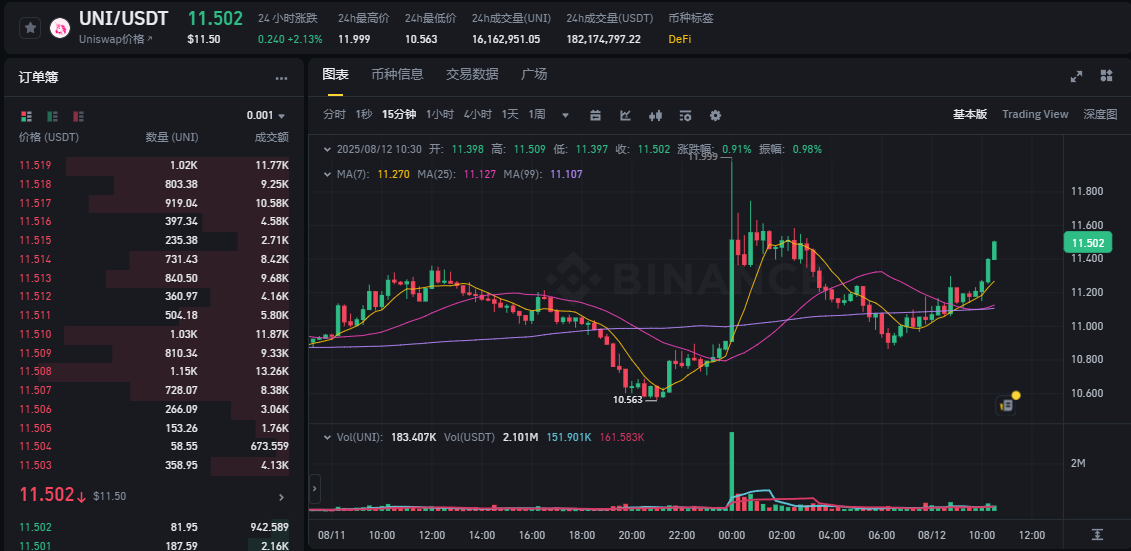
提案公布后,UNI 代币短线暴涨 ​​8%​​,市场对合规化与费率开关落地投下信任票。但代币价格较 2021 年历史高点 ​​44.97 美元​​仍下跌 ​​75.76%​​,反映协议收入长期无法捕获价值的困境。


五、行业拐点:Uniswap 的合规实验为何关乎 DeFi 未来

Uniswap 的 DUNA 提案若通过,将创造三大范式转移:

  1. ​​监管破冰​​:2025 年 2 月 SEC 终止对 Uniswap 调查后,美国加密政策转向宽松。众议院拟审议的《数字资产市场结构法案》进一步明确“非证券型代币”定义,DUNA 架构顺势成为合规最佳实践。
  2. ​​代币经济重生​​:除费率开关外,Unichain(Uniswap 基于 OP Stack 的 L2)已采用 UNI 作为验证者质押代币,65% 链收入分配给质押者。结合 DAO 国库的资金杠杆,UNI 将从治理符号升级为生息资产。
  3. ​​DAO 治理样板​​:作为 TVL 51.2 亿美元、月交易量 845 亿的 DeFi 龙头,Uniswap 的合规路径将为 MakerDAO、Aave 等协议提供关键参考。


结语:法律护甲下的价值觉醒

Uniswap 的 DUNA 提案是一场精密的法律工程,更是一次代币经济模型的自我救赎。通过怀俄明州的“法律护甲”,协议不仅规避了成员责任风险,更扫清了费率开关落地的最后障碍——将沉睡的协议收入转化为 DAO 国库的持续现金流。在 UNI 较历史高点仍跌逾 75% 的估值洼地中,这一机制有望成为价值觉醒的导火索。

然而,法律化亦是一把双刃剑。当 a16z 等资本方公开称赞 DUNA 是“DAO 的绿洲”时,社区不得不警惕治理权力的事实集中化。如何在合规框架下捍卫去中心化精神,将是 Uniswap 留给整个 DeFi 行业的终极命题。

8 月 18 日的初步投票,或许标志着去中心化治理从技术理想迈向法律现实的分水岭。这场实验的结果,将决定 Uniswap 是成为监管时代的牺牲品,还是打开百亿估值闸门的破局者。
Похожее

AI Bubble Warning: AI Investments Are Negative Returns for Most Tech Giants

The article issues a stark warning about a potential AI investment bubble. It notes that while the AI boom shares similarities with the TMT bubble of the late 1990s, its scale is vastly larger, currently driving 93% of U.S. GDP growth. Major hyperscale cloud providers like Microsoft, Alphabet, Amazon, Meta, and Oracle are planning to invest trillions in AI data centers over the coming years. However, calculations based on analyst projections for 2025-2030 reveal a concerning math problem: expected capital expenditure growth far outpaces projected revenue growth. Even under an extremely optimistic scenario of zero costs, the implied return on investment for most of these tech giants (except Amazon) is deeply negative. This suggests that the current trajectory could lead to one of history's largest shareholder value destruction events. The piece outlines two potential escapes: AI generating vastly more revenue than currently anticipated—a near-impossible task—or a significant cutback in the planned investment splurge. The latter scenario could trigger a domino effect, severely impacting the entire tech supply chain (from Nvidia to TSMC), potentially pushing the U.S. economy into recession, and causing a major stock market downturn. The author suggests upcoming high-profile IPOs by companies like OpenAI and Anthropic might represent a transfer of risk from early investors to public market participants. While the peak of the hype cycle might sustain investment through 2026, the fundamental financial dilemma remains unresolved, setting the stage for a potential market correction in 2027 or 2028, similar to the years following Alan Greenspan's "irrational exuberance" warning.

marsbit43 мин. назад

AI Bubble Warning: AI Investments Are Negative Returns for Most Tech Giants

marsbit43 мин. назад

From Tokens to Machine Labor: AI is Shifting from Tool to "Worker"

The article "From Token to Machine Labor: AI is Evolving from Tool to 'Worker'" argues that the business model for AI is shifting beyond simply selling computational resources (tokens, GPU hours) or model access. Instead, a new "machine labor market" is emerging, where the core economic transaction is the purchase of economically useful work directly performed by software. The central thesis is that AI pricing will evolve through four stages: 1) raw tokens, 2) standardized LLM capabilities (e.g., text generation), 3) industry-specific labor markets (e.g., legal review, radiology), and finally 4) a programmable results market where tasks like resolving a support ticket are bid on and priced based on outcome. In this future, buyers will care less about *which* model or GPU completes a task and more about whether the work meets specified standards for accuracy, latency, and cost. This transition reframes the impact of AI on human labor. Rather than simple replacement, it suggests a re-coordination where machines handle standardized, verifiable work, freeing humans for roles involving oversight, context management, responsibility, and final judgment. In some cases, this "last 1%" of human input becomes more valuable as it enables the other 99% to be automated. Furthermore, as AI reduces the cost of work, demand may expand, creating larger markets (e.g., 24/7 customer service) rather than just cheaper versions of existing ones. The article concludes that while infrastructure (GPUs, models, tokens) remains crucial upstream, the market is converging on a simpler, tradeable unit: machine labor that can be defined, measured, priced, and procured based on contractible specifications.

marsbit53 мин. назад

From Tokens to Machine Labor: AI is Shifting from Tool to "Worker"

marsbit53 мин. назад

Xiaomi MiMo's 99% Price Cut is Not Marketing! Luo Fuli Posts on X to Refute Critics

The price of Xiaomi's MiMo-V2.5 series API has been permanently reduced by up to 99%, specifically for the "Input (Cache Hit)" cost, which covers users re-reading historical context in long conversations. MiMo's head, Luo Fuli, published a detailed technical blog to clarify that this drastic price cut stems from genuine engineering breakthroughs, not a marketing stunt or a simple price war. The core of the achievement lies in six key engineering optimizations. First, the model architecture adopts a Hybrid Sliding Window Attention (SWA), reducing the memory footprint (KVCache) to 1/7th of a traditional model. Second, a dual-pool memory management system actually utilizes these savings, allowing a single GPU to handle over 5 times more concurrent users. Third, an upgraded prefix caching mechanism achieves a cache hit rate of 93-95% for repeated reads, meaning most such requests bypass GPU computation entirely. Fourth, a self-developed distributed cache (GCache) utilizes idle SSD space on existing GPU servers, eliminating additional storage costs. Fifth, an intelligent scheduling system (LLM-Router) efficiently routes requests to maximize cache reuse and performance. Sixth, Multi-Token Prediction (MTP) accelerates the model's text generation ("output") side. Together, these systemic optimizations dramatically lower the real computational cost per request, enabling the 99% price reduction for cached inputs while reportedly maintaining positive gross margins. Luo Fuli's disclosure aims to shift the narrative from "price war" to a demonstration of substantive AI engineering progress.

marsbit2 ч. назад

Xiaomi MiMo's 99% Price Cut is Not Marketing! Luo Fuli Posts on X to Refute Critics

marsbit2 ч. назад

$26 Billion: An 'All-Chinese Team' Backs the World's Highest-Valued AI Programming Company

Cognition AI, the company behind the AI programmer "Devin," has raised over $1 billion in new funding at a valuation of $26 billion, just eight months after reaching a $10.2 billion valuation. The round was led by Lux Capital, General Catalyst, and 8VC. Founded by three young Chinese entrepreneurs with strong competitive programming backgrounds, Cognition initially gained fame with Devin, marketed as the world's first AI software engineer capable of handling tasks from start to finish. While its early demos were impressive, real-world usage revealed reliability and cost-effectiveness issues, leading to a significant price cut for Devin in 2025. A pivotal moment came when Cognition acquired the assets of AI IDE company Windsurf after a failed acquisition by OpenAI. This move gave Cognition a crucial developer-facing tool, allowing it to pursue a two-pronged strategy: Devin for autonomous task execution and Windsurf for integrated, collaborative coding within an IDE. This shift helped the company move away from the controversial "AI replacement" narrative towards a model of augmenting human engineers, particularly for repetitive or maintenance tasks. This strategic pivot is backed by strong commercial metrics. The company reports a 10x increase in enterprise usage this year, with an annual revenue run-rate of $492 million and a 50% month-over-month growth in enterprise Devin usage over the past six months. Its client list now includes major corporations like Goldman Sachs and Mercedes-Benz, as well as government agencies like NASA and the U.S. Army. Investors are betting on Cognition becoming a foundational piece of next-generation software engineering infrastructure, positioning it at the center of a hybrid future where AI agents and human developers work in tandem.

marsbit3 ч. назад

$26 Billion: An 'All-Chinese Team' Backs the World's Highest-Valued AI Programming Company

marsbit3 ч. назад

The Hottest 00s Generation on Wall Street

"Wall Street's Hottest '00s Phenom: The 25-Year-Old Fund Manager Who Bet on AI's 'Boring' Backbone" At just 25, Leopold Aschenbrenner, once fired by OpenAI, now runs a hedge fund worth $13.7 billion. His strategy? Betting against the consensus. While others chased AI chips, he invested early in the physical infrastructure powering the AI boom: electricity, data centers, and energy. Expelled from OpenAI's safety team in 2024, Aschenbrenner foresaw the coming bottleneck. He argued that AI progress would be limited not by algorithms, but by power, chip capacity, and space. Acting on this, he founded Situational Awareness LP to go long on these "old economy" assets. His bets have paid off spectacularly. His fund's assets soared from $255 million in late 2024 to $13.7 billion by Q1 2026. His portfolio is a direct reflection of his thesis: major long positions in fuel cell company Bloom Energy and data center/bitcoin mining firms like CleanSpark and Riot Platforms, which control critical land and power resources. Conversely, he holds massive put options against overheated semiconductor giants like NVIDIA and AMD. A notable exception was his bullish bet on storage company SanDisk, which surged ~160% in Q2. Aschenbrenner's vision is materializing. Tech giants like Amazon, Alphabet, and Meta are ramping up colossal capital expenditure on data centers. Global data center power consumption is projected to skyrocket, with AI accounting for over half by 2030. The demand for enabling technologies like optical fiber and modules is also exploding. His story underscores a fundamental truth of the AI era: the ethereal intelligence of algorithms rests on a very physical, heavy, and power-hungry foundation. The future is being built not just in code, but in concrete, copper, and kilowatts.

marsbit5 ч. назад

The Hottest 00s Generation on Wall Street

marsbit5 ч. назад

Торговля

Спот
Фьючерсы
活动图片