解读Animoca新棋局:从TOWER回购看Web3巨头的“存量激活”心法

marsbitОпубликовано 2025-08-04Обновлено 2025-08-05

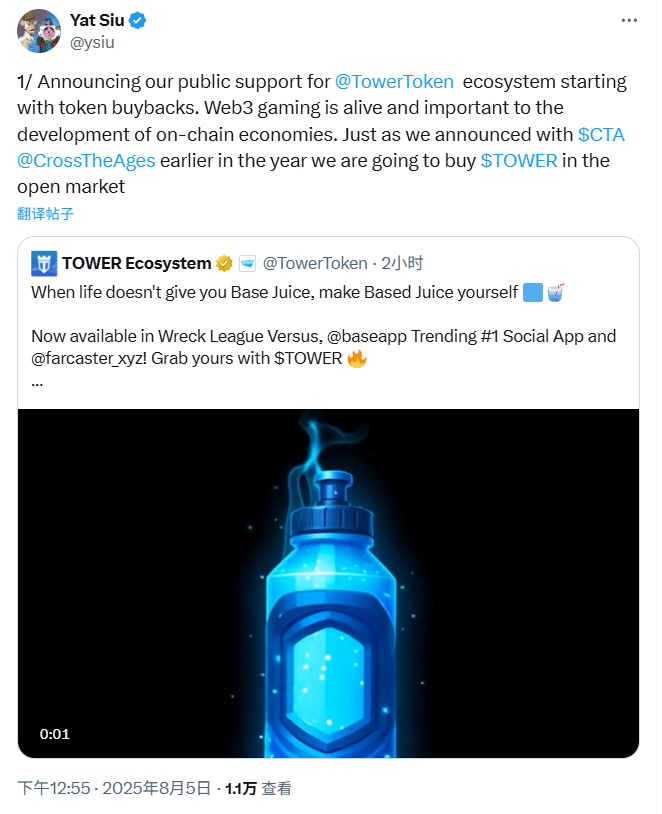
就在今天,2025年8月5日, Brands的联合创始人兼执行主席Yat Siu在X平台上发布的一则简短声明,却如同一颗投入静湖的石子,在Web3游戏领域激起了圈圈涟漪。他宣布,Animoca Brands将“公开承诺支持Tower生态系统”,并将启动TOWER代币的二级市场回购。
Animoca Brands

市场的反应颇为微妙:TOWER是谁?一个似乎还停留在2021年记忆深处的代币,为何在2025年的今天,被Animoca这位Web3巨头重新从“军火库”中翻出并高调擦拭?这仅仅是一次对旗下“亲儿子”的常规扶持,还是在整个GameFi赛道似乎错过了上一轮牛市的落寞背景下,Animoca Brands发出的一次深思熟虑的战略信号?

答案,远比一次简单的代币回购要复杂得多。

解构TOWER:一枚Web3的“活化石”

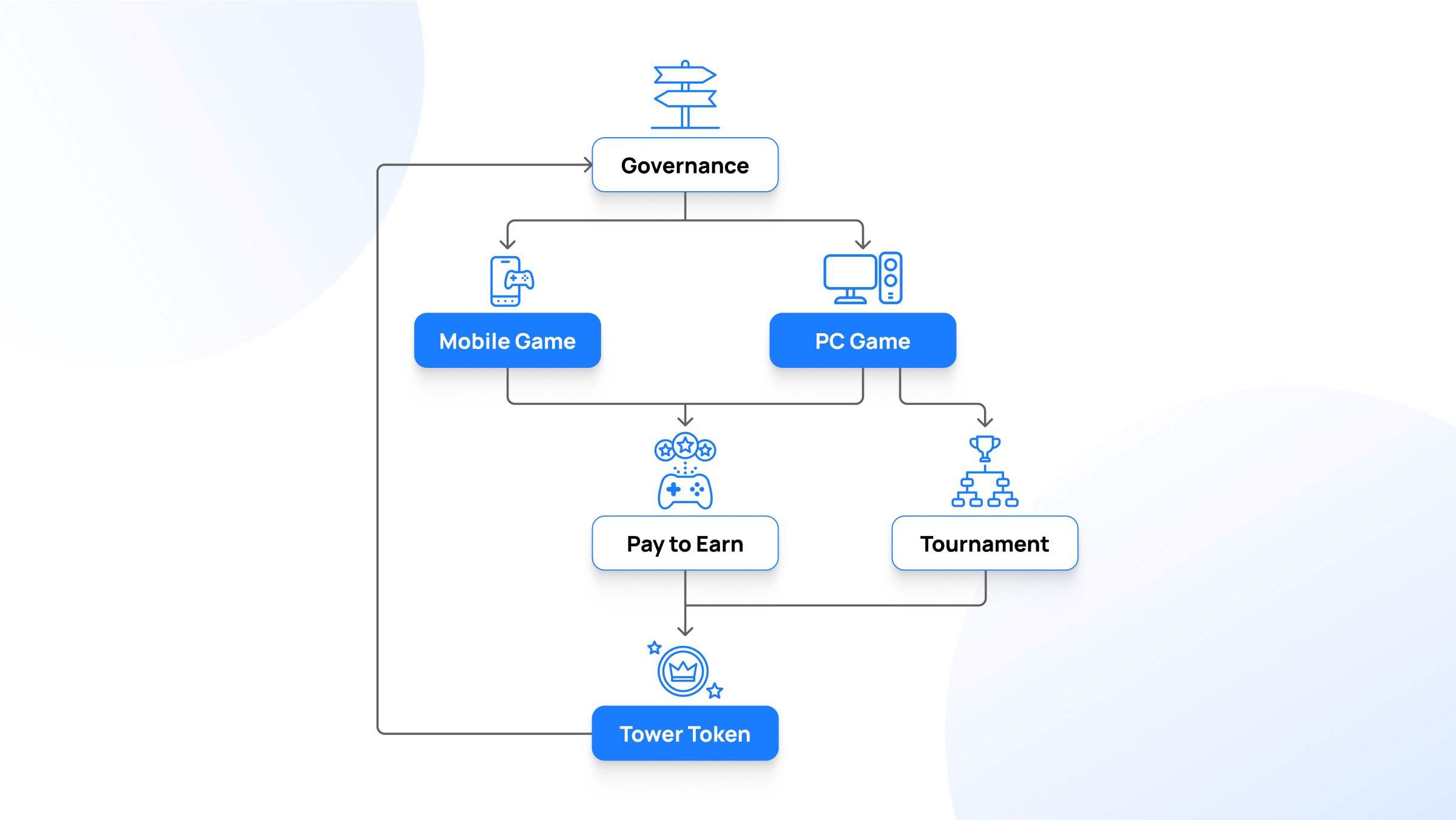
要理解Yat Siu的动机,我们必须先将时钟拨回。TOWER代币及其生态系统,本身就是GameFi赛道演进的一面镜子,甚至可以称之为一枚“活化石”。它诞生于2021年初,那是Play-to-Earn(P2E)概念最炙手可热的时代。Animoca Brands的构想极具前瞻性:将旗下早已获得市场验证的、拥有数百万下载量的免费手游(Free-to-Play),如《Crazy Kings》和《Crazy Defense Heroes》,与Web3的代币经济进行桥接。
Animoca Brands

这个模式的核心,并非创造一个全新的、以“赚取”为唯一目的的链上游戏,而是为已成功的游戏体验“附加”一个价值层。玩家在《Crazy Defense Heroes》中奋力拼杀,不再仅仅是为了虚拟的积分和徽章,而是通过每月达成一定的游戏内经验值(XP)目标,来赚取真正在链上流通的ERC-20代币——TOWER。这些代币可以在其官方网站上兑换独家的游戏NFT或参与特殊活动,形成了一个完整的“玩-赚-用”经济闭环。

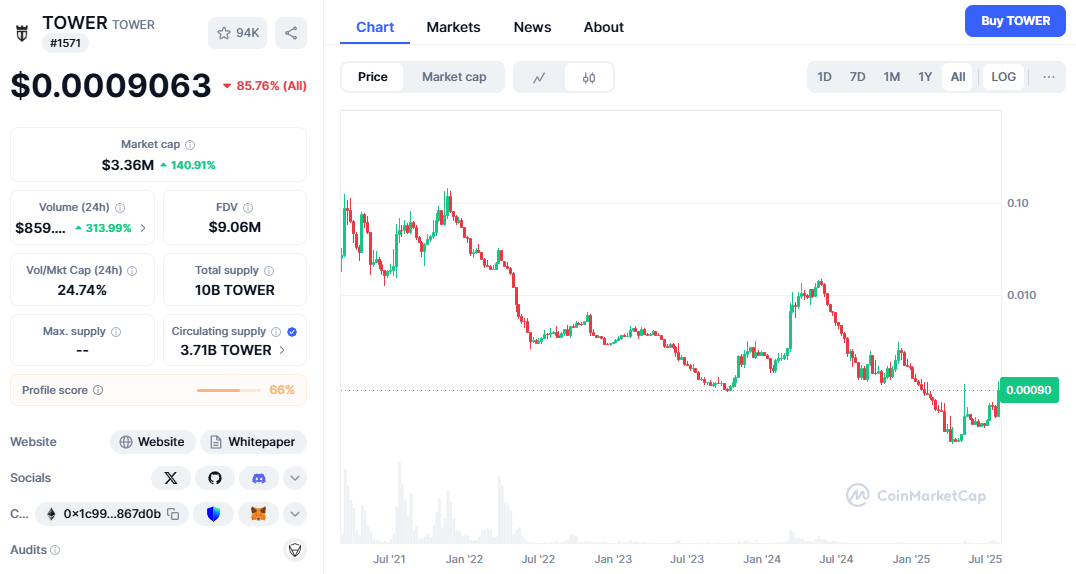
然而,理想丰满,现实骨感。伴随着2022年加密熊市的到来和第一代P2E模型的集体崩溃,TOWER也未能幸免。其代币价格从约0.14美元的历史高点一路下挫,跌幅超过99%,市值一度萎缩至不足200万美元。它就像那个时代大多数的GameFi项目一样,在经历了短暂的辉煌后,迅速被市场遗忘,静静地躺在无数用户的钱包深处。这个项目的初始代币分配(总量100亿枚,其中30%用于P2E奖励池,15%用于市场营销,15%为团队持有)在当时看是行业标准配置,但在流动性枯竭的市场中,这一切都显得那么无力。
Animoca Brands


动机探寻:Yat Siu的“标准操作”与价值哲学

如果TOWER只是一个失败的昨日黄花,那么Animoca今天的举动就显得毫无道理。但关键的线索,隐藏在Yat Siu声明中引用的一个先例里——他在推文中特意提到了“正如我们今年早些时候针对CTA的声明”。

这里的“CTA”,指的是另一个Web3游戏项目“Cross the Ages”。就在两个月前的2025年6月,Animoca Brands宣布与其达成战略合作时,就曾公开表示将“从二级市场购入CTA代币”。当时官方给出的理由是:Animoca旨在支持那些他们认为“价值被严重低估”且“致力于开发高质量Web3游戏”的生态伙伴。

将这套逻辑应用到TOWER身上,Yat Siu的意图便豁然开朗。截至声明发布前,TOWER代币的总市值仅约140万美元。这是一个什么概念?对于一个背后拥有着千万级下载量、至今仍在稳定运营的成熟游戏系列所支撑的代币项目而言,这个估值低得不成比例。Animoca Brands此时入场回购,不仅成本极低,更能以最直接的方式向市场传递一个强有力的信号:我们认为它被低估了,我们相信它的内在价值。

这并非一次心血来潮的“拉盘”,而更像是一次Animoca Brands投资哲学的“标准操作”。与其在外部寻找新的投资标的,不如回过头来,在自己庞大的投资版图中,激活那些拥有坚实基础但暂时蒙尘的资产。这是一种极其精明的“组合投资管理”策略,只不过是以公开市场操作的形式演繹出来。


GameFi的“失落牛市”与路径反思

Yat Siu的行动,恰好发生在一个对GameFi而言略显尴尬的时间节点。回顾过去一年多的牛市,DePIN、AI、Solana生态乃至各类Memecoin都曾轮番上演财富神话,唯独GameFi赛道,除了少数几个头部项目偶有波澜外,整体表现平平,似乎被主流叙事所遗忘。

究其原因,是第一代GameFi留下的“后遗症”太过深刻。以Axie Infinity的早期模型为代表,那种将“Earn”(赚取)置于“Play”(可玩性)之上的设计,催生了大量以打金为唯一目的的“游戏矿工”,其螺旋增发的代币模型在市场下行时被证明是不可持续的。这种模式的脆弱性,让整个行业对GameFi产生了信任赤字。投资者和玩家都在问:我们究竟是在“玩游戏”,还是在“玩庞氏”?

而TOWER的模式,在今天看来,反而提供了一种不同的解题思路。它的游戏本体——《Crazy Defense Heroes》——首先是一款好玩的、能够依靠自身品质吸引并留住玩家的F2P游戏。TOWER代币是锦上添花的奖励层,而非游戏得以成立的基石。这种“Play-and-Earn”(边玩边赚)的理念,而非“Play-to-Earn”(为赚而玩),正被越来越多的人视作更健康、更可持续的发展方向。

同样在进行反思和迭代的还有Gala Games。面对代币通胀压力,Gala在2023年果断地执行了大规模的代币销毁,并转向其自研的GalaChain,试图从根本上优化其经济生态。这些案例表明,GameFi赛道并未消亡,它只是在经历一场深刻的、必要的集体反思与内部重建。


从“增量扩张”到“存量激活”:Animoca的新棋局

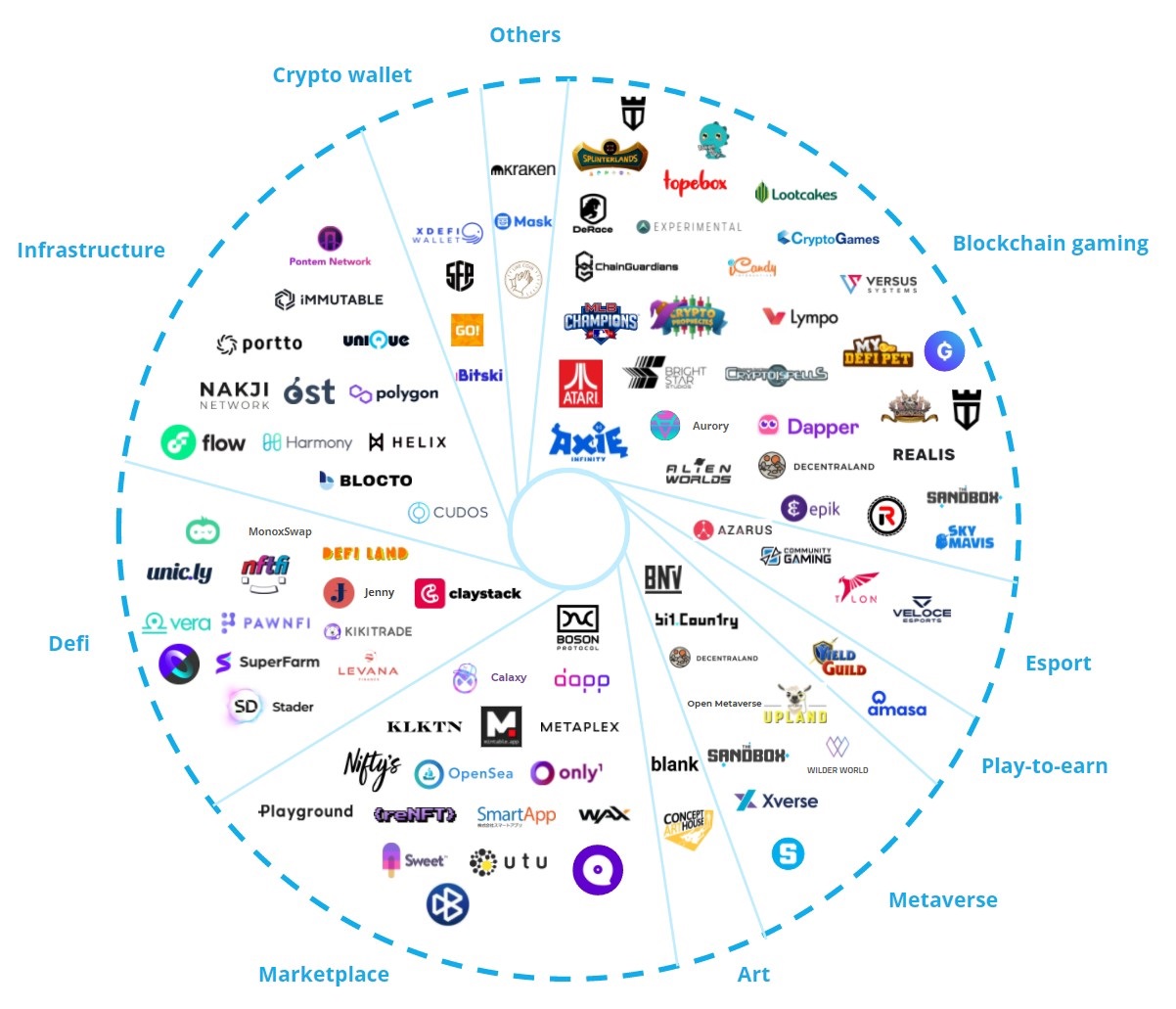
将所有线索串联起来,一幅关于Animoca Brands未来战略的清晰图景便浮出水面。作为Web3领域最庞大的投资帝国之一,Animoca旗下拥有数百个投资项目和子公司。在经历了前几年的高速“圈地”、追求广度的增量扩张阶段后,其战略重心似乎正在悄然转变。
Animoca Brands

新的棋局,是“存量激活”——即深入挖掘并激活其庞大投资组合内部的潜在价值。TOWER项目无疑是这盘新棋局中一枚完美的“过河卒”。它拥有成功的游戏IP、庞大的现有玩家基础、一个功能完备的代币系统,以及一个被市场极度低估的价格。启动回购,就像一个四两拨千斤的杠杆,以最小的成本,撬动了市场的关注、安抚了现有社区,并向生态内所有其他项目方传递了一个信息:母公司会在关键时刻提供实实在在的支持。这无异于一次精准的“内部定向刺激计划”。

有趣的是,在我们对TOWER生态的研究中,并未发现一份清晰的、面向未来的长期发展路线图(Roadmap)。这在追求“画饼”能力的加密世界中显得有些另类。但这或许也正是Animoca新策略的一部分:告别僵化的、宏大的长期承诺,取而代之的是更敏捷、更具机会主义的战术干预。一次代币回购、一场与新伙伴的联动、一轮精心设计的游戏内活动,这些务实的举措可能比一份华丽的PDF文档更能带来实际的价值。

总而言之,Yat Siu关于TOWER的声明,其意义远超一次单纯的财务操作。它既是对当下GameFi发展困境的一次深刻回应,也是市场从狂热走向成熟的必然反思,更是Animoca Brands这位Web3棋手在棋局中盘阶段落下的一步意味深长的棋。

GameFi或许错过了上一场盛大的舞会,但像Animoca Brands这样的掌舵者显然没有弃船而去。他们正在做的,是回到机舱,仔细检查每一个引擎部件,将那些布满灰尘的“传家宝”重新打磨光亮,为下一段截然不同的航程做准备。这段新航程,将不再依赖于投机泡沫,而是建立在可持续的经济模型和被市场验证过的真实价值之上。Yat Siu的信号,不仅关乎TOWER的未来,更是在安静而坚定地告诉整个行业:游戏,还远未结束。


Похожее

SpaceX, OpenAI, Anthropic: The Three AI Giants Racing for IPO, Which One Is Worth Betting On?

SpaceX, OpenAI, and Anthropic are poised for historic IPOs within weeks, potentially raising a combined $180 billion—a sum exceeding the entire internet bubble's fundraising. The hosts of the Limitless Podcast argue this isn't just individual company financing but an unprecedented capital concentration for AI infrastructure, driven by an insatiable need for compute, data centers, power, and chips. SpaceX's IPO is notable for reportedly changing market index rules to allow faster inclusion, potentially funneling trillions in passive retirement funds into its stock, despite its unproven space-based data center business model. In contrast, Anthropic demonstrates explosive growth, with ARR reportedly hitting $45 billion and approaching profitability, fueled by strong enterprise adoption of products like Claude Code. Google's separate $80 billion raise highlights the immense capital pressure, even for giants. The discussion acknowledges bubble risks but leans optimistic. The hosts contend the massive spending is building essential physical infrastructure for the next technological era. A key bottleneck isn't capital but the real-world limits of chip manufacturing and construction speed. As long as demand for AI compute outstrips supply, this investment cycle represents a foundational build-out rather than a purely financial bubble. All three companies are seen as foundational bets on the future, with Anthropic often cited as the most immediately compelling due to its proven revenue trajectory.

marsbit2 ч. назад

SpaceX, OpenAI, Anthropic: The Three AI Giants Racing for IPO, Which One Is Worth Betting On?

marsbit2 ч. назад

From 'Old Guys' to 'New Favorites': How AI Is Revaluing Old Infrastructure from Dell to Nokia?

From "Vintage Tech" to "New AI Darlings": How AI Revalues Old Infrastructure One year ago, tech giants like Dell, Nokia, Cisco, and Western Data were seen as slow-growth, low-valuation stories, far from the AI spotlight dominated by players like Nvidia. Now, these legacy tech stocks are gaining market attention, sparking debate on whether this is genuine industry revaluation or a temporary narrative. As AI moves from model parameters to real-world data centers, the market is recognizing companies with proven delivery and infrastructure capabilities. This shift marks a change in the AI investment thesis: from pure model and GPU focus to the complex systems engineering required for deployment. Companies like Dell, HPE, and Corning are being revalued not for being "sexy" AI innovators, but for their decades of accumulated expertise in supply chains, enterprise delivery, and infrastructure—assets that have become critical in the AI buildout phase. The revaluation is unfolding across three key infrastructure lines: 1. **Servers & System Integration:** Dell and HPE are emerging as crucial system integrators or "general contractors" for AI data centers, translating GPU orders into complete, deployable server racks integrated with power, cooling, and networking. 2. **Networking & Connectivity:** AI's scale demands robust high-speed connections. Corning (fiber optics), Nokia (AI-RAN, 6G), and Cisco (data center switches) are gaining importance for enabling efficient data transfer within and between AI clusters. 3. **Storage:** Beyond high-speed memory (HBM/DRAM), the AI data explosion is driving demand for high-capacity hard drives (HDDs) from companies like Western Digital and Seagate to handle training data, logs, and cold storage cost-effectively. For this revaluation to be substantive and not just a narrative, three criteria are key: 1) Concrete AI-related order and revenue growth (e.g., Dell's AI server sales), 2) Upward revisions to company financial guidance, and 3) Sustainable improvements in profit quality, not just top-line revenue spikes. In essence, AI's transition to a real construction phase is re-pricing "old assets" against "new demand." The opportunity, however, is selective. Only those legacy firms that are demonstrably integrated into the capital expenditure chains of data center and enterprise AI deployment are likely to experience a true "logic re-rating" rather than just a temporary valuation bounce.

marsbit2 ч. назад

From 'Old Guys' to 'New Favorites': How AI Is Revaluing Old Infrastructure from Dell to Nokia?

marsbit2 ч. назад

Торговля

Спот
Фьючерсы
活动图片