Dogecoin Price To $3 And XRP Price To $5? Analyst Says It’s ‘A Matter Of Time’

bitcoinistОпубликовано 2024-12-01Обновлено 2024-12-02

Введение

The cryptocurrency market is no stranger to bullish predictions, particularly given the current positive market sentiment. According to a crypto...

The cryptocurrency market is no stranger to bullish predictions, particularly given the current positive market sentiment. According to a crypto market participant who goes by the name Scofield (@Crypto_Scofield) on social media platform X, there are a few altcoins with bullish potential in the coming weeks and month. 

In his recent post, Scofield shared a list of price targets for various cryptocurrencies, including well-known tokens such as Dogecoin and XRP. Among the notable predictions, he suggested that Dogecoin could reach $3, while XRP could hit $5, describing these price levels as “a matter of time.”

Price Predictions To Stir Crypto Investors

Although the post in which this analyst highlighted these bullish price targets did not come with a technical analysis and potential timelines, it nonetheless plays into the current bullish sentiment surrounding these cryptocurrencies.

XRP, for instance, has been undergoing ultra-bullish inflows and buying pressure from crypto traders, which has caused its price to be trading at its highest point in over three years. At the time of writing, XRP is trading at $1.93, which is its highest level since 2018. This impressive rally has reignited interest in the token and its only a matter of time before the XRP price surpasses the critical $2 threshold.

The XRP price is already up by 270% in the past 30 days, and reaching the predicted $5 mark would translate to a further 160% increase at this point.

DOGE is currently trading at $0.42. Chart: TradingView

Scofield’s assertion that the XRP price could surge to $5 aligns with the bullish sentiment that has surrounded the token since the US presidential elections. Additionally, the expected change in SEC leadership has also sent the XRP price surging more than many would’ve expected. However, reaching $5 would require the XRP price to overcome its current all-time high of $3.40 and maintain consistent trading volume.

Another interesting aspect of Scofield’s predictions is the projection of Dogecoin reaching $3. This prediction resonates with the ongoing enthusiasm surrounding the token, which has seen renewed attention from both retail and institutional investors.

Dogecoin, like XRP, is trading at multi-year highs, recently climbing to $0.4759. Notably, this marks the highest level the Dogecoin price has achieved in three years. For Dogecoin, reaching the predicted $3 mark would translate to a 530% increase from $0.4759.

Other Predictions: A Broader Bullish Sentiment

Scofield’s list extended beyond Dogecoin and XRP, as it covers several altcoins with equally ambitious targets. Notably, he envisions Fetch.ai (FET) climbing to $10, Fantom (FTM) hitting $5, and Injective Protocol (INJ) surging to $150. Additionally, he predicted VeChain (VET) will reach $0.25, Coti (COTI) will hit $1, and Oasis (ROSE), $0.80.   

Featured image from Pexels, chart from TradingView

Scott Matherson

Scott Matherson

Scott Matherson is a leading crypto writer at Bitcoinist, who possesses a sharp analytical mind and a deep understanding of the digital currency landscape. Scott has earned a reputation for delivering thought-provoking and well-researched articles that resonate with both newcomers and seasoned crypto enthusiasts. Outside of his writing, Scott is passionate about promoting crypto literacy and often works to educate the public on the potential of blockchain.

Похожее

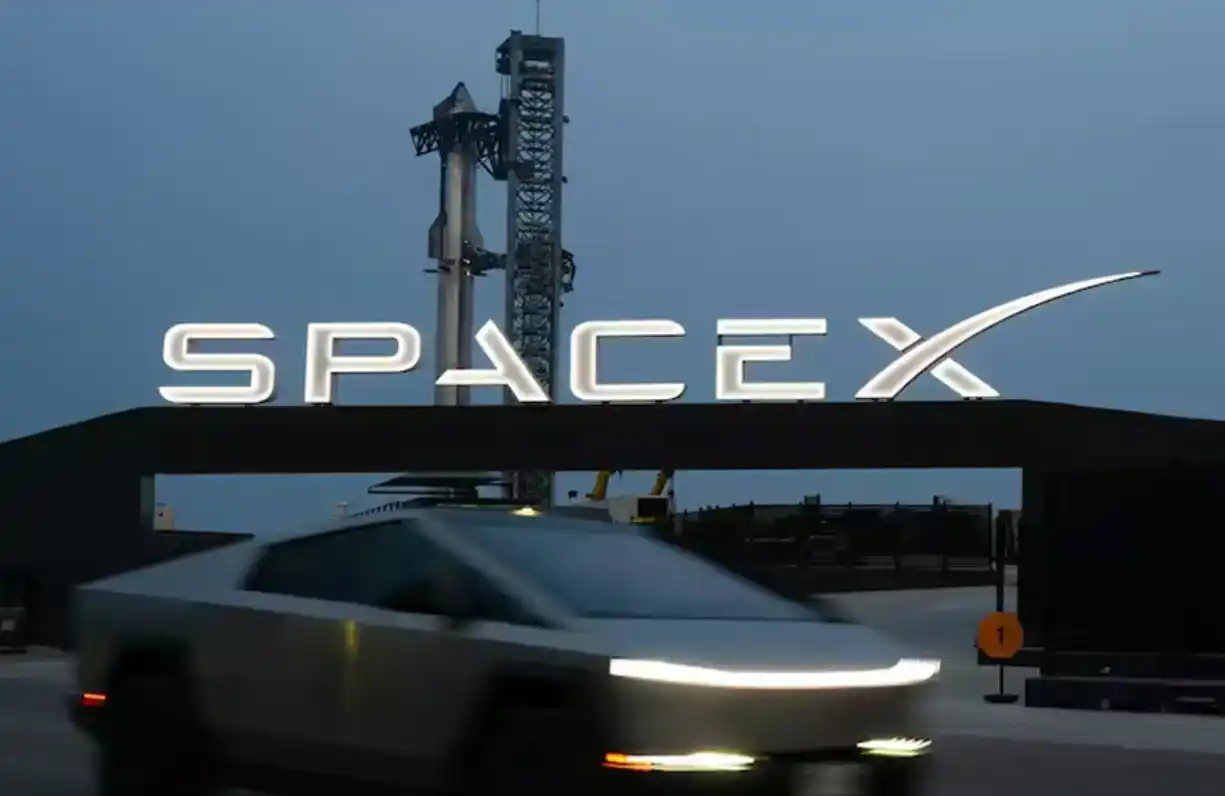
Those Who Rushed into SpaceX's Private Secondary Market Are Bewildered in the Greatest Wealth Creation Wave Ever

Investors are rushing into SpaceX’s private secondary market ahead of its historic IPO, but many are finding confusion instead of clarity. While early backers like Darsana Capital are poised for astronomical returns—turning a $600M bet into roughly $150B—other buyers face uncertainty about whether they actually own SpaceX shares at all. The frenzy stems from AI-driven FOMO, as soaring valuations for private companies like OpenAI and SpaceX create intense demand for pre-IPO exposure. This has fueled a booming but opaque secondary market, where special purpose vehicles (SPVs) layer investments, adding fees and obscuring ownership. Some investors are three or four layers removed from the actual stock, unable to verify their holdings. With companies staying private longer—SpaceX for 24 years—secondary trading has grown complex and risky. Platforms have faced fraud, bankruptcy, and regulatory scrutiny. Now, firms like Anthropic and OpenAI are publicly rejecting unauthorized transfers, warning that shares sold through certain platforms may be invalid. SpaceX’s IPO filing in June will finally reveal the official shareholder list, resolving these uncertainties. Until then, buying into SpaceX through secondary channels remains a high-stakes gamble—a blind box in a market overflowing with capital and complexity.

marsbit12 мин. назад

Those Who Rushed into SpaceX's Private Secondary Market Are Bewildered in the Greatest Wealth Creation Wave Ever

marsbit12 мин. назад

Warsh's First Conundrum: Rate Cuts, Inflation, and a Fractured Fed

Walsh's First Dilemma: Rate Cuts, Inflation, and a Divided Fed Kevin Warsh officially assumed the Fed Chairmanship on May 15th, inheriting a central bank deeply divided over inflation. Contrary to market expectations of a dovish stance due to his appointment by President Trump, Warsh's historical record shows early and consistent hawkish concerns about inflation. The Fed he leads is fractured, with three FOMC members recently dissenting against even hinting at future rate cuts. The immediate challenge is surging inflation. While the Iran-related oil shock is a temporary factor, core CPI and services inflation are accelerating, showing signs of becoming entrenched—echoing the Fed's 2022 "transitory" misstep. Warsh faces the task of building consensus within a committee where several members believe policy may not be restrictive enough, especially if the neutral interest rate (r-star) is higher than currently estimated. Politically, Warsh is caught between Trump's desire for rate cuts and the economic reality of persistent price pressures. Any move perceived as bowing to political pressure could undermine Fed independence. Market implications are significant. Long-term Treasury yields (e.g., 30-year at 5.19%) could rise further, especially if the June FOMC statement hints at possible tightening. Tech stocks face continued valuation pressure from higher rates. The key variable is progress in Iran negotiations; a breakthrough before the June meeting could temporarily ease oil-driven inflation, but stubborn services inflation would remain. All eyes are on Warsh's first post-FOMC press conference on June 17th. His wording on inflation and policy will reveal how much the market has mispriced his stance and the Fed's likely path forward.

marsbit21 мин. назад

Warsh's First Conundrum: Rate Cuts, Inflation, and a Fractured Fed

marsbit21 мин. назад

Harvard and Others Exit, Six Core Talents Depart in a Month: What's Happening to Ethereum?

Ethereum faces significant internal and external pressures, marked by a wave of high-profile departures from its core development team and a loss of confidence from major institutional investors. Within four months, at least seven key figures—including researchers, protocol leads, and a former executive director—have left the Ethereum Foundation. This exodus, partly triggered by controversy over a new "mission statement" requiring employee sign-off, risks derailing critical roadmap upgrades like PeerDAS and Verkle trees, and has already contributed to delays in the planned Glamsterdam upgrade. Compounding the internal instability, major institutions are reducing their exposure. Goldman Sachs slashed its iShares Ethereum Trust holdings by approximately 70%, and Harvard's endowment fund completely exited its $87 million Ethereum ETF position. Concurrently, the Ethereum Foundation itself has been unstaking and selling ETH for "treasury rebalancing," further unsettling the market. These challenges emerge as Ethereum's competitive dominance erodes. Its share of the total DeFi market has fallen to around 54%, with rivals like Solana and Base gaining ground. In fee revenue, it was recently outpaced by newer chains like Hyperliquid. Furthermore, a trend of institutions exploring proprietary or hybrid blockchains (exemplified by Circle's Arc) threatens Ethereum's position as the premier settlement layer for institutional assets. While founder Vitalik Buterin's vision for Ethereum as a secure, decentralized "technical sanctuary" and "world computer" remains clear, its realization is threatened by the concurrent loss of execution capability, institutional patience, and market share during a critical competitive phase.

链捕手1 ч. назад

Harvard and Others Exit, Six Core Talents Depart in a Month: What's Happening to Ethereum?

链捕手1 ч. назад

IOSG | After the Halving of Developer Count: Crypto Isn't Dead, It's Just Handing Over Talent to AI

IOSG Report: Crypto's Developer Exodus Masks a "Talent Deleveraging" and Migration to AI The number of monthly active crypto developers on GitHub has roughly halved from its 2022 peak to around 23,000. This decline is not a sign of industry collapse but a "talent deleveraging." The exodus consists largely of newcomers who entered during the bull market, while the cohort of established developers (2+ years of experience) has grown to a record high, now contributing about 70% of the code. These core builders are consolidating in ecosystems with real users and activity, like Bitcoin and Solana. The crypto industry has forged a unique skill set: building operational, trusted systems from scratch in environments with no external authority, near-zero tolerance for error, and missing rules. This involves creating trust through pure code/mechanisms and making judgments under profound technical and economic uncertainty. This capability is finding new, high-value applications in the AI era, which faces structurally similar problems: trust in opaque autonomous systems, a lack of governance frameworks, and coordination among self-interested AI agents. Key migration patterns include: 1. **Direct Hardware/Infrastructure Translation:** Projects like CoreWeave pivoted from GPU mining to AI compute supply. 2. **Mechanism Design & Trust Engineering:** Crypto's experience in decentralized coordination and incentive design (e.g., via tokenomics, staking/slashing) is being applied to critical AI challenges: * **Compute Aggregation & Verification:** Solving trust and efficiency problems in decentralized GPU networks (e.g., Hyperbolic). * **AI Agent Governance:** Using cryptoeconomic mechanisms to align the behavior of multiple autonomous AI agents (e.g., EigenLayer's approach). * **Autonomous Agent Payments:** Leveraging stablecoins and programmable money for fast, permissionless micro-transactions between AI agents (e.g., x402 protocol). The builder's role is evolving from "writing smart contracts" to "designing trust mechanisms for autonomous AI systems." This convergence is reflected in hiring trends at major firms and significant capital allocation from top venture funds like Paradigm and a16z into the crypto-AI intersection. While regional approaches differ—with the US focusing more on foundational protocol innovation and Asia on application-layer integration—the core thesis remains: the systemic skills honed in crypto's trustless environments are becoming a scarce and critical asset for scaling AI.

marsbit1 ч. назад

IOSG | After the Halving of Developer Count: Crypto Isn't Dead, It's Just Handing Over Talent to AI

marsbit1 ч. назад

Торговля

Спот
Фьючерсы
活动图片