Авторы:Xinyang & Ethan, IOSG
В 2026 году кривая активности разработчиков в open-source сообществе Crypto на GitHub совершила впечатляющий «донный» разворот. По сравнению с пиком в 45 тысяч активных разработчиков в месяц в 2022 году, показатель упал примерно до 23 тысяч. Такое двукратное сокращение на бумаге вызвало в социальных сетях дискуссии об «истощении нарратива». Однако, если проанализировать структуру этой кривой, становится ясно, что мы наблюдаем не сжатие отрасли, а глубокую «делевериджизацию талантов».
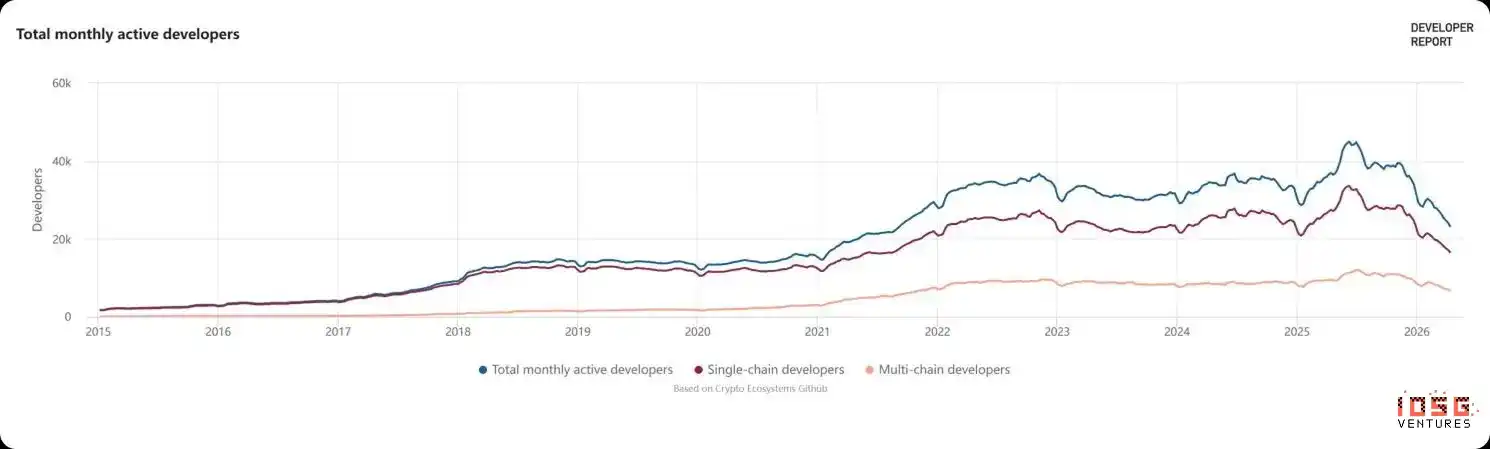
▲ Источник данных: Electric Capital Developer Report, на основе Crypto Ecosystems Github
I. Кто ушел? Кто остался?
В основном ушли новички. В феврале 2024 года за один месяц в индустрию пришли 5462 новых разработчика, но затем этот показатель резко упал, а уровень оттока среди тех, кто проработал менее года, составил 52%. Большинство из них пришло во время бычьего рынка и занималось такими задачами, как смарт-контракты для выпуска NFT, форки DeFi-протоколов, разработка фронтендов для новых L2-решений. Эти роли сильно зависели от рыночного хайпа: как только он прошел, проекты прекращали работу, а вместе с ними исчезали и рабочие места. Согласно данным, вклад новичков в код никогда не превышал 25% от общего объема, а значит, они изначально не входили в ядро отрасли.
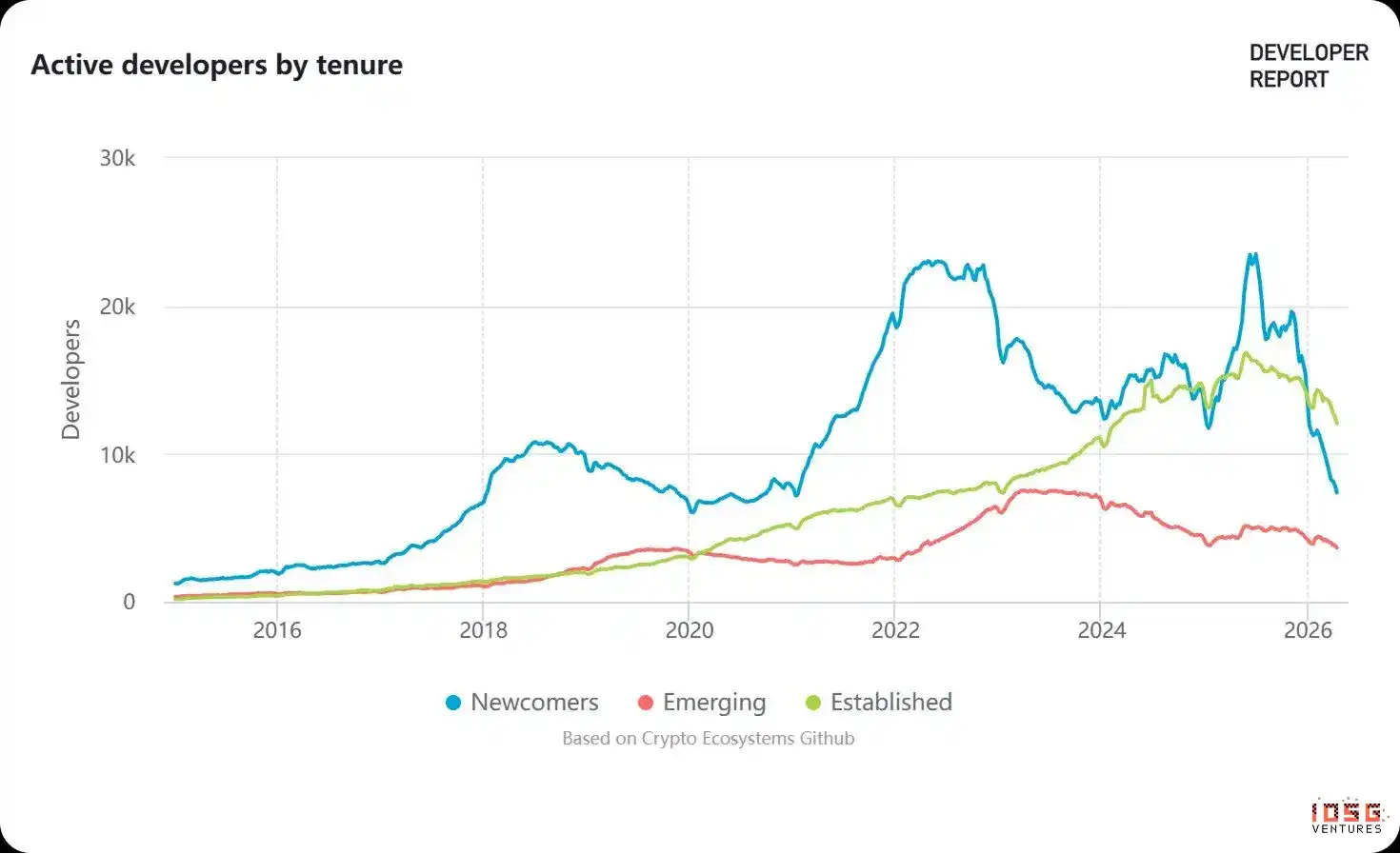
▲ Newcomers приходят на бычьем рынке и уходят на медвежьем; Established devs (более 2 лет опыта) в тот же период достигли исторического максимума
Источник данных: Electric Capital Developer Report
С другой стороны, количество разработчиков с опытом работы более двух лет в тот же период не сократилось, а выросло, достигнув исторического максимума, и они вносят около 70% кода. Партнер Electric Capital Мария Шен прямо говорит: «Когда мы смотрим на группу established developers, она растет и выглядит очень здоровой».
Они остались не потому, что у них нет другого выбора.
С технической точки зрения, сейчас ключевая работа в crypto — это разработка инфраструктуры, требующая многолетнего опыта: разработка на уровне протоколов, аудит безопасности, кросс-чейн архитектура. Этим задачам нужно долго учиться, и они не исчезнут с уходом хайпа.
С экономической точки зрения, у многих ветеранов есть токены, которые еще не полностью вестированы, governance-права в протоколах и долевое участие. Их накопленный опыт в отрасли создал реальные барьеры и приносит реальную отдачу. С точки зрения распределения по экосистемам, они голосуют ногами: за два года количество разработчиков для Bitcoin выросло на 64.3%, для Solana — на 11.1%, а для Cosmos и Polkadot снизилось на 51.1% и 46.9% соответственно. Ветераны концентрируются в экосистемах с реальными пользователями и доходами, уходя от проектов, которые держатся на нарративах.
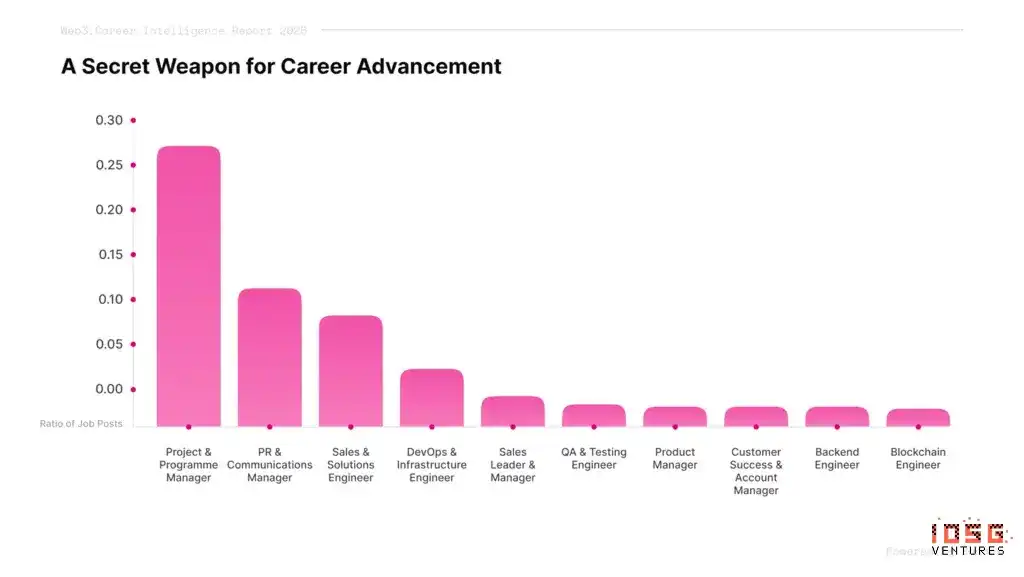
▲ Источник: Coincub Web3 Jobs Report 2025
Источник данных: Web3.Career
Изменения в структуре вакансий подтверждают ту же тенденцию. В новых вакансиях Web3 в 2025 году наибольшую долю занимали не разработчики, а менеджеры проектов и программ (Project & Programme Management) — более 27%. Для индустрии, известной своей технологической направленностью, это нелогично, но за этим стоит простая причина: отрасль перешла из фазы строительства в фазу исполнения. Нужно интегрировать более 100 блокчейнов, институциональные клиенты предъявляют совершенно иные требования к комплаенсу и безопасности, а управление DAO требует баланса интересов различных стейкхолдеров. Это не традиционный менеджмент проектов, а координация и принятие решений в среде, где правила еще только формируются.
На поверхности индустрия сокращается, но плотность ядра, наоборот, растет. Медвежий рынок 2018-2019 годов также сопровождался массовым оттоком разработчиков, но затем появились такие знаковые проекты, как Uniswap, Aave, OpenSea, определившие бычий рынок 2020-2021 годов. На этот раз оставшиеся билдеры имеют более зрелую инфраструктуру, а эпоха AI дает им сцену больше, чем в прошлом цикле.
II. Какими навыками обладают оставшиеся?
Какие же особые навыки оттачивает индустрия crypto в билдерах? Чтобы ответить на этот вопрос, нужно вернуться к базовым принципам блокчейна. Несмотря на смену рыночных циклов, отрасль всегда работает по одному и тому же фундаментальному правилу: код — это закон, исполнение — окончательно.
Инцидент с The DAO в 2016 году: злоумышленник, используя уязвимость рекурсивного вызова, вывел 36 миллионов долларов. В коде не было бага, логика выполнялась строго по плану, просто разработчики не предусмотрели граничные условия. Взлом кросс-чейн моста Poly Network в 2021 году: 610 миллионов долларов были переведены за несколько часов. Не было платформы для остановки, не было института для отмены, не было правовых норм для взыскания. Это структурная особенность crypto, отличающая его почти от всех других отраслей: нулевой запас на ошибку, постфактумное вмешательство практически невозможно.
Такая среда выковала набор навыков, редко востребованных в других индустриях: способность с нуля создавать функционирующие системы, в которые незнакомцы готовы участвовать, в условиях отсутствия правил и доверия.
Это включает два аспекта. Во-первых, создание доверия с нуля, без опоры на внешние авторитеты, только с помощью кода и механизмов, чтобы незнакомцы были готовы вложить реальные активы. Во-вторых, принятие решений в условиях технологической и экономической неопределенности: нет нормативных рамок, исторических данных или отраслевых стандартов, но все равно нужно спроектировать работоспособную систему.
Оба аспекта нашли конкретное воплощение в crypto. Uniswap не имеет корпоративных гарантий, KYC или службы поддержки. Любой, кто вкладывает средства в пул ликвидности, полагается лишь на доверие к нескольким сотням строк кода и экономическому механизму, что обеспечивает ежедневный объем торгов в сотни миллиардов долларов. MakerDAO не имеет поддержки центрального банка или страхования вкладов, стабильность DAI поддерживается исключительно ончейн-управлением и механизмом залогов. В период DeFi Summer ситуация была еще экстремальнее: не было регуляторных рамок, стандартов аудита, никаких исторических данных для сравнения. Билдеры создали AMM, кредитные протоколы, фарминг ликвидности — от идеи до TVL в десятки миллиардов долларов прошло всего несколько месяцев. Этот навык проявляется по-разному у билдеров на уровне протоколов, приложений и управления, но лежащий в основе принцип один и тот же.
Эпоха AI создает структурно похожую проблему. Процесс принятия решений моделями непрозрачен, результаты их работы нельзя независимо верифицировать. AI-агенты начинают автономно выполнять транзакции, распределять средства, а соответствующие системы правил и ограничений еще не существуют. Крупные компании, разрабатывающие модели, контролируют как сами модели, так и стандарты их оценки, а у пользователей нет эффективных средств проверки. Вычислительные мощности сконцентрированы у нескольких крупнейших игроков, что создает монопольное ценообразование при всплеске спроса. Все эти проблемы указывают на одно ядро: проблема доверия к автономным системам повторяется в процессе масштабирования AI, только в больших масштабах.
Билдеры crypto годами решали подобные проблемы в среде без внешних авторитетных правил, только раньше сценарии были ончейн-протоколами, а теперь это AI. И уже есть группа людей, которая напрямую перенесла накопленные в crypto навыки в AI и достигла результатов.
III. Как эти навыки переоцениваются в эпоху AI?
Переход из crypto в AI в последние годы не редкость, но при ближайшем рассмотрении видно, что они уносят с собой разное.
Самый очевидный путь — прямое применение оборудования и опыта. Трое основателей CoreWeave, Майкл Интратор, Брайан Вентуро и Брэннин МакБи, начали майнить Ethereum на GPU в 2017 году, постепенно расширившись от одной установки до тысяч. В 2022 году они закрыли майнинговый бизнес, а через два месяца вышел ChatGPT. Их GPU моментально превратились в поставку вычислительных мощностей для AI. В марте 2025 года компания провела IPO на NASDAQ с оценкой около 23 млрд долларов, а затем пиковая капитализация приблизилась к 70 млрд долларов.
Сооснователь OpenSea Алекс Аталла занимался агрегацией и маршрутизацией крайне неоднородных активов на рынке NFT. Он применил тот же опыт к маршрутизации AI-моделей, основав OpenRouter, который за два года обслужил более 5 миллионов разработчиков и достиг оценки в 500 миллионов долларов.
Другой тип перехода заслуживает большего внимания. Основатель NEAR Илья Полосухин — соавтор статьи о Transformer. Уйдя из Google, он изначально хотел создавать AI-приложения с помощью естественного языка, но в процессе разработки столкнулся с практической проблемой: необходимость осуществлять трансграничные платежи для разметчиков данных по всему миру, у многих из которых не было банковских счетов. Технология блокчейна оказалась оптимальным решением этой платежной проблемы.
Сейчас NEAR трансформируется в платформу AI-инфраструктуры, основными направлениями которой являются user-owned AI и децентрализованное конфиденциальное машинное обучение (DCML), позволяющее пользователям использовать AI-сервисы, не раскрывая данных. Накопленный в NEAR опыт в области децентрализованной архитектуры стал самой сложной для копирования отправной точкой в этом направлении.
Сооснователь Circle Шон Невилл после ухода основал Catena Labs, позиционируя ее как AI-нативный банк, и напрямую перенес понимание инфраструктуры стейблкоинов в финансовые сценарии работы AI-агентов. Раунд посевного финансирования на 18 миллионов долларов возглавила a16z crypto. Опытный разработчик Aave и Lens Protocol Надер Дабит перешел в Cognition, принеся опыт построения экосистемы разработчиков, накопленный в нескольких crypto-протоколах, в сферу инструментов для AI-агентов.
Эти люди унесли с собой не просто оборудование GPU или пользовательскую сеть, а интуицию проектирования механизмов, опыт построения экосистемы разработчиков, способность принимать решения и строить надежные системы с нуля в отсутствие правил. Эти навыки как раз соответствуют трем структурным пробелам, с которыми сталкивается масштабирование AI.
Агрегация и оптимизация вычислительных мощностей
Вычислительные мощности — самый прямой барьер для масштабирования AI. Обучение и инференс требуют большого количества GPU, спрос сильно колеблется, облачные провайдеры дороги и заставляют ждать в очереди, а компании не хотят скупать оборудование сами. У этой проблемы два уровня: как агрегировать и распределять мощности, и как более эффективно использовать агрегированные мощности. У билдеров crypto есть непосредственно применимый опыт на обоих уровнях.
Hyperbolic решает проблемы распределения и доверия. Основатель Джаспер Чжан привнес децентрализованное проектирование механизмов в сферу вычислительных мощностей для AI: токены побуждают владельцев разрозненных GPU делиться простаивающими мощностями, но более ключевой вопрос — доверие.
Почему можно доверять результатам вычислений, предоставленным незнакомым узлом? Ключевая инновация, PoSP, использует случайную выборку и теорию игр, делая честность доминирующей стратегией для узлов. Не требуется полная проверка, затраты низкие, масштабируемость высокая, результаты надежны. Эта логика напрямую перенесена из crypto-практики верификации действий незнакомых узлов.
MoonMath решает проблему эффективности. Ее предшественница, Ingonyama, специализировалась на аппаратном ускорении ZK, увеличивая скорость генерации ZK-доказательств в несколько раз в условиях экстремальных вычислительных ограничений. Сейчас направление сместилось на производительный слой для Physical AI, занимаясь ускорением разреженного внимания для видео-диффузионных моделей (LiteAttention), низкоранговой декомпозицией слоев FFN (LiteLinear), ускорением обратного распространения при обучении (BackLite). Переход от ускорения ZK к ускорению инференса AI основан на одном и том же навыке: заставить математику работать быстрее в условиях экстремальных вычислительных ограничений. Сфера изменилась, но накопленный опыт не пропал.
Управление AI и проектирование стимулирующих механизмов
Когда несколько AI-агентов начинают совместно выполнять задачи, как гарантировать, что они не разрушат общую систему в погоне за собственными целями? Каждый участник стремится максимизировать свою целевую функцию, и никто не гарантирует, что система в целом останется работоспособной, а скорость выполнения агентами операций превышает временное окно для вмешательства человека.
Это тип проблем, с которыми билдеры crypto сталкивались неоднократно при проектировании управления DAO и токеномики: заставить участников с совершенно разными интересами действовать в соответствии с заданным направлением системы при отсутствии центрального авторитета. Ответ crypto — экономические механизмы: нарушение правил влечет реальные экономические издержки, правила записаны в коде и выполняются автоматически.
EigenLayer перенес этот механизм напрямую в контекст AI. С помощью механизма рестейкинга (restaking) узлы должны застейкать активы перед участием в совместной работе. Невыполнение обязательств или нарушение правил запускает автоматическое наказание. Правила — это не рекомендации, а жесткие границы с реальными экономическими последствиями. EigenCloud расширяет эту логику до верифицируемых вычислений и совместного управления AI-агентами, заставляя агентов оставаться в рамках, заданных при проектировании системы, при достижении своих целей. Использование экономических механизмов для ограничения агентов гораздо надежнее, чем использование этических норм.
Автономные платежи для AI-агентов
Есть и более фундаментальная проблема: как платят агенты. Традиционные платежные системы созданы для людей: для кредитных карт нужен счет, банковские переводы требуют авторизации, каждый шаг предполагает, что оператор — человек, имеющий идентификацию и готовый ждать. Агенты не будут ждать. Они могут инициировать множество запросов в секунду, каждый из которых может включать микроплатеж. Традиционные платежные каналы в таком сценарии просто не работают.
Стейблкоины и ончейн-правила — это инфраструктура, уже построенная билдерами crypto, изначально поддерживающая программируемость, отсутствие необходимости в авторизации и круглосуточную работу. Эти три характеристики как раз являются жесткими требованиями для сценариев платежей агентов. Не хватает лишь протокола, связывающего стейблкоины с рабочими процессами агентов.
x402 был запущен Coinbase в мае 2025 года. Он активирует статусный код HTTP 402, встраивая платежи стейблкоинами прямо в HTTP-запросы. Агент совершает платеж одновременно с отправкой запроса, без необходимости в аккаунте, расчет занимает около двух секунд. По данным на апрель 2026 года, протокол x402 обработал более 165 миллионов транзакций на общую сумму около 50 миллионов долларов, количество активных агентов достигло 69 000 (данные: x402 Foundation). К протоколу уже подключились Cloudflare, AWS, Stripe, Anthropic MCP. Платежи агентов — это уже направление с реальным трафиком.
Три направления соответствуют трем структурным пробелам, с которыми сталкивается масштабирование AI: агрегация и эффективность вычислительных мощностей, согласование стимулов для совместной работы множества агентов, инфраструктура для автономных платежей. На эти вопросы нет готовых ответов в традиционной программной архитектуре, но в индустрии crypto есть соответствующий опыт их решения. Навыки не исчезли, они просто нашли новую сферу применения.
IV. Новая роль билдера: от написания контрактов к установлению правил для AI
Масштабирование AI создает ранее не существовавший дефицит функций. Это не дефицит технических специалистов, а дефицит людей, способных проектировать механизмы доверия в автономных системах. Когда целевой аудиторией становятся не люди, а AI, роль билдера crypto также переопределяется.
В таблице ниже сравниваются изменения в парадигме конкретных функций:
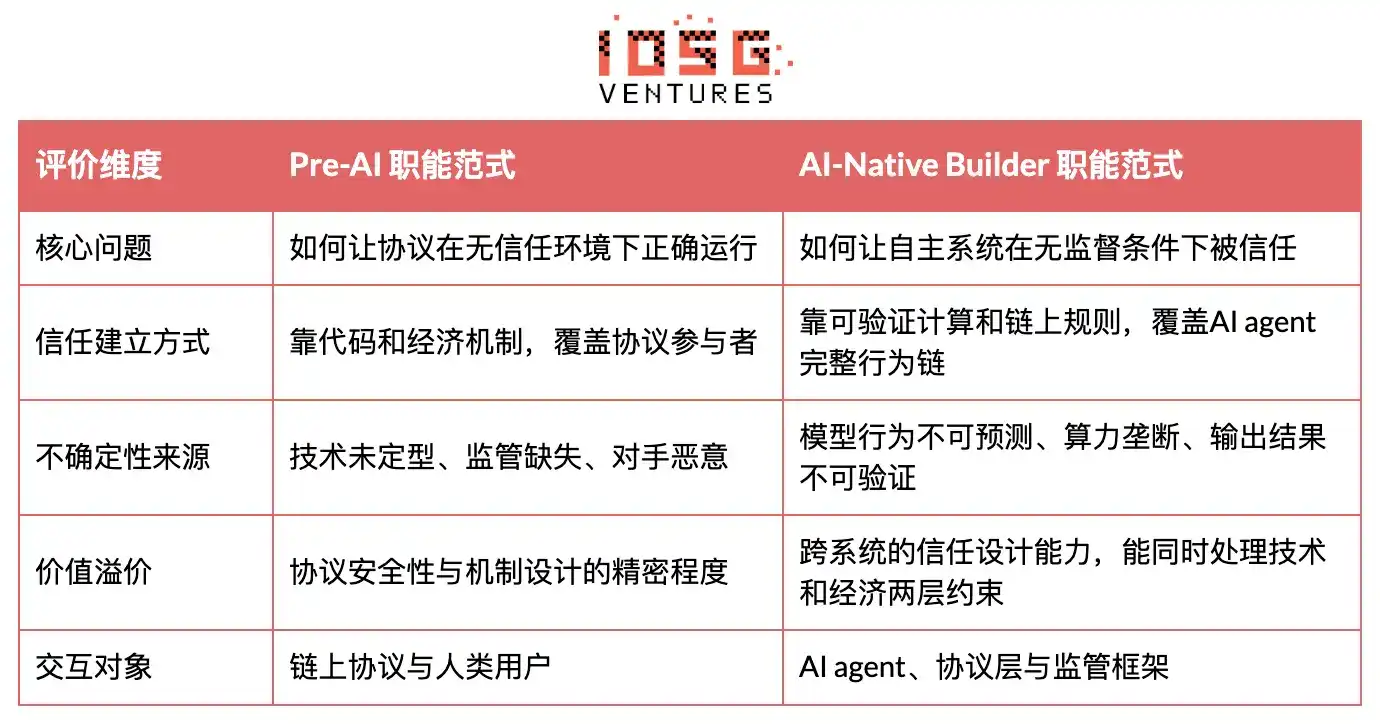
Ключевое различие между двумя парадигмами заключается не в технологическом стеке, а в способе установления доверия и логике исполнения правил. В эпоху до AI билдеры crypto имели дело с человеческими участниками, правила записывались в контракты, запас на ошибку был нулевым, но границы системы были относительно четкими.
В AI-нативную эпоху, когда взаимодействие происходит с автономно работающими AI-агентами, необходимо решать следующие проблемы: поведение агентов непредсказуемо, скорость выполнения превышает окно для вмешательства человека, а сами границы системы необходимо заново определять в условиях большей неопределенности. Функциональная роль билдера crypto смещается от «написания безопасных контрактов» к «проектированию надежных механизмов для автономных систем AI».
style="text-align: start;">Наем в ведущих компаниях уже отражает эти изменения: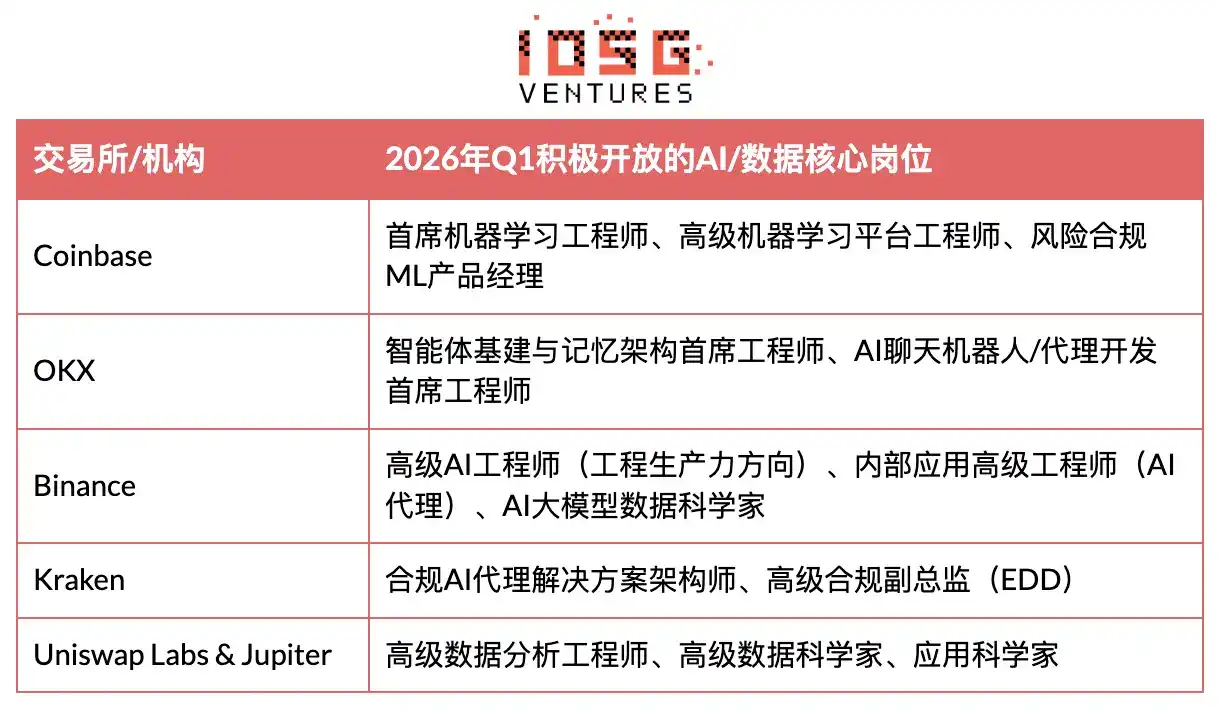
▲ Ключевые вакансии в области AI/данных, активно открывавшиеся ведущими биржами в первом квартале 2026 года
Источник: Gate Research Institute
Наем ведущими биржами и институтами в 2026 году четко отражает эту тенденцию: они больше не ищут просто AI-инженеров или crypto-разработчиков, а ищут людей, способных соединить обе области — тех, кто понимает искажения стимулов и управленческие игры в ончейн-среде, может глубоко интегрировать AI-инструменты в рабочие процессы crypto и проектировать механизмы, обеспечивающие долгосрочное соответствие агентов регуляторным требованиям и интересам пользователей.
Направление распределения капитала также отражает эту оценку. Paradigm привлекает новый фонд объемом до 1.5 миллиарда долларов, расширяя сферу инвестиций с crypto до AI и робототехники. Haun Ventures завершила формирование Fund II на 1 миллиард долларов, сосредоточившись на финансовой инфраструктуре, объединяющей crypto и AI, особенно на платежных системах, стейблкоинах и экономических системах agent-to-agent, поддерживающих автономные транзакции и координацию AI-агентов.
a16z crypto завершила формирование пятого фонда (Crypto Fund V) объемом 2.2 миллиарда долларов, четко заявив, что фонд будет на 100% инвестировать в сферу crypto. Столкнувшись со сложностью и непрозрачностью эпохи AI, они будут уделять особое внимание применению прозрачности, верифицируемости и децентрализованных характеристик crypto. Согласно данным PitchBook, в 2025 году около 40% венчурных инвестиций в сферу crypto в США пришлось на компании, также работающие в сфере AI, что значительно больше, чем в 2024 году.
Хотя и те, и другие билдеры переходят из crypto в AI, выбранные ими пути в разных рыночных условиях заметно отличаются.
В США, по мере того как регуляторная среда становится относительно ясной, инновации на уровне протоколов получили реальное пространство для существования. Плотность сети капитала высока, путь от идеи до финансирования короткий, запас на ошибку больше. Общая черта ряда проектов, таких как Hyperbolic, EigenCloud, Gensyn, Ritual, заключается в том, что они проектируют новые механизмы с нуля, а не просто интегрируют приложения в существующие системы. Ведущие венчурные капиталисты имеют четкую инвестиционную тезу по направлениям «верифицируемые вычисления, координация агентов, децентрализованное машинное обучение» и готовы предоставлять достаточный запас прочности для ранних технологических исследований.
В Азии ситуация иная. Сингапур и Гонконг в большей степени выполняют роль площадок для соблюдения нормативных требований и перевалочных пунктов для институционального капитала. Регуляторные рамки относительно консервативны, терпимость к чистым инновациям на уровне протоколов ниже. Билдеры с опытом в crypto, переходя в AI, чаще выбирают путь интеграции на уровне приложений и отраслей — используют накопленную в crypto пользовательскую базу, платежные возможности или активы данных для быстрого подключения к AI-продуктам и сервисам.
Это не разница в способностях, а разница в выборе пути, обусловленная различными рыночными сигналами и регуляторной средой: США больше поощряют фундаментальные инновации в механизмах и ранние технологические исследования, в то время как в Азии больше внимания уделяется совместимости с нормативными требованиями, быстрой монетизации и глубокой интеграции с традиционными отраслями.
Вернемся к начальной кривой на GitHub. Количество активных разработчиков в месяц упало с 45K до 23K — на поверхности кажется, что индустрия сокращается. Но среди оставшихся доля опытных разработчиков (established devs) достигла исторического максимума. Они устремляются в экосистемы с реальными пользователями и одновременно переоцениваются индустрией AI беспрецедентным образом.
Когда масштабирование AI сталкивается со структурными узкими местами, такими как агрегация вычислительных мощностей, автономные платежи агентов, верифицируемость данных и решений, координация приватности, именно на стыке Crypto и AI эти долгосрочно накопленные чувствительность к правилам, стимулам и реальности постепенно превращаются в дефицитные системные навыки эпохи AI.
Будучи венчурной компанией, с 2017 года углубленно работающей в области crypto-инфраструктуры, IOSG не ограничивается наблюдениями за этой тенденцией. Мы инвестировали в EigenLayer, когда механизм рестейкинга еще не был широко известен рынку, возглавили посевной раунд инвестиций в Ingonyama (ныне MoonMath), сделав ставку на переход от аппаратного ускорения ZK к производительному слою для AI, и в 2024 году инвестировали в Hyperbolic, считая перспективным их путь решения проблемы доверия в децентрализованных вычислениях с помощью механизмов верификации, изначально присущих crypto.
Общая логика, стоящая за этими инвестициями, такова: проблемы доверия, координации и верификации, с которыми сталкивается масштабирование AI, в конечном итоге потребуют для решения навыков проектирования механизмов, накопленных в индустрии crypto. Мы верим, что пересечение crypto и AI — это не нарратив, а структурная возможность, которая уже реализуется.