PEPE Price Surges; DOGE Jumps 10%; Meme Whales Now Rotate Profits Into This $0.10 Utility Token

bitcoinistОпубликовано 2024-11-29Обновлено 2024-11-30

Введение

Although meme coins have been showing spectacular trends during this bull run, with Dogecoin gaining traction since Trump's victory and...

Although meme coins have been showing spectacular trends during this bull run, with Dogecoin gaining traction since Trump’s victory and the PEPE price quickly soaring, an emergent utility token known as DTX Exchange is observed ensnaring institutional investors with its enormous profits. Even though DOGE has had the most impressive market performance, DTX is now the greatest option for investors looking to increase their profits.

PEPE Price Shows Bullish Takeover For The Memecoin

With enormous intraday gains of 9% in just one day, PEPE price actions are currently leading the rise. The PEPE price has increased significantly since Donald Trump won the presidency. Several exchanges, including Coinbase and Robinhood, quickly recognized the token, which caused PEPE’s price to rise sharply and reach a new all-time high.

Earlier on Wednesday, Coinbase declared that its users in New York could finally access PEPE. This caused the PEPE price to spike beyond 13% before a minor adjustment. At present, the PEPE price on the daily charts shows strong bullish momentum with a dominant green candle.

The meme coin is also showing strength on the monthly charts, with the PEPE price soaring up by over 103%. PEPE started the month for $0.059525, while the PEPE price has now reached a high of $0.00001947.

Dogecoin Price Prediction: DOGE To Rally To $1 Mark

Whale sightings and Elon Musk’s influence have been the main drivers of Dogecoin’s (DOGE) recent price increase. Following a temporary decline, large investors purchased 200 million coins, indicating decreased selling pressure and maybe a price increase.

Because the ADX (Average Directional Index) is rising strongly, Dogecoin may be able to break above its resistance level of $0.42 and reach $0.48 or possibly $1. This increase in buying is exacerbated by the ongoing support from well-known figures like Musk, which makes the DOGE price prediction optimistic about future gains.

Dogecoin’s rally is worth watching if you’re looking for the next cryptocurrency to hit $1. The DOGE price prediction appears to be optimistic, as it has a strong foundation of support from both whales and Musk. There’s a good chance Dogecoin may hit $1 sooner rather than later if momentum keeps up and selling pressure stays modest.

Investors Confident Of DTX Exchange As Presale Crosses $8.85 Million

The good thing is that it’s not just crypto users who are finding their way to DTX Exchange. The platform boasts hybrid trading, and it’s as diverse as the average trader would have ever wanted.

There are 120,000 trading instruments on the DTX Exchange trading platform, all from the three main digital financial markets. Equity products, foreign currencies, and crypto tokens are available for trading on DTX Exchange, and some of them come with 1000x leverage options.

To top off the list, DTX Exchange opens up the fast-growing sector of real-world assets to its traders, allowing them to trade crypto-backed commodities. Before you feel overwhelmed by all the different assets you might be trading, DTX provides a multi-asset wallet that offers you the state of your trading and assets at a glance.

Apart from conventional DeFi trading, DTX Exchange also has a platform for staking, where its users can contribute to the liquidity on the platform. That way, the platform will be economically stable, and users will be able to earn passively on their staked tokens.

The DTX token is yet to be listed as investors are still accumulating the token in its current Stage 5 of the public presale, where it is valued at $0.10. The plan is to position for the presale 100% ROI by the time the project goes live at $0.20 in a few weeks. DTX has raised $8.85 million in the current stage.

After the presale gains, investors can then look forward to a 100x DTX pump, as predicted by experts who believe the DTX Exchange platform will generate enough traffic with its attractive features to spike demand for the DTX token.

Key Takeaways

Meme whales continue to shift their gains to this new utility coin, DTX, even if the PEPE price and Dogecoin’s (DOGE) momentum have been extremely outstanding during this bull run! Though DOGE’s market performance has been the most inspiring one, DTX has become the best investment choice for making more profits.

Learn more:

Buy Presale
Visit DTX Website
Join The DTX Community

Bitcoinist

Bitcoinist

Bitcoinist is the ultimate news and review site for the crypto currency community!

Похожее

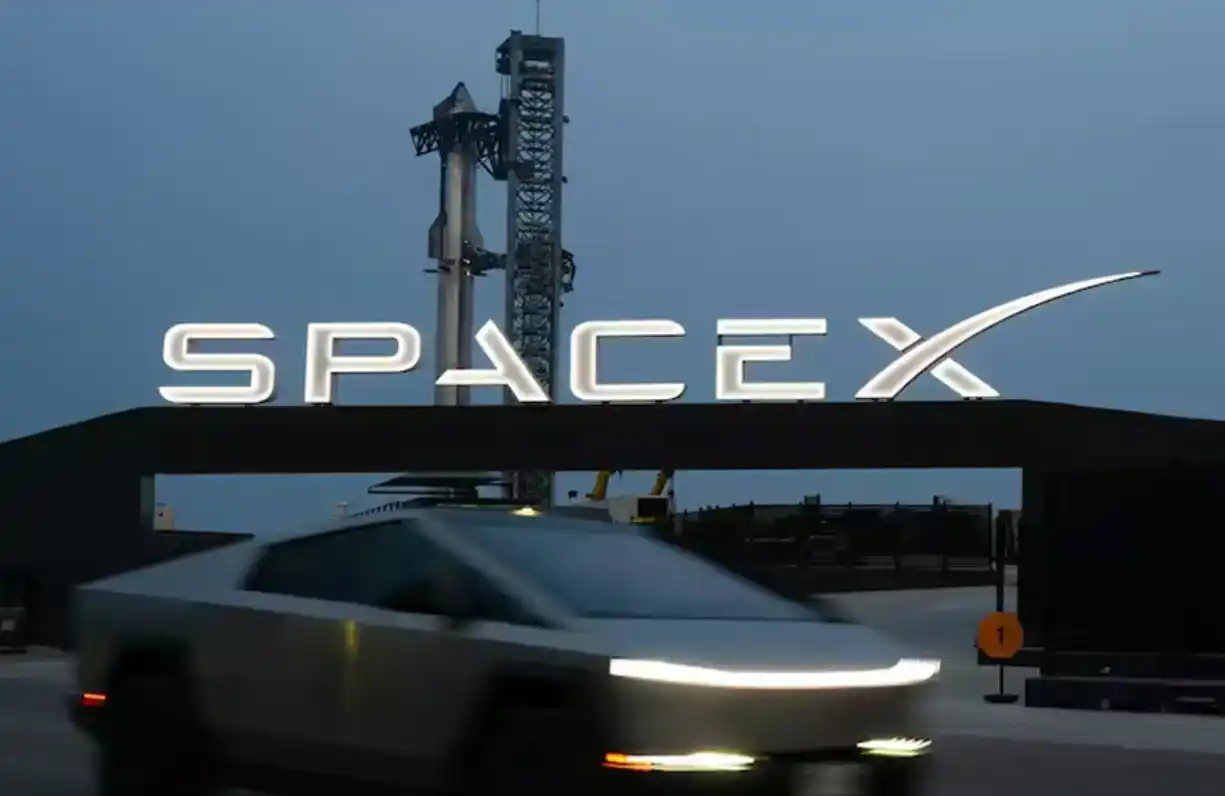
Those Who Rushed into SpaceX's Private Secondary Market Are Bewildered in the Greatest Wealth Creation Wave Ever

Investors are rushing into SpaceX’s private secondary market ahead of its historic IPO, but many are finding confusion instead of clarity. While early backers like Darsana Capital are poised for astronomical returns—turning a $600M bet into roughly $150B—other buyers face uncertainty about whether they actually own SpaceX shares at all. The frenzy stems from AI-driven FOMO, as soaring valuations for private companies like OpenAI and SpaceX create intense demand for pre-IPO exposure. This has fueled a booming but opaque secondary market, where special purpose vehicles (SPVs) layer investments, adding fees and obscuring ownership. Some investors are three or four layers removed from the actual stock, unable to verify their holdings. With companies staying private longer—SpaceX for 24 years—secondary trading has grown complex and risky. Platforms have faced fraud, bankruptcy, and regulatory scrutiny. Now, firms like Anthropic and OpenAI are publicly rejecting unauthorized transfers, warning that shares sold through certain platforms may be invalid. SpaceX’s IPO filing in June will finally reveal the official shareholder list, resolving these uncertainties. Until then, buying into SpaceX through secondary channels remains a high-stakes gamble—a blind box in a market overflowing with capital and complexity.

marsbit10 мин. назад

Those Who Rushed into SpaceX's Private Secondary Market Are Bewildered in the Greatest Wealth Creation Wave Ever

marsbit10 мин. назад

Warsh's First Conundrum: Rate Cuts, Inflation, and a Fractured Fed

Walsh's First Dilemma: Rate Cuts, Inflation, and a Divided Fed Kevin Warsh officially assumed the Fed Chairmanship on May 15th, inheriting a central bank deeply divided over inflation. Contrary to market expectations of a dovish stance due to his appointment by President Trump, Warsh's historical record shows early and consistent hawkish concerns about inflation. The Fed he leads is fractured, with three FOMC members recently dissenting against even hinting at future rate cuts. The immediate challenge is surging inflation. While the Iran-related oil shock is a temporary factor, core CPI and services inflation are accelerating, showing signs of becoming entrenched—echoing the Fed's 2022 "transitory" misstep. Warsh faces the task of building consensus within a committee where several members believe policy may not be restrictive enough, especially if the neutral interest rate (r-star) is higher than currently estimated. Politically, Warsh is caught between Trump's desire for rate cuts and the economic reality of persistent price pressures. Any move perceived as bowing to political pressure could undermine Fed independence. Market implications are significant. Long-term Treasury yields (e.g., 30-year at 5.19%) could rise further, especially if the June FOMC statement hints at possible tightening. Tech stocks face continued valuation pressure from higher rates. The key variable is progress in Iran negotiations; a breakthrough before the June meeting could temporarily ease oil-driven inflation, but stubborn services inflation would remain. All eyes are on Warsh's first post-FOMC press conference on June 17th. His wording on inflation and policy will reveal how much the market has mispriced his stance and the Fed's likely path forward.

marsbit19 мин. назад

Warsh's First Conundrum: Rate Cuts, Inflation, and a Fractured Fed

marsbit19 мин. назад

Harvard and Others Exit, Six Core Talents Depart in a Month: What's Happening to Ethereum?

Ethereum faces significant internal and external pressures, marked by a wave of high-profile departures from its core development team and a loss of confidence from major institutional investors. Within four months, at least seven key figures—including researchers, protocol leads, and a former executive director—have left the Ethereum Foundation. This exodus, partly triggered by controversy over a new "mission statement" requiring employee sign-off, risks derailing critical roadmap upgrades like PeerDAS and Verkle trees, and has already contributed to delays in the planned Glamsterdam upgrade. Compounding the internal instability, major institutions are reducing their exposure. Goldman Sachs slashed its iShares Ethereum Trust holdings by approximately 70%, and Harvard's endowment fund completely exited its $87 million Ethereum ETF position. Concurrently, the Ethereum Foundation itself has been unstaking and selling ETH for "treasury rebalancing," further unsettling the market. These challenges emerge as Ethereum's competitive dominance erodes. Its share of the total DeFi market has fallen to around 54%, with rivals like Solana and Base gaining ground. In fee revenue, it was recently outpaced by newer chains like Hyperliquid. Furthermore, a trend of institutions exploring proprietary or hybrid blockchains (exemplified by Circle's Arc) threatens Ethereum's position as the premier settlement layer for institutional assets. While founder Vitalik Buterin's vision for Ethereum as a secure, decentralized "technical sanctuary" and "world computer" remains clear, its realization is threatened by the concurrent loss of execution capability, institutional patience, and market share during a critical competitive phase.

链捕手59 мин. назад

Harvard and Others Exit, Six Core Talents Depart in a Month: What's Happening to Ethereum?

链捕手59 мин. назад

IOSG | After the Halving of Developer Count: Crypto Isn't Dead, It's Just Handing Over Talent to AI

IOSG Report: Crypto's Developer Exodus Masks a "Talent Deleveraging" and Migration to AI The number of monthly active crypto developers on GitHub has roughly halved from its 2022 peak to around 23,000. This decline is not a sign of industry collapse but a "talent deleveraging." The exodus consists largely of newcomers who entered during the bull market, while the cohort of established developers (2+ years of experience) has grown to a record high, now contributing about 70% of the code. These core builders are consolidating in ecosystems with real users and activity, like Bitcoin and Solana. The crypto industry has forged a unique skill set: building operational, trusted systems from scratch in environments with no external authority, near-zero tolerance for error, and missing rules. This involves creating trust through pure code/mechanisms and making judgments under profound technical and economic uncertainty. This capability is finding new, high-value applications in the AI era, which faces structurally similar problems: trust in opaque autonomous systems, a lack of governance frameworks, and coordination among self-interested AI agents. Key migration patterns include: 1. **Direct Hardware/Infrastructure Translation:** Projects like CoreWeave pivoted from GPU mining to AI compute supply. 2. **Mechanism Design & Trust Engineering:** Crypto's experience in decentralized coordination and incentive design (e.g., via tokenomics, staking/slashing) is being applied to critical AI challenges: * **Compute Aggregation & Verification:** Solving trust and efficiency problems in decentralized GPU networks (e.g., Hyperbolic). * **AI Agent Governance:** Using cryptoeconomic mechanisms to align the behavior of multiple autonomous AI agents (e.g., EigenLayer's approach). * **Autonomous Agent Payments:** Leveraging stablecoins and programmable money for fast, permissionless micro-transactions between AI agents (e.g., x402 protocol). The builder's role is evolving from "writing smart contracts" to "designing trust mechanisms for autonomous AI systems." This convergence is reflected in hiring trends at major firms and significant capital allocation from top venture funds like Paradigm and a16z into the crypto-AI intersection. While regional approaches differ—with the US focusing more on foundational protocol innovation and Asia on application-layer integration—the core thesis remains: the systemic skills honed in crypto's trustless environments are becoming a scarce and critical asset for scaling AI.

marsbit1 ч. назад

IOSG | After the Halving of Developer Count: Crypto Isn't Dead, It's Just Handing Over Talent to AI

marsbit1 ч. назад

Торговля

Спот
Фьючерсы
活动图片