Похожее

Vitalik on the Future of the Ethereum Foundation: A Smaller, More Distinct, but Longer-Lasting Ship

Vitalik discusses the future direction of the Ethereum Foundation (EF), emphasizing a shift towards a smaller, more focused, and longer-lasting organization. He clarifies this is his personal view and that his own influence within EF is diminishing, which he welcomes. The key driver is aligning EF's actions with its stated values of decentralization, privacy, and being a "sanctuary technology," addressing criticism that its operations haven't fully reflected these ideals. He argues that EF should not be the "center" of Ethereum but one node among many with a specific mandate. With limited resources (holding only ~0.16% of all ETH), EF must focus its remaining efforts on long-term, mission-critical activities that wouldn't happen without its push, particularly those reinforcing Ethereum's core CROPS values (Censorship-Resistance, Resilience, Openness, Privacy, Security). This means making hard choices, potentially spinning out even respected projects to attract external capital, and cultivating a distinct cultural stance. The core technical vision is for Ethereum to be "amazing" not by chasing maximal throughput, but by excelling in the CROPS dimension. Key goals include: a provably bug-free Ethereum via AI-assisted formal verification; high-availability chain consensus combining the best of BFT and Bitcoin-style security; and minimization of intermediaries in transaction sending and user experience. These "unreasonable" ambitions aim to make Ethereum profoundly impressive in its core values, which also support ETH as a robust asset. The future EF will be a smaller, more opinionated ship built for longevity and meaningful impact.

链捕手3 мин. назад

Vitalik on the Future of the Ethereum Foundation: A Smaller, More Distinct, but Longer-Lasting Ship

链捕手3 мин. назад

Leading Players in Large Models Drain the Primary Market

The AI industry is witnessing an unprecedented concentration of capital into a handful of leading players, signaling what insiders call the "eve of a final shakeout." A staggering funding surge exceeding $7 billion hit just three Chinese companies in May alone—Kimi, StepFun (接近完成融资), and DeepSeek—with the latter's valuation reaching $45-$50 billion. Globally, giants like OpenAI, Anthropic, and SpaceX (set to merge with xAI) are preparing for public listings, collectively eyeing valuations over $3 trillion. This capital is no longer fueling a broad "hundred-model war" but is being funneled to "refuel" the final few contenders, following a sector-wide attrition rate exceeding 90%. This frenzy is driven by a fundamental shift in industry logic. The focus has moved from比拼模型智商 (competing on model intelligence) to "token factory economics." The explosion of long-context AI agents has massively increased token consumption per task. With token supply constrained by bottlenecks in HBM memory and power infrastructure—key factors in production costs—dominance now hinges on owning and efficiently operating large-scale compute resources. Major tech firms are investing hundreds of billions annually in this AI "power grid." Consequently, competition pivots to three core areas: 1) **Monetization** as the "AGI premium" cools, forcing a shift from user growth to revenue; 2) **Cost efficiency**, where reducing inference costs becomes the ultimate KPI as model capabilities commoditize; and 3) **Strategic path divergence** between enterprise-focused AI (prioritizing integration and reliability) and consumer-facing applications (betting on scale and user engagement). The message is clear: the final capital injections are determining the endgame lineup. Success will depend not just on technical prowess, but on transforming technology into a sustainable, profitable business model with demonstrable return on massive compute investments.

marsbit12 мин. назад

Leading Players in Large Models Drain the Primary Market

marsbit12 мин. назад

AI Giants Queueing Up for IPOs: Is This the 'Last Dance' for the U.S. Stock Market?

A massive wave of IPOs from AI giants like OpenAI, Anthropic, and SpaceX is taking shape, potentially reshaping the U.S. stock market. OpenAI is reportedly preparing for a historic IPO, targeting a valuation over $1 trillion and raising roughly $60 billion, which would dwarf previous records. Anthropic is also advancing its own IPO plans, projecting significant revenue growth and achieving quarterly operating profit. However, their financial profiles starkly differ. While Anthropic is nearing profitability with a focus on enterprise clients, OpenAI continues to report substantial losses, with a negative operating margin and expectations for positive cash flow only by 2029-2030. Analysts warn these listings could trigger a major "passive fund reshuffle," forcing index funds to sell holdings in established tech giants to make room for the new entrants, potentially pressuring the broader market. Some observers view the IPO rush as a "risk transfer," allowing early private investors to cash out at peak valuations while passing future financial uncertainty to public market investors. The divergent paths of Anthropic's near-term profitability versus OpenAI's long-term, high-cost growth narrative present a critical choice for investors. The outcome of these IPOs is seen as a major swing factor for risk assets in 2026, testing whether this surge marks a new cycle or a potential peak.

marsbit20 мин. назад

AI Giants Queueing Up for IPOs: Is This the 'Last Dance' for the U.S. Stock Market?

marsbit20 мин. назад

The Richest Fed Chair in 112 Years Is Here: Kevin Warsh Is Rewriting the Rules

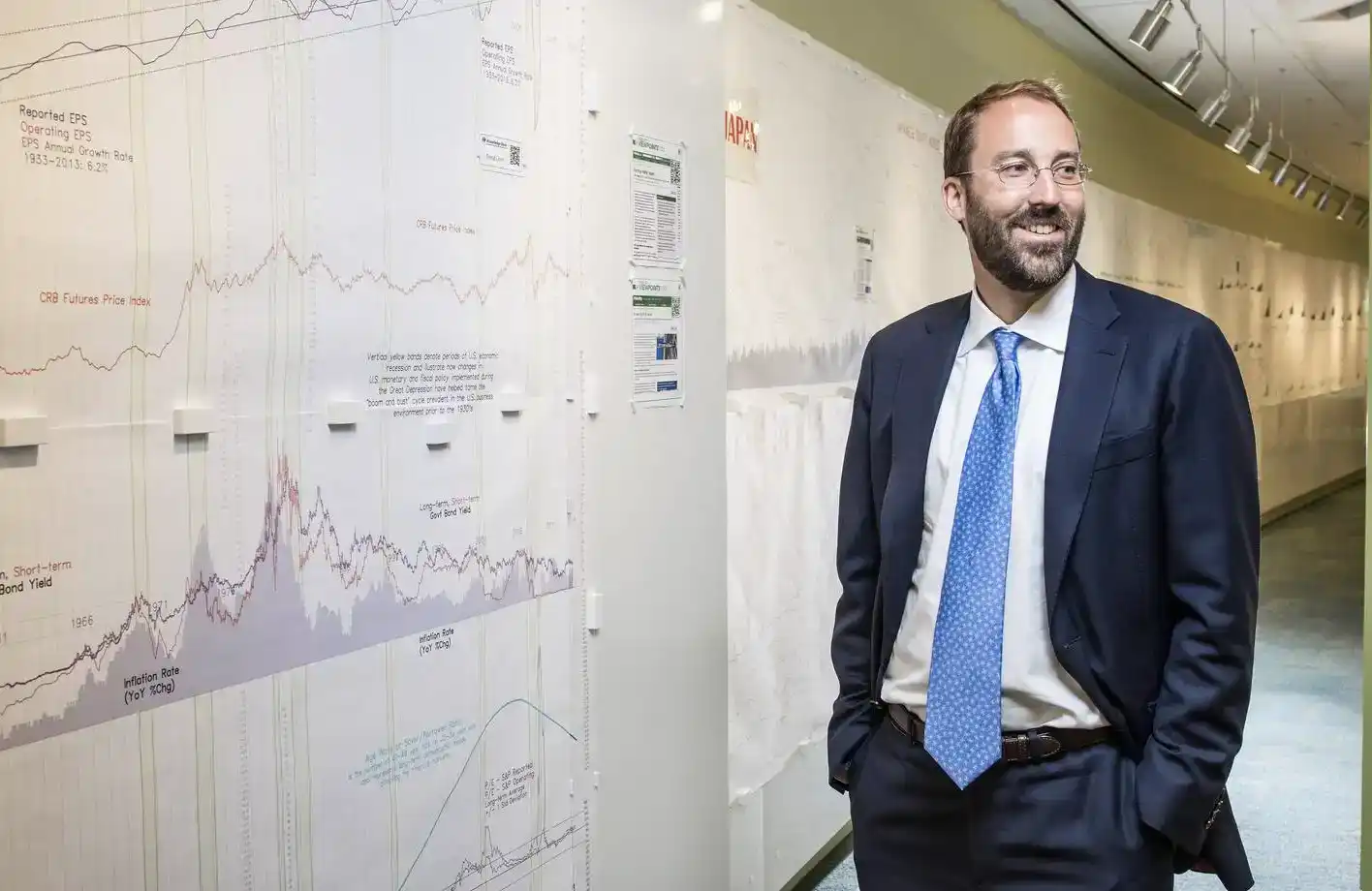
Kevin Warsh, with a personal fortune exceeding $130 million, became the 112nd and wealthiest Chair of the U.S. Federal Reserve on May 22nd. A former Wall Street investment banker and key figure during the 2008 financial crisis, Warsh lacks a traditional academic background for a central banker but brings deep market experience. He proposes an unconventional policy approach of simultaneously reducing the Fed's balance sheet ("quantitative tightening") while cutting interest rates, arguing that a smaller balance sheet would allow for more effective rate policy. His ascent marks a potential regime change at the Fed. Warsh aims to reform the institution's decision-making processes, tighten communication discipline among officials, and reduce reliance on forward guidance like the "dot plot." This shift responds to the Fed's current dilemma: fiscal policy is expanding the government's balance sheet through deficits, while monetary policy's ability to shrink its own $6.7 trillion balance sheet is severely constrained, creating pressure on long-term interest rates. Analysts expect Warsh's tenure to sustain high volatility in the U.S. Treasury market due to persistent supply pressures. Furthermore, his leadership coincides with a gradual, structural erosion of dollar dominance, evidenced by its declining share in global reserves and cracks in the petrodollar system, with increased use of alternatives like the Chinese yuan in oil trade. For investors, this environment underscores the importance of portfolio diversification, including assets like gold and Chinese sovereign bonds, amid a fluctuating dollar credit anchor.

链捕手35 мин. назад

The Richest Fed Chair in 112 Years Is Here: Kevin Warsh Is Rewriting the Rules

链捕手35 мин. назад

Торговля

Спот
Фьючерсы
活动图片