Infineon推出备受期待的预售

币界网Опубликовано 2024-08-22Обновлено 2024-08-22

币界网报道:

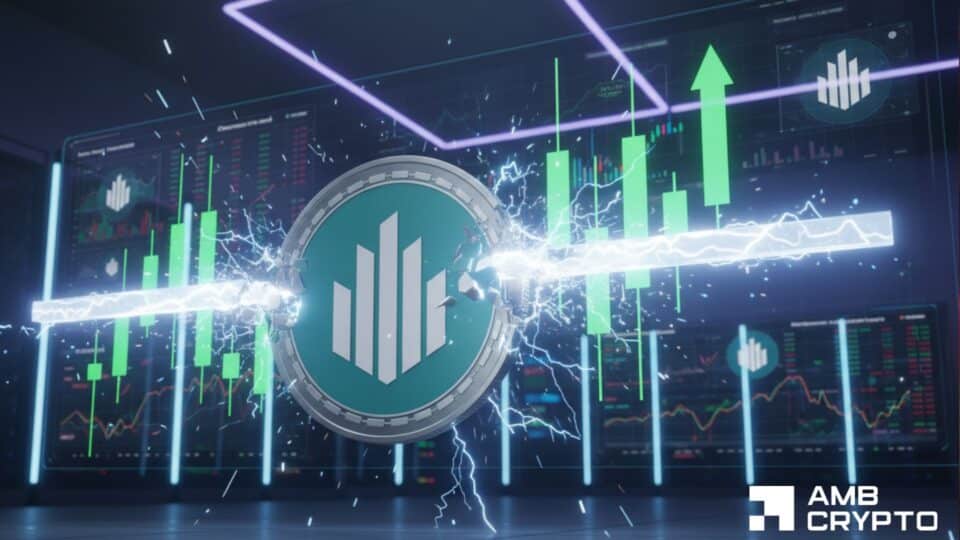
作为一项可能对加密货币和去中心化金融(DeFi)格局产生重大影响的举措,具有开创性的第2层区块链解决方案Infineon已经推出了预售。贡献者现在可以使用以太坊、BNB链、Arbitrum、Base、Polygon甚至信用卡参与Infineon预售。预售已经筹集了25000美元,贡献者将获得其贡献的美元价值加上额外8%的代币。

这一发展正值加密货币和DeFi动态世界的关键时刻,其中出现了一个持续的挑战——大多数项目缺乏长期可持续性。加密货币初创公司往往在没有明确的持续增长计划的情况下急于推出,导致投资者快速退出和项目逐渐衰退的恶性循环。这种模式削弱了人们对这些企业可行性的信心,突显出迫切需要创新战略来确保在动荡的加密货币和DeFi环境中的长期弹性。

Infineon旨在通过其突破性的第2层区块链解决方案来解决这一紧迫问题。Infineon设计的核心是创新的“Infineon”资产,旨在不断增值,从而保护网络上代币的潜在价值免受贬值。这种新的资产价值稳定方法使Infineon在寻求加密货币和DeFi领域的长期可持续性方面脱颖而出。

与传统的区块链不同,在市场低迷期间,原生资产的价值可能会对其他代币的价值产生负面影响,Infineon具有独特的结构,以确保与其配对的每个代币都保持一个只升值的基线价值。随着交易在区块链上发生,Infineon的价值自然会增加,从而增强了所有相关代币的价值稳定性。

这一独特功能将Infineon定位为第2层空间的先驱解决方案,提供了一种强大的机制来保护和提升数字资产的价值。通过保证每个代币的价值上升轨迹,Infineon为去中心化应用程序和金融交易提供了一个有弹性的平台。

Infineon的生态系统围绕三种关键代币类型构建:Infineon原生代币、Infineon LP代币和Infineon Gas代币。

    Infineon Native Token是区块链的动态原生代币,旨在成为区块链的主要赞助者,并为区块链带来长期生存能力。它的特点是通货紧缩机制,不断地从流通中移除代币,从而在没有通胀压力的情况下获得可持续的回报。区块链上的部分天然气费用和DEX费用会自动用于购买和销毁Infineon Native Token,从而进一步提高其价值。Infineon LP代币是一种包装好的以太坊代币,在Infineon链上的每笔交易中都会增值。一部分天然气费用分配给Infineon LP代币合约,使其价值稳步增长。在Infineon链上推出的代币可以与Infineon LP代币配对,从这种价值增值中受益,从而形成一个积极的反馈循环。Infineon Gas Token与以太坊保持1:1的价值,作为Infineon区块链上交互的主要交换媒介。它的功能类似于Base和Arbitrum,有一个无缝的桥梁,可以在以太坊和Infineon Gas Token之间轻松转换。

Infinity Swap去中心化交易所(DEX)进一步加强了Infineon生态系统,该交易所以Infineon LP代币作为其主要包装的以太坊资产。在Infinity Swap上上市的项目将随着其支持资产Infineon LP Token的价值随着每笔交易的增加而实时增值。此外,Infinity Swap DEX产生的费用的50%用于购买和销毁Infineon Native Token。

Infineon还提供了一个引人注目的质押机制来激励长期参与。自动复合质押功能为用户提供具有竞争力的年百分比收益率(APY)奖励,1个月质押为5%,3个月质押则为10%,奖励将自动复合。至关重要的是,这种赌注是由Infineon生态系统内产生的收入资助的,而不是依赖天赋供应或税收。

通过解决加密货币和DeFi领域持续资产价值的根本挑战,Infineon成为一种突破性的第2层解决方案,可以重新定义去中心化金融和区块链驱动的应用程序的格局。随着行业的不断发展,Infineon对价值稳定性的新颖方法可能会为数字资产领域更具弹性和繁荣的未来铺平道路。

Похожее

Borrowing Money from a Hundred Years Later, Building Incomprehensible AI

Tech giants like Alphabet, Amazon, Meta, and Microsoft are undergoing a radical financial transformation due to AI. Their traditional "light-asset, high-free-cash-flow" model is being dismantled by staggering capital expenditures on AI infrastructure—data centers, GPUs, and power. Combined 2026 guidance exceeds $700 billion, a 4.5x increase from 2022, causing free cash flow to plummet (e.g., Amazon's fell 95%). To fund this, they are borrowing unprecedented sums through long-dated, multi-currency bonds (e.g., Alphabet's 100-year bond). The world's most conservative capital—pensions, insurers—is now funding Silicon Valley's most speculative bet. This shift makes these companies resemble heavy-asset industrials (railroads, utilities) rather than software firms, threatening their premium valuations. Historically, such infrastructure booms (railroads, fiber optics) followed a pattern: genuine technology, overbuilding fueled by competitive frenzy, aggressive debt financing, and a crash triggered by financial conditions—not technology failure. The infrastructure remained, but many original builders and financiers did not survive. The core gamble is a "time arbitrage": using cheap debt today to build scale and lock in customers before AI capabilities commoditize. They are betting that AI revenue will materialize before debt comes due. Their positions vary: Amazon is under immediate cash pressure; Meta's path to monetization is unclear; Alphabet has a robust core business buffer; Microsoft has the shortest path from infrastructure to revenue. The contract is set: the most risk-averse global capital has lent its time to Silicon Valley, awaiting a future that is promised but uncertain.

marsbit15 мин. назад

Borrowing Money from a Hundred Years Later, Building Incomprehensible AI

marsbit15 мин. назад

The 'VVV' Concept Soars 9x in Half a Year, The New AI Narrative on Base Chain

"The article explores the 'VVV' concept as the new AI-focused narrative within the Base ecosystem, centered around the token $VVV of the privacy-focused, uncensored generative AI platform Venice, led by crypto veteran Erik Voorhees. Venice has seen significant growth in 2026, with its API users surging, partly attributed to exposure from OpenClaw. The platform now boasts over 2 million total users and 55,000 paid subscribers. Correspondingly, the $VVV token price has risen over 9x this year. Key to its performance are tokenomics designed for value accrual: reduced annual emissions, subscription revenue used for buyback-and-burn, and a unique staking mechanism. Staking $VVV yields $sVVV, which can be used to mint $DIEM tokens. Each staked $DIEM provides a daily $1 credit for using Venice's API services, creating tangible utility. The article also highlights other tokens associated with the 'VVV' narrative. $POD, the token of distributed AI network Dolphin (which co-developed Venice's default AI model), saw a massive price surge. $cyb3rwr3n, a project for a Venice credit auction market, gained attention due to perceived connections to Venice's team despite official denials. Finally, $SR of robotics platform STRIKEROBOT.AI rose after announcing a partnership with Venice for robot vision-language model development. Overall, the 'VVV' ecosystem combines AI platform growth, deflationary tokenomics, and innovative utility mechanisms, driving significant investor interest and price action in related tokens."

marsbit24 мин. назад

The 'VVV' Concept Soars 9x in Half a Year, The New AI Narrative on Base Chain

marsbit24 мин. назад

Anthropic and OpenAI Have Single-Handedly Severed the Logic of Pre-IPO Stock Tokenization

The pre-IPO stock token market is experiencing significant turmoil following strong statements from AI giants Anthropic and OpenAI. Both companies have updated their official policies, declaring that any transfer of their company shares—including sales, transfers, or assignments of share interests—without prior board approval is "invalid" and will not be recognized in their corporate records. This means buyers in such unauthorized transactions would not be recognized as shareholders and would have no shareholder rights. A major point of contention is the use of Special Purpose Vehicles (SPVs), which are legal entities commonly used by pre-IPO token platforms to pool investor funds and indirectly acquire shares from employees or early investors. The companies explicitly state they do not permit SPVs to acquire their shares, and any such transfer violates their restrictions. They warn that third parties selling shares through SPVs, direct sales, forward contracts, or stock tokens are likely engaged in fraud or are offering worthless investments due to these transfer limits. This stance directly threatens the core model of many pre-IPO token platforms, which rely on SPV structures. The announcement revealed additional risks within this model, such as complex "SPV-within-SPV" layering that obscures legal transparency, increases management fees, and creates a chain reaction risk of invalidation. Following the news, tokens like ANTHROPIC and OPENAI on platforms like PreStocks fell sharply (over 20%). The market reaction highlights a divergence: while asset-backed pre-IPO tokens plummeted, purely speculative pre-IPO futures contracts, which are bilateral bets on future IPO prices with no claim to actual shares, remained relatively stable as they are unaffected by the transfer restrictions. The industry is split on the implications. Some believe the fundamental logic of pre-IPO token trading is broken if leading companies reject SPV-held shares, potentially causing a domino effect. Others, like Rivet founder Nick Abouzeid, argue that buyers of such unofficial tokens always knowingly accepted the risk of non-recognition by the company. The statements serve as a stark risk warning and a corrective measure for a market where valuations for some AI-related pre-IPO tokens had soared to irrational levels, far exceeding recent funding round valuations.

marsbit1 ч. назад

Anthropic and OpenAI Have Single-Handedly Severed the Logic of Pre-IPO Stock Tokenization

marsbit1 ч. назад

Anthropic and OpenAI Personally Sever the Logic of Pre-IPO Crypto-Stocks

The pre-IPO token market has been rocked by strong statements from Anthropic and OpenAI. Both AI giants have updated official warnings, declaring that any sale or transfer of their company shares without explicit board approval is "invalid" and will not be recognized on their corporate records. This directly targets Special Purpose Vehicles (SPVs), the common legal structure used by pre-IPO token platforms. These platforms typically use an SPV to acquire shares from employees or early investors, then issue blockchain-based tokens representing a claim on the SPV's economic benefits. Anthropic and OpenAI's position means that if an SPV's share purchase lacked authorization, the underlying asset could be deemed worthless, nullifying the token's value. Anthropic explicitly warned that any third party selling its shares—via direct sales, forwards, or tokens—is likely fraudulent or offering a valueless investment. The crackdown highlights risks in the popular SPV model, including complex multi-layered "Russian doll" SPV structures that obscure legal ownership, add fees, and concentrate risk. If one layer is invalidated, the entire chain could collapse. Following the announcements, tokens like ANTHROPIC and OPENAI on platforms like PreStocks fell sharply (over 20%). In contrast, purely speculative pre-IPO prediction contracts remained stable, as they involve no actual share ownership. The move is seen as a corrective measure amid a market frenzy where some pre-IPO token valuations (e.g., Anthropic's token hitting a $1.4 trillion implied valuation) far exceeded recent official funding rounds. Opinions are split: some believe this undermines the core logic of pre-IPO token trading if top companies reject SPVs, while others argue buyers always assumed this legal risk when accessing unofficial channels. The statements serve as a stark warning and a potential catalyst for market de-leveraging and clearer boundaries.

Odaily星球日报1 ч. назад

Anthropic and OpenAI Personally Sever the Logic of Pre-IPO Crypto-Stocks

Odaily星球日报1 ч. назад

The Waged Worker Driven to Poverty by AI Subscriptions

"AI Membership: The Hidden Cost Pushing Workers Toward 'Poverty'" The widespread corporate push for AI adoption is creating a hidden financial burden for employees. Companies, from giants like Alibaba to small firms, are mandating AI use, often tying token consumption to KPIs, but frequently refuse to cover the costs. Workers are forced to pay for subscriptions out of pocket to stay competitive and avoid being replaced. Front-end developer Long Shen spends up to 2000 RMB monthly on tools like Cursor and ChatGPT Plus, seeing it as a necessary 3% salary investment to handle 90% of his coding tasks. While it boosted his performance and led to promotions, he now faces idle time at work, pretending to be busy. Designer Peng Peng navigates strict company firewalls by using personal devices and accounts for AI image generation tools like Midjourney, spending hundreds monthly without reimbursement, while her boss demands faster, more numerous revisions. The pressure creates workplace anxiety and suspicion. Programmer Li Huahua, after a friend's experience of raised KPIs following AI success, fears being branded a "traitor" for using it yet worries about falling behind if she doesn't. The dynamic allows management to demand results without understanding the tools or covering expenses, treating employees like AI "agents." While some, like entrepreneur Jin Tu, find high value in paid AI, building entire systems and winning competitions, for most, it's a trap. Free tools like Kimi and Doubao are introducing fees, closing off alternatives. The initial efficiency gains individual advantage, but as AI becomes ubiquitous, the personal edge disappears, workloads increase, and a cycle of dependency begins. Workers like Long Shen realize they cannot maintain AI-generated code without AI, making stopping harder than continuing to pay. The tool promising liberation is instead becoming a compulsory, costly chain in the modern workplace.

marsbit2 ч. назад

The Waged Worker Driven to Poverty by AI Subscriptions

marsbit2 ч. назад

Торговля

Спот
Фьючерсы
活动图片