Anthropic and OpenAI Personally Sever the Logic of Pre-IPO Crypto-Stocks

Odaily星球日报Опубликовано 2026-05-12Обновлено 2026-05-12

Введение

The pre-IPO token market has been rocked by strong statements from Anthropic and OpenAI. Both AI giants have updated official warnings, declaring that any sale or transfer of their company shares without explicit board approval is "invalid" and will not be recognized on their corporate records. This directly targets Special Purpose Vehicles (SPVs), the common legal structure used by pre-IPO token platforms. These platforms typically use an SPV to acquire shares from employees or early investors, then issue blockchain-based tokens representing a claim on the SPV's economic benefits. Anthropic and OpenAI's position means that if an SPV's share purchase lacked authorization, the underlying asset could be deemed worthless, nullifying the token's value. Anthropic explicitly warned that any third party selling its shares—via direct sales, forwards, or tokens—is likely fraudulent or offering a valueless investment. The crackdown highlights risks in the popular SPV model, including complex multi-layered "Russian doll" SPV structures that obscure legal ownership, add fees, and concentrate risk. If one layer is invalidated, the entire chain could collapse. Following the announcements, tokens like ANTHROPIC and OPENAI on platforms like PreStocks fell sharply (over 20%). In contrast, purely speculative pre-IPO prediction contracts remained stable, as they involve no actual share ownership. The move is seen as a corrective measure amid a market frenzy where some pre-IPO token valuation...

Original | Odaily Planet Daily (@OdailyChina)

Author | Azuma (@azuma_eth)

The pre-IPO (Pre-IPO) stock token market has just experienced a severe shock. The epicenter of this earthquake stems from two statements issued by two major AI companies, Anthropic and OpenAI.

Anthropic and OpenAI Successively Declare They 'Do Not Acknowledge' Unauthorized Sales

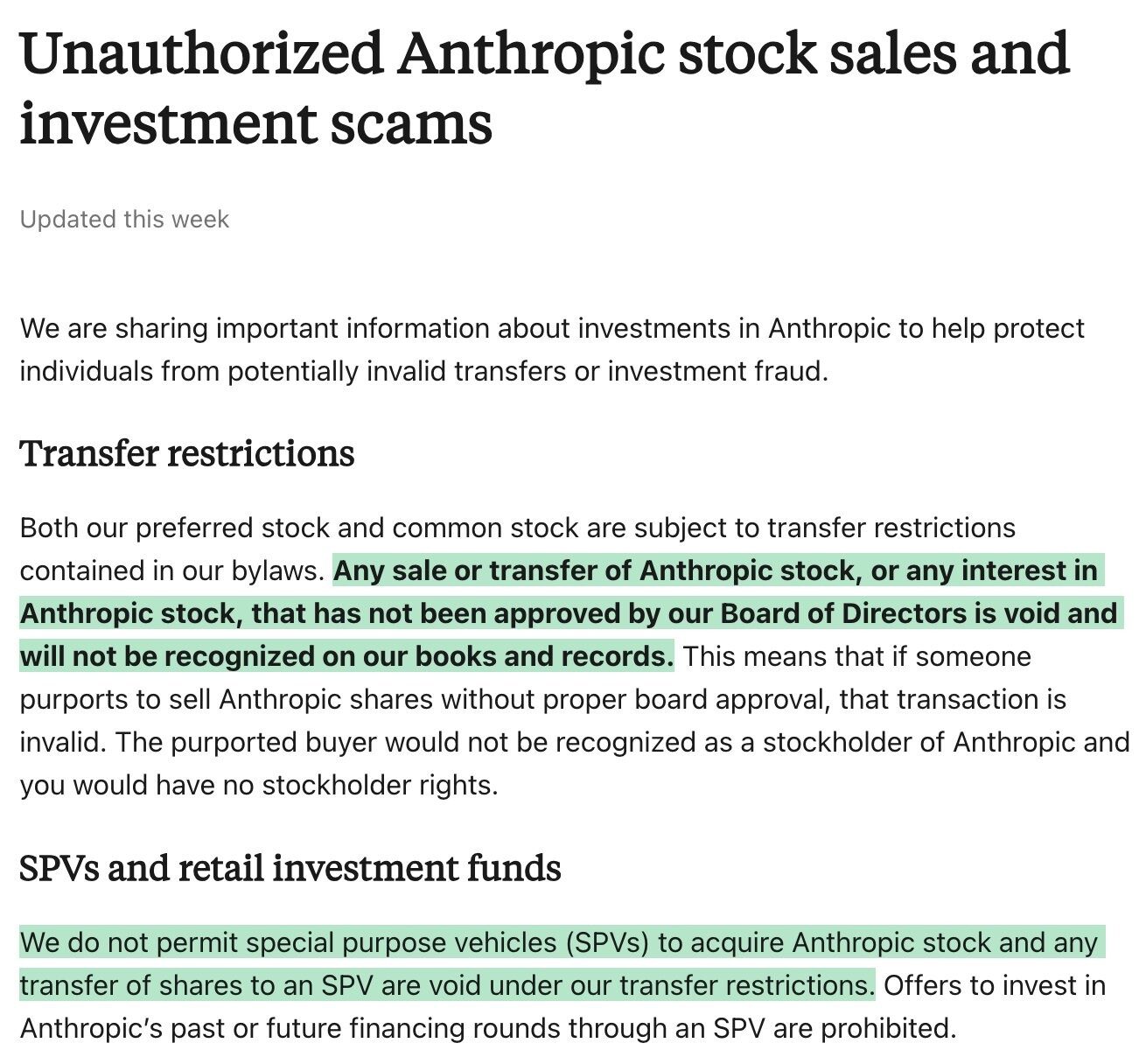
Today, Anthropic updated an official statement it released in February titled "On Unauthorized Sales of Anthropic Stock and Investment Scams".

Anthropic explicitly stated in the article: "Any sale or transfer of Anthropic stock that is not approved by our Board of Directors, or any disposition of economic interests in Anthropic stock, is invalid (note the term 'invalid') and will not be recognized on the company's books and records. This means that if someone sells Anthropic stock without board approval, the transaction will be deemed invalid. The purported buyer will not be recognized as a shareholder of Anthropic and will not enjoy any shareholder rights."
Shortly after Anthropic updated its statement, OpenAI also followed up with an announcement stating: "All equity is subject to transfer restrictions. No shares may be transferred, directly or indirectly, without the Company's written consent. Any sale without consent is not only unauthorized but also invalid."
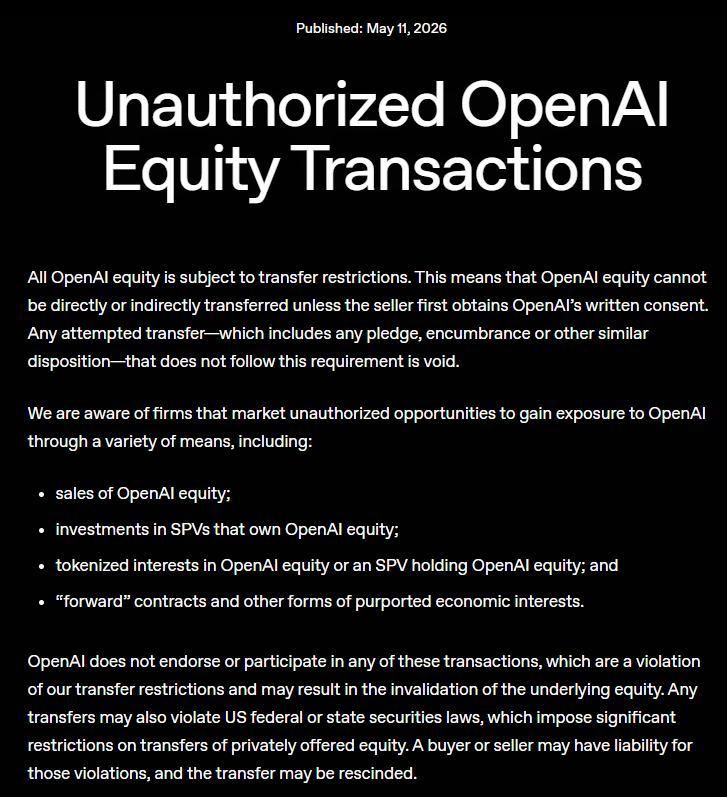
In their announcements, both Anthropic and OpenAI explained that the companies' preferred and common shares are subject to transfer restrictions stipulated in their charters, meaning all stock transfers require board consent.

Anthropic particularly emphasized that the company also does not permit "Special Purpose Vehicles" (SPVs) to acquire its shares, and any transfer of shares to an SPV violates the company's transfer restrictions...... Certain investment funds may claim to provide indirect access to Anthropic stock, but these funds are likely attempting to circumvent transfer restrictions. Therefore, any third party claiming to sell Anthropic stock to the public — whether through direct sales, forward contracts, stock tokens, or other mechanisms — may be engaged in fraud or offering worthless investments due to Anthropic's transfer restrictions.
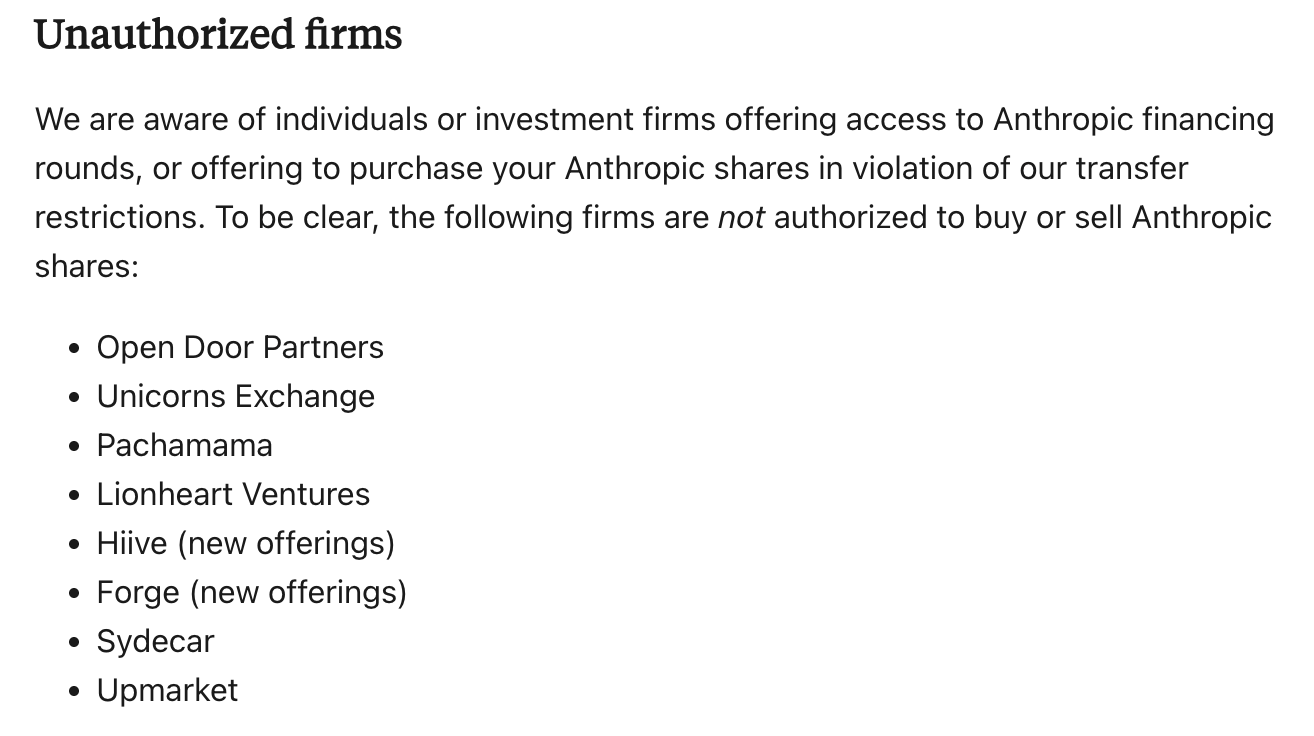
  • Odaily Note: The image shows platforms named by Anthropic for unauthorized equity transfers.

What is an SPV?

To understand why this update has such a massive impact on the pre-IPO stock token market, one must first understand what an SPV is.

In traditional pre-IPO stock trading, directly transferring original shares is extremely difficult, restricted not only by company charters but also involving complex legal procedures. In this context, SPVs emerged.

An SPV is a legal entity established separately for a specific transaction or investment purpose, which can be understood as a 'shell company specifically used to hold a certain asset' — multiple investors can indirectly hold shares in a company or a type of asset by contributing capital to the same SPV, thereby achieving centralized ownership, lowering entry barriers, and optimizing legal and tax structures. SPVs are especially common in popular pre-IPO stock trades. As many star companies are often unwilling to directly introduce a large number of small shareholders, institutions typically first establish an SPV, which then uniformly invests in the target company.

For example, the so-called "early participation in Anthropic or OpenAI share subscriptions" in the market essentially involves investors first contributing capital to an SPV, which then uniformly acquires the unlisted equity of Anthropic.

Currently, most pre-IPO stock token platforms in the market (such as Prestock) adopt the SPV structure.

  • The platform or its partners will register an SPV in a certain jurisdiction. The sole task of this SPV is to buy original shares of Anthropic in the secondary market (usually from employees or early investors);
  • The platform then issues derivative tokens on-chain (such as ANTHROPIC or OPENAI), which are legally defined in agreements as "claims to the economic benefits of that SPV";
  • In theory, these tokens are 1:1 pegged to the original shares; for every token issued, the offline SPV should hold a corresponding share of stock.

But now the problem is, Anthropic and OpenAI have explicitly stated they 'do not acknowledge unauthorized stock transfers'. This means if an SPV transfers stock without board approval (which is basically impossible to obtain), the stock held by that SPV may be considered invalid in the eyes of Anthropic and OpenAI — if the SPV's stock is invalid, then the "economic benefits" referenced by the on-chain tokens become worthless.

The Risk of SPV "Nesting"

A significant reason why Anthropic and OpenAI are so resistant to SPVs is that with the ongoing speculative frenzy around their pre-IPO stock tokens (Anthropic's pre-IPO valuation once soared to $1.4 trillion, far higher than its last funding round valuation), the risk of SPVs becoming over-financialized has begun to surface.

Among these risks, the "nesting" problem of SPVs is most noteworthy — many investors buying pre-IPO stock tokens believe they are purchasing company shares, but in reality, they only hold claims to the economic benefits of some SPV. Even more exaggeratedly, many SPVs do not directly hold Anthropic's original shares but are themselves nested two or three SPV layers down.

This "nesting" structure is, in fact, very dangerous.

  • Legal Transparency Issues: With each additional layer, the authenticity of the underlying asset becomes more ambiguous. Investors find it difficult to confirm whether the SPV at the very bottom has actually received board approval for the transfer.
  • Management Fee Exploitation: Each SPV layer charges management fees, performance fees, and dividends. After layers of skimming, investors' actual returns are severely diluted.
  • Risk of Wipeout: If the equity transfer at any layer is deemed "invalid" by Anthropic, the entire value chain can collapse instantly.

Whether for reputation or investor protection considerations, Anthropic and OpenAI clearly do not want to see this situation.

Pre-IPO Stock Tokens Plunge, Contracts Remain Relatively Stable

Once the announcements from Anthropic and OpenAI spread, the market reacted immediately.

ANTHROPIC on PreStocks plunged sharply, once falling below $1,000, temporarily reported at $1,082 as of 12:00, down 20.62% for the day; OPENAI temporarily reported at $1,440, down 26.82% for the day.
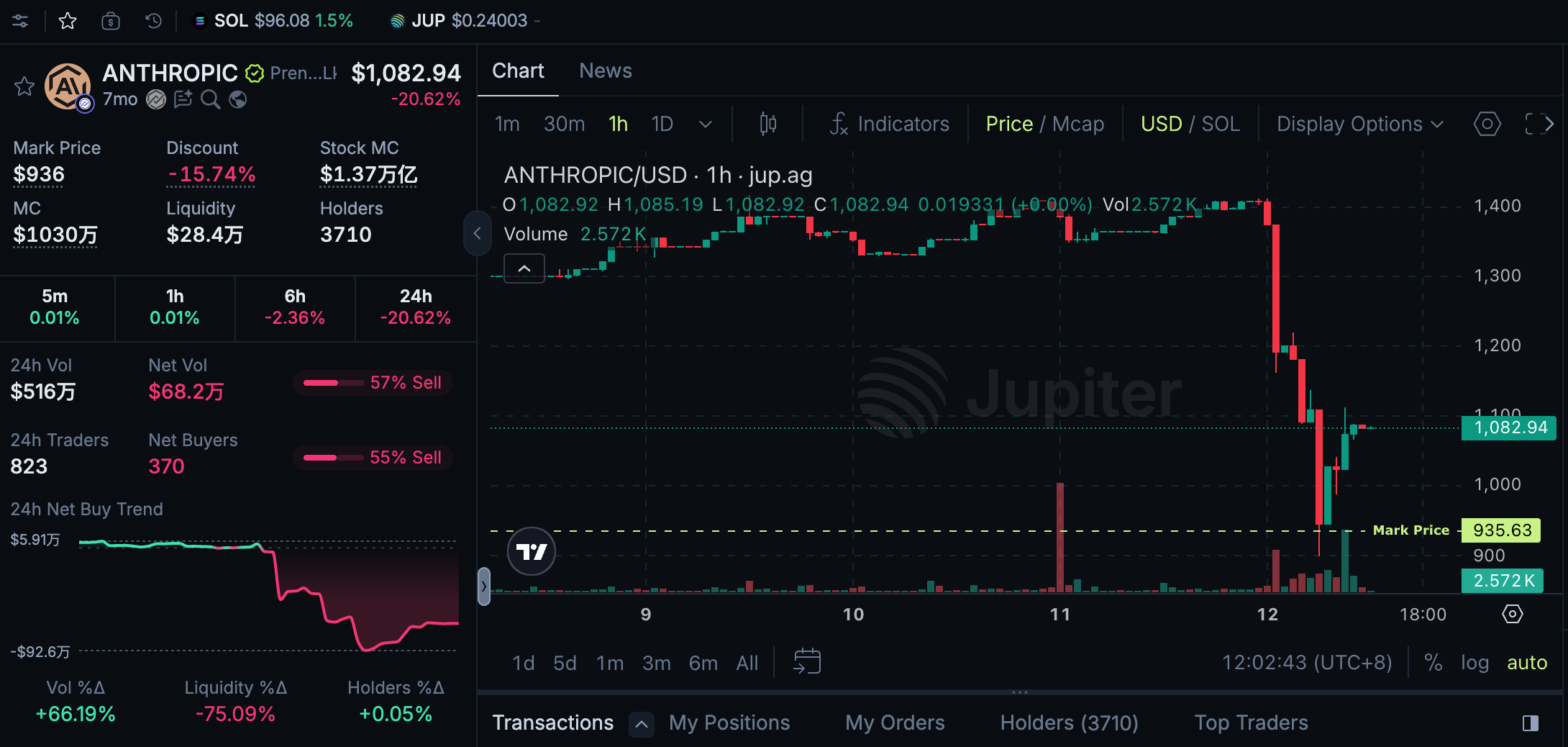
Investors' panic is easily understood. Since Anthropic and OpenAI explicitly stated they do not acknowledge unauthorized holdings, the "rights" behind these tokens face the probability of becoming "worthless paper," and holders may face significant risks in confirming ownership and legal litigation costs.

Interestingly, while pre-IPO stock tokens were under pressure, another type of pre-IPO trading product performed relatively stably — pre-IPO contracts that rely entirely on market bilateral speculation. This is because such products do not inherently hold any real stock; the restrictions by Anthropic and OpenAI have no direct impact on them. They are essentially "bilateral bets" on the future IPO price, relying on price competition between buyers and sellers.

Future Trend Predictions

Facing Anthropic and OpenAI's "non-acknowledgment" stance, two contrasting voices have emerged within the industry.

Some believe the logic of pre-IPO crypto-stock trading is dead. If headliners like Anthropic and OpenAI take the lead in banning SPVs, other giants may follow suit. With the backing of equity rights being shaken, whether pre-IPO stock tokens still hold value is questionable.

However, others, including Rivet founder Nick Abouzeid, believe this is not a big deal. Trading pre-IPO stock tokens through unofficial channels is inherently a gamble; buyers should have been prepared for the possibility that the "company would not acknowledge" them from day one — what you lack is direct investment opportunities; obtaining such opportunities through other means always carries certain risks.

In summary, with the continuous expansion of pre-IPO stock token premiums and increasingly fervent market sentiment, the stance of Anthropic and OpenAI undoubtedly pours a bucket of cold water on the entire sector.

Over the past few months, more and more investors have begun to view pre-IPO stock tokens as a "low-barrier channel to participate in the growth of top AI companies." The valuations of some AI-concept pre-IPO stock tokens have clearly detached from reality, even experiencing frenzied speculation far exceeding the valuations of their last funding rounds. Against this backdrop, the public "debunking" by Anthropic and OpenAI is, in a way, redrawing boundaries for this wildly growing new market.

For speculators, this is a risk education; but for the industry's long-term development, the market may also need such a "de-bubbling" moment.

Связанные с этим вопросы

QWhat did Anthropic and OpenAI declare regarding the transfer of their stocks?

ABoth Anthropic and OpenAI declared that any transfer or sale of their company stock without the express approval of their respective boards of directors is unauthorized and considered 'invalid.' They will not recognize such transfers on their company books and records, meaning buyers in these unauthorized transactions would not be considered shareholders and would have no shareholder rights.

QWhat is an SPV (Special Purpose Vehicle) and what is its role in pre-IPO stock token trading?

AA Special Purpose Vehicle (SPV) is a legal entity created for a specific transaction or investment purpose, often acting as a 'shell company' to hold an asset. In pre-IPO stock token trading, platforms use SPVs to indirectly acquire shares of a target company (like Anthropic) from employees or early investors. The platform then issues blockchain tokens representing a claim on the economic benefits of the SPV, theoretically pegged 1:1 to the underlying shares.

QWhy did the announcements by Anthropic and OpenAI cause a significant drop in the price of pre-IPO stock tokens?

AThe announcements caused a significant price drop because they fundamentally questioned the value of the underlying assets. By declaring unauthorized stock transfers 'invalid,' Anthropic and OpenAI implied that the shares held by the SPVs backing the tokens might be worthless. This creates substantial legal and ownership risks for token holders, leading to panic selling and a loss of confidence in these instruments.

QWhat is the 'nesting doll' risk associated with SPVs mentioned in the article?

AThe 'nesting doll' risk refers to a structure where an SPV does not directly hold the target company's shares but instead holds interests in other SPVs, which themselves may hold shares or interests in further SPVs. This creates several dangers: it obscures the true ownership and validity of the underlying shares, subjects investor returns to multiple layers of management fees, and increases the risk of total loss ('going to zero') if any layer in the chain is deemed invalid by the target company.

QAccording to the article, how did pre-IPO stock futures contracts react compared to the token market after the announcements?

AAccording to the article, pre-IPO stock futures contracts remained relatively stable compared to the collapsing token market. This is because these futures contracts are purely speculative derivatives based on the future IPO price and do not involve any claim on or holding of the actual company shares. Therefore, they were not directly affected by Anthropic's and OpenAI's statements regarding the invalidity of unauthorized share transfers.

Похожее

SUI Group увеличивает кредит Bluefin до 6 миллионов SUI для финансирования приобретения Suilend

Компания SUI Group Holdings Limited (Nasdaq: SUIG) увеличила свой кредит децентрализованной бирже Bluefin на 4 миллиона токенов SUI. Общая сумма займа теперь составляет 6 миллионов SUI, а срок его погашения продлен до 30 сентября 2028 года. В рамках пересмотренного соглашения доля SUI Group в доходах Bluefin увеличилась с 5% до 11%, что будет выплачиваться токенами SUI. Привлеченные средства будут использованы для участия Bluefin в финансировании приобретения компанией Bluewater Labs платформы Suilend — крупнейшего кредитного и DeFi-протокола в экосистеме Sui. После сделки Suilend сохранит независимый бренд, а ее генеральным директором станет сооснователь Bluefin. Важно отметить, что SUI Group — это публичная инвестиционная компания, а не Sui Foundation или Mysten Labs. Данная сделка отражает растущий тренд, когда публичные компании ищут способы получить доступ к ончейн-экосистемам через структурированное размещение капитала и долю в доходах. Это расширенное кредитное соглашение укрепляет финансовую инфраструктуру Sui, объединяя возможности торговой площадки Bluefin и кредитного протокола Suilend, что может способствовать углублению всей DeFi-экосистемы.

bitcoinist12 мин. назад

SUI Group увеличивает кредит Bluefin до 6 миллионов SUI для финансирования приобретения Suilend

bitcoinist12 мин. назад

USDT ненадолго обошёл Ethereum: Тревожный сигнал для крипторынка?

Стейблкоин USDT ненадолго обогнал Ethereum по рыночной капитализации 26 июня после того, как снижение цены ETH сократило её капитализацию до $184,4 млрд. Это произошло на фоне общих распродаж на крипторынке, вызванных давлением со стороны биткойна. Рост доли USDT до 9% на рынке, уровня, наблюдаемого на дне медвежьего рынка 2022 года, указывает на осторожность инвесторов и переход капитала в стейблкоины. Однако это событие не отражает долгосрочных изменений в настроениях, а скорее является следствием волатильности, когда инвесторы фиксируют прибыль в ожидании новых возможностей. Общий объем стейблкоинов немного снизился с мая, что свидетельствует о некотором оттоке средств из криптосферы, а соотношение ETH/BTC продолжает снижаться, указывая на замедление роста альткойнов. В целом, временное лидерство USDT не является тревожным сигналом само по себе, но растущее доминирование стейблкоина подтверждает сохраняющиеся риски на рынке.

ambcrypto30 мин. назад

USDT ненадолго обошёл Ethereum: Тревожный сигнал для крипторынка?

ambcrypto30 мин. назад

Mysten Labs запускает Sui Seal MPC, чтобы позволить ИИ-агентам проводить транзакции без хранения ключей

Mysten Labs запустила Sui Seal MPC в основной сети Sui в июне 2026 года. Эта система предназначена для того, чтобы автономные ИИ-агенты могли совершать транзакции в блокчейне без прямого хранения или контроля закрытых ключей. Технология использует многосторонние вычисления (MPC), распределяя доли ключа между независимыми узлами, что устраняет единую точку отказа. Для добавления защитных механизмов используются смарт-контракты Move, которые могут обеспечивать соблюдение правил, таких как лимиты расходов или список разрешенных контрагентов. Система также поддерживает функцию "скрытых ставок" для использования в алгоритмической торговле, где предложения остаются зашифрованными до момента раскрытия. Запуск Sui Seal MPC позиционирует сеть Sui как инфраструктурное решение для безопасного участия автономных программных агентов в ончейн-экономике, сочетая криптографию MPC и гибкие политики на основе Move.

bitcoinist56 мин. назад

Mysten Labs запускает Sui Seal MPC, чтобы позволить ИИ-агентам проводить транзакции без хранения ключей

bitcoinist56 мин. назад

Недельный релиз токенов: EIGEN разблокирует 6.2% от текущего объема в обращении

**EigenLayer**: 24 мая произойдет крупный разблокировка токенов Eigen (EIGEN). В обращение поступит 36,83 млн монет (6,2% от текущего объема), что составляет около $8,25 млн. EigenLayer — это протокол рестейкинга на базе Ethereum, позволяющий валидаторам повторно использовать застейканный ETH для обеспечения безопасности других приложений. **Falcon Finance**: Также на этой неделе разблокируется 100 млн токенов Falcon Finance (FALCON) на сумму примерно $6,79 млн. Falcon Finance — это децентрализованный протокол для создания синтетических активов под залог. **Kamino**: Третий крупный этап разблокировки — 230 млн токенов Kamino (KMNO) стоимостью около $4,59 млн. Kamino — это автоматизированное решение для предоставления ликвидности на основе механизма CLMM (концентрированный маркет-мейкинг), разработанное в экосистеме Solana. Для всех трех проектов в статье приведены графики предстоящих этапов разблокировки токенов.

marsbit1 ч. назад

Недельный релиз токенов: EIGEN разблокирует 6.2% от текущего объема в обращении

marsbit1 ч. назад

Chainlink присоединяется к проекту «Пангея» для модернизации валютных расчетов для 47 банков

Chainlink присоединился к Project Pangea — инициативе по трансграничному валютному расчету с участием FairSquareLab и консорциума более чем 47 европейских и южнокорейских банков. Цель проекта — сократить сроки расчетов по иностранной валюте с T+2 до T+0 с использованием регулируемых стейблкоинов, привязанных к евро и воне, при этом банки смогут продолжать инициировать сделки через привычные сообщения SWIFT и стандарты ISO 20022. Важно отметить, что Chainlink не заменяет SWIFT, а выступает в качестве промежуточного программного слоя (мидлвара). Такое решение является более прагматичным, поскольку не требует от банков отказа от существующей инфраструктуры обмена сообщениями. Проект нацелен на обеспечение атомарных расчетов «платеж против платежа» в торговом коридоре Европа-Южная Корея, объем которого превышает 150 млрд долларов в год. Планируется, что живые транзакции начнутся к середине 2027 года. Для Chainlink эта инициатива подтверждает тезис о том, что децентрализованная инфраструктура может служить связующим звеном между традиционными финансовыми системами и рельсами токенизированных расчетов.

bitcoinist1 ч. назад

Chainlink присоединяется к проекту «Пангея» для модернизации валютных расчетов для 47 банков

bitcoinist1 ч. назад

Торговля

Спот
活动图片