【研报精选】下轮牛市的旗手?分析目前LSD赛道市面上主流的方案

Pantera CapitalОпубликовано 2023-05-25Обновлено 2026-06-03

Введение

LSD已成为任何PoS生态系统的标准,并且已经是主要的DeFi趋势之一。LSD提供了近乎无风险的5%的产品,以及更高的回报的高波动资产。随着LSDfi将持续演进,LSD将成为链上世界的债券产品。

注:本文来自@Rocky_Bitcoin 推特,其是加密分析师,原推文内容由MarsBit整理如下:

自从昨晚发出 #LSDFI 灵魂拷问之后,很多伙伴对 #LSD 赛道很感兴趣,并想了解有什么套利方案。我今天写写相关介绍,讲讲目前市面上主流的方案。(内容仅供参考,DYOR)

内容分3部分:

第一部分:ETH质押换取xxETH。

第二部分:xxETH再套利。

第三部分:LSD相关的数据跟踪看板。
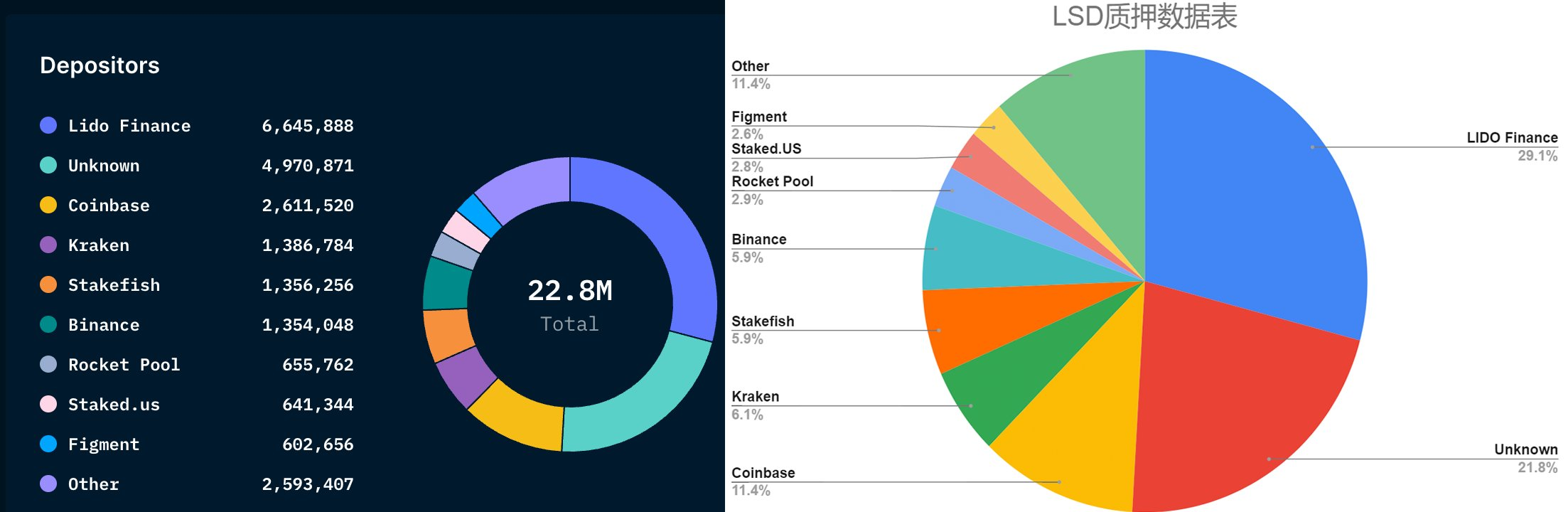
第一部分:ETH质押换取xxETH。

(xxETH称之为Liquid Staking Tokens (LSTs),后期用LST替代)

1.LDO(stETH)

平均年化收益率:4.9%。市占率:71%(剔除非核心数据)

优点:LSD赛道的先驱,市占率第一,流动性强,收费合理,社区强大,UX界面友好,绝大多数LSDFI协议支持stETH
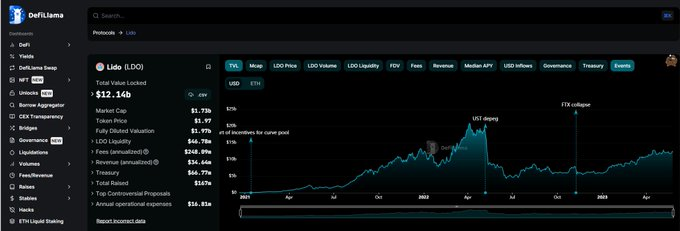
缺点:目前最大ETH质押池,高集中度可能带来较大的风险系数,存在受攻击风险,Lido DAO治理投票没有自我限制,可能导致治理的不公平性与未来发展方向偏差。

费用:产生的奖励收取10% 作为费用,在节点运营商和 DAO 之间分配 50/50收益。

质押网址:https://lido.fi/

2.Rocket Pool(rETH)

平均年化收益率:5.17%。市占率:7.6%

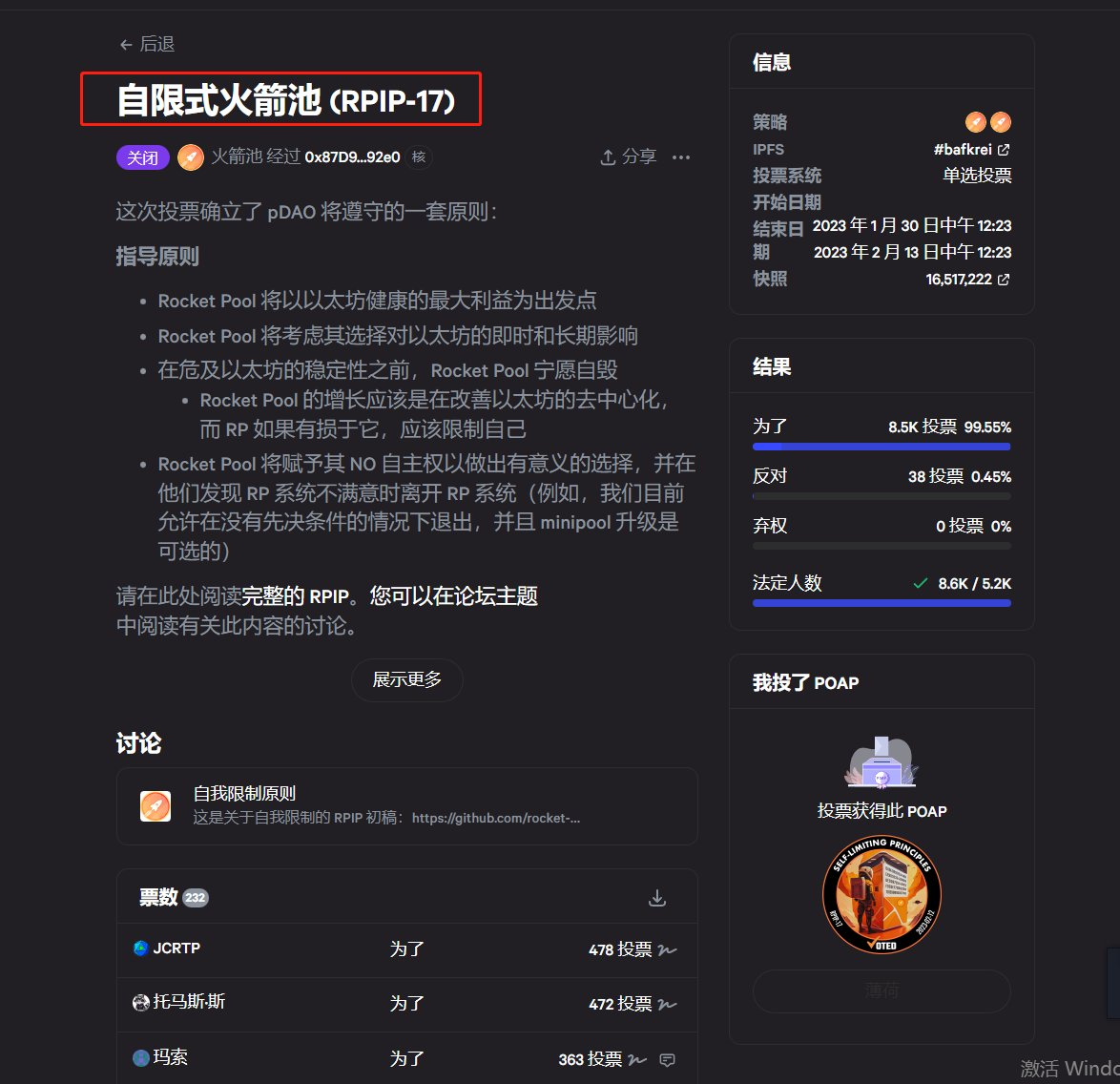
优点:最佳去中心化的ETH质押协议。DAO投票治理具有自我限制机制,相对公平且为ETH去中心化做了表率。

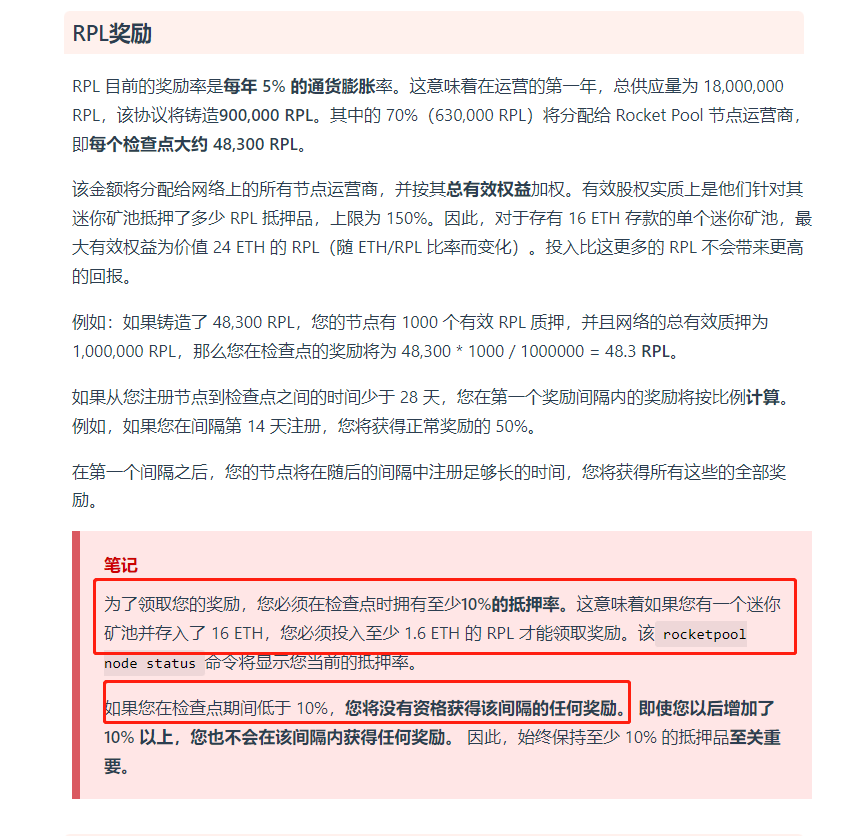
缺点:资本效率较低,对于那些节点迷你矿池始终必须保持至少10%的抵押品。否则无法领取奖励。(如👇👇图)
费用:固定费率,14%收益由节点运营商收取,没有协议输入捕获。

质押网址:https://stake.rocketpool.net/

3.FXS(frxETH)

平均年化收益率:8.85%。市占率:2.42%。

优点:从 #CRV 和 #CVX 双系统中获得收益。采用了双代币系统,类似于 #ANKR ,有助于将波动性代币和盈利代币做分隔,从而允许分别在流动性提供者与质押奖励之间,分配多重利润,达到更高的APR收益。
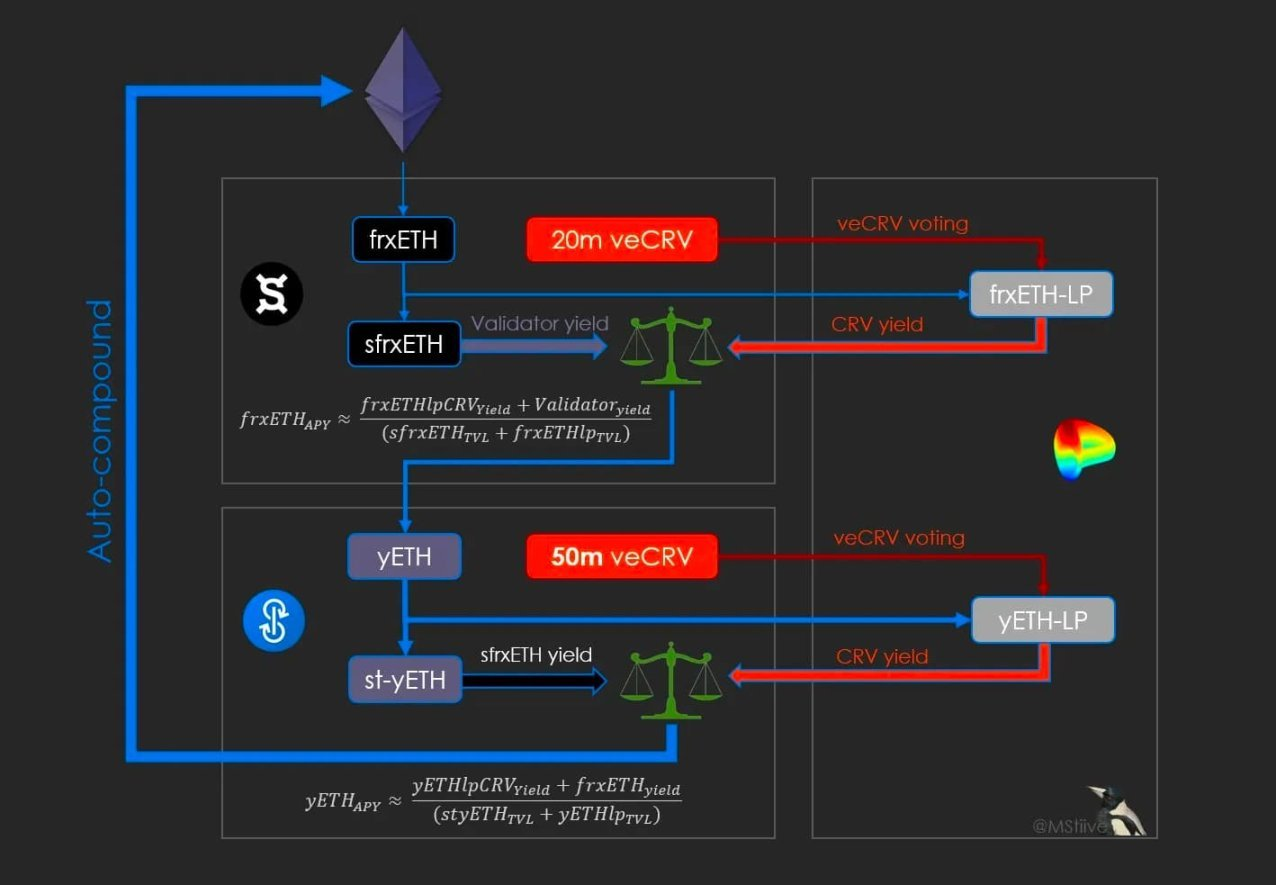
缺点:当frxETH供应锁定为sfrxETH,如若其中的池子的ETH比例较低,将可能面临流动性枯竭问题。

费用:产生的奖励收取10%作为费用。

质押网址:https://app.frax.finance/frxeth/mint

4.Stakewise

平均年化收益率:5.42%.市占率:1.20%

优点:采用双代币系统,sETH2作为本金,rETH2作为奖励,在LPing或杠杆质押时提供比单代币模型更大的灵活性和GAS效率.

缺点:由于Horcrux验证系统,它不那么去中心化,它将验证器密钥分成7个部分,分给在以太坊社区中7个有影响力人物持有,容易内部欺诈.
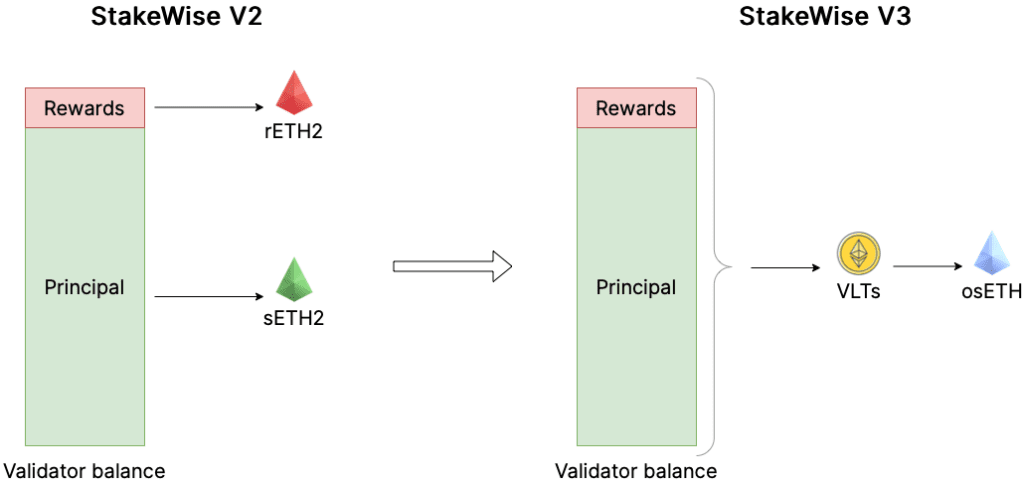
缺点:Stakewise代币表现一般,交易量低。另外支持Stakewise的Defi协议较少。

费用:产生的奖励收取10%作为费用。

质押网址:https://app.stakewise.io

5.火必质押ETH

平均年化收益率:4.35%。市占率:1.2%

优点:界面简单易学,十分适合新手。

缺点:提款过程较慢,它需要15天才能完成,并且在等待的这段时间,BETH将不会获得任何收益。

费用:未知。

质押网址:huobi.com

6.Pendle(折扣价购买stETH)

平均年化收益率:0.65%-8.65%。市占率:0.56%

优点:高达8.83%的折扣购买stETH。Pendle使stETH持有者能够在没有清算风险的情况下获得杠杆收益敞口,可以在到期前的任何时间出售头寸,但其中价格会有所差异。本金ETH可以在到期日后全部赎回。
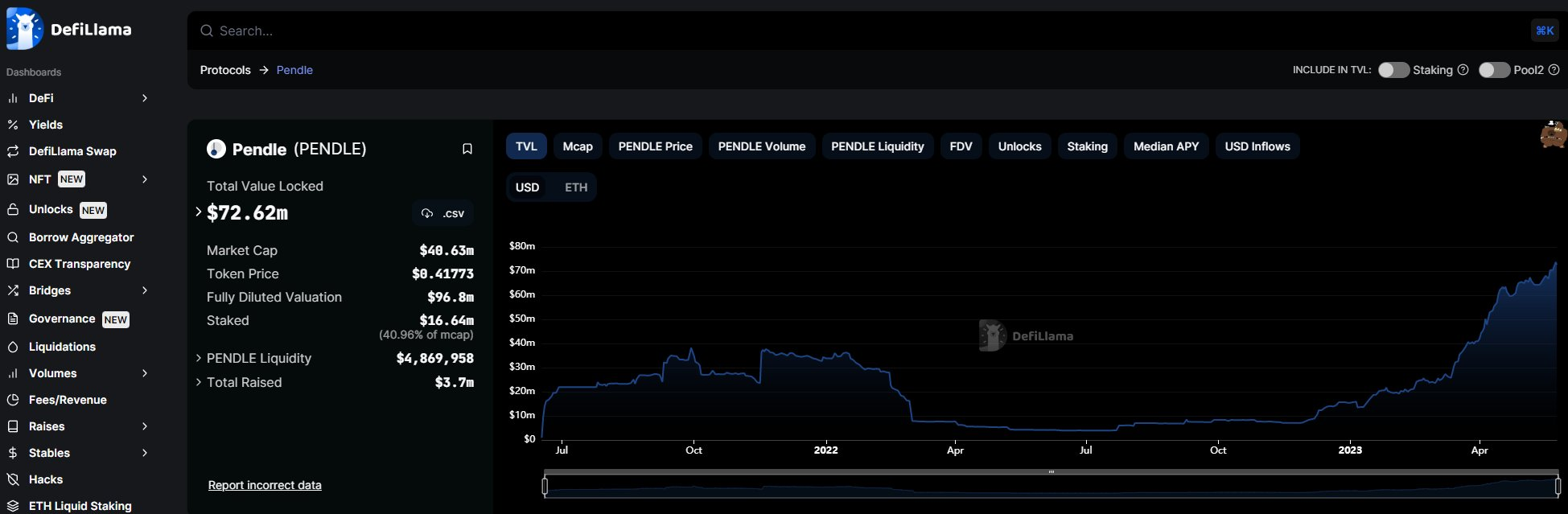
缺点:Pendle 模型很复杂,普通用户可能难以理解,造成了不小的学习成本和门槛。

费用:未知。

质押网址:app.pendle.finance

第二部分:xxETH再套利。

例如:将 stETH 存入 #Curve 的 stETH 集中流动资金池,并在 stETH APY 之外赚取额外的 3.92% APY。

1.Pendle

APR:10%-60.9%

优势:购买打折的 ETH、USDC 并提供流动性以赚取最高收益。

网址:app.pendle.finance

2.unshETH

APR:5.2%-27.12%

优势:支持较多ETH 质押代币(WETH、sfrxETH、rETH、wstETH、cbETH)的农场奖励。

网址:https://unsheth.xyz/deposit

3.sfrxETH

APR:5.88%

优势:frxETH 的持有者可以通过将代币存入 sfrxETH 保险库来赚取额外的质押收益。

网址:https://app.frax.finance/frxeth/stake

4.Curve

APR:3%左右

优势:Curve上有极佳流动性的池子stETH/ETH,提供流动性挖矿奖励。用户获得 CRV 和 LDO 形式的 APR 奖励。

网址:https://curve.fi/#/ethereum/pools

5.Flashstake

APR:5.04%

优势:质押 ETH、LSD 代币并预先获得收益。

网址:https://app.flashstake.io/stake

第三部分:LSD相关的数据跟踪看板

1. #Tokenterminal 展示链上质押的核心项目,并与之相关的核心数据(协议收入,MEV奖励,活跃用户数等),图表展示。

@tokenterminal

网址:https://tokenterminal.com/terminal/markets/liquid-staking

2. #Defillama 比较详细的各个LSD数据的详情(包括质押量,TVL,7D变化,30D变化,市场占比等)

@DefiLlama

网址:defillama.com

3. #Nansen 事实的数据追踪,包括最新质押的情况,具体是谁的钱包,什么时候质押的,钱包收益多少,昨天推文展示孙哥的质押钱包,显示的一览无余。

@nansen_ai

网址:https://pro.nansen.ai/eth2-deposit-contract

4. #DUNE 这个数据表,也十分完善。值得一看。

@DuneAnalytics

网址:dune.com

结束语

LSD已成为任何PoS生态系统的标准,并且已经是主要的DeFi趋势之一。

LSD生成一致的、低风险的被动收入,并有助于维护区块链。

LSDfi是LSD的逻辑扩展。它创建了一个整体的经济,一方面,可以产生大量的收入,另一方面,简化了与LSD项目的交互。

LSDfi将持续演进,我们将逐步见证项目的复杂性和独特性的增加。让我们在未来观察它的进展。

Похожее

ETH Bull and Bear Views Compilation: Can Ethereum's Value Flow Back to ETH?

Titled "ETH Bull and Bear Views: Can Ethereum's Value Flow Back to ETH?", this article synthesizes the current heated debate around Ethereum's native token, ETH, following Bankless co-founder David Hoffman's decision to sell his entire ETH holdings. The **bullish case**, represented by figures like Tom Lee (BitMine CEO) and Raoul Pal, argues that ETH's core thesis remains intact. They contend Ethereum is the essential, secure, and neutral foundational layer for future finance—encompassing stablecoins, RWA, DeFi, L2s, and Agentic AI. Bulls bet on ETH's long-term revaluation as institutional adoption of on-chain finance grows, with significant buying activity from entities like BitMine and Consensys cited as evidence. Conversely, the **bearish perspective**, led by Hoffman and analysts like Markus Thielen, questions ETH's value capture mechanism. They acknowledge Ethereum's network success but argue that the value created by L2s, DeFi, and applications does not sufficiently accrue to the ETH token itself. Bears point to ETH's prolonged underperformance versus the broader crypto market, lack of traditional cash flows, weakening "ultrasound money" narrative, and apparent institutional retreat (e.g., Harvard Management Company exiting its ETH ETF position) as key concerns. The debate highlights a pivotal shift: ETH is no longer just a community belief asset. The central question is whether ETH can transition from being a "**used infrastructure**" to a "**continuously bought and held core asset**" as more value enters the Ethereum ecosystem. The market is now critically examining the direct link between network growth and ETH's value.

marsbit35 мин. назад

ETH Bull and Bear Views Compilation: Can Ethereum's Value Flow Back to ETH?

marsbit35 мин. назад

Crypto is dead, Perps are forever

The crypto industry is shifting from a focus on creating native assets (like altcoins and protocol tokens) to becoming a "global asset pipeline." Native cryptocurrencies, except for Bitcoin, are seen as failing in their value storage and utility promises, with demand driven largely by speculation. Attention and liquidity are now moving toward real-world assets (RWAs) like U.S. stocks, bonds, gold, and oil traded on-chain via perpetual contracts (Perps). Stablecoins like USDT and USDC set the precedent, proving blockchain's core strength is efficient global settlement and transfer, not inventing new monetary systems. Meanwhile, assets like Ethereum and many DeFi tokens struggle as their narratives weaken against tangible traditional assets and the rapid real-world progress of AI. Perpetual contracts have emerged as a pivotal innovation. They simplify trading by offering pure price exposure to any asset, bypassing complexities of ownership, custody, and traditional market hours. Projects like Hyperliquid gained traction by combining CEX-like efficiency with on-chain transparency, capitalizing on post-FTX distrust, macroeconomic volatility, and the surge in demand for 24/7 stock trading. In conclusion, while the era of speculative native "crypto assets" may be over, perpetual contracts persist as the industry's most potent financial instrument—transforming all assets into globally accessible, constantly tradable instruments centered on price speculation.

marsbit40 мин. назад

Crypto is dead, Perps are forever

marsbit40 мин. назад

Tencent, Alibaba, ByteDance in a Battle for the Skill Store

Skill is becoming a key concept in the AI field, essentially serving as a structured "instruction manual" for AI Agents that specifies tool calls, decision logic, and output standards. This allows Agents to execute predefined tasks. As the number of Skills grows, distribution platforms have emerged. Major tech companies are swiftly entering this space. In March, Tencent, Alibaba, and ByteDance launched Skill stores within their respective Agent platforms. Subsequently, players like Zhipu AI, Meituan, and Xiaohongshu joined the fray. This competition for the "Skill store" is fundamentally a battle for the AI-era user entry point; whoever controls distribution controls the users. While ByteDance's Coze has experimented with paid Skills, most platforms offer them for free. The real value lies not in the stores themselves but in using them to attract and retain users within an ecosystem, driving revenue from services like cloud computing, model calls, or advertising. The landscape features three main player types: 1) **Internet giants** (e.g., Alibaba, ByteDance, Tencent, Meituan), leveraging Skills to drive traffic and monetize through their broader ecosystems (cloud services, transactions, ads). 2) **Large model companies** (e.g., Zhipu AI, Moonshot AI), using Skill stores to increase user engagement and monetize model API calls. 3) **Content platforms** (e.g., Xiaohongshu), treating Skills as a new content format to generate traffic and ad revenue. However, transforming Skill stores into a sustainable business faces significant hurdles. Key challenges include: the **difficulty in pricing Skills** due to inconsistent outputs across different models and contexts; **lack of cost transparency** (varying token consumption); **security risks** like Skill poisoning; and the **absence of standardized protocols** for development and evaluation. Unlike standardized mobile apps, Skills are often personalized workflows resistant to uniformity, which hinders the establishment of a reliable review and monetization system akin to the App Store. While there is genuine user demand for paid Skills—particularly in enterprise (e.g., contract review) and certain personal productivity scenarios—current platforms offer developers limited and unpredictable distribution. The future of Skill stores depends on overcoming these standardization, evaluation, and safety challenges to make acquiring a Skill as straightforward as downloading an app. For now, the stores function more as display shelves than robust marketplaces.

marsbit40 мин. назад

Tencent, Alibaba, ByteDance in a Battle for the Skill Store

marsbit40 мин. назад

The Crypto Scene Is Dead, Perpetual Swaps Are Eternal

The crypto industry is undergoing a fundamental shift. The era defined by minting novel, native digital assets (altcoins) is fading. These assets, lacking real-world cash flows or clear value, are losing relevance as attention and capital flow elsewhere. Two powerful external forces are reshaping the space. First, traditional assets like U.S. stocks, bonds, gold, and oil are being tokenized and traded on-chain. Second, the explosive growth of AI, with its tangible products, has overshadowed crypto's once-dominant "future narrative." This marks a critical pivot: crypto is transitioning from being a "factory for new assets" to becoming a "global conduit for existing assets." Its validated utility is not complex financial reinvention but efficient global settlement, transfer, and trading—the original promise of blockchain. Stablecoins like USDT and USDC exemplify this, offering faster dollar movement rather than replacing it. Consequently, native ecosystems like Ethereum face profound challenges. While still crucial infrastructure, ETH struggles to capture value as users interact with Layer 2s or trade traditional assets without needing to hold it. DeFi's grand narrative of rebuilding finance has narrowed to core needs like cheap transfers and deep liquidity. The true breakout innovation is the perpetual contract (Perp). It brilliantly bypasses the complexities of direct asset ownership (custody, compliance, dividends) by creating pure price exposure. Users can speculate on the price movement of *any* asset—NVIDIA, gold, oil—24/7, globally, and with leverage. This "price casino" model, while risky and ethically fraught, delivers unmatched liquidity and accessibility. Projects like Hyperliquid succeeded not by inventing new mechanics but by perfecting the timing and execution of this model. Key drivers included making on-chain Perps feel like centralized exchanges, post-FTX trust migration towards transparency, and rising demand to trade macro assets and equities round-the-clock. In conclusion, the crypto world's most enduring successes are the dollar (via stablecoins), Bitcoin, and trading. Its new frontier is not creating alternative assets but providing a seamless, perpetual trading layer—a new API—for the world's existing financial system. The age of native altcoins is over; the age of perpetual synthetic exposure has begun.

Odaily星球日报49 мин. назад

The Crypto Scene Is Dead, Perpetual Swaps Are Eternal

Odaily星球日报49 мин. назад

Торговля

Спот
Фьючерсы
活动图片