Источник: Weixi Zhibei
Вчера утром моя лента в WeChat взорвалась новостями о том, что WeChat подключил OpenClaw в виде плагина.
Снова поползли громкие заявления вроде "WeChat заканчивает игру", прямо как тогда, когда DeepSeek подключили к поиску WeChat.
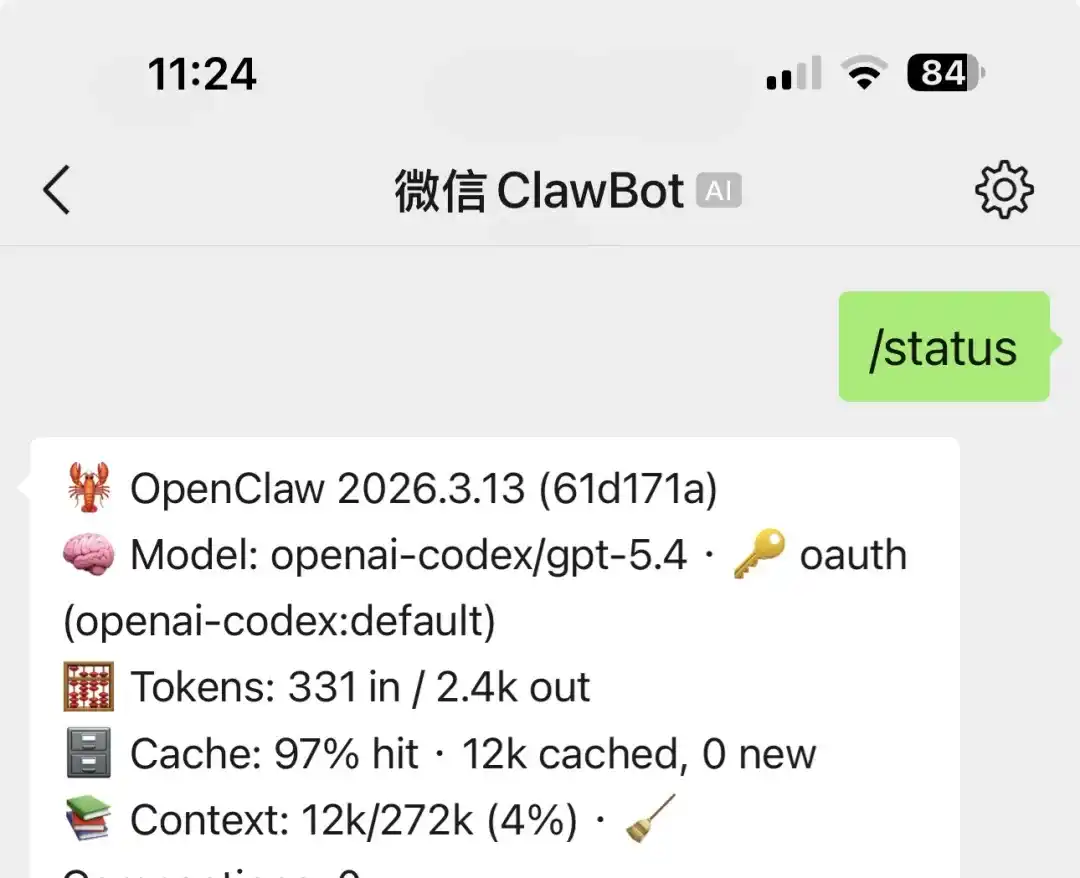
Первое сообщение, которое я отправил своему креветке в WeChat
Но я хочу сказать: его влияние, возможно, не так велико, как мы думаем.
Это скорее небольшое дело, которое WeChat и так должен был сделать.
Вот мои десять холодных размышлений —
1. Сначала посмотрим на особенности самого OpenClaw в WeChat
Во-первых, WeChat не выпустил нового креветка, а скорее, у вас уже был свой креветок, и теперь официально поддерживается возможность общаться с ним внутри WeChat.
Если конкретнее, он существует в WeChat в виде плагина. Официальная документация
В этом смысле, плагин-архитектура WeChat, разработанная ранее, была очень дальновидной, она может относительно гибко поддерживать множество новых, экспериментальных функций.
Ранний сотрудник WeChat, учитель Лу Шуцянь, ранее написал статью «Культура лаборатории в команде WeChat», которая очень стоит прочтения.
Затем он поддерживает различные версии креветков на рынке, будь то локальные креветки, облачные креветки, модифицированные креветки или поддельные креветки.
Теоретически, WeChat поддерживает всех креветков, которые не имеют масштабных изменений в модуле плагина OpenClaw. Более того, некоторые уже на основе кода протокола этого плагина WeChat создали проект, позволяющий WeChat также поддерживать ClaudeCode, CodeX и другие бэкенды ИИ, не ограничиваясь креветками. Адрес проекта: https://github.com/wong2/weixin-agent-sdk (Это важно, проанализируем позже).
Весь процесс подключения очень прост: установите плагин, затем отсканируйте QR-код в WeChat — и всё готово. Весь процесс занимает 2 минуты, даже проще, чем в Telegram.
Теперь посмотрим на некоторые его небольшие особенности—
1. Не поддерживает групповые чаты. (В основном из соображений безопасности, проанализируем позже)
2. Не поддерживает потоковый вывод. (Если я не ошибаюсь, в Китае, кажется, только Feishu поддерживает)
3. Поддерживает изменение имени, но не поддерживает изменение аватара; можно закрепить;
4. Кажется, версия для Mac еще не обновлена, контакт "WeChat clawbot" не виден;
6. Поддерживает быстрые команды через слэш в OpenClaw;
7. Поддерживает передачу файлов;
8. При выборе диалога поддерживается только копирование, пересылка, цитирование и удаление; не поддерживается множественный выбор, перевод, повышение эффективности, поиск, множественный выбор, добавление в избранное; (Yuanbao поддерживает все кнопки, это различие интересно)
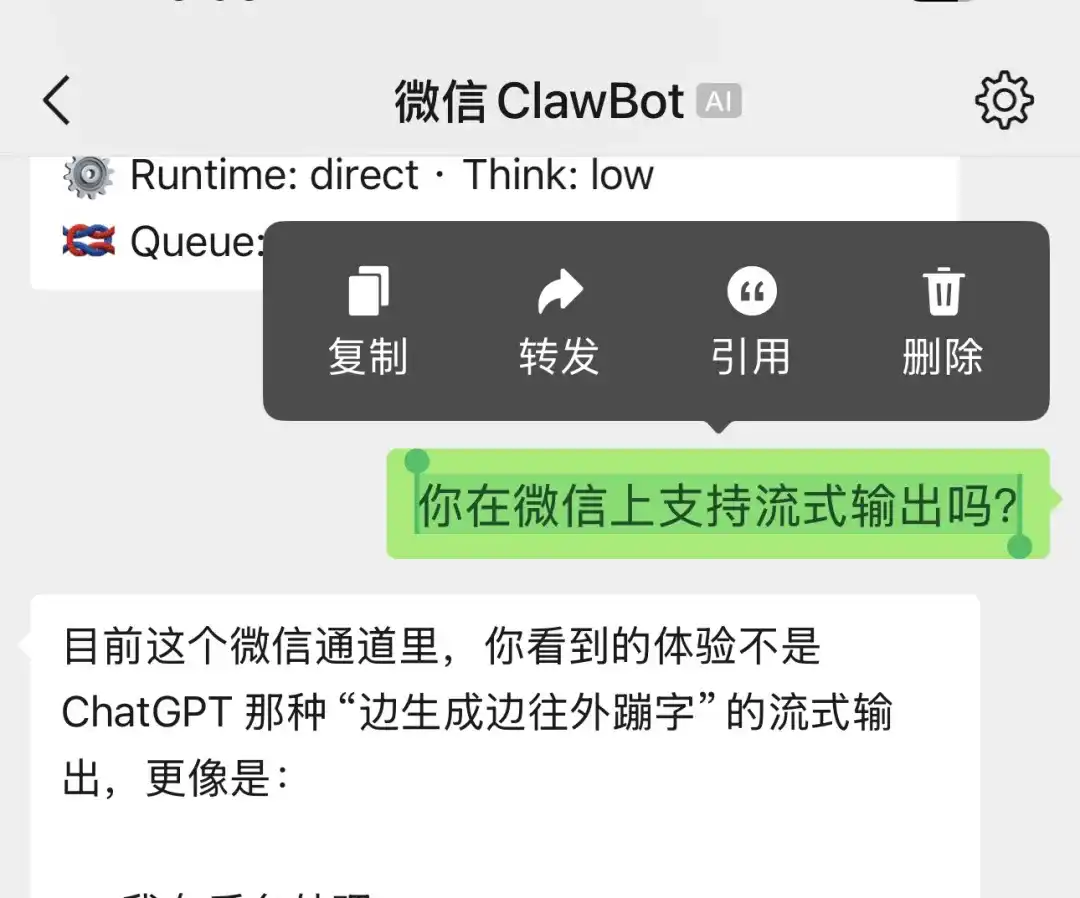
9. Поддерживает подключение только одного креветка.
10. Поддержка формата markdown довольно слабая;
11. Не поддерживает пересылку диалогов других людей "WeChat clawbot". (Это очень странно, ведь Yuanbao в WeChat это поддерживает)
Так что, откровенно говоря, многое было урезано, опыт всё же несколько снижен.
Например, лично я не могу смириться с поддержкой только одного креветка. Я сам создал три дочерних Agent в OpenClaw, и я не могу с ними общаться, а в Telegram достаточно просто нового бота.
2. Действия WeChat сложно назвать быстрыми
Кто-то говорит, что WeChat действовал быстро, но я считаю, что это действие не таким уж быстрым.
Можно просто сравнить: когда DeepSeek стал популярным год назад, это было 25 января (DeepSeek начал поддерживать поиск в интернете + глубокие размышления).
Затем поиск WeChat подключил DeepSeek 17 февраля, то есть прошло всего 20 дней.
А на этот раз официальное подключение WeChat, если считать с Праздника весны, длится уже больше месяца. (Сравнение грубовато, но至少 доказывает, что не быстро)
Конечно, изменение поиска и изменение списка контактов WeChat — это разные вещи, я понимаю, что это больше связано с безопасностью, затраты на разработку для WeChat точно не были узким местом, ограничивающим запуск.
Когда действует Лунг, нужно гарантировать полную безопасность.
В индустрии也有 разные мнения, Dachein Daчен на Jike считает, что WeChat уже очень агрессивен —
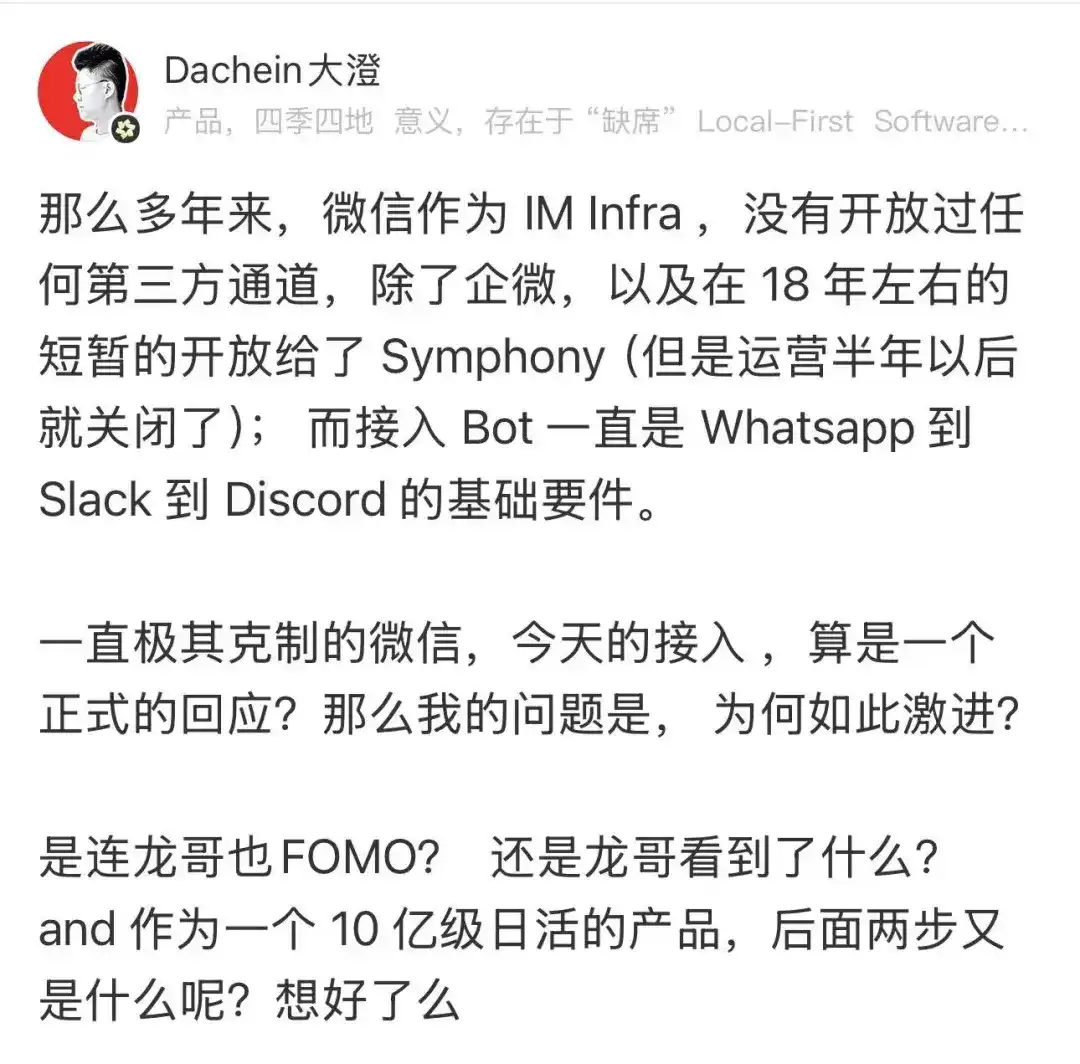
Лично я не согласен с этим утверждением, немного агрессии не помешает, если一味保守, то это才是 вызывает беспокойство.
Продвижение ИИ в Apple — пример, они долго не могут представить usable продукт, это才是 беспокоит. (На самом деле, многие в индустрии уже ставят WeChat и Apple в один ряд в вопросах ИИ)
3. Решение WeChat элегантно
Ранее Tencent также выпустила несколько разных креветков, как локальных, так и облачных.
И их способ подключения к WeChat был относительно неудобным: некоторые через мини-программы, некоторые через сервисные сообщения WeChat, что на самом деле не является нативной поддержкой.
Я сначала думал, что это可能是因为 группа WeChat считает, что эти продукты еще не выиграли гонку, и нужно подождать, пока кто-то действительно站稳脚跟, прежде чем WeChat окажет нативную поддержку.
Теперь я вижу, что недооценил масштаб мышления Лунга.
Лунг махнул рукой и сказал: "Я не буду поддерживать каждого из вас по отдельности, но я поддержу всех, не только вас, но и всех на рынке."
Что называется архитектурным решением?
Это и называется архитектурным решением.
WeChat выступает только в роли пульта дистанционного управления — вы отправляете команды в WeChat, креветок выполняет на компьютере (или в облаке), результат возвращается в WeChat, при этом границы данных WeChat остаются неприкосновенными.
Типичное платформенное мышление.
4. WeChat, вероятно, очень долго не будет добавлять функцию групповых чатов для OpenClaw.
Для WeChat безопасность нельзя переоценить.
Doubao Mobile ранее был заблокирован WeChat менее чем через два дня после запуска из-за имитации кликов across приложений через системные разрешения.
Это также одна из важных причин, почему групповые чаты не были добавлены при этом запуске OpenClaw.
Очевидно, что с технической точки зрения добавить групповые чаты — дело пары минут.
Мое предположение: возможно, в течение длительного времени после этого они не будут добавлены.
В конце концов, безопасность в групповых чатах будет очень неконтролируемой.
Я ранее писал статью «Ваш креветок может быть голым — начиная с вызывающей дрожь статьи», в которой рассказывал несколько захватывающих историй (инцидентов).
Суть в одном: как только появятся групповые чаты, люди inevitably начнут придумывать различные способы взлома вашего креветка, что приведет к бесконечным проблемам безопасности.
Поэтому WeChat будет действовать очень осторожно.
В конце концов, для WeChat социальный граф из 1.4 миллиарда пользователей — это its核心 актив, и его ахиллесова пята.
Он не посмеет轻取妄动.
5. Само по себе подключение OpenClaw к WeChat не снижает порог содержания креветка
Многие думают, что как только WeChat подключится, порог содержания креветка снизится.
Ошибаются.
WeChat снижает порог общения с креветком, а не порог его содержания как таковой.
Те, кто действительно содержал креветков и смог сделать их более ценными, чем Chatbot,早就 знают —
核心 сложность содержания креветка заключается не в том, каким инструментом с ним общаться.
Есть еще ряд затрат помимо операционных —
Например, crucial, какую модель использовать. Если использовать модель с низким интеллектом, опыт будет хуже, чем у Doubao.
Кроме того, настройка soul.md, user.md, без правильной настройки, безвкусно, как жвачка. А также ваше熟悉ство с памятью и skills.
На самом деле, есть много скрытых затрат — вам нужно глубоко понимать границы возможностей Agent, это вопрос уровня Дао.
Поэтому подключение OpenClaw к WeChat, конечно, выгодно для многих, снижает явные затраты, но самое главное — вы должны осознанно поручать больше задач Агенту, использовать его более нативно, максимально.
Действительно рассматривать его как рычаг.
Очень хорошо сказано —
«В это время, если вы многое делаете своими руками, это означает, что ваши способности к ручному труду не ахти.»
6. Для WeChat это больше похоже на рутинное дело, которое он должен был сделать
Для WeChat и его пользователей, это дело, конечно, имеет ценность и significance, но его влияние, возможно, меньше, чем мы imagine.
Например, Telegram, OpenClaw поддерживал его с момента создания, но скажите, насколько это помогло Telegram?
Это действительно сложно оценить конкретно.
Восприятие пользователей все еще сосредоточено на самом OpenClaw, а не на Telegram.
На самом деле, это更应该 понимать так: если вы не делаете, то это может помочь другим IM, которые сделали;
Но если вы сделали, то насколько это улучшило вас самих, это под вопросом.
В конце концов, вы уже инфраструктура.
Поэтому, я更愿意 считать — это подключение WeChat на самом деле является лишь сертификацией его как основной инфраструктуры чата.
Просто это дело, очевидно, не является хорошей новостью для Feishu, Enterprise WeChat и DingTalk, которые в последнее время активно продвигали一键 подключение креветков.
7. Насколько большую ценность можно реализовать, зависит от того, насколько велико само ценностное пространство OpenClaw
Если вы умеете содержать креветка, вы можете делать это в Feishu, Enterprise WeChat, в Telegram, в QQ.
Если вы не умеете содержать креветка, даже с подключением к WeChat, вы все равно не сможете.
Очень просто, Yuanbao также нативно поддерживает WeChat, но на самом деле, насколько высока частота использования прямого общения с Yuanbao внутри WeChat?
Большинство людей, вероятно, все еще предпочитают использовать Doubao, или даже更习惯 открывать приложение Yuanbao. (Конечно, это не значит, что это совершенно бесполезно, когда я рассказывал об ИИ пожилым людям в Хайдянь Вэньцюаньчжэнь, некоторые из них习惯 общаться с Yuanbao внутри WeChat, потому что WeChat — единственное приложение, которое они умеют использовать, но логика OpenClaw completely отличается)
Кажется, WeChat сделал функцию для всех, но реальная аудитория, те, кто уже содержит креветков, вероятно, составляет небольшую долю от общего числа пользователей WeChat.
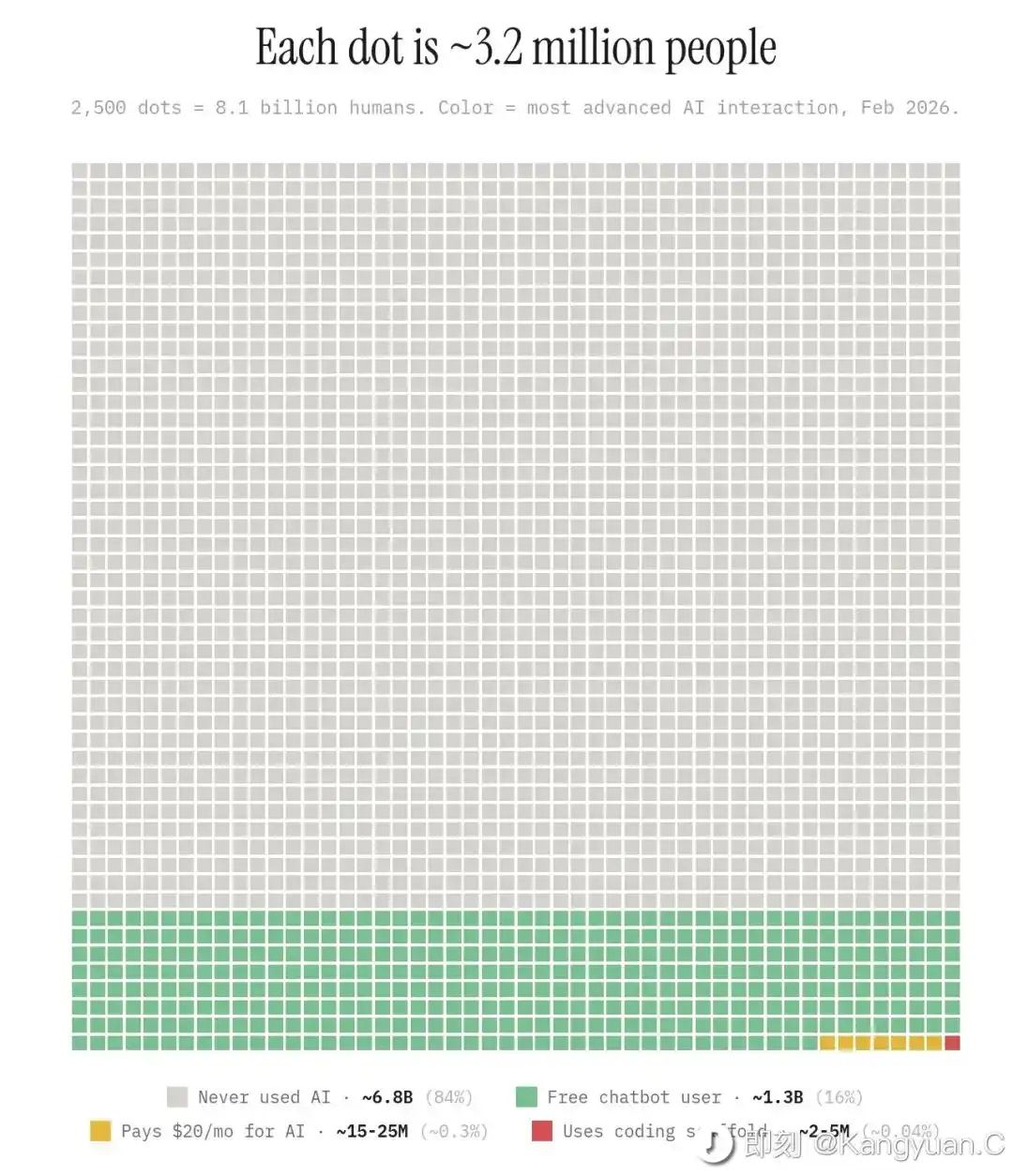
Это возвращает нас к старой проблеме: технокружок думает, что небо изменилось, обычные пользователи думают, что ничего не произошло.
Важно глубоко понимать, что проникновение технологий требует времени.
Принцип Парето всегда действует, снова почувствуйте эту картинку —
8. Это подключение — очень чистое инструментальное подключение, не интегрированное с другими модулями WeChat.
По сути, это подключение просто добавляет отдельную роль в ваш список контактов, и всё.
Оно не может читать вашу ленту моментов, не может заказать еду на вынос.
Можно даже сказать, что всё, что вы заставляете его делать, не имеет прямого отношения к самому WeChat, кроме того, что ваше общение с ним происходит в WeChat.
Да, приклеено скотчем.
Посмотрим на другую вещь —
Согласно отчету The Information за март этого года, внутри WeChat уже давно в секрете продвигается собственный проект AI Agent, начавшийся еще в 2025 году.
Амбиции этого проекта гораздо больше — он должен напрямую打通 огромное количество мини-программ в экосистеме WeChat, вызов такси, заказ еды, покупка продуктов, бронирование билетов (то, что делает Qianwen немного похоже), согласно отчету, планируется начать тестирование в середине 2026 года.
Другими словами, то, что WeChat собирается сделать сам, полностью отличается от этого подключения OpenClaw.
Но эти две вещи не конфликтуют.
Подключение OpenClaw решает насущные потребности тех пользователей, которые уже содержат креветков — им просто нужно место, чтобы поговорить со своим креветком.
Если WeChat не сделает, они пойдут в Feishu, в Telegram, в Enterprise WeChat, и WeChat反而 потеряет время пребывания пользователей.
Но как только собственный Agent WeChat выйдет, начнется настоящее большое шоу. Если AI Agent сможет напрямую использовать возможности этих мини-программ, это будет полноценный WeChat AI.
Поэтому это чисто инструментальное подключение — это прелюдия. WeChat сначала заставляет вас习惯 общаться с ИИ в списке контактов, а когда вы привыкнете, постепенно интегрирует другие модули, и тогда принятие пользователей будет much выше.
Сначала заставить вас觉得正常, затем заставить вас觉得好用.
Лунг всегда так делает.
9. Мы должны постепенно习惯 появлению большего количества нечеловеческих контактов в WeChat
Сначала Yuanbao, недавно сервисные сообщения WeChat, теперь OpenClaw, а позже будет собственный Agent WeChat.
Если подумать, до этого каждый контакт в списке контактов WeChat был реальным человеком. (Корпоративные аккаунты и публичные аккаунты не в счет, они не в списке контактов).
Теперь WeChat официально признал новое существование: в вашем списке контактов может быть контакт, который не является человеком.
Это изменение довольно тонкое.
Ключевой нарратив WeChat всегда был: соединять людей с людьми, но с момента подключения OpenClaw он фактически также соединяет людей с ИИ.
Это изменение может быть более深远им, чем изменения на функциональном уровне.
Потому что как только пользователи接受, что в списке контактов может существовать ИИ, что дальше?
Тогда ИИ顺理成章 делать某些 вещи в WeChat станет естественным.
Это изменение может произойти быстрее, чем мы думаем.
10. То, что WeChat не выбрал создание собственного креветка, само по себе является важным продуктовым решением
Задумывались ли вы над вопросом: учитывая ресурсы и технические возможности подразделения WeChat, он完全可以 создать собственного креветка —就像 Qclaw那样, встроенного в WeChat, готового к использованию из коробки.
Но WeChat не сделал этого.
Это "неделание" более值得分析, чем то, что было сделано.
Создав креветка, вы просто один из многих в войне креветков, делая соединение, вы становитесь инфраструктурой.
WeChat其实也不是 не делать креветка, как уже упоминалось в пункте 6, внутренний проект AI Agent WeChat — это в некотором смысле креветок с ДНК WeChat, креветок с无限 большой пропускной способностью связи с WeChat.
Тогда возникает вопрос: когда собственный Agent WeChat официально запустится, какие отношения будут между ним и креветками OpenClaw?
Как только собственный Agent WeChat запустится, его вход, его ресурсы продвижения, его位置 в интерфейсе WeChat, вероятно, будут иметь гораздо более высокий приоритет, чем креветки OpenClaw.
В конце концов, он родной сын.
На этот раз WeChat выбрал поддержку всех креветков, совместимых с протоколом OpenClaw, а не только собственных от Tencent, сейчас он нейтральная платформа.
Как в дальнейшем другие креветки будут дифференцироваться и конкурировать с собственным истинным креветком WeChat, над этим стоит подумать.
Заключение
Мы склонны переоценивать краткосрочное влияние события и недооценивать его долгосрочное влияние.
Подключение OpenClaw к WeChat в краткосрочной перспективе ничего не изменит.
Но если оглянуться через десять лет, это может стать starting pointом перехода WeChat от соединения людей с людьми к наложению соединения людей с ИИ.
Вспомните историю популяризации QR-кодов.
В 2012 году, когда WeChat добавил функцию сканирования,绝大多数 китайцев вообще не знали, что такое QR-код, WeChat не занимался обучением пользователей, он просто поместил сканирование в WeChat.
然后 пользователи начали думать: что можно делать с этой штукой?
Затем商家 начали клеить QR-коды, затем пришли мобильные платежи.
Само размещение внутри WeChat очень важно.
Каждый шаг WeChat кажется маленьким, но оглядываясь назад, каждый шаг был точным.
这次 тоже.
Просто Лунг向来 не торопится.







