Variant: Three L1 Assets Most Likely to Become Major Stores of Value

marsbitPublished on 2026-06-02Last updated on 2026-06-02

Abstract

The core thesis of this article from Variant is that first-layer blockchain (L1) assets can be effectively analyzed as value stores (SOV). A good SOV is defined by several key traits: technological durability, scarcity, censorship resistance, economic productivity, strong memetics, and liquidity. The total addressable market for SOV assets is massive, exemplified by gold's $31 trillion market cap. The article identifies three L1 assets with high potential to become primary SOVs, each excelling in different dimensions. Bitcoin (BTC) dominates in memetic strength and widespread belief as "digital gold." Ethereum (ETH) stands out for its technological durability and adaptability, evidenced by its ability to upgrade and navigate significant challenges. ZCash (ZEC) excels in censorship resistance and privacy via its shielded pool feature, offering a long-term path for asset protection. The author concludes that despite these digital assets possessing superior fundamentals in many aspects compared to traditional SOVs like gold, they still represent a small fraction of the total SOV market, presenting a significant opportunity.

Author: Alana Levin, Variant

Compiler: Hu Tao, ChainCatcher

At Variant, the core of our investment philosophy is the belief that people should be able to own their money, identity, and data.

We look for large markets where applications can support and expand the ability of individuals and organizations to access and own the resources they need in daily life. Our investments in crypto networks have turned many of these ideas into reality. These networks are coordination protocols with sovereignty and self-custody at their core.

However, many questions remain about how to value these networks. Different protocols and projects vary greatly in their goals, and therefore the key metrics for tracking success and predicting growth also differ significantly.

We believe all tokens can be categorized into one of two groups: store of value (SOV) assets or equity-like instruments. In particular, we find the store of value framework very useful for evaluating first-layer blockchains (L1s)—among the largest and most important monetary coordination protocols in the modern financial system.

Through in-depth discussion, we have identified a series of fundamental metrics for understanding, evaluating, and tracking the future development of these networks. This article aims to share some of our thought process, hoping to provide a useful reference for others thinking about these assets.

L1 Assets Can Serve as Stores of Value

One of our core frameworks is that L1s can be analyzed and modeled as stores of value.

So, what makes an asset a good store of value? Our key fundamentals are as follows (roughly in order of importance):

Technological Durability: Will this asset still exist in 5-10 years? To what extent will its appearance/function remain unchanged?

Scarcity: Is the asset widely available and easily accessible? How easy is it to inflate the supply? How predictable is its inflation curve?

Censorship Resistance: How easily can a single entity seize the asset? To what extent can economic activity associated with the asset be blocked or shut down?

Economic Productivity: Can the asset be used to facilitate economic activity? How useful is it in finance, e.g., does it have value as collateral?

Memetics: Do others view this asset as a store of value? An important characteristic of any currency is societal consensus on its value and utility.

Liquidity: Is the asset widely accessible to all who wish to include it in their portfolio (regardless of size)? We place this last because it is often a downstream effect of memetics; liquidity tends to beget more liquidity, and the greater the interest in an asset, the more likely its size (relative to inflationary currencies) is to grow. Bitcoin was not very liquid in its early years, but now it is one of the most liquid assets in the world.

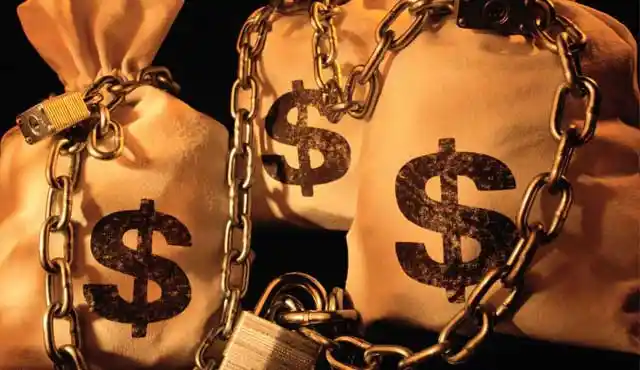
Few market sizes can exceed the total addressable market (TAM) for stores of value. Gold—the largest and most widely recognized store of value—has a market cap of $31 trillion. Silver's market cap reaches $4 trillion. We believe some L1s have the potential to become superior stores of value.

Sovereign Wealth Fund Assets

Currently, three L1 assets stand out as having a high potential to become major stores of value: Bitcoin (BTC), Ethereum (ETH), and ZEC. In our framework, each excels in different dimensions.

Bitcoin holds a dominant position in memetic perception, often dubbed "digital gold." The powerful reflexivity of strong memes is a formidable force and a crucial fundamental for any store of value contender: the more people believe Bitcoin is a store of value, the more likely peripheral groups are to believe it is a store of value. Over the past fifteen years, individuals, funds, corporations, institutions, and even nations have invested in this belief.

Ethereum may be more technologically durable than Bitcoin. It is easier to upgrade, and its roadmap provides transparent, trackable, and verifiable insight into the developer community's future plans. Looking ahead—and at new risks posed by innovations like quantum computing—we view this adaptability as an advantage, not a flaw. At the heart of any high-quality sovereign asset is the belief it will still exist a decade from now. Ethereum has already demonstrated strong resilience, withstanding significant technical and social challenges—such as The DAO hack, The Merge, and more—and we believe it will continue to thrive in this regard.

ZCash excels in censorship resistance and privacy. The mere option provided by shielded pools (ZCash's privacy feature for transactions) allows individuals to avoid future risks of wealth confiscation or extensive state surveillance. This is a lasting advantage of ZCash, offering individuals a long-term path to protect their assets.

Overall, the scale of store of value markets is in the trillions of dollars. This is evident from the current state alone. We believe this area will continue to grow at a high speed, and multiple stores of value can coexist.

However, looking at today's market landscape, despite digital sovereign stores of value (SOVs) outperforming gold or silver on many of the fundamental metrics mentioned above, their share of the total SOV market remains very small. For us, this represents an ambitious and exciting opportunity.

Related Questions

QAccording to the article, what are the three L1 assets most likely to become primary stores of value, and what is each one's primary strength within the author's framework?

AThe three L1 assets are Bitcoin (BTC), Ethereum (ETH), and ZEC. Bitcoin's primary strength is its dominant memetic narrative ('digital gold'). Ethereum's is its superior technical durability and adaptability. ZEC's is its superior censorship resistance and privacy via its shielded pool.

QWhat are the key fundamental properties of a good store of value as listed in the article?

AThe key properties, roughly in order of importance, are: Technical Durability, Scarcity, Censorship Resistance, Economic Productivity, Memetics, and Liquidity.

QHow does the author compare the market potential of digital SOV assets to traditional ones like gold and silver?

AThe author highlights that while digital SOV assets like these L1s excel over gold and silver on many fundamental metrics, they still represent a very small portion of the total SOV market, which presents a significant and exciting growth opportunity.

QWhat core investment thesis does the author mention at the beginning of the article?

AThe core investment thesis is the belief that people should be able to own their own money, identity, and data. They invest in networks that support and expand access to these resources.

QWhy does the author specifically highlight ZCash's (ZEC) shielded pool as a major advantage?

AThe author states that the optionality provided by ZCash's shielded pool offers a pathway for individuals to shield their assets from potential future confiscation or pervasive state surveillance over the long term.

Related Reads

Fei-Fei Li's Team Clarifies the Concept of 'World Models', Sora Merely a Renderer

"World Models" has become a widely used yet confusing term in AI. To address this, a team led by Fei-Fei Li and World Labs proposed a functional taxonomy based on the Partially Observable Markov Decision Process framework. This taxonomy categorizes systems called "world models" into three distinct projections: Renderers, Simulators, and Planners. Renderers, like OpenAI's Sora and other video generation models, focus on producing photorealistic visual outputs for human perception. They prioritize visual fidelity over physical accuracy. Simulators, such as NVIDIA Omniverse, aim to compute precise future environmental states for computational tasks like engineering analysis or digital twins. Planners, like Vision-Language-Action models, take in observations and goals to output executable actions for robots or agents. The article clarifies that most current "world models," including Sora, are primarily Renderers. They generate convincing visuals but lack the core ability to simulate state transitions based on actions, a key requirement for a true world model in classic reinforcement learning definitions. This conceptual confusion has practical implications, leading to potential misalignment in technology selection, investment, and public understanding of AI capabilities. Clear categorization is crucial. It helps enterprises avoid costly mistakes (e.g., using a renderer for robot training), allows investors to accurately assess markets, and enables researchers to build comparable benchmarks. While future systems may integrate these functions, recognizing current boundaries is essential for honest assessment and progress.

marsbit35m ago

Fei-Fei Li's Team Clarifies the Concept of 'World Models', Sora Merely a Renderer

marsbit35m ago

Bloomberg Uncovered: How Do China's Wealthy Circumvent the Annual $50,000 Limit to Transfer Assets?

**Summary: How Wealthy Chinese Circumvent $50,000 Annual Foreign Exchange Limits** Despite China's strict capital controls, including an annual $50,000 per person foreign exchange quota, an estimated $150 billion in funds still leaves the country annually via various gray and underground channels. This report outlines the evolution of China's "capital wall" and the methods used to bypass it. **The Evolving Capital Controls:** * **Foundation (1994):** The system of "current account convertibility with strict capital account controls" was established. * **Quota Set (2007):** The $50,000 individual annual forex purchase limit was formalized. * **Crackdown Begins (2015-2017):** Following market volatility, enforcement tightened. Banks were required to scrutinize transactions, and channels like using UnionPay cards for Hong Kong insurance premiums or buying overseas property were blocked. * **Digital & Legal Upgrades (2024-2026):** Enhanced algorithms now flag suspicious patterns (e.g., "smurfing"). The Common Reporting Standard (CRS) provides Chinese tax authorities with data on citizens' offshore accounts. Unlicensed cross-border brokers have been targeted. **Five Primary Methods for Moving Capital:** 1. **Underground Banking / "Hawala" (Duiqiao):** The largest-scale method. No money crosses borders. Clients pay RMB to a domestic account; an overseas associate deposits equivalent foreign currency into the client's offshore account. Risks include high fees, account freezes, and legal penalties. 2. **"Smurfing" or "Ant Moving":** Using multiple individuals' $50,000 quotas to pool funds for one offshore recipient. Increasingly detected by anti-money laundering algorithms. 3. **Trade Invoice Manipulation:** Businesses over-invoice imports or under-invoice exports via offshore shell companies, creating a pretext to transfer excess funds abroad under the guise of trade. 4. **Channel Migration:** After a crackdown on internet brokers, funds flow toward more compliant but costly channels like major banks' cross-border wealth management services or Qualified Domestic Institutional Investor (QDII) quotas. 5. **Structural Arrangements:** High-net-worth individuals use complex, high-cost legal structures involving offshore trusts, insurance, and investment migration programs to transfer asset ownership. **Regulatory Response: Focusing on People, Not Just Money** The current strategy extends oversight from enterprises to **individual residents**. Tools like CRS allow retroactive visibility into offshore assets. Cryptocurrencies, once seen as a potential loophole, are now actively monitored and prosecuted as an illegal channel. The underlying driver remains: with significant wealth concentrated among millions of affluent households seeking diversification amid domestic economic shifts, the incentive to move assets offshore persists despite regulatory barriers.

marsbit55m ago

Bloomberg Uncovered: How Do China's Wealthy Circumvent the Annual $50,000 Limit to Transfer Assets?

marsbit55m ago

Trading

Spot
Futures
活动图片