UK House Of Lords Urges BoE To Ease Stablecoin Rules Over Competitiveness Concerns

bitcoinistPublished on 2026-06-04Last updated on 2026-06-04

Abstract

The UK House of Lords has urged the Bank of England (BoE) to revise its proposed stablecoin regulations, warning that overly strict rules could harm the country's competitiveness. While supporting core principles like 1:1 backing, a parliamentary committee criticized specific proposals. These include a requirement for issuers to hold 40% of reserves as non-interest-bearing bank deposits and suggested caps on individual and corporate holdings. The committee argued these measures create operational burdens, hinder the growth of pound-based stablecoins, and could cause the UK to fall behind other jurisdictions with clearer regimes. The report follows industry pressure, and the BoE has indicated openness to easing its "overly conservative" plans, with final rules expected soon.

The House of Lords, the upper chamber of the UK parliament, has urged financial regulators to reconsider some of their controversial stablecoin proposals, warning that the country risks falling behind global leaders if regulation is not done right.

House Of Lords Outlines Concerns Over Stablecoin Rules

On Wednesday, the House of Lords’ Financial Services Regulation Committee published a report on the regulation of stablecoins, urging the Bank of England (BoE) to review some areas of its proposed rules “where the desired balance between supporting innovation and risk mitigation appears less appropriately calibrated.”

The committee affirmed its support for many of the central bank’s proposals, including the requirement that issuers back stablecoins 1:1 and the backstop lending facility. However, it noted that aspects of the proposals “need further consideration.”

Last year, the central bank proposed that systemic stablecoin issuers hold at least 40% of the reserves backing the token as unremunerated bank deposits to ensure “robust redemption” and “public confidence.”

It also suggested a temporary cap on stablecoin ownership, setting holding limits of £10,000 to £20,000 for individuals and £10 million for businesses. The measure resembled the BoE’s proposed approach to the digital pound, aiming to mitigate financial stability risks “stemming from large and rapid outflows of deposits from the banking sector.”

The policymakers consider that regulators should reevaluate the asset allocation and redemption requirements, citing the “considerable operational burdens this would create” and potential negative impact on the sustainability of stablecoin issuers and the UK’s global market competitiveness.

In addition, the report suggested that the holding limits should be reconsidered, arguing that they could unnecessarily hinder the expansion of pound-based stablecoins and prove impractical to implement.

It also shared concerns about the lack of clarity on the transition from the Financial Conduct Authority’s (FCA) regime to joint regulation alongside the BoE, and the uncertainty surrounding HM Treasury’s plans to determine whether stablecoins are systemic and to bring them into the payments regulatory perimeter.

UK At Risk Of Falling Behind

The Committee affirmed that the shape of the pound-denominated stablecoin market will be “strongly influenced by the direction of the regulatory regime,” and authorities must “create a level playing field so that stablecoins can compete with other forms of payment in the UK.”

Therefore, the regime must be flexible, responsive, and clear to accommodate future innovations, or the UK will risk “lagging behind global counterparts, where regulatory regimes are more established and provide clarity for market participants.”

The House of Lords’ report follows pressure from industry participants and other lawmakers to fight the controversial proposals. In December, members of the House of Lords, the House of Commons, and peers sent a letter to Chancellor Rachel Reeves asking her to oppose the BoE’s stablecoin rules, arguing that they could undermine the government’s efforts to position the UK as an industry leader.

Last month, BoE’s Deputy Governor for financial stability, Sarah Breeden, stated that the central bank was preparing to ease its regulatory plans. As reported by Bitcoinist, Breeden admitted that the proposals may have been “overly conservative.” She also shared that the financial regulator was “genuinely open” to revisiting the rules and establishing a better regime in which stablecoins can thrive.

Ultimately, the committee urged regulators to adhere to current timelines and ensure that the final regulatory regime is not delayed. A BoE spokesperson told Reuters that the central bank will publish its final policy and draft rules later this month.
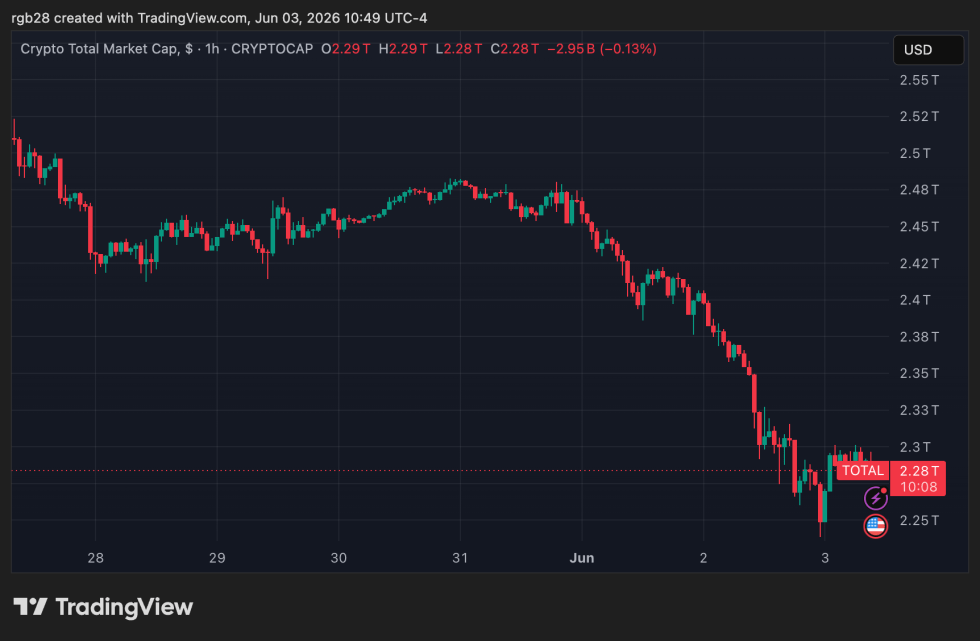
The total crypto market capitalization is at $2.28 trillion in the one-week chart. Source: TOTAL on Tradingview


Related Questions

QWhat is the main concern raised by the UK House of Lords regarding the Bank of England's proposed stablecoin rules?

AThe UK House of Lords warned that the proposed rules, if not adjusted, risk making the UK fall behind global leaders in the stablecoin and digital finance sector due to overly restrictive regulations that could stifle innovation and competitiveness.

QWhich two specific aspects of the BoE's stablecoin proposals did the House of Lords committee suggest need further review?

AThe committee suggested a review of the requirement for systemic stablecoin issuers to hold at least 40% of reserves as unremunerated bank deposits and the proposed temporary caps on holdings (£10,000-£20,000 for individuals and £10 million for businesses).

QAccording to the report, why could the proposed holding limits for stablecoins be problematic?

AThe holding limits could unnecessarily hinder the expansion of pound-based stablecoins and prove impractical to implement, potentially limiting their adoption and utility.

QWhat did BoE Deputy Governor Sarah Breeden recently state regarding the initial regulatory proposals?

ASarah Breeden admitted that the proposals may have been 'overly conservative' and stated that the central bank was 'genuinely open' to revisiting the rules to establish a better regime for stablecoins to thrive.

QWhat is the committee's final urgent recommendation to the regulators?

AThe committee urged regulators to adhere to current timelines and ensure that the final regulatory regime for stablecoins is not delayed.

Related Reads

What Are Some Good Paths for Chinese Web3 Entrepreneurship? (Part 5)

This article explores pathways for Chinese Web3 teams to pivot toward AI, building on a previous discussion. It focuses on two specific team profiles: **Security & Risk Control Teams:** These teams, skilled in smart contract auditing, wallet security, and on-chain monitoring, can transition to providing **Agent behavior auditing and AI security governance**. As AI Agents automate tasks, access data, and trigger payments, enterprises will need solutions to monitor permissions, audit logs, control data access, and prevent anomalies—creating a strong B2B demand. **Application & Community-Focused Teams:** Instead of completely rebranding as AI companies, these teams should use AI to **enhance their existing products**. For example, research platforms can use AI to summarize information and identify signals; community tools can automate user support and analysis; and educational products can create personalized learning paths. The key is integrating AI to solve existing user pain points, like information overload or high operational costs. The article also advises against certain AI directions for Chinese Web3 teams, such as building general-purpose large language models (too resource-intensive), creating overly broad Agent platforms (hard to monetize), developing AI traders/automated yield products (high regulatory and risk sensitivity), or simply adding superficial AI features without genuine value. The core conclusion: Successful migration depends not on chasing AI hype, but on **identifying how a team's existing Web3 capabilities—be it in data, payments, security, or user operations—can address real needs in new AI application scenarios.**

marsbit23m ago

What Are Some Good Paths for Chinese Web3 Entrepreneurship? (Part 5)

marsbit23m ago

Trading

Spot
Futures

Hot Articles

How to Buy HOUSE

Welcome to HTX.com! We've made purchasing Housecoin (HOUSE) simple and convenient. Follow our step-by-step guide to embark on your crypto journey.Step 1: Create Your HTX AccountUse your email or phone number to sign up for a free account on HTX. Experience a hassle-free registration journey and unlock all features.Get My AccountStep 2: Go to Buy Crypto and Choose Your Payment MethodCredit/Debit Card: Use your Visa or Mastercard to buy Housecoin (HOUSE) instantly.Balance: Use funds from your HTX account balance to trade seamlessly.Third Parties: We've added popular payment methods such as Google Pay and Apple Pay to enhance convenience.P2P: Trade directly with other users on HTX.Over-the-Counter (OTC): We offer tailor-made services and competitive exchange rates for traders.Step 3: Store Your Housecoin (HOUSE)After purchasing your Housecoin (HOUSE), store it in your HTX account. Alternatively, you can send it elsewhere via blockchain transfer or use it to trade other cryptocurrencies.Step 4: Trade Housecoin (HOUSE)Easily trade Housecoin (HOUSE) on HTX's spot market. Simply access your account, select your trading pair, execute your trades, and monitor in real-time. We offer a user-friendly experience for both beginners and seasoned traders.

4.5k Total ViewsPublished 2025.04.27Updated 2026.06.02

How to Buy HOUSE

Discussions

Welcome to the HTX Community. Here, you can stay informed about the latest platform developments and gain access to professional market insights. Users' opinions on the price of HOUSE (HOUSE) are presented below.

活动图片