BOLTS Launches Quantum-Resilience Pilot On Canton Network To Future-Proof $6T Real-World Assets

TheNewsCryptoPublished on 2025-12-10Last updated on 2025-12-10

Abstract

BOLTS Technologies has launched a pilot program to integrate its quantum-resilient software, QFlex, into the Canton Network, a blockchain for institutional finance. The initiative aims to protect over $6 trillion in real-world assets from future quantum computing threats, specifically addressing risks posed by cryptographically relevant quantum computers (CRQC) and Shor’s algorithm. QFlex enables cryptographic agility at the transaction level, allowing asset owners to adopt quantum-resistant measures without code changes. The pilot supports regulatory readiness for standards like PQS 2030 and DLT 2030. BOLTS’ technology, backed by grants from NIST, the U.S. Air Force, and Navy, offers a proactive solution to safeguard institutional digital assets against quantum vulnerabilities.

Glencoe, Illinois, USA, December 10th, 2025, Chainwire

Today, BOLTS Technologies (BOLTS), a cybersecurity company pioneering crypto-agile and cipher-neutral security infrastructure, announced the launch of a pilot program to explore bringing quantum-resilience on the Canton Network, the public, permissionless blockchain purpose-built for institutional finance.

The pilot will explore how BOLTS’ quantum-resilient software product, QFlex, could potentially bring quantum-resistant transaction assurance to Canton Network. QFlex addresses the multi-faceted complexities around fortifying blockchain networks against Q-Day. This refers to the day when a cryptographically relevant quantum computer (CRQC) arrives, and undermines the foundations of current Internet security using Shor’s algorithm.

Following the EU’s introduction of PQS 2030, flexible support for post-quantum cryptography (PQS) will become an increasing focus for Canton Network, which has an extensive roster of institutional ecosystem participants, processing over $4T in repos monthly.

Bernhard Elsner, Chief Product Officer of Digital Asset, said, “We’re excited to explore QFlex’s promise of allowing sub-networks to enable flexible, user-controlled use of a wide range of cutting-edge cryptographic algorithms without code-changes. This would further strengthen the Canton Network’s cryptographic agility and position it well to seamlessly support stakeholders adopting rules like DLT 2030 and beyond.”

Yoon Auh, CEO of BOLTS affirms, “We are proud that our proven expertise and technology are in this pilot test with Canton Network. This collaboration represents a meaningful step in our mission to deliver durable, future-ready security infrastructure solutions for institutions operating on distributed ledger platforms.

QFlex gives assurance to the industry that Q-Day fears can be overcome efficiently today, with a clear path to becoming quantum-ready. The industry can no longer delay this, given the trillions of dollars in institutional digital assets at stake. With Canton Network supporting over $6 trillion in on-chain real-world assets, this pilot will have a significant impact on the industry.”

Built on the Structured Data Folding with Transmutations (SDFT) protocol, QFlex delivers cryptographic agility at the transaction level. As such, it empowers each asset owner to respond to new threats in real time on their next transaction unlike existing static or hybrid-algo solutions.

About BOLTS Technologies

BOLTS Technologies provides advanced, validated quantum-resilient solutions for Web3 systems. Its flagship technology, QFlex, enables crypto-agile protection of blockchain transactions controlled by the owner/wallet. QFlex saves blockchains from future cryptography transitions. QFlex has its roots in secure data centric technologies providing scalable privacy solutions originally developed by its sister company, NUTS Technologies. QFlex (SDFT) has won numerous grants from The National Institute of Standards and Technology, The United States Air Force, and The United States Navy for advanced cryptographic technologies. SDFT/NUTS advanced applied cryptographic technologies are backed by more than 30 international patents. More: https://boltstechnologies.xyz/

Contact

Media Contact
Candice Teo
[email protected]

Related Reads

Why Haven't Forex Stablecoins Taken Off?

Why FX Stablecoins Never Took Off: A Path Forward via Synthetic FX Despite the explosive growth of stablecoin-powered digital banking, which has seen ~$6B in VC investment and a 24x surge in crypto card spending in under a year, a major limitation persists: these banks are essentially dollar-only accounts. This leaves 95-99% of global accounts, which are denominated in non-USD currencies, underserved. Attempts to create native foreign currency (FX) stablecoins (like EURC) have largely failed, with total FX stablecoin TVL at ~$600M compared to $400B for USD stablecoins—a 700x gap. These FX tokens face critical challenges: fragile pegs due to low liquidity, limited exchange/FinTech acceptance, poor on/off-ramps, complex regional compliance, and a chicken-and-egg adoption problem. The article argues that the solution lies not in competing with entrenched USD stablecoin networks (USDT/USDC), but in adopting a synthetic FX model inspired by traditional finance. Specifically, it advocates for Mark-to-Market Non-Deliverable Forwards (NDFs)—cash-settled FX derivatives that allow users to maintain underlying USD stablecoin holdings while having their account balance and P&L denominated in a foreign currency. This approach offers key advantages: strong oracle-based pegs, retention of deep USD stablecoin liquidity and yield, superior on/off-ramps, scalability to any currency with a reliable feed, and capital efficiency. It mirrors how modern institutional FX markets operate. Primary use cases for on-chain NDFs include: 1. **Digital Banks/Wallets:** Enabling multi-currency accounts for international users without leaving the USD stablecoin ecosystem, boosting deposits and retention. 2. **FX Carry Trade Vaults:** Offering access to sovereign interest rate differentials (e.g., earning yield on BRL) in a more stable and scalable format than crypto-native products like Ethena. 3. **Global Enterprise Payments:** Allowing merchants to receive payments in local currency equivalents while settling in USD stablecoins, similar to services offered by Stripe for fiat. The conclusion is that synthetic FX, not native FX stablecoins, is the viable path to integrating foreign exchange into the growing stablecoin digital banking landscape, potentially unlocking the next phase of institutional DeFi and multi-trillion-dollar global adoption.

链捕手6m ago

Why Haven't Forex Stablecoins Taken Off?

链捕手6m ago

IOSG Founder: Web3 Is 'Losing Blood,' How Can Practitioners Survive Better?

IOSG Founder: Web3 Is "Bleeding Out" – How Can Practitioners Survive Better? In a candid reflection, the founder of IOSG Ventures voices deep concerns about the current state of Web3, describing an ecosystem experiencing severe "blood loss." Despite the recent MuShanghai event showcasing a successful pivot towards a more diverse, global community, a somber reality persists: many crypto-native attendees were there exploring exits or new labels in biotech, AI, and robotics. The core issue is identified as a breakdown in the ecosystem's positive feedback loop. Alarmingly, underestimated "low-probability bad events" are occurring simultaneously: a significant brain drain of Chinese developers to AI, a lack of breakout applications despite massive funding, and a widening credibility gap for practitioners globally, often stigmatized as scam artists. This has created a dire接班人 (successor) problem, with the next generation seeing little professional prestige or financial upside in crypto compared to fields like AI. A significant portion of the critique focuses on Ethereum and Vitalik Buterin. While not pessimistic about Ethereum's technology, the founder worries that critical development windows were missed by focusing on niche technical narratives like ZK and L2 instead of mass-market applications. A more urgent concern is that Vitalik may be isolated in an "information bubble," shielded from the grassroots community's hardships by layers of intermediaries, preventing crucial feedback from reaching him. The call is for Vitalik to return to a founder's mindset, re-engage directly with the community, and rally efforts for the next decade. The divergence between U.S. and Chinese OG (Original Gangster) ecosystems is stark. While many U.S. builders reinvest their wealth into the ecosystem, the Chinese scene suffers from a severe lack of "造血能力" (blood-making ability), with most market-driven funds struggling and many early success stories cashing out entirely. This threatens the entire Asian Web3 ecosystem's survival. For individual practitioners, survival advice is pragmatic: find your core "why," maintain life balance beyond token prices, continuously learn new skills (like AI), form small, trusted alliances for mutual support, and practice self-compassion. The industry's greatest need is not money or tech, but lighthouses—individuals at all levels who offer mentorship, grants, referrals, and honest reflection to guide others. The piece concludes with a direct appeal: OGs must pay forward the opportunities the industry gave them; founders must not struggle alone; and builders must continue their work, ensuring it remains a viable profession. The survival of Web3's "cathedral" depends not on any single leader but on the collective responsibility of everyone who remains.

marsbit1h ago

IOSG Founder: Web3 Is 'Losing Blood,' How Can Practitioners Survive Better?

marsbit1h ago

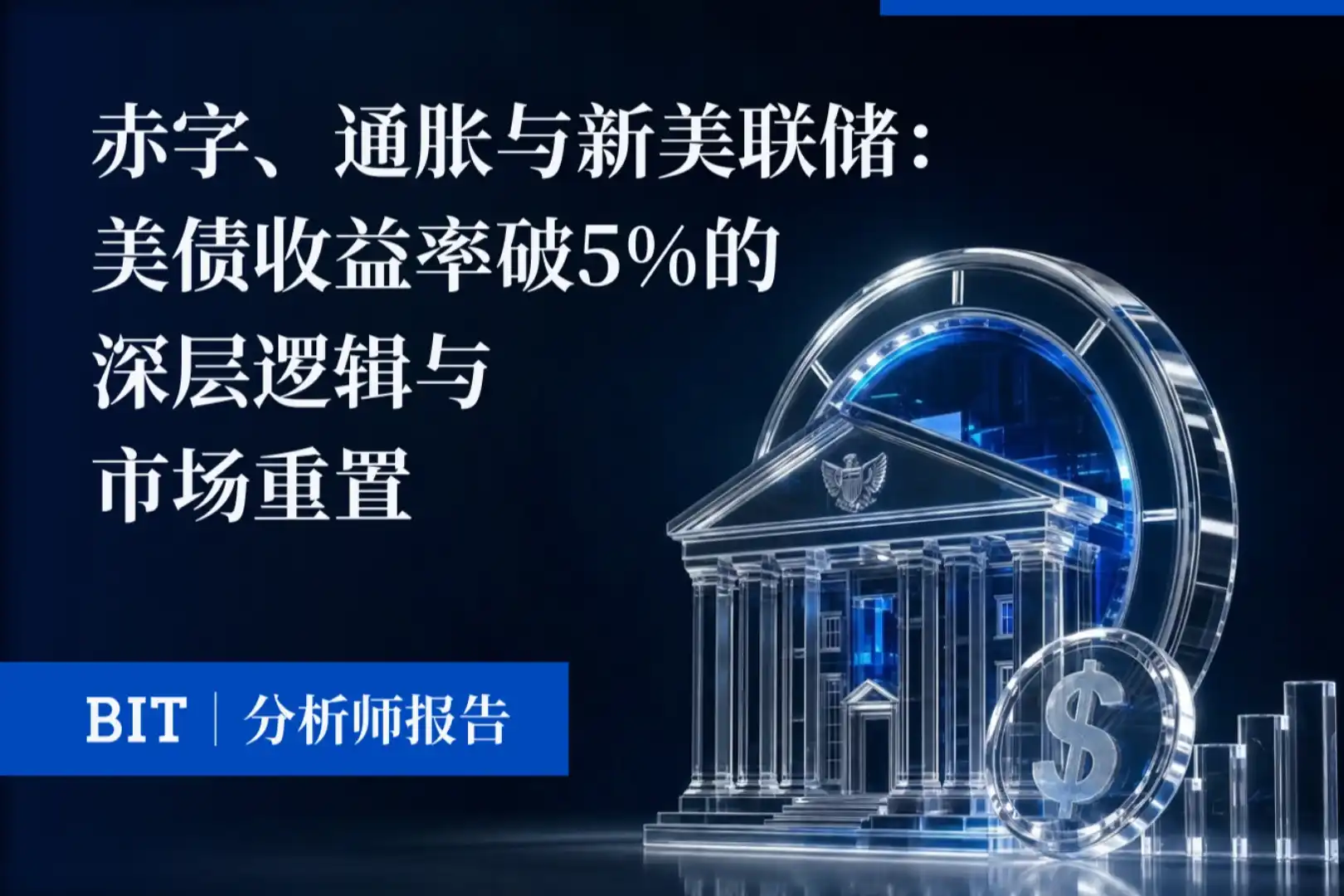
Deficits, Inflation, and the New Fed: The Deep Logic Behind US Bond Yields Breaking 5% and the Market Reset

In the week of May 15-19, 2026, U.S. long-term Treasury yields surged to multi-year highs, with the 30-year yield hitting 5.2%, a level unseen since 2007, and the 10-year yield climbing to 4.687%. Equity markets declined in response. Four primary factors are driving the rise in yields. First, stubborn inflation persists, with April wholesale prices rising 6% year-over-year, fueling expectations of potential future Fed rate hikes instead of cuts. Second, newly confirmed Fed Chair Kevin Warsh inherits a complex inflation battle, with markets closely awaiting his first FOMC meeting. Third, deteriorating U.S. fiscal health, marked by large deficits and rising debt servicing costs, is eroding the traditional "safe-haven" premium for Treasuries. Fourth, the "One Big Beautiful Bill" tax cuts are projected to add trillions to the national debt, contributing to Moody's recent credit rating downgrade. Rising yields pressure stocks through several channels: a higher discount rate reduces the present value of future earnings (especially for growth stocks); rising risk-free rates compress equity risk premiums, making bonds relatively more attractive; higher borrowing costs impact consumers and corporations; and a stronger dollar affects multinational earnings. For investors, the environment favors value and financial stocks over long-duration growth stocks. Bond investors find attractive yields in short to intermediate maturities, while income investors see the best fixed-income opportunities in over a decade. Key developments to watch include Chair Warsh's first FOMC meeting, upcoming inflation data, Treasury auction demand, and whether the 30-year yield approaches 6%, a level that could trigger a more sustained equity valuation reset. The bond market's message is clear: the era of cheap government borrowing is over, posing a central challenge for markets in late 2026.

marsbit1h ago

Deficits, Inflation, and the New Fed: The Deep Logic Behind US Bond Yields Breaking 5% and the Market Reset

marsbit1h ago

Is MicroStrategy Selling Bitcoin Not a Bearish Signal? Deconstructing the 5 Financial Logics Behind Corporate Bitcoin Divestment

The article "Is Strategy Selling Bitcoin Not a Bearish Signal? Decoding 5 Financial Logics Behind Corporate Bitcoin Divestment" analyzes why companies might sell their bitcoin holdings, arguing it's not necessarily negative. It begins by noting the market's surprise at Strategy's potential sale, contrasting its previous "never sell" stance. The core argument is that corporate decisions prioritize shareholder value, and selling bitcoin can be a rational strategic choice. The article outlines five key financial reasons for such sales: 1. **Increase Bitcoin Holdings Per Share:** Companies can use proceeds from bitcoin sales to repurchase shares when the stock price is undervalued relative to its bitcoin assets. This reduces the outstanding share count, potentially increasing the bitcoin amount backing each remaining share. 2. **Optimize Capital Structure & Reduce Financing Costs:** Building cash reserves through bitcoin sales can improve credit ratings (as favored by agencies like S&P), leading to lower future borrowing costs. Repaying debt with sale proceeds also reduces financial leverage. 3. **Legitimate Tax Planning:** In the absence of wash-sale rules for bitcoin in the US, companies can sell to realize capital losses, then repurchase, lowering the tax basis of their holdings and creating tax offsets. 4. **Counter Negative Market Narratives:** A controlled, non-disruptive sale could demonstrate market resilience and disprove fears that corporate selling would crash the market, thereby normalizing bitcoin as a corporate treasury asset. 5. **Repurchase Preferred Stock at a Discount:** If a company's preferred stock trades significantly below its face value, using bitcoin sale proceeds to repurchase it can retire expensive liabilities at a profit, saving on future dividend payments. The conclusion emphasizes that bitcoin's monetary properties offer flexibility. Strategic sales can protect corporate and shareholder interests, making asset utilization more important than rigid "hold" mandates.

marsbit1h ago

Is MicroStrategy Selling Bitcoin Not a Bearish Signal? Deconstructing the 5 Financial Logics Behind Corporate Bitcoin Divestment

marsbit1h ago

Trading

Spot
Futures

Hot Articles

How to Buy T

Welcome to HTX.com! We've made purchasing Threshold Network Token (T) simple and convenient. Follow our step-by-step guide to embark on your crypto journey.Step 1: Create Your HTX AccountUse your email or phone number to sign up for a free account on HTX. Experience a hassle-free registration journey and unlock all features.Get My AccountStep 2: Go to Buy Crypto and Choose Your Payment MethodCredit/Debit Card: Use your Visa or Mastercard to buy Threshold Network Token (T) instantly.Balance: Use funds from your HTX account balance to trade seamlessly.Third Parties: We've added popular payment methods such as Google Pay and Apple Pay to enhance convenience.P2P: Trade directly with other users on HTX.Over-the-Counter (OTC): We offer tailor-made services and competitive exchange rates for traders.Step 3: Store Your Threshold Network Token (T)After purchasing your Threshold Network Token (T), store it in your HTX account. Alternatively, you can send it elsewhere via blockchain transfer or use it to trade other cryptocurrencies.Step 4: Trade Threshold Network Token (T)Easily trade Threshold Network Token (T) on HTX's spot market. Simply access your account, select your trading pair, execute your trades, and monitor in real-time. We offer a user-friendly experience for both beginners and seasoned traders.

11.6k Total ViewsPublished 2024.03.29Updated 2025.03.21

How to Buy T

Discussions

Welcome to the HTX Community. Here, you can stay informed about the latest platform developments and gain access to professional market insights. Users' opinions on the price of T (T) are presented below.

活动图片