Why Moonshot AI’s $30B IPO could matter for crypto, not just AI

ambcryptoPublished on 2026-07-20Last updated on 2026-07-20

Abstract

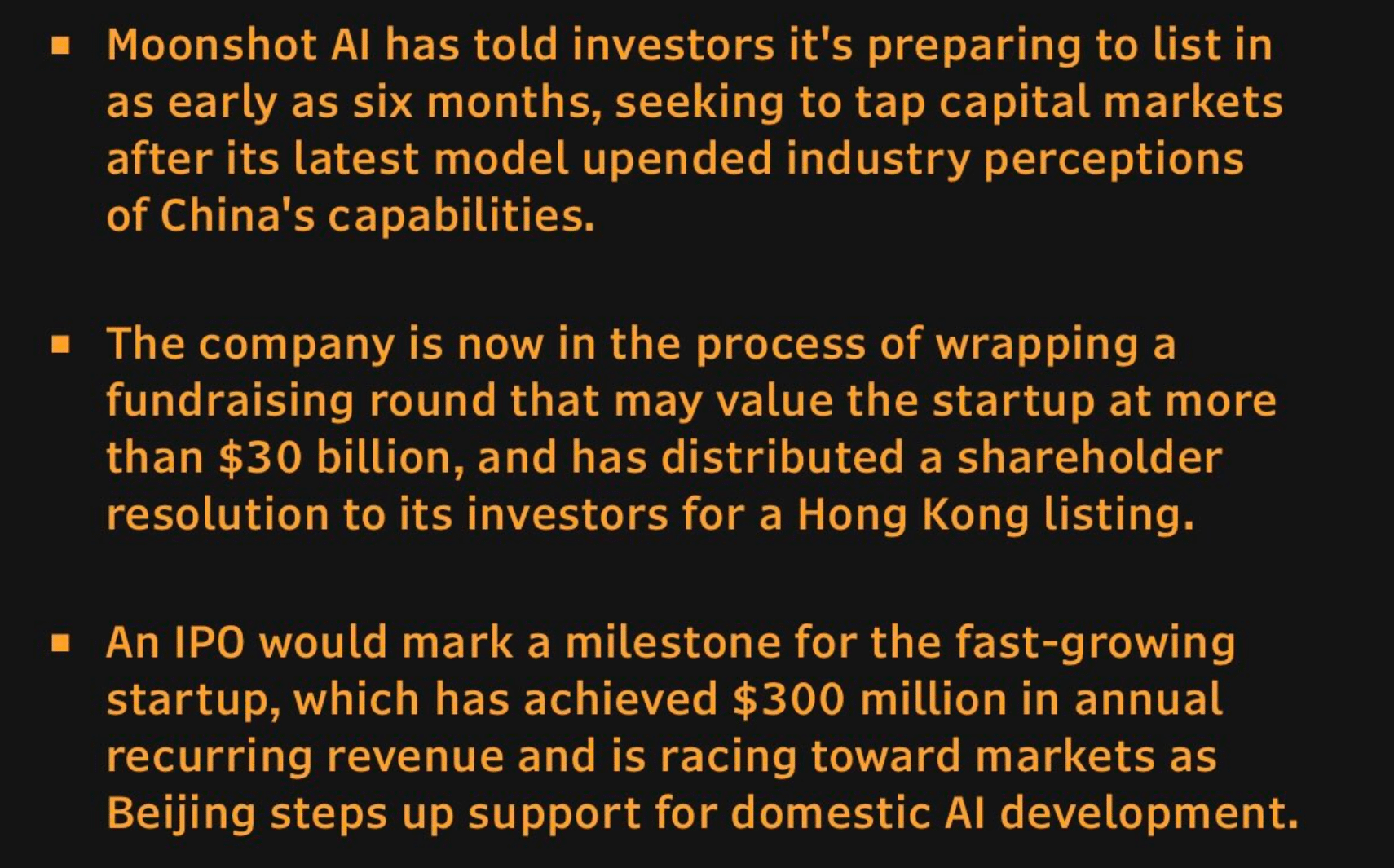
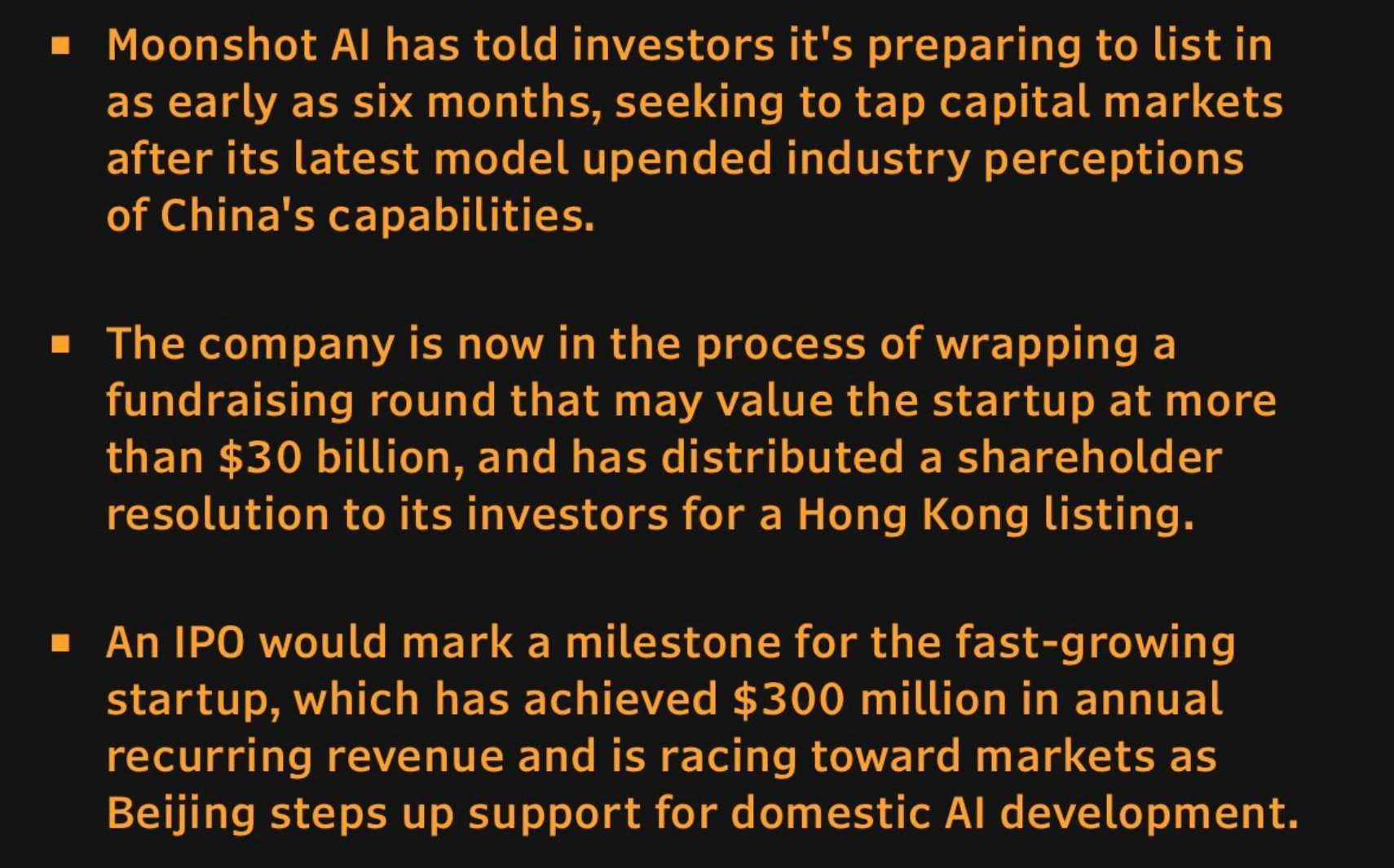
Moonshot AI is preparing for a Hong Kong IPO, targeting a valuation above $30 billion within six months. The company’s revenue grew significantly, from around $200 million in April to approximately $300 million by mid-June, accelerated by the release of its Kimi K3 model. While AI's resurgence is reshaping public market capital flows, with IPOs averaging $1.75 billion in 2026, the cryptocurrency market's reaction has been muted. Bitcoin and Ethereum remain range-bound despite improving AI sentiment, though ample stablecoin liquidity suggests capital is available. Ultimately, successful AI IPOs like Moonshot’s could strengthen confidence in tokenized capital markets and blockchain-based infrastructure, potentially paving the way for a broader crypto rally in the future.

Just a month after the SpaceX IPO drew strong global investor attention, another high-profile technology listing is gathering momentum. Moonshot AI is preparing for a Hong Kong IPO, reflecting confidence in investor demand and the broader AI market.

Management is targeting a valuation above $30 billion within the next six months. Recurring annual revenue increased from approximately $200 million in early April to approximately $300 million in mid-June, indicating the rate of business growth.
Source: Bloomberg

That momentum accelerated after the release of the Kimi K3 model. This strengthened the company’s competitive position and attracted fresh investor interest. Notably, Moonshot’s value has already risen significantly above previous estimates of $18 billion to $20 billion thanks to private funding.

Furthermore, shareholder resolutions and corporate restructuring indicate listing preparations are progressing steadily. Still, sustaining revenue growth and product adoption will be essential to securing its targeted valuation and a successful market debut.

Can AI momentum reshape crypto capital flows?

AI’s resurgence is becoming a broader market story rather than an equity story alone. The next question is whether crypto follows that momentum or continues trading on its cycle. Public markets already hint at changing investor behavior.

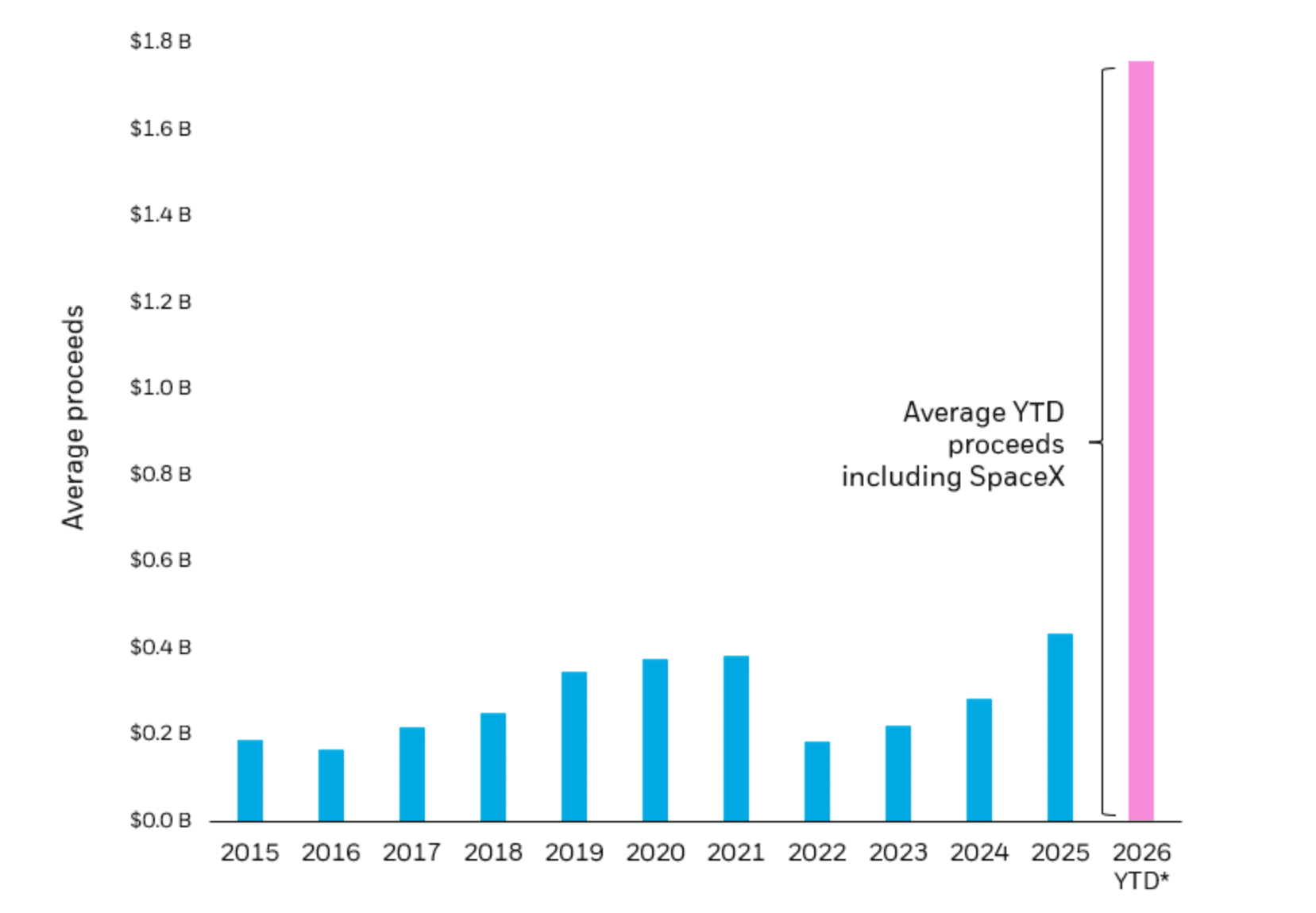
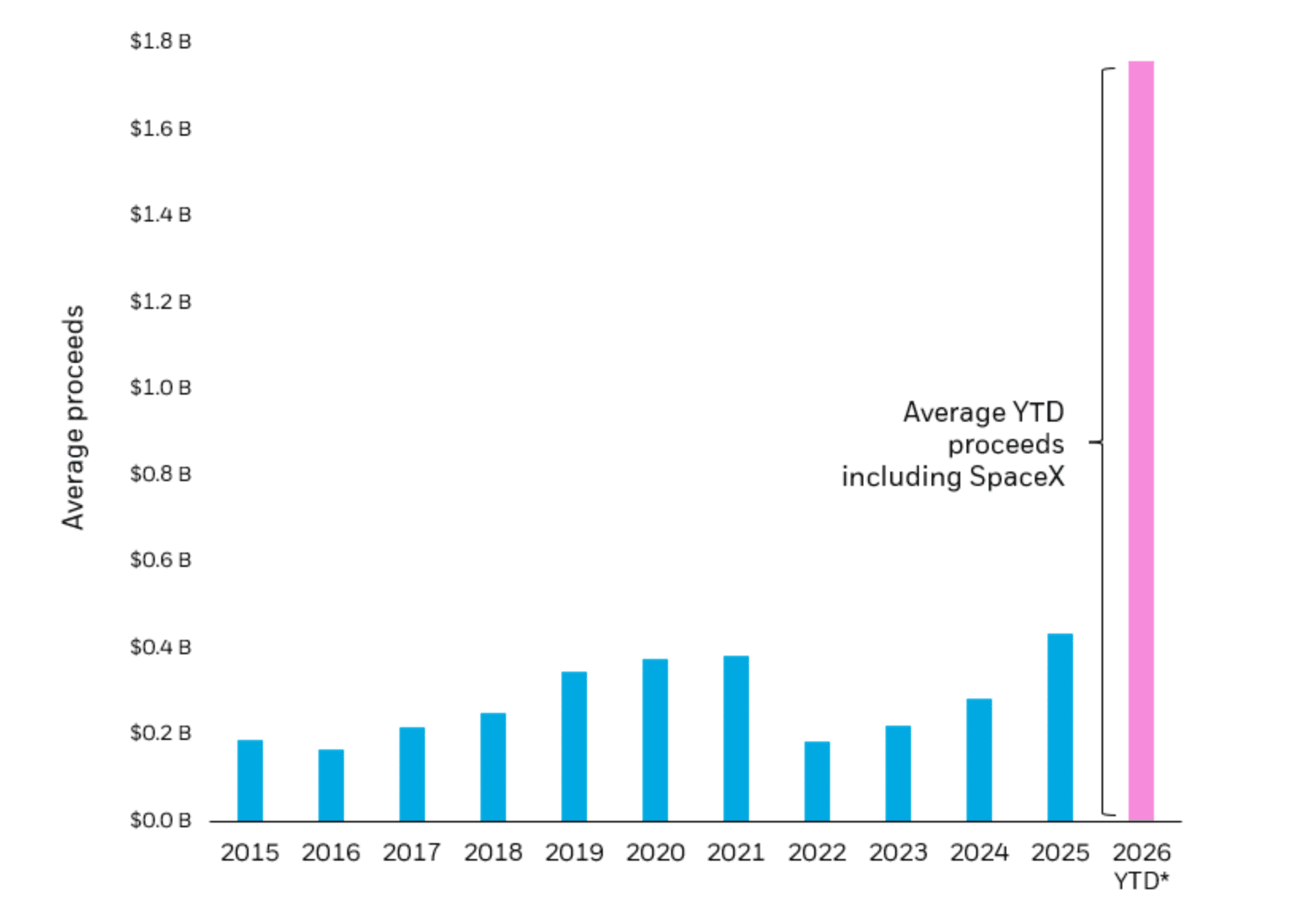
IPO offerings averaged about $1.75 billion in 2026, approximately four times what was seen in 2025. This was as a result of greater demand for listing companies with strong growth potential. In contrast, crypto’s reaction has been muted.
Source: iShares

Bitcoin [BTC] continues consolidating between $63,000 and $65,000, while Ethereum [ETH] trades near $1,850 to $1,870, despite improving AI sentiment. Meanwhile, stablecoin supply exceeding $300 billion suggests liquidity remains available rather than exhausted.

That cautious positioning explains why the AI token sector holds roughly a $21.7 billion market capitalization despite softer inference pricing. Beyond price action, the bigger shift may lie in capital formation.

All in all, Moonshot AI’s IPO reinforces AI’s growing influence while strengthening confidence in tokenized capital markets and blockchain. Still, as that ecosystem expands, successful AI IPOs could help build confidence in blockchain-based infrastructure before triggering a larger overall rally in cryptocurrency.


Final Summary

  • Moonshot AI’s IPO reflects rising demand for high-growth AI companies.
  • Successful AI IPOs could strengthen tokenized capital markets and blockchain fundraising.

Trending Cryptos

Related Questions

QWhat is the targeted valuation for Moonshot AI's upcoming Hong Kong IPO?

AManagement is targeting a valuation above $30 billion.

QWhat key factor strengthened Moonshot AI's competitive position and attracted fresh investor interest?

AThe release of the Kimi K3 model accelerated the company's momentum and strengthened its competitive position.

QAccording to the article, how could successful AI IPOs potentially impact the cryptocurrency sector?

ASuccessful AI IPOs could help build confidence in blockchain-based infrastructure and tokenized capital markets, potentially triggering a larger overall rally in cryptocurrency.

QWhat does the current stablecoin supply exceeding $300 billion suggest about market liquidity?

AIt suggests that liquidity remains available rather than exhausted.

QHow did the average IPO offering size in 2026 compare to 2025, and what does this indicate?

AIPO offerings averaged about $1.75 billion in 2026, approximately four times what was seen in 2025, indicating greater investor demand for listing companies with strong growth potential.

Related Reads

The Most Difficult Thing to Predict on Polymarket Is... When the POLY Airdrop Will Happen

During the recent World Cup, Polymarket saw record-breaking activity, with its "World Cup winner" market reaching $4.32 billion in volume, making it the platform's highest-volume single prediction event ever. Over the six-week tournament, football markets amassed $85 billion in nominal trading volume, cementing sports as a major growth driver. Capitalizing on this surge in traffic, Polymarket quietly increased fees for its sports markets in early July. The taker fee multiplier was raised from 0.03 to 0.05, effectively raising maximum costs per trade by nearly 70% and moving sports out of its lowest fee tier. This follows a broader trend of the platform gradually expanding fee structures across various market categories since the start of the year to boost revenue. However, community focus is increasingly shifting from trading volumes to the long-awaited POLY token airdrop. Despite a senior executive confirming in late 2025 that a token and airdrop were planned for after U.S. market re-entry, no timeline has been provided. Recent actions, like an affiliated account deleting a potentially suggestive tweet and official help pages stating "no airdrop or token generation event has been announced," have fueled speculation and frustration. The community is divided on the reasons for the delay. Some believe Polymarket is waiting for a more favorable regulatory window in the U.S., while others speculate that the platform's strong organic growth and rising fee revenue have reduced the urgency to issue a token, potentially following a path similar to OpenSea. The prolonged uncertainty has led users to question not the *if*, but the *when*, of the POLY airdrop, turning it into one of the platform's most unpredictable events.

Odaily星球日报10m ago

The Most Difficult Thing to Predict on Polymarket Is... When the POLY Airdrop Will Happen

Odaily星球日报10m ago

After Investing in Changxin, Hefei State Capital Makes Another Move

Two events unfolded within the same week. On July 13th, the Hefei Industrial Investment Xinzhi Xinyu Equity Investment Partnership with a pledged scale of 5 billion RMB was established. Three days later, ChangXin Technology launched its online and offline public offering at a price of 8.66 RMB per share, aiming to raise approximately 57.9 billion RMB. The link between these events is the Hefei Industrial Investment Group (Hefei ChanTou). Hefei ChanTou directly holds shares in ChangXin Technology through its wholly-owned subsidiary, ChangXin Integration, and is also behind the newly established 5 billion RMB fund. This highlights a strategic move: as ChangXin approaches its IPO, Hefei ChanTou establishes a new fund to prepare for the next round of industrial investment. Founded in 2015, Hefei ChanTou is a state-owned capital investment platform focused on industrial financing and innovation. Beyond direct equity holdings in major projects like ChangXin's 12-inch memory wafer manufacturing base, it manages various provincial and municipal government-guided funds. Its self-managed fund scale exceeds 100 billion RMB. ChangXin Technology, now China's leading DRAM manufacturer, exemplifies the classic "Hefei model." A decade ago, when founder Zhu Yiming sought entry into the capital-intensive DRAM sector, Hefei's state capital provided the crucial long-term support. Pre-IPO, entities within the Hefei ChanTou system hold significant direct and indirect stakes, with a theoretical combined value of roughly 116.2 billion RMB based on the IPO price. However, this long-cycle, concentrated investment model brings financial pressure. Hefei ChanTou's financials show significant liabilities, net outflows from investing activities, and reliance on investment income. The focus is now shifting alongside Hefei's broader "654X" industrial system, which encompasses six dominant industries, five emerging industries (like AI and biopharma), and four future industries (including quantum tech and nuclear fusion). The narrative is one of transition. As the ChangXin project reaches a major milestone with its IPO, the new 5 billion RMB fund symbolizes the beginning of the next investment chapter—targeting a more diverse and early-stage array of sectors within Hefei's expanded industrial vision.

marsbit20m ago

After Investing in Changxin, Hefei State Capital Makes Another Move

marsbit20m ago

Should Developers Build on Corporate Blockchains Like Base and Robinhood?

Should developers build on enterprise-backed public chains like Base, Robinhood, or Stripe's Tempo? While these chains offer enticing benefits—primarily access to the platform's existing user base for accelerated growth—they come with significant, well-documented risks stemming from the inherent conflict of interest when a company controls both the underlying chain and major on-chain applications. The core promise is traffic distribution: projects gain exposure through platforms like the Coinbase wallet or app. However, this model creates five major risks: 1. **Direct Competition**: The platform can leverage its data and position to launch and prioritize its own competing products, similar to Amazon creating private-label goods or Microsoft bundling Internet Explorer. 2. **Wallet Agnosticism**: Companion wallets (e.g., Coinbase Wallet) must support multiple chains and integrate top applications across the ecosystem to remain competitive, diluting the promised exclusive traffic advantage for the enterprise chain. 3. **Competitor Exclusion**: Rival platforms (e.g., Coinbase vs. Robinhood) have no incentive to promote applications built on a competitor's chain. 4. **Profit Extraction**: The party controlling end-users holds disproportionate bargaining power and can capture most of the value, squeezing protocol profits down to marginal cost. 5. **Unfulfilled Promises**: Promised traffic support can be deprioritized or withdrawn based on shifting corporate strategies. In contrast, neutral chains like Ethereum or Solana avoid these platform risks entirely. For developers considering enterprise chains, risk mitigation strategies include: evaluating substantial onboarding grants, seeking (though often weak) contractual guarantees, and, most crucially, pursuing a multi-chain strategy while building independent user acquisition channels. Enterprise chains may be useful for initial cold-start growth, but the ultimate goal should be cultivating a dedicated user base rather than long-term dependence on a single, conflicted platform.

marsbit21m ago

Should Developers Build on Corporate Blockchains Like Base and Robinhood?

marsbit21m ago

Trading

Spot

Hot Articles

Discussions

Welcome to the HTX Community. Here, you can stay informed about the latest platform developments and gain access to professional market insights. Users' opinions on the price of AI (AI) are presented below.

活动图片