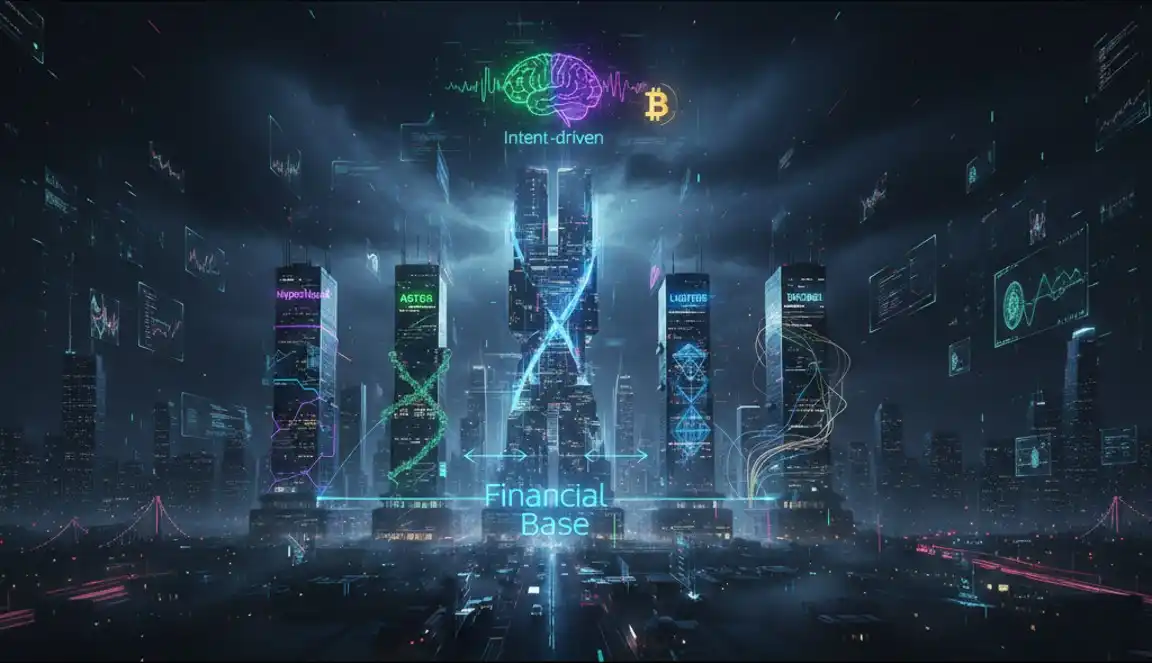
Who Will Make Money in the Age of Agents?

marsbitPublished on 2026-05-27Last updated on 2026-05-27

Abstract

In the Agents era of blockchain, traditional value capture theories face challenges. The "Fat Protocol" theory, dominant since 2016, suggested protocols capture most value as their tokens are essential for network use. However, the proliferation of interchangeable L1s, L2s, and modular layers has eroded protocol scarcity and pricing power. Conversely, the "Fat App" theory posits that applications capturing user relationships (like wallets and exchanges) become the primary value layer by controlling distribution and transaction flows. This aligns with the current "Great Repricing" cycle. Agents disrupt this logic. As software users, they lack brand loyalty, prioritize cost and efficiency, and switch between platforms seamlessly. This undermines the front-end UX moats that "Fat Apps" rely on. The article explores several potential futures: 1. **Headless Applications:** Current leading apps could strip their front-ends and become backend API infrastructure for Agents, preserving their role. 2. **Protocol Resurgence:** If integration becomes trivial, Agents might bypass aggregators and interact directly with protocols, reviving "Fat Protocol" dynamics. 3. **Pricing Power Collapse:** Agents' rational, frictionless routing could commoditize the entire stack, compressing margins toward cost and leaving little profit for intermediaries. 4. **Unprecedented Activity:** Agents may enable new, high-frequency, machine-to-machine economic activities, expanding the total value pie ev...

Author: Jonah Burian

Compiled by: Jiahuan, ChainCatcher

Many speculate that the next billion users of blockchain will be Agents. But few ask the further question: In that world, who will make money?

Every previous theory of value capture in the crypto space assumes the user is human. The "Fat Protocols" theory posits that protocols are best at monetizing human users.

The "Fat Apps" theory I explored with my colleagues in "How to Capture Value" and "The Great Repricing" argues that the application layer can do better. But Agents change the nature of the user, and existing theories will break down accordingly.

The Fat Protocols Theory

In 2016, @jmonegro proposed "Fat Protocols." For nearly a decade, it has been the dominant value capture theory in crypto.

The core idea: In the traditional internet, value accumulates at the application layer (@Google, @facebook), while the underlying protocols (TCP/IP, HTTP) capture almost no value. The crypto world will completely reverse this. Blockchains have open, shared data, so applications will become commoditized.

And because using the network requires consuming the protocol's token, the token will capture the speculative value generated by usage growth as it appreciates. Each application's success drives demand for the token. The underlying protocol will grow faster than any application built on top of it.
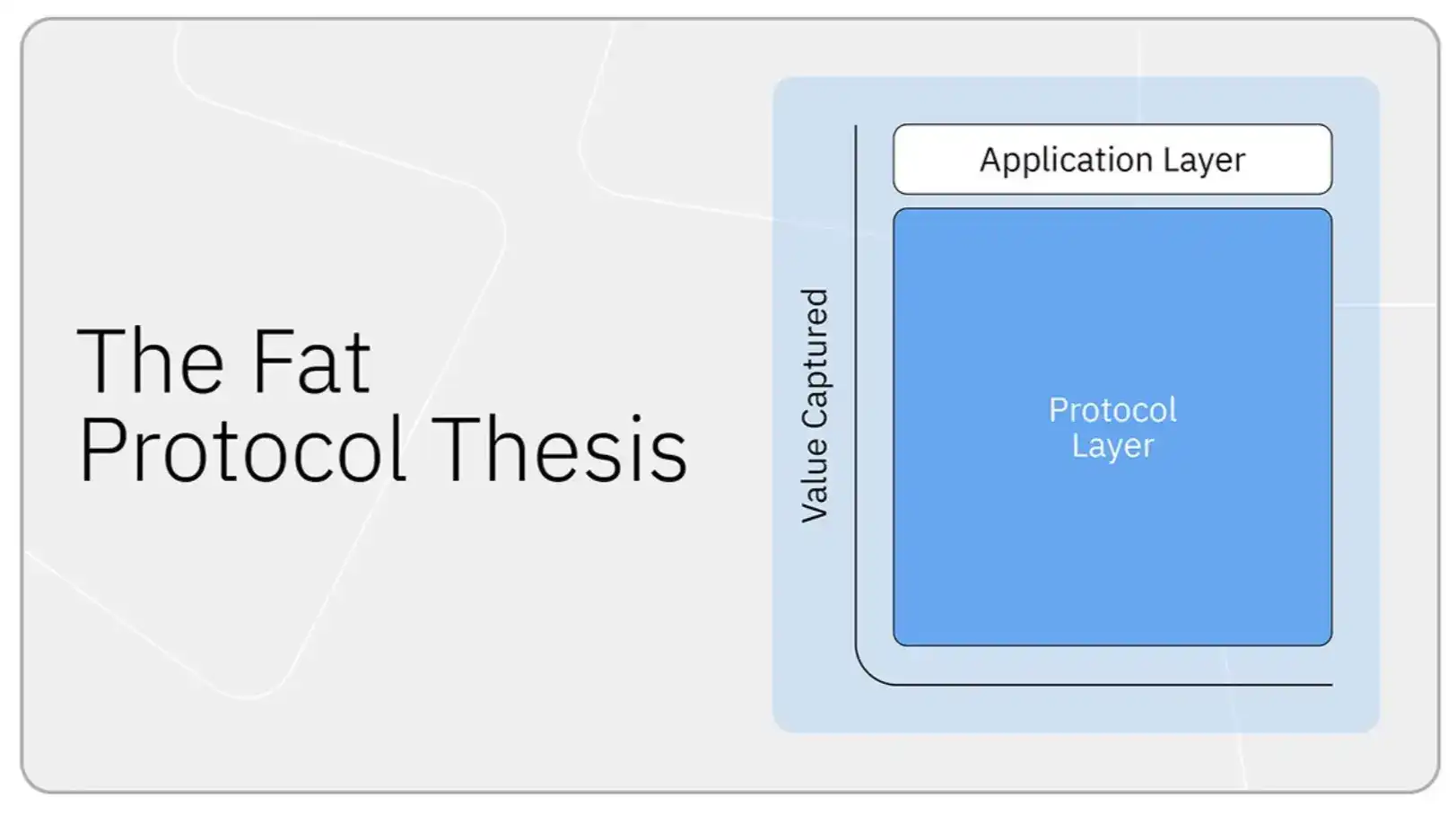
For years, this seemed correct. Bitcoin and Ethereum's values far surpassed any companies built on them.

This model works perfectly when the protocol itself is scarce, costly to build, and difficult to replace. Bitcoin and Ethereum in 2017 were indeed very scarce; there weren't dozens of general-purpose L1s competing for the same workloads.

Block space was sufficiently constrained that holding the underlying asset felt like holding a piece of every application that needed it.

Today, reliable alternatives exist at every layer of the infrastructure stack: multiple high-throughput L1s, dozens of L2s, and modular settlement and data availability (DA) layers competing fiercely on price. Block space has gone from constrained to abundant.

As cross-chain bridges and aggregators make the underlying chain nearly invisible to users, user switching costs collapse. Infrastructure becomes interchangeable, and interchangeable commodities compete on price. The result is that protocol pricing power dies along with scarcity.

The Fat Apps Theory

By 2026, the entities capturing most of the economic benefits are applications, not protocols: e.g., @phantom, @coinbase, @Polymarket, @Pumpfun.

In my view, the reason is that the most valuable asset in crypto is the user relationship.

If you control the user interface and transaction flow, you control distribution, and can profit from almost any on-chain product users touch: swaps, lending, staking, minting, and fiat on/off ramps. This is probably why funds are so obsessed with neobanks.
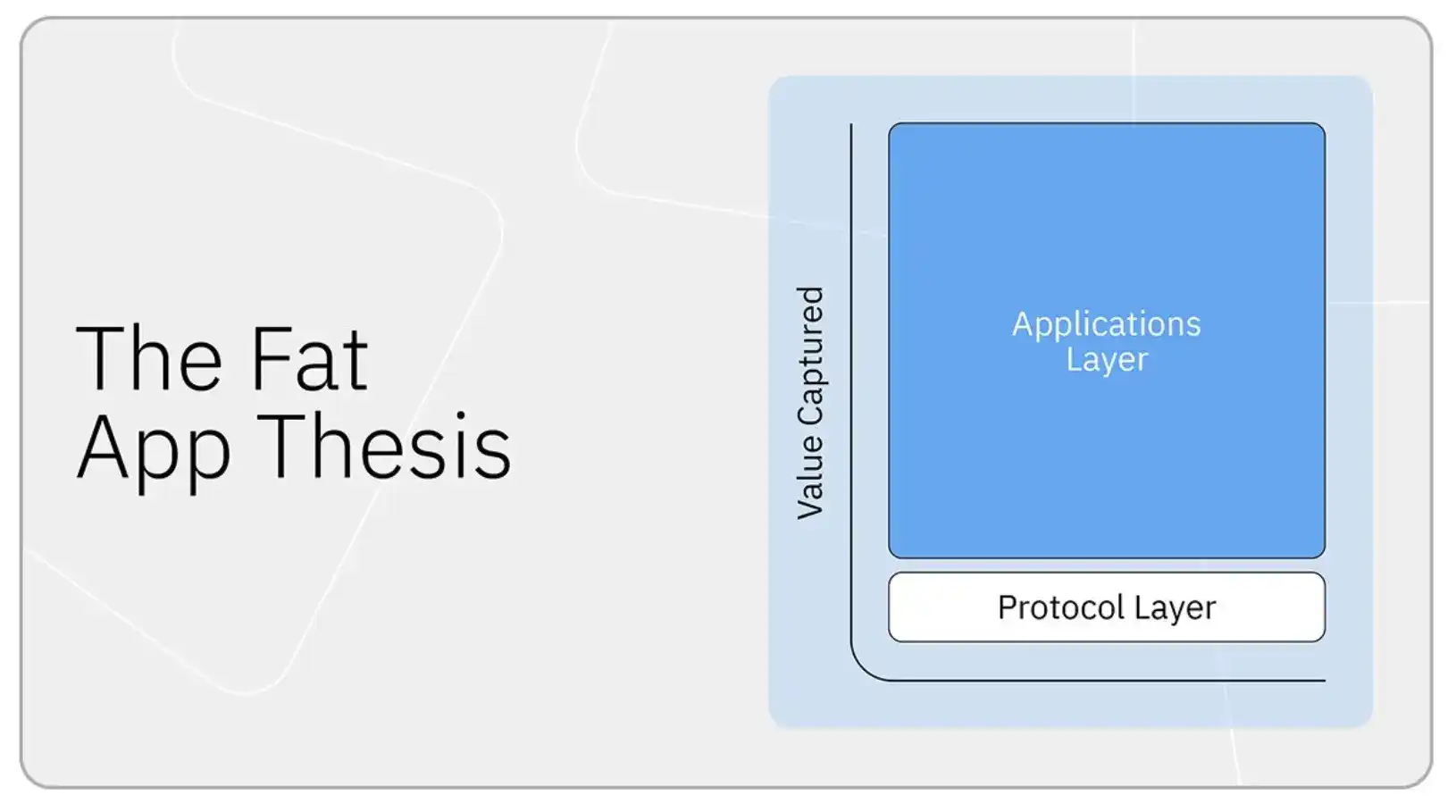
Applications also push infrastructure into pure price wars, forcing infrastructure margins down to marginal cost. I documented this dynamic in "How to Capture Value." The same dynamic is playing out in the stablecoin space, which I've discussed elsewhere.

Asset prices are reflecting this theory. Spencer and I called this shift "The Great Repricing": in this cycle, value is starting to accrue to the layer that owns the user.

Why Agents Break This Logic

The Fat Apps theory assumes users are humans who value UX, brand, and convenience. But Agents don't care about any of that. They call APIs directly, have no brand loyalty, and switch between platforms at zero cost.

When the user becomes software, owning the user relationship is no longer an unbreakable moat. The entire front-end moat upon which the Fat Apps theory relies is failing.

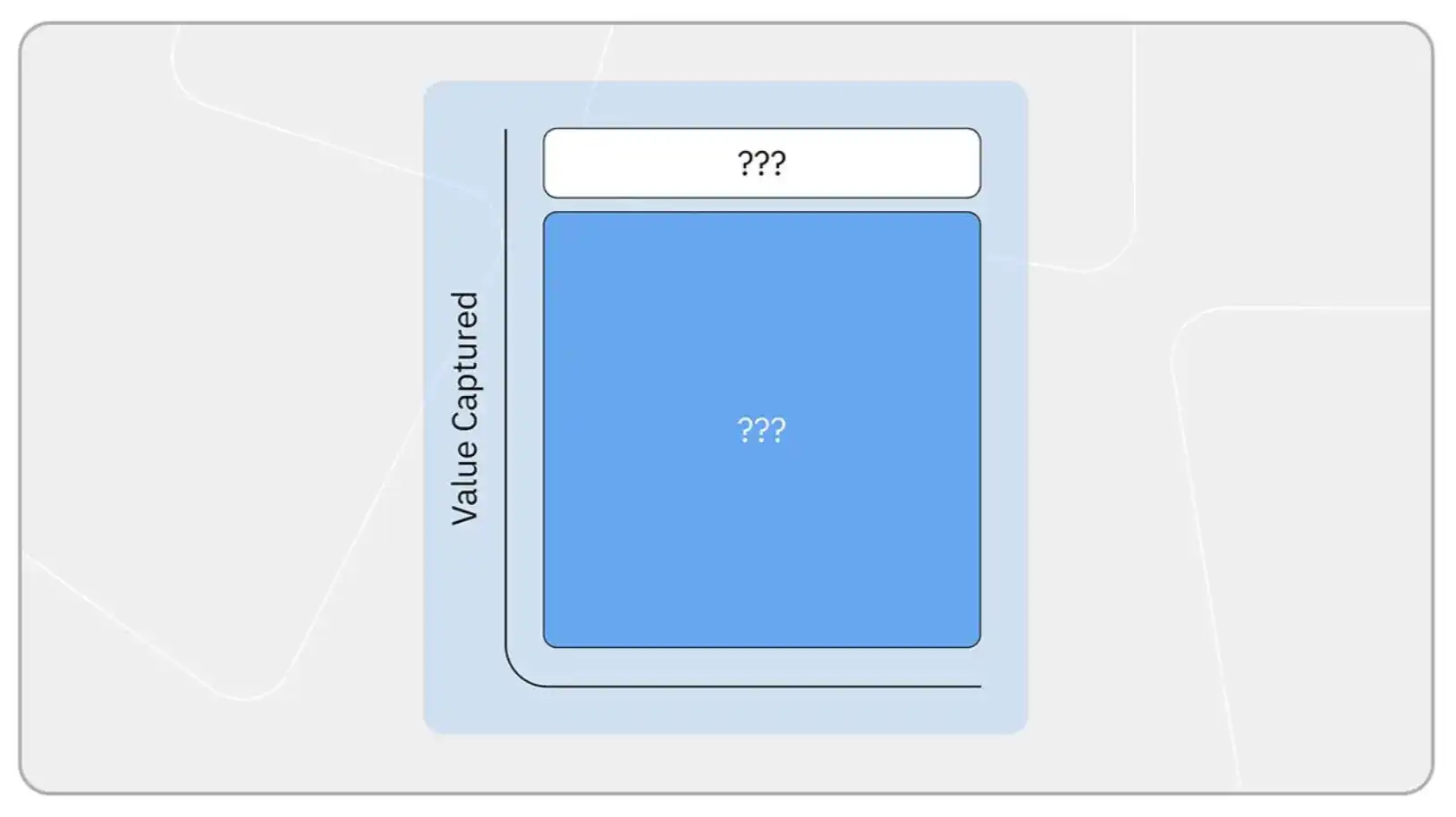
So, who captures value in the age of Agents?
Applications Go "Headless"

In one version of the future, winners at the application layer remain winners by shedding their front-end interface, i.e., going "headless."

Wallets and aggregators have already done the hardest work: integrations with dozens of protocols, routing logic, authentication, and fiat on/off-ramp infrastructure.

The logical next step is to open this tech stack as an API for Agents, letting Agents route through them—just as humans route through @phantom or @JupiterExchange today.

In this world, the Fat Apps theory survives. It just loses its front end. The companies that won in the human era transform into pure back-end infrastructure for Agents. We already see traditional SaaS companies like Salesforce moving in this direction.

The Resurgence of Protocols

In another version, Agents completely skip the middle layer.

If integration becomes easy enough (well-documented APIs, standardized RPCs, predictable execution semantics), Agents have no real reason to pay an aggregator to do something they can do themselves. Aggregators' advantages in the human era were UX and handling routing complexity.

But Agents don't need UX, and routing is an engineering problem that Agents are increasingly good at solving.

If the world evolves this way, the Fat Protocols theory gets a second life.

Pricing Power Collapses Across the Stack

Perhaps Agents will apply commoditization pressure everywhere. They are perfectly rational, frictionlessly routing to the cheapest venue every single time with zero loyalty.

Applications lose the ability to charge a UX premium from humans. Aggregators and infrastructure lose pricing power because there is no longer human inertia protecting them from price wars.

In this scenario, no one in the tech stack captures much profit. Margins across the supply chain are forced down to marginal cost. The residual value accrues to the owners of the Agents, or to the end-users the Agents serve.

Crypto becomes a utility, and it's hard to make big money in utilities.

Agents Create Unprecedented Activity

The simple take on this is: Agents are doing everything humans do, just faster and at greater scale. Even if margins are compressed, the overall pie grows.

I think there's a more interesting version.

Agents enable activities that were previously infeasible: e.g., continuously rebalancing a portfolio for less than a penny in execution costs, machine-to-machine commerce between Agents, and entirely new markets that exist only because pricing and transaction speeds far outpace what humans can follow.

Current on-chain activity data doesn't reflect this because we assume a human must be involved.

If this is the change Agents bring, then the question shifts from "how is the existing pie divided" to "how much new economic activity pours on-chain, and which layers are ready to serve it."

A Yet-Unnamed Business Model

Every cycle, we try to guess where value will flow, and tend to think existing business models will extend into the future. This assumption usually causes us to miss the new models that haven't yet emerged.

When the internet was new, no one foresaw the attention economy. The idea that "slicing up user attention and auctioning it to advertisers would become the dominant business model, and a single company could capture a significant share of global ad spend" was alien. It only seems inevitable in hindsight.

AI looks like one of the biggest technological disruptions in decades. In an Agent-dominated world, some value capture might flow to business models no one is talking about today. And the entities capturing that value might not be the ones the market is currently focused on.

What to Watch

The most likely outcome is not one system completely replacing the other. For a long time, humans and Agents will coexist as crypto users, with entirely different maps of value capture.

As long as humans interact on-chain, the Fat Apps theory still applies: consumers willing to pay for UX, brand, and convenience will continue to pay a premium to the applications that own that relationship. And the layers involved in Agent transactions will be governed by a separate set of theories, whichever of the above scenarios becomes reality.

For builders, I think the question worth iterating on the Agent side is: What actually makes an Agent come back to you instead of routing directly to the next cheapest alternative? UX probably isn't the answer. Liquidity, latency, settlement guarantees might be.


Related Questions

QAccording to the article, what was the dominant value capture theory in crypto for the past decade, and what was its core argument?

AThe dominant value capture theory was the 'Fat Protocols' theory. Its core argument was that in the crypto world, value accrues to the underlying blockchain protocols (like Bitcoin and Ethereum) rather than the applications built on top. This is because protocols become more valuable as they are used (demand for their token increases), while applications become commoditized due to open, shared data.

QWhat is the 'Fat App' theory, and why is it currently challenging the 'Fat Protocols' theory?

AThe 'Fat App' theory argues that value is increasingly captured at the application layer. It posits that the most valuable asset in crypto is the user relationship. Entities that control the user interface and transaction flow (like wallets and exchanges) control distribution and can monetize various on-chain products. It challenges 'Fat Protocols' because infrastructure has become commoditized with many alternatives, eroding protocol pricing power.

QWhy does the author believe AI Agents will disrupt the current 'Fat App' value capture model?

AThe 'Fat App' model assumes users are humans who value UX, brand, and convenience. AI Agents do not care about these aspects; they interact via APIs with zero brand loyalty and can switch between platforms at near-zero cost. Therefore, the front-end moat (user relationship) that 'Fat Apps' rely on becomes ineffective when the 'user' is software.

QThe article outlines several possible scenarios for value capture in an Agents-dominated world. Name two of them.

ATwo possible scenarios are: 1) Successful applications become 'headless,' pivoting to serve as backend infrastructure APIs for Agents, keeping the 'Fat App' theory alive but without the front-end. 2) Agents bypass middlemen entirely and interact directly with protocols if integration is simple enough, potentially revitalizing the 'Fat Protocols' theory.

QWhat does the author suggest builders in the Agents economy should focus on, instead of user experience (UX)?

AThe author suggests builders should focus on what would make an Agent choose their service repeatedly over a cheaper alternative. Potential answers include factors like superior liquidity, lower latency, or stronger settlement guarantees, rather than traditional UX elements that appeal to humans.

Related Reads

a16z Partner: Being in the Flow of Capital Is the True Moat

A16z Partner: Standing in the Cash Flow is the True Moat Historically, many of the strongest companies built their moats by positioning themselves within "cash flows"—facilitating value creation and transfer in a network and taking a cut. The more value flows, the larger they grow. Crypto is the first modern technology natively built for this. With open ledgers, programmable settlement, and stablecoins enabling internet-speed global value transfer, it allows startups to inherit network effects from day one. Well-designed tokens align users, developers, and the protocol towards network growth, distributing value to contributors. This model isn't new (e.g., railroads, Visa, Google, AWS) but Crypto democratizes it. It lets entrepreneurs target areas with high inefficiency and profit extraction—like traditional finance's payments, custody, FX, and settlement—to compress costs, increase speed, and redistribute value by standing in the new flow. The opportunity extends beyond finance to emerging markets like GPU/compute, AI training data, energy, and space, where new, programmable infrastructure can be built without legacy constraints. Key questions for founders: Are you already in the cash flow? Does your revenue scale 10x with network activity? Where is profit extraction highest relative to value created in your market? The strategy is clear: compress the old cost structure, position yourself in the new value stream, and let the network compound.

marsbit16m ago

a16z Partner: Being in the Flow of Capital Is the True Moat

marsbit16m ago

Capturing 15 Top-Tier Zero-Day Vulnerabilities: A Consensus Protocol Debug Agent Framework Built by 0G Lab in Collaboration with Teams from NUS, PKU, and BUPT

"Agents Capture 15 Critical Zero-Day Bugs: 0G Lab's Multi-Agent Framework Automates Debugging in Consensus Protocols" Distributed consensus protocols are notoriously difficult to debug due to complex, intertwined states. A novel framework, Agora, developed by 0G Labs with researchers from NUS, Peking University, and Beijing University of Posts and Telecommunications, tackles this by fusing deep domain expertise with a collaborative multi-agent LLM architecture. Agora moves beyond the limitations of single LLMs and traditional testing like fuzzing. It employs three specialized agents: an Orchestrator for global state, a Strategy agent for generating attack scenarios using distributed systems knowledge, and a TestGen agent that creates executable tests. A core innovation is its efficient "Succinct Memory & Communication" mechanism and a dynamic test harness. This allows the system to translate abstract hypotheses into concrete tests across languages like Go and Rust, run them, capture failures, and refine the approach in a closed loop—all with minimal token overhead. In rigorous evaluations on production-level protocols including Raft, EPaxos, and components from etcd and Sui, Agora discovered 15 previously unknown deep logic bugs (e.g., execution divergence, liveness violations). In stark contrast, powerful standalone LLMs like GPT-5.2 and Claude 4.5 found zero such bugs. Agora achieved this with a high precision of 73.9% and at an average cost of only about $40 per bug found. The framework demonstrates high generalizability. Its decoupled design allows the "Multi-Agent + Hypothesis-Driven Testing" paradigm to be applied to other complex domains like database concurrency control, OS kernels, and Web3 smart contract auditing. By enabling efficient, automated detection of deep logic flaws, Agora points the way for AI-powered security in critical infrastructure, aligning with the growing trends of agentic systems and automated quality control.

marsbit19m ago

Capturing 15 Top-Tier Zero-Day Vulnerabilities: A Consensus Protocol Debug Agent Framework Built by 0G Lab in Collaboration with Teams from NUS, PKU, and BUPT

marsbit19m ago

a16z crypto Partner: Cash Flow Is the True Moat

Title: a16z Crypto Partner: Capital Flow is the True Moat In business history, enduringly successful enterprises often share a core logic: capturing value by facilitating its creation and transfer within an ecosystem, taking a share of the proceeds. The scale of value flowing through the ecosystem directly correlates with the company's growth. Cryptography is the first modern technology natively suited to this commercial logic. Startups that don't leverage this framework in product design and business model construction miss significant opportunities. Stablecoins enable internet-speed, 24/7 global settlement of value with end-to-end programmability. With open underlying channels for capital flow and transparent unit economics, every circulating dollar globally represents potential flow in this arena. Blockchain is inherently a network business model. All transactions are recorded on a shared ledger, and each new participant strengthens this foundational system for future developers. More users and applications increase the network's value for all. Crypto entrepreneurs start with built-in network effects, unlike traditional businesses that spend years building them on legacy infrastructure. Network tokens amplify this advantage. A well-designed token system aligns users, developers, service providers, and validators around a common goal—network growth—while distributing rewards based on contribution. All proceeds flow back to ecosystem participants, creating a virtuous cycle of value circulation. This is not a new logic; the crypto industry simply makes it easier for startups to implement and scale. Historic giants like railroads, Standard Oil, AT&T, and modern leaders like Google and AWS succeeded by positioning themselves at critical junctures of value flow. In finance, Visa processed $15.7 trillion in payments (net revenue: $35.9B), and top market makers like Jane Street thrive by being in the path of order flow, benefiting from volume. Combining capital flow with network effects creates one of business's most robust models. As Jeff Bezos noted, "Your margin is my opportunity." This is acutely true in traditional finance, where sectors like payments, custody, and settlements extract significant fees (e.g., 2-3% for card networks, 6-9% for cross-border transfers). These profits represent opportunities for disruption by reducing costs and increasing efficiency, as proven by Stripe and Square in payments. Crypto founders can build the next-generation infrastructure: programmable, instant, global, and inherently embedded in capital flow paths. Opportunities extend beyond finance to markets like compute/GPU trading, AI training data, energy, robotics, and critical minerals—areas poised for massive global value movement that existing channels cannot handle. These are blue oceans for new, programmable infrastructure centered on capital flow, free from entrenched platforms and intermediaries. Founders should ask: Is your business at the heart of a value flow? Does your revenue scale 10x with ecosystem transaction growth? Where are the highest margins relative to value created in your target market? The answers point to the opportunity: cut existing costs, enter new value flow arenas, and grow through network effects.

Foresight News20m ago

a16z crypto Partner: Cash Flow Is the True Moat

Foresight News20m ago

Unveiling the 'White-haired Stock God' Serenity: A Spiritual Remedy for Anxious Retail Investors

The article details the rise of Serenity, dubbed the "White-Haired Stock God," whose social media posts have recently caused significant volatility in China's A-share market. Previously gaining fame in international retail investor communities, Serenity is known for his "Chokepoint Investment" strategy targeting small monopolies in the AI supply chain, reportedly achieving returns over 3612% this year. His influence stems from his background as a former AI research scientist, detailed analysis, and a massive following on X, where his subscriber count has surpassed Elon Musk's. In early June, Serenity's Chinese-language posts mentioning A-shares like LeaderDrive (Lide Xiebo), Easun, and Innolight triggered immediate 20% surges in their stock prices. He later clarified that some recommendations were crowdsourced from followers and claimed he did not hold positions in these stocks, stating his actions were "just for fun" to offer a foreign perspective on Chinese markets. This activity drew scrutiny from Chinese financial media, which warned of potential "pump-and-dump" schemes and legal risks. While anonymous, clues suggest Serenity is likely a Chinese-speaking individual living in Japan. He maintains his anonymity due to past harassment but enjoys substantial monthly income from his paid subscriptions. The article posits that Serenity embodies the market's current appetite for a charismatic, successful figure during the AI bull run, serving as an "outward projection" of bullish sentiment. It concludes by noting the cyclical nature of such market icons, warning that the same crowds that elevate them often seek scapegoats when trends reverse.

Odaily星球日报25m ago

Unveiling the 'White-haired Stock God' Serenity: A Spiritual Remedy for Anxious Retail Investors

Odaily星球日报25m ago

Unveiling the 'White-Haired Stock God' Serenity: The Mental Elixir for Anxious Retail Investors

The anonymous stock influencer known as "White-Haired Stock God" Serenity has ignited a frenzy in the A-share market. From June 5-9, Serenity's posts on platform X mentioning A-shares like LeaderDrive, Easun, and Innolight triggered sharp price surges, with some stocks hitting 20% daily limits. Serenity, who claims a 3612% personal return this year, gained fame internationally using a "chokepoint investment" strategy focused on small, monopolistic AI supply chain companies. With over 810k X followers, his influence rivals top analysts. His recent foray into Chinese stocks, which he claims is "for fun" to offer a "foreign perspective," has drawn scrutiny. While Serenity denies holding positions in these A-shares and states his posts are not recommendations, his actions have caused significant market volatility. He monetizes through a $1/month subscription, earning an estimated $54k monthly. Facing accusations of market manipulation, he maintains he promotes "information democracy." Community analysis suggests Serenity is likely an English-speaking Chinese national living in Japan, based on his posting patterns and shared personal details. He maintains anonymity due to past harassment. Ultimately, Serenity is seen by many as a manifestation of the current AI bull market's euphoria—a mysterious, seemingly successful figure who fulfills the market's desire for a "stock god," though such personas often face intense scrutiny when market sentiment shifts.

marsbit25m ago

Unveiling the 'White-Haired Stock God' Serenity: The Mental Elixir for Anxious Retail Investors

marsbit25m ago

Trading

Spot
Futures
活动图片