48-часовой ультиматум Трампа по поводу Ормузского пролива быстро распространился на крипторынок, подтвердив роль Биткойна [BTC] в качестве основного инструмента реакции на макростресс. В течение нескольких часов BTC колебался между $68 265 и $71 051, прежде чем стабилизироваться около $69 195, показав падение на 2,2%.
Фактически, такое резкое расширение диапазона указывает на быстрое переценообразование, а не на стабильный спрос. В то же время объем ликвидаций вырос до более чем $300 миллионов, что на 80% больше, причем свыше $123 миллионов пришлось на BTC, что свидетельствует о доминировании вынужденных закрытий позиций в ценовом движении.
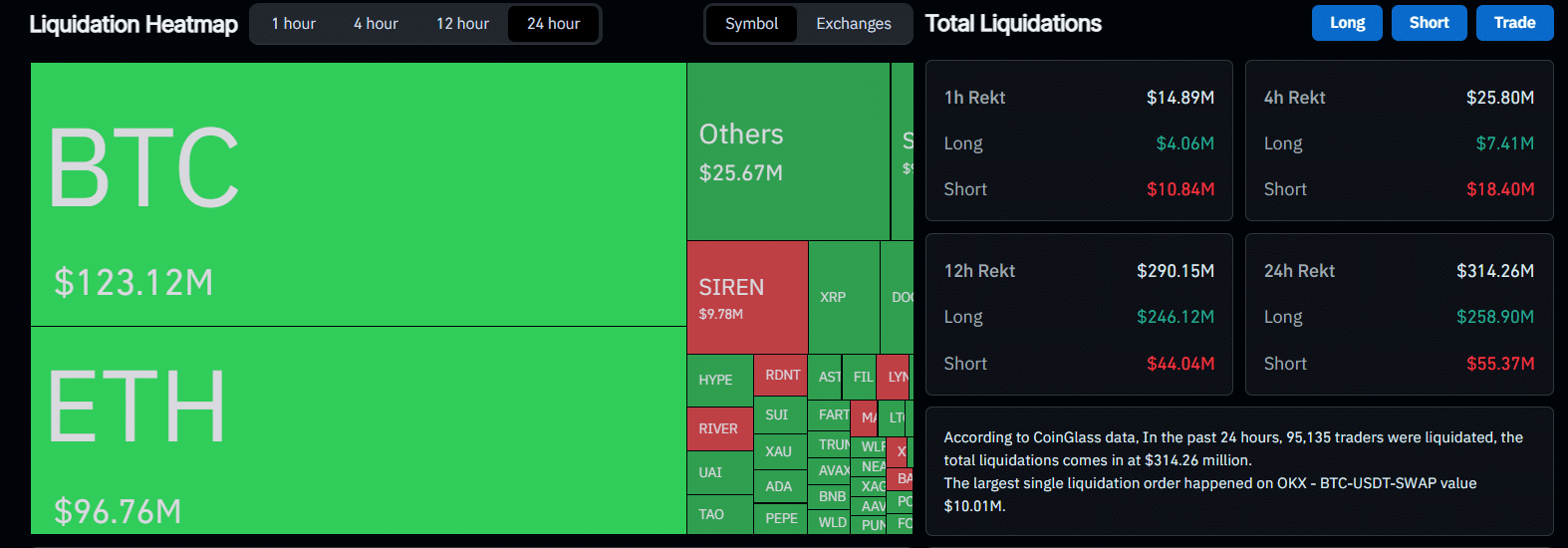
Тем временем Ethereum [ETH] упал на 2,1%, подтвердив общую чувствительность к рискам. По мере роста волатильности Индекс страха и жадности упал до 9, а количество коротких позиций выросло до 51,7%.
Такая конфигурация предполагает, что трейдеры переходят к защите, а не к накоплению, что указывает на хрупкую ликвидность и рынок, движимый скорее реакцией, чем убежденностью.
Общерыночная коррекция разворачивается синхронно
Падение Биткойна вызвало более широкую реакцию, поскольку альткойны также снизились синхронно, но с разной интенсивностью. Ethereum упал на 3,01% до $2091, в то время как Ripple [XRP] снизился на 3,04%, а Solana [SOL] упала на 2,86%, демонстрируя согласованное, но неравномерное давление.
Фактически, этот разброс показывает, как альткойны усиливают снижение при ужесточении ликвидности, но при этом продолжают closely отслеживать направление Биткойна. Тем временем общая рыночная капитализация снизилась до $2,37 трлн, сигнализируя об оттоке капитала, хотя и не о полном разрушении структуры.
В то же время индекс CoinMarketCap 20 упал на 2,5%, подтвердив общую слабость среди крупных капитализаций. Такая setup предполагает, что аппетит к риску ослабевает, а капитал становится более избирательным, что означает, что альткойны остаются уязвимыми, но могут быстро стабилизироваться, если Биткойн восстановит импульс.
Биткойн отражает макростресс на фоне рисков, связанных с нефтью
По мере обострения напряженности в Ормузе Биткойн оставался в тренде с рисковыми активами, а не смещался в сторону убежища. Доминирование Биткойна выросло до 58,2%, увеличившись на 0,27%, что сигнализирует о ротации в пользу Биткойна за счет альткойнов, а не о широких притоках.
Это отражает оборонительную позицию внутри криптоиндустрии, а не возобновление аппетита к риску. Тем временем потоки ETF отражали changing убежденность на рынке. 17 марта спотовые Биткойн-ETF зафиксировали чистый приток в размере $199 миллионов.
Однако этот тренд быстро развернулся. 18 марта потоки сменились на отток в $163 миллиона, что сигнализирует о краткосрочной неопределенности.
Тем не менее, совокупный приток все еще превышает $56 миллиардов. В результате, underlying институциональный интерес продолжает сохраняться, несмотря на недавние колебания.
Поскольку цена удерживается near $68 700 – $69 000, стабильность выглядит условной, а не прочной. В то же время, предложение стейблкоинов не показывает резкого расширения, что указывает на ограниченное поступление fresh ликвидности на рынок.







