Les « attaques clés à molette » violentes contre les détenteurs de crypto-monnaies, des vols et enlèvements physiques destinés à forcer les victimes à remettre leurs jetons, semblent augmenter en termes absolus et devenir plus graves, selon une nouvelle visualisation construite à partir d'une base de données d'incidents tenue depuis longtemps par le chercheur en sécurité Jameson Lopp.
Haseeb Qureshi, partenaire de Dragonfly, a déclaré avoir analysé l'ensemble de données de Lopp et construit un tableau de bord interactif pour tester une question que de nombreux traders et développeurs se posent discrètement depuis des années : le simple fait de détenir des crypto-monnaies devient-il physiquement plus dangereux ? « Vous ne l'imaginez pas : le nombre d'attaques a augmenté au fil du temps », a écrit Qureshi sur X. « Non seulement cela, mais les attaques deviennent plus violentes. »
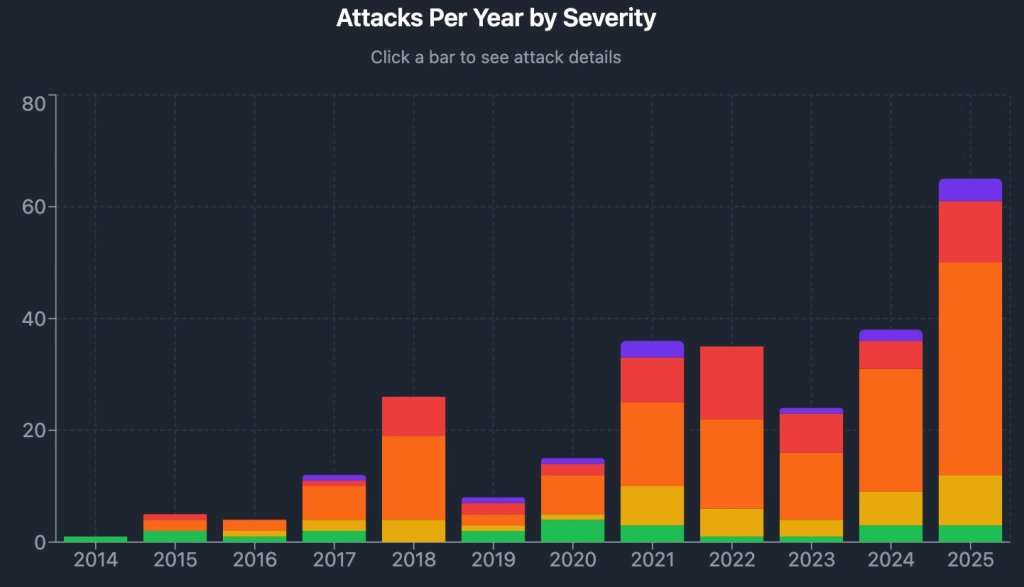
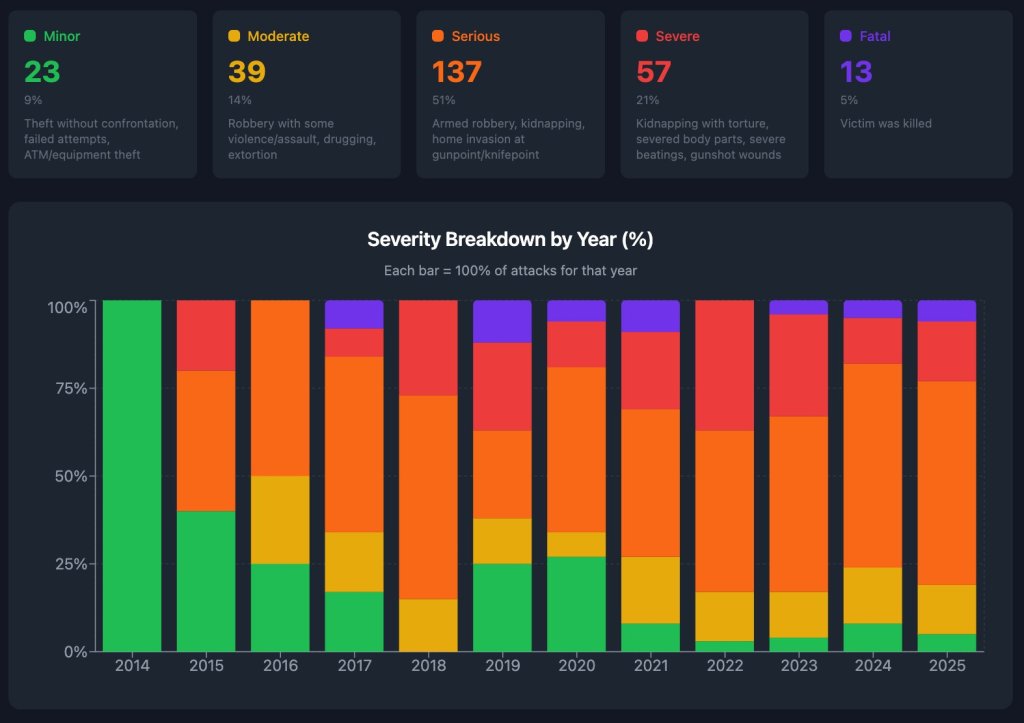
Le tableau de bord répartit les incidents signalés en cinq niveaux de gravité — Mineur, Modéré, Sérieux, Sévère et Mortel — et la distribution penche fortement vers l'extrémité la plus grave du spectre. Sur 269 incidents catégorisés présentés, 137 (51 %) ont été étiquetés « Sérieux », 57 (21 %) « Sévères » et 13 (5 %) « Mortels », le reste étant réparti entre 39 (14 %) « Modérés » et 23 (9 %) « Mineurs ».
Les barres année par année montrent que les années les plus récentes comportent une plus grande proportion de résultats « Sévères » et « Mortels » que le début de l'historique de l'ensemble de données, 2025 apparaissant comme l'année avec le plus d'incidents sur le graphique.
L'analyse de Qureshi quantifie également le facteur le plus intuitif : le prix. En traçant les incidents par rapport à la capitalisation boursière totale du marché des crypto-monnaies, il a rapporté une régression simple avec un R2 de 0,45 — ce qui implique qu'environ 45 % de la variation de la violence signalée s'explique par la seule capitalisation boursière. En termes simples, des prix plus élevés coïncident avec plus d'attaques.
Mais la question la plus importante pour les détenteurs ordinaires n'est pas le nombre brut ; c'est le risque par personne. Parce que des données complètes sur le « nombre d'utilisateurs de crypto » sont difficiles à cerner, Qureshi a utilisé les utilisateurs actifs mensuels de Coinbase comme proxy, et a normalisé séparément les incidents par la capitalisation boursière pour approximer les attaques par dollar de richesse.
Le graphique résultant des « taux d'attaque normalisés » raconte une histoire moins linéaire : les taux d'attaque par utilisateur ont grimpé en flèche lors des premières ères de marché (notamment vers 2015 et à nouveau en 2018), puis ont chuté après 2019, avant de remonter légèrement dans les observations les plus récentes. « Alors, est-ce tout ? » a demandé Qureshi. « La preuve que les crypto deviennent physiquement plus dangereuses ? »
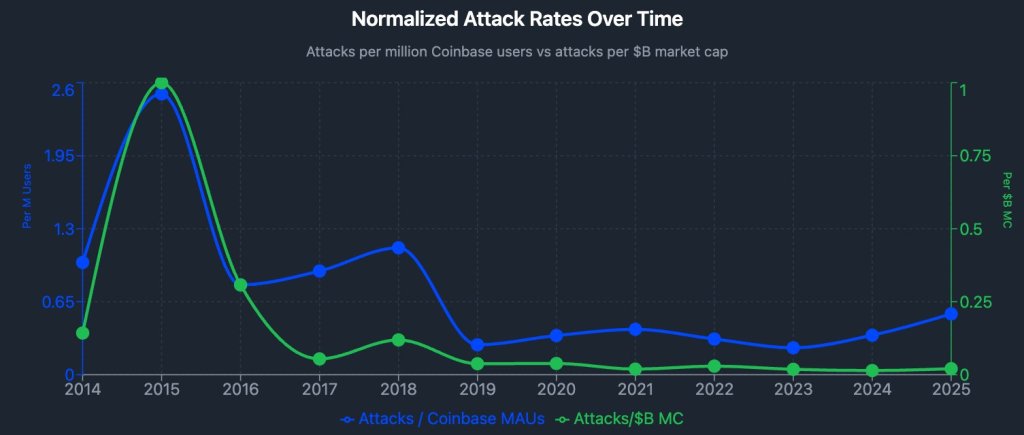
Selon lui, pas tout à fait. Il a noté que les utilisateurs actifs mensuels de Coinbase se sont considérablement développés au cours de la décennie, tandis que les taux d'attaque normalisés n'ont pas augmenté proportionnellement, suggérant un « effet de population » significatif derrière les totaux globaux plus élevés. Néanmoins, la ligne par utilisateur est remontée depuis ses plus bas après 2019, à peu près de retour vers les niveaux observés lors du cycle de 2021, même si la ligne des « attaques par $ de capitalisation boursière » reste relativement plate ces dernières années.
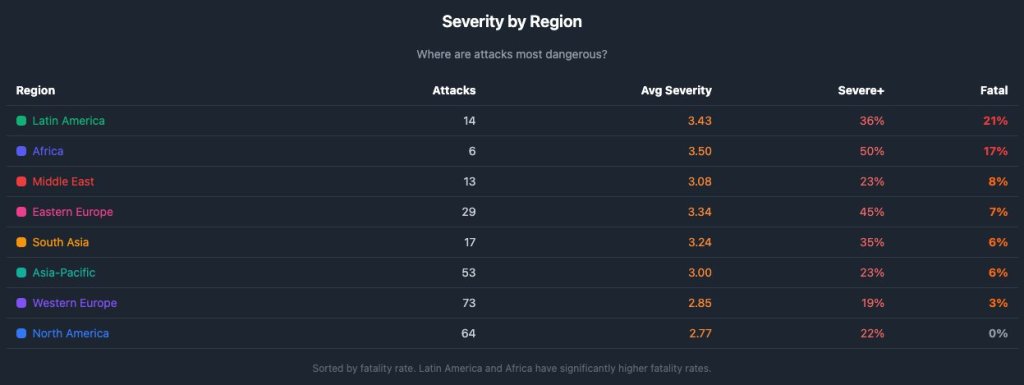
La géographie ajoute une autre couche inconfortable. Un tableau régional du tableau de bord montre l'Europe occidentale (73 attaques) et l'Amérique du Nord (64) comme les deux plus grands groupes par nombre d'incidents, la région Asie-Pacifique étant également substantielle (53). Mais les issues les plus mortelles se concentrent ailleurs : l'Amérique latine affiche un taux de mortalité de 21 % et l'Afrique de 17 %, contre 0 % en Amérique du Nord. Qureshi a souligné ce point directement : « Notamment, il n'y a jamais eu de décès en Amérique du Nord », a-t-il écrit, ajoutant que la « part du lion » des décès se situe en Amérique latine et en Afrique.
Lopp, qui tient l'archive sous-jacente « Bitcoin Wrench Attack » depuis des années, a averti que la charge de travail et la fréquence deviennent plus difficiles à traiter comme des incidents isolés. « Lorsqu'un événement passe de rare à se produire tous les quelques jours, il n'est plus digne d'intérêt — c'est juste un fait de la vie », a-t-il écrit dans un message du 21 décembre cité dans le fil, tout en invitant d'autres à aider à maintenir la base de données.
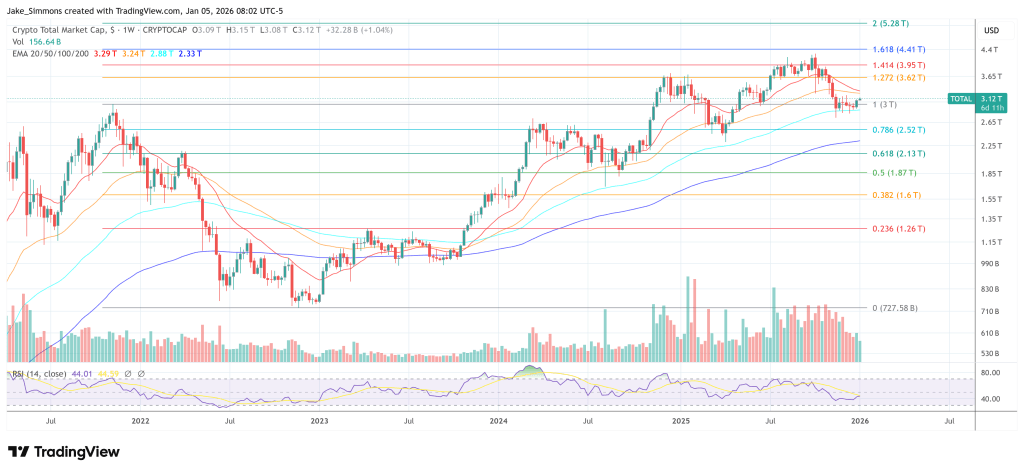
Au moment de la rédaction, la capitalisation boursière totale des crypto-monnaies s'élevait à 3,12 billions de dollars.