US Treasury Sanctions Iranian Insurers Accepting Bitcoin

cryptonews.ruPublished on 2026-07-30Last updated on 2026-07-30

Abstract

The U.S. Treasury Department's OFAC has imposed sanctions on two Iranian marine insurance companies, Persian Gulf Marine Insurance Company and HormuzSafe Marine Services Authority, for using cryptocurrency to evade sanctions. The Treasury alleges the firms are controlled by Iran's Islamic Revolutionary Guard Corps (IRGC) and force commercial vessels to purchase mandatory insurance for passage through the Strait of Hormuz, while Iran itself creates the primary risks. HormuzSafe notably accepts payment in Bitcoin and other digital assets. U.S. Treasury Secretary Scott Bessent stated the measures aim to prevent Iran from taking global trade hostage or using shipping to finance terrorism and repression. The sanctions also target eight vessels in Iran's "shadow fleet" transporting oil and petrochemicals. These actions are part of broader U.S. efforts, under an existing executive order, to pressure Iran's oil sector and its economy, which is suffering from high inflation.

"RBC Crypto" does not provide investment advice, the material is published for informational purposes only. Cryptocurrency is a volatile asset that can lead to financial losses.

US authorities have expanded sanctions pressure on Iran, targeting insurance companies that use cryptocurrency to circumvent restrictions, according to a statement from the US Treasury's Office of Foreign Assets Control (OFAC).

The companies in question are Persian Gulf Marine Insurance Company and HormuzSafe Marine Services Authority, which the agency believes are controlled by the Islamic Revolutionary Guard Corps (IRGC). Commercial vessels are allegedly forced to purchase mandatory insurance for passage through the strait, although the main risks, including the seizure of ships, according to the US Treasury, are created by Iran itself.

Particular attention in the Treasury's press release was given to HormuzSafe. It is an Iranian insurance company established with the participation of the country's Ministry of Economy. It is reported to accept payment in Bitcoin and other digital assets to evade US sanctions.

"Iran's economy is in free fall, with inflation in triple digits, and the regime is desperately in need of money. The US will not allow Iran to hold global trade hostage or use international shipping to fund terrorism, aggression, and repression by the IRGC," said US Treasury Secretary Scott Bessent.

In addition to the insurance companies, sanctions targeted eight vessels from Iran's "shadow fleet" that transported oil and petrochemical products. Since the beginning of the year, OFAC has imposed restrictions on more than 100 vessels linked to this network. Today's measures were taken under Executive Order No. 13902, which targets Iran's oil and petrochemical sectors.

end-content

Trending Cryptos

Related Questions

QWhich two Iranian insurance companies were sanctioned by the U.S. Department of the Treasury?

AThe U.S. Department of the Treasury sanctioned Persian Gulf Marine Insurance Company and HormuzSafe Marine Services Authority.

QAccording to the U.S. Treasury, which Iranian armed force controls the sanctioned insurance companies?

AAccording to the U.S. Treasury, the sanctioned insurance companies are controlled by Iran's Islamic Revolutionary Guard Corps (IRGC).

QWhich specific company mentioned in the article was highlighted for accepting Bitcoin to evade sanctions?

AThe company HormuzSafe Marine Services Authority was highlighted for accepting payment in Bitcoin and other digital assets to evade U.S. sanctions.

QWhat reason did U.S. Treasury Secretary Scott Bessent give for the sanctions against Iran?

AU.S. Treasury Secretary Scott Bessent stated the sanctions are to prevent Iran from 'taking global trade hostage or using international shipping to finance the terrorism, aggression, and repression of the IRGC.'

QWhat was the total number of vessels related to Iran's 'shadow fleet' that OFAC has targeted with restrictions since the start of the year?

ASince the start of the year, the U.S. Office of Foreign Assets Control (OFAC) has targeted more than 100 vessels linked to Iran's 'shadow fleet' with restrictions.

Related Reads

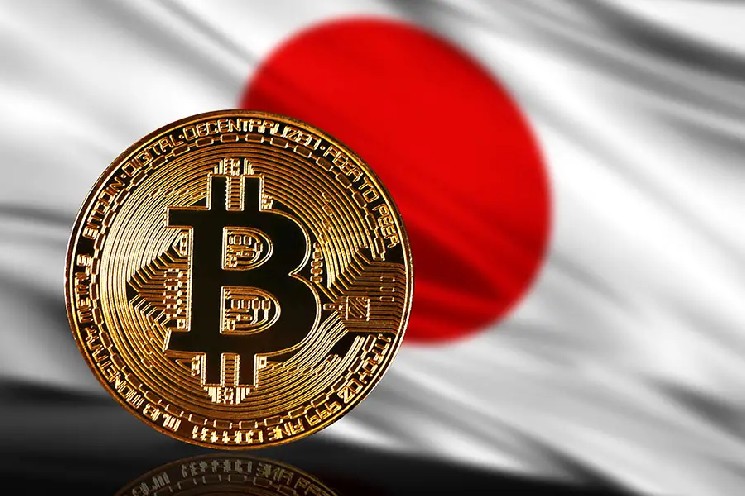
Expect news tomorrow: this time the Bank of Japan will announce its interest rate decision! What impact will this have on Bitcoin?

A day before the Bank of Japan's (BOJ) interest rate decision announcement, the Japanese yen surged nearly 3% against the US dollar. The sharp move in the currency market fueled speculation that the Japanese government may have intervened again to support the yen. The USD/JPY pair fell over 400 pips to 158.5, its steepest daily drop since Japan's currency intervention earlier this year. Market participants suspect the rapid, strong yen appreciation could be due to direct foreign currency sales by Japanese authorities, though the Ministry of Finance has made no official statement. The yen had previously fallen to its weakest level against the dollar in nearly 40 years. In late April and May, the government intervened with roughly 9.6 trillion yen to prevent the USD/JPY from rising sustainably above 160, but the yen faced renewed selling pressure afterward. Investors are now focused on the BOJ's rate decision and its signals on future monetary policy. Potential hawkish signals from the BOJ are seen as a factor that could support further yen strength. A sharp yen appreciation could create short-term selling pressure on Bitcoin by increasing the risk of unwinding carry trades, where investors borrow low-yielding yen to invest in Bitcoin and other risky assets. This pressure could intensify if the BOJ takes a hawkish stance or raises interest rates.

cryptonews.ru1h ago

Expect news tomorrow: this time the Bank of Japan will announce its interest rate decision! What impact will this have on Bitcoin?

cryptonews.ru1h ago

Trading

Spot

Hot Articles

What is $BITCOIN

DIGITAL GOLD ($BITCOIN): A Comprehensive Analysis Introduction to DIGITAL GOLD ($BITCOIN) DIGITAL GOLD ($BITCOIN) is a blockchain-based project operating on the Solana network, which aims to combine the characteristics of traditional precious metals with the innovation of decentralized technologies. While it shares a name with Bitcoin, often referred to as “digital gold” due to its perception as a store of value, DIGITAL GOLD is a separate token designed to create a unique ecosystem within the Web3 landscape. Its goal is to position itself as a viable alternative digital asset, although specifics regarding its applications and functionalities are still developing. What is DIGITAL GOLD ($BITCOIN)? DIGITAL GOLD ($BITCOIN) is a cryptocurrency token explicitly designed for use on the Solana blockchain. In contrast to Bitcoin, which provides a widely recognized value storage role, this token appears to focus on broader applications and characteristics. Notable aspects include: Blockchain Infrastructure: The token is built on the Solana blockchain, known for its capacity to handle high-speed and low-cost transactions. Supply Dynamics: DIGITAL GOLD has a maximum supply capped at 100 quadrillion tokens (100P $BITCOIN), although details regarding its circulating supply are currently undisclosed. Utility: While precise functionalities are not explicitly outlined, there are indications that the token could be utilized for various applications, potentially involving decentralized applications (dApps) or asset tokenization strategies. Who is the Creator of DIGITAL GOLD ($BITCOIN)? At present, the identity of the creators and development team behind DIGITAL GOLD ($BITCOIN) remains unknown. This situation is typical among many innovative projects within the blockchain space, particularly those aligning with decentralized finance and meme coin phenomena. While such anonymity may foster a community-driven culture, it intensifies concerns about governance and accountability. Who are the Investors of DIGITAL GOLD ($BITCOIN)? The available information indicates that DIGITAL GOLD ($BITCOIN) does not have any known institutional backers or prominent venture capital investments. The project seems to operate on a peer-to-peer model focused on community support and adoption rather than traditional funding routes. Its activity and liquidity are primarily situated on decentralized exchanges (DEXs), such as PumpSwap, rather than established centralized trading platforms, further highlighting its grassroots approach. How DIGITAL GOLD ($BITCOIN) Works The operational mechanics of DIGITAL GOLD ($BITCOIN) can be elaborated on based on its blockchain design and network attributes: Consensus Mechanism: By leveraging Solana’s unique proof-of-history (PoH) combined with a proof-of-stake (PoS) model, the project ensures efficient transaction validation contributing to the network's high performance. Tokenomics: While specific deflationary mechanisms have not been extensively detailed, the vast maximum token supply implies that it may cater to microtransactions or niche use cases that are still to be defined. Interoperability: There exists the potential for integration with Solana’s broader ecosystem, including various decentralized finance (DeFi) platforms. However, the details regarding specific integrations remain unspecified. Timeline of Key Events Here is a timeline that highlights significant milestones concerning DIGITAL GOLD ($BITCOIN): 2023: The initial deployment of the token occurs on the Solana blockchain, marked by its contract address. 2024: DIGITAL GOLD gains visibility as it becomes available for trading on decentralized exchanges like PumpSwap, allowing users to trade it against SOL. 2025: The project witnesses sporadic trading activity and potential interest in community-led engagements, although no noteworthy partnerships or technical advancements have been documented as of yet. Critical Analysis Strengths Scalability: The underlying Solana infrastructure supports high transaction volumes, which could enhance the utility of $BITCOIN in various transaction scenarios. Accessibility: The potential low trading price per token could attract retail investors, facilitating wider participation due to fractional ownership opportunities. Risks Lack of Transparency: The absence of publicly known backers, developers, or an audit process may yield skepticism regarding the project's sustainability and trustworthiness. Market Volatility: The trading activity is heavily reliant on speculative behavior, which can result in significant price volatility and uncertainty for investors. Conclusion DIGITAL GOLD ($BITCOIN) emerges as an intriguing yet ambiguous project within the rapidly evolving Solana ecosystem. While it attempts to leverage the “digital gold” narrative, its departure from Bitcoin's established role as a store of value underscores the need for a clearer differentiation of its intended utility and governance structure. Future acceptance and adoption will likely depend on addressing the current opacity and defining its operational and economic strategies more explicitly. Note: This report encompasses synthesised information available as of October 2023, and developments may have transpired beyond the research period.

1.1k Total ViewsPublished 2025.05.13Updated 2025.05.13

What is $BITCOIN

Discussions

Welcome to the HTX Community. Here, you can stay informed about the latest platform developments and gain access to professional market insights. Users' opinions on the price of BTC (BTC) are presented below.

活动图片