The Year Token Economics Were Debunked

marsbitОпубліковано о 2026-01-21Востаннє оновлено о 2026-01-21

Анотація

The year 2025 is portrayed as a turning point where the fundamental economic model of crypto tokens was invalidated. The passage of regulatory frameworks like the CLARITY Act in the US forced projects to choose between being classified as a security (under the SEC) or a commodity (under the CFTC), with most falling into the former category. This led to a crisis of "coin rights" (币权). A key trend emerged: traditional financial institutions began acquiring crypto companies, but only for their technology and talent, explicitly excluding the associated tokens from deals. Examples include Circle's acquisition of Interop Labs (without the AXL token) and similar moves by Kraken and Coinbase. This shattered the investor narrative that buying a project's token was equivalent to owning equity, as tokens held no legal claim to a company's assets or profits. Simultaneously, major DeFi protocols like Aave and Uniswap faced internal conflicts. Aave's developers were accused of diverting front-end fees from the community treasury, while Uniswap had to implement complex legal structures to distribute fees to token holders without attracting SEC scrutiny. This highlighted a core dilemma: providing token dividends risked being classified as a security, while avoiding regulation meant tokens remained valueless. The article concludes that the crypto industry is being assimilated into traditional finance, but this "fusion" means value is flowing toward legally recognized entities—companies, eq...

When the Bitcoin ETF was approved in early 2024, many cryptocurrency practitioners jokingly referred to each other as "distinguished U.S. stock traders." But when the New York Stock Exchange planned to develop on-chain stocks and 24/7 trading, making token integration part of the traditional finance agenda, the crypto community belatedly realized that the crypto industry had not conquered Wall Street.

On the contrary, Wall Street had been betting on integration from the beginning and has now gradually transitioned into an era of two-way acquisitions: crypto companies buying traditional finance licenses, clients, and compliance capabilities; traditional finance buying crypto technology, pipelines, and innovation capabilities. The two sides are mutually infiltrating, and the boundaries are gradually disappearing. In three to five years, there may no longer be a distinction between crypto companies and traditional financial companies—only financial companies.

This co-option and integration is taking place under the legal framework of the Clarity for Digital Assets Act (hereinafter referred to as the CLARITY Act), which is reshaping the wildly growing crypto sphere into a form familiar to Wall Street at the institutional level. The first to be reformed is the concept of "token rights," a purely crypto notion that is not as popular as stablecoins.

The Era of Binary Choices

For a long time, practitioners and investors in the crypto space have been living in an anxiety of illegitimacy, often subjected to enforcement-style regulation by government departments. This tug-of-war not only stifles innovation but also places investors holding tokens in an awkward position, as they hold tokens but possess only token rights. Unlike investors in traditional financial markets, token holders have neither legally protected rights to information nor recourse against insider trading by project teams.

Therefore, when the CLARITY Act was passed with overwhelming support in the U.S. House of Representatives last July, the entire industry placed high hopes on it. The core demand of the market was clear: to define whether tokens are digital commodities or securities, and to end the years-long jurisdictional dispute between the U.S. Securities and Exchange Commission (SEC) and the Commodity Futures Trading Commission (CFTC).

The Act stipulates that only assets that are fully decentralized and have no actual controlling party can be recognized as digital commodities, falling under the jurisdiction of the CFTC, just like gold or soybeans. Any asset with traces of centralized control or used for fundraising by promising returns is classified as a restricted digital asset or security, falling under the iron-fisted jurisdiction of the SEC.

For networks like Bitcoin and Ethereum, which long ago lost any actual controlling party, this is good news. But for the vast majority of DeFi projects and DAOs, it is almost a death knell.

The Act requires any intermediary involved in digital asset transactions to register and implement strict anti-money laundering (AML) and know-your-customer (KYC) procedures. For DeFi protocols running on smart contracts, this is an impossible task.

The Act's summary document explicitly mentions that certain decentralized financial activities related to the operation and maintenance of blockchain networks will be exempted, but it retains enforcement powers against fraud and manipulation. This is a typical regulatory compromise, allowing activities like writing code and developing front-end interfaces to exist, but once they involve transaction matching, profit distribution, and intermediary services, they must fall under a heavier regulatory framework.

Precisely because of this compromise, the CLARITY Act did not truly reassure the industry after the summer of 2025, as it forced all projects to answer a brutal question: What are you, really?

If you claim to be a decentralized protocol and comply with the CLARITY Act, your token cannot have actual value. If you don't want to shortchange token holders, you must acknowledge the importance of equity structure and subject the token to the scrutiny of securities laws.

Take the Team, Not the Token

This choice played out repeatedly in 2025.

In December 2025, a merger and acquisition news story triggered截然不同的 reactions on Wall Street and in the crypto community.

The world's second-largest stablecoin issuer, Circle, announced the acquisition of Interop Labs, the core development team behind the cross-chain protocol Axelar. In the eyes of traditional financial media, this was a standard talent acquisition: Circle gained a top-tier cross-chain technology team to enhance the circulation capability of its stablecoin USDC in multi-chain ecosystems. Circle's valuation solidified, and Interop Labs' founders and early equity investors walked away satisfied with cash or Circle stock.

But in the cryptocurrency secondary market, the news triggered panic selling.

Investors discovered upon dissecting the deal terms that Circle's acquisition target was limited to the development team and explicitly excluded the AXL token, the Axelar network, and the Axelar Foundation. This discovery instantly shattered previous optimistic expectations. Within hours of the announcement, the AXL token not only erased all gains previously made on acquisition rumors but fell even deeper.

For a long time, crypto project investors had defaulted to a narrative: buying tokens was equivalent to investing in the startup. As the development team worked hard, protocol usage would increase, and the token's value would rise accordingly.

Circle's acquisition shattered this illusion, declaring from both a legal and practical standpoint that the development company (Labs) and the protocol network (Network) are two completely separate entities.

"This is legalized robbery," wrote an investor who had held AXL for over two years on social media. But he could not sue anyone because, in the legal disclaimers of the prospectus and whitepaper, the token was never promised residual claim rights to the development company.

Looking back at acquisitions of crypto projects with tokens in 2025, these acquisitions often involved the transfer of technical teams and underlying infrastructure but excluded token权益, causing significant冲击 to investors.

In July, Kraken's Layer 2 network Ink acquired the engineering team and underlying trading architecture of Vertex Protocol. Subsequently, Vertex Protocol announced the shutdown of its services, and its token VRTX was abandoned.

In October, Pump.fun acquired the trading terminal Padre. Simultaneously with the announcement, the project team declared the PADRE token worthless with no future plans.

In November, Coinbase acquired the trading terminal technology built by Tensor Labs; this acquisition同样 did not involve权益 for the TNSR token.

At least in this wave of mergers and acquisitions in 2025, more and more transactions tended to buy only the team and technology, while abandoning the tokens. This has also made more and more investors in the crypto industry indignant: "Either赋予代币 the same value as stocks, or don't issue tokens at all."

DeFi's Dividend Dilemma

If Circle was a tragedy caused by external acquisition, then Uniswap and Aave demonstrated the internal conflicts that have long existed at different stages of the crypto market's development.

Aave, long regarded as the king of the DeFi lending space, found itself embroiled in a fierce internal civil war over money at the end of 2025, with the conflict focusing on the protocol's front-end revenue.

The vast majority of users do not interact directly with the smart contracts on the blockchain but through the web interface developed by Aave Labs. In December 2025, the community敏锐地 discovered that Aave Labs had quietly modified the front-end code, redirecting the high transaction fees generated from token swaps on the webpage to Labs' own corporate account, rather than to the treasury of the decentralized autonomous organization Aave DAO.

Aave Labs' justification aligned with traditional business logic: the website was built by us, the server fees are paid by us, the compliance risks are borne by us, so the monetization of traffic理应 belong to the company. But in the eyes of token holders, this was a betrayal.

"Users are here for the Aave decentralized protocol, not for your HTML webpage." This argument caused Aave's token market capitalization to evaporate by $500 million in a short period.
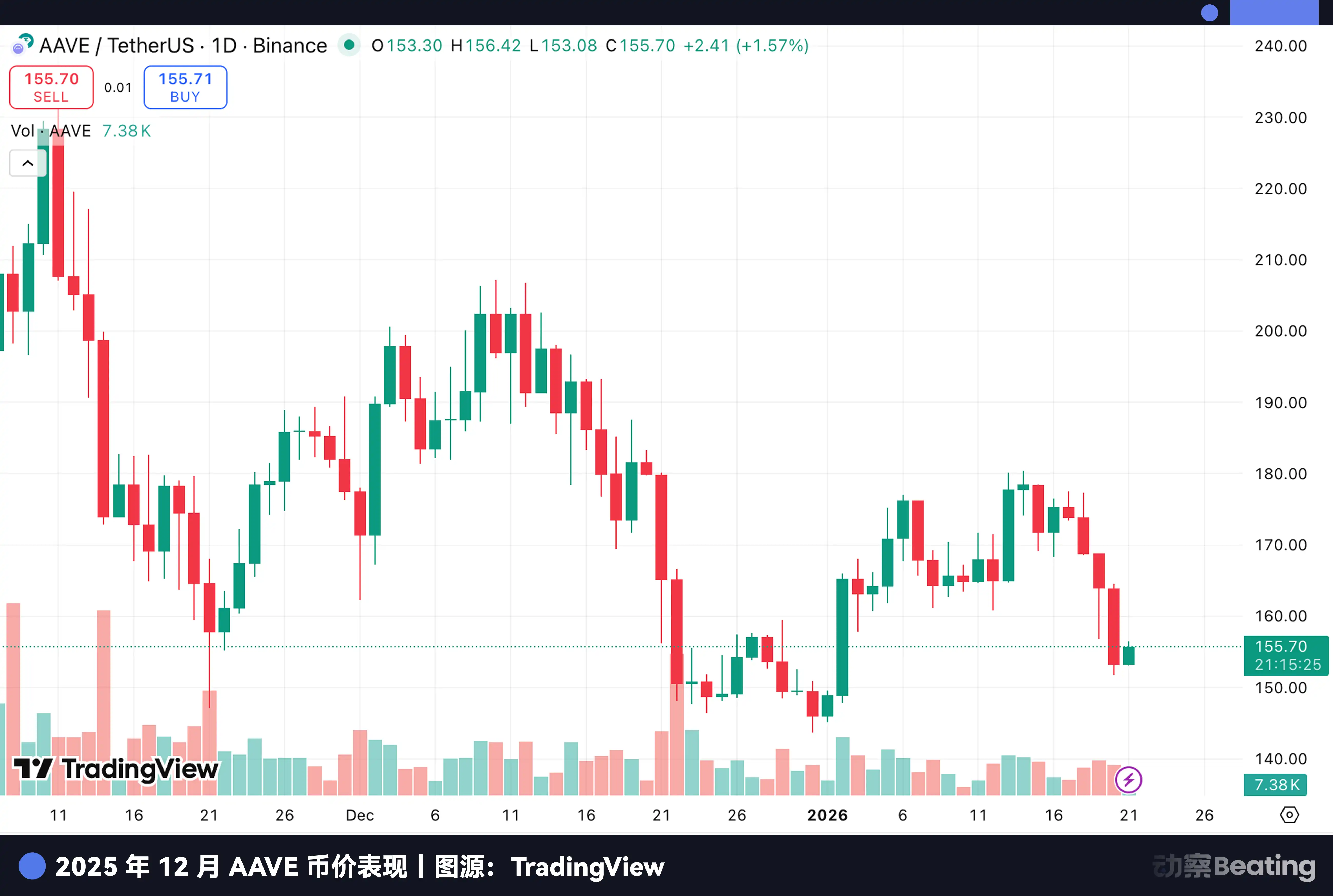
Although the two sides eventually reached a compromise under immense public pressure, with Labs承诺 proposing a plan to share non-protocol revenue with token holders, the rift could not be healed. The protocol may be decentralized, but the entry point for traffic is always centralized. Whoever controls the entry point controls the actual power to tax the protocol's economy.

Meanwhile, the decentralized exchange behemoth Uniswap also had to self-neuter for compliance reasons.

Between 2024 and 2025, Uniswap finally advanced its highly anticipated fee switch proposal, aimed at using a portion of the protocol's transaction fees to repurchase and burn UNI tokens, attempting to transform the token from a useless governance ticket into a deflationary, yield-bearing asset.

However, to avoid being classified as a security by the SEC, Uniswap had to undertake extremely complex structural separation, physically isolating the entity responsible for dividends from the development team. They even registered a new type of entity in Wyoming called a DUNA (Decentralized Unincorporated Nonprofit Association), trying to find a place on the edge of compliance.

On December 26, Uniswap's final governance vote on the fee switch proposal was passed. The core content also included burning 100 million UNI tokens and Uniswap Labs closing front-end fees to further focus on protocol layer development.

Uniswap's struggles and Aave's civil war together point to an awkward reality: the dividends investors crave are precisely the core basis for regulatory agencies to认定证券. Wanting to赋予代币 value invites fines from the SEC; wanting to avoid regulation forces the token to remain in a state of having no actual value.

Empty Rights Mapping, and Then What?

When trying to understand the token rights crisis of 2025, it is helpful to look towards more mature capital markets. There exists a highly illustrative reference point: the American Depositary Receipts (ADS) of Chinese concept stocks and the Variable Interest Entity (VIE) structure.

If you buy Alibaba (BABA) stock on Nasdaq, seasoned traders will tell you that you are not buying direct equity in the operating entity running Taobao in Hangzhou, China. Restricted by law, you hold权益 in a holding company in the Cayman Islands, which in turn controls the operating entities in China through a series of complex agreements.

This sounds very much like some altcoins—you're buying a kind of mapping, not the thing itself.

But the lesson of 2025 tells us that there is a significant difference between ADS and tokens: legal recourse.

The ADS structure, although circuitous, is built on decades of trust in international commercial law, a sound auditing system, and默契 between Wall Street and regulators. Most crucially, ADS holders legally enjoy residual claim rights. This means that if Alibaba is acquired or privatized, the acquirer must follow legal procedures to置换 your ADS with cash or equivalents.

In contrast, tokens, especially those governance tokens originally placed with high hopes, exposed their本质 in the 2025 acquisition wave: they are neither on the liability side of the balance sheet nor on the owner's equity side.

Before the CLARITY Act landed, this fragile relationship was maintained by community consensus and bull market faith. Developers hinted that tokens were like stocks; investors pretended they were doing VC. But when the compliance hammer fell in 2025, everyone had to face the fact that under the traditional corporate law framework, token holders are neither creditors nor shareholders; they are more like fans who bought expensive membership cards.

When assets can be traded, rights can be split. When rights are split, value converges towards the end that is most legally recognized,最能承载现金流, and最能被强制执行.

In this sense, the crypto industry in 2025 did not fail; it was incorporated into financial history. It began to be judged, like all mature financial markets, by capital structure, legal text, and regulatory boundaries.

As crypto's move towards traditional finance becomes an irreversible trend, a sharper question arises: where will the industry's value flow afterwards?

Many people thought that integration meant victory, but historical experience often suggests the opposite. When a new technology is adopted by an old system, it gains scale but does not necessarily retain the originally promised distribution method. What the old system is best at is taming innovation into a form that is regulatable, accountable, and balance-sheetable, and firmly nailing the residual claim rights to the existing power structure.

The合规化 of crypto may not return value to token holders but is more likely to return value to the parts familiar to the law: companies, equity, licenses, regulated accounts, and contracts that can be liquidated and enforced in court.

Token rights will continue to exist, just as ADS will continue to exist; they are both allowed mappings of rights in financial engineering. But the question is, which layer of mapping are you actually buying?


Пов'язані питання

QWhat is the CLARITY Act and how does it impact the classification of digital assets?

AThe CLARITY Act is the Digital Asset Market Clarity Act passed by the U.S. House of Representatives. It mandates that only fully decentralized assets with no actual controller are classified as digital commodities under CFTC jurisdiction, while any asset with centralized control or used for fundraising with promised returns is classified as a restricted digital asset or security under SEC jurisdiction.

QWhy did Circle's acquisition of Interop Labs cause panic in the cryptocurrency market?

ACircle's acquisition only included the development team and explicitly excluded the AXL token, the Axelar network, and its foundation. This shattered the narrative that buying tokens equates to investing in the startup, revealing that development companies and protocol networks are legally separate entities, leading to a panic sell-off of AXL tokens.

QWhat dilemma do DeFi projects like Uniswap and Aave face regarding token value and regulatory compliance?

ADeFi projects face a conflict where investors desire token value (e.g., through dividends or buybacks), but such value-adding mechanisms often trigger SEC scrutiny and potential classification as securities. To avoid regulation, tokens must remain valueless, creating tension between investor expectations and legal compliance.

QHow does the legal status of token holders differ from that of traditional equity shareholders?

AToken holders lack legal protections such as guaranteed information rights or recourse against insider trading. Unlike shareholders who have residual claim rights under corporate law, token holders are not recognized as creditors or equity owners; they hold no enforceable legal rights to a project's assets or cash flows.

QWhat is the article's perspective on the future of token economics amid integration with traditional finance?

AThe article argues that as crypto integrates with traditional finance, value will flow toward legally recognized structures like companies, equity, licenses, and regulated accounts, rather than to token holders. Token economics may be 'disproved' as innovation is驯服ed into traditional frameworks, prioritizing regulatory compliance over decentralized value distribution.

Пов'язані матеріали

First Batch of Keynote Speakers and Partners Announced! Web2+3 Summit: Defining the Next Generation of Digital Economy

Web2+3 Summit: Defining the Next Generation of Digital Economy The 6th BEYOND International Technology Innovation Expo (BEYOND Expo 2026), Asia's largest tech and ecosystem exhibition, is launching a dedicated Web2+3 stage for the first time. Co-hosted by BEYOND Expo and ChainNeXT Group, the Web3 Summit will take place from May 28–30, 2026. Against the backdrop of accelerating global tech integration, the boundaries between Web2 and Web3 are rapidly blurring. With clearer global regulations for blockchain-driven internet (Web3) and the special issuance of a Hong Kong dollar stable币 license by the Hong Kong SAR government on April 10, 2026, Web3's decentralized principles are quickly merging with traditional industries (Web2) such as e-commerce, finance, and artificial intelligence. Focused on blockchain-driven digital economy elements, the summit will center on three core principles—implementability, commercial viability, and compliance. It will bring together top Web3 experts to discuss key integration areas like stablecoin payment finance (PayFi), real-world asset tokenization (RWA), and decentralized AI (DeAI), unveiling new opportunities for industrial innovation. The first wave of confirmed speakers includes Jack Kong (Director of Hong Kong Cyberport, Chairman of Nano Labs), Yat Siu (Chairman of Animoca Brands), Michael Wu (Co-founder & CEO of Amber Group), Michael Heinrich (Co-founder & CEO of 0G), and Art Abal (Co-founder of Vana). More Web3 ecosystem pioneers, AI, and fintech experts will be announced soon. Core forum topics include: - Web2+DeAI: New AI Paradigms Driven by Decentralized Infrastructure - Web2+RWA: Real-World Asset Tokenization and Global Liquidity - Web2+PayFi: Cross-Border Payments and Financial Innovation Powered by Crypto Infrastructure - Web2+3 AI: Autonomous Agents and the Crypto Economy - Web2+3 Wealth: On-Chain and Off-Chain Integrated Investment Ecosystems - Web2+3 Commerce: A New Landscape for Global Trade Driven by Stablecoins Additional agenda details will be released in the near future.

marsbit4 год тому

First Batch of Keynote Speakers and Partners Announced! Web2+3 Summit: Defining the Next Generation of Digital Economy

marsbit4 год тому

Торгівля

Спот
Ф'ючерси

Популярні статті

Що таке BITCOIN

Розуміння HarryPotterObamaSonic10Inu (ERC-20) та його позиції у крипто-просторі Останніми роками ринок криптовалют спостерігав за зростанням популярності мем-коінів, які привертають інтерес не тільки трейдерів, але й тих, хто шукає спілкування та розважальну цінність. Серед цих унікальних токенів є HarryPotterObamaSonic10Inu (ERC-20), інтригуючий проект, що поєднує культурні посилання з тканинами криптовалюти. Ця стаття досліджує ключові аспекти HarryPotterObamaSonic10Inu, вивчаючи його механізми, спільноту та його взаємодію з ширшим крипто-ландшафтом. Що таке HarryPotterObamaSonic10Inu (ERC-20)? Як випливає з його назви, HarryPotterObamaSonic10Inu є мем-коіном, побудованим на блокчейні Ethereum, класифікованим за стандартом ERC-20. На відміну від традиційних криптовалют, які можуть підкреслювати практичну корисність або інвестиційний потенціал, цей токен процвітає завдяки розважальній цінності та силі своєї спільноти. Проект спрямований на створення середовища, де зацікавлені користувачі можуть об'єднуватися, ділитися ідеями та брати участь у заходах, натхненних різноманітними культурними явищами. Однією з примітних особливостей HarryPotterObamaSonic10Inu є нульовий податок на транзакції. Цей привабливий елемент має на меті заохочувати торгівлю та участь у спільноті, позбавлену додаткових витрат, які можуть відлякувати дрібних трейдерів. Загальна пропозиція монет становить один мільярд токенів, що позначає намір підтримувати суттєву циркуляцію в межах спільноти. Творець HarryPotterObamaSonic10Inu (ERC-20) Походження HarryPotterObamaSonic10Inu дещо окутане таємницею; деталі про творця залишаються невідомими. Розвиток цього токена позбавлений впізнаваної команди або чіткої стратегії, що не є рідкістю в секторі мем-коінів. Натомість проект виник органічно, а його розвиток значною мірою залежить від ентузіазму та участі його спільноти. Інвестори HarryPotterObamaSonic10Inu (ERC-20) Щодо зовнішніх інвестицій та підтримки, HarryPotterObamaSonic10Inu також залишається невизначеним. Токен не зазначає жодних відомих інвестиційних фондів або значної організаційної підтримки. Натомість життєва сила проекту полягає в його базовій спільноті, яка інформує про його зростання та стійкість через колективні дії та залученість у крипто-просторі. Як працює HarryPotterObamaSonic10Inu (ERC-20)? Як мем-коін, HarryPotterObamaSonic10Inu функціонує передусім поза традиційними рамками, що часто регулюють вартість активів. Є кілька відмінних аспектів, що визначають, як працює проект: Транзакції без податку: Завдяки відсутності податкових зборів на транзакції, користувачі можуть вільно купувати та продавати токен, не турбуючись про приховані витрати. Залучення спільноти: Проект процвітає завдяки взаємодії спільноти, використовуючи соціальні медіа для створення шуму та сприяння залученню. Обговорення, обмін контентом та залученість є ключовими елементами, що допомагають розширити його охоплення та зміцнити лояльність серед прихильників. Відсутність практичної корисності: Слід зазначити, що HarryPotterObamaSonic10Inu не пропонує конкретної корисності в рамках фінансової екосистеми. Натомість він класифікується як токен, що призначений в основному для розваги та спільнотних активностей. Культурне посилання: Токен кмітливо вплітає елементи популярної культури, щоб привернути інтерес, зв'язуючи з ентузіастами мемів та крипто-стежками. HarryPotterObamaSonic10Inu ілюструє, як мем-коіни функціонують інакше, ніж традиційні криптовалютні проекти, увійшовши на ринок як інноваційні соціальні конструкти, а не утилітарні активи. Хронологія HarryPotterObamaSonic10Inu (ERC-20) Історія HarryPotterObamaSonic10Inu відзначена кількома значними етапами: Створення: Токен виник з вірусного мему, захопивши уяву багатьох крипто-ентузіастів. Конкретні дати створення недоступні, що підкреслює його органічний розвиток. Лістинг на біржах: HarryPotterObamaSonic10Inu з'явився на різних біржах, дозволяючи зручніший доступ і торгівлю спільноти. Ініціативи залучення спільноти: Ведення діяльності, спрямованої на покращення взаємодії спільноти, включаючи конкурси, кампанії в соціальних мережах та створення контенту від фанатів та прихильників. Плани на майбутнє: Дорожня карта проекту включає запуск колекції NFT, мерчандайзинг та електронну комерцію, пов'язану з його культурними темами, що далі залучає спільноту та намагається додати більше вимірів до його екосистеми. Ключові моменти про HarryPotterObamaSonic10Inu (ERC-20) Спільнотний підхід: Проект надає пріоритет колективному внеску та креативності, забезпечуючи, щоб участь користувачів була в центрі його розвитку. Класифікація як мем-коін: Це є його епігенез розважальної криптовалюти, що відрізняється від традиційних інвестиційних інструментів. Жодного прямого відношення до Bitcoin: Незважаючи на схожість у назві, HarryPotterObamaSonic10Inu є відмінним і не має жодного зв’язку з Bitcoin або іншими усталеними криптовалютами. Зосередженість на співпраці: HarryPotterObamaSonic10Inu створено для того, щоб надати простір для співпраці та обміну історіями серед його власників, забезпечуючи шлях для творчості та спільного зв'язку. Перспективи на майбутнє: Амбіція розширитися за межі початкової концепції в NFT та мерчандайз відкриває шлях для проекту потенційно потрапити в більш мейнстрімні сфери цифрової культури. Оскільки мем-коіни продовжують захоплювати уяву спільноти криптовалют, HarryPotterObamaSonic10Inu (ERC-20) вирізняється своїми культурними зв'язками та орієнтованим на спільноту підходом. Хоча він може не відповідати типовій моделі утилітарного токена, його суть полягає в радощах і товариськості, що підтримуються серед його прихильників, підкреслюючи еволюційну природу криптовалют в усе більш цифрову епоху. Оскільки проект продовжує розвиватися, важливо спостерігати за тим, як динаміка спільноти вплине на його траєкторію в постійно змінюваному ландшафті технології блокчейн.

1.7k переглядів усьогоОпубліковано 2024.04.01Оновлено 2024.12.03

Що таке BITCOIN

Як купити BTC

Ласкаво просимо до HTX.com! Ми зробили покупку Bitcoin (BTC) простою та зручною. Дотримуйтесь нашої покрокової інструкції, щоб розпочати свою криптовалютну подорож.Крок 1: Створіть обліковий запис на HTXВикористовуйте свою електронну пошту або номер телефону, щоб зареєструвати обліковий запис на HTX безплатно. Пройдіть безпроблемну реєстрацію й отримайте доступ до всіх функцій.ЗареєструватисьКрок 2: Перейдіть до розділу Купити крипту і виберіть спосіб оплатиКредитна/дебетова картка: використовуйте вашу картку Visa або Mastercard, щоб миттєво купити Bitcoin (BTC).Баланс: використовуйте кошти з балансу вашого рахунку HTX для безперешкодної торгівлі.Треті особи: ми додали популярні способи оплати, такі як Google Pay та Apple Pay, щоб підвищити зручність.P2P: Торгуйте безпосередньо з іншими користувачами на HTX.Позабіржова торгівля (OTC): ми пропонуємо індивідуальні послуги та конкурентні обмінні курси для трейдерів.Крок 3: Зберігайте свої Bitcoin (BTC)Після придбання Bitcoin (BTC) збережіть його у своєму обліковому записі на HTX. Крім того, ви можете відправити його в інше місце за допомогою блокчейн-переказу або використовувати його для торгівлі іншими криптовалютами.Крок 4: Торгівля Bitcoin (BTC)Легко торгуйте Bitcoin (BTC) на спотовому ринку HTX. Просто увійдіть до свого облікового запису, виберіть торгову пару, укладайте угоди та спостерігайте за ними в режимі реального часу. Ми пропонуємо зручний досвід як для початківців, так і для досвідчених трейдерів.

4.2k переглядів усьогоОпубліковано 2024.12.12Оновлено 2025.03.21

Як купити BTC

Що таке $BITCOIN

ЦИФРОВЕ ЗОЛОТО ($BITCOIN): Комплексний аналіз Вступ до ЦИФРОВОГО ЗОЛОТА ($BITCOIN) ЦИФРОВЕ ЗОЛОТО ($BITCOIN) — це проект на основі блокчейну, що працює в мережі Solana, який має на меті поєднати характеристики традиційних дорогоцінних металів з інноваціями децентралізованих технологій. Хоча він має таку ж назву, як і Bitcoin, який часто називають “цифровим золотом” через його сприйняття як засобу збереження вартості, ЦИФРОВЕ ЗОЛОТО є окремим токеном, розробленим для створення унікальної екосистеми в ландшафті Web3. Його мета — позиціонувати себе як життєздатний альтернативний цифровий актив, хоча деталі щодо його застосувань і функціональностей все ще розробляються. Що таке ЦИФРОВЕ ЗОЛОТО ($BITCOIN)? ЦИФРОВЕ ЗОЛОТО ($BITCOIN) — це токен криптовалюти, спеціально розроблений для використання в блокчейні Solana. На відміну від Bitcoin, який виконує широко визнану роль зберігання вартості, цей токен, здається, зосереджується на більш широких застосуваннях і характеристиках. Помітні аспекти включають: Інфраструктура блокчейну: Токен побудований на блокчейні Solana, відомому своєю здатністю обробляти швидкі та низьковартісні транзакції. Динаміка постачання: ЦИФРОВЕ ЗОЛОТО має максимальне постачання, обмежене 100 квадрильйонами токенів (100P $BITCOIN), хоча деталі щодо його обігового постачання наразі не розголошуються. Утиліта: Хоча точні функціональності не викладені, є вказівки на те, що токен може бути використаний для різних застосувань, потенційно пов'язаних з децентралізованими додатками (dApps) або стратегіями токенізації активів. Хто є творцем ЦИФРОВОГО ЗОЛОТА ($BITCOIN)? На даний момент особа творців і команди розробників, що стоять за ЦИФРОВИМ ЗОЛОТОМ ($BITCOIN), залишається невідомою. Ця ситуація є типовою для багатьох інноваційних проектів у сфері блокчейну, особливо тих, що пов'язані з децентралізованими фінансами та феноменом мем-коінів. Хоча така анонімність може сприяти культурі, орієнтованій на спільноту, вона посилює занепокоєння щодо управління та підзвітності. Хто є інвесторами ЦИФРОВОГО ЗОЛОТА ($BITCOIN)? Доступна інформація вказує на те, що ЦИФРОВЕ ЗОЛОТО ($BITCOIN) не має жодних відомих інституційних спонсорів або помітних венчурних капіталовкладень. Проект, здається, працює за моделлю “рівний до рівного”, зосереджуючись на підтримці та прийнятті спільноти, а не на традиційних шляхах фінансування. Його активність і ліквідність переважно розташовані на децентралізованих біржах (DEX), таких як PumpSwap, а не на встановлених централізованих торгових платформах, що ще більше підкреслює його підхід знизу вгору. Як працює ЦИФРОВЕ ЗОЛОТО ($BITCOIN) Операційні механізми ЦИФРОВОГО ЗОЛОТА ($BITCOIN) можна детальніше розглянути на основі його дизайну блокчейну та характеристик мережі: Механізм консенсусу: Використовуючи унікальний proof-of-history (PoH) Solana в поєднанні з моделлю proof-of-stake (PoS), проект забезпечує ефективну валідацію транзакцій, що сприяє високій продуктивності мережі. Токеноміка: Хоча конкретні дефляційні механізми не були детально описані, велике максимальне постачання токенів вказує на те, що воно може задовольняти мікротранзакції або нішеві випадки використання, які ще потрібно визначити. Інтероперабельність: Існує потенціал для інтеграції з більш широкою екосистемою Solana, включаючи різні платформи децентралізованих фінансів (DeFi). Однак деталі щодо конкретних інтеграцій залишаються невизначеними. Хронологія ключових подій Ось хронологія, яка підкреслює значні віхи, пов'язані з ЦИФРОВИМ ЗОЛОТОМ ($BITCOIN): 2023: Початкове розгортання токена відбувається на блокчейні Solana, позначене його адресою контракту. 2024: ЦИФРОВЕ ЗОЛОТО набуває видимості, оскільки стає доступним для торгівлі на децентралізованих біржах, таких як PumpSwap, що дозволяє користувачам торгувати ним проти SOL. 2025: Проект спостерігає спорадичну торгову активність і потенційний інтерес до ініціатив, очолюваних спільнотою, хоча на даний момент не зафіксовано жодних значних партнерств або технічних досягнень. Критичний аналіз Сильні сторони Масштабованість: Основна інфраструктура Solana підтримує високі обсяги транзакцій, що може підвищити утиліту $BITCOIN у різних сценаріях транзакцій. Доступність: Потенційно низька торгова ціна за токен може привабити роздрібних інвесторів, сприяючи більш широкій участі завдяки можливостям дробового володіння. Ризики Відсутність прозорості: Відсутність публічно відомих спонсорів, розробників або процесу аудиту може викликати скептицизм щодо стійкості та надійності проекту. Волатильність ринку: Торгова активність сильно залежить від спекулятивної поведінки, що може призвести до значної волатильності цін і невизначеності для інвесторів. Висновок ЦИФРОВЕ ЗОЛОТО ($BITCOIN) постає як цікавій, але неоднозначний проект у швидко розвиваючійся екосистемі Solana. Хоча він намагається використати наратив “цифрового золота”, його відхід від встановленої ролі Bitcoin як засобу збереження вартості підкреслює необхідність чіткішого розмежування його передбачуваної утиліти та структури управління. Майбутнє прийняття та адаптація, ймовірно, залежатиме від вирішення поточної непрозорості та більш чіткого визначення його операційних та економічних стратегій. Примітка: Цей звіт охоплює синтезовану інформацію, доступну станом на жовтень 2023 року, і можуть відбутися події, що виходять за межі дослідницького періоду.

75 переглядів усьогоОпубліковано 2025.05.13Оновлено 2025.05.13

Що таке $BITCOIN

Обговорення

Ласкаво просимо до спільноти HTX. Тут ви можете бути в курсі останніх подій розвитку платформи та отримати доступ до професійної ринкової інформації. Нижче представлені думки користувачів щодо ціни BTC (BTC).

活动图片














