The End of the Crypto Premium? Market Logic Shift Seen Through Gemini's Post-IPO Struggles

marsbitPublished on 2026-04-16Last updated on 2026-04-16

Abstract

The article "The End of the Crypto Premium? Market Logic Shifts as Gemini Struggles Post-IPO" examines the dramatic downturn of cryptocurrency exchange Gemini following its public listing in September 2025. Initially part of a wave of crypto IPOs, including Bullish, which saw soaring valuations and massive investor interest, Gemini's stock price has since collapsed by over 80%, falling from $28 to around $5. The company has cut 30% of its workforce, exited international markets, and faces significant financial strain, including $330 million in Bitcoin-denominated debt. The core argument is that Gemini's struggles reflect a broader market shift where the "excess premium" once associated with crypto assets is disappearing. Two key factors are identified: the erosion of regulatory arbitrage, as compliance costs rise for all players (up 22.5% for small firms in 2026), and the decline of liquidity scarcity premiums, as institutional investors now access crypto via low-friction ETFs and stocks rather than volatile altcoins. The approval of Bitcoin and other crypto ETPs, which now manage $1.8 trillion globally, has diverted institutional capital away from altcoins, causing their liquidity to dry up and volatility to increase. For Gemini, its strategy of being "the most compliant exchange" became a liability in a bear market, as fixed compliance costs remained high while trading revenue fell. The article concludes that the era of narrative-driven crypto valuations is ending, giving...

Author: Chloe, ChainCatcher

In the second half of 2025, the crypto industry experienced a wave of public listings, with Bullish and Gemini successively entering the capital markets, their market capitalizations once soaring to tens of billions of dollars. The market widely believed that going public was a historic declaration of crypto exchanges shedding their wild, unregulated growth and moving into the mainstream. However, just half a year later, reality has delivered a starkly different answer.

From Bullish's 83% surge on its first trading day and Gemini attracting 20 times oversubscription, to the current stock price collapse, layoffs, retreat from markets, and overwhelming compliance costs—this is not just the plight of one exchange. It points to a more fundamental question: as the extra-legal dividends of crypto assets disappear one by one, how much of its excess premium over traditional finance remains?

Can Gemini Hold On? Halved Market Cap, 30% Layoffs

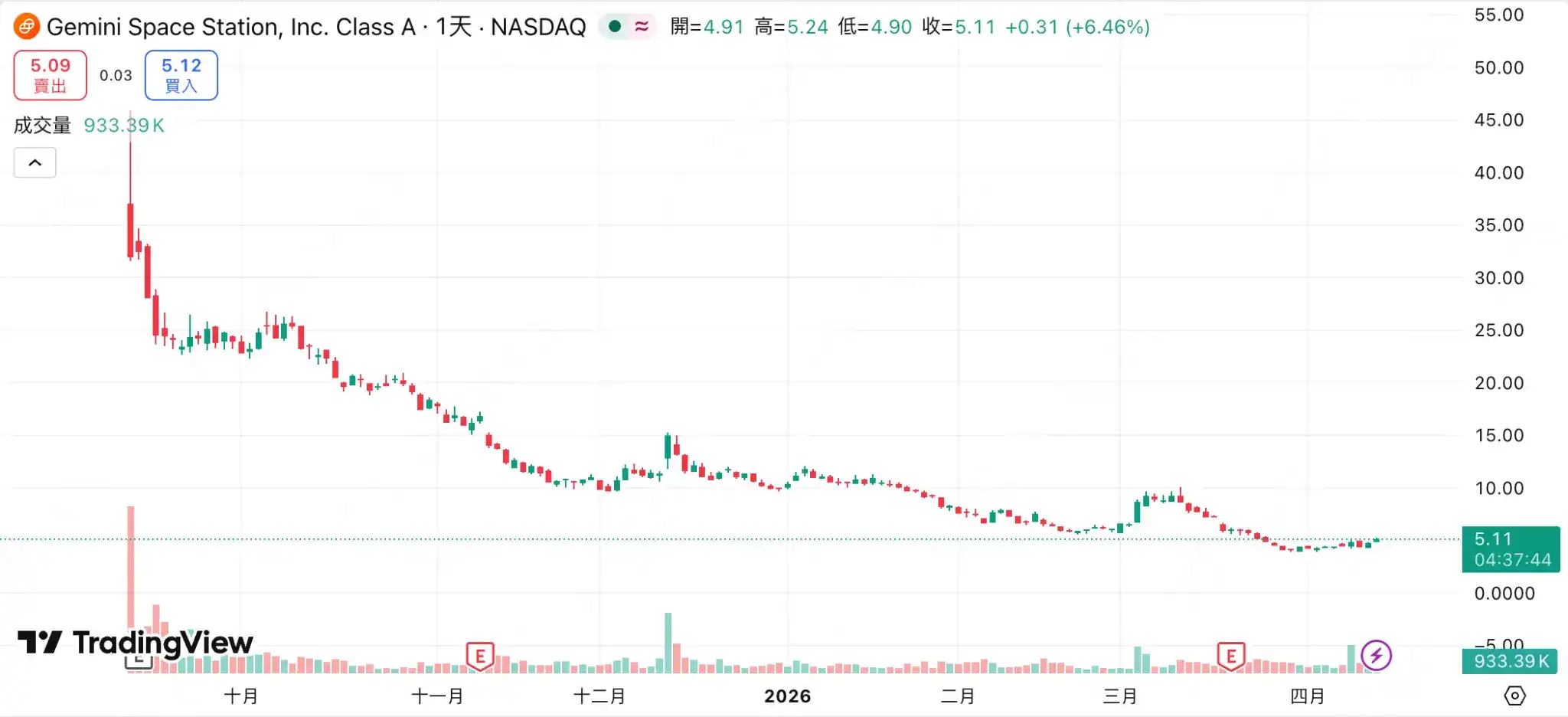
On April 11, 2026, Bloomberg revealed the reality that Gemini founders Tyler Winklevoss and Cameron Winklevoss were most reluctant to face. Gemini's stock price had collapsed from its $28 IPO price to around $5, evaporating over 80% from its post-listing high; the company recently laid off 30% of its staff and exited multiple international markets. Simultaneously, three core executives—the Chief Operating Officer, Chief Financial Officer, and Chief Legal Officer—chose to part ways.

More棘手的是资本结构问题。 Currently, one of the discussed solutions is for the Winklevoss brothers to forgive the hundreds of millions of dollars in loans they provided to the company through Winklevoss Capital Fund LLC, potentially by converting this debt into equity. As of the end of December 2025, Gemini still had an outstanding debt of 4,619 bitcoin, worth over $330 million at current market prices.

The company currently has about 445 employees. Although the stock rebounded 9% in a single day due to rumors of a buyer interested in its now-closed overseas licenses, it is still down over 50% year-to-date. These licenses are expected to fetch no more than a few million dollars due to complex and time-consuming transfer procedures—a drop in the bucket for a company that lost $585 million last year.

The Aftermath of the Party: The End of the Listing Wave

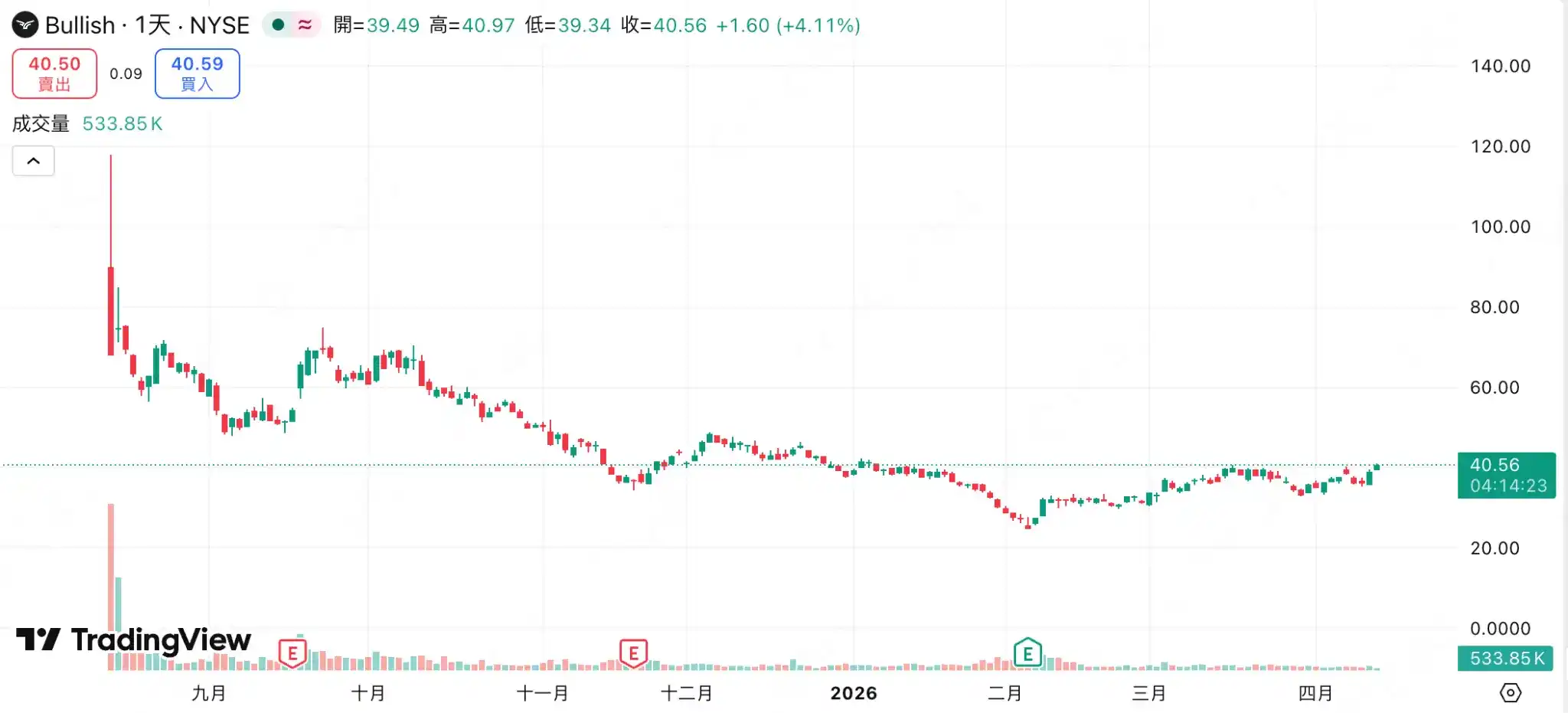
To understand Gemini's困境, one must return to the crypto industry's listing feast in the summer of 2025. On August 13, 2025, Bullish (NYSE: BLSH) priced its initial public offering at $37 per share, raising $1.15 billion. On its first day of trading, the stock price briefly exceeded $100, finally closing at $68, up over 83% from the offering price, with a market cap breaking $10 billion. BlackRock and Ark Invest had stated their interest in subscribing for up to $200 million worth of shares before the IPO, and retail enthusiasm added fuel to the fire.

Less than a month later, Gemini followed suit, listing on Nasdaq on September 12 with an offering price set at $28. It opened at $37, surged over 14% for the day, with an overall valuation reaching $3.3 billion, and attracted 20 times oversubscription. Around the same time, Circle, eToro, and Figure Technologies also successively entered the capital markets. For a while, the narrative of a "wide-open window for crypto listings" was rampant.

Market commentary generally believed this was a declaration of an industry that had experienced multiple collapses moving into the mainstream; however, the final answer was completely different. Gemini opened at $37 on its first day and then trended downward continuously, finally falling below $5 in less than half a year, a drop of over 80% from its post-listing high. Bullish's performance was relatively better but also came under pressure and fell back after Bitcoin declined.

The Burden of Compliance: Rising Audit and Legal Fees Create Financial Pressure

Going public brings not only capital but also a continuously growing bill. Gemini's revenue in the first half of 2025 was only $67.9 million, while its net loss in the same period was as high as $282 million. One of the core reasons for the expanding losses was the rapid rise in regulatory and compliance costs. The first quarterly report after listing showed a net loss of $159.5 million in the third quarter, with high marketing and listing-related expenses being the main drag, even though quarterly revenue doubled to $50.6 million compared to the previous period.

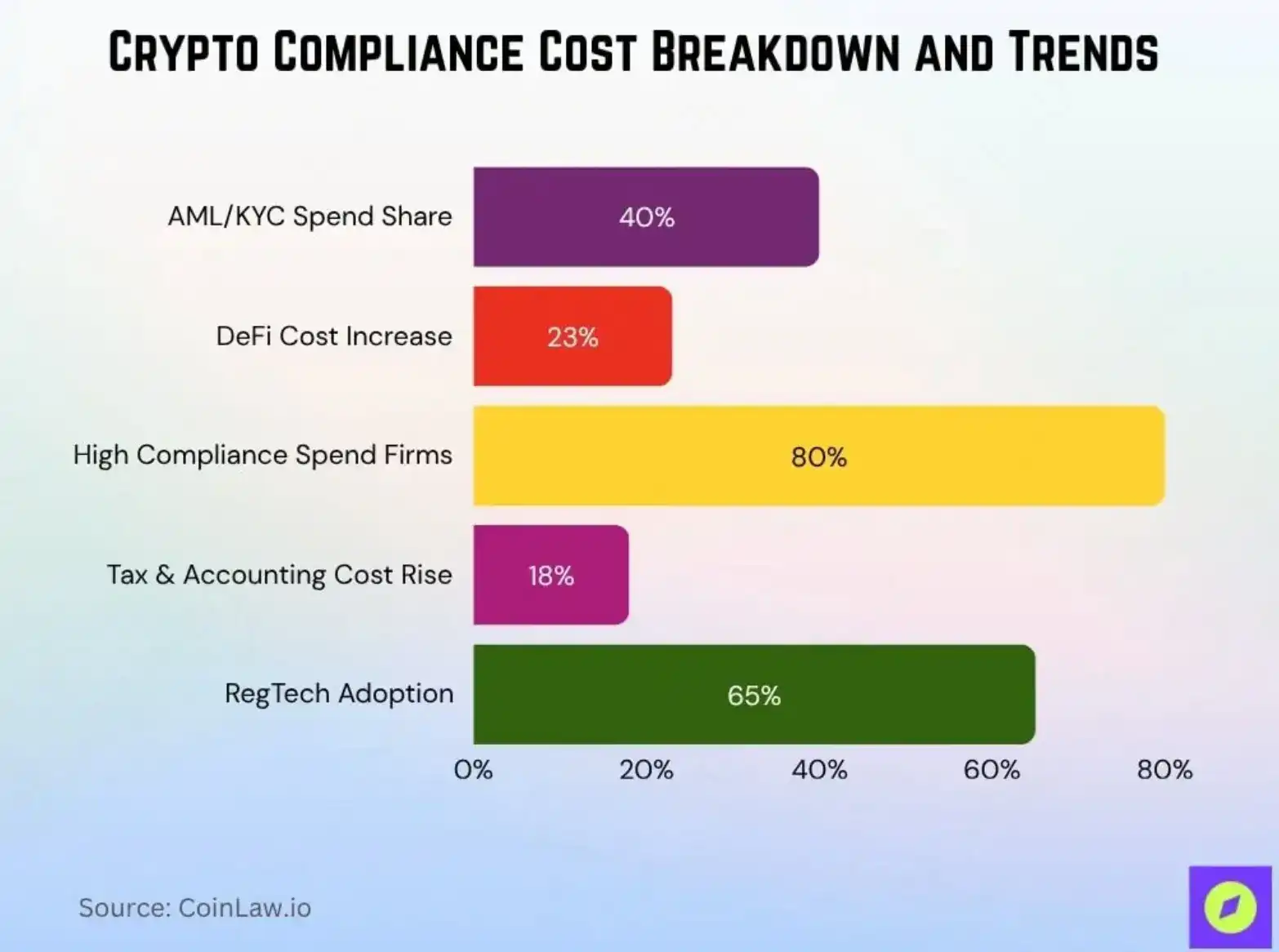
This is not a困境 unique to Gemini but a cost issue the entire industry must face. According to CoinLaw statistics, the average compliance cost for small and medium-sized crypto businesses increased from $620,000 in 2025 to about $760,000 annually in 2026, a rise of 22.5%; Anti-Money Laundering (AML) and Know Your Customer (KYC) processes account for 40% of the compliance budget, the largest single cost item. Many companies are forced to establish dedicated compliance departments to adapt to regulatory requirements.

For listed companies, this cost list doubles again with additional叠加: audit fees, legal advisory fees, compliance expenses for regular reporting to the U.S. Securities and Exchange Commission (SEC), investor relations departments to handle institutional investor inquiries, and market pressure after each public earnings report. Even a behemoth like Coinbase faced a $100 million fine from the New York State Department of Financial Services (NYDFS) for AML and cybersecurity compliance violations, with $50 million as a direct fine and another $50 million allocated for rectification investments.

Gemini is typical of a compliance-first strategy, long using "the most compliant crypto exchange" as its core brand selling point. Ironically, it is this very strategy that makes it more vulnerable than any competitor in a bear market: when trading volume shrinks, revenue directly declines, but the compliance costs accumulated to maintain its listed status create enormous financial pressure.

The Structural Exhaustion of Altcoin Appeal

On the other hand, Gemini's predicament is a microcosm of the转变 in the entire crypto market, a转变 most clearly visible in the altcoin market. In every past bull market, "altcoin season" was almost a standard script: after Bitcoin surged, funds overflowed into Ethereum, then to Solana, then to various small-cap tokens, forming waves of wealth transfer effects. The premise of this logic was that "the crypto market is a closed pool of liquidity," where funds, once entered, could only rotate between different assets.

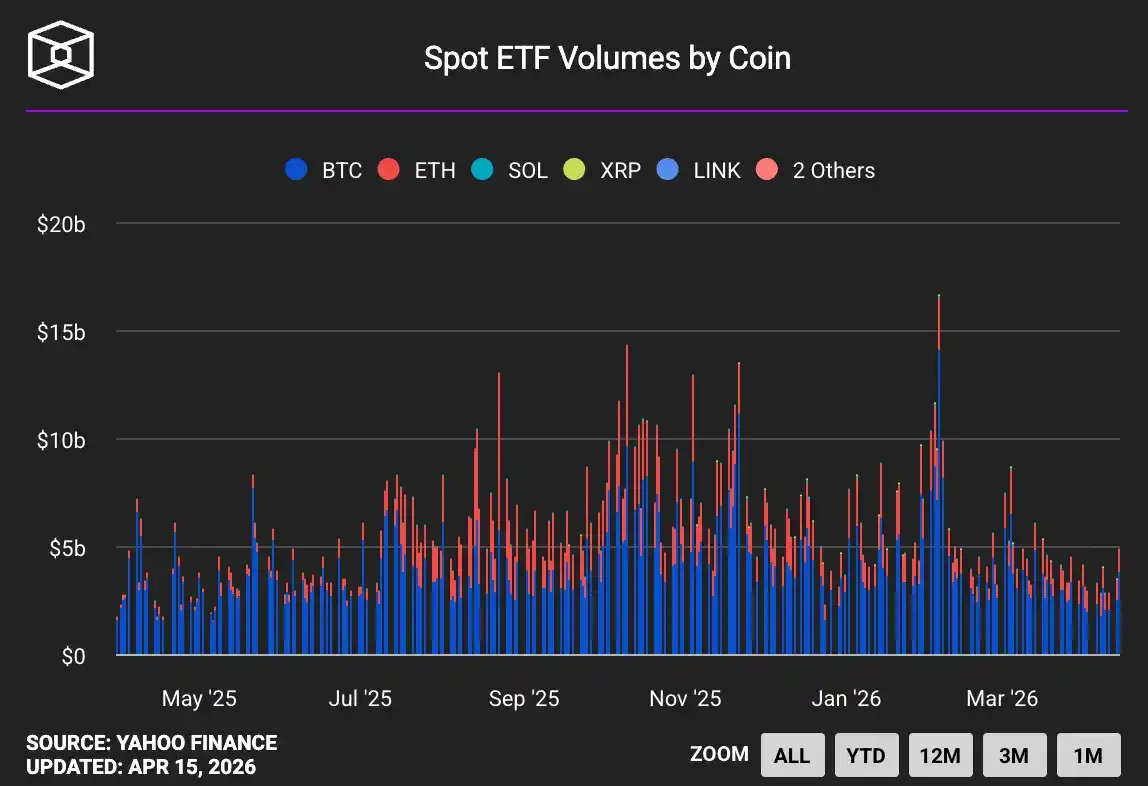
But in 2025, this premise was broken. By the end of 2025, the global assets under management (AUM) of crypto exchange-traded products (ETPs) had reached nearly $180 billion. Bitcoin exchange-traded funds (ETFs) became the core entry channel for institutional funds, creating a certain crowding-out effect on altcoins. Furthermore, Bitcoin's dominance rate hovered around 59% throughout 2025. The TOTAL2 index, representing the overall market cap of the non-Bitcoin crypto market, fell from a high of $1.77 trillion in October to $1.19 trillion in December, a drop of 32%, and it broke below key supports like the 50-week moving average.

Although ETFs for several altcoins like Solana, Ripple (XRP), Dogecoin, and Chainlink were approved successively in 2025, fund inflows remained highly concentrated in Bitcoin and Ethereum products. Altcoin ETFs merely broadened the choices without substantially shifting capital allocation. The global head of ETF asset services at BNY Mellon pointed out that altcoin ETFs are "unlikely to expand at the same scale,原因是 they are highly sensitive to market cycles, and demand will fluctuate with price rises and falls."

In other words, institutional funds now have a "compliant and low-friction entry channel"; they no longer need to go to the secondary market and bear liquidity risks just to buy Solana. On the other hand, the excess premium of altcoins, which once stemmed from the high friction of entry barriers and the get-rich-quick expectations of extra-legal territories, may be gradually disappearing.

Crypto Stocks vs. Altcoins: A Zero-Sum Game for Liquidity

The other side of this market转变 is the significant expansion of tools available to investors. In 2021, an institutional investor wanting exposure to the crypto market had very limited choices: buy coins directly, buy Coinbase stock, or buy Grayscale's GBTC trust and endure its long-term negative premium. By 2025, this list of choices had become quite rich: Bitcoin spot ETF, Ethereum spot ETF, MicroStrategy (MSTR), Bitmine (BMNR)...

The rise of crypto stocks and ETFs objectively plays the role of an "altcoin liquidity pump." The global AUM of crypto ETPs has reached nearly $180 billion, with a considerable proportion of funds being diverted from the potential pool that previously flowed to altcoins. Large funds can now gain crypto market exposure without bearing the tail risks specific to altcoins, such as audit opacity, contract vulnerabilities, and liquidity drying up.

The result is the持续恶化 of liquidity in the altcoin market. Shallow order books mean that any slightly large buy or sell order can cause剧烈波动, which in turn scares away institutional funds that require predictable liquidity, forming a vicious cycle.

After the Extra-Legal Dividends Disappear, Where Does the Premium Go?

It can be said that the "excess premium" of crypto assets was never a baseless bubble; it had real structural sources.

The first is regulatory arbitrage premium: non-compliant exchanges or projects, because they did not bear regulatory costs, had a天然优于 profit structure compared to compliant competitors. But as compliance costs converge globally—with average compliance spending for small and medium-sized crypto businesses rising 22.5% in 2025 and compliance staffing continuing to increase—this spread is being erased. Whether it's listed Gemini or small unlisted exchanges, everyone is paying the "entry fee" for regulation.

The second is liquidity scarcity premium: when the crypto market was still a niche asset with extremely high entry barriers, early participants naturally enjoyed a scarcity dividend. But with the普及 of spot ETFs and the listing of crypto stocks, the friction costs for institutional entry have significantly decreased. The previous "excess returns only available by going to the secondary market" no longer exist.

Gemini's困境 lies in the fact that it spent a decade building the "most compliant crypto exchange" and cashed in on this brand as a listing premium at precisely the right time. However, the post-listing reality is: it entered a competitive environment where "compliance is a basic门槛 rather than a differentiating advantage," yet it has to bear heavier fixed costs than any non-listed competitor.

For the entire market, those dividends that once supported the excess returns of crypto assets are being digested by the market one by one. What remains is the true fundamentals: the actual usage of protocols, the liquidity depth of exchanges, and the sustainability of institutional adoption. In this world, which is closer to "traditional financial logic," the era of narrative-driven valuations may have quietly come to an end.

Related Questions

QWhat are the main reasons behind Gemini's financial struggles after its IPO?

AGemini's financial struggles stem from a combination of factors, including an 80%+ stock price crash from its IPO high, a 30% workforce reduction, high executive turnover, and significant debt (over $330 million in Bitcoin-denominated debt). Crucially, the immense and rising costs of compliance, auditing, and legal fees as a public company have created a heavy financial burden that its revenues cannot support, leading to substantial losses.

QHow did the compliance costs change for crypto companies between 2025 and 2026, and what was the biggest component?

AAccording to CoinLaw, the average compliance cost for small and medium-sized crypto enterprises increased by 22.5%, rising from $620,000 in 2025 to approximately $760,000 annually in 2026. The largest single component of this cost, accounting for 40% of the compliance budget, was Anti-Money Laundering (AML) and Know Your Customer (KYC) processes.

QWhat fundamental market shift is challenging the traditional 'altcoin season' narrative?

AThe traditional 'altcoin season' narrative, where money flows from Bitcoin to Ethereum and then to smaller altcoins, is being challenged by the rise of crypto Exchange-Traded Products (ETPs) and ETFs. With nearly $1.8 trillion in global assets under management for crypto ETPs by the end of 2025, institutional money now has a compliant, low-friction entry point. This has created a 'crowding-out effect,' diverting potential liquidity away from the altcoin market and concentrating it in Bitcoin and Ethereum products.

QWhat two key sources of 'excess premium' for crypto assets are identified as disappearing in the article?

AThe two key sources of disappearing 'excess premium' are: 1) Regulatory arbitrage premium: The profit advantage that non-compliant entities had by avoiding regulatory costs is vanishing as compliance costs become globalized and mandatory. 2) Liquidity scarcity premium: The high returns that were once only accessible by navigating the complex secondary market are now available through low-friction, compliant instruments like ETFs, eliminating the previous scarcity红利 (scarcity红利).

QWhy did Gemini's 'compliance-first' strategy become a vulnerability in a bear market?

AGemini's 'compliance-first' strategy became a vulnerability because it created a high fixed-cost structure. In a bear market, when trading volumes and revenue decline significantly, these heavy compliance, auditing, and reporting costs (necessary to maintain its public listing and brand) remained constant, creating immense financial pressure that its diminished income could not cover. Its competitors, especially non-public ones, did not face the same scale of fixed costs.

Related Reads

Can a Hair Dryer Earn $34,000? Deciphering the Reflexivity Paradox in Prediction Markets

An individual manipulated a weather sensor at Paris Charles de Gaulle Airport with a portable heat source, causing a Polymarket weather market to settle at 22°C and earning $34,000. This incident highlights a fundamental issue in prediction markets: when a market aims to reflect reality, it also incentivizes participants to influence that reality. Prediction markets operate on two layers: platform rules (what outcome counts as a win) and data sources (what actually happened). While most focus on rules, the real vulnerability lies in the data source. If reality is recorded through a specific source, influencing that source directly affects market settlement. The article categorizes markets by their vulnerability: 1. **Single-point physical data sources** (e.g., weather stations): Easily manipulated through physical interference. 2. **Insider information markets** (e.g., MrBeast video details): Insiders like team members use non-public information to trade. Kalshi fined a剪辑师 $20,000 for insider trading. 3. **Actor-manipulated markets** (e.g., Andrew Tate’s tweet counts): The subject of the market can control the outcome. Evidence suggests Tate’sociated accounts coordinated to profit. 4. **Individual-action markets** (e.g., WNBA disruptions): A single person can execute an event to profit from their pre-placed bets. Kalshi and Polymarket handle these issues differently. Kalshi enforces strict KYC, publicly penalizes insider trading, and reports to regulators. Polymarket, with its anonymous wallet-based system, has historically been more permissive, arguing that insider information improves market accuracy. However, it cooperated with authorities in the "Van Dyke case," where a user traded on classified government information. The core paradox is reflexivity: prediction markets are designed to discover truth, but their financial incentives can distort reality. The more valuable a prediction becomes, the more likely participants are to influence the event itself. The market ceases to be a mirror of reality and instead shapes it.

marsbit11m ago

Can a Hair Dryer Earn $34,000? Deciphering the Reflexivity Paradox in Prediction Markets

marsbit11m ago

First Day Review of "Musk's WeChat" XChat: Even Worse Than Expected

Elon Musk's much-anticipated "WeChat-like" app, XChat, has officially launched after multiple delays. The initial review reveals a product that falls short of expectations, offering an experience largely similar to X Platform's (formerly Twitter) direct messages, despite being marketed as an encrypted communication tool. Key observations from the first-day test include: 1. The app's promoted "end-to-end encryption" and its claimed relation to Bitcoin's architecture were criticized by experts as a superficial attempt to capitalize on crypto buzz, with no real technical connection. 2. Musk's vision of an ad-free "secure communication system" is technically met, but only because the app is currently extremely basic, featuring only a single chat interface. 3. A promised anti-screenshot feature appears inconsistent; it works in X Platform group chats but fails within the XChat app itself, where screenshots still capture avatars. 4. The app supports 45 languages and has a 16+ age rating, indicating a broader tolerance for content compared to WeChat's 13+ rating. 5. A puzzling login process requires users to verify the email associated with their X account. 6. The touted encryption" feels minimal in practice, with its presence only indicated by a simple "Encrypted - Yes" label on messages. 7. Disappearing message timers for groups can be set from 5 minutes to 4 weeks, with the timer starting upon being read by a user. 8. Group invite links are shared with X Platform groups. 9. Group size limits are planned to be increased, aiming for 1000 members, a move that has drawn user criticism. 10. The app offers 8 different colored icons, and its chat bubbles are notably similar to WeChat's. Message deletion options mimic Telegram's. Crucially, many pre-announced features like importing X contacts, integrating Grok AI, X Money payments, and Cashtags are not yet available. The initial release is seen as a bare-bones and underwhelming first step.

Odaily星球日报1h ago

First Day Review of "Musk's WeChat" XChat: Even Worse Than Expected

Odaily星球日报1h ago

Trading

Spot
Futures

Hot Articles

Discussions

Welcome to the HTX Community. Here, you can stay informed about the latest platform developments and gain access to professional market insights. Users' opinions on the price of S (S) are presented below.

活动图片