The Earliest Regulator to Study Bitcoin: How Did He Step into the Crypto World?

Odaily星球日报Published on 2026-03-16Last updated on 2026-03-16

Abstract

This article explores the journey of Mark Wetjen, a former U.S. regulator who transitioned into the cryptocurrency industry. As a policy advisor in the U.S. Senate and later a commissioner and acting chairman of the CFTC, Wetjen was an early advocate for Bitcoin regulation, leading the first U.S. regulatory hearing on digital assets and approving the first regulated Bitcoin derivatives product. After his tenure in government, he worked in traditional finance infrastructure and later joined FTX US to handle policy and regulatory affairs. He is now President of Backpack US, where he is leading the platform’s expansion into the U.S. market. Wetjen believes that long-term success in crypto depends on trust and compliance, not just technical innovation. He sees Backpack as a company that embeds regulatory compliance into its core design rather than treating it as an afterthought. Under his leadership, Backpack is pursuing a deliberate global compliance strategy, with licenses already secured in Dubai and Europe. Wetjen argues that in the future, the most important competitive advantage for crypto exchanges will be trust—built through consistent compliance, user safety, and the ability to bridge traditional finance with the crypto ecosystem.

Original | Odaily Planet Daily (@OdailyChina)

Author | Ding Dang (@XiaMiPP)
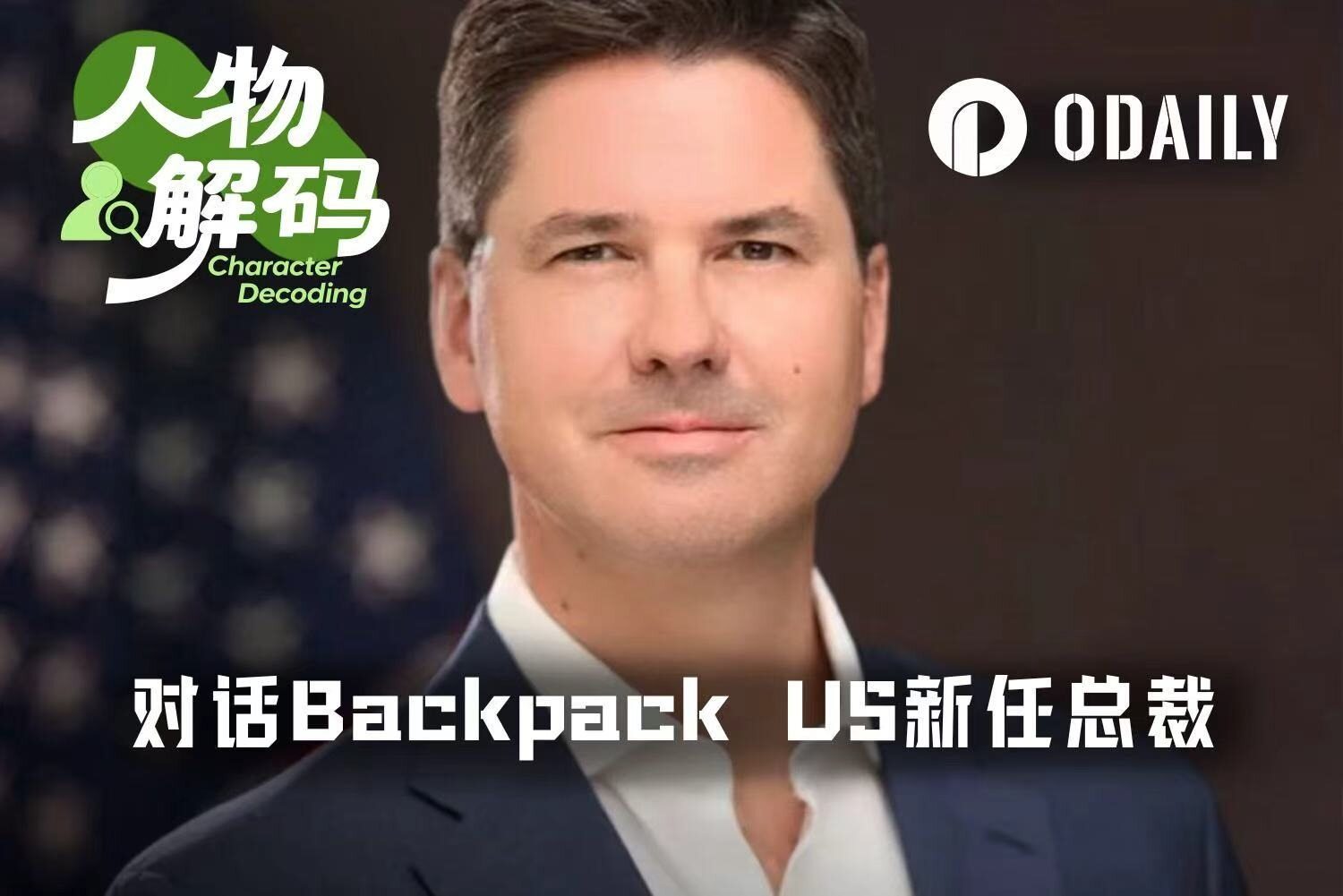
In the eyes of most people, there seems to be an insurmountable gap between the crypto industry and the U.S. regulatory system.

On one side are the tech pioneers constantly pushing boundaries, who believe that code can rewrite financial rules and repeatedly test the limits of the system; on the other side are the regulators tasked with maintaining order and stability, who use caution and rules as a shield to protect the bottom line of the financial system.

Over the past decade, these two forces have sometimes clashed fiercely and sometimes reached brief compromises, always moving forward in a delicate tension.

But there are also some people who happen to stand right on this boundary line, such as Mark Wetjen.

He worked in the U.S. financial regulatory system for nearly two decades: from Policy Advisor to the U.S. Senate Committee on Finance, to being nominated by President Obama as a Commissioner of the U.S. Commodity Futures Trading Commission (CFTC), and even serving as Acting Chairman in 2014. At that time, Wall Street was still largely观望 or even skeptical of Bitcoin, while he had already led and facilitated the first formal hearing on digital assets in U.S. regulatory history within the CFTC. Looking back now, that openness and foresight towards emerging technology must have seemed particularly precious and lonely at the time.

More than a decade later, this former policy maker who once sat in the regulatory seat chose to turn around and step into the crypto world. Today, he has joined the crypto exchange Backpack as President of Backpack US, responsible for U.S. market operations management, regulatory communication, and business development.

And at this point in time, Backpack is also standing at a new critical juncture. The TGE of the platform's native token is expected to take place on March 23. As the token issuance approaches, Backpack is also明显 accelerating its global market compliance layout and has identified the U.S. market as the most important strategic focus for the next phase.

It is against this backdrop that Odaily Planet Daily had the privilege of conducting an in-depth and candid conversation with Mark Wetjen.

This conversation is not just the story of a veteran regulator's personal transition; it also serves as a mirror, reflecting the subtle yet profound changes in the U.S. regulatory environment and the crypto industry ecosystem over the past decade—from initial vigilance and alienation to increasing understanding, dialogue, and even a certain degree of mutual approach.

And Mark Wetjen has恰好 witnessed and participated in all of this.

From the Regulatory Seat to the Market Frontlines

In the development narrative of the crypto industry, regulators are often seen as an "external force." They often arrive late after the market has already formed, using rules to amend, restrict, or even correct the sparks of innovation that have already occurred.

But Mark Wetjen's trajectory is somewhat unique.

While many were still debating "whether this nascent digital asset Bitcoin is an internet bubble," he was already pondering a more practical question: if this asset can truly exist and continue to grow, how should the regulatory system face it?

If we仔细观察 Mark Wetjen's career path, we find that he has几乎 walked through the most important nodes of the modern financial system.

In Washington, he was a policy maker; at the CFTC, he was a regulator; at DTCC (The Depository Trust & Clearing Corporation), he entered the core financial infrastructure of Wall Street and participated in shaping DTCC's early thinking on blockchain technology; later, he was hired to lead MIAX Futures and assisted in its foray into digital asset products. After that, he joined FTX US, responsible for policy and regulatory affairs. From rule drafter, to infrastructure guardian, to exchange leader, this path几乎串起了 the entire bloodstream of the financial market.

During his tenure at the CFTC, he approved the first Bitcoin derivative instrument listed and traded on a regulated U.S. platform and directed the General Counsel to assess whether Bitcoin was a commodity, thus determining its suitability as a reference asset for CFTC-regulated products. At that time, he saw a nascent market full of potential but structurally chaotic. He was already one of the earliest officials in Washington to publicly advocate for a regulatory framework for Bitcoin.

In the early years, Wetjen formed this view: those crypto companies that can truly develop long-term are precisely the ones that treat compliance capabilities as a competitive advantage. Because compliance not only means legal security but also broader market access, more institutional funds, and more stable long-term growth.

In Wetjen's view, Backpack is exactly such a company.

They are a team that truly places compliance at the core of product design, rather than treating it as an afterthought. This was also a key reason why he ultimately chose to join Backpack.

Now, as Backpack officially enters the U.S. market, he has been appointed President of Backpack US, responsible for U.S. market operations management, regulatory communication, and business development. Simply put, his task is单一: to help Backpack truly land in the world's most complex and important financial market.

And judging from today's results, this strategy is already taking shape. Backpack has already obtained regulatory approval in multiple jurisdictions: a VASP license in Dubai, MiFID II authorization in Europe, and the U.S. is its next most important market. In Wetjen's view, this is not accidental—it is a strategic choice made after careful consideration.

The Ultimate Answer to Exchange Competition: Trust

Over the past few years, the battle among crypto exchanges has seemed like an never-ending arms race: who has deeper liquidity, who iterates products quicker, who lists coins faster... These were once hailed as the king's way and indeed allowed some platforms to stand out in the short term.

However, when asked about the most core competitiveness of exchanges in the next decade, in Wetjen's view, these are not the final answer.

His answer is simple: trust.

In the crypto industry, everything comes and goes quickly. Today's领先 matching engine may be replaced by a more efficient architecture tomorrow; an exchange's proud liquidity pool may also be quickly replicated by competitors during market cycles. Even regulatory licenses, once seen as barriers, may no longer be the exclusive advantage of a few institutions as the industry gradually moves towards compliance.

But trust is different.

If an exchange can operate stably over the long term in a complex and changing regulatory environment and always put user asset safety first, then this trust will continuously沉淀 over time, eventually becoming the most difficult to replicate moat.

In Wetjen's view, the role played by crypto trading platforms in the future is far more than just a simple trading matching system.

It is more like a bridge. One end connects the crypto-native world, and the other end connects the traditional financial system, allowing ordinary users and institutional investors to enter this new financial network in a compliant and secure manner.

It is precisely for this reason that he chose to join Backpack. "I believe this team is doing the right thing at the right time," Wetjen said.

If five years from now, when people think of the most compliant, trustworthy, and product-innovative crypto trading platform, the first name that comes to mind is Backpack, then for him, this experiment might already be a success.

In a sense, this is also a natural continuation of his career.

Ten years ago, he was in a Washington conference room discussing how to regulate Bitcoin.

Ten years later, he is participating in building a crypto financial infrastructure that can be accepted by the regulatory system.

Some people are builders of the crypto world, some are gatekeepers of the regulatory system. And people like Mark Wetjen are trying to build a bridge between the two.


Related Questions

QWho is Mark Wetjen and what significant role did he play in the early regulation of Bitcoin?

AMark Wetjen is a former U.S. financial regulator who served as a policy advisor to the U.S. Senate Committee on Finance and was nominated by President Obama as a commissioner of the U.S. Commodity Futures Trading Commission (CFTC). In 2014, he acted as the CFTC's acting chairman. He led and facilitated the first formal U.S. regulatory hearing on digital assets, approved the first Bitcoin derivatives product traded on a regulated U.S. platform, and was one of the earliest officials in Washington to advocate for a regulatory framework for Bitcoin.

QWhat is Mark Wetjen's current role in the cryptocurrency industry?

AMark Wetjen is currently the President of Backpack US, a cryptocurrency exchange. He is responsible for the platform's U.S. market operations, regulatory communication, and business development.

QAccording to Mark Wetjen, what is the ultimate competitive advantage for a cryptocurrency exchange in the long term?

AMark Wetjen believes that the ultimate competitive advantage for a cryptocurrency exchange is trust. He argues that while technological features like liquidity and product innovation can be replicated, the trust built through long-term compliance, user asset security, and stable operation in a complex regulatory environment becomes an enduring and difficult-to-copy moat.

QWhat regulatory approvals has Backpack obtained in its global expansion?

ABackpack has obtained a VASP license in Dubai and received MiFID II authorization in Europe. The United States is identified as its next most important strategic market.

QHow does Mark Wetjen view the role of a cryptocurrency exchange in the future financial system?

AMark Wetjen sees the future role of a cryptocurrency exchange as a bridge connecting the native crypto world with the traditional financial system. It aims to allow both retail users and institutional investors to enter this new financial network in a compliant and secure manner.

Related Reads

Should You Buy SpaceX Stock at $1.7 Trillion? Here's What the Market Is Worried About

SpaceX is preparing for a massive IPO aiming to raise around $75 billion at a valuation of approximately $1.75 trillion. While its achievements in reusable rockets and the profitable Starlink satellite internet service are clear, the market is concerned about the aggressive valuation. Key issues include: the current $1.75 trillion valuation, which is about 94 times 2025 revenue, seems to price in not just existing businesses but also unproven future ventures like AI infrastructure and orbital data centers. Financially, while Starlink is profitable, the AI division, bolstered by the acquisition of xAI, is incurring massive losses and consuming the majority of capital expenditures. This acquisition also introduced complex related-party financing arrangements and debt onto SpaceX's balance sheet. Furthermore, corporate governance poses a challenge. SpaceX's dual-class share structure ensures founder Elon Musk retains absolute control, limiting ordinary shareholders' influence over high-risk, long-term strategic decisions. The future success of ambitious projects like the Starship rocket—critical for lowering costs and enabling new services—remains a significant variable for the valuation. In summary, the market's apprehension (FUD) centers not on doubting SpaceX's past technological triumphs but on questioning how much premium public investors should pay for a future that combines proven profits with highly speculative and capital-intensive new ventures, all under a governance structure that offers limited shareholder oversight.

marsbit40m ago

Should You Buy SpaceX Stock at $1.7 Trillion? Here's What the Market Is Worried About

marsbit40m ago

Breaking the DeFi Cascading Liquidation Curse: Vitalik Proposes a New Solution

Vitalik Buterin has proposed a new DeFi design to eliminate the automatic liquidation mechanism that causes market instability during sharp downturns. The current system, used by protocols like Aave, triggers forced sales when collateral value falls below a threshold, often exacerbating price drops and creating systemic selling pressure. Buterin's alternative model is based on splitting an asset like ETH into two synthetic option-like tokens, P and N, pegged to a price index. Their combined value always equals one ETH. Instead of sudden liquidation, a position's value gradually drifts from its target peg if the market moves. Users must proactively rebalance their holdings to maintain their desired exposure, transferring the management burden from the protocol to the user or automated tools. A key advantage is the reduced reliance on real-time oracles. Pricing decisions are deferred until contract expiry, allowing for more robust, fault-tolerant oracle designs. This removes a clear liquidation threshold that speculators can target for manipulation or MEV extraction. However, significant challenges remain. Frequent rebalancing could incur high slippage and transaction costs, necessitating new liquidity provider models. The design is better suited for hedging instruments than for stablecoins requiring a rigid 1:1 peg. While not an immediate replacement for existing systems, the proposal challenges the foundational assumption that instantaneous forced liquidation is an unavoidable necessity in DeFi, opening the door for fundamentally different risk management architectures.

marsbit45m ago

Breaking the DeFi Cascading Liquidation Curse: Vitalik Proposes a New Solution

marsbit45m ago

The End of Single-Factor Cryptography

The article "The End of Single-Factor Crypto" posits a fundamental shift in the cryptocurrency ecosystem. It argues the era where crypto asset valuations were predominantly driven by, and correlated with, Bitcoin's price is ending. The space is bifurcating into two distinct economies: endogenous and exogenous. The endogenous economy represents traditional crypto, where token and project values are directly tied to crypto market prices. The emerging exogenous economy comprises projects and businesses that may utilize blockchain technology or tokens but derive their fundamental value from external, non-crypto factors like consumer demand, subscription revenue, or real-world utility. Examples include AI inference platforms like Venice, fintech lenders using blockchain for efficiency, and stablecoin/payment infrastructure companies acquired by giants like Mastercard and Stripe. This shift means investment analysis must change. For exogenous assets, evaluating traditional business fundamentals—such as revenue streams, unit economics, and competitive moats—becomes more critical than tracking Bitcoin charts. While endogenous assets like Bitcoin remain relevant, the growth of the exogenous category is driven by measurable demand independent of crypto price cycles, paving the way for a new, more diversified market phase. Consequently, crypto is evolving from a single-factor, reflexive asset class into a multifaceted ecosystem with varied drivers and investment theses.

marsbit45m ago

The End of Single-Factor Cryptography

marsbit45m ago

Morning Post | Bitmine Plans to Raise $300 Million Through Preferred Stock Issuance; Polymarket Accuses Kalshi of Commercial Espionage

ChainCatcher's Daily Crypto Brief: Key developments from the past 24 hours include significant funding moves, regulatory actions, and market predictions. Bitmine announced a $300 million preferred stock fundraising. Polymarket accused rival prediction platform Kalshi of corporate espionage, citing numerous suspicious coincidences in product launches, a claim Kalshi strongly denied. The U.S. Department of Justice, in a joint "Disruption Week" anti-fraud operation with companies like Coinbase and Meta, froze over $3.8 million in cryptocurrency linked to scams. In infrastructure news, Macau completed its integration with the multi-central bank digital currency bridge, mBridge, aiming to build efficient cross-border payment channels. Cosmos Labs acquired the block explorer Mintscan. Market-wise, Geoffrey Kendrick, Standard Chartered's Head of Digital Assets Research, stated Bitcoin is nearing a bottom around $63,000, maintaining a year-end target of $100,000. He noted stability in U.S. spot Bitcoin ETF holdings. Ahead of SpaceX's anticipated IPO, internal insiders at Rocket Lab (RKLB) sold over $18.41 million in stock. In tokenization, Goldman Sachs partnered with Apex and Archax to launch a tokenized real estate fund. The meme token tracker GMGN reported the top trending tokens: on Ethereum, HEX, SHIB, LINK, PEPE, mUSD; on Solana, TROLL, swarms, WORLDCUP, neet, Buttcoin; and on Base, PEPE, toby, ODDS, ELSA, SKI.

链捕手1h ago

Morning Post | Bitmine Plans to Raise $300 Million Through Preferred Stock Issuance; Polymarket Accuses Kalshi of Commercial Espionage

链捕手1h ago

Trading

Spot
Futures

Hot Articles

What is $BITCOIN

DIGITAL GOLD ($BITCOIN): A Comprehensive Analysis Introduction to DIGITAL GOLD ($BITCOIN) DIGITAL GOLD ($BITCOIN) is a blockchain-based project operating on the Solana network, which aims to combine the characteristics of traditional precious metals with the innovation of decentralized technologies. While it shares a name with Bitcoin, often referred to as “digital gold” due to its perception as a store of value, DIGITAL GOLD is a separate token designed to create a unique ecosystem within the Web3 landscape. Its goal is to position itself as a viable alternative digital asset, although specifics regarding its applications and functionalities are still developing. What is DIGITAL GOLD ($BITCOIN)? DIGITAL GOLD ($BITCOIN) is a cryptocurrency token explicitly designed for use on the Solana blockchain. In contrast to Bitcoin, which provides a widely recognized value storage role, this token appears to focus on broader applications and characteristics. Notable aspects include: Blockchain Infrastructure: The token is built on the Solana blockchain, known for its capacity to handle high-speed and low-cost transactions. Supply Dynamics: DIGITAL GOLD has a maximum supply capped at 100 quadrillion tokens (100P $BITCOIN), although details regarding its circulating supply are currently undisclosed. Utility: While precise functionalities are not explicitly outlined, there are indications that the token could be utilized for various applications, potentially involving decentralized applications (dApps) or asset tokenization strategies. Who is the Creator of DIGITAL GOLD ($BITCOIN)? At present, the identity of the creators and development team behind DIGITAL GOLD ($BITCOIN) remains unknown. This situation is typical among many innovative projects within the blockchain space, particularly those aligning with decentralized finance and meme coin phenomena. While such anonymity may foster a community-driven culture, it intensifies concerns about governance and accountability. Who are the Investors of DIGITAL GOLD ($BITCOIN)? The available information indicates that DIGITAL GOLD ($BITCOIN) does not have any known institutional backers or prominent venture capital investments. The project seems to operate on a peer-to-peer model focused on community support and adoption rather than traditional funding routes. Its activity and liquidity are primarily situated on decentralized exchanges (DEXs), such as PumpSwap, rather than established centralized trading platforms, further highlighting its grassroots approach. How DIGITAL GOLD ($BITCOIN) Works The operational mechanics of DIGITAL GOLD ($BITCOIN) can be elaborated on based on its blockchain design and network attributes: Consensus Mechanism: By leveraging Solana’s unique proof-of-history (PoH) combined with a proof-of-stake (PoS) model, the project ensures efficient transaction validation contributing to the network's high performance. Tokenomics: While specific deflationary mechanisms have not been extensively detailed, the vast maximum token supply implies that it may cater to microtransactions or niche use cases that are still to be defined. Interoperability: There exists the potential for integration with Solana’s broader ecosystem, including various decentralized finance (DeFi) platforms. However, the details regarding specific integrations remain unspecified. Timeline of Key Events Here is a timeline that highlights significant milestones concerning DIGITAL GOLD ($BITCOIN): 2023: The initial deployment of the token occurs on the Solana blockchain, marked by its contract address. 2024: DIGITAL GOLD gains visibility as it becomes available for trading on decentralized exchanges like PumpSwap, allowing users to trade it against SOL. 2025: The project witnesses sporadic trading activity and potential interest in community-led engagements, although no noteworthy partnerships or technical advancements have been documented as of yet. Critical Analysis Strengths Scalability: The underlying Solana infrastructure supports high transaction volumes, which could enhance the utility of $BITCOIN in various transaction scenarios. Accessibility: The potential low trading price per token could attract retail investors, facilitating wider participation due to fractional ownership opportunities. Risks Lack of Transparency: The absence of publicly known backers, developers, or an audit process may yield skepticism regarding the project's sustainability and trustworthiness. Market Volatility: The trading activity is heavily reliant on speculative behavior, which can result in significant price volatility and uncertainty for investors. Conclusion DIGITAL GOLD ($BITCOIN) emerges as an intriguing yet ambiguous project within the rapidly evolving Solana ecosystem. While it attempts to leverage the “digital gold” narrative, its departure from Bitcoin's established role as a store of value underscores the need for a clearer differentiation of its intended utility and governance structure. Future acceptance and adoption will likely depend on addressing the current opacity and defining its operational and economic strategies more explicitly. Note: This report encompasses synthesised information available as of October 2023, and developments may have transpired beyond the research period.

363 Total ViewsPublished 2025.05.13Updated 2025.05.13

What is $BITCOIN

Discussions

Welcome to the HTX Community. Here, you can stay informed about the latest platform developments and gain access to professional market insights. Users' opinions on the price of BTC (BTC) are presented below.

活动图片














