# Yield Related Articles

HTX News Center provides the latest articles and in-depth analysis on "Yield", covering market trends, project updates, tech developments, and regulatory policies in the crypto industry.

Beyond Trading: A Look at the Star New Projects and Major Updates in the Solana Ecosystem

At Solana Breakpoint 2025, major updates and new projects were announced across DeFi, RWA, AI, privacy, wallets, and prediction markets. Key highlights include the mainnet launch of Firedancer, expected to boost TPS to over 1 million, and Coinbase DEX integration. In DeFi, multiple yield-bearing stablecoins were introduced: Splyce Finance launched $SFULC with 10% APY backed by real estate cash flows, while Streamflow introduced $USD+ with 3.6% APY backed by U.S. Treasuries. RockawayX and WisdomTree announced RWA yield vaults, and State Street revealed plans for a tokenized liquidity fund, SWEEP, with Galaxy Digital. Carrot introduced Turbo Tokens for leverage trading without liquidation risk, and Huma Finance partnered to provide stablecoin liquidity for稀土 mineral trading. Light Protocol introduced a new token standard, Light Token, reducing costs by 200x vs. SPL, and deBridge launched an intent-based execution model for seamless cross-chain operations. In RWA, Oro announced $StGOLD, a yield-generating gold token with physical redemption points, and Uranium Digital demonstrated on-chain uranium trading for institutions. For privacy, Arcium introduced C-SPL, an encrypted token standard, and the Cerberus Protocol for enhanced security. In AI, Solflare launched Magic AI, a decentralized assistant executing on-chain actions via natural language commands, and Glider introduced an AI-driven investment app backed by a16z. Wallet updates included Unruggable, a Solana-native hardware wallet, Solflare Shield, a card-shaped NFC hardware wallet, and Phantom integrating Kalshi's prediction markets. Finally, worm.wtf launched a leveraged prediction market on Solana.

marsbit12/15 10:39

Beyond Trading: A Look at the Star New Projects and Major Updates in the Solana Ecosystem

marsbit12/15 10:39

a16z Bets on Energy Tokenization Experiment: How Will DayFi Use DeFi to Restructure the Power Grid? Jae 2025/12/13 12:00

a16z Backs Energy Tokenization Experiment: How DayFi Aims to Restructure the Grid with DeFi As global tech giants compete for computing power, electricity has become a critical resource. DayFi, a decentralized energy capital markets protocol under the Daylight ecosystem, is launching a $50 million pre-deposit event on December 16. Backed by a16z Crypto and Framework Ventures, DayFi tokenizes future electricity revenue into tradable crypto assets. The protocol allows users to deposit stablecoins to mint GRID—a fully collateralized stablecoin—and then stake it to receive sGRID, a yield-bearing token representing a share in energy asset revenue. This creates a flywheel effect: liquidity funds distributed energy projects, which generate tokenized returns for holders. However, DayFi faces significant regulatory challenges. sGRID may be classified as a security by the SEC, requiring strict disclosures. Additionally, FERC’s restrictions on disclosing critical energy infrastructure data conflict with DeFi’s transparency requirements. Technical solutions like zero-knowledge proofs may be needed to verify收益 without exposing sensitive data. Valuation of the underlying energy assets—solar panels, batteries—also remains uncertain, with risks of depreciation and potential manipulation. Despite these hurdles, DayFi represents an ambitious attempt to bridge DeFi with physical energy grids, transforming electricity into a dynamic, tradable asset amid growing AI-driven power demand.

marsbit12/13 05:42

a16z Bets on Energy Tokenization Experiment: How Will DayFi Use DeFi to Restructure the Power Grid? Jae 2025/12/13 12:00

marsbit12/13 05:42

Champion! Huobi HTX Tops the Industry with $583.7M Net Asset Inflow Over the Past 30 Days

In the competitive crypto industry, fund flows reveal true user trust. According to Defillama data on December 5, Huobi HTX recorded a net inflow of $583.7M over the past 30 days, ranking first among all centralized exchanges (CEXs). This reflects growing user confidence in the platform’s security, transparency, and product offerings. Huobi HTX has maintained steady growth in total assets and spot trading volume, forming a positive cycle of asset safety, user growth, and capital inflow. Key factors behind this performance include enhanced asset proof mechanisms—with 38 consecutive months of published Merkle Tree Proof of Reserves (PoR) and 100%+ reserve ratios for major assets—alongside improved C2C trading features such as a "100% compensation" policy and a streamlined user experience. The platform’s earn products, including Huobi Earn, also saw significant growth, with increases in both user participation and asset deposits for tokens like USDD, ETH, and TRX. Users are increasingly choosing Huobi HTX for its reliable yields, ease of use, and strong security measures during market volatility. As a long-established exchange founded in 2013, Huobi HTX has strengthened its compliance and risk management frameworks, reinforcing its reputation for safety and transparency. The net inflow milestone underscores its position as a trusted platform where users choose to securely store and grow their digital assets.

深潮12/10 10:19

Champion! Huobi HTX Tops the Industry with $583.7M Net Asset Inflow Over the Past 30 Days

深潮12/10 10:19

We've Hoarded Trillions in Bitcoin, But Never Use It? That's Changing Now

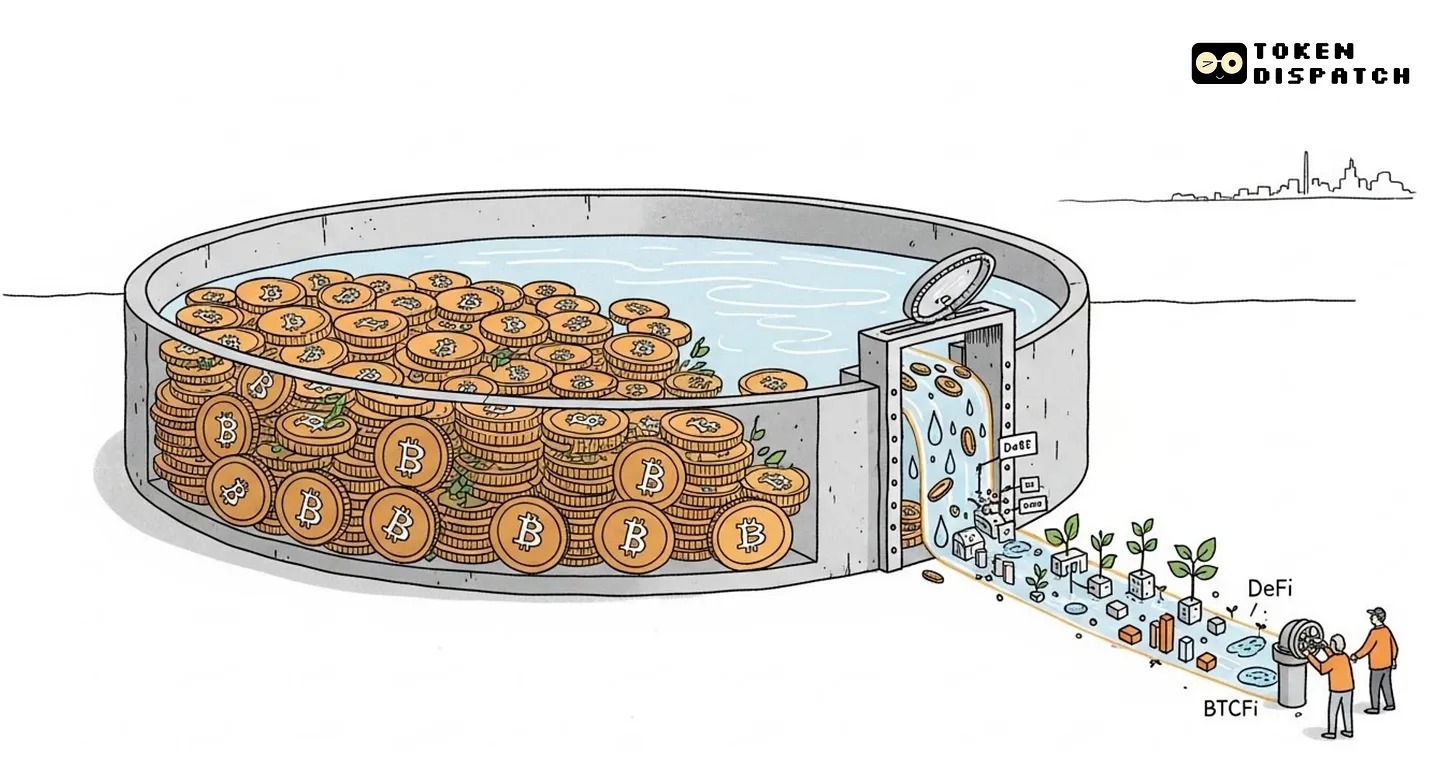
A significant portion of Bitcoin's trillion-dollar market cap remains dormant, with 61% of coins not moving in over a year and only 0.8% used in DeFi. While other ecosystems like Ethereum and L2s thrive with active use cases, Bitcoin has largely functioned as a passive store of value due to architectural and cultural constraints—prioritizing security over programmability, resisting upgrades, and lacking native interoperability. Previous solutions like wrapped BTC, federated systems, and bridges attempted to unlock Bitcoin’s liquidity but introduced new risks like custodial trust, security vulnerabilities, and reliance on external validators, contradicting Bitcoin’s trust-minimized ethos. However, this is changing with recent breakthroughs. Innovations like BitVM enable Bitcoin to verify external computations without executing them, allowing for Bitcoin-secured rollups and trust-minimized bridges. Upgrades like Taproot facilitate native assets and programmable vaults. New systems now support Bitcoin staking, restaking, and Lightning Network-based yield without requiring custodial wrapping or bridging. This emerging BTCFi ecosystem—comprising infrastructure, asset, and protocol layers—finally allows Bitcoin to participate in a functional economy while preserving its security model and self-custody principles. This could unlock a portion of the dormant capital, significantly impacting the broader crypto landscape.

marsbit12/09 02:55

We've Hoarded Trillions in Bitcoin, But Never Use It? That's Changing Now

marsbit12/09 02:55

Bitcoin's Dormant Capital Has Finally Awakened

Bitcoin, the largest and most secure cryptocurrency, has historically been underutilized, with over 60% of its supply dormant for more than a year and less than 1% engaged in DeFi. While other ecosystems like Ethereum and Solana evolved with smart contracts and vibrant economies, Bitcoin’s largely remained a passive asset due to its security-first architecture, limited scripting capabilities, slow upgrade processes, and cultural conservatism. Previous workarounds—wrapped BTC, federated systems, cross-chain bridges, and sidechains—introduced trust assumptions, custodial risks, and security vulnerabilities, failing to align with Bitcoin’s trust-minimized ethos. Recent breakthroughs are changing this. Innovations like BitVM enable Bitcoin to verify off-chain computations without executing them, allowing for Bitcoin-backed rollups, trust-minimized bridges, and programmable vaults. Upgrades like Taproot have expanded Bitcoin’s capabilities, enabling native assets (e.g., Taproot Assets for stablecoins) and more complex cryptographic structures. New models also allow Bitcoin to earn yield natively—through staking, restaking, and Lightning Network-based liquidity provision—without leaving self-custody. This emerging BTCFi ecosystem comprises infrastructure for secure execution environments, verifiable bridges, yield markets, and Bitcoin-native assets, all without compromising Bitcoin’s core security or self-custody principles. This marks the first time Bitcoin has a financial ecosystem capable of supporting its trillion-dollar market cap, potentially unlocking vast dormant capital and integrating it into a productive, decentralized economy.

深潮12/09 01:34

Bitcoin's Dormant Capital Has Finally Awakened

深潮12/09 01:34

活动图片