# Tokenomics Related Articles

HTX News Center provides the latest articles and in-depth analysis on "Tokenomics", covering market trends, project updates, tech developments, and regulatory policies in the crypto industry.
Early Trading Made a Fortune? A Comprehensive Guide to Genius's New Rules

**Title: Early Traders Made Huge Gains? Understanding Genius' New Rules** Genius, a highly discussed DEX, announced new GP points rules for its Season 1, ending April 12, with a 50% increase in airdrop allocation. The team confirmed that GP points earned from early trading volume remain valid, benefiting users who followed initial interaction guides. Key updates: - Total S1 GP points are fixed at 200 million, with 75 million already distributed from pre-whitepaper trading. The remaining 125 million will be distributed weekly starting January 20, at 10 million GP per week. - Distribution is weighted to prevent whales from dominating, allowing smaller traders to earn points. - Stablecoin swaps (e.g., USDT/USDC) now have a 0.5x weight; other spot trades retain 1.0x. - Previous task-based and referral GP rewards were removed. Now, points are earned solely via spot trading volume. - New trading tiers introduce fee discounts based on cumulative trading volume, though zero-fee trading remains active indefinitely. - Referrals now offer 35% commission on invitees’ trading fees post-zero-fee campaign. - The GENIUS token will be created before April 12, 2026, with a TGE expected randomly before then. Despite platform bugs from high traffic, Genius’ strong backing (including investment from YZi Labs and CZ as advisor) and confirmed TGE make it noteworthy. With a potential $300M FDV and 10% airdrop, each GP point could be worth ~$0.15. Early participants may have profitable opportunities, especially during the ongoing zero-fee period.

Odaily星球日报01/20 01:49

Early Trading Made a Fortune? A Comprehensive Guide to Genius's New Rules

Odaily星球日报01/20 01:49

2025 Crypto Buyback Revelation: When a $138 Million Buy Order Can't Save an 80% Plunge

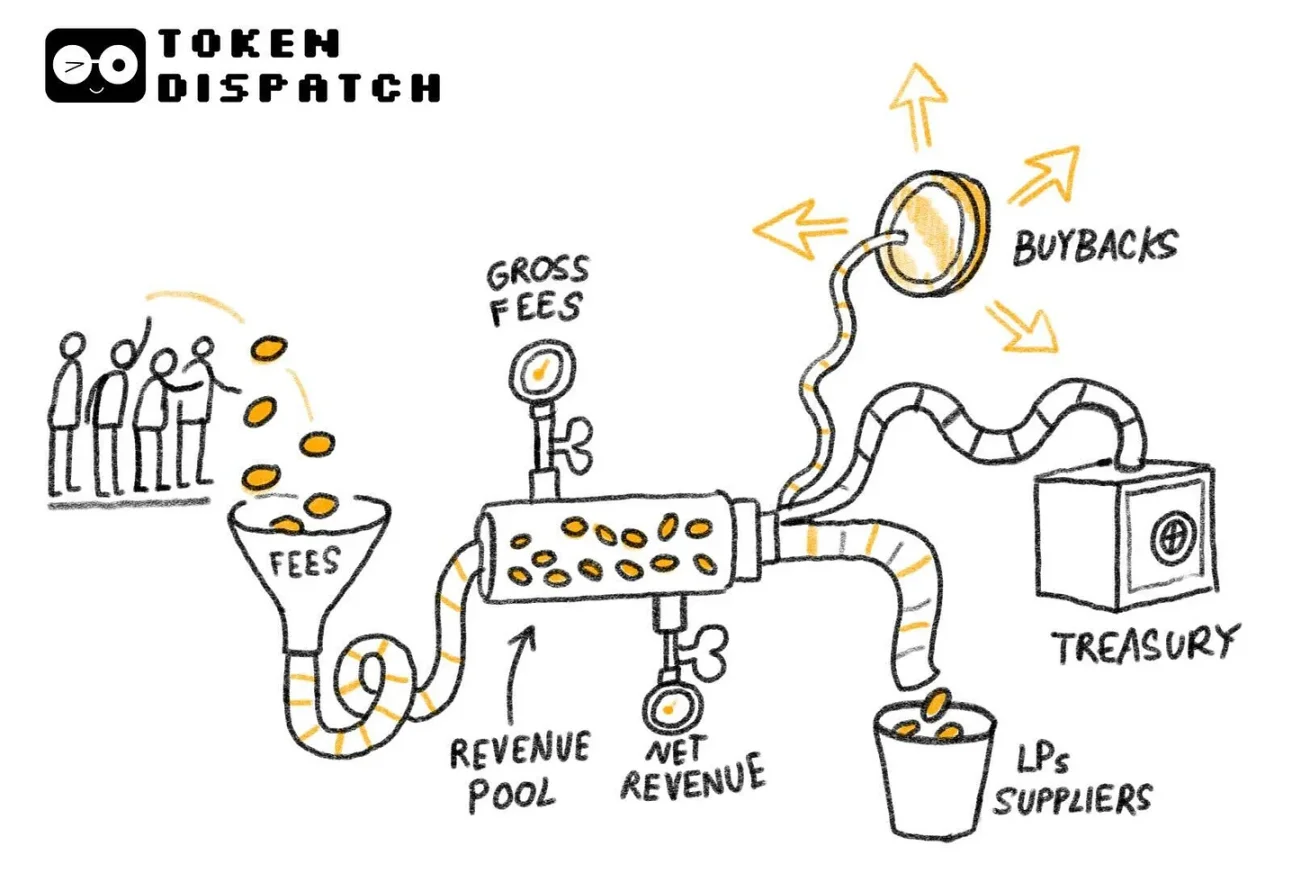
"2025 Crypto Buyback Report: A $1.38B Buyback Fails to Prevent an 80% Crash" The year 2025 witnessed an "industrial revolution" in crypto fiscal discipline, with on-chain protocols spending over $1.4 billion on token buybacks. This strategy, driven by mature DeFi business models and favorable US regulatory shifts, aimed to reshape tokenomics. However, the outcomes were starkly polarized. Hyperliquid emerged as the dominant success story, allocating over $640 million (nearly 46% of the total market) to buybacks, which fueled a 4x price surge. Its key was a high "Net Flow Efficiency Ratio" (NFER > 3.0), where buyback volume drastically exceeded token unlock sell pressure, creating net deflation. In contrast, major failures demonstrated that buyback size alone is meaningless against structural inflation. Despite a massive $138 million buyback, Pump.fun's token price crashed 80% as the mechanism served as exit liquidity for concentrated whales without lock-ups. Jupiter spent $70 million but faced an overwhelming $1.2 billion in annual unlocks (NFER of 0.06), making its efforts futile. The analysis introduces NFER as the critical metric: Buybacks only positively impact price when the annualized buyback volume surpasses the value of annual unlocks and emissions (NFER > 1.0). Otherwise, they are ineffective or even counterproductive. By early 2026, a strategic pivot occurred. Projects like Helium and Jupiter halted buybacks, recognizing that capital was better spent on user acquisition, subsidies, and building network effects—akin to "growth stocks." Mature protocols with established cash flows, like Optimism, began adopting buybacks to transition from speculation to value. The conclusion is clear: Financial engineering cannot overcome structural inflation. The new paradigm rewards protocols that use cash flow to build real economic moats and achieve genuine net deflation. Investors must now scrutinize NFER, holder structure, and the source of buyback funds.

marsbit01/19 08:37

2025 Crypto Buyback Revelation: When a $138 Million Buy Order Can't Save an 80% Plunge

marsbit01/19 08:37

Sentient Announces Token Economics, How Will the Market Price It?

Sentient, an open-source AI platform focused on building an open, monetized, and verifiable Artificial General Intelligence (AGI) economy, has released the tokenomics for its native token SENT. The total supply is set at approximately 34.36 billion tokens (2³⁵), distributed across five categories: Community Initiatives & Airdrops (44%), Ecosystem & R&D (19.55%), Team (22%), Investors (12.45%), and Public Sale (2%). The SENT will be used for staking, model services, data-related functions, and payments within the platform's ecosystem, particularly for services powered by Artifacts. Unlock schedules vary: 30% of community and ecosystem allocations are unlocked at TGE, with the remainder linearly released over four years. Team and investor tokens are locked for one year post-TGE, then linearly vested over four and six years, respectively. The public sale portion is fully unlocked at TGE. Market expectations are high, with Polymarket prediction data indicating a 99% probability that Sentient’s fully diluted valuation (FDV) will exceed $200 million upon launch. Sentient aims to create a decentralized AGI economy where developers can monetize models, data, and innovations. Its core infrastructure, GRID (Global Research and Intelligence Directory), is a composable network of AI agents, models, and tools. The project has raised $85 million in seed funding from investors including Founders Fund, Pantera Capital, and Framework Ventures. Key advisors include Sandeep Nailwal (Polygon) and Sreeram Kannan (EigenLayer). The team is research-heavy, with core contributors coming from academic and engineering fields. The platform emphasizes transparency and collaboration through its Open, Monetized, Loyal (OML) model and has open-sourced its ROMA (Recursive Open Meta-Agent) framework to support multi-agent task coordination. Over 60 ecosystem partners have been onboarded, covering model collaboration, agents, data providers, and validators.

marsbit01/16 10:12

Sentient Announces Token Economics, How Will the Market Price It?

marsbit01/16 10:12

After the Implementation of Uniswap's Fee Switch: Is This DeFi Transformation's 'Report Card' Impressive Enough?

Uniswap's fee switch activation, implemented through the "UNIfication" proposal, marks a pivotal shift in its tokenomics by linking UNI tokens directly to protocol usage and revenue. Previously a governance-only asset, UNI now accrues value through a deflationary mechanism where a portion of protocol fees from Uniswap V2, V3, and Unichain is used to programmatically burn UNI tokens. An initial one-time treasury burn of 100 million UNI was executed to compensate holders for past unaccrued fees. Early data indicates an annualized protocol revenue of approximately $26-27 million, resulting in a revenue multiple of around 207x relative to UNI’s $5.4 billion market capitalization. The current annualized burn rate is estimated at 4-5 million UNI, representing only 0.4% of the circulating supply. This high valuation implies strong market expectations for future growth, requiring expanded fee capture—such as broader pool coverage, V4 hooks, and Unichain optimization—to justify current levels. The move reflects a broader DeFi trend toward "fee-hooked" token models, where tokens are designed to better align holders with protocol economics through mechanisms like burns, staker rewards, or ve-token lockups. This transition makes UNI more analytically grounded but also subjects it to greater scrutiny based on sustainable value accumulation and real yield generation. Regulatory developments regarding revenue-sharing tokens will also play a critical role in shaping its future.

marsbit01/14 10:05

After the Implementation of Uniswap's Fee Switch: Is This DeFi Transformation's 'Report Card' Impressive Enough?

marsbit01/14 10:05

活动图片