# Supply Chain Related Articles

HTX News Center provides the latest articles and in-depth analysis on "Supply Chain", covering market trends, project updates, tech developments, and regulatory policies in the crypto industry.

The 'Chip' Challenge and Breakthroughs in China's Optical Industry Chain

China's Photonics Industry: Bottlenecks and Breakthroughs In the global AI race, computing chips dominate the narrative, but the underlying bottleneck increasingly defining the scale of AI clusters is light—or more specifically, optical connectivity. Optical modules, which translate electrical signals to light and vice versa, are crucial for connecting thousands of GPUs in AI data centers, preventing data congestion and ensuring efficient model training. High-speed modules (800G, 1.6T) are now standard, with performance hinging on advanced DSP (Digital Signal Processor) chips. This is where a critical dependency lies. Two US giants—Marvell and Broadcom—collectively dominate over 90% of the high-end DSP chip market. Chinese optical module leaders like Zhongji Innolight and Eoptolink rely on these chips to manufacture modules for overseas AI customers, primarily in North America. While this creates a supply chain vulnerability, complete decoupling is difficult. Marvell derives over half its revenue from Greater China, and the US firms depend on Chinese partners for chip packaging and optical components. The risk from laser chips (e.g., from Lumentum), another key component, is considered more manageable due to multiple global suppliers and faster progress in domestic alternatives from companies like YOFC and Accelink. To mitigate risks, China's industry is pursuing a multi-pronged strategy: diversifying supply chains and locking in long-term orders; fostering a domestic market ecosystem to adopt homegrown DSPs from firms like Huawei HiSilicon and CETC; accelerating R&D in high-speed DSPs and advanced packaging; and investing in next-gen technologies like silicon photonics and Co-Packaged Optics (CPO) to reduce reliance on discrete DSPs. The ultimate solution lies not in short-term博弈 but in persistent advancement of domestic high-end chip R&D and manufacturing. While challenges remain in performance, certification, and ecosystem building, China's vast domestic market and manufacturing base provide a crucial buffer, buying time for the industry to achieve greater technological independence.

marsbit06/17 04:47

The 'Chip' Challenge and Breakthroughs in China's Optical Industry Chain

marsbit06/17 04:47

Google TPU Shipments Revised Up by 50%

Recent industry research indicates a significant upward revision in the shipments of Google's TPU (Tensor Processing Unit) chips. Previous expectations for 2027 were set at around 10 million units, but new estimates now point to 15 million units, a 50% increase. This substantial boost directly translates to higher demand across the entire supporting supply chain. Google's TPU clusters utilize a standardized all-optical interconnect architecture. Consequently, key hardware components are deeply integrated and scaled in fixed ratios with the chips. The 15 million TPU target will drive corresponding demand increases for NPO optical engines (roughly a 1:1 match), 1.6T optical modules, OCS optical switches, high-end server power supplies, fiber optics & MPO connectors, and liquid cooling solutions. Among these, liquid cooling is highlighted as the sector experiencing the most significant transformation and offering the most stable potential for excess returns. As next-generation TPU chips reach power levels where traditional air cooling is insufficient, liquid cooling becomes essential. 2026 is forecasted as the first year of substantial adoption for Google's liquid cooling solutions. This shift, coupled with delivery and capacity bottlenecks faced by incumbent overseas manufacturers, is creating a prime window for domestic Chinese suppliers to enter and secure Google's core supply chain. The market size for Google-specific liquid cooling is projected to potentially triple from a baseline of hundreds of billions to around 300 billion units by 2028. The logic for the fiber optic sector is also being rewritten. Once considered a cyclical commodity tied to telecom operator procurement, fiber is now a strategic and scarce resource for AI Data Centers (AIDC). A severe supply-demand imbalance, driven by the long lead time for preform production (18-24 months) and surging demand from cloud giants, is supporting strong performance. Chinese fiber manufacturers are well-positioned to capture a significant share of global AIDC demand, with exports potentially reaching 200-300 million core kilometers in 2026. Overall, the investment focus within the AI computing industry is shifting from pure "chip performance speculation" towards the more certain incremental growth in computing infrastructure and its supporting ecosystem. The upward revision in Google TPU shipments, along with the potential for further doubling by 2028, is seen as solidifying performance visibility for the entire supporting supply chain over the next two years.

marsbit06/17 00:25

Google TPU Shipments Revised Up by 50%

marsbit06/17 00:25

Can SK Hynix's Stock Double Again in This Rally?

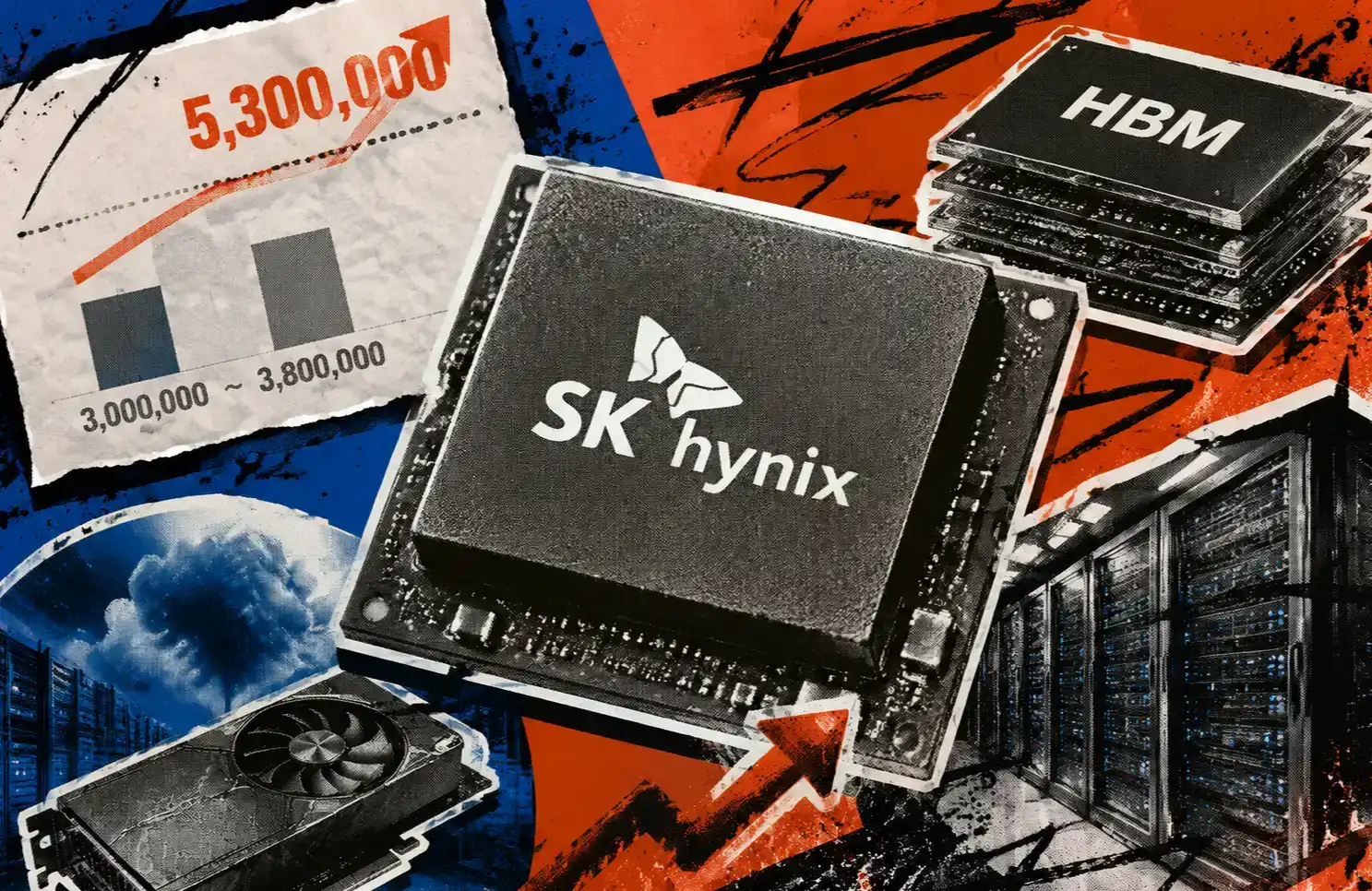
The article discusses the highly optimistic price target of approximately $3,500 for SK Hynix stock, set by Aletheia Capital. This target is significantly above the consensus range of $2,000-$2,520 from major brokerages. The core debate is whether SK Hynix deserves a fundamental re-rating beyond its traditional cyclical discount, based on the long-term impact of AI-driven demand. The $3,500 target hinges on three key assumptions holding simultaneously until at least 2027: 1) Continued shortage and high pricing for HBM (High Bandwidth Memory), a critical component for AI chips; 2) Sustained high prices for standard DRAM, as HBM production consumes capacity and constrains general supply; and 3) Strong AI server demand generating substantial, above-expectation free cash flow. SK Hynix's leading ~58% market share in HBM and its early certification with key clients like Nvidia provide a competitive advantage, allowing it to capture significant supply chain premiums. The HBM shortage is seen not just as a niche growth driver but as a catalyst that amplifies profitability across the entire memory business by tightening overall DRAM supply. However, the article cautions that this target represents an optimistic "tail scenario." Key risks include potential supply increases from competitors (Samsung, Micron) by 2027, a possible slowdown in HBM price growth, and high capital expenditures that could erode the projected free cash flow. The divergence in analyst targets reflects the market's uncertainty over whether the current AI-driven boom will temporarily elevate earnings or permanently raise the memory industry's profit baseline.

marsbit06/16 07:54

Can SK Hynix's Stock Double Again in This Rally?

marsbit06/16 07:54

The Year of AI Applications: Saying 'Yes' While Ignoring Risks? A Comprehensive Open Source Log of Software Development's Journey

The Year of AI Applications: Blindly Saying "Yes" While Ignoring Risks? A Software Development Log Goes Fully Open Source. AI-generated code harbors risks hidden within seemingly correct programs, potentially leading to data leaks or asset loss. The open-source project "Narwhal AI Code Risks," from Peking University's Narwhal-Lab, compiles real-world cases, early warning signs, and typical risk pathways. Its goal is to help developers identify potential hazards early and avoid repeating past mistakes. In 2026, code is generated faster than ever but deployed with less scrutiny. The danger often lies not in glaring errors, but in code that appears normal—syntactically correct, passing all checks—yet introduces subtle but critical flaws like non-existent dependencies, excessive permissions, or exposed databases. A stark example is the Moonwell cbETH oracle incident. A configuration file error, where a cryptocurrency price was set to ~$1.12 instead of ~$2,200, slipped through 28 checks and a pull request signed by both AI (Claude, Copilot) and human developers. This "semantic deviation" resulted in a loss of $1.78 million. The risk is that AI can produce functionally valid code that is semantically wrong for the business context. As AI moves beyond simple code completion to modifying configurations, installing dependencies, and operating via autonomous agents, it traverses longer, less traceable paths within software engineering, blurring traditional boundaries and oversight points. The Narwhal AI Code Risks project structures information into three layers: `/cases` for documented real-world incidents, `/inferred` for early warning signals, and `/scenarios` for clear, generalized risk patterns not yet tied to specific events. This aims to create a lasting, public record to prevent collective amnesia about past AI-coding pitfalls. Risks are categorized into seven areas: Software Supply Chain (e.g., recommending fake packages), Code-Level Vulnerabilities (e.g., reintroducing path traversal bugs), Cloud & Infrastructure Misconfiguration (e.g., overly permissive settings), Agent Risks (from autonomous tool execution), Vertical Domain Risks (e.g., in finance, healthcare), Intellectual Property & Compliance issues, and Human Factors (like over-reliance on AI output). The project's core value is transforming isolated incidents into reusable knowledge—a foundational resource for developers to spot similar issues, for security researchers to build upon, for toolmakers to create detection rules, and for the community to contribute new findings. As AI integration accelerates, this open-source "logbook" serves as a crucial navigational aid, charting past errors to help future projects steer clear of the same traps.

marsbit06/16 04:52
The Year of AI Applications: Saying 'Yes' While Ignoring Risks? A Comprehensive Open Source Log of Software Development's Journey

marsbit06/16 04:52

The Foundation of SpaceX's Trillion-Dollar Valuation: Who is Dividing Up Musk's Annual Tens of Billions in Capital Expenditure?

SpaceX's trillion-dollar valuation is built on its three core businesses: Starlink (profitable, 60% of revenue), rockets (driving down launch costs), and AI (a major investment area). This creates a financial cycle: Starlink funds rocket development, which enables low-cost launches for AI hardware, generating future revenue. This cycle fuels annual capital expenditures of tens of billions, flowing to a vast supply chain. Suppliers are categorized by their replaceability. The first group includes irreplaceable players like NVIDIA (GPU/CUDA ecosystem), Eutelsat (critical radio spectrum), Filtronic (specialized amplifiers), Materion (strategic beryllium), and STMicroelectronics (antenna chips). The second group consists of hard-to-replace suppliers due to high switching costs, such as Honeywell (flight control), Carpenter Technology (specialty alloys), Hexcel (carbon fiber), Broadcom (data exchange), and Linde (industrial gases). The third group comprises high-volume, cost-critical suppliers for mass-produced items like Starlink terminals. Key names include Wistron NeWeb (primary manufacturer) and several A-share companies like Shenzhen Sunway (connectors), Pies New Materials (forgings), Western Superconducting (alloys), and Yingliu (castings). Other niche players include Trimble (timing), Astronics (power distribution), and CTS (thermal management). The article argues that investing in these suppliers, rather than SpaceX stock directly, offers an alternative opportunity. The rationale is threefold: procurement is just beginning to scale, SpaceX's IPO brings new transparency to its supply chain, and the situation mirrors early stages of past "super terminal" ecosystems like Apple or Tesla. While risks exist (commodity cycles, geopolitical factors, technology shifts), the core thesis is that SpaceX's massive, ongoing procurement will translate into reliable revenue for its key suppliers, regardless of its own stock price volatility.

marsbit06/16 04:05

The Foundation of SpaceX's Trillion-Dollar Valuation: Who is Dividing Up Musk's Annual Tens of Billions in Capital Expenditure?

marsbit06/16 04:05

SpaceX's Trillion-Dollar Valuation Base: Who's Sharing in Musk's Annual Tens of Billions in Capital Expenditure?

**Title: The Foundation of SpaceX's Trillion-Dollar Valuation: Who Benefits from Musk's Annual $100 Billion Capital Expenditure?** This article argues that investors seeking to benefit from SpaceX's growth might find greater opportunities in its supply chain rather than directly investing in the company itself, drawing parallels to historical successes with Apple, Tesla, and NVIDIA suppliers. **SpaceX's Business Model & Cash Flow:** SpaceX generates revenue from three main areas: 1. **Starlink:** Its profitable core, earning $11.3B in 2023 (60% of revenue), funding other ventures. 2. **Rockets (Falcon/Starship):** Requires $3B+ in annual R&D but achieves the world's lowest launch costs. 3. **AI:** Currently unprofitable (-$6B+ in 2023), investing heavily in ground-based supercomputers (220,000 GPUs) and future orbital data centers. The cycle is: Starlink profits → fund cheaper rockets → low-cost launches deploy AI hardware → AI compute rentals generate future revenue. This cycle drives annual procurement spending of tens of billions of dollars. **The Supply Chain Beneficiaries:** Suppliers are categorized by their replaceability: **1. Nearly Irreplaceable (High Barriers to Entry):** * **NVIDIA:** Powers the Colossus supercomputer; its CUDA ecosystem creates immense switching costs. * **Eutelsat (SATS):** Controls critical radio spectrum for satellite communications; holds a ~3% stake in SpaceX. * **Filtronic (FTC):** Supplies millimeter-wave signal amplifiers for Starlink satellites; SpaceX constitutes 83% of its revenue. * **Materion (MTRN):** Global leader in beryllium production, a strategic material used in Starship structures. * **STMicroelectronics (STM):** Supplies phased-array antenna chips for Starlink satellites. **2. Replaceable, but Switching Cost is Prohibitively High:** * **Honeywell (HON):** Provides flight control and inertial navigation systems with decades of certification. * **Carpenter Technology (CRS):** Manufactures ultra-pure specialty steel alloys for Raptor engines. * **Hexcel (HXL):** Supplies custom carbon fiber composites developed over a decade with SpaceX. * **Broadcom (AVGO):** Manages high-speed data switching. * **Linde Group:** Supplies industrial gases (liquid oxygen/nitrogen) from facilities built near SpaceX launch sites. **3. High-Volume, Cost-Critical Manufacturing:** Focuses on mass-producing components like Starlink user terminals (target: 30 million units). * **Key Players:** Wistron NeWeb (6285, primary terminal manufacturer), several Chinese A-share companies (e.g., Sunway Communication, PAX New Materials, Western Metal Materials, Yingliu Co.), and smaller US firms like Trimble (TRMB, timing systems). **Why Now?** Three factors make the supply chain opportunity timely: 1. **Volume Ramp-Up:** SpaceX plans 100 launches in 2026, aims for 30 million Starlink terminals, and will deploy AI data centers, meaning procurement will accelerate. 2. **Increased Transparency:** The IPO provides public financial data, allowing investors to track supplier order growth. 3. **Historical Precedent:** The current phase is likened to Tesla's early mass-production stage (circa 2018), suggesting a long growth runway for suppliers. **Conclusion:** The article posits that while investing in SpaceX stock is betting on Elon Musk's ambitious vision at a high valuation, investing in its established suppliers is a bet on the tangible, recurring revenue from its massive procurement budget, which is largely decoupled from day-to-day stock price volatility.

链捕手06/16 04:01

SpaceX's Trillion-Dollar Valuation Base: Who's Sharing in Musk's Annual Tens of Billions in Capital Expenditure?

链捕手06/16 04:01

Missed Out on SpaceX's IPO? Take a Look at SpaceX's Complete Supply Chain

SpaceX is now public, but its high valuation and losses may deter some investors. However, the real opportunity, as seen with Apple, Tesla, and Nvidia, may lie in its extensive supply chain. SpaceX, funded primarily by its profitable Starlink service, spends hundreds of billions annually on components for its rockets, satellites, and planned orbital AI data centers, creating significant revenue streams for suppliers. Key suppliers are categorized by their indispensability. The first group includes irreplaceable players like **NVIDIA** (GPUs for AI supercomputers), **Eutelsat (SATS)** (spectrum rights), **Filtronic** (millimeter-wave amplifiers), **Materion (MTRN)** (beryllium alloys), and **STMicroelectronics (STM)** (phased array chips). The second category comprises suppliers costly to replace due to long certification cycles or deep integration, such as **Honeywell (HON)** (flight controls), **Carpenter Technology (CRS)** (specialty steel), **Hexcel (HXL)** (carbon fiber), **Broadcom (AVGO)** (data switching), and **Linde** (industrial gases). The third group involves high-volume, cost-critical manufacturers for mass-produced items like Starlink terminals. Major players here include Taiwanese contract manufacturer **Wistron NeWeb (6285)** and several Chinese-listed firms: **Sunway Communication (300136)**, **Parker Advanced Materials (605123)**, **Western Superconducting (002149)**, and **Yingliu Co., Ltd. (603308)**. Other niche providers include **Tianyin Electromechanical**, **Tongyu Communication**, **Trimble (TRMB)**, **Astronics (ATRO)**, and **CTSH**. The timing is now relevant because: 1) SpaceX's procurement is accelerating with plans for 100 launches in 2026, 30 million Starlink terminals, and orbital data centers. 2) Its IPO has brought unprecedented transparency to its supply chain. 3) This phase mirrors early days of the Tesla supply chain boom. The investment thesis shifts from betting on SpaceX's stock to betting on the steady, order-book-driven revenues of its essential suppliers. Risks remain, such as commodity cycles, geopolitical factors, and technological shifts, but the supply chain offers a potentially less speculative path to participate in SpaceX's growth.

marsbit06/16 03:36

Missed Out on SpaceX's IPO? Take a Look at SpaceX's Complete Supply Chain

marsbit06/16 03:36

A Clod of Chinese Soil Chokes Two Japanese Giants

"Chinese Soil Chokes Japanese Giants" The production of a key electronic specialty gas, tungsten hexafluoride (WF6), vital for manufacturing AI chips, was halted by two leading Japanese producers—Kanto Denka and Central Glass. Their shutdown was not due to a technological failure but a sudden, critical shortage of a raw material they had long taken for granted: ultra-high-purity (6N-grade) tungsten powder, which is almost entirely sourced from China. Following a quiet Chinese export announcement in January 2026, tungsten powder shipments to Japan dropped to zero for months. Despite frantic efforts, Japanese companies found no viable alternative; imported powder was three times more expensive and lacked the required purity. Their existing stockpiles were exhausted by mid-2026. WF6 is essential for depositing tungsten into the microscopic contact holes of High Bandwidth Memory (HBM) chips, which are crucial for advanced processors like those from Nvidia. While Japanese firms had mastered producing ultra-pure WF6 gas, their entire supply chain relied on China's 6N tungsten powder—a dependency now revealed as a fatal vulnerability. China's dominance in this "soil" results from decades of painstaking R&D by companies like Xiamen Tungsten and China Tungsten & Hightech. They overcame immense technical hurdles, such as separating chemically similar molybdenum from tungsten, to achieve mass production of the world's purest tungsten powder. With their primary suppliers gone, Kanto Denka and Central Glass announced a permanent halt to WF6 production starting July 1, 2026. This immediately created a supply crisis for major semiconductor manufacturers like Samsung and SK Hynix, forcing them to urgently seek and certify new Chinese suppliers for WF6 itself. The reversal marks a dramatic shift: China has moved from exporting low-value raw materials to controlling the high-purity foundation of a critical global tech supply chain, upending a long-established industrial hierarchy.

marsbit06/16 00:28

A Clod of Chinese Soil Chokes Two Japanese Giants

marsbit06/16 00:28

Without Tencent, What's Left for Suiyuan?

The article centers on the crucial question posed in the title: what is Seyond Technology really worth if its dominant customer, Tencent, were to stop purchasing its AI chips? As the last of China's "Four AI Chip Dragons" to secure approval for a public listing, Seyond's IPO filing reveals a profound and controversial dependency. In 2025, 74.9% to over 80% of its revenue came from Tencent. The piece argues that this extreme customer concentration is not merely a vulnerability but a strategic outcome of China's AI industry evolution. It contrasts Seyond's path with its peers (Moore Thread, Biren Technology, and MetaX), noting that while others raced to market with ambitious stories, Seyond focused first on securing and delivering for a major client. Its explosive revenue growth—with Q1 2026 up 1474.85% year-on-year—is driven by concentrated orders from Tencent, which itself faces massive, escalating AI compute demands for products like its Yuanbao and Hunyuan models. The relationship is framed as a deliberate, symbiotic cultivation of a supply chain. As both a major shareholder (20.26%) and primary client, Tencent is actively fostering Seyond to build a controllable, stable alternative to NVIDIA, similar to how global tech giants historically nurtured key suppliers. The high switching costs—involving software stacks and deployed systems—create a deep "ecological moat" for Seyond within Tencent's ecosystem. The analysis positions the AI chip landscape in three tiers: NVIDIA as the global leader, Huawei's Ascend as the state-backed player, and commercial firms like Seyond competing for market orders. Seyond is increasingly seen as "Tencent's compute foundation," with its product roadmap closely aligned with the tech giant's needs. The conclusion is that the industry's metric for success is shifting from fundraising and technical specs to real orders, delivery capability, and ecosystem binding. Seyond's value, therefore, lies not just in its chips but in holding a massive, multi-year procurement order from China's largest internet company—a tangible asset arguably more telling than any technical whitepaper in the current climate. The core insight is that for domestic chips, the ultimate challenge isn't just catching up technologically with NVIDIA, but earning the trust, scenarios, and recurring orders from a major anchor client.

marsbit06/15 23:15

Without Tencent, What's Left for Suiyuan?

marsbit06/15 23:15

活动图片