# Strategy Related Articles

HTX News Center provides the latest articles and in-depth analysis on "Strategy", covering market trends, project updates, tech developments, and regulatory policies in the crypto industry.

A Hard-Fought Battle to Defend Par Value: STRC Drifts Further Away from $100

STRC, the dividend-paying stock issued by Michael Saylor's bitcoin reserve firm Strategy (formerly MicroStrategy), is trading far below its intended $100 par value, closing recently at $80.84. With a key dividend snapshot date approaching, Saylor aims to pull the price back to $100, as per SEC filings stating the company's goal to stabilize the stock near that level. The situation is complicated by the June volume-weighted average price (VWAP) falling below $95, triggering an internal rule that mandates the next dividend increase to be at least double the standard 0.25% per cycle, potentially pushing the annualized dividend yield to 12%. However, attracting buyers with this higher yield faces challenges: the payout is spread over 24 bi-monthly installments, the board can alter or suspend dividends at any time, and there is no guarantee against further price declines. Beyond raising dividends, Strategy has limited tools to boost the stock. These include direct share buybacks (never utilized), halting new share issuances above $100 (which currently cap the price), selling ordinary MSTR shares to build a cash buffer for dividends (with limited effect so far), or announcing special shareholder benefits. Historically, STRC has reclaimed the $100 mark, such as in October last year, driven by a combination of dividend fulfillment, a rate hike, and a pause in share sales. The core question remains how much cost and effort Strategy is willing to bear to attract the necessary buying pressure to restore the $100 par value.

Foresight News06/25 08:00

A Hard-Fought Battle to Defend Par Value: STRC Drifts Further Away from $100

Foresight News06/25 08:00

a16z: In the AI Era, Company Competition for Talent Starts with Job Title Naming

The article discusses how companies in the AI era are competing for talent through strategic "title arbitrage," or the renaming of key roles to reflect and attract new, high-value capabilities. It uses Palantir's creation of the "Forward-Deployed Engineer" (FDE) as a prime example. This title reframed client-facing technical work from a peripheral "implementation" role into a core, high-status engineering function. The move was strategic, allowing Palantir to attract talent that blended technical skill with business acumen and to dominate the market's perception of this capability. The piece argues that job titles are an organizational language that signals the value and authority of certain work. Effective new titles, like "Data Scientist" or "Site Reliability Engineer," emerge when a role's strategic importance genuinely outgrows its old name. Conversely, mere title inflation without substantive change is ineffective. For AI companies, particularly in B2B, this is a crucial strategy. AI transformation creates new high-leverage roles (e.g., "Legal Engineer," "GTM Engineer") that combine domain expertise with technical automation. By naming these roles, a company can help clients internally legitimize these change-makers. This, in turn, builds market mindshare, associating the company with the new capability. In conclusion, as AI blurs the lines between product and service, the ability to accurately name and organize the critical, client-adjacent work that defines product learning will be a key competitive advantage. The first to define this new organizational language plants a flag in the market's mind.

marsbit06/24 12:20

a16z: In the AI Era, Company Competition for Talent Starts with Job Title Naming

marsbit06/24 12:20

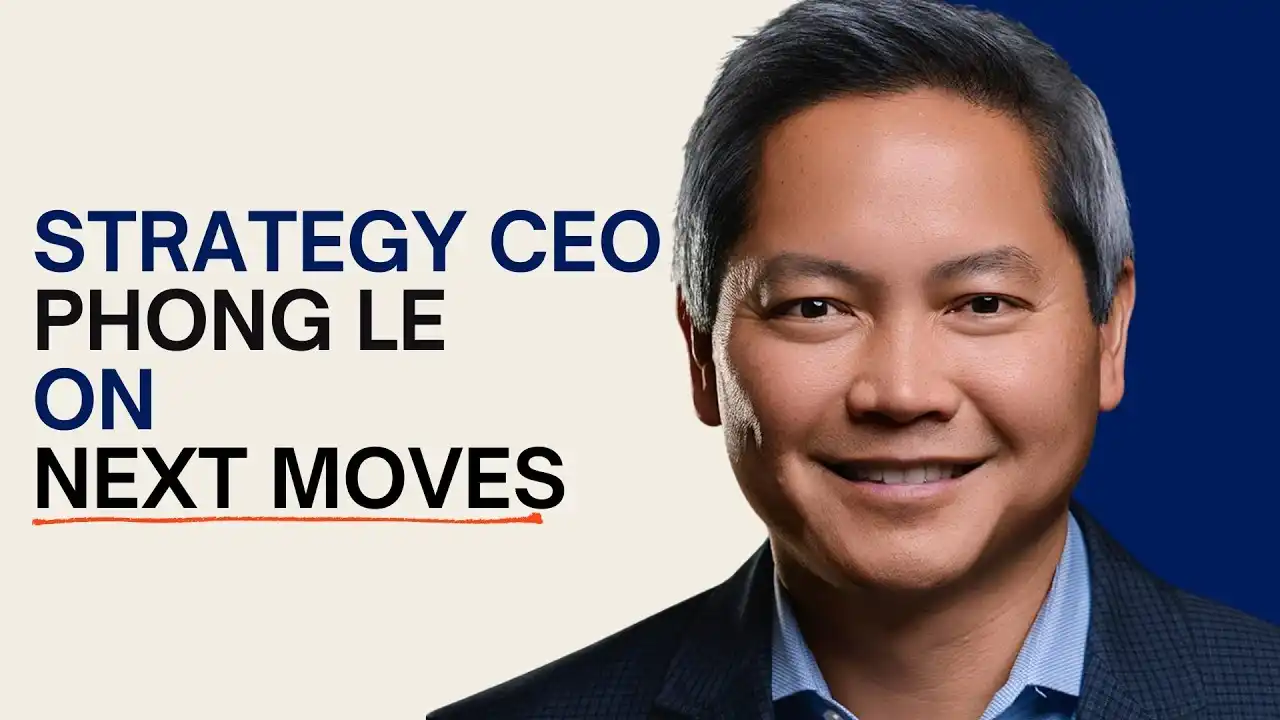
Interview with Strategy CEO: Can STRC Recover After Selling Bitcoin?

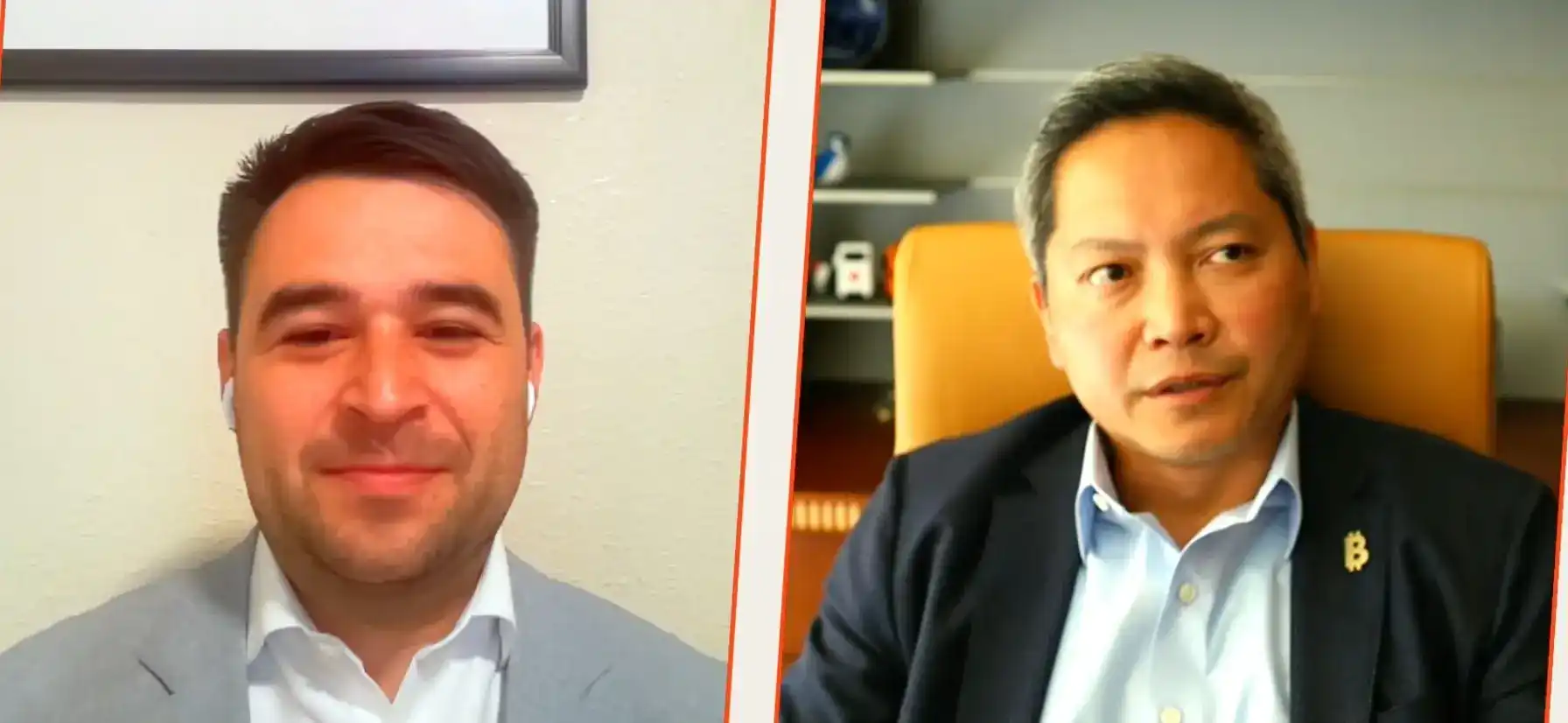
Interview with Strategy CEO Phong Le on the recent sale of 32 Bitcoin and its impact. He clarifies the move was a small, strategic action to demonstrate liquidity to debt holders, test internal processes, and prove operational discipline—not a response to fears of a "death spiral" from DeFi protocols leveraging STRC (Strategy's preferred stock product), which he notes holds less than 10% of STRC. Le emphasizes Strategy’s long-term focus as the largest corporate Bitcoin holder, using the adage that markets are a "voting machine" short-term but a "weighing machine" long-term. Decision-making is data-driven, involving the board, complex modeling, and multiple stakeholder considerations, moving beyond a founder-centric model. He outlines various capital options but stresses the strategic importance of "doing nothing" as a valid choice, citing resilience built during the 2022 bear market. Le expresses unwavering belief in Bitcoin's foundational value for global sovereignty and its future role in an AI-driven economy with trillions of autonomous agents. Addressing STRC's current price below its $100 face value, Le explains recent pressure was due to using dollar reserves for bond buybacks. He expects STRC to return to par as reserves are replenished and its semi-monthly dividend payments begin, noting the product is heavily over-collateralized. Finally, Le confirms the company sold Bitcoin the week prior to May 31st, as disclosed in an 8-K filing, leaving prediction market interpretations to others. The overarching philosophy remains "Spread Bitcoin with love," embracing all methods of gaining Bitcoin exposure.

marsbit06/24 11:47

Interview with Strategy CEO: Can STRC Recover After Selling Bitcoin?

marsbit06/24 11:47

IOSG Founder: Ethereum Doesn't Need Another Leap of Technical Faith, It Needs a Musk-style Compromise

Jocy, founder of IOSG Ventures, argues that Ethereum does not need renewed technological faith but a "Musk-like compromise." The recent formation of ETHLabs—funded by major ETH holders like BitMine and Lubin—highlights a market-driven move to fill a gap left by the Ethereum Foundation (EF), signaling a loss of confidence in its decentralized, hands-off approach. The core critique contrasts Vitalik Buterin's (V) idealistic, technology-first vision with Elon Musk's pragmatic, business-driven execution. The author asserts Ethereum's current shortage is not another technical roadmap but a clear, real-world application narrative and a leader willing to engage directly with commercial realities—like Musk. Internal issues are emphasized, citing EF's management problems and talent drain. While the new decentralized model with independent nodes like ETHLabs addresses the single foundation's limitations, it risks fragmentation without cohesive direction. True cohesion, the author suggests, must come from a shared, compelling narrative around ETH's value, not just from aligned financial interests. Independence claims for new entities are seen as aspirational, needing years of transparency to build trust. The ultimate threat is not competitors like Solana, but the broader shift of attention and talent toward AI. Ethereum has a limited window—12 to 18 months—to recapture focus by delivering tangible, real-world applications. The conclusion urges V to shift from abstract ideals to grounded, pragmatic leadership. The time for this crucial pivot is running out.

marsbit06/24 10:40

IOSG Founder: Ethereum Doesn't Need Another Leap of Technical Faith, It Needs a Musk-style Compromise

marsbit06/24 10:40

Ethereum Foundation Cuts 20% of Staff, 54 Depart: The Survival Logic Behind the Restructuring

The Ethereum Foundation (EF) has announced a major restructuring, resulting in the departure of 54 staff members, representing approximately 20% of its workforce. This reorganization is not merely a cost-cutting measure but a strategic refocusing. The EF will now concentrate its resources on what it deems critical and unique tasks, structured around five new operational clusters. The new structure comprises clusters dedicated to: the Protocol Layer (ensuring Ethereum's core properties like censorship resistance and security); the Access Layer (enabling trusted, non-intermediated user interactions); the User Layer (grounding decisions in real user needs and constraints); the Community Layer (representing EF's stance and building alliances); and the Institutional Layer (engaging with enterprises, governments, and academia to promote principled adoption). The foundation stated that the layoffs were a difficult but necessary step to align its organization and spending with its long-term mandate, insulating its core work from short-term market fluctuations. Affected employees were offered a severance package and transition support. The restructured EF emerges as a leaner and more focused organization, poised to prioritize the development and preservation of Ethereum's foundational promise of self-sovereignty. Further details on the new operational model are expected in the coming weeks.

marsbit06/24 03:30

Ethereum Foundation Cuts 20% of Staff, 54 Depart: The Survival Logic Behind the Restructuring

marsbit06/24 03:30

Interview with NDV Founder Jason Huang: Piercing the AI Bubble and the MicroStrategy Myth, Seeking the Ultimate Edge in the Crypto Market

In a podcast with WuBlockchain, NDV founder Jason Huang discusses recent market dynamics, expressing a bearish outlook on crypto in the near term. He attributes Bitcoin's recent decline to a combination of cyclical selling pressure, the start of a US stock market correction, and liquidity tightening. A key catalyst is the emerging financial strain on MicroStrategy (MSTR). Huang explains that MSTR's model of borrowing to buy Bitcoin created a positive "flywheel" in a bull market. However, with falling BTC prices turning its stock premium into a discount, the model is now under severe stress. While MSTR only sold 32 BTC recently, the market is "front-running" the fear of its massive 80,000+ BTC holdings potentially being liquidated to meet debt obligations. He believes a true market bottom requires a major, capitulation-level event similar to the FTX collapse. Regarding investments, Huang states his fund is up over 20% this year, outperforming Bitcoin by 50-60%. The strategy involves crypto assets and commodities like oil, gold, and silver, but avoids AI stocks due to a perceived lack of trading edge. He is cautious of crowded trades in semiconductors and sees bubbles in the broader market, citing the hype around a potential SpaceX IPO. Despite short-term pessimism, Huang remains long-term bullish on one crypto innovation: stablecoins. He views them as the clearest example of a "faster, better" financial tool with significant room for global adoption. For the future, he is very bearish on Ethereum. For Bitcoin, he anticipates potential for a significant drop below $48,000 before a eventual rebound, but stresses the need to wait for a true panic-driven bottom marked by widespread despair and disinterest in the market.

marsbit06/24 01:41

Interview with NDV Founder Jason Huang: Piercing the AI Bubble and the MicroStrategy Myth, Seeking the Ultimate Edge in the Crypto Market

marsbit06/24 01:41

Foundation Steps Back, Ethlabs Steps Forward: Ethereum Undergoes Its Largest Restructuring in History

On June 23rd, the Ethereum ecosystem witnessed two major shifts, signaling a significant governance realignment. First, former Ethereum Foundation researchers established Ethlabs, a new independent non-profit. Backed by major ETH holders like Bitmine and SharpLink, Ethlabs aims to address practical needs for institutional adoption, including faster settlement, native asset issuance, cross-chain transactions, and mainnet scaling. Secondly, the Ethereum Foundation announced a major restructuring, laying off 54 employees (20% of its staff) to become a leaner entity focused on protocol governance and maintenance rather than being the primary builder. This move represents a pivotal correction. Criticisms had mounted over the Foundation's perceived slowness, lack of clear strategy, and over-reliance on Vitalik Buterin's influence. Ethlabs emerges as a more execution-oriented, "industrialized" layer focused on market adoption—bridging the gap between research and real-world use. Notably, Vitalik Buterin is absent from its list of supporters, interpreted as an intentional step to avoid excessive personal endorsement and allow the organization to build independent credibility. The Ethereum Foundation's downsizing and redefinition mark a retreat from its former central coordinating role. It now aims to share the "privilege of stewarding Ethereum" with other emerging groups like Ethlabs, the Ethereum Applications Guild, and The Ethereum Economic Zone. Analysts frame this dual shift as the Foundation ensuring Ethereum remains "correct" (credibly neutral), while Ethlabs must prove it remains "effective" (competitive and attractive for capital and adoption). This addresses community "shareholder-like anxiety" about ETH's market performance. While risks exist—such as concerns over shifting from Foundation centrality to large-holder influence—the consensus is that the greater risk for Ethereum was inaction, caught between technical idealism and organizational inertia. These steps aim to create a more multi-stakeholder, execution-driven future for the network.

链捕手06/23 15:50

Foundation Steps Back, Ethlabs Steps Forward: Ethereum Undergoes Its Largest Restructuring in History

链捕手06/23 15:50

After Missing the 20x, I've Found a 'Dumb' Method for AI Investing

**Missing the 20x Opportunity: A Simple 'Dumb' Approach to AI Investing** The AI boom, driving NVIDIA's revenue from $60B to $216B in two years, creates immense investment pressure. However, like the internet bubble of 2000, the largest AI opportunities likely lie ahead, perhaps after a correction. Instead of rushing in now or waiting paralyzed for a crash, the author proposes a third way: building a "knowledge warehouse" by systematically mapping the AI industry to be ready when opportunities arise. The core of the strategy is understanding AI's four-layer value chain: 1. **Compute Infrastructure (The "Engine"):** This foundational layer, where all money eventually flows, includes: a) **Chip Design:** NVIDIA's dominance via its CUDA ecosystem, b) **Chip Manufacturing/Packaging/Memory:** TSMC's near-monopoly in advanced manufacturing and SK Hynix's lead in High Bandwidth Memory (HBM), c) **Optical Interconnects:** Essential for large-scale AI clusters (e.g., Lumentum, Coherent), d) **Cooling & Power:** Critical for high-density AI data centers (e.g., Vertiv), e) **Servers/Data Centers & Cloud Platforms:** The physical and virtual wholesale providers. 2. **Models & Tools (The "OS"):** The competitive layer of foundation models (OpenAI, Anthropic, Google, Meta, xAI), now generating real revenue. A key shift is the center of gravity moving from **Training** models to **Inference** (running models), which demands different chip characteristics and could challenge NVIDIA's monopoly. 3. **Middleware & Platform ("The Glue"):** Connects models and applications (e.g., Scale AI, Hugging Face). This layer could explode if applications take off. 4. **Vertical Applications ("The Cash Register"):** Where AI meets end-users (e.g., enterprise AI, coding tools, medical AI, robotics). A critical cross-cutting constraint is **Energy**, as AI's massive power consumption drives investment in nuclear and other energy infrastructure. The author identifies four key questions for further research: 1) How will the shift from Training to Inference reshape the competitive landscape? 2) With tech giants spending over $600B on capex, where is the ROI from AI applications? 3) What are the under-the-radar opportunities in the "second" and "third" circles of the value chain (e.g., cooling, specialty foundries)? 4) How will geopolitics (e.g., U.S.-China chip restrictions) bifurcate the supply chain? The conclusion is that missed opportunities stem from insufficient research, not slow timing. By methodically studying each layer—its business models, competition, and valuations—investors can build the "killer intuition" needed to act decisively when the market presents its chance.

marsbit06/23 03:50

After Missing the 20x, I've Found a 'Dumb' Method for AI Investing

marsbit06/23 03:50

Interview with MicroStrategy CEO: Beyond the 32 BTC Selling Stir, 6 Trillion AI Agents are the Ultimate Endgame for Bitcoin

Interview with Strategy CEO: Beyond the 32 BTC Sale, 6 Trillion AI Agents are Bitcoin's Ultimate Endgame Strategy CEO Phong Le discusses the recent sale of 32 BTC, clarifying it was a minor, strategic move to demonstrate operational liquidity and internal process robustness to creditors and rating agencies, not a reaction to market fears. He emphasizes Strategy's disciplined, data-driven decision-making framework involving its board and complex financial modeling, distancing the company from centralized "black box" operations seen elsewhere in crypto. Le outlines the company's resilience and long-term focus, citing the "doing nothing" strategy during the 2022 bear market as a testament to its conviction in Bitcoin's underlying value proposition for global sovereignty and freedom. He reveals that generative AI was instrumental in developing their Stretch (STRC) preferred stock product, cutting development time from years to months. The most visionary part of the discussion centers on Agentic AI. Le envisions a future with 6 trillion autonomous AI agents conducting commerce, particularly in off-world environments like Mars, which would naturally adopt decentralized crypto rails and seek yield-bearing assets like Bitcoin as a core store of value. Finally, Le addresses the STRC product, expressing confidence it will return to its $100 par value through reserve replenishment and the initiation of dividend payments, and dismisses concerns about competition with stablecoins. He concludes by affirming Strategy's philosophy of expanding Bitcoin access through all available means, from self-custody to ETFs, to onboard the next wave of users.

marsbit06/23 01:16

Interview with MicroStrategy CEO: Beyond the 32 BTC Selling Stir, 6 Trillion AI Agents are the Ultimate Endgame for Bitcoin

marsbit06/23 01:16

活动图片